Pickleball has rapidly evolved from a recreational niche into a mainstream sport embraced by organizations across North America. As participation continues to rise, many companies are discovering that pickleball offers something rare: an activity that is fun, social, accessible, and easy to organize.
Corporate wellness studies consistently highlight that companies investing in group physical activities often see stronger employee engagement, improved morale, and better collaboration across teams.
As a result, pickleball corporate events are increasingly used for team building, wellness programming, leadership retreats, onboarding experiences, and client engagement – all with minimal barriers to participation.
What Are Pickleball Corporate Events?
Pickleball corporate events are organized group experiences built around pickleball, designed specifically for workplace teams or business audiences. Depending on your company’s goals, these events can range from casual open-play socials to structured tournaments with coaching, scorekeeping, and awards.
Unlike competitive leagues, corporate pickleball events are designed to prioritize inclusion, interaction, and shared experience. Participants often include a mix of beginners, intermediate players, and first-time athletes – so the best corporate formats are built to encourage rotation, partner switching, and consistent playtime rather than high-level competition.
Companies use pickleball events for a variety of internal and external goals, including:
Pickleball corporate events typically follow several proven formats:
- team-building and culture building
- wellness and stress reduction initiatives
- leadership development and offsite retreats
- onboarding and new-hire engagement
- client appreciation and informal networking
Because pickleball scales easily across group sizes and skill levels, it works well for startups, mid-sized companies, and large enterprises.
Popular Pickleball Corporate Event Formats
Pickleball events typically follow a few proven formats depending on energy level, participant experience, and event goals:
- Team-building tournaments: Short games with rotating doubles teams so everyone plays multiple matches and meets new coworkers.Open-play socials: A relaxed environment where participants join courts freely, focused on connection rather than competition.
- Wellness activations: Light instruction + guided play designed for movement, stress relief, and fun.
- Executive retreats and offsites: Pickleball sessions included as part of a larger agenda, often paired with lunch, networking, or workshops.
- Client appreciation events: A casual competitive activity that naturally creates conversation, teamwork, and memorable interaction.
These events are commonly planned by HR and People Operations teams, office managers, event planners, and wellness coordinators. Sales teams and leadership groups also use pickleball to build rapport with clients and partners in a low-pressure setting.
Why Pickleball Works So Well for Corporate Events
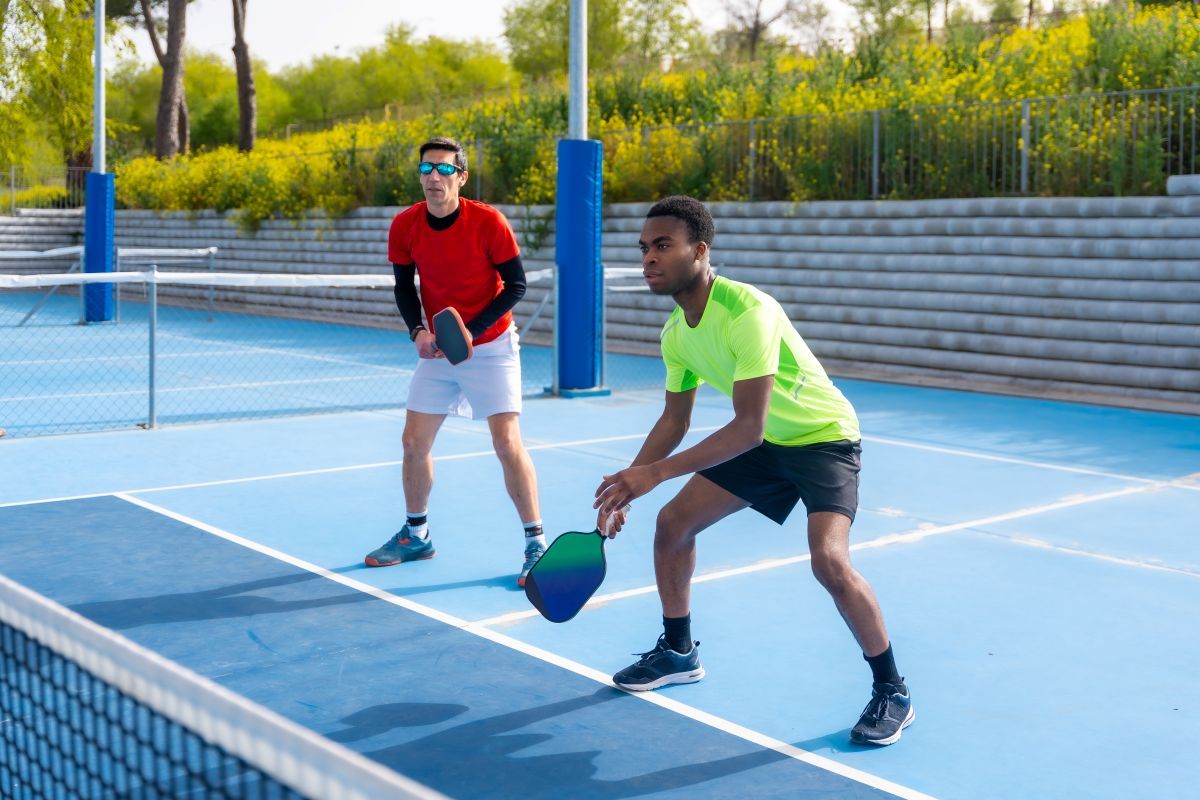
Pickleball aligns naturally with modern workplace priorities like inclusion, collaboration, wellness, and team connection. Several characteristics make it particularly effective in corporate environments.
Inclusive and Beginner-Friendly
Pickleball has a lower learning curve than many sports. Within minutes, most people can rally and participate in gameplay – especially in doubles formats designed to keep the pace manageable.
Because the court is smaller and movement demands are moderate, the game feels less intimidating than tennis or full-court sports. Success depends more on coordination, placement, and teamwork than strength or speed, which makes it accessible to a wide range of ages and fitness levels.
Naturally Social and Collaborative
Most corporate pickleball events are built around doubles play, which encourages constant communication and shared decision-making. The sport creates natural opportunities for employees to interact with colleagues outside their typical teams.
Rotating partners throughout the session helps employees build connections across departments, strengthening relationships that often translate into better collaboration back at work.
High Engagement With Minimal Pressure
Pickleball games are short – often around 10–15 minutes – which helps keep energy high and prevents burnout. Employees stay active and involved without the fatigue that comes with longer competitions.
Because pickleball is widely seen as fun and approachable, participation rates tend to be higher than traditional corporate athletics. The social nature of the event also reduces performance anxiety for beginners.
Alignment With Corporate Wellness Goals
Modern workplace wellness programs are increasingly focused on sustainable, enjoyable movement rather than intense workouts. Pickleball supports:
- light-to-moderate cardiovascular activity
- coordination and balance
- stress reduction and mood improvement
- social interaction and community
It delivers real health benefits without requiring peak fitness, making it easier for employees to participate comfortably.
Planning a Pickleball Corporate Event: Step by Step
Successful corporate pickleball events feel effortless to participants – but that experience comes from thoughtful planning behind the scenes. These steps help ensure your event is inclusive, organized, and enjoyable.
Step 1: Define Event Goals
Before choosing a venue or format, clarify what success looks like.
Common corporate event goals include:
- team building: maximize partner rotation and interaction
- wellness and morale: keep the tone light and low-pressure
- client engagement: focus on atmosphere and networking
- leadership retreats: blend structured instruction with competition
- onboarding: create a welcoming and social activity for new hires
Clear goals will guide decisions around timing, format, coaching, and structure.
Step 2: Choose the Right Venue
The venue impacts everything – attendance, comfort, scheduling reliability, and overall experience.
- Indoor courts are ideal for predictable scheduling and large groups
- Outdoor courts offer a more casual and social atmosphere (weather dependent)
Many organizers use Bounce to find local courts, compare options, and identify facilities that match group size and availability. Centralized access is especially helpful for companies planning events in multiple locations.
Step 3: Decide on Group Size and Play Format
Group size determines everything from how many courts you’ll need to how long people wait between games. For corporate events, the goal is simple: keep players moving, minimize downtime, and make rotations easy to follow, especially for beginners.
Recommended Group Size per Court (Doubles Play)
Each pickleball court supports 4 players at a time. A good corporate rule-of-thumb is:
- 4–8 players per court = ideal (high playtime, short waits)
- 9–12 players per court = workable (moderate waits, needs rotation system)
- 13+ players per court = not recommended (too much downtime unless you extend the event)
Best Formats by Group Size
Choosing the right format keeps the event inclusive and prevents confusion.
Small groups (8–16 players)
- Best format: Open play or casual rotation
- Works well because everyone plays frequently and logistics stay simple
Medium groups (16–36 players)
- Best format: Round-robin rotation with timed games
- Ideal for team-building because people can rotate partners and play multiple short matches
Large groups (36+ players)
- Best format: Structured rotations + staggered start times
- Consider running the event in two blocks (Group A / Group B) to reduce downtime
How to Run Smooth Rotations (Beginner-Friendly)
To keep games moving and avoid awkward court confusion:
- Set games to 10–12 minutes (or first to 7 points)
- Use a whistle/timer to signal rotations
- Rotate 2 players off / 2 players on each round
- If you want maximum team mixing, rotate partners every round
This structure ensures everyone gets consistent playtime and keeps energy high without turning the event into a complicated tournament.
Step 4: Secure Coaches or Facilitators
Certified pickleball coaches add structure and confidence to corporate events. Coaches lead warmups, explain rules, demonstrate basic techniques, and manage rotations. Their presence is particularly valuable when many participants are beginners.
Through Bounce, companies can access verified pickleball instructors and coordinate lessons or facilitated sessions that match the experience level of the group. This ensures consistency and professionalism across events.
Step 5: Equipment and Event Logistics
Pickleball doesn’t require a massive budget, but details still matter.
Make sure you have enough:
- paddles (especially beginner-friendly options)
- balls (indoor/outdoor depending on venue)
- nets (if courts are temporary)
- water access + hydration breaks
- scorecards (if running a tournament)
To enhance the experience, consider:
- branded shirts or wristbandslight refreshments
- shaded seating or rest areas
- music and a simple welcome briefing
These small touches make the event feel intentional – and more memorable.
Pickleball Corporate Event Formats That Work Best
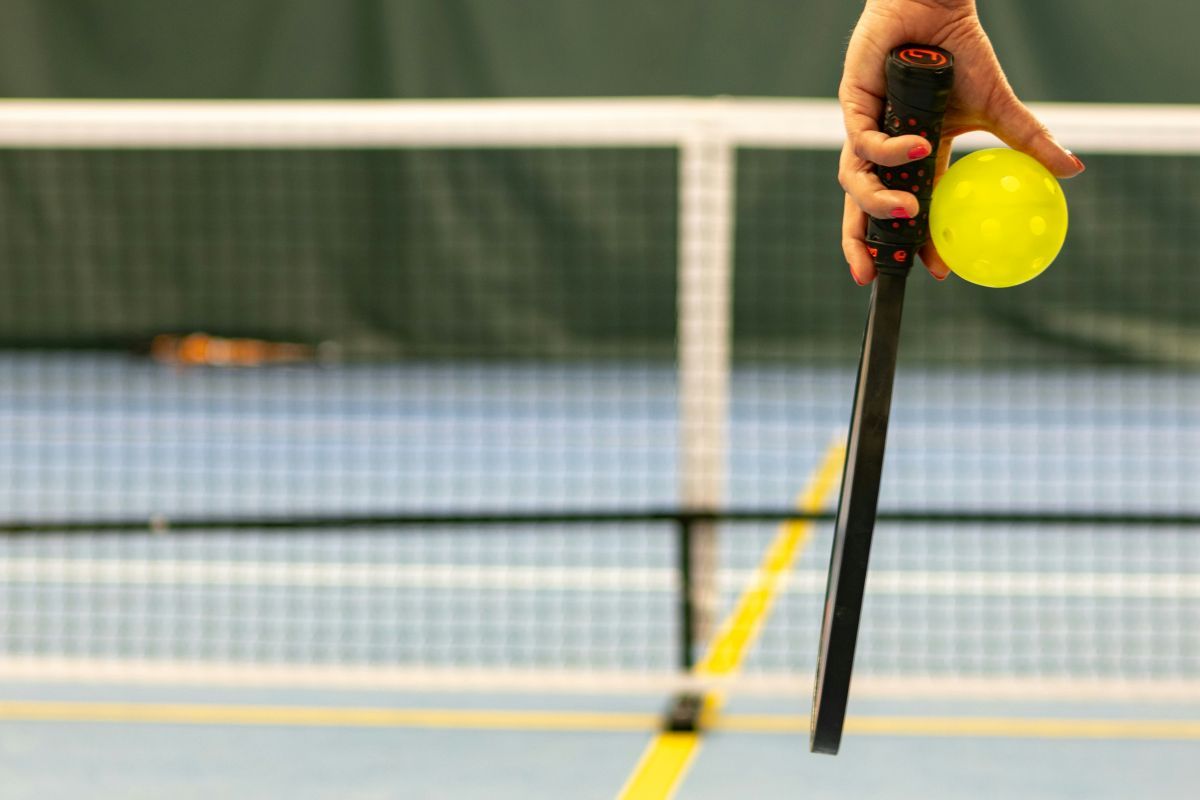
Different formats suit different corporate objectives, and flexibility is one of pickleball’s greatest strengths.
Beginner Clinics (Best for First-Time Teams)
Beginner clinics include instruction before gameplay. Coaches teach:
- basic rules
- serving and rallying fundamentals
- court positioning and rotation
Then participants transition into guided play. This format reduces hesitation, creates confidence quickly, and ensures everyone knows enough to enjoy the game.
Round-Robin Team Play (Best for Team Building)
Round-robin formats rotate partners frequently, which keeps participation high and maximizes interaction across the company.
This format works well when the primary goal is connection and collaboration rather than competition.
Structured Corporate Tournaments (Best for Large Events)
Tournaments bring excitement and a sense of occasion – especially for celebrations and larger groups.
To keep tournaments beginner-friendly:
- use short games or timed rounds
- keep scoring simple
- prioritize fun over intensity
- offer friendly awards (team spirit, best rally, most improved)
Wellness-Focused Open Play (Best for Low-Pressure Events)
Open play allows employees to join courts freely and play at their own pace. It works especially well for wellness days, informal company outings, and organizations that want movement without structured competition.
Indoor vs Outdoor Pickleball for Corporate Events
Selecting between indoor and outdoor pickleball venues depends on event goals, group size, scheduling needs, and the overall experience a company wants to create.
Both options offer distinct advantages, and understanding these differences helps organizers choose the format that best supports participation, logistics, and atmosphere.
| Category | Indoor Pickleball Corporate Events | Outdoor Pickleball Corporate Events |
| Environment Control | Climate-controlled settings ensure consistent conditions regardless of season or weather | Open-air setting creates a relaxed, social atmosphere but depends on seasonal conditions |
| Scheduling Reliability | Highly predictable with minimal risk of disruption, making planning easier | Requires contingency planning due to temperature, wind, or rain |
| Court Consistency | Uniform surfaces support smoother gameplay and accommodate all skill levels | Surface quality may vary by location, which can affect play |
| Group Size Suitability | Well-suited for large corporate groups and structured events | Ideal for small to mid-sized groups and informal gatherings |
| Event Tone | Professional and organized, often preferred for formal team-building or wellness programs | Casual and social, commonly used for client events and relaxed company outings |
| Year-Round Availability | Available throughout the year, supporting ongoing corporate programming | Typically seasonal, with availability influenced by local climate |
| Logistical Complexity | Easier to manage equipment, timing, and rotations | May require additional planning for shade, hydration, and backup locations |
How Long Should a Pickleball Corporate Event Last?
Duration depends on goals and participant energy levels.
Typical timeframes:
- 60–90 minutes: ideal for team building and clinics
- 2–4 hours: common for offsites and retreats
- Full-day events: best for large programs with breaks, food, and multiple play blocks
For most companies, 60–90 minutes is the sweet spot – long enough for real connection, short enough to stay high-energy.
Budgeting for Pickleball Corporate Events
Pickleball is cost-effective compared to many corporate activities, but budgeting remains important.
Key expenses include:
- Court rental
- Coaching fees
- Equipment
- Event coordination
- Food or beverages
Costs vary based on location, duration, and group size.
Companies can reduce expenses by scheduling off-peak court times, sharing equipment, and simplifying formats.
Platforms like Bounce help organizations compare options and streamline bookings, reducing administrative overhead.
Common Mistakes to Avoid When Planning Pickleball Corporate Events
Even though pickleball is highly accessible, poor planning can reduce participation and impact. These are the most common mistakes – and how to prevent them.
1. Overcomplicating the Event Format
Using complex tournament structures or unclear rules can confuse participants, especially beginners. Simple formats with clear rotations keep gameplay smooth and reduce frustration.
2. Ignoring Beginner Skill Levels
Failing to account for first-time players often leads to disengagement. Corporate pickleball events work best when instruction, warmups, and beginner-friendly play are built into the schedule.
3. Underestimating the Value of Coaching
Skipping certified instructors can result in uneven gameplay, poor court flow, and lack of confidence among participants. Coaches help maintain structure, explain rules, and create a welcoming environment.
4. Poor Court Rotation Planning
Without a rotation system, some participants may wait too long between games while others dominate court time. Balanced rotations ensure equal participation and sustained energy.
5. Inadequate Scheduling and Time Allocation
Events that are too short feel rushed, while overly long sessions cause fatigue. Well-paced schedules keep participants engaged without overwhelming them.
6. Choosing the Wrong Venue Type
Selecting a venue without considering group size, accessibility, or availability can create logistical challenges. Matching the venue to event goals improves flow and attendance.
7. Insufficient Equipment Preparation
Not having enough paddles, balls, or nets leads to delays and reduced playtime. Equipment readiness is essential for smooth execution.
8. Treating the Event as Too Competitive
Overemphasizing competition can discourage participation from less experienced employees. Corporate pickleball events perform best when fun, inclusion, and connection remain the focus.
9. Lack of Clear Communication Before the Event
Unclear expectations about attire, skill level, or schedule can create confusion. Providing simple pre-event guidance helps participants feel prepared and confident.
Pickleball Corporate Events Across Different Company Sizes
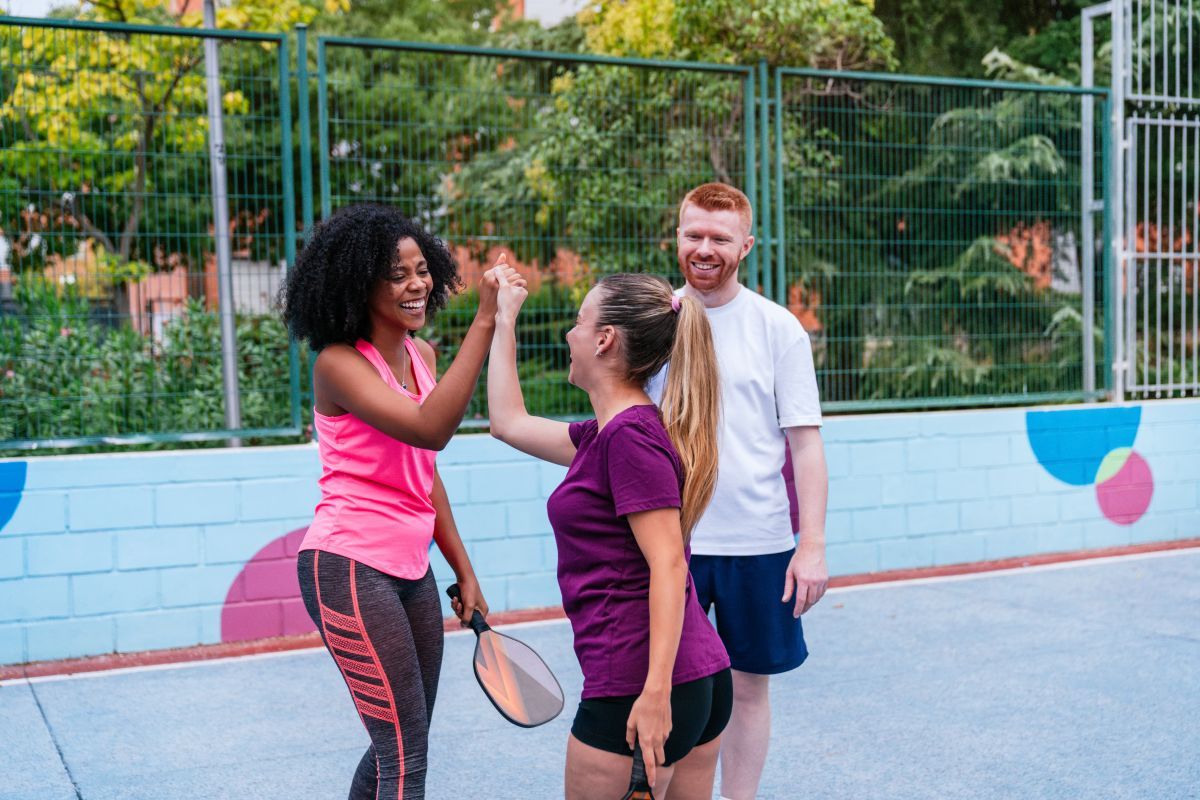
Startups and Small Teams
Small teams often thrive with informal open play or short clinics focused on connection. These events are quick to organize and require minimal logistics.
Mid-Sized Companies
Mid-sized teams benefit from structured clinics and round-robin tournaments that balance organization with flexibility. These formats support engagement across departments.
Large Enterprises
Large organizations often host multi-session or multi-location events. Using platforms like Bounce allows enterprises to scale pickleball corporate events across cities while maintaining consistent quality and access to courts and coaches.
Final Thoughts
Pickleball corporate events combine accessibility, wellness, and social connection in a way that few team activities can match. As companies continue to prioritize employee engagement and meaningful shared experiences, pickleball offers a practical and scalable solution.
With thoughtful planning and streamlined access to facilities and instructors through Bounce, pickleball corporate events can become a lasting part of company culture, supporting both organizational goals and employee well-being.