Pickleball sounds unserious until you stand at the kitchen line and lose a point because your toe landed on the wrong side of a painted line.
That is the game. Easy first rally. Harder second lesson. A lot of small rules that punish lazy feet and loose attention.
These 25 pickleball facts are grouped by origin, rules, equipment, player culture, global growth, and the pro scene. They are useful facts with court value, coaching value, and enough context to make bad explanations easier to spot. You should finish knowing the sport better and repeating the dog story with less confidence.
The bigger point is simple. Pickleball works because its design keeps people in rallies quickly, then gives them enough detail to stay obsessed. Some facts help on court. Others help when someone at open play explains a rule with complete confidence and gets it wrong.
Quick answer
Want the quick version? Pickleball began in 1965 on Bainbridge Island, Washington, as a backyard game built from whatever equipment was available. SFIA participation data says 24.3 million Americans played in 2025, with 171.8% growth from 2022 to 2025. The sport keeps spreading because the court is small, the serve starts rallies instead of ending them, and the 7-foot kitchen forces patience.
Origin and pickleball history facts
1. Pickleball was invented in 1965 on Bainbridge Island
USA Pickleball history traces the sport to Joel Pritchard’s home on Bainbridge Island. Pritchard and Bill Bell came back from golf, found their families bored, and started improvising on an old badminton court.
They could not find a full set of badminton rackets, so they used ping-pong paddles and a perforated plastic ball. That rough setup still explains the game: simple equipment, quick entry, and rules that let mixed-skill players share the same court.
2. The name origin is still debated
The dog story gets repeated because it is tidy. The story says the game was named after the Pritchard family dog, Pickles.
The rowing explanation has stronger support in the official history. It connects the name to a “pickle boat,” where leftover rowers were grouped together. The exact origin is still debated, so the honest version is simple: the dog story is popular, and the rowing story is better supported.
3. The first version used patched-together gear
Modern paddles can cost more than a good pair of tennis shoes. The first version was much rougher.
The founders used what they had: an old badminton court, ping-pong paddles, and a plastic ball. That homemade start still fits the sport. Pickleball rewards problem-solving more than force. A calm player with control can beat a player with a bigger swing and worse decisions.
4. The sport took decades to reach mass culture
Pickleball started in 1965. The mass-market climb came much later.
SFIA says U.S. participation grew from about 4.2 million players in 2020 to 24.3 million in 2025. The sport spent more than 50 years moving through parks, schools, clubs, and retirement communities before the current wave arrived.
That slow build helped. Pickleball already had simple rules, cheap entry-level gear, and a community base when demand spiked. The sport already had the bones. The missing pieces were enough courts, coaches, and organized play to catch up.
Rules and scoring facts that explain the game
5. The court is 20 by 44 feet for singles and doubles
The 2026 USA Pickleball rulebook gives the court size as 20 feet wide and 44 feet long for both singles and doubles.
That small court changes the point immediately. You cover less ground than tennis, but you have less time to recover after a bad paddle position. Doubles at the kitchen line exposes slow hands fast.
6. The kitchen is a 7-foot no-volley zone
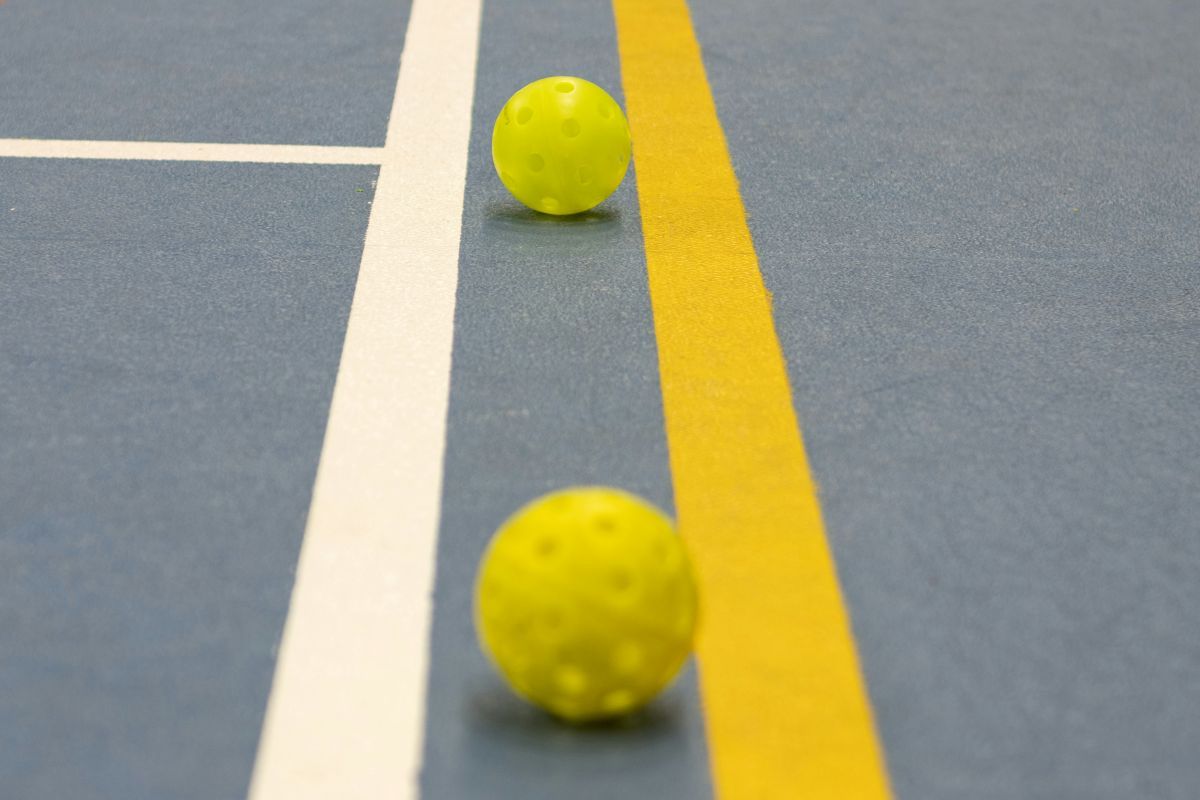
The kitchen is officially the non-volley zone. It runs 7 feet from the net on both sides, and the kitchen line counts as part of the zone.
You can stand in the kitchen. You can hit a ball there after it bounces. You cannot volley while touching it, and your momentum cannot carry you into it after a volley. The footwork matters more than the nickname, especially once players start arguing over the kitchen rule.
The kitchen is why a soft dink can beat a hard swing. It pulls players into a positioning game where balance, paddle height, and patience matter more than raw pace.
7. The serve has more rules than “underhand”
Beginners usually remember the underhand part. The rulebook is more exact.
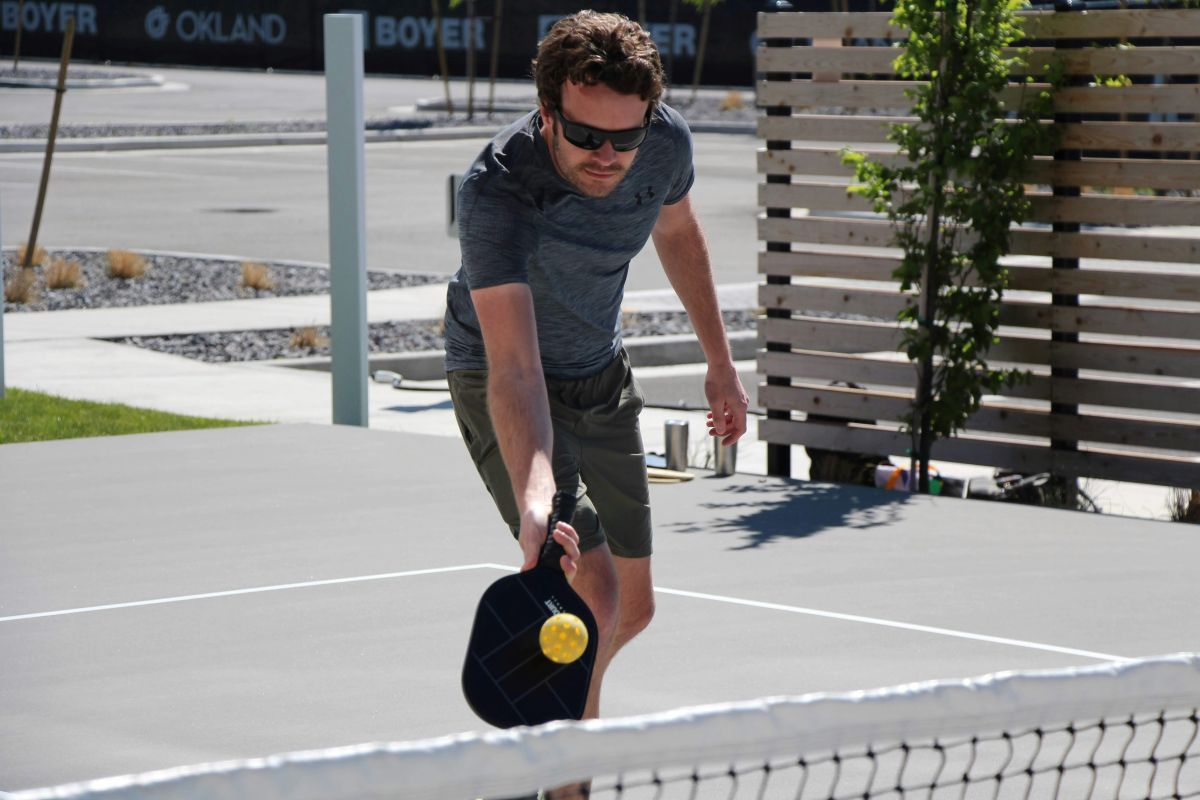
On a legal volley serve, the paddle must move in a clear upward arc, the paddle head must stay below the wrist at contact, and the ball must be no higher than the waist. Tennis-style sidearm serves get called out for a reason. The serve makes more sense once you see it next to the rest of the basic pickleball rules
8. The two-bounce rule creates the third-shot problem
After the serve, the return has to bounce. Then the serving team has to let that return bounce before hitting the third shot.
Only after those 2 bounces can either team volley. The rule stops the serving team from sprinting forward and attacking the first return out of the air. It also creates the shot that bothers almost every beginner: the third shot.
9. Standard scoring gives points only to the serving team
In standard pickleball, only the serving team can score.
Doubles scoring uses 3 numbers: serving team score, receiving team score, and server number. A game starts at 0-0-2 because the starting team begins with the second server. It sounds strange. After a few games, it becomes normal.
10. Rally scoring is allowed as an option
The 2026 rulebook includes rally scoring as a provisional option.
In rally scoring, the team that wins the rally gets the point. Standard side-out scoring is still common in casual play and many organized settings. Ask before the first serve. That one question prevents a lot of score confusion.
11. A line ball is usually in
If the ball touches a boundary line during a rally, it is in.
The serve has the exception players need to remember. A serve must clear the kitchen and land in the correct service court. A serve on the kitchen line is short. During rallies, call a ball out only when you clearly see space between the ball and the line.
Equipment and court facts
12. There is no official paddle weight limit
USA Pickleball sets paddle size limits and leaves paddle weight open.
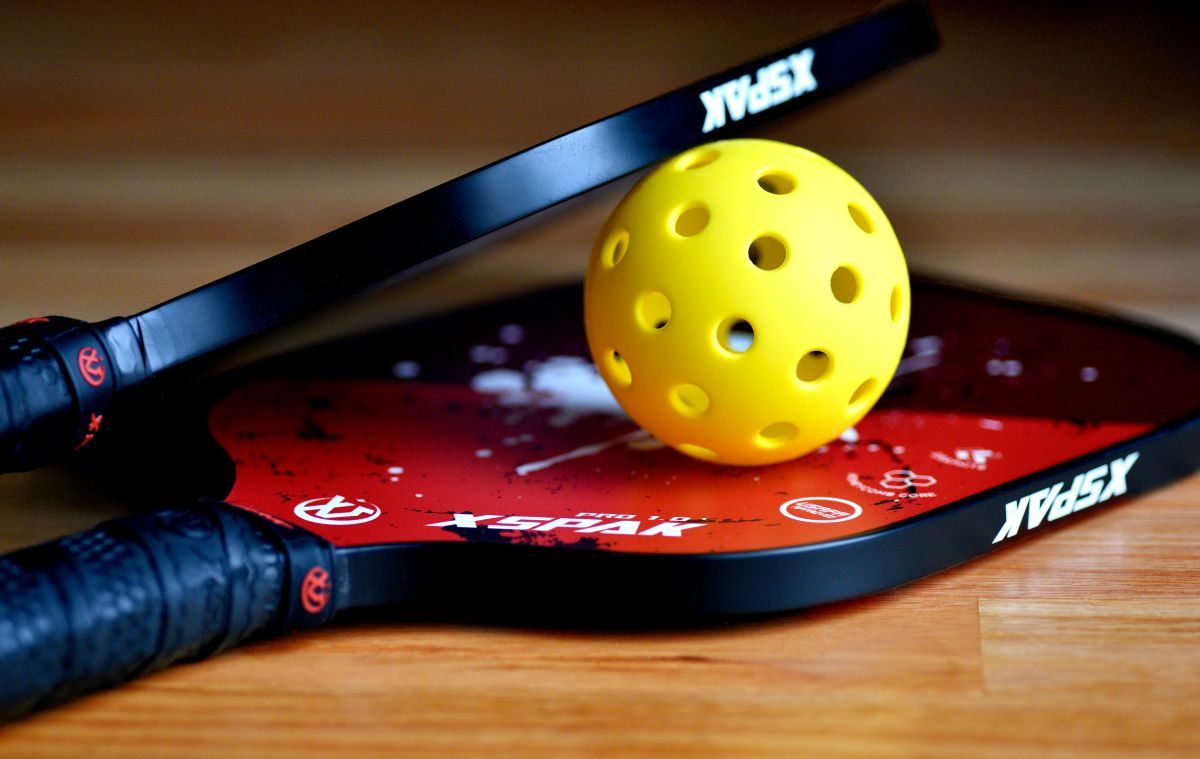
The combined paddle length and width cannot exceed 24 inches, and paddle length cannot exceed 17 inches. Brands can still change weight, thickness, shape, and materials. For players, weight still matters. Too light can twist. Too heavy can stress the arm.
Specs need context. A paddle that feels quick in warmups can feel unstable against pace. A heavier paddle can feel solid for one game and tiring by the fifth.
13. Paddle approval has become crowded
USA Pickleball’s Annual Growth Report says 1,713 paddle and ball submissions were tested in 2024. In 2025, 790 new paddle and ball submissions were approved, including 718 paddles.
That is why buying a paddle feels messy. Approved means legal for sanctioned play. Fit still depends on your swing, strength, and touch.Start with paddle selection before copying whatever the best player at open play brought that day.
14. Indoor and outdoor balls behave differently
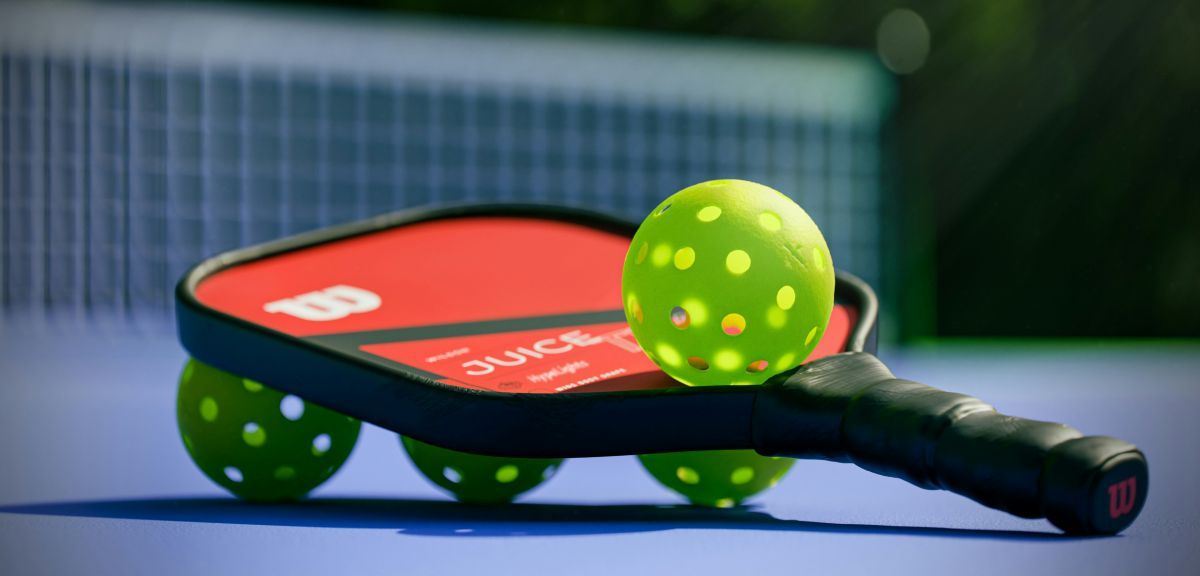
The 2026 rulebook notes that larger holes are customarily used for indoor balls, while smaller holes are customarily used for outdoor balls.
That difference changes timing. Outdoor balls tend to feel harder and move faster in wind. Indoor balls often feel softer. A player can look sharp indoors and then sail shots long outdoors because the ball changed.
15. The net is lower in the middle
The net is 36 inches high at the sidelines and 34 inches at the center.
Those 2 inches are one reason smart players use the middle. The net is lower there, and doubles partners often hesitate over who should take the ball. Beginners chase sharp angles too early. Better players make the middle uncomfortable.
Player culture and participation facts
16. 24.3 million Americans played pickleball in 2025
SFIA participation data says 24.3 million Americans played pickleball in 2025.
That number changes the feel of the sport. Open play is busier. Skill levels vary more. New players show up with expensive paddles and incomplete rule knowledge. Clubs and parks need clearer beginner paths, rated play, and better scheduling. A bigger player base also means beginners need more structure. Skill-matched games matter more when courts are full.
For coaches and club owners, the data has a practical meaning. Growth creates demand for lessons, intro clinics, ladders, socials, and formats that help players find games at the right level.
17. Pickleball grew 171.8% from 2022 to 2025
SFIA reports 171.8% growth from 2022 to 2025, making pickleball the fastest-growing U.S. sport over that period.
That pace creates court pressure. Parks cannot triple capacity overnight. Coaches cannot absorb every new beginner at once. Organized play gets more useful when a sport gets crowded.
The growth also changes what players expect. They want a clear place to learn, a fair way to match by level, and a reliable path from beginner sessions into stronger games. Random open play can handle only so much demand before it turns chaotic.
18. Women make up 43% of U.S. players
SFIA’s 2025 participation page lists pickleball at 57% male and 43% female.
That is a strong share for a competitive racket sport. Doubles play, smaller courts, and the value of control help broaden the player base. Power helps, but it does not settle every rally.
19. The 25-to-34 age group is a major force
The old retiree stereotype is worn out.
SFIA’s 2024 State of Pickleball reporting said the age group with the most participants was 25 to 34, with 2.3 million people. Older players still matter. The newer story is that younger adults now shape court culture, leagues, events, and demand for coaching.
That age mix changes programming. A morning social session and a weeknight ladder can both be pickleball, but they serve different players. Good programming respects that instead of stuffing everyone into one crowded queue.
20. Exercise is a main reason people play
SFIA player motivation data found that nearly 94% of surveyed players value the physical exercise pickleball provides.
That explains why the sport sticks. It gives movement without the punishment of longer-court sports, but it still gives players technical feedback every point. Late split step. Loose return. High dink. The game keeps handing you something specific to fix.
21. Court availability is still a pain point
USA Pickleball’s Annual Growth Report says its court location database reached 18,258 locations and 82,613 known courts in 2025.
That sounds like plenty until you try to play after work. Demand piles into the same windows: mornings, evenings, weekends, and good weather. Finding the right pickleball community guide saves players from guessing where the better games happen.
Court supply is also uneven. Some cities have dedicated facilities, while others rely on shared tennis courts, gym floors, or taped lines. The national court count looks large. Local access is what players actually feel.
For players who want less searching and more playing, Bounce connects coaching, courts, lessons, and organized play in one city-based platform.
Global and pro pickleball facts
22. Asia has become a serious pickleball market
UPA Asia and YouGov research covered 12 Asian territories in 2025 and estimated that 1.9 billion people had heard of pickleball.
The same research estimated 812 million people had played at least once, with 282 million playing at least once a month. Those figures come from survey extrapolation, so they should be treated as market estimates. The direction is still clear: the sport’s growth has moved well beyond the United States.
That matters for equipment brands, coaches, leagues, and media. A sport that spreads across Asia will develop through local cultures instead of copying U.S. park play exactly.
23. Pro pickleball is drawing real crowds
The PPA Tour and MLP 2025 report said the Jenius Bank Pickleball World Championships and MLP Cup drew more than 60,000 total attendance and more than 70 million minutes viewed on Pickleballtv.
Those numbers show a pro product with traction. The pro game also looks different from casual play: cleaner hands, tighter court positioning, and fewer wasted balls from the kitchen.
For newer players, watching pro pickleball helps only when you know what to watch. Ignore the speed first. Watch where players stand, how early they reset their paddle, and how rarely they panic on balls near their feet.
24. Celebrity investors noticed the sport early
Tom Brady and Kim Clijsters headlined one Major League Pickleball ownership group for the 2023 season, according to a Major League Pickleball ownership announcement.
An ESPN report on pickleball investors also said LeBron James joined another ownership group with Maverick Carter, Draymond Green, Kevin Love, and Drew Brees. Famous names alone are weak evidence. Investment still says something useful: serious people saw participation growth, media potential, and local community demand.
25. Injuries are rising as participation grows
Pickleball has injury risk, mostly from falls, slips, and overuse.
Emergency-department injury research found a rapid rise in pickleball-related injuries from 2013 to 2022, with older players disproportionately represented. Another study estimated that national emergency-department injuries rose from 1,313 in 2014 to 24,461 in 2023.
The practical advice is boring because it works: wear court shoes, warm up, avoid backpedaling, and skip slick courts. Wet-court safety matters any time the surface looks questionable.
FAQ
What is the most interesting pickleball fact?
The origin story is the best one. Pickleball began in 1965 as an improvised backyard game and took more than 50 years to become a mass participation sport.
Why is pickleball called pickleball?
The name's origin is debated. The dog story is popular, but the “pickle boat” rowing explanation has stronger support from official history.
How many people play pickleball in the United States?
SFIA says 24.3 million Americans played pickleball in 2025. The same source reports 171.8% growth from 2022 to 2025.
What is the weirdest pickleball rule?
The kitchen rule usually wins. You can stand in the kitchen, but you cannot volley while touching it or while your momentum carries you into it.
Is pickleball easier than tennis?
Pickleball is easier to start because the court is smaller, the serve is controlled, and the paddle face is solid. Mastery still takes real work. Positioning, patience, and shot choice beat hand speed alone.
Is pickleball safe?
Pickleball is accessible, but injuries happen. Falls are a major issue in emergency-department data, especially among older players. Shoes, warmups, strength work, and dry courts matter.
Why is pickleball growing so fast?
It gives players easy entry, real competition, social play, and technical depth. The court is small enough to start quickly, and the game is tactical enough to stay interesting.
Conclusion
The best pickleball facts explain why the sport works.
A backyard game became a serious racket sport because the structure keeps people coming back. The court is small. The serve starts rallies. The kitchen rewards patience. Doubles makes the game social without removing the competitive edge.
That is why the sport keeps pulling in different kinds of players. Beginners get rallies. Former tennis players get tactics. Older players get movement. Competitive players get ratings, leagues, and tournaments. Club owners get demand that shows up on the schedule.
The numbers now match what players feel on court. More players. More courts. More crowded sessions. More demand for coaching and organized play.
For players ready to move past random games, Bounce connects you with coaching, courts, lessons, and organized play in your city.
Facts are useful. Better games are better.