Pickleball has quickly become one of the fastest-growing sports in the world, attracting beginners with its fun, social atmosphere and low barrier to entry.
In the U.S., it has earned the title of the fastest-growing sport for four straight years as of 2025, with participation rising more than 300% in the last three years.
What makes pickleball so appealing is how fast it “clicks.” The court is smaller, the serve is underhand, and rallies are easier to keep going – so even first-time players can jump in confidently and start having fun right away.
In this guide, you’ll learn the basics of pickleball equipment, rules, techniques, and beginner strategies so you can improve quickly and enjoy the game from day one.
What Pickleball Is (and Why Beginners Love It)
Pickleball is a racket sport that combines elements of tennis, badminton, and ping-pong, played on a smaller court with a lightweight plastic ball and simple rules that make it easy to start. Because the court is compact and the serve is underhand, the game feels less intimidating and puts less strain on the body compared to many other racket sports.
One of the biggest reasons beginners love pickleball is how quickly it becomes fun. Even in a first session, new players can often keep rallies going, experience real gameplay, and feel improvement almost immediately – without needing years of technique to enjoy it.
Pickleball also rewards control, patience, and smart placement more than pure strength or speed, which makes it approachable for a wide range of ages and fitness levels. Players can compete, improve, and stay engaged without feeling overwhelmed.
Beyond the game itself, pickleball is known for its welcoming social culture. Open play sessions, recreational leagues, and community courts make it easy to meet others, learn by watching, and find people at the same skill level.
Platforms like Bounce make getting started even easier by helping new players quickly find nearby courts, open play sessions, and beginner-friendly lessons – so you can join the community without needing insider knowledge.
Pickleball Court Layout and Equipment Basics
Before you start playing, it helps to understand the basics of the court and the equipment you’ll be using. Knowing how the court is laid out, what the different lines and zones mean, and how paddles and balls affect gameplay will make everything feel less confusing once you’re actually in a match. A few minutes of preparation can prevent common beginner mistakes and help you feel more confident from your very first rally.
Court Dimensions and Layout
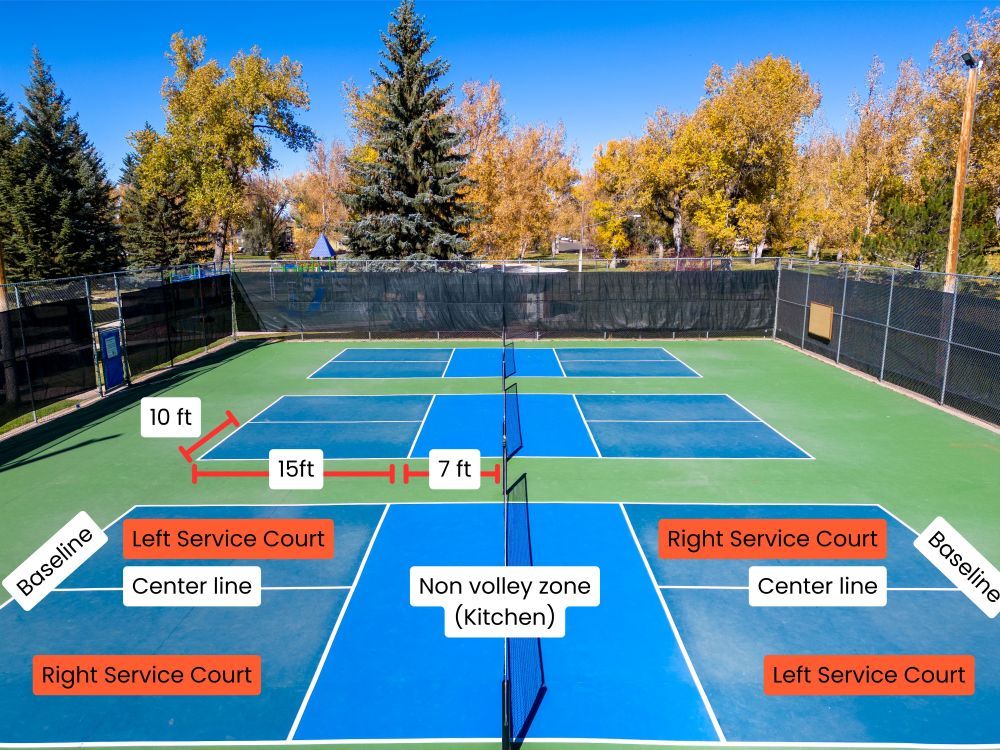
A pickleball court measures 20 feet wide by 44 feet long, and that size stays the same for both singles and doubles.
The net is:
- 36 inches high at the sidelines
- 34 inches high at the center
The smaller court means less running and quicker points, which helps beginners stay engaged and build confidence faster.
Court markings include the baseline, sidelines, centerline, and service boxes. With less space to cover, new players can focus more on positioning, control, and fundamentals rather than endurance.
The Kitchen (Non-Volley Zone) Explained
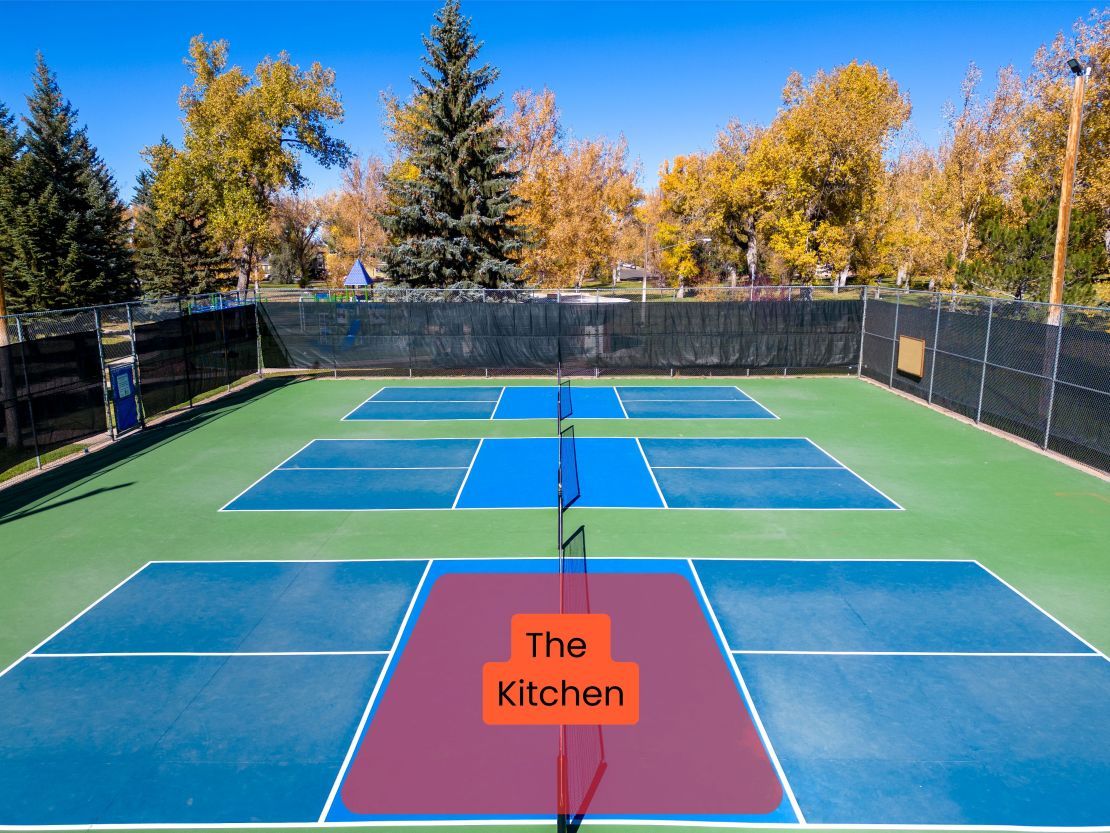
One of the most important areas of the court is the kitchen, also called the non-volley zone (NVZ).
- It extends 7 feet from the net on both sides
- You can stand inside it, but you cannot volley (hit the ball out of the air) while in it
- If the ball bounces inside the kitchen, you can step in and hit it after the bounce
This rule prevents players from smashing every ball at the net and creates longer rallies – which is great for learning.
Pickleball Paddles Explained
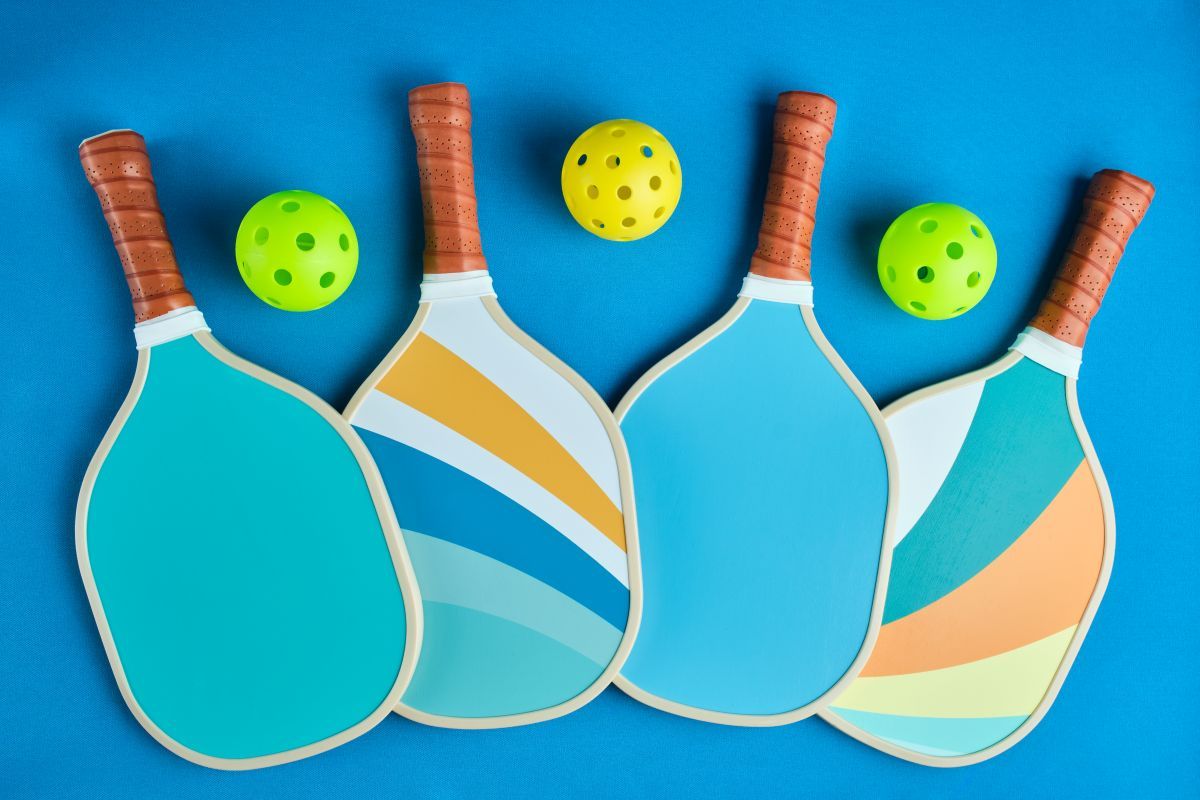
Pickleball paddles are solid and stringless, typically made from wood, composite materials, or graphite.
For most beginners, a mid-weight paddle (typically around 7.3–8.4 ounces) offers the best balance of control and power without putting too much strain on your arm. It’s heavy enough to feel stable on contact, but still light enough to swing comfortably and react quickly at the net.
Grip size matters too. A comfortable grip reduces fatigue, improves control, and helps you stay consistent during longer rallies. Beginners usually improve faster when their equipment supports control and consistency, not maximum power.
Indoor vs Outdoor Pickleball Balls
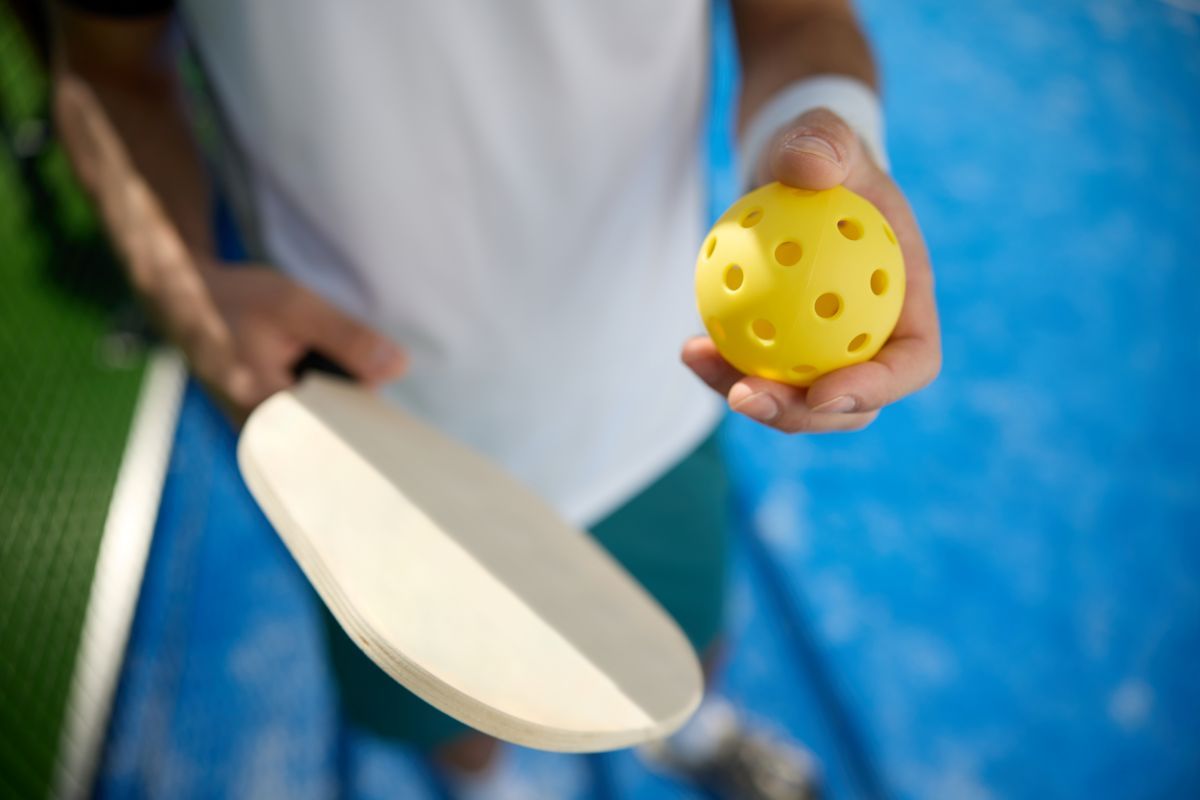
Pickleball balls are built differently for indoor and outdoor play, and those differences affect how fast the ball moves, how it bounces, and how easy it is to control.
Outdoor Pickleball Balls
Pickleball balls are built differently for indoor and outdoor play, and those differences affect how fast the ball moves, how it bounces, and how easy it is to control.
Outdoor Pickleball Balls
- Weight: ~25.5–27g (0.90–0.95 oz)
- Holes: usually 40 holes
- Hole size: smaller holes (tighter pattern)
- Hardness: harder plastic
- Gameplay feel: faster, sharper bounce, more wind-resistant
Indoor Pickleball Balls
- Weight: ~24–26g (0.85–0.92 oz)
- Holes: usually 26 holes
- Hole size: larger holes (more airflow/drag)
- Hardness: slightly softer feel
- Gameplay feel: slower pace, softer bounce, easier control
For new players, matching the ball to the court matters more than most people expect. Using an indoor ball outside can make shots drift and bounce inconsistently, while an outdoor ball indoors can feel fast and “skippy.” The right ball improves timing, consistency, and confidence – so your early progress reflects your skill, not unpredictable bounce.
Pickleball Rules for Beginners
Understanding a few core rules early will make games less confusing and far more enjoyable. The goal isn’t to memorize everything at once – just learn the essentials that shape how points are played.
Serving Rules
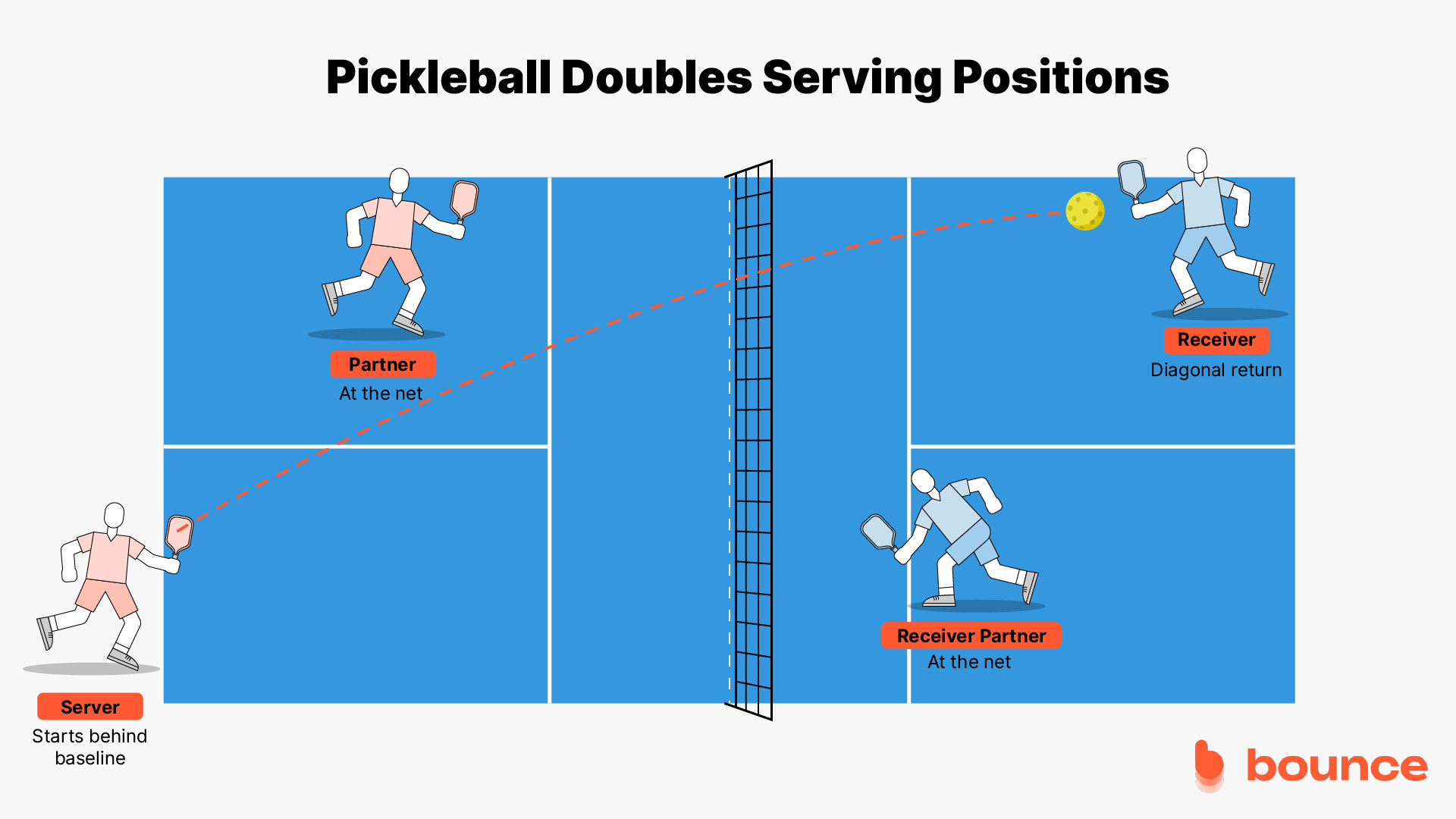
Pickleball serves must be underhand, with contact made below waist level, and the serve must travel diagonally into the opponent’s service box. The serve should clear the net and land inside the correct box without touching the non-volley zone line.
A key beginner-friendly detail: you get one serve attempt (except for a let). That encourages accuracy and consistency over power – exactly what new players should focus on. A reliable serve that lands in is more valuable than a hard serve that misses.
Beginner tip: Aim deep into the service box. Depth limits your opponent’s angles and makes it harder for them to attack early.
The Double-Bounce Rule
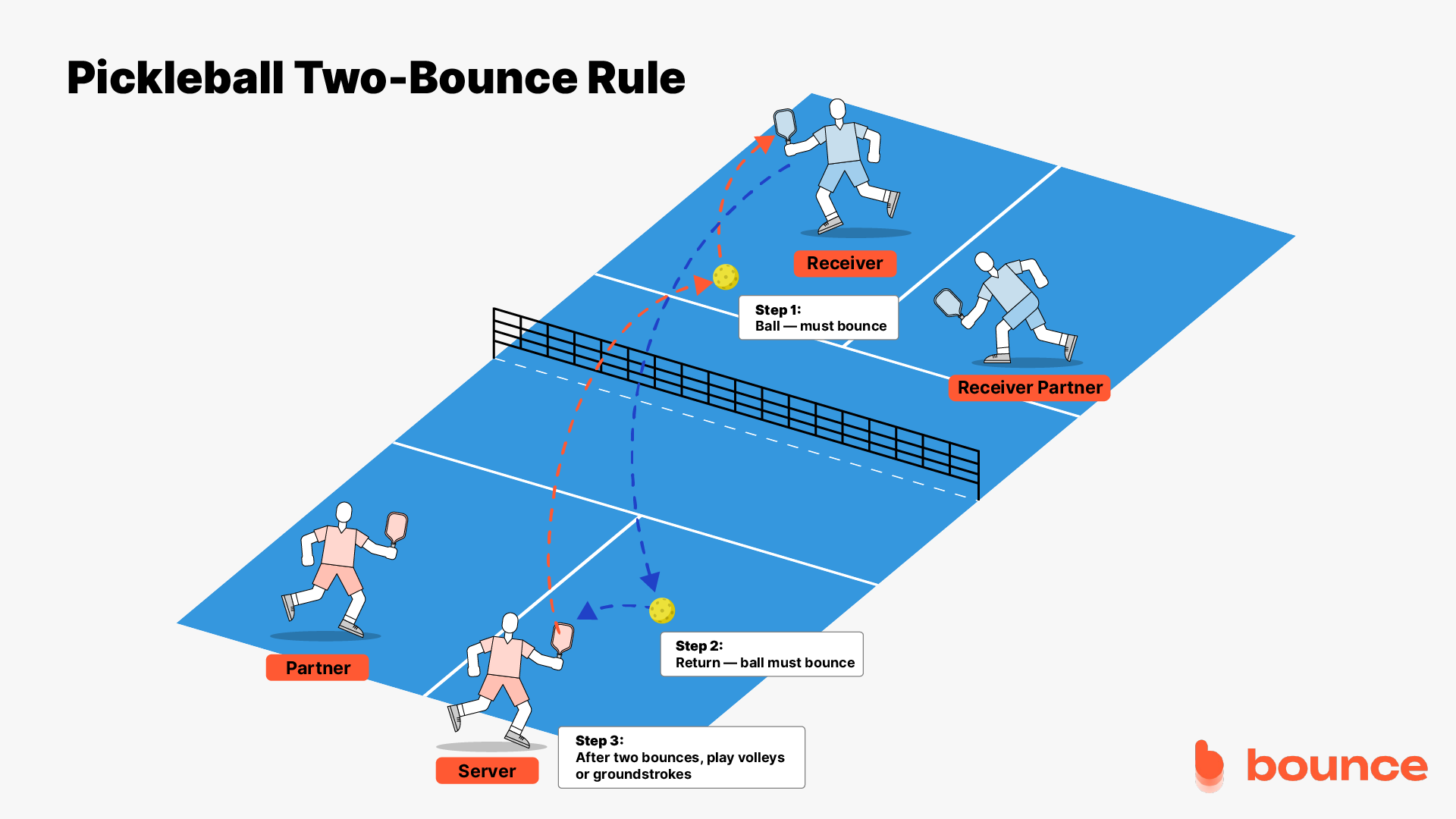
This is one of the most important rules in pickleball – and one of the reasons the game feels accessible for beginners.
After the serve:
- The receiving team must let the serve bounce once before returning it.
- The serving team must let the return bounce once before hitting it.
- After those two bounces, players can volley (hit the ball in the air) or let it bounce.
This rule prevents immediate net rushing and gives rallies time to develop. It also creates a more balanced point structure, allowing newer players to settle into play rather than losing points instantly at the net.
Scoring Basics
Pickleball scoring can vary depending on where you play, but traditional scoring is simple: only the serving team can score points. Most games are played to 11, and you must win by two.
In doubles, scoring can feel confusing at first because both players on a team usually get a chance to serve before the serve switches to the other team. When the serving team loses a rally, they don’t always lose the serve immediately – often it simply passes to their partner. A “side out” happens only after both servers have lost their turn, and then the serve moves to the other team.
To help with positioning, remember this simple rule: when your team’s score is even, you serve from the right side of the court, and when it’s odd, you serve from the left. During play, the score is typically called out as three numbers in doubles: server’s score – receiver’s score – server number (for example, “4–2–1”), which helps everyone track who is serving.
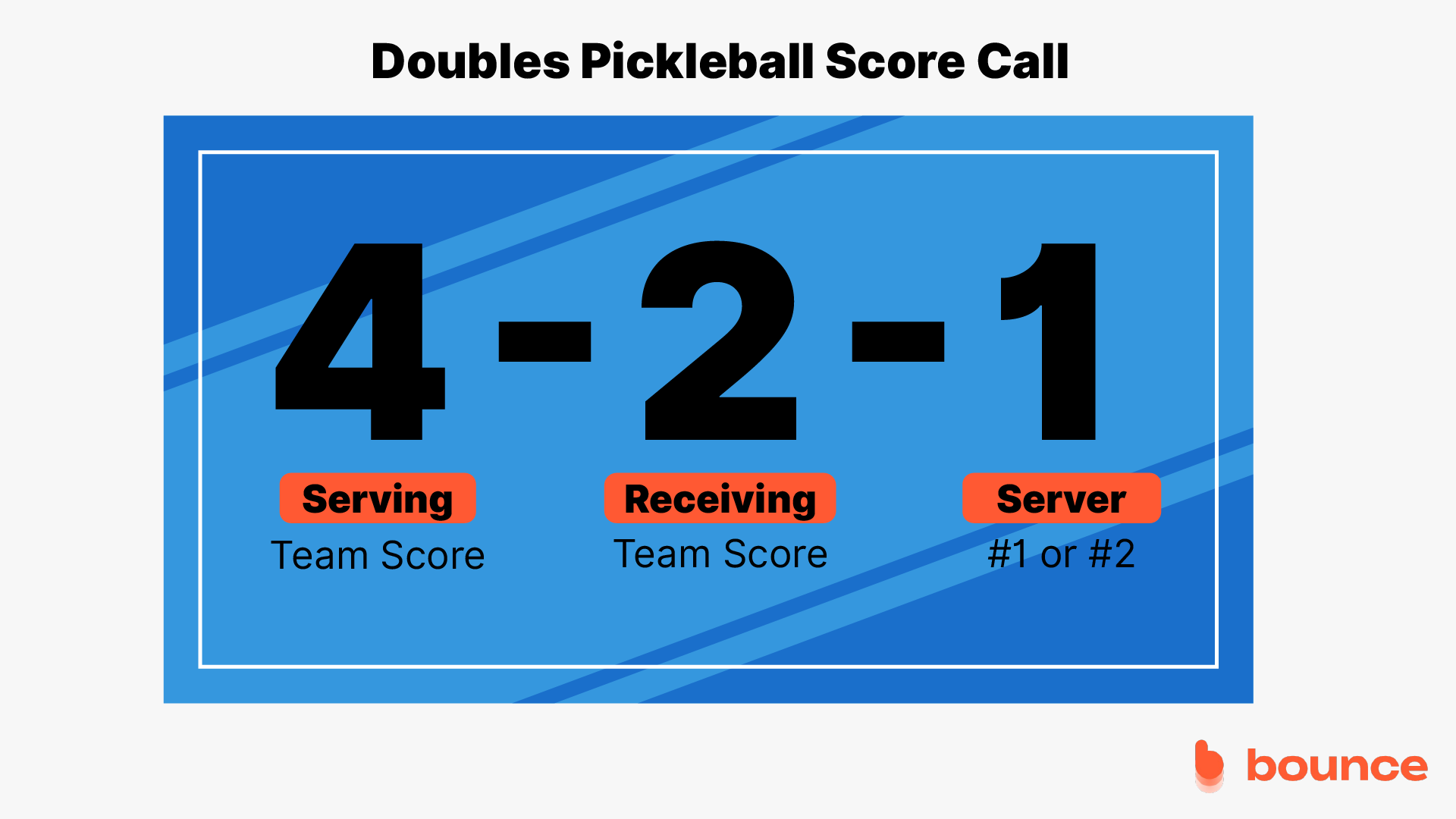
If you’re just starting out, don’t let scoring distract you from what matters most early: clean contact, steady rallying, and solid positioning. Beginners often improve faster in structured sessions where the flow of the game becomes natural through repetition and guided play.
Many players find it helpful to play with structured sessions or guided instruction, which Bounce supports by connecting beginners with verified coaches and organized play environments.
Serving Technique for Beginners
A consistent serve sets the tone for the rally. While it’s tempting to swing hard, beginners improve faster when they focus on placement, depth, and repeatable mechanics.
Start with a relaxed stance and a smooth underhand motion. Keep your swing controlled – think of it as a clean, upward arc rather than a forceful hit. The goal is solid contact and predictable placement.
What to prioritize early:
- Consistency: get the serve in every time
- Depth: aim toward the back half of the service box
- Direction: target the opponent’s weaker side when possible
Serving deep pushes opponents toward the baseline, making it harder for them to attack and easier for you to move forward into a better court position. With regular practice – especially structured repetitions – you’ll quickly develop muscle memory and reduce unforced errors.
Essential Pickleball Shots for Beginners
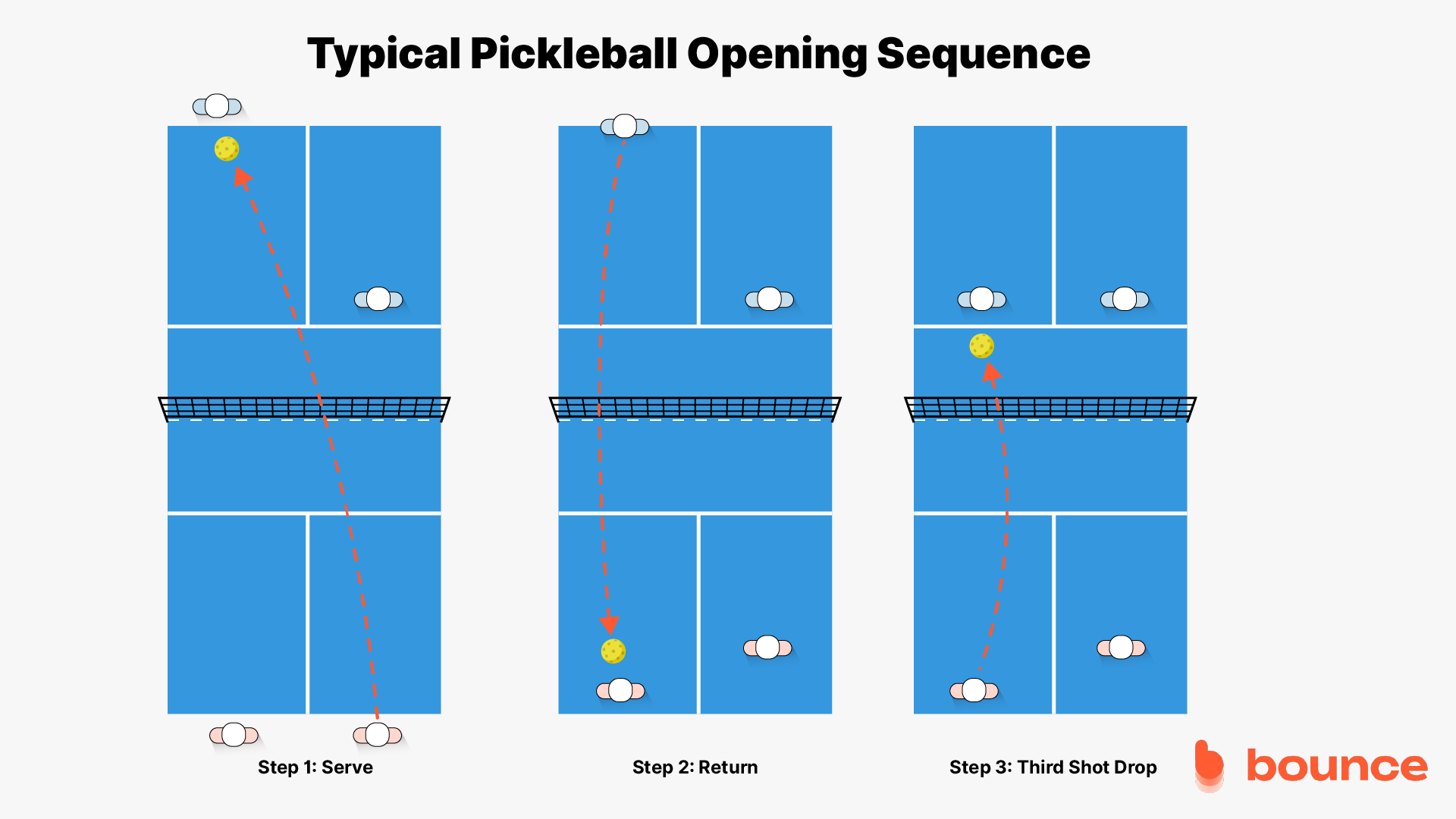
As a beginner, you don’t need every advanced shot. You need a small toolkit you can rely on under pressure. These three areas build the foundation of almost every rally.
Groundstrokes (Forehand + Backhand)
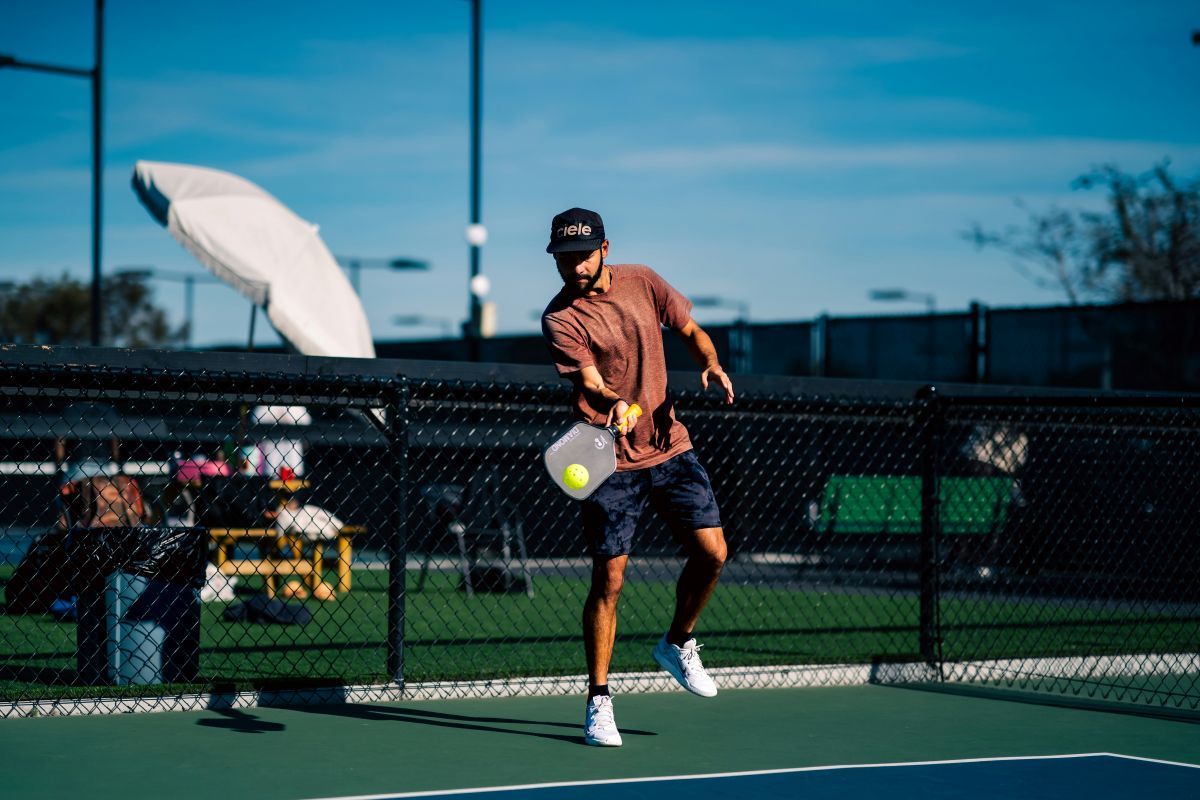
Groundstrokes are your baseline shots and the backbone of early rallies. The most common beginner mistake is swinging too big. Instead, use a compact, controlled swing and focus on clean contact.
Keys for improvement:
- Stay balanced with stable footwork
- Keep your paddle face steady through contact
- Aim with margin (a little higher over the net)
- Focus on keeping the ball in play consistently
Power comes later. Consistency builds confidence – and confidence builds better decision-making.
Dink Shots
A dink is a soft shot intended to land in your opponent’s kitchen area, close to the net. Even though it’s seen as a “higher-level” skill, beginners benefit from learning dinks early because it builds touch and patience.
Dinking teaches you how to:
- control pace
- avoid unnecessary errors
- win points through placement rather than force
If you can learn to keep dinks low and controlled, you’ll feel more comfortable in net exchanges and less reliant on hard shots that often fly long.
Volleys and Net Play
Volleys happen quickly, so the goal is simple: stay ready and keep movements short. Beginners often swing too much at the net – this leads to pop-ups and missed shots.
A better approach:
- Keep the paddle in front of your body
- Use short “punch” motions, not full swings
- Stay low and stable in an athletic stance
- Reset the ball safely if you’re under pressure
Net play becomes much easier once you learn basic positioning and footwork. Playing with others at a similar level also helps, because you get more predictable rallies and more repetitions – both essential for learning.
Beginner Pickleball Strategy
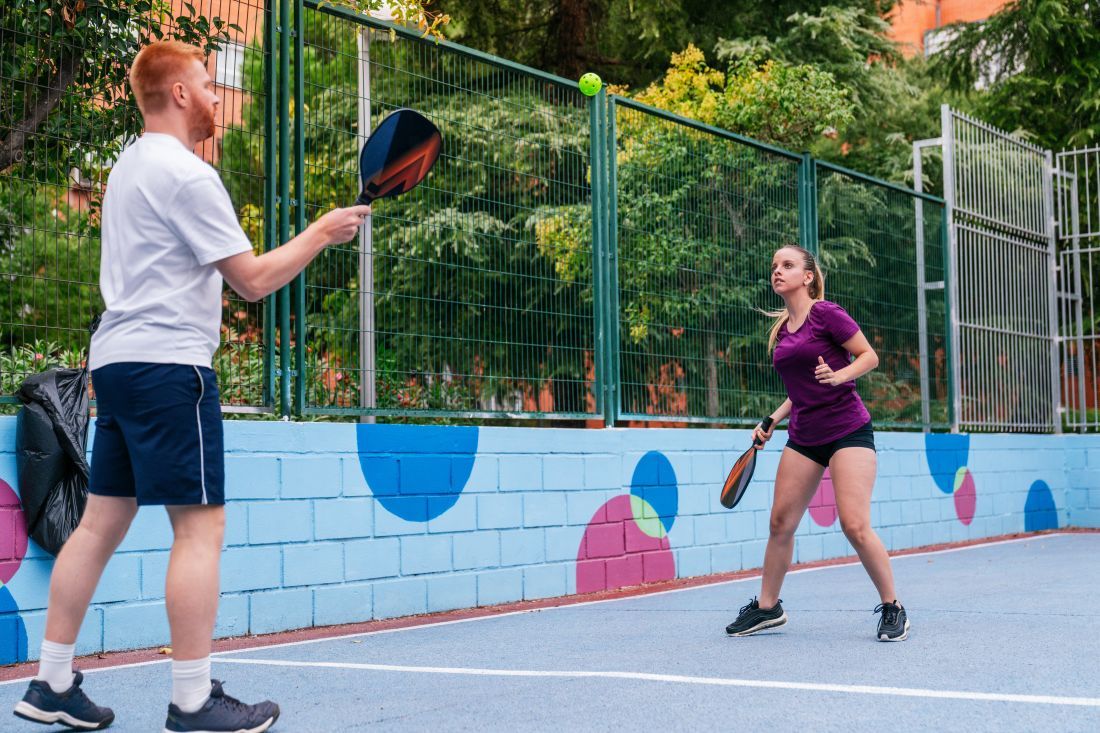
Strategy is where beginners often improve fastest. You don’t need complex tactics – you need simple habits that reduce errors and put you in good positions.
Singles vs Doubles Play
Singles pickleball emphasizes court coverage and endurance, while doubles focuses more on positioning, communication, and shot selection. Most beginners start with doubles, as it reduces court coverage demands and encourages teamwork.
Beginner doubles tip: Avoid chasing the same ball as your partner. Communicate early and stay in your lane to reduce confusion and missed shots.
Shot Selection and Consistency
At the beginner level, the player who makes fewer mistakes usually wins. High-percentage shots – those with safe targets and controlled pace – keep you in points and force opponents to take risks.
Instead of trying to attack everything:
- play safe to the middle or deep zones
- keep the ball low when possible
- slow down when you feel rushed
Players who stay patient build confidence faster and win more points over time.
Winning Points Through Fundamentals
Most beginner points end due to errors: balls hit into the net, pushed long, or rushed shots under pressure. That’s why fundamentals matter so much.
If you focus on:
- depth
- consistency
- controlled pace
- smart positioning
…your match results will improve naturally without you needing highlight-reel shots.
Structured coaching helps reinforce these habits faster, which is why many beginners use Bounce to find lessons that prioritize decision-making, positioning, and repeatable technique.
Pickleball Drills to Accelerate Improvement
Games are fun, but drills speed up improvement because they give you repeated reps of the same skill. The best approach is to mix solo drills (for technique) with partner drills (for timing) and group drills (for real-game pressure).
Here’s a cleaner, more usable drill table:
| Drill Type | Drill Focus | How It Works | Beginner Benefit |
| Solo – Wall Drills | Forehands, backhands, volleys | Hitting against a wall to practice controlled strokes and quick reactions without needing a partner | Builds consistency, improves hand-eye coordination, and reinforces proper paddle mechanics |
| Solo – Serve Accuracy Drills | Serving placement | Repeatedly serving to specific target areas within the service box | Develops muscle memory, improves consistency, and reduces serving errors |
| Partner – Controlled Rallies | Timing and shot selection | Cooperative rallies focused on keeping the ball in play rather than winning points | Improves rhythm, control, and decision-making under low pressure |
| Partner – Dinking Drills | Soft touch and control | Practicing short, controlled shots near the net with a partner | Enhances touch, patience, and consistency in non-attacking situations |
| Group – Volley Exchanges | Reaction speed and positioning | Rapid volley drills involving multiple players rotating through positions | Improves reflexes, paddle readiness, and net confidence |
| Group – Structured Practice Sessions | Overall skill development | Organized drills led by a coach or group facilitator | Creates accountability, reinforces fundamentals, and accelerates improvement |
Quick routine idea (30 minutes):
- 10 min: serve targets
- 10 min: dinks
- 10 min: controlled rallies or volleys
How Beginners Improve Faster Over Time
The fastest improvement comes from a simple formula: consistent play + targeted practice + feedback. Playing casually is helpful, but adding a small amount of structured learning accelerates progress dramatically.
A strong beginner schedule is 2–3 sessions per week, mixing:
- one practice-focused session (serves, dinks, controlled rallies)
- one open play session (real-game decision-making)
- optional lesson or clinic (feedback + corrections)
Lessons are especially valuable early, because they prevent you from building habits that are hard to fix later. Finding the right courts, partners, and coaching also removes friction – making it easier to stay consistent.
Final Thoughts
Pickleball rewards patience, consistency, and smart choices more than raw power. Beginners who commit to fundamentals, practice regularly, and play in supportive environments tend to improve quickly – and enjoy the game much more along the way.
With simple rules, manageable physical demands, and a strong social element, pickleball offers a long-term path for recreational players and competitive athletes alike.
Tools like Bounce make the learning process smoother by connecting beginners to lessons, courts, and players that match their goals and skill level. Start with the basics, stay consistent, and give yourself time – your progress will come faster than you think.