Pickleball serving rules define what makes a serve legal: underhand motion, contact below the navel, diagonal placement in the opponent's service court, and at least one foot behind the baseline.
USA Pickleball enforces these standards across all sanctioned play, including competitive leagues and open play sessions. The 2026 rulebook clarified serving rules by explicitly allowing servers to release the ball with either one hand or the paddle, including letting the ball roll off the paddle face by gravity, while prohibiting intentional spin during the release.
Players who understand correct serving mechanics avoid developing illegal habits that limit their progress. Getting this right early matters, because the habits you build in casual play follow you into organized competition.
Official Pickleball Serving Rules: Quick Overview
The five core pickleball serving rules apply in every format: the serve must be underhand, contact must be below the navel, the paddle head must stay below the wrist, at least one foot must be behind the baseline, and the ball must land in the diagonally opposite service court.
Pickleball serving rules are standardized across most recreational and competitive play in North America and internationally.
While casual games may allow flexibility, official rules govern organized leagues, tournaments, and sanctioned events.
Key principles define every legal serve:
- The serve must be underhand.
- Contact with the ball must occur below the server’s navel.
- The paddle head must be below the wrist at contact.
- The serve must be made with a single, continuous forward motion.
- The ball must land diagonally in the opponent’s service court, clearing the non-volley zone.
A USA Pickleball 2026 update to Rule 4.A.5 clarified that during a volley serve, the server may release the ball from one hand or from the paddle face. Natural rolling off the paddle by gravity is permitted. Deliberately imparting spin on the ball during any release remains a fault.
These rules apply consistently in singles and doubles play, with differences only in service order and scoring procedures.
Legal Pickleball Serve Requirements
Serve Motion Rules
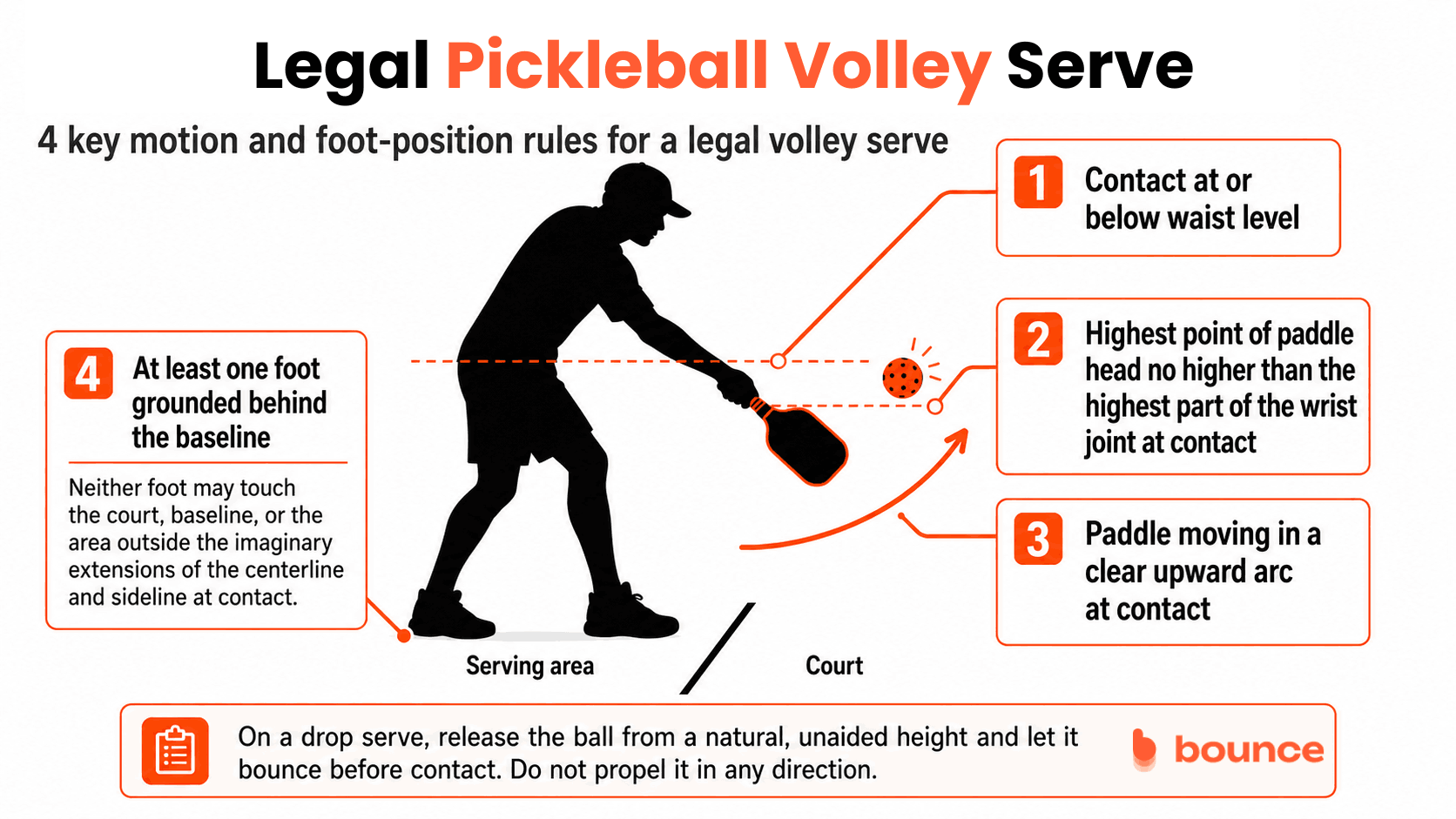
A legal serve requires an underhand swing with the arm moving upward, contact below the navel, and the paddle head below the wrist. Both forehand and backhand motions are permitted on the volley serve and the drop serve.
Sidearm or overhand motions are not permitted. Even subtle wrist snaps that elevate the paddle above the wrist can result in a fault. The intent of this rule is to limit excessive power and preserve the game's emphasis on placement, control, and rally construction.
Foot Placement and Positioning
At the moment of contact, at least one foot must be on the playing surface behind the baseline. Neither foot may touch the baseline, the court inside it, or the ground outside the imaginary extensions of the sideline and centerline.
Foot placement is strictly regulated during the serve. At the moment the ball is struck:
- Both feet must be behind the baseline.
- Neither foot may touch the baseline or the court surface inside the baseline.
- One or both feet may be airborne.
- Neither foot may touch the playing surface outside the imaginary extensions of the sideline or centerline.
The server must remain behind the baseline until contact is made. Stepping on or over the baseline before striking the ball results in a foot fault.
Where the Serve Must Land
The serve must cross the net diagonally and land in the opponent's service court. It must clear the entire non-volley zone. Any serve touching the kitchen line is a fault ,even though that same line counts as in during regular rallies.
The serve must travel diagonally across the court and land in the opponent’s service box. The ball must:
- Clear the non-volley zone entirely.
- Land within the boundaries of the correct service court.
- Avoid touching the non-volley zone line, which counts as a fault on the serve.
- The serve may land on the sideline, centerline, or baseline. All three lines count as in.
If the serve lands out of bounds, in the kitchen, or in the wrong service box, the serving team commits a fault.
Pickleball Serving Rules for Doubles
In doubles, each team gets two servers per side-out. The first server starts on the right and continues until a fault. The second server then takes over from the correct side. When both servers fault, the serve transfers to the other team.
The serving order proceeds as follows:
- The first server begins from the right service court.
- After scoring a point, the serving team switches sides.
- The same server continues serving until a fault occurs.
- The second server then serves from the appropriate side.
- When both servers commit faults, a side-out occurs.
This system ensures balanced opportunities for both teams and maintains consistent rotation.
Score Calling Rules
In doubles, the server must call three numbers before every serve: the serving team's score, the receiving team's score, and the server number (1 or 2). Serving without calling the score, or calling it incorrectly, can result in a fault or a replay.
Before every serve, the server must call the score clearly. In doubles, the score consists of three numbers:
- Serving team’s score
- Receiving team’s score
- Server number (1 or 2)
Calling the score correctly is mandatory in organized play. Serving without announcing the score or calling it incorrectly can result in confusion and disputes.
Consistent score calling improves pace of play and reinforces rule awareness for all players.
Pickleball Serving Rules for Singles
In singles, the server’s position depends on their score. Serve from the right when your score is even and from the left when it’s odd. Each side has one server, so a fault immediately gives the serve to the opponent.
Positioning depends on the server’s score:
- When the server’s score is even, they serve from the right service court.
- When the server’s score is odd, they serve from the left service court.
This system eliminates server numbers and emphasizes individual accuracy, movement, and endurance.
Singles players benefit significantly from mastering legal serve mechanics, as there is no partner to compensate for service errors.
Common Pickleball Serving Faults
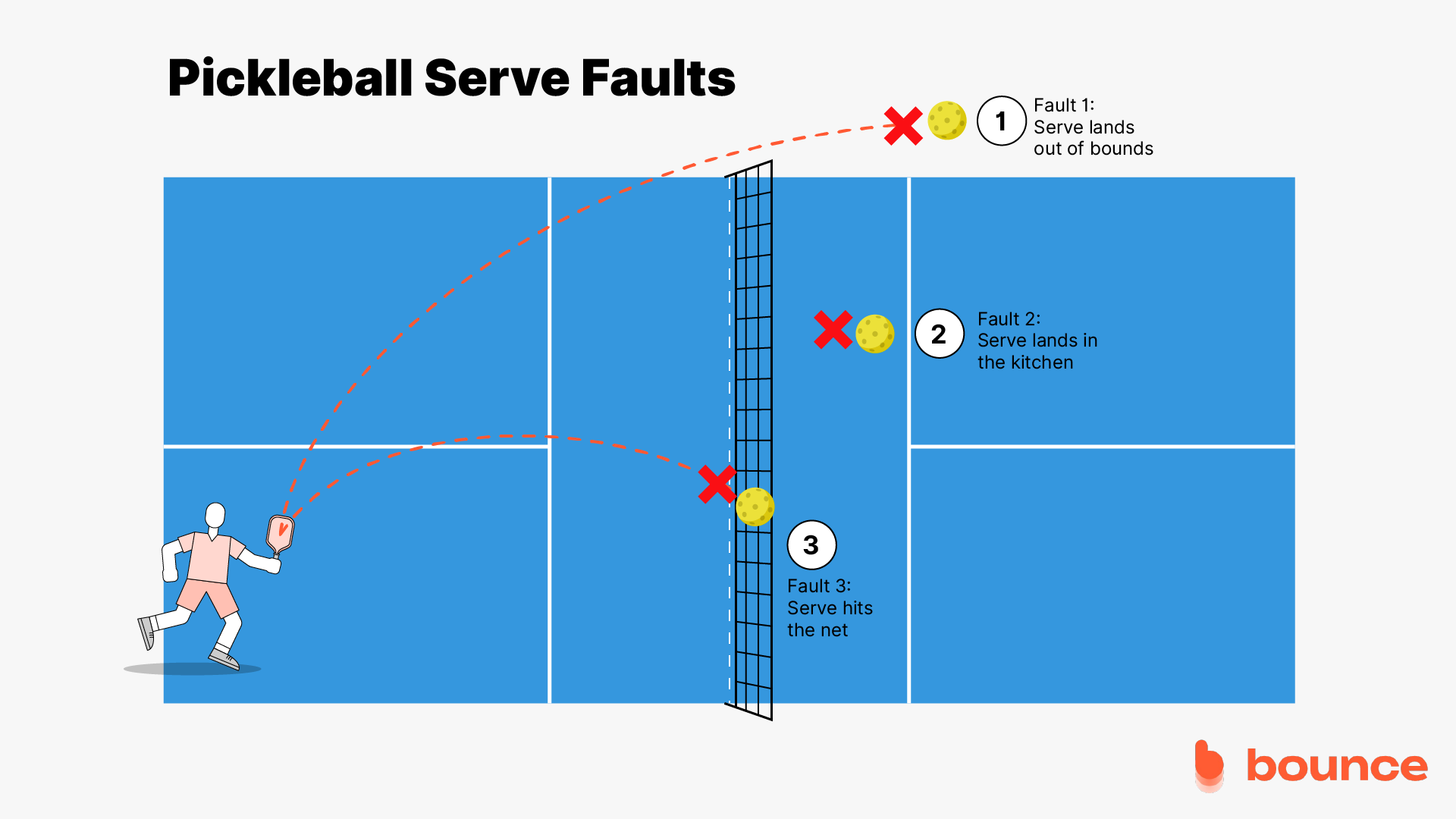
Most serve violations come down to how you move and stand, or where the ball lands. The illegal pickleball serves called most often are kitchen errors and foot faults. Both easy to develop as habits and hard to break later.
Foot Faults
Foot faults are among the most common serving violations. These include:
- Stepping on the baseline during contact
- Stepping inside the court before striking the ball
- Dragging a foot across the baseline
- Allowing a foot to touch the playing surface outside the imaginary extensions of the sideline or centerline.
Foot placement errors often occur under pressure or fatigue, making consistent awareness essential.
Motion and Contact Faults
Illegal motion faults include:
- Overhand or sidearm swings
- Paddle head above the wrist at contact
- Contact above the navel
- Double hits or carried serves
These faults are more likely when players attempt to generate excessive power rather than focusing on controlled placement.
Target and Placement Faults
Placement-related faults occur when the serve:
- Lands in the non-volley zone
- Touches the kitchen line
- Lands in the wrong service court
- Travels out of bounds
Improving serve accuracy significantly reduces these errors and increases point consistency.
Drop Serve Rules
The drop serve is a legal alternative that lets you bounce the ball before hitting it. It bypasses the underhand-motion, navel-height, and paddle-below-wrist requirements of the volley serve, making it the more forgiving option for beginners or players returning from injury.
Key drop serve rules include:
- The ball must be dropped naturally, without being thrown or propelled.
- The bounce must occur within the serving area.
- The server may strike the ball with any underhand motion after the bounce.
The drop serve became a permanent rule in 2022. It was originally introduced to accommodate players with disabilities who found the volley serve technically difficult.
In 2022, USA Pickleball banned the “chainsaw serve,” a technique that used the paddle edge or a player’s hand to add heavy spin to the ball before it was struck.
Unlike the volley serve, drop serves are not subject to the paddle-below-wrist or navel-height requirements.
This makes the drop serve particularly useful for beginners, players returning from injury, or those refining consistency.
Serving Rules for Tournament vs Recreational Play
The rules are the same in both formats. Enforcement changes. Recreational players usually handle violations informally, while sanctioned tournaments and leagues call faults strictly, treat line decisions as final, follow formal dispute procedures, and expect players to know the rulebook.
However, tournament and league play enforce rules strictly. In competitive environments:
- Line calls must be made immediately.
- Faults are final and cannot be replayed.
- Players are responsible for knowing and applying all serving rules.
- The 10-second serve clock starts the moment the score is called.Exceeding it results in a fault.
As players transition from casual games to organized competition, familiarity with strict enforcement becomes essential.
Structured lessons and match play help bridge this gap, reducing errors under pressure.
The table below outlines how pickleball serving rules are applied differently in recreational settings versus tournament and league play, highlighting variations in enforcement, accountability, and match impact.
| Aspect | Recreational Play | Tournament / League Play |
| Rule Enforcement | Flexible and often informal | Strict and fully enforced |
| Serve Motion Violations | Frequently corrected verbally or replayed | Immediate fault, no replay |
| Foot Faults | Often overlooked or warned | Always called as faults |
| Kitchen Line on Serve | May be replayed by agreement | Automatic fault |
| Score Calling Accuracy | Casual enforcement | Mandatory and precise |
| Line Calls | Players may discuss or replay | Calls are final and binding |
| Referees | Rarely present | Common in sanctioned events |
| Rule Knowledge Expectation | Basic understanding acceptable | Full rule knowledge required |
| Dispute Resolution | Consensus-based | Official ruling or rulebook |
| Impact of Serving Errors | Minimal consequence | Direct effect on match outcome |
Why Serving Rules Exist
Pickleball’s serving rules limit how much advantage the server can create. Restrictions on motion and contact height keep rallies central to how points are won.
These rules:
- Encourage longer rallies
- Balance competition across skill levels
- Reduce injury risk
- Preserve the sport’s social and inclusive nature
As pickleball continues to grow globally, consistent serving rules allow players from different regions and backgrounds to compete seamlessly.
How to Improve Your Serve While Staying Legal
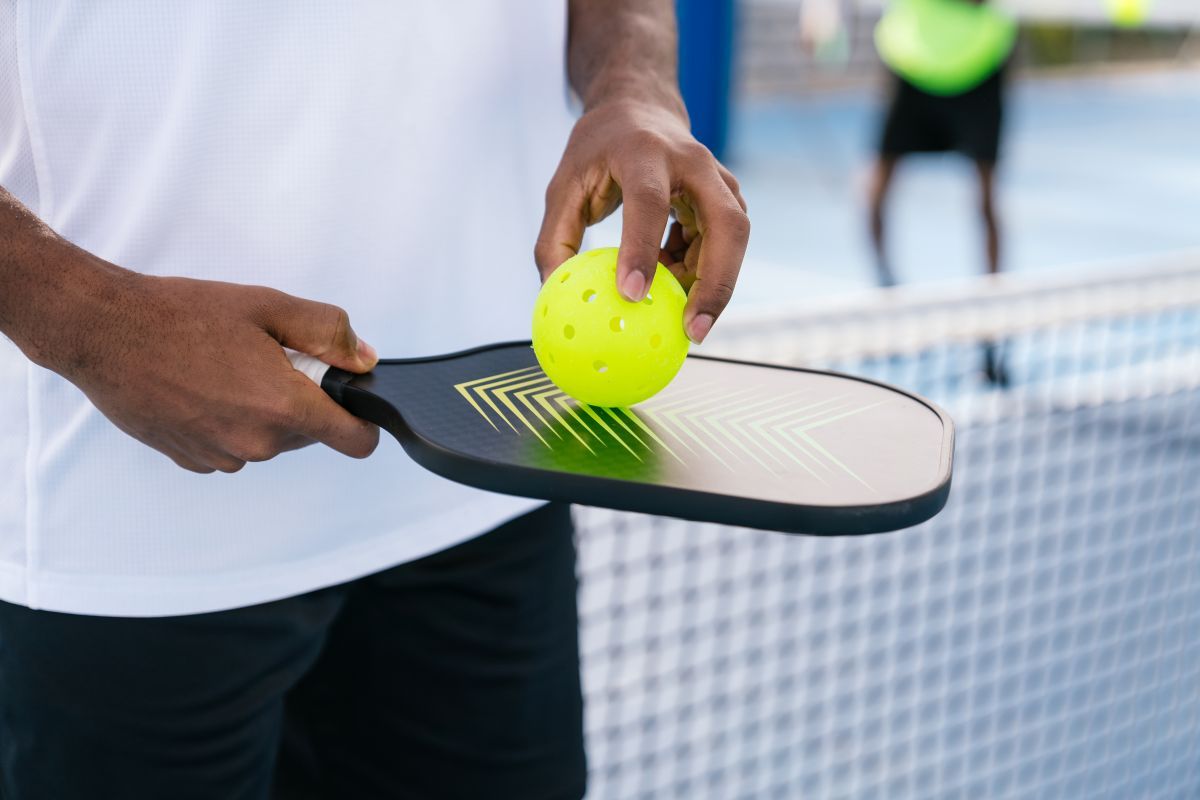
The most effective legal serve improvements focus on placement and depth, not power. A deep serve to the opponent's backhand corner is more disruptive than a fast one that lands short.
Technique Adjustments Within the Rules
Legal improvement focuses on placement, depth, and variation rather than raw power. Servers can:
- Aim deep to push opponents back
- Vary angles to disrupt positioning
- Add controlled spin within legal motion limits
- Mix volley and drop serves to keep opponents off-balance.
Consistency and accuracy create more scoring opportunities than speed alone.
Practice Strategies
Effective serve practice includes:
- Repetitive serving to specific targets
- Alternating service boxes to simulate game conditions
- Tracking faults to identify patterns
- Recording your serve to review for illegal motion habits before they become ingrained.
Short, focused practice sessions reinforce muscle memory and rule compliance.
Learning With Certified Coaches
Instruction from certified professionals accelerates improvement. Coaches identify subtle mechanical errors that lead to faults and provide structured feedback.
Through Bounce, players can access verified pickleball coaches, book lessons, and practice serving techniques in environments aligned with official rules. This structured approach shortens the learning curve and builds confidence faster than trial-and-error play.
Beginner Mistakes With Pickleball Serving Rules
The most common beginner errors are overhand habits carried over from tennis or volleyball, stepping on the baseline, and serving into the kitchen. Score-calling confusion is a close second, especially in doubles where forgetting the server number is a frequent fault.
New players commonly struggle with:
- Overhand serving habits from other sports
- Incorrect foot placement
- Kitchen-related placement errors
- Score calling confusion
Addressing these issues early prevents long-term limitations. Organized clinics, coached sessions, and structured play environments help beginners internalize correct serving mechanics more effectively than unstructured games alone.
Conclusion
Pickleball serving rules form the foundation of fair and competitive play. Players who understand what is legal, recognize common faults, and practice within the rules develop stronger, more reliable games.
Serving consistency improves confidence and reduces faults. It also sets up the court position you need for a favorable third shot.
Bounce supports this progression by connecting players with lessons, certified coaches, and organized play opportunities that emphasize proper serving fundamentals and long-term development.
Mastering the serve is not about power. It is about precision, consistency, and respect for the rules that define pickleball’s unique character.
Frequently asked questions
What are the 5 rules of serving in pickleball?
The five core requirements for a legal volley serve are: (1) an underhand motion with the arm moving upward, (2) contact below the navel, (3) paddle head below the wrist at contact, (4) at least one foot behind the baseline, and (5) the ball landing in the diagonally opposite service court, clearing the non-volley zone. The drop serve waives requirements one through three but still requires correct foot position and diagonal court placement.
Can I bounce the ball before I serve in pickleball?
Yes. The drop serve became a permanent USA Pickleball rule in 2022. You may drop the ball and strike it after the bounce, even if it bounces more than once or lands anywhere on the playing surface. Release the ball naturally without throwing, tossing, or propelling it.
Are you allowed two serves in pickleball?
No. Each server gets one attempt. If the serve is a fault, the server loses the serve immediately. In doubles, the second player on the same team then serves. The exception is the very first service sequence of a game, where the starting team gets only one server before the serve transfers to the other team.
Can I serve with backhand in pickleball?
Yes. Both volley serves and drop serves may use a forehand or backhand motion. For a volley serve, your arm must move upward at contact. Strike the ball below your navel and keep the paddle head below your wrist. Backhand serves are legal at every level.
What are the new pickleball serve rules for 2026?
The 2026 USA Pickleball rulebook updated Rule 4.A.5 to clarify that during a volley serve, the server may release the ball from one hand or from the paddle face. Natural rolling off the paddle face by gravity is permitted. Deliberately imparting spin on the ball during the release remains a fault.