Pickleball ratings aren’t just numbers – they’re what keep the sport fair, competitive, and fun as more players join organized open play, leagues, clinics, and tournaments.
A rating gives a clear snapshot of your skill level, helping you find balanced matchups, enter the right divisions, and avoid games that feel one-sided or frustrating.
In this guide, we’ll break down what pickleball ratings mean, how they’re calculated, and what to focus on if you want to improve yours over time.
What Is a Pickleball Rating?
A pickleball rating is a numerical score that represents a player’s overall skill level based on how consistently they perform core skills in real game conditions. It reflects more than athleticism or occasional highlight shots – it measures how reliably a player can execute fundamentals under pressure.
Pickleball ratings typically evaluate areas like:
- serving and returning consistency
- dinking and control at the kitchen line
- volley technique and net positioning
- shot selection and decision-making
- court awareness and movement
- ability to sustain rallies with low error rates
Ratings aren’t designed to measure one good day or one bad match. Instead, they capture patterns over time. Higher-rated players tend to make fewer unforced errors, manage pace more effectively, and choose higher-percentage shots – especially during longer rallies.
While ratings can apply to singles and doubles, most systems are shaped heavily by doubles results since doubles is the most common format in organized pickleball.
Unlike casual labels like “beginner” or “advanced,” ratings provide measurable benchmarks. They help players track improvement objectively and give organizers a dependable way to structure fair competition.
Why Pickleball Ratings Matter

Pickleball ratings matter because they improve the quality of play for everyone – from casual recreational groups to serious tournament competitors.
For Recreational Players
At the recreational level, ratings help create better games. When players are evenly matched, rallies tend to last longer, games stay competitive, and everyone gets more meaningful reps. That leads to faster improvement and a better overall experience.
When skill levels are mismatched, the opposite happens:
- rallies end quickly
- one team dominates
- players get fewer touches
- frustration increases
- learning slows down
Ratings also give players direction. Knowing your current level makes it easier to focus on what skills you actually need to progress, rather than practicing randomly and hoping results improve.
Many open play communities, ladders, and round robins now use ratings to keep sessions balanced. Bounce supports this structure by helping players find organized play and lessons that match their skill level, reducing uncertainty when joining new courts or new groups.
For Competitive Players
For tournament players, ratings are essential. Most tournaments use rating-based divisions to protect competitive integrity and ensure fair matchups. Playing in the right division helps maintain a legitimate level of competition – and creates a better experience for everyone involved.
Ratings can also affect:
- eligibility for certain events
- division placement and seeding
- long-term performance tracking
- progression into higher-level competition
As pickleball becomes more professional and competitive, accurate ratings are increasingly viewed as a requirement – not an optional detail.
For Coaches, Clubs, and Communities
Ratings help coaches and facilities group players more effectively. Clinics and leagues work best when skill levels are relatively even, because instruction becomes more efficient and games become more productive.
For clubs, ratings also support operations and retention. When players have:
- appropriate competition
- clear progression pathways
- structured skill development
…they stay engaged longer and remain more likely to commit to memberships, lessons, and recurring programming.
By integrating lessons, organized play, and local community discovery, Bounce helps bridge the gap between rating level and real-world improvement opportunities.
The Main Pickleball Rating Systems Explained
There isn’t one universal rating system used everywhere. Today, organized pickleball communities often reference a combination of self-ratings, third-party systems such as DUPR and VAIR (VAIRified), and local club evaluations to group players effectively.
Self-Rating (Recreational and Club Play)
Self-rating is the most common starting point. Players use published skill descriptions and assign themselves a rating – usually in 0.5 increments (for example: 2.5, 3.0, or 3.5).
Self-rating is widely used for:
- open play groups
- beginner leagues
- casual ladders
- non-sanctioned local events
The advantage is accessibility. The downside is inconsistency. Many players unintentionally overrate (or underrate) themselves due to limited comparison with stronger competition or unclear definitions of what each rating level actually means.
Even with those limitations, self-ratings still provide a helpful entry framework – especially for new players.
DUPR (Dynamic Universal Pickleball Rating)
DUPR is one of the most widely used modern rating systems. It calculates ratings dynamically using match results and updates as new matches are recorded.
DUPR commonly accounts for:
- win/loss outcomes
- opponent strength
- score margins
- match frequency and rating stability over time
A key strength of DUPR is inclusivity. Recreational matches, league play, and competitive match results can contribute to your rating – making it useful even for players who don’t compete in tournaments frequently.
VAIR (VAIRified Rating System)
VAIR (VAIRified – vairified.com) is an independent pickleball rating system built around performance-based evaluation rather than simple win–loss outcomes. VAIR uses advanced mathematical modeling and AI-assisted analysis to assess how players perform relative to expectations in real match conditions.
Unlike traditional systems that primarily reward match results, VAIR places emphasis on how well a player performs, even in losses. Close games against stronger opponents, strong point margins, and consistent execution can positively influence a player’s rating, while underperformance against weaker competition may result in rating adjustments.
VAIR is designed to account for a broader range of competitive variables, including:
- age and gender dynamics
- mixed doubles play
- adaptive and wheelchair divisions
- score margins and predicted outcomes
- consistency across multiple matches
The VAIR rating scale ranges from 2.0 to 8.0, allowing for more granular separation across skill levels. Players can begin with a free recreational rating and, if desired, pursue a VAIRified rating through verified match data or certified rater assessments.
VAIR is commonly used by clubs, leagues, and organizations that prioritize validated performance data, tier-based competition, and reduced rating manipulation. Its focus on performance relative to expectations makes it particularly appealing in environments where accurate skill differentiation and competitive balance are critical.
Local and Club-Based Rating Systems
Some clubs use internal rating systems based on:
- coach evaluations
- local ladders
- challenge matches
- structured assessments
These can be highly effective within a facility, but they aren’t standardized and often don’t transfer well across locations.
The Standard Pickleball Level Scale
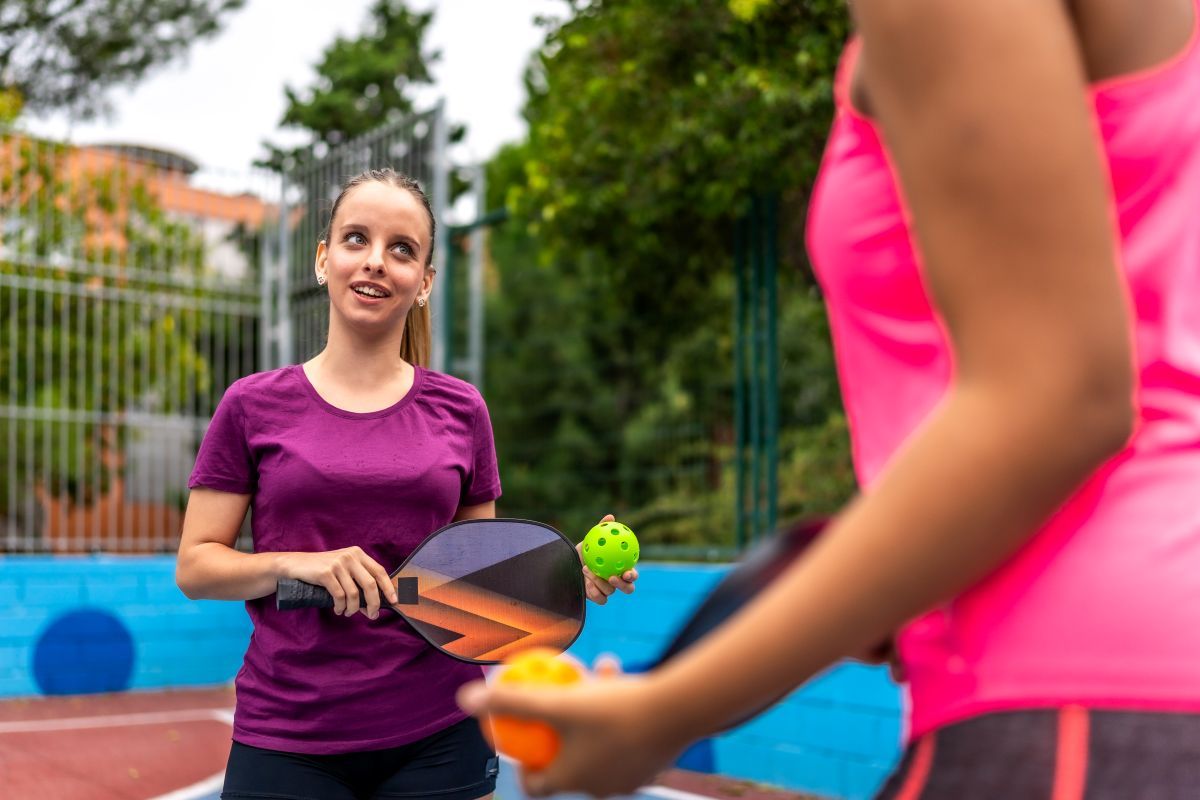
Most pickleball organizations, clubs, and recreational facilities use a 1.0–5.0+ scale to describe player ability. Each level represents a measurable increase in consistency, technique, and tactical execution.
The scale progresses as follows:
- 1.0–2.5: Beginner
- 3.0–3.5: Intermediate
- 4.0–4.5: Advanced
- 5.0+: Professional/Elite
Players do not advance simply by playing longer. Advancement depends on reducing unforced errors, improving control, and demonstrating repeatable success in real match situations.
Beginner Pickleball Levels (1.0–2.5)

Beginner levels focus on learning the fundamentals of pickleball and developing basic consistency.
Level 1.0 – New Player
Players at the 1.0 level are new to pickleball and are learning foundational concepts. Skills at this stage include:
- Understanding court layout and basic rules
- Learning scoring and serve rotation
- Developing basic forehand and backhand swings
- Limited rally capability
Most points at this level end quickly due to mis-hits or rule misunderstandings. Improvement occurs rapidly as players gain exposure and repetition.
Level 2.0 – Beginner
At the 2.0 level, players begin to demonstrate improved coordination and awareness. Common characteristics include:
- Ability to complete short rallies
- More consistent underhand serves
- Improved return accuracy
- Better court positioning, especially in doubles
Players still struggle with pace control and directional accuracy, but rallies last longer. According to recreational play surveys, most casual players remain between 2.0 and 2.5 during their first 3–6 months of consistent play.
Level 2.5 – Advanced Beginner
The 2.5 level represents a noticeable step forward. Players at this stage:
- Demonstrate consistent contact on groundstrokes
- Begin to use soft shots intentionally
- Understand basic doubles strategy
- Make fewer scoring and rotation errors
At 2.5, players are ready for more structured play environments. Skill-appropriate lessons and coached sessions - often organized through platforms like Bounce - help reduce bad habits before they become ingrained.
Intermediate Pickleball Levels (3.0–3.5)
Intermediate levels represent the largest percentage of active pickleball players. Industry estimates suggest over 45% of regular players fall between 3.0 and 3.5.
Level 3.0 – Lower Intermediate
At the 3.0 level, players show meaningful consistency and game awareness:
- Reliable serves and returns
- Improved footwork and court coverage
- Introduction to dinking at the non-volley zone
- Developing third-shot drop attempts
Mistakes still occur under pressure, but players can sustain longer rallies and intentionally construct points.
Level 3.5 – Solid Intermediate
The 3.5 level marks a transition from reactive play to intentional strategy. Players typically demonstrate:
- Reliable soft game and dink control
- Improved shot selection and placement
- Stronger teamwork in doubles
- Reduced unforced errors
The gap between 3.0 and 3.5 is often consistency rather than new skills. Structured drills, match analysis, and targeted coaching significantly accelerate progress at this stage.
Advanced Pickleball Levels (4.0–4.5)
Advanced players combine technical execution with tactical intelligence. Fewer than 15% of active pickleball players reach the 4.0+ range.
Level 4.0 – Advanced
Players at the 4.0 level consistently perform under match pressure:
- Strong third-shot drops and resets
- Strategic point construction
- Anticipation of opponents’ tendencies
- Effective transition play to the net
Matches at this level are decided by patience, discipline, and decision-making rather than power alone.
Level 4.5 – High Advanced
The 4.5 level represents near-elite amateur play:
- Excellent court awareness and positioning
- High-level dink exchanges and counterattacks
- Tactical adaptability mid-match
- Minimal unforced errors
Players at this level often train multiple times per week and rely on advanced coaching, performance tracking, and high-quality competition.
Professional & Elite Pickleball Levels (5.0+)
The 5.0+ category includes top amateurs and professional players. These athletes demonstrate:
- Exceptional consistency at high speed
- Advanced shot disguising and anticipation
- Mental resilience across long matches
- Tactical mastery across formats
Only a small fraction of players - estimated at under 3% globally - reach this level. Progression requires structured training, competitive exposure, and continuous refinement.
How to Improve Your Pickleball Level
Improving your rating isn’t about playing harder – it’s about playing cleaner. Most rating growth comes from fewer errors, better decisions, and stronger fundamentals in common rally situations.
Skill Areas That Most Impact Your Level
The fastest rating improvements usually come from:
- Serve consistency and placement: Reliable serves that limit free points and apply early pressure.
- Return of serve quality: Deep, controlled returns that prevent opponents from attacking the net.
- Unforced error reduction: Cleaner execution during rallies, especially in neutral situations.
- Dinking consistency: Ability to sustain soft exchanges and maintain control at the non-volley zone.
- Third-shot drops: Effective transition shots that neutralize aggressive opponents and enable net positioning.
- Non-volley zone control: Strong footwork, balance, and discipline at the kitchen line.
- Shot selection and patience: Choosing high-percentage shots and avoiding unnecessary risk.
- Court positioning and movement: Proper spacing, anticipation, and recovery between shots.
These skill areas consistently separate higher-rated players from those plateauing at intermediate levels and provide the most direct path to measurable rating improvement.
Structured Improvement vs Casual Play
Casual play is valuable for experience, but it’s not always efficient for improvement. Many players repeat the same habits unless they practice intentionally.
Structured improvement often includes:
- targeted drills
- coached sessions
- match review and tactical feedback
- consistent play in appropriate skill environments
Bounce supports structured improvement by helping players book lessons, connect with qualified coaches, and find organized play environments aligned with their current rating. This integration reduces friction between learning and competition.
Pickleball Ratings in Tournaments and Leagues
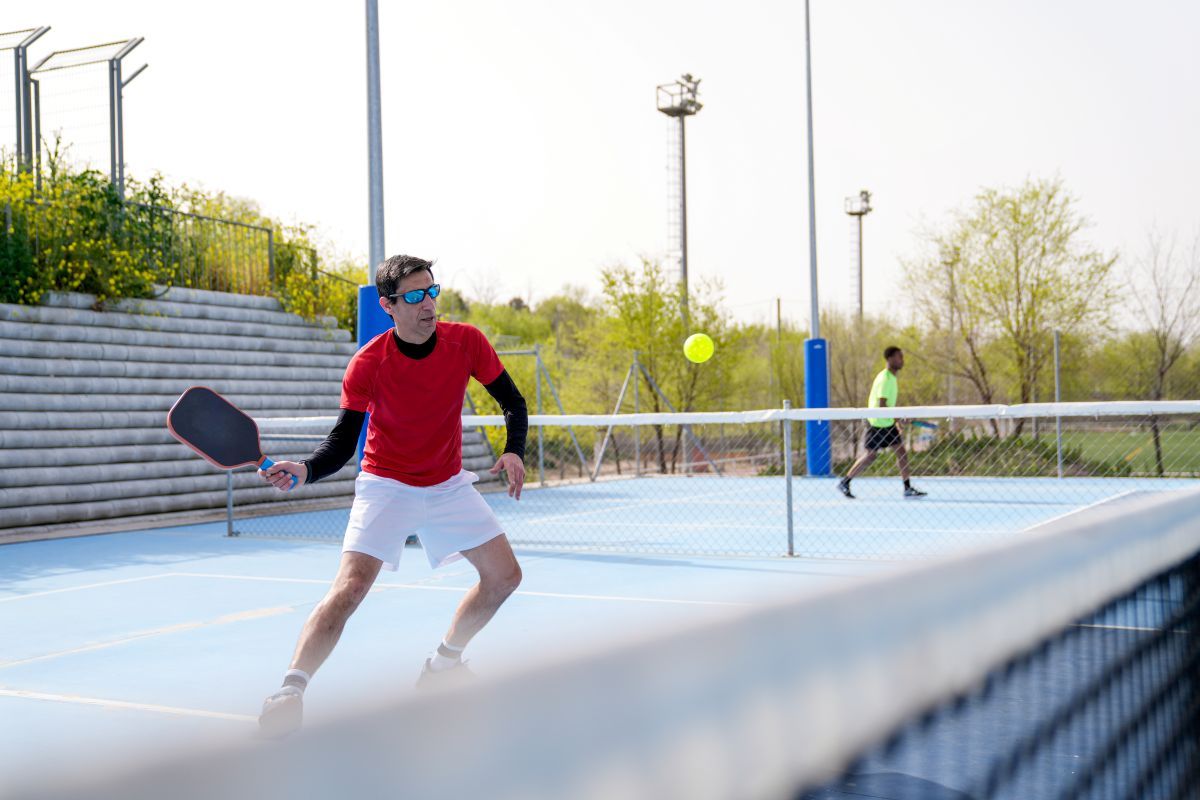
Ratings play a central role in organized competition. Tournaments enforce rating divisions to create fair matchups and protect the integrity of competition. Many events require verified ratings and may restrict entry if a player’s rating exceeds a division cap.
Leagues also use ratings to structure divisions, manage movement between levels, and ensure seasonal balance. When leagues are organized by rating, players typically stay more engaged because competition feels challenging – but still fair.
As pickleball continues to mature, ratings will only become more important in shaping how communities, clubs, and competitive environments operate.
Final Thoughts
Pickleball ratings work best when viewed as development tools – not fixed labels. They provide structure, guide improvement, and create better playing experiences across every level of the sport.
With honest self-assessment, consistent match data, and intentional practice, players can improve steadily and track progress over time. For those who want a clear path forward, Bounce helps connect ratings to real opportunities – making it easier to find lessons, play environments, and competition that support long-term growth.