

The short answer is no. If you are coming from tennis or another racket sport, this will likely surprise you. In pickleball, there is no let serve. When the ball clips the net on a serve and lands in the correct service court, play continues as if the net was never touched. There is no replay, no pause, and no second attempt.
The confusion is completely understandable. Tennis players in particular arrive at pickleball with a deeply ingrained instinct to call "let" the moment a serve grazes the net.
That instinct is wrong in pickleball, and acting on it mid-game causes unnecessary stoppages and disputes.
This article covers the full picture: what the let rule was, when and why it was removed, what happens to the serve in different net-contact scenarios, how the rule compares to tennis, and what actually counts as a service fault under current rules.
What Is the Pickleball Let Serve Rule?
In its current form, the pickleball let serve rule is a rule that no longer exists.
In the early years of the sport, pickleball followed the same convention used in tennis: if a served ball clipped the net and landed in the correct service court, the server was given the opportunity to replay the serve. That serve was called a let, and it carried no penalty in either direction.
The logic behind the original let rule was fairness. A ball deflected by the net travels unpredictably, and it was considered unreasonable to hold the receiving team to a return they could not reasonably anticipate.
Most racket sports adopted this same reasoning, and pickleball was no exception in its early days.
That rationale was reconsidered as the sport professionalized and its rules were refined. The let serve provision was officially removed from the USA Pickleball official rulebook effective January 2021, and it has not been part of sanctioned pickleball play since.
The word "let" does not appear anywhere in the current USA Pickleball rulebook in the context of serving.
The USA Pickleball Rule Change 2021: Why the Let Was Removed
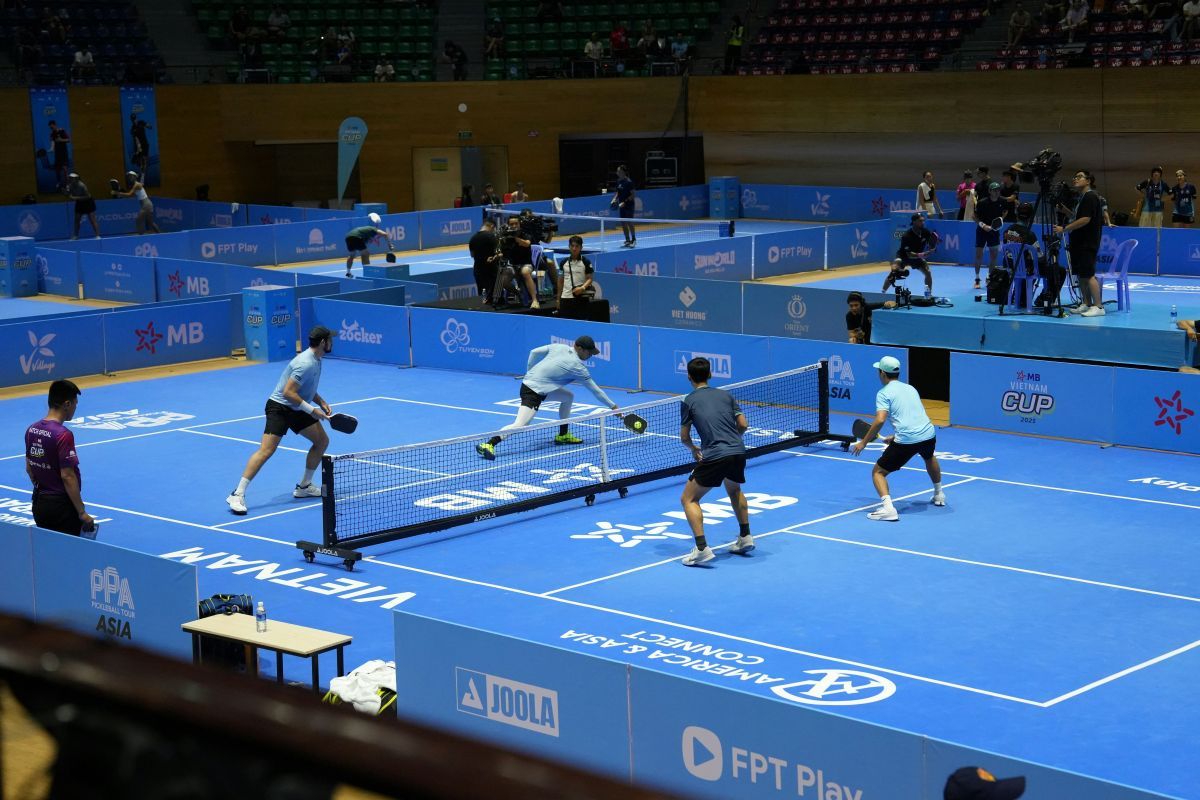
The 2021 rule change that eliminated the let serve was not made arbitrarily. It addressed real problems that the original rule was creating on the court, particularly in competitive and high-volume recreational settings.
Speed of play
Let serves interrupt the flow of the game. In a sport built around quick exchanges and continuous momentum, stopping play to replay a serve that would have been perfectly returnable slows everything down.
Removing the let keeps rallies uninterrupted and sessions moving faster, which is especially meaningful at open play events where court time is shared across many players.
Elimination of disputes
Whether a serve actually touched the net is not always clear from the receiving end. In competitive settings without electronic line-calling technology, let calls were frequently contested.
Players disagreed about whether they heard a sound, whether they saw contact, and whether the call was being made in good faith. Removing the rule eliminated that entire category of dispute.
Consistency with rally play
During regular rally play in pickleball, a ball that clips the net and lands in bounds has always been live.
The let rule created an inconsistency where the same physical event, a ball touching the net, produced two completely different outcomes depending solely on whether it happened on a serve or during the rally. The 2021 change brought the serve in line with how the rest of the game works.
Increased challenge and engagement
A serve that skims the net and drops unpredictably into the service court is genuinely difficult to return.
Keeping that ball in play adds a layer of challenge for the receiving team and rewards a server who, intentionally or not, produces a low net-skimming delivery. The rule change turned an interruption into a live tactical element of the game.
What Happens If the Serve Hits the Net in Pickleball?
What happens when a pickleball serve hits the net depends entirely on where the ball lands after making contact. The net touch itself is neutral. What matters is the landing.
Serve clips the net and lands in the correct service court
This is a live ball. The receiving team must be prepared to play it, and the rally continues from that point forward. There is no replay, no let call, and no fault. The serve is valid regardless of how dramatically the net contact affected the ball's trajectory.
Serve clips the net and lands in the kitchen
This is a service fault. A serve that lands anywhere inside the non-volley zone, including on the kitchen line, is a fault regardless of whether the ball touched the net. The kitchen line exception applies only on the serve. During regular rally play, the kitchen line is in.
Serve clips the net and lands out of bounds
This is also a fault. A serve that touches the net and then lands outside the correct service court is no different from any other serve that misses its target. The net contact is irrelevant to the outcome.
Serve hits the net post
A serve that strikes the net post is a fault. This applies regardless of where the ball goes afterward.
Serve touches the net during rally play
A ball that clips the net during a rally and lands anywhere within the opponent's court is live. This includes the kitchen, the service boxes, and the areas near the lines. The only time a net touch creates special consequences is on the serve, in the ways described above.
Pickleball vs Tennis Let Rule: A Direct Comparison
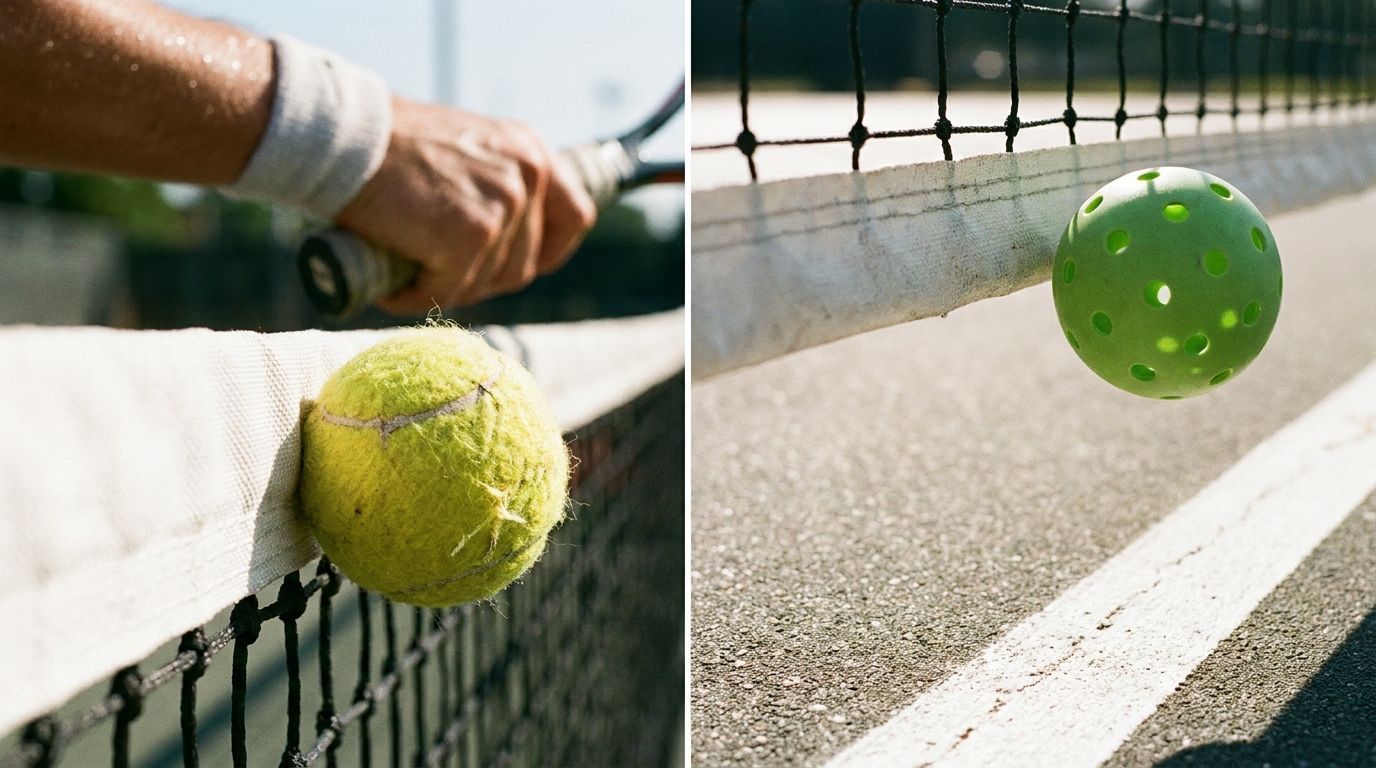
The let rule difference is one of the most practically important distinctions for players transitioning between tennis and pickleball. In tennis, the let serve is still in effect.
The ITF rules of tennis specify that a serve touching the net and landing in the correct service box results in a replay. In pickleball, that same serve has been a live ball since January 2021. The table below captures the key differences.
| Scenario | Tennis Rule | Pickleball Rule |
| Serve clips net, lands in correct service box | Replay (let) | Live ball — play continues |
| Serve clips net, lands in kitchen or NVZ line | N/A (no kitchen in tennis) | Fault |
| Serve clips net, lands out of bounds | Fault | Fault |
| Serve hits the net post | Fault | Fault |
| Ball clips net during a rally, lands in | Live ball | Live ball |
| Number of serve attempts allowed | Two (first and second serve) | One |
| Let rule currently active? | Yes | No (removed January 2021) |
The most important practical difference for a tennis player stepping onto a pickleball court is this: do not stop play when the serve touches the net. If the ball lands in the correct service court, both teams should be playing the rally.
Calling let in that situation is not just incorrect, it actively disrupts the game.
It is also worth noting that pickleball allows only one serve attempt per point, not two as in tennis. A faulty serve is a direct fault with no second chance, which makes serve consistency more important in pickleball than many tennis converts initially expect.
What Is a Pickleball Service Fault?
Once you understand that lets no longer exist, the natural follow-up question is: what service fault situations should you actually be watching for? A service fault ends the rally immediately and costs the server either the point or the serve, depending on the scoring format in use.
Serve lands in the non-volley zone
Any serve that lands inside the kitchen, including on the kitchen line, is a fault. This is the most common service fault in recreational play and the one most frequently missed by newer players.
The kitchen line is treated as out on the serve, even though it is treated as in during the rest of the rally.
Serve lands out of bounds
A serve that lands outside the correct diagonal service court is a fault. This includes serves that land on the correct side of the court but in the wrong service box, serves that go long, and serves that sail wide of the sideline.
Serve does not clear the net
A serve that hits the net and falls on the server's side of the court, or does not clear the net at all, is a fault. This is different from a serve that clips the tape and crosses into the service court, which is live.
Illegal serve mechanics
A serve can be faulted for mechanical violations independent of where the ball lands. The serve must be underhand, with contact made below the waist, and the paddle face must be below the wrist at contact on a volley serve.
Foot position matters as well: the server must have at least one foot behind the baseline and must not touch the baseline or the court surface inside it at the moment of contact.
Understanding what makes a serve mechanically illegal goes beyond just the net and landing zone, and knowing these rules is essential before stepping into any competitive setting.
Serving from the wrong position
In doubles, serving from the wrong side of the court relative to the score is a fault. The score determines which side each player should be serving from, and mistakes in server rotation or side selection are common in recreational play.
A full understanding of how the serve interacts with scoring and side selection in both singles and doubles helps clarify why position accuracy on the serve is just as important as mechanics and placement.
For players who want to get their serve mechanics locked in under real playing conditions, working with a certified coach is the fastest path to building correct habits. Bounce connects players with verified coaches and organized sessions in their city, so fixing serve issues that cause faults becomes a structured process rather than trial and error at open play.
Does the Let Rule Apply During Regular Play?
A common point of confusion is whether the removal of the let rule applies only to serves or to the whole game. The answer is clear: during regular rally play, a ball that clips the net and lands in bounds on the opponent's side has always been live in pickleball, and that has not changed.
The technical distinction is that the word "let" was never used in pickleball rules to describe net contact during a rally. The let specifically referred to the serve replay provision, which has now been removed.
During rallies, a ball touching the net and landing in is simply treated as any other live ball.
The double-bounce rule and kitchen restrictions that apply at the start of each rally remain fully in effect regardless of net contact. Net contact during a rally never stops play in pickleball. Both teams play through it in all circumstances.
Why This Rule Trips Up So Many Players
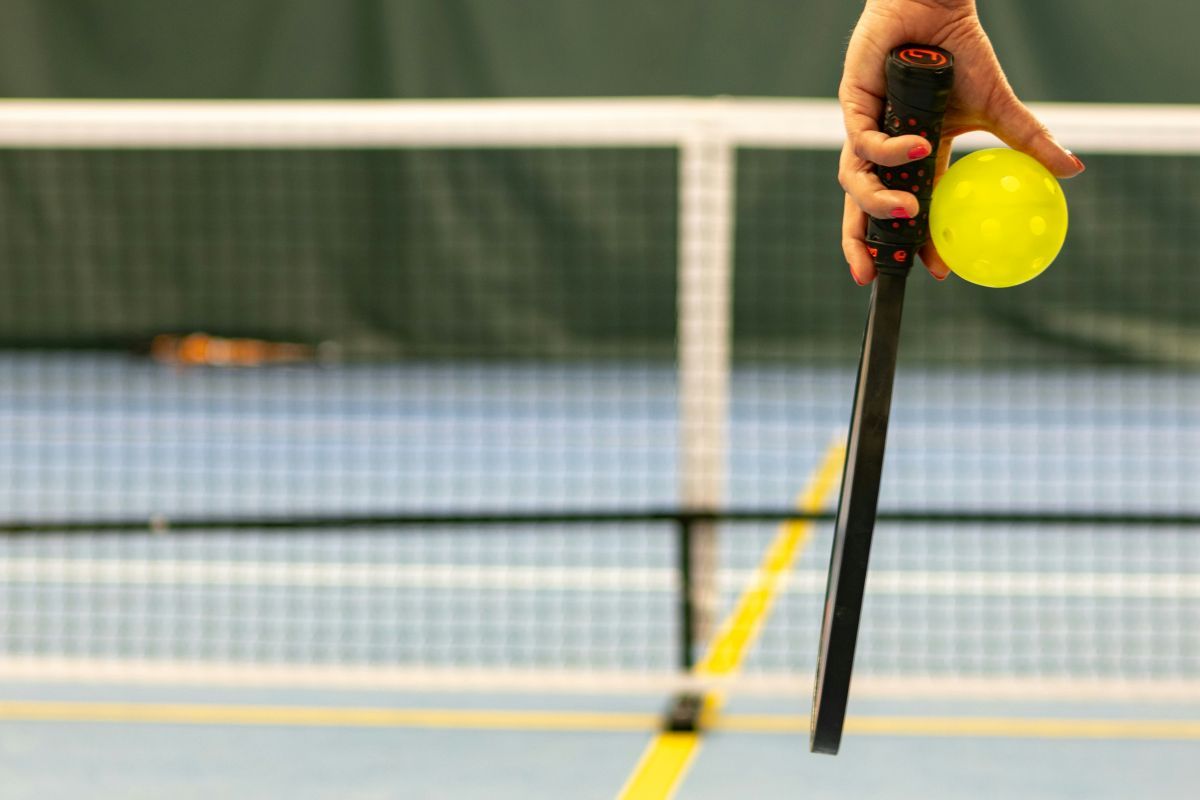
The let confusion in pickleball is almost entirely driven by two things: the sport's overlap with tennis in terms of player base, and the fact that the rule changed relatively recently. Players who learned tennis before pickleball carry a reflex that is hard to override.
Calling let on a net serve feels instinctive because it has been reinforced by thousands of prior tennis points.
The 2021 rule change also means there is a generation of pickleball players who learned the game before the change and may still be playing under the old convention in recreational settings.
This creates real friction at open play sessions where some players call let and others correctly continue play.
The clearest resolution is to know the rule, play it correctly, and be ready to explain it calmly when it comes up. USA Pickleball's sportsmanship guide is useful here: it emphasizes courtesy, clear communication, and giving opponents the benefit of the doubt.
A calm, non-confrontational explanation of why play continues is the most efficient way to resolve the situation.
Players who are navigating the transition from tennis to pickleball often run into several rule differences like this one simultaneously.
Finding a structured environment to learn the rules in context, rather than correcting instincts mid-game, makes the transition faster and less frustrating. Bounce makes it easy to find a certified coach nearby who can walk through the key rule differences and help you build pickleball-specific habits from the start.
Practical Tips for Playing Through Net Serves
Knowing the rules and executing correctly in the moment are two different things. Here is what both sides of the court should be doing when the serve looks like it might clip the net.
For the server
Do not stop, hesitate, or look apologetically at the receiver after a serve that skims the net. If the ball clears the net and heads toward the correct service court, your job is to get ready for the return. Pausing signals uncertainty and may confuse your partner about whether play is live.
For the receiver
Stay ready on every serve, regardless of how the ball approaches the net. A serve that clips the tape will often drop shorter and lower than a clean serve, and your reaction window is reduced. Keep your paddle up and your weight forward so that a net-skimming serve does not catch you flat-footed.
For both teams
If there is any genuine uncertainty about whether the ball touched the net, play the rally to its conclusion. Disputes about net contact are almost impossible to resolve definitively after the fact in recreational settings. Playing through the point is both the correct approach under the rules and the most practical one for keeping the game moving.
When a new player calls let incorrectly
Address it quickly, clearly, and without condescension. Explain that the let rule was removed in 2021 and that serves which clip the net and land in the service court are live balls. Most players accept this correction immediately once they understand the current rule.
Offer to replay the point as a gesture of good faith if the player genuinely did not know, but make sure everyone understands the correct rule going forward.
Conclusion
The answer is a clear no, and it has been that way since January 2021. A served ball that clips the net and lands in the correct service court is live, and both teams should be playing the rally from that moment forward. There is no replay, no pause, and no second attempt.
Understanding this rule fully means knowing not just that the let is gone, but also knowing what actually is a fault on the serve, why the rule was changed, and why it differs from tennis. That complete picture is what prevents the confusion from recurring every time a serve grazes the tape.
If you are working on your serve mechanics, learning the rules of pickleball from scratch, or transitioning from another racket sport, Bounce connects you with certified coaches and organized play in your city. Get the fundamentals right from the start and spend more time playing and less time arguing over calls that were settled four years ago.
FAQs
Are there lets in pickleball?
No. The let serve rule was officially removed from pickleball in January 2021. A serve that clips the net and lands in the correct service court is now a live ball, and play continues without a replay.
What happens if the serve hits the net and lands in the kitchen?
That is a service fault. A serve that lands in the non-volley zone, or on the kitchen line, is always a fault regardless of whether the ball touched the net on the way.
Is a net-clipping serve in tennis also a live ball?
No. In tennis, a serve that clips the net and lands in the correct service box is still a let and results in a replay. The pickleball rule change in 2021 moved pickleball away from this convention entirely.
When did pickleball remove the let serve rule?
The let serve rule was officially removed effective January 2021 under the USA Pickleball official rulebook. It has not been part of sanctioned pickleball play since that date.
Can the ball touch the net during a rally?
Yes. A ball that clips the net during a rally and lands in bounds on the opponent's side is always a live ball. This applies everywhere on the court, including the kitchen. The no-let convention during rallies has always been the standard in pickleball.
What are the main service faults in pickleball?
The main service faults are: landing in the kitchen or on the kitchen line, landing out of the correct service court, hitting the net without clearing it, illegal serve mechanics such as contact above the waist or paddle head above the wrist, and serving from the wrong position or side.
Do I get a second serve in pickleball if my first is a fault?
No. Unlike tennis, pickleball allows only one serve attempt per point. A service fault ends the server's turn immediately.
What if both players disagree about whether the serve hit the net?
In recreational play, the standard resolution for a genuinely disputed call is to replay the point. However, under current rules, a serve that was clearly live should be played rather than replayed. Clear communication before the session about current rules helps prevent these disputes from arising.


