Pickleball doubles rules add a two-server sequence, three-number scoring, and kitchen restrictions you won't find in most other racket sports. USA Pickleball sets the official standards for all sanctioned play: games go to 11, win by 2. Doubles is the format most players encounter first, whether through clinics, open play, or competitive leagues.
Doubles is the most popular format in pickleball, and it's easy to see why. It's social, faster-paced than most players expect, easier on the body than singles, and built around partner communication. But doubles also introduces rules you won't find in most other racket sports: two-server rotations, three-number scoring, kitchen restrictions, and momentum faults.
When doubles rules aren't clear, games slow down. Players serve from the wrong side, forget the server number, argue about kitchen momentum, or lose track of rotation. When the rules are clear, the game flows: rallies last longer, transitions make sense, both teams stay aligned, and everyone can focus on playing.
Once those rules are clear, the game moves faster. Both teams know who serves next, where each player belongs, and when a kitchen violation ends the rally.
Official Governing Rules for Doubles Pickleball
USA Pickleball is the official governing body for all sanctioned doubles play in the US, setting the rules used everywhere from local recreational courts to national tournaments.
Standardized doubles rules exist to ensure:
- Equal serving opportunities for both teams
- Consistent scoring and rotations
- Clear fault enforcement (especially kitchen and serving faults)
- Easy transition between courts and communities without relearning basics
If you plan to join leagues or tournaments – or even just play with new groups – knowing the official doubles rules prevents most common arguments before they happen.
Pickleball Court Setup for Doubles Play
Court Dimensions and Markings
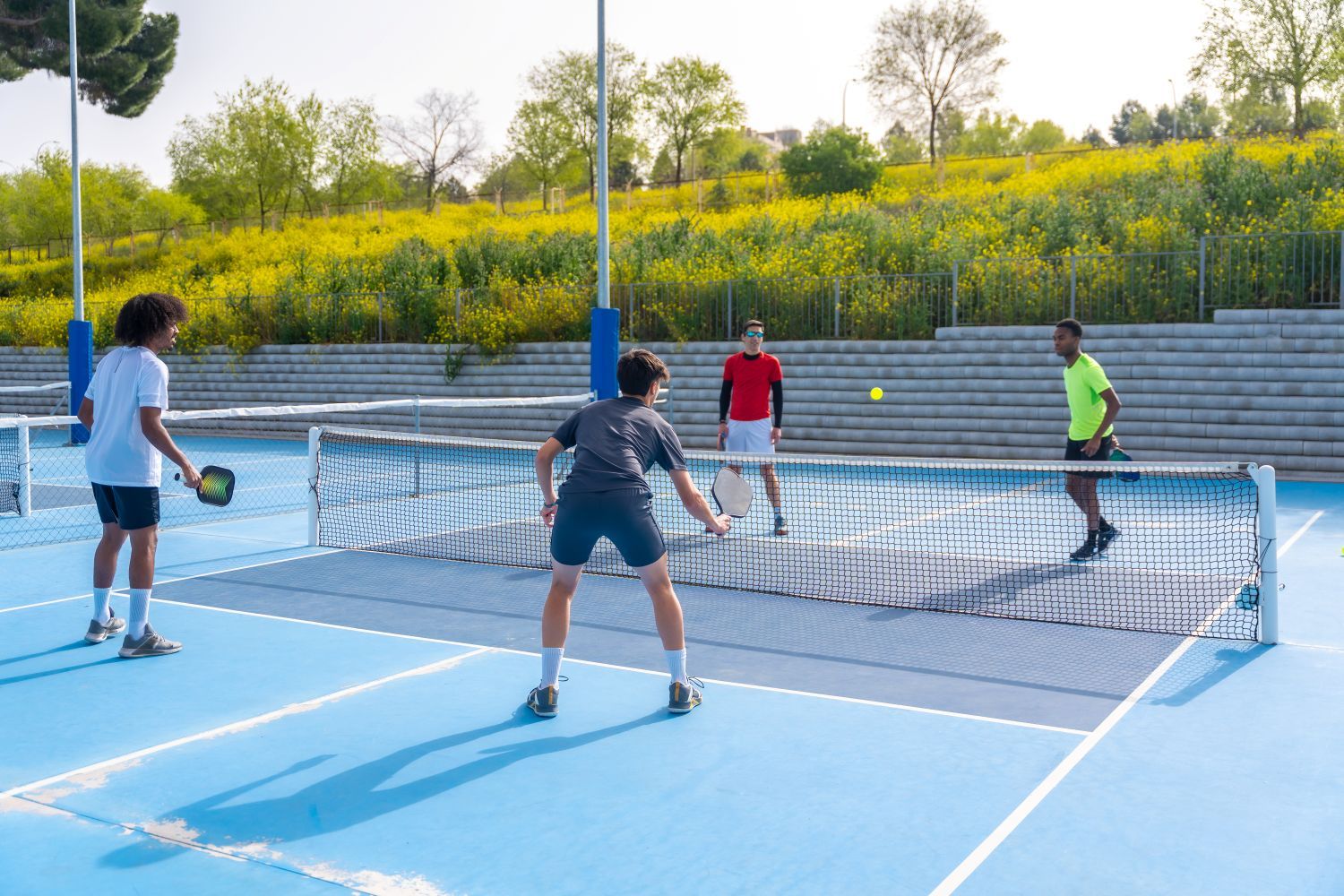
Doubles is played on the standard pickleball court: 20 feet wide by 44 feet long. The net is 36 inches at the sidelines and 34 inches in the center. The court markings matter because doubles rules (serving, receiving, and kitchen violations) depend directly on where players are standing.
Key court markings include:
- Baselines at the back of each side
- Sidelines defining the court width
- Centerline dividing service courts
- Service courts on the right and left
- Non-volley zone (kitchen) extending 7 feet from the net on each side
A quick beginner takeaway: most doubles mistakes happen because of lines – standing in the wrong service court, stepping on the kitchen line during a volley, or serving while touching the baseline.
Player Positioning in Doubles
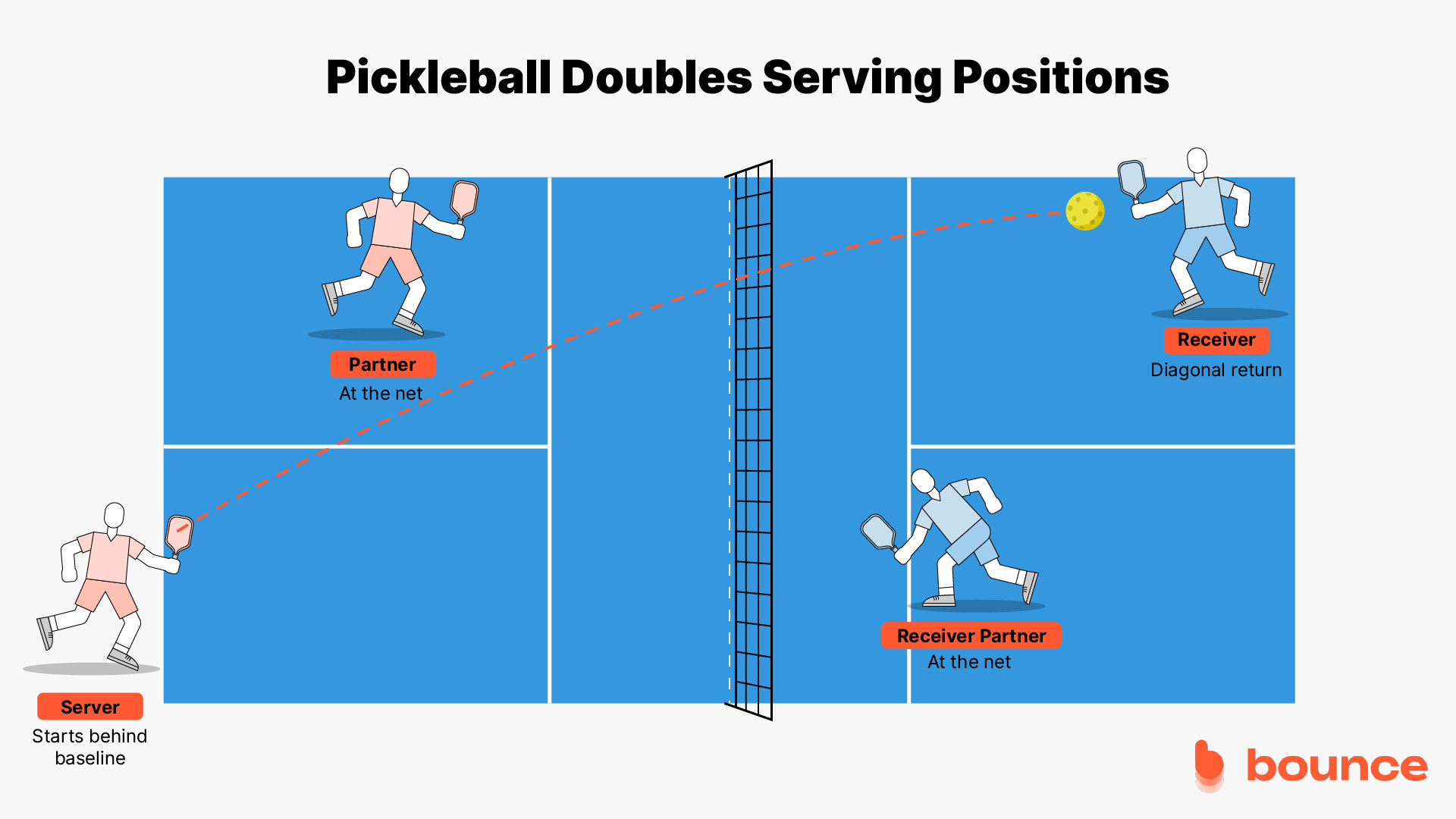
At the start of every rally, the receiver stands diagonally opposite the server. Both players on the receiving team must stay in position until the serve is struck.
At the start of each rally:
- the receiver must be diagonally opposite the server
- both receivers typically start behind the baseline (especially at beginner/intermediate levels)
After the serve and return (and once the double-bounce rule is satisfied), most teams move up together toward the kitchen line. Staying coordinated matters because doubles is about covering angles as a unit – if one partner is up and the other is back, opponents can exploit the open space.
Good doubles positioning combines rule compliance (correct receiver, correct side) with teamwork and communication. Players who want to go deeper on positioning tactics can explore stacking in pickleball, a formation where partners shift positions to control angles and exploit opponent positioning.
Doubles Serving Rules in Pickleball
Legal Serve Requirements
Every doubles serve must meet the same legal requirements as singles. A legal serve must be:
- The serve is hit underhand
- Paddle contact occurs below the server’s navel
- The paddle face moves in an upward arc
- At least one foot remains behind the baseline at contact
- The serve travels diagonally into the opposite service court
- The ball clears the non-volley zone on the fly
If any part of this is violated, it's a service fault, and there is no second serve attempt.
Why it matters in doubles: giving away free faults disrupts rotation and prevents your team from building rhythm on serve. For a full breakdown of what triggers a fault, including spin rules and foot fault details, see illegal pickleball serves.
The Two-Server Sequence (The Rule That Confuses Everyone)
Each doubles team has two servers per service turn. Both partners serve consecutively before a side-out occurs, except at the start of the game.
At the beginning of the match:
- Only one player on the starting team serves
- Once that player faults, the serve passes to the opposing team
- After the first side-out, each team then uses both servers per turn
- The starting server is designated Server 2, signaling that the first team gets only one serve to open the game.
This structure balances serve advantage and ensures fairness across the match. Understanding the two-server sequence is essential for accurate score tracking and rotation.
Serving Order and Score Calling
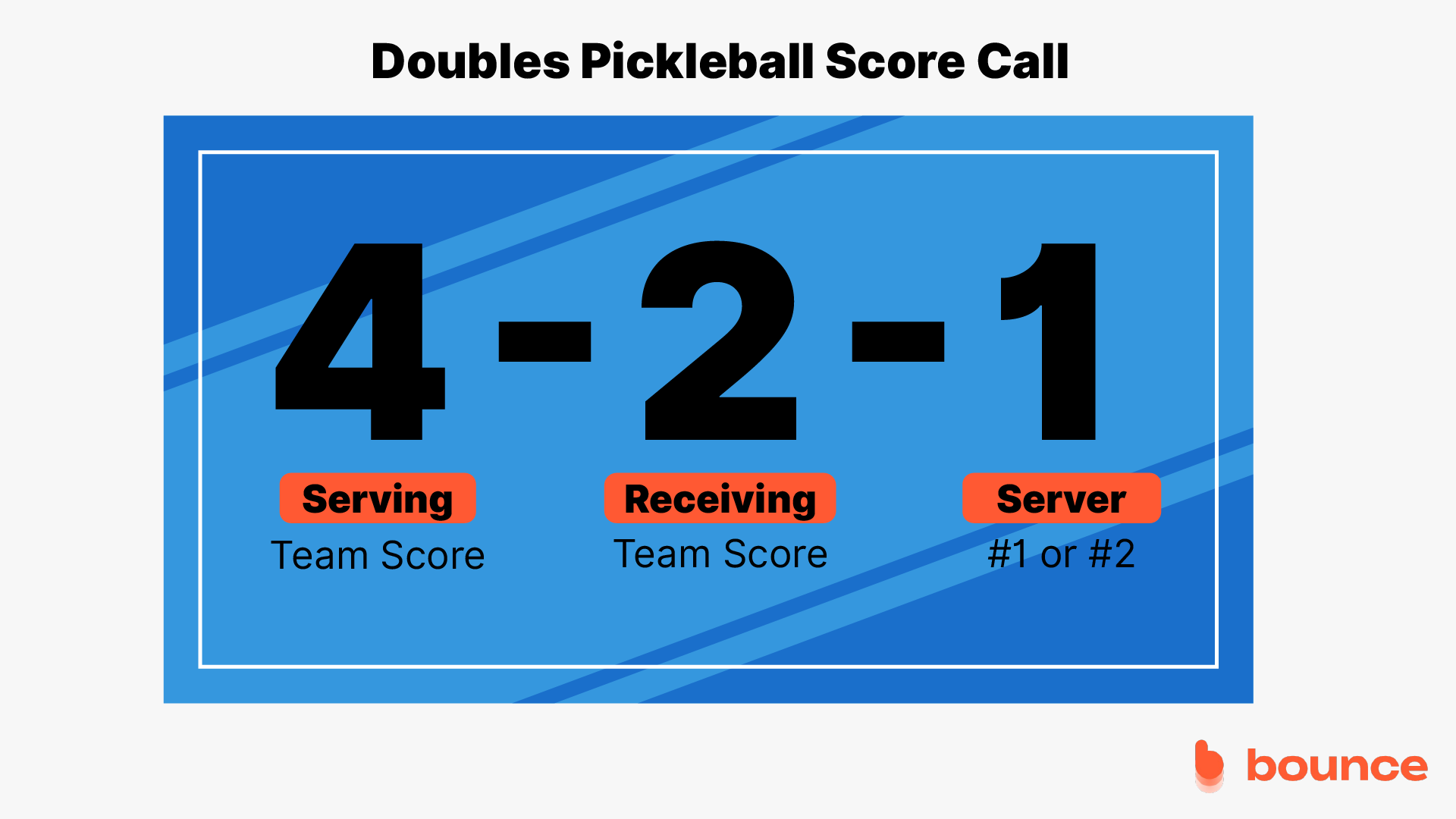
Before each serve, the server must call the full score using three numbers:
- Serving team score
- Receiving team score
- Server number (1 or 2)
For example: “6–4–1”
The server number matters because it tells everyone whether your team still has a second serve available before losing the serve completely.
Calling the wrong score usually doesn’t create an automatic fault in casual play, but it does create confusion – and in organized play it can cause delays or disputes. Clear score calling keeps matches flowing.
Doubles receiving rules
The receiver stands diagonally opposite the server in the correct service court and must let the serve bounce before returning it. Volleys on the return of serve are not allowed.
The partner may stand anywhere on the court, provided they do not obstruct the server’s view or movement.
The receiving team must let the serve bounce before returning it. Volleys on the return of serve are not permitted. After the return, both teams must also allow the third shot to bounce before volleys are allowed. This structure leads directly into the double-bounce rule.
Clear understanding of receiving responsibilities improves transition play and reduces early rally faults.
The Double-Bounce Rule in Doubles
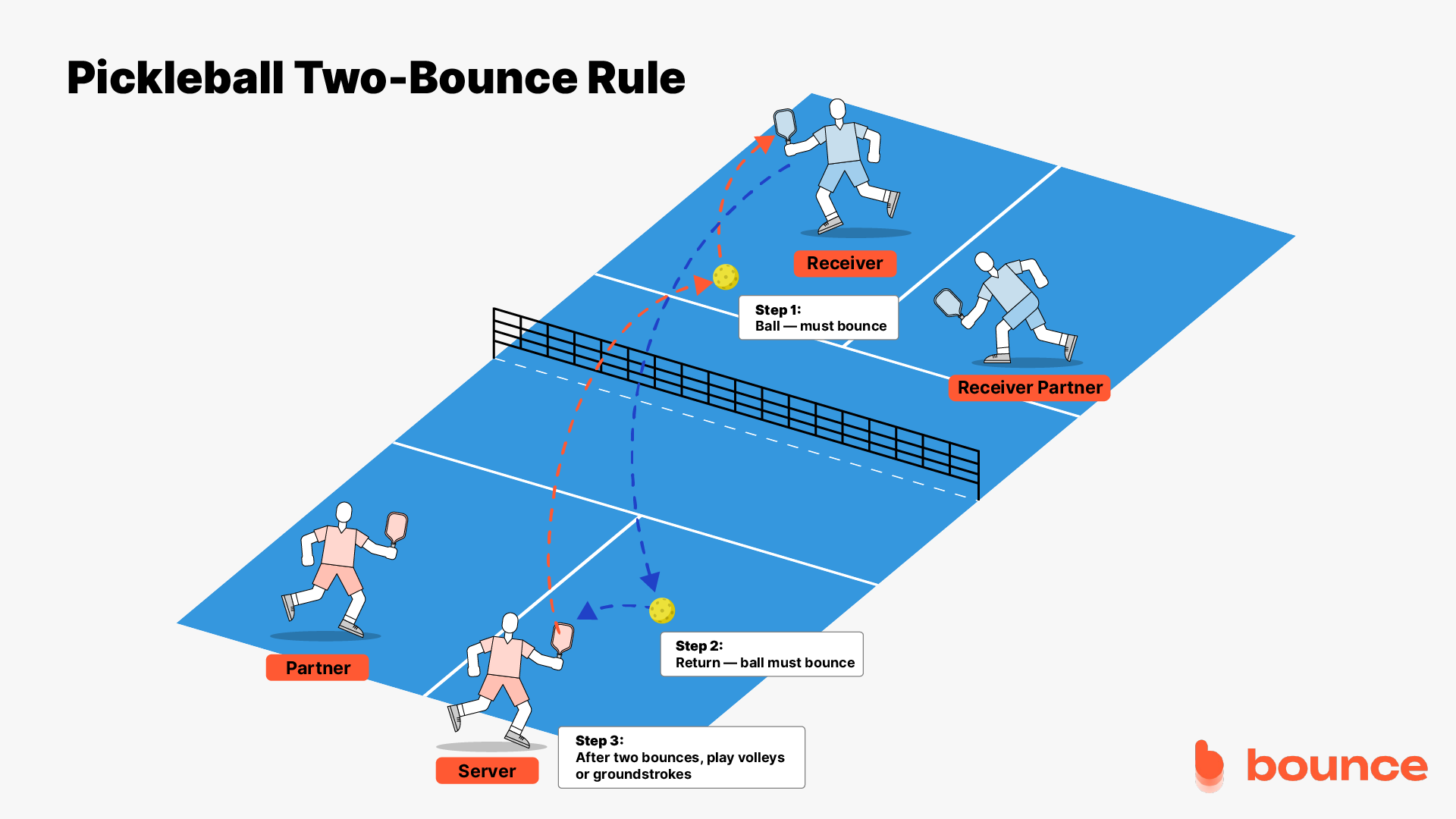
Both teams must let the ball bounce once each before volleys are allowed: once on the serve, once on the return. Only after those 2 bounces can either team volley.
The double-bounce rule requires:
- The served ball to bounce once on the receiving side
- The return to bounce once on the serving side
Only after these two bounces may either team volley the ball.
In doubles, this rule prevents immediate net dominance by the serving team and promotes longer rallies. Teams must transition from the baseline to the non-volley zone strategically, often using third-shot drops or drives.
Violations of the double-bounce rule result in immediate faults. Players who internalize this rule develop better patience and shot selection, especially during early rally phases.
Non-Volley Zone (Kitchen) Rules in Doubles
Players can't volley from inside the non-volley zone (kitchen) or when momentum after a volley carries them into it. The non-volley zone extends seven feet from the net on both sides and plays a central role in doubles strategy.
Key kitchen rules include:
- Both feet must be outside the kitchen when volleying
- Momentum after contact cannot cause a foot to touch the kitchen
- Players may stand in the kitchen to hit a ball that has bounced
- Kitchen lines are part of the kitchen
In doubles, partners often crowd the non-volley zone line. Coordinated footwork and spacing help avoid foot faults while maintaining offensive pressure.
Kitchen violations are among the most common faults in doubles play, especially during fast exchanges. Practicing controlled volleys and balanced positioning reduces errors. For the full rules covering momentum faults, the kitchen line, and partner positioning, see pickleball kitchen rules.
Faults and violations in doubles
A fault ends the rally and may result in a loss of serve or point. Common doubles faults include:
- Serving into the wrong service court
- Foot faults during serve or volley
- Volleys taken before the double-bounce rule is satisfied
- Kitchen violations
- Balls hit out of bounds
- Failure to clear the net
- Serving or receiving out of order
Partner interference, such as one player contacting the ball after their partner, also results in a fault. Clear communication prevents these errors and helps partners anticipate each other’s movements.
Scoring rules in doubles
Standard doubles pickleball uses side-out scoring. Only the serving team can score points. Points are earned when the receiving team commits a fault.
Games are typically played to 11 points, with a requirement to win by two points. Tournament formats may extend games to 15 or 21 points, but the same scoring principles apply.
When the first server on a team faults, the serve passes to the second server. When the second server faults, a side-out occurs and the serve transfers to the opposing team.
Accurate scoring relies on:
- Correct serving order
- Clear score calling
- Awareness of server number
- Serving from the correct side of the court on every point
Players who track score consistently reduce delays and maintain match rhythm. Players who join pickleball leagues on Bounce call the three-number score in every match, which is the fastest way to make the system automatic.
Line Calls and Player Responsibility
In pickleball, players are responsible for making line calls on their side of the court. If a team is unsure whether a ball was in or out, the call defaults to in.
In doubles:
- Either partner may make a line call
- Partners should communicate clearly on close shots
- Disagreements between partners should be resolved internally
- Opponents should not be questioned unless asked
Good sportsmanship and honesty are fundamental to doubles play, particularly in recreational environments.
Common doubles rule misunderstandings
A handful of doubles rules trip up players at every level, even those with years of singles experience.
Several misconceptions frequently appear in doubles games:
- Believing each player gets only one serve per game
- Thinking kitchen momentum faults only apply when stepping forward
- Calling incorrect scores by omitting the server number
- Applying singles serving rules to doubles
- Assuming replay rules apply automatically after confusion
Correcting these misunderstandings speeds up games and makes doubles feel dramatically easier.
Applying Doubles Rules in Real Games
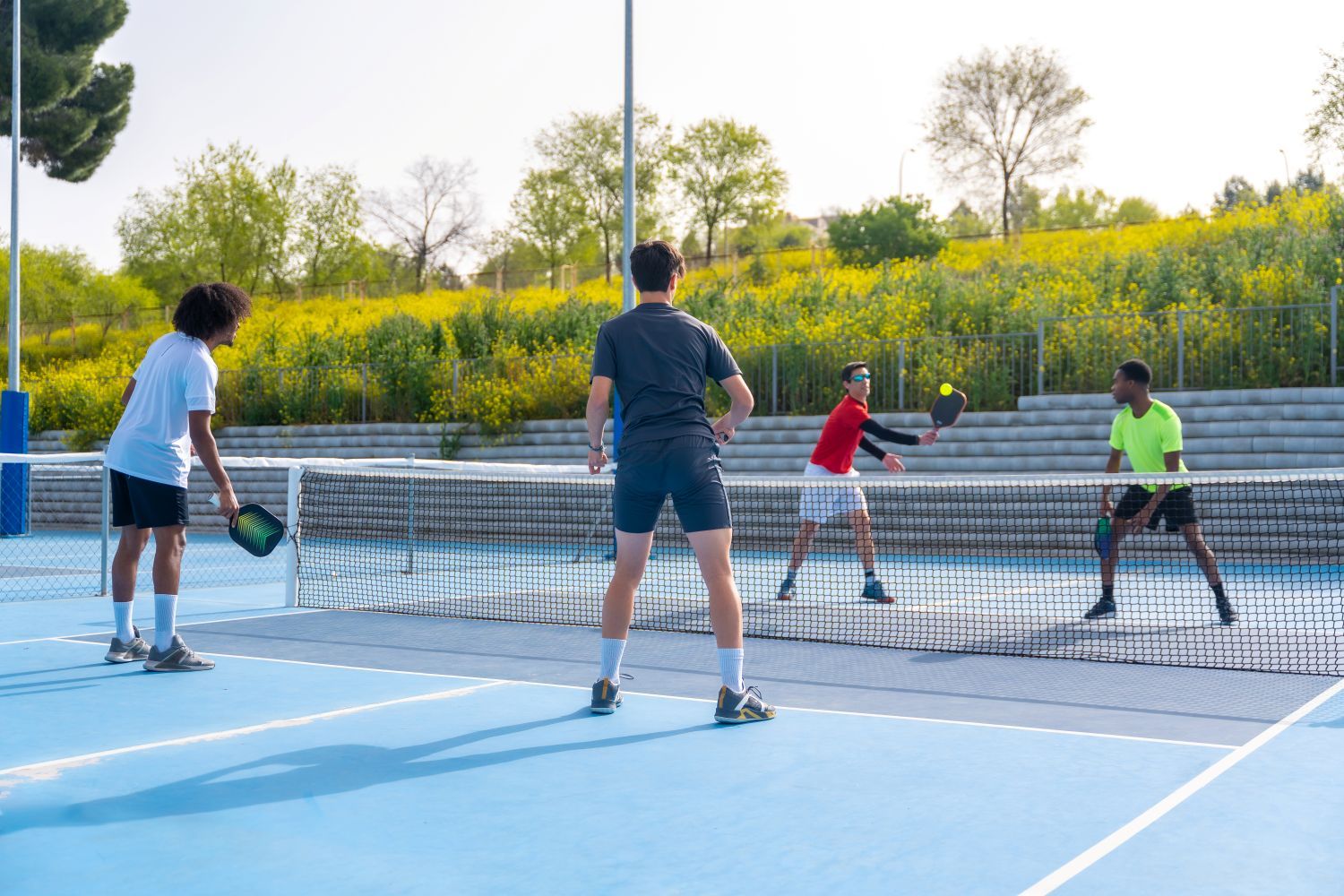
Casual open play often includes players with varying rule knowledge. Clear communication before the game starts helps establish expectations. Explaining serving order and score calling at the outset creates alignment.
Organized environments such as leagues, coached sessions, and clinics reinforce correct rule application. Players exposed to structured play learn faster and apply rules more consistently.
Bounce supports this progression by helping players find organized doubles play, lessons, and competitive opportunities that reinforce official rules through repetition and coaching.
Regular exposure to rule-consistent games accelerates learning and builds confidence across all skill levels.
Final Thoughts
Pickleball doubles rules are what make pickleball fair, structured, and repeatable across different courts and communities. When players understand serving sequence, three-number scoring, double-bounce timing, and kitchen restrictions, games become smoother and more competitive – with fewer disputes and better rallies.
Rule knowledge also improves partner coordination. Teams that communicate clearly, rotate correctly, and avoid avoidable faults win more points without needing flashy shots.
Bounce helps turn rule knowledge into real progress by connecting players with organized doubles play, certified coaching, and competitive environments that follow official standards. With consistent repetition in structured settings, improvement becomes measurable, partnerships strengthen, and doubles pickleball becomes dramatically more enjoyable.
Frequently asked questions
What are the rules for doubles in pickleball?
Doubles pickleball uses side-out scoring: only the serving team earns points, and games go to 11 (win by 2). Each team gets 2 servers per turn before a side-out. The server calls three numbers before every rally: their score, the opponent's score, and their server number. The double-bounce rule applies at the start of each rally, and players can't volley from inside the kitchen. USA Pickleball governs all official rules.
What is Nasty Nelson in pickleball?
A Nasty Nelson is when the server aims at the non-receiving opponent (the partner standing near the kitchen line) instead of the diagonal service court. If the ball hits that player, it's a point for the serving team. It's legal under official rules, though most recreational players treat it as poor form.
Can you step in the kitchen in pickleball?
Yes. You can stand in the kitchen at any time during a rally. The restriction applies to volleys: you can't hit the ball out of the air while in the kitchen, or while momentum from a volley carries you into it. If the ball bounces first, you can step in and play it freely.
How do you keep score in doubles pickleball?
The server calls three numbers before every point: serving team score, receiving team score, and server number. Example: "5-3-2" means the serving team leads 5-3 and this is the second server. If that server faults, the serve goes to the opposing team. Only the serving team scores, so a side-out resets who controls the serve.
What are the new pickleball rules for 2026?
USA Pickleball updates its official rulebook annually. The core doubles structure (two-server sequence, side-out scoring to 11, kitchen restrictions) has remained consistent, but spin serve regulations and fault definitions have been refined in recent years. Playing in organized tournaments on Bounce ensures you're always playing under the current official version.