The serve is the only shot in pickleball that begins entirely on your terms. Every rally starts with a decision about depth, direction, spin, and pace.
Players who treat the serve casually often plateau, while those who train it deliberately build a consistent competitive advantage.
Structured pickleball serving drills transform the serve from a neutral starting shot into a reliable foundation for point construction.
Fundamentals of an Effective Pickleball Serve
Before drilling for performance, mechanics must be stable. Strong fundamentals reduce unforced errors and prevent ingraining bad habits.
Legal Serve Requirements
A legal serve in pickleball must follow specific criteria:
- The motion must be underhand.
- Paddle contact must occur below the waist.
- The paddle head must move in an upward arc.
- Both feet must remain behind the baseline until contact.
- The ball must travel crosscourt into the correct service box.
Players may use either a volley serve (striking the ball out of the air) or a drop serve (letting the ball bounce before striking). Both are legal when executed within the rules. Precision within these constraints is more important than maximizing speed.
Proper Serve Mechanics
Efficient mechanics create repeatability. Key elements include:
- Balanced stance with weight shifting from the back foot to the front foot.
- Relaxed grip pressure to prevent tension in the forearm.
- A consistent contact point slightly in front of the body.
- A smooth follow-through directed toward the intended target.
Poor weight transfer or excessive grip tension frequently causes short serves and inconsistent spin. Building muscle memory through disciplined repetition reinforces mechanical stability.
Types of Pickleball Serves
Different serve types create tactical variation:
- Flat serve for direct pace.
- Topspin serve for higher net clearance and deeper bounce.
- Slice serve for lateral movement after the bounce.
- Deep placement serve to push opponents back.
- Short tactical serve to disrupt rhythm.
Placement and depth typically produce more consistent results than raw power. Strategic serving sets up favorable third-shot patterns and increases rally control.
Common Serving Mistakes
Many players struggle with:
- Overhitting for speed.
- Landing serves too short in the box.
- Inconsistent toss or drop mechanics.
- Poor balance at contact.
- Lack of a repeatable pre-serve routine.
Once these fundamentals are stabilized, structured pickleball serving drills build performance under pressure.
1. The Deep Target Accuracy Drill
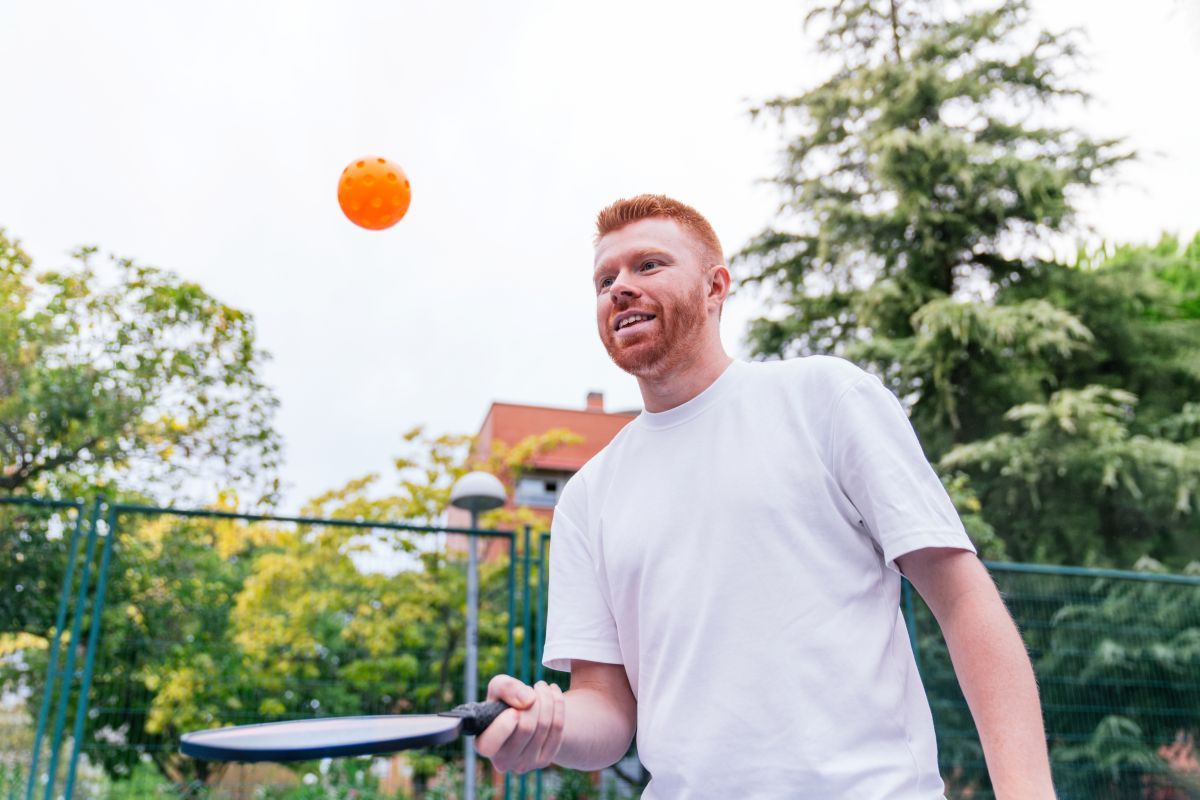
The Deep Target Accuracy Drill develops reliable depth, which is the cornerstone of effective serving. Short serves invite aggressive returns and compromise positioning. Training depth creates margin for error and defensive stability.
Setup
- Place visual markers or cones 2–3 feet inside the baseline.
- Use cross-court service positioning.
- Prepare 20–30 balls for continuous repetition.
Execution
- Serve crosscourt with the objective of landing beyond the markers.
- Focus on controlled arc and full follow-through.
- Reset immediately and maintain rhythm.
Scoring Goal
| Repetitions | Target Success Rate |
| 20 serves | 15+ deep serves |
| 30 serves | 23+ deep serves |
This drill builds depth awareness, trajectory control, and margin management. Players quickly learn that moderate pace combined with height over the net produces more reliable outcomes than aggressive flattening.
Progression options include alternating between crosscourt and down-the-line targets or narrowing the deep zone to increase precision demands.
2. The 10-in-a-Row Consistency Drill
The 10-in-a-Row Drill trains mental discipline and rhythm. Serving percentages often drop under pressure due to inconsistency in routine rather than mechanical flaws. This drill sharpens focus and reinforces repeatable execution.
Setup
- Standard crosscourt serving position.
- No physical targets required.
- Keep a visible count.
Execution
- Land 10 consecutive legal serves.
- Any miss resets the count to zero.
- Maintain the same pre-serve routine before each attempt.
The emphasis is on consistency under repetition, not power. Players frequently underestimate how challenging it is to maintain consecutive accuracy.
This drill strengthens:
- Mental concentration
- Routine development
- Serve percentage stability
Progression methods include adding a time constraint or light conditioning movement between serves. Fatigue elements expose breakdowns in balance or focus.
Players participating in structured leagues or recurring social formats gain additional benefit because match environments reinforce the discipline developed here.
3. The Serve + Third Shot Drill
The serve alone does not win points; the sequence that follows determines advantage. The Serve + Third Shot Drill connects the opening serve to strategic rally development.
Setup
- Partner positioned to return serve.
- Alternatively, use a controlled ball feed.
- Begin in standard serving stance.
Execution
- Deliver a deep crosscourt serve.
- Partner executes a realistic return.
- Execute a third-shot drop or drive with purpose.
This drill reinforces the relationship between serve depth and third-shot quality. A shallow serve often results in a strong return, forcing defensive third shots. Deep, controlled serves create more manageable return trajectories.
Key benefits include:
- Improved transition control
- Enhanced shot selection awareness
- Better anticipation of opponent positioning
Coached environments amplify this drill’s impact. Certified instructors correct footwork timing, paddle angle, and decision-making errors in real time.
Through Bounce, players can discover certified coaches and clinics aligned with their skill level, making it easier to practice serve-to-third-shot sequences in structured sessions rather than informal play.
4. The Spin Development Drill
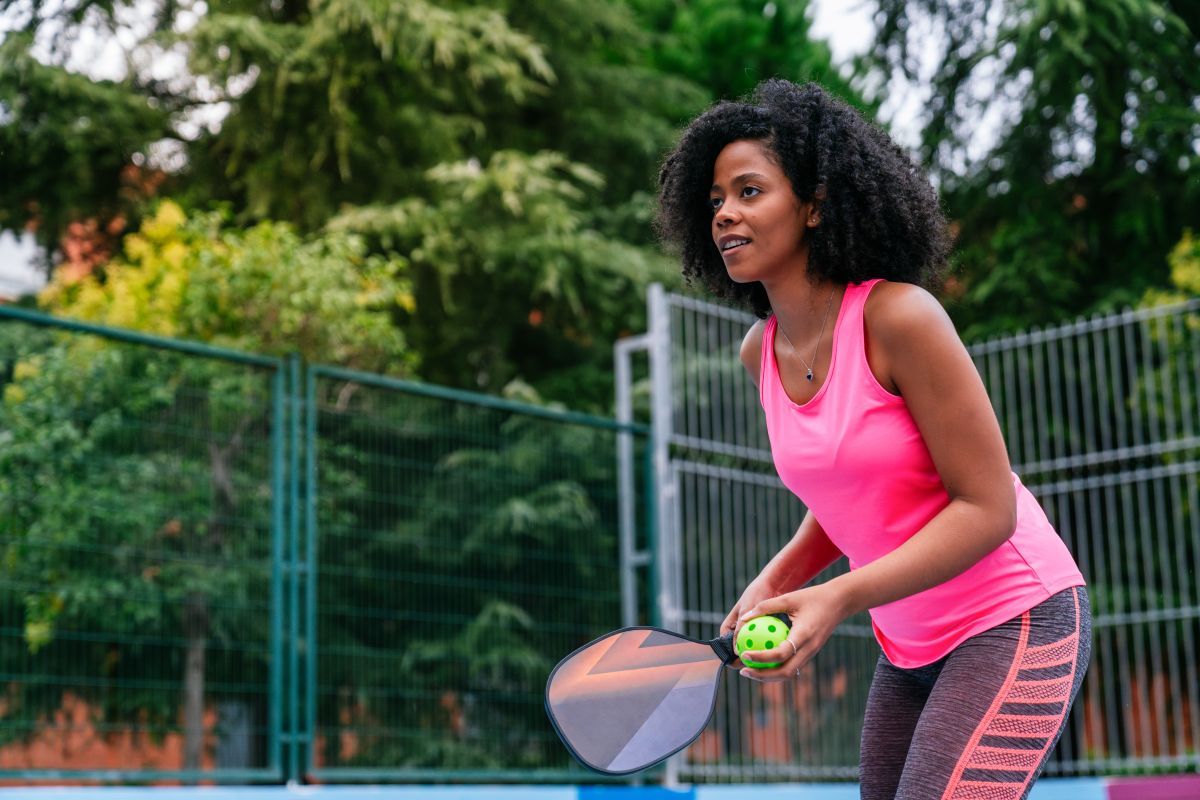
Spin variation introduces tactical unpredictability. Topspin increases net clearance and depth reliability, while slice alters bounce direction and timing.
Setup
- Focus on paddle brushing motion.
- Use crosscourt targets.
- Track bounce behavior carefully.
Execution
- Perform 15 topspin serves.
- Perform 15 slice serves.
- Record landing percentage and bounce depth.
This drill improves:
- Trajectory manipulation
- Contact precision
- Serve disguise and variation
Topspin serves require low-to-high brushing contact with controlled wrist stability. Slice serves demand lateral paddle movement and clean ball engagement. Many players struggle with excessive wrist action or inconsistent contact points, leading to erratic results.
Progression includes narrowing the landing zone or alternating spin types randomly to simulate match unpredictability.
5. The Pressure Percentage Drill
Technical proficiency must withstand competitive stress. The Pressure Percentage Drill simulates match tension and reinforces composure.
Setup
- Imagine a 9–9 game score.
- Designate a deep landing zone.
- Track consecutive successes.
Execution
- Hit 4 consecutive deep legal serves.
- Any miss resets the count.
- Maintain deliberate breathing and routine before each serve.
This drill develops:
- Clutch reliability
- Routine stability under stress
- Confidence reinforcement
Players often discover that mental composure, not mechanics, determines outcomes in pressure situations. The serve becomes vulnerable when attention shifts to fear of missing rather than commitment to execution.
Conclusion
A dependable serve compounds over time. Depth, placement, spin control, and composure form the foundation of competitive consistency. Structured pickleball serving drills turn repetition into reliable execution, especially when combined with live play and guided instruction.
If you want to accelerate your development, do not rely on casual repetition alone. Train deliberately, seek structured competition, and practice under qualified guidance.
Explore coaching, clinics, and leagues in your city through Bounce and make your serve a consistent competitive advantage rather than a liability.