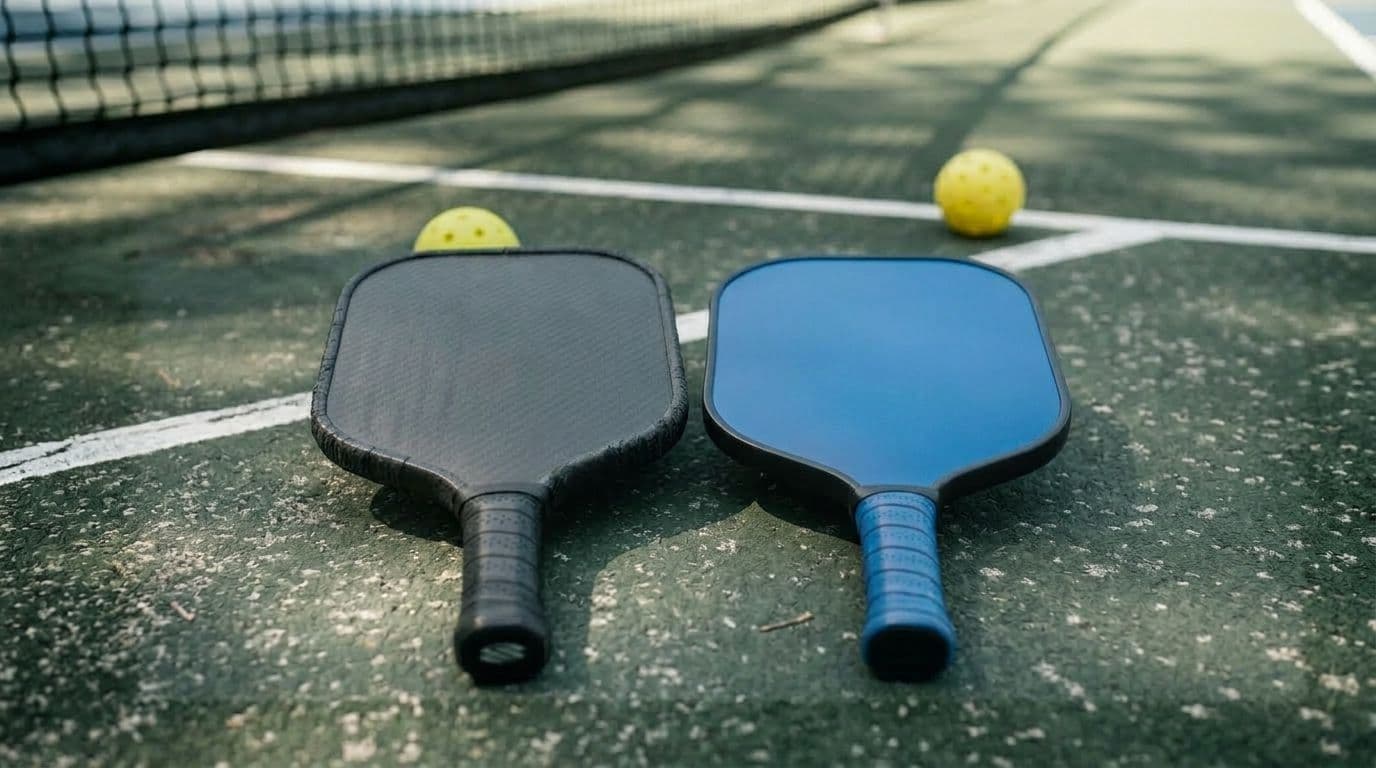
The carbon fiber vs fiberglass pickleball paddle decision is the most consequential equipment choice you will make. Both materials work, but they work differently, and that difference compounds with every session you play.
In general, carbon-faced paddles tend to prioritize control and spin, while fiberglass-faced paddles often feel poppier and more forgiving.
Which one helps you more depends on where your game is right now, not what the marketing says on the paddle box.
This guide breaks down what each material actually does, how they compare across every performance variable, and which one fits your skill level and style. If you want a broader look at the full purchase decision, the guide to what to look for when selecting a paddle covers weight, core, grip, and budget alongside face material.
Carbon Fiber vs Fiberglass: At a Glance
Here is the head-to-head breakdown before we go deeper into each material.
| Category | Carbon Fiber | Fiberglass |
| Spin | High. Textured surface grips the ball. | Moderate. Smoother surface. |
| Power | Moderate. Stiffer face absorbs less. | High. Flex returns more energy. |
| Control | High. Precise placement and feel. | Moderate. Livelier response. |
| Sweet Spot | Smaller. Rewards centered contact. | Larger. Forgives off-center hits. |
| Feel | Firm, responsive, direct feedback | Softer, springier, more forgiving |
| Durability | High. Surface holds texture well. | High. Flexible surface resists chips. |
| Price | Mid to high range | Budget to mid range |
| Budget to mid range | Intermediate to advanced players | Beginners to intermediate players |
Why Pickleball Paddle Material Matters More Than You Think
The face material is not a cosmetic detail. It is the primary driver of how a paddle performs. Spin generation, power output, ball feel, and shot feedback all trace back directly to what the face is made of.
Every shot you hit involves a contact event between the ball and the paddle face. How long the ball stays on the face, how much friction it generates, and how much energy transfers back into the ball are all determined by face material.
Your technique shapes the shot, but the material shapes what your technique can produce.
Understanding the difference between a carbon fiber pickleball paddle and a fiberglass pickleball paddle is not about brand preference. It is about matching material properties to your actual playing needs.
What Is a Carbon Fiber Pickleball Paddle?
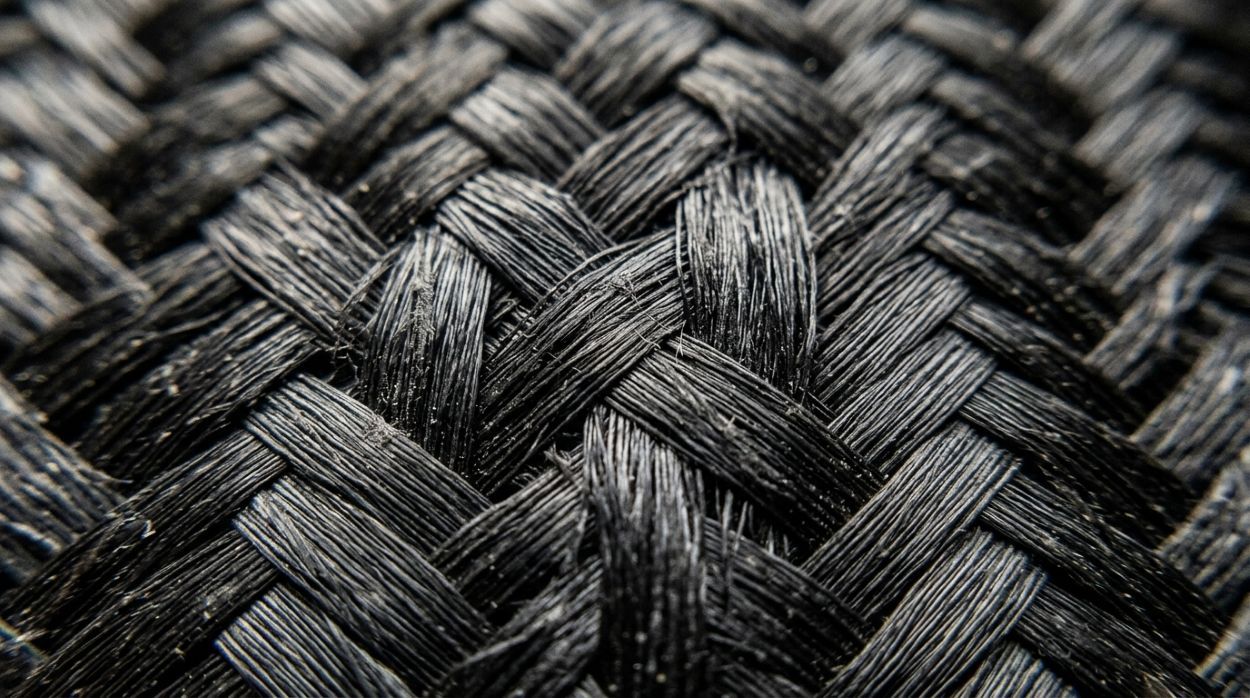
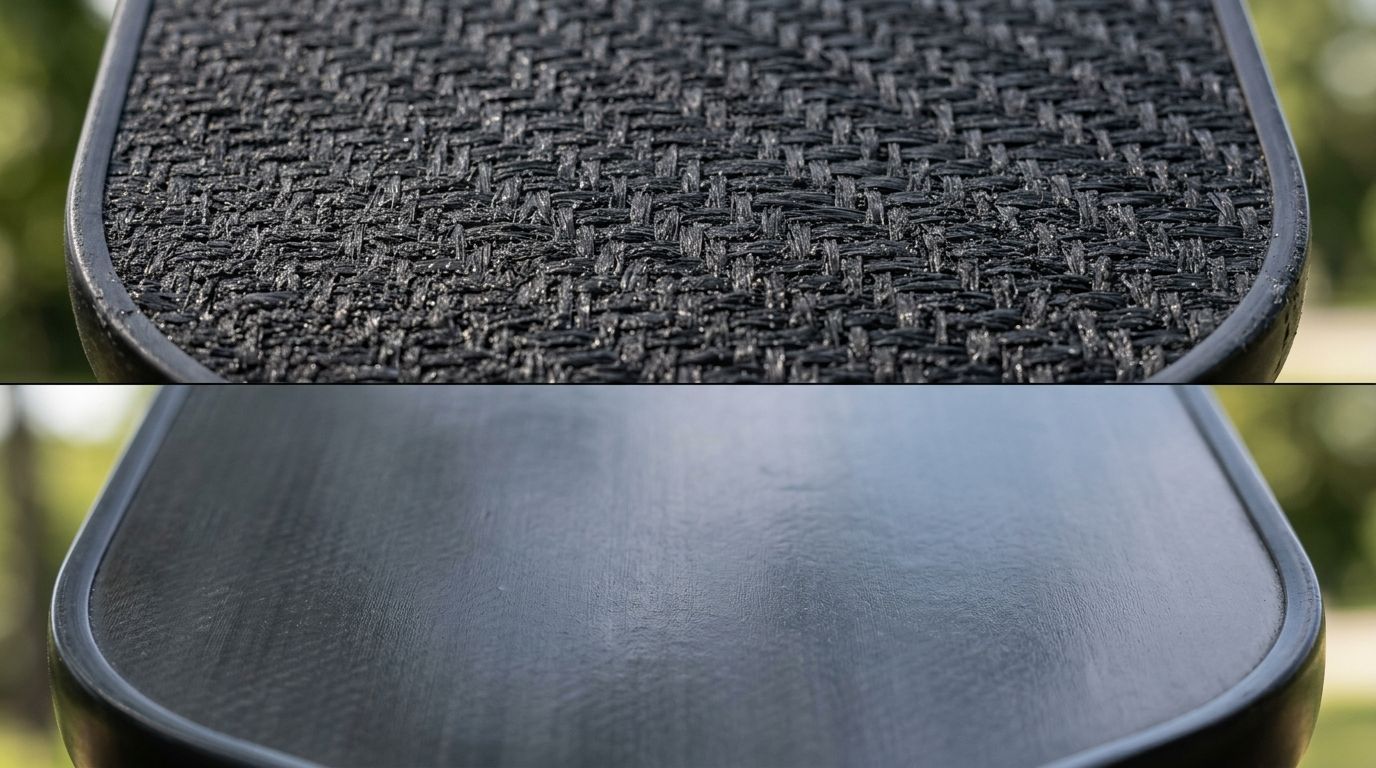
A carbon fiber paddle uses a face made from woven carbon fiber composite material. The surface is stiff and textured, with a characteristic flat black appearance that comes from the raw fiber weave rather than a painted finish.
Stiffness and Feel
Carbon fiber is significantly stiffer than fiberglass at the same thickness. When the ball contacts the face, less flexing occurs. That stiffness translates into direct, precise feedback. You feel exactly where and how you hit the ball.
For dinking, resets, and controlled third-shot drops, that precision is an asset. You can shape placements with higher accuracy because the face is not adding unintended flex to your contact.
Spin Generation
The raw carbon fiber surface creates a textured, high-friction face. That friction allows the ball to grip the surface during contact, which is what generates spin. Topspin drives, slice serves, and roll volleys are all more effective on a carbon surface than a fiberglass one.
Research on surface texture and friction coefficients confirms that surface texture patterns directly determine the coefficient of friction between two contacting surfaces. That mechanical relationship is why a raw carbon face generates more spin than a smooth composite one on the same swing.
Paddle certification standards from USA Pickleball include specific surface friction and roughness testing to regulate how much grip a paddle face is allowed to provide. That testing framework reflects just how much spin-generating potential surface texture actually creates.
Sweet Spot and Precision
Carbon fiber paddles have a smaller, more concentrated sweet spot than fiberglass. Centered contact produces crisp, accurate shots. Off-center contact is more noticeable and you feel the mis-hit immediately.
This is not a flaw. It is a feedback mechanism. If you are developing your game past the beginner stage, that feedback accelerates improvement. If you are still working on contact consistency, it can be frustrating.
Price
Carbon fiber paddles typically cost more than fiberglass options at the same tier. The manufacturing process is more complex, and the raw material is more expensive. Expect to pay a premium for a quality carbon fiber face at the mid-to-high range of the market.
What Is a Fiberglass Pickleball Paddle?
A fiberglass paddle uses a face made from woven glass fiber composite material bonded with an epoxy resin. The surface is typically smoother and slightly glossier than raw carbon fiber, and the face itself is more flexible under impact.
Flex and Power
Fiberglass is more flexible than carbon fiber. When the ball strikes the face, the surface deflects and rebounds, returning energy back into the ball. That flex-and-rebound action produces more pace on drives, returns, and power shots compared to a stiffer carbon face.
Comparative research on the mechanical properties of carbon fiber and fiberglass composites found that glass fiber composites demonstrate higher flexural strength and energy absorption than carbon fiber composites of equivalent construction.
That energy absorption and release is the mechanical source of the power differential players feel between the two materials.
Larger Sweet Spot
The flexibility of fiberglass distributes contact force across a wider area of the face. The result is a larger effective sweet spot. Off-center hits produce a more consistent response than on a carbon fiber paddle, which concentrates force in a smaller zone.
For players still building contact consistency, that forgiveness makes a real difference. Mishits do not punish you as heavily, which allows you to maintain rally length and develop stroke patterns without compounding errors.
Feel
Fiberglass has a springier, livelier feel at contact. Some players describe it as more effortless for pace. Others find it less precise for touch shots because the flex adds a small degree of unpredictability to placement.
Both descriptions are accurate and reflect the same material property from two different use cases.
Price
Fiberglass paddles are generally less expensive than carbon fiber at equivalent quality levels. Quality fiberglass options exist across the budget to mid-range spectrum, which makes them the more accessible starting point for new players.
Head-to-Head Comparison: Carbon Fiber vs Fiberglass
Pickleball Paddle Power vs Control: How Material Affects Your Game
The core trade-off in the pickleball paddle power vs control debate maps directly onto these two materials. Fiberglass creates power through flex. Carbon fiber creates control through stiffness.
When a fiberglass face flexes on impact, it stores a small amount of energy that releases back into the ball, similar in principle to how a trampoline works. That energy return increases ball speed without requiring extra effort from you. You get pace at a lower swing speed.
A carbon fiber face does not flex the same way. The stiffer surface keeps the ball in contact slightly longer, giving you more opportunity to influence ball direction and spin during that contact window.
The shot requires more deliberate technique but rewards it with more precise placement.
Understanding how spin affects shot selection helps you recognize which material property you actually need. If your game is built around dinking, resets, and spin-heavy third shots, carbon fiber gives you more tools.
If you rely on flat drives and active offense from the baseline, fiberglass produces that pace more easily.
Durability
Both materials are durable in normal play conditions. Carbon fiber surfaces maintain their spin-generating texture well over time. Fiberglass surfaces resist surface chips and edge cracking effectively due to their flex properties.
The main durability risk for carbon fiber is surface contamination. Ball residue filling in the texture reduces spin performance before the surface is structurally worn. Regular cleaning with a paddle eraser maintains that performance.
Fiberglass requires less surface maintenance but is more susceptible to the paint layer wearing down on lower-end models.
Weight
At equivalent paddle specifications, carbon fiber paddles tend to be slightly lighter per unit area because carbon fiber has a higher strength-to-weight ratio than fiberglass.
In practice, the weight difference at the paddle level is usually small, as most manufacturers design to a target weight range regardless of face material.
What matters more than raw weight is weight distribution. A head-heavy paddle plays differently than a balanced one regardless of face material. Check balance point alongside face material when evaluating a paddle.
Which Is the Best Pickleball Paddle for Beginners?
Fiberglass is the better starting point for most beginners. The larger sweet spot forgives contact errors, the power output requires less technique to achieve, and the lower price makes it a practical first investment.
At the beginner stage, you are working on consistency. Getting the ball over the net and into the court on a reliable contact point is the entire job.
Carbon fiber's precise feedback is most valuable when you already have a foundation of consistent contact to build from. Before that foundation exists, it amplifies mistakes rather than accelerating development.
The full gear breakdown for new players covers what to prioritize at each price point and which specifications matter most for players just getting started.
When to Switch to Carbon Fiber
Move to carbon fiber when your contact consistency is reliable and you want to build more spin and precise placement into your game. That transition usually makes sense at the 3.0 to 3.5 skill level, when you are working on third-shot drops, spin serves, and controlled net exchanges.
If you are already there and playing on a fiberglass paddle, you may find that your control shots are less precise than they could be and your spin attempts produce less bite than expected. Those are signals that your game has outpaced your material.
Intermediate and Advanced Players
Most intermediate and advanced players use carbon fiber. At that level, spin and placement accuracy matter more than raw power, and the control advantage of carbon fiber compounds as the game slows down at the kitchen.
The exception is players who are primarily baseliners or power players. If your strategy relies on flat drives and active offense from deeper in the court, fiberglass's power return may suit your style better than a stiffer carbon face.
How to Test Before You Commit
Reading about material properties only gets you so far. The feel of a paddle at contact is something you have to experience.
If you have access to a local club, open play session, or clinic, try both materials before buying. Borrow paddles, ask other players to swap for a few points, or attend a demo session if your area runs one.
The test is simple: hit a few dink exchanges near the kitchen with each paddle. Carbon fiber will feel firmer and more precise. Fiberglass will feel springier and more forgiving. That sensory difference will tell you more than any spec sheet.
For players who want structured guidance on equipment selection as part of a broader skill development plan, Bounce connects you with certified coaches and organized play formats in your city.
A coach can assess your current game and point you toward the material that actually matches where you are.
Carbon Fiber vs Fiberglass: The Short Decision Guide
If you are still deciding after all of this, use these filters.
Choose fiberglass if:
- You are a beginner or early intermediate player
- Contact consistency is still a work in progress
- You want accessible power without extra swing effort
- Budget is a primary consideration
- Forgiveness on off-center hits matters more than precision
Choose carbon fiber if:
- You are at an intermediate level or above
- You rely on spin shots, dinking, and controlled placements
- You want precise touch around the kitchen line
- You play competitively and need certified performance standards
- You are willing to invest in a higher price point
Most recreational players at the intermediate level who make the switch to carbon fiber notice an immediate improvement in their dink consistency and third-shot drop quality. Most beginners who start on carbon fiber find it less forgiving until their contact improves.
For players building toward competitive play, Bounce can help you find coaching, leagues, and structured sessions in your city that put both your technique and your equipment to the test in match conditions.
Conclusion
The carbon fiber vs fiberglass pickleball paddle decision comes down to one question: does your game need more precision or more forgiveness right now?
Beginners and players still building contact consistency get more out of fiberglass. The larger sweet spot and accessible power support development without compounding errors.
Intermediate and advanced players who want spin, control, and precise placement at the kitchen get more from carbon fiber.
Neither material is wrong. Both are used at every level of the sport. The error is choosing the wrong one for your current game.
Paying a premium for control benefits you cannot yet use, or limiting your spin and placement potential with a surface that does not match your technique, are both avoidable mistakes.
Match the material to where your game is now, not where you want it to be. The paddle that helps you improve fastest is the right one.
FAQs
Is carbon fiber or fiberglass better for pickleball?
Neither is universally better. Carbon fiber gives you more spin and control. Fiberglass gives you more power and forgiveness. The right choice depends on your skill level and playing style.
Which pickleball paddle material is best for beginners?
Fiberglass. The larger sweet spot tolerates contact errors that beginners make naturally while developing consistency. Carbon fiber's smaller sweet spot is more valuable once your contact is reliable.
Do carbon fiber paddles generate more spin?
Yes. The raw carbon fiber surface creates a higher-friction texture that grips the ball during contact. That friction is the mechanical basis for spin generation. Fiberglass surfaces are smoother and produce less friction, which limits spin potential on the same swing.
Are carbon fiber pickleball paddles worth the extra cost?
At the intermediate to advanced level, yes. The control and spin advantages are meaningful and compound over time. For beginners who have not yet built contact consistency, the extra cost does not return proportional performance benefit.
Can a beginner use a carbon fiber paddle?
Yes, but expect a steeper learning curve. The smaller sweet spot makes mishits more noticeable and feedback more immediate. Some players find that accelerating. Others find it discouraging before their contact is developed enough to benefit from it.
How long do fiberglass and carbon fiber paddles last?
Both materials are durable in normal play conditions. Carbon fiber surface texture degrades faster without regular cleaning. Fiberglass surfaces are more forgiving under cleaning neglect but may show paint wear earlier on budget models.
With proper care, either material should last 12 to 24 months of regular recreational play.