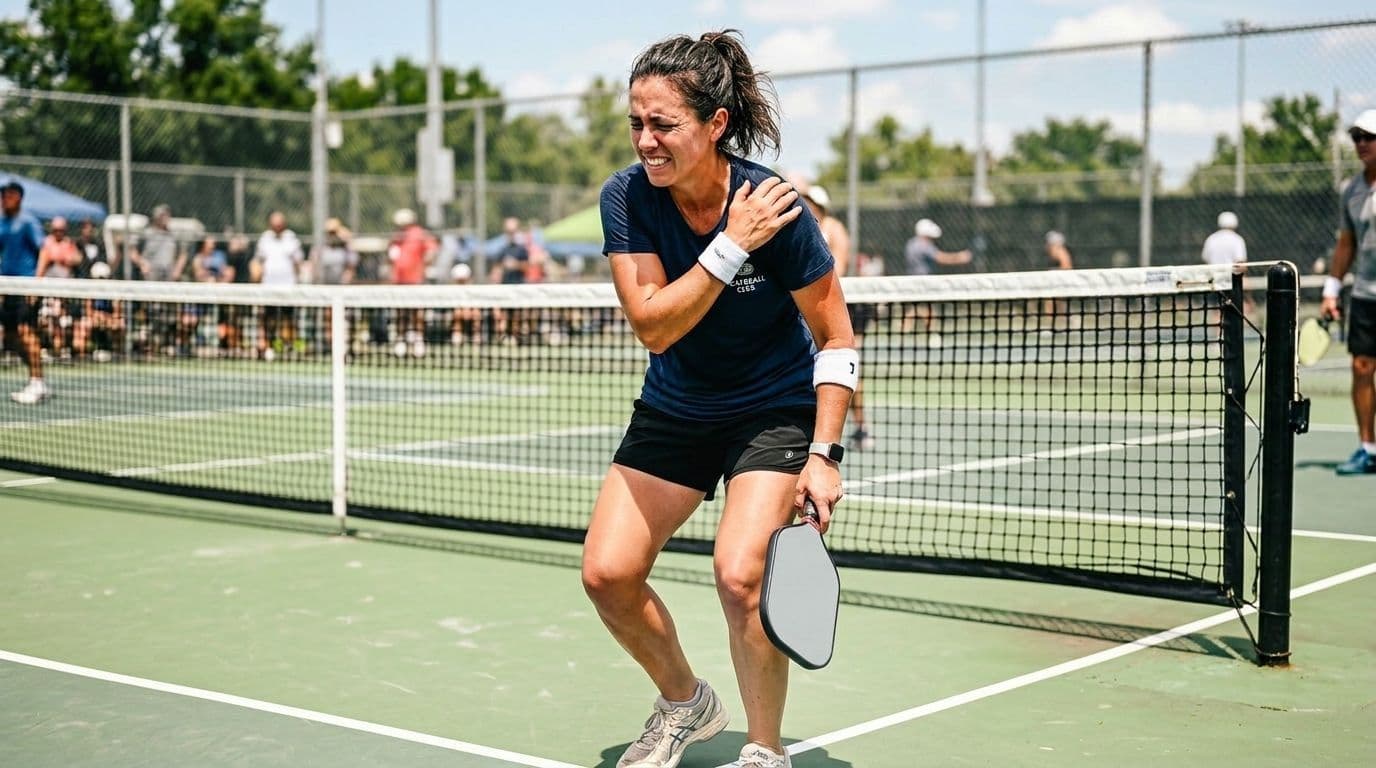
If you are dealing with pickleball shoulder pain, you are not alone. Shoulder injuries are the most common upper-body complaint among pickleball players, and most of them develop gradually before they become impossible to ignore.
The shoulder takes a significant load every time you serve, drive, or execute an overhead. That stress accumulates. Most players do not feel a single moment of injury. They feel weeks of mild discomfort that becomes moderate, then sharp.
This guide covers what is actually happening in your shoulder, which injury types are most common in pickleball, how to manage pain and rebuild strength, and how to protect your shoulder going forward.
The Most Common Pickleball Shoulder Injuries Explained
A clinical study of pickleball-related injuries from 2017 to 2022 found that rotator cuff injuries accounted for the highest proportion of shoulder injuries in pickleball players across all age groups.
Soft tissue strains were the most common injury category overall, and the number of injuries grew nearly sevenfold over the five-year study period.
Pickleball demands repetitive shoulder rotation on serves, overhead smashes, and cross-body drives. Those repeated motions stress the same soft tissue structures over and over. Here is what that stress produces.
| Injury Type | What It Is | Common Cause in Pickleball |
| Rotator cuff strain or tear | Damage to the tendons of the four rotator cuff muscles | Overhead smashes, serves, repetitive arm rotation |
| Shoulder impingement | Compression of tendons or bursa in the shoulder space | Repetitive overhead motion with poor mechanics |
| Tendonitis | Inflammation of a tendon, usually the supraspinatus | Overuse without adequate recovery |
| Bursitis | Inflammation of the bursa sac cushioning the joint | Friction from repeated overhead movement |
| Labral tear | Damage to the cartilage ring around the shoulder socket | Forceful overhead or bracing falls |
Rotator Cuff Injuries in Pickleball: What Is Really Happening
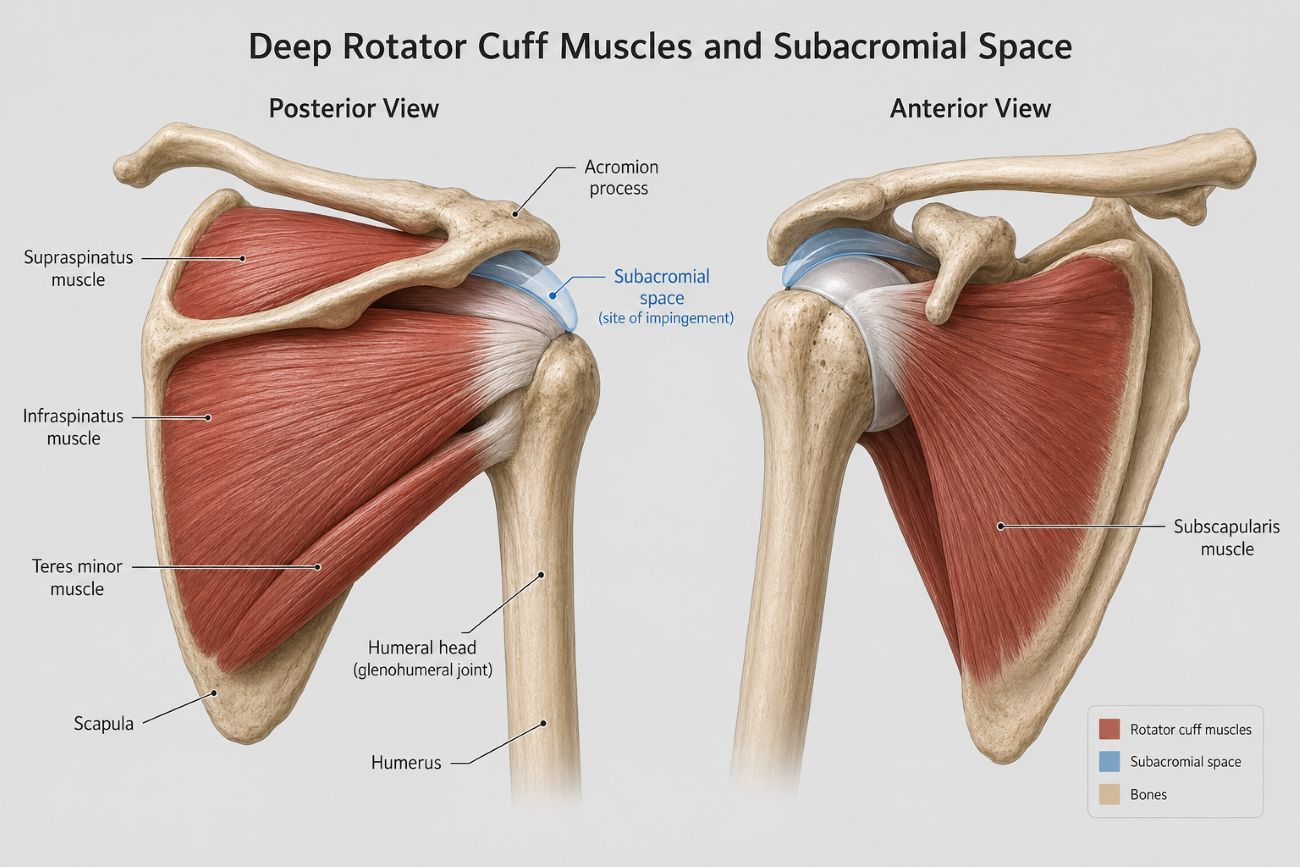
The rotator cuff is a group of four muscles and their tendons that stabilize the shoulder joint and control arm rotation. In pickleball, these tendons absorb force on every overhead motion, every backhand drive, and every serve.
Research on rotator cuff injuries in overhead sport athletes confirms that repetitive overhead motion is the primary mechanism of rotator cuff damage. The injury is not usually a single traumatic event.
It is cumulative microtrauma, small amounts of tendon stress that accumulate session after session without adequate recovery.
Tendonitis vs. a Tear: Understanding the Difference
Rotator cuff tendonitis is inflammation without structural damage. The tendon is irritated and swollen, but intact. Rest, targeted exercise, and reduced load typically resolve it within weeks.
A rotator cuff tear is structural damage to the tendon itself. Partial tears may be managed conservatively with physical therapy. Full tears, where the tendon is completely severed, often require surgical repair, particularly if you want to return to active play.
Pain on the outside or top of the shoulder that worsens during overhead motion points toward the rotator cuff. Weakness when raising the arm or rotating it against resistance confirms it further. Do not manage a suspected tear with rest alone. Get it evaluated.
Shoulder Impingement: The Hidden Culprit Behind Pickleball Pain
Shoulder impingement occurs when the tendons or bursa in the subacromial space get pinched between the bones of the shoulder during overhead movement. The space naturally narrows when you raise your arm above shoulder height, which happens repeatedly on serves and smashes.
Impingement is frequently confused with a rotator cuff tear because both produce pain during overhead motion. The distinction matters. Impingement is a compression problem.
It is often driven by muscle imbalance, poor posture, or faulty mechanics that can be corrected. A rotator cuff tear is structural damage that requires a different treatment path.
If your pain is worst in a specific arc of shoulder movement, typically between 60 and 120 degrees of arm elevation, that is a classic impingement pattern. A sports medicine physician or orthopedic specialist can differentiate between the two with a physical examination and, if necessary, imaging.
Why Pickleball Specifically Stresses the Shoulder
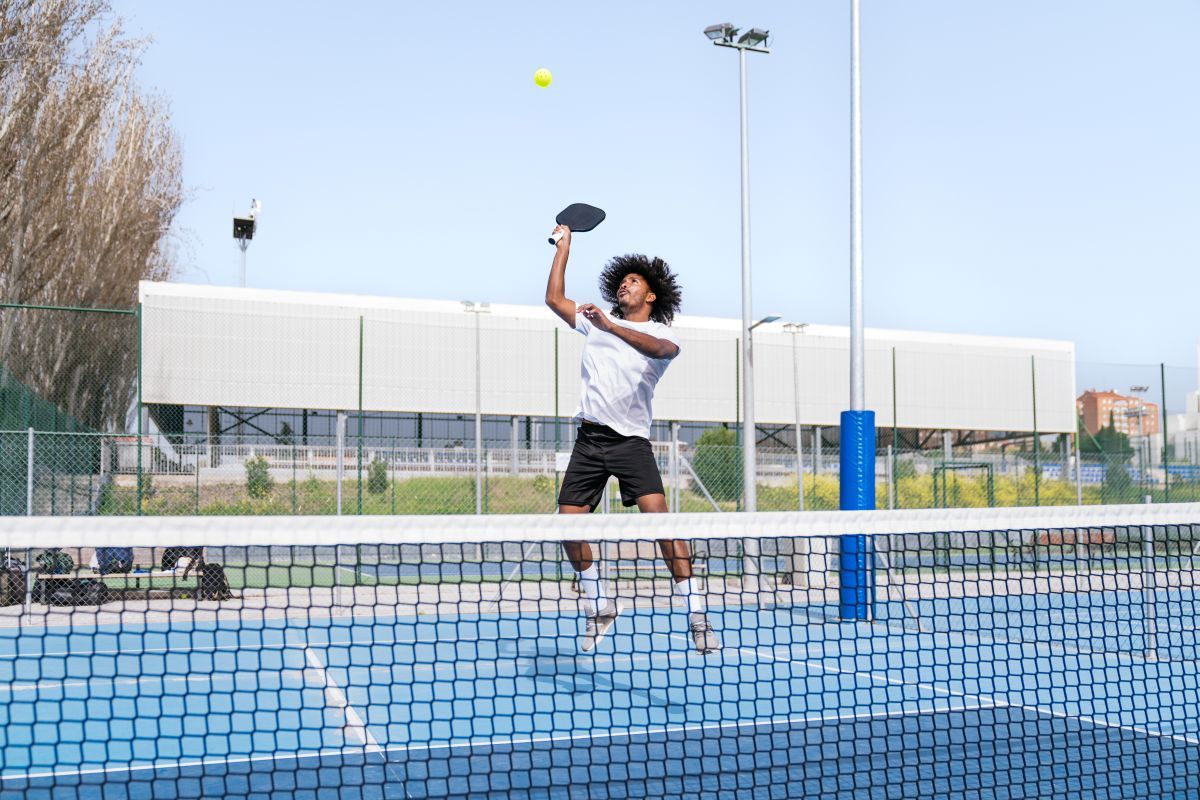
The overhead smash is the highest-stress shoulder movement in pickleball. The arm decelerates rapidly after contact, loading the posterior rotator cuff through eccentric contraction.
Repeated deceleration is the primary driver of infraspinatus and teres minor injuries in overhead sport athletes.
Understanding the full physical demands of regular pickleball play helps you recognize why shoulder fatigue accumulates faster than players expect. The sport engages the upper body far more consistently than it appears from the outside.
Several factors increase shoulder injury risk in pickleball specifically:
- Playing volume without conditioning. Adding sessions faster than your shoulder soft tissue can adapt is the most common cause.
- Poor overhead mechanics. Contacting the ball behind your body on smashes torques the shoulder into a compromised position.
- Paddle weight mismatch. A paddle that is too heavy shifts load onto the shoulder on every swing.
- Inadequate warm-up. Cold tendons are less elastic and absorb less force before reaching their stress threshold.
- Age-related tissue changes. Tendon elasticity and blood supply decrease with age, which extends recovery time and raises injury risk.
Pickleball Shoulder Exercises for Relief and Rebuilding Strength
These exercises address the two core problems behind most pickleball shoulder injuries: tendon irritation and muscle imbalance. Start with mobility exercises to restore range of motion, then progress to strengthening once pain allows.
Do not push through sharp pain on any of these. Mild discomfort during a stretch or controlled movement is acceptable. Sharp or shooting pain is a stop signal.
Mobility Exercises
1. Pendulum swings.
- Lean forward with your uninvolved hand on a table or chair for support
- Let the injured arm hang freely
- Use gentle momentum to swing the arm in small circles, forward and back, and side to side
- Keep the shoulder muscles relaxed throughout. The movement comes from the torso, not the arm
- Two minutes per direction, twice daily
Pendulum swings use gravity to gently distract the joint and maintain range of motion during the early irritation phase.
2. Doorway chest stretch.
- Stand in a doorway with your elbow bent at 90 degrees and your forearm against the frame
- Step slightly forward until you feel a gentle stretch across the front of the shoulder and chest
- Hold for 30 seconds. Repeat three times per side
Tight pectoral muscles pull the shoulder forward and reduce the subacromial space. Stretching them directly addresses one of the structural causes of impingement.
Strengthening Exercises
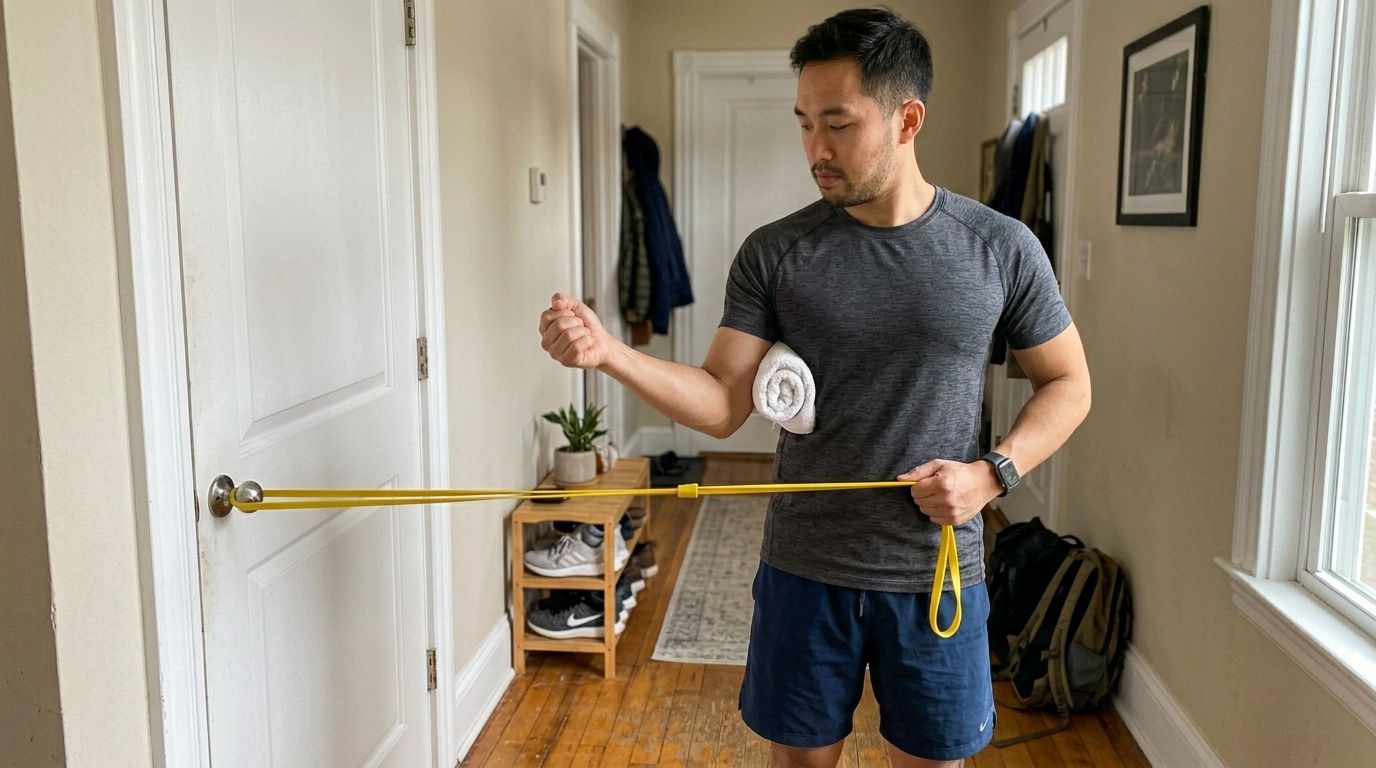
3. Resistance band external rotation.
- Anchor a resistance band at elbow height
- Stand sideways to the anchor point, elbow bent at 90 degrees and pressed against your side
- Rotate your forearm away from the band, keeping the elbow fixed
- Return slowly to the starting position. That slow return is the eccentric phase that rebuilds tendon strength
- Three sets of 15 repetitions, light resistance
External rotation targets the infraspinatus and teres minor, the two posterior rotator cuff muscles most stressed by overhead deceleration in pickleball.
4. Resistance band pull-aparts.
- Hold a resistance band at shoulder height with both hands, arms extended in front of you
- Pull the band apart horizontally until your arms are fully extended to each side
- Return slowly to the starting position
- Three sets of 15 repetitions
Pull-aparts strengthen the rear deltoid and mid-trapezius, which support proper scapular position and reduce the mechanical conditions that lead to impingement.
5. Scapular pinches.
- Sit or stand with your arms at your sides
- Squeeze your shoulder blades together and downward, as if pinching a pencil between them
- Hold for five seconds, then release
- Three sets of 15 repetitions
Scapular control is the foundation of shoulder health. Weak scapular stabilizers allow the shoulder blade to move poorly during arm elevation, which compresses structures in the subacromial space.
When to See a Doctor
Most mild shoulder irritation responds to rest, modified activity, and the exercises above within two to four weeks. Some situations require professional evaluation. Do not delay on these.
- Pain that is sharp, sudden, or associated with a specific moment of impact during play
- Weakness when raising your arm or rotating it against resistance
- Pain that persists at rest or wakes you from sleep
- A popping, clicking, or grinding sensation inside the shoulder joint
- No improvement after two to four weeks of modified activity and targeted exercise
- Visible swelling or bruising around the shoulder joint
- Numbness or tingling running down the arm
Biomechanical research on rotator cuff pathology shows that untreated tendon stress progressively degrades tissue integrity, increasing the probability of a complete tear. Early evaluation protects your long-term ability to play.
A sports medicine physician or orthopedic specialist can differentiate between tendonitis, a partial tear, and a full tear through physical examination and, when necessary, MRI.
Knowing what you are dealing with changes the treatment path significantly.
How to Prevent Pickleball Injuries: Shoulder Protection Strategies
Most shoulder injuries in pickleball are preventable. The conditions that create them, accumulated stress without adequate recovery and poor mechanics, are manageable if you address them before symptoms develop.
Warm Up Properly Before Every Session
Your shoulder tendons are less elastic when cold. A proper warm-up increases blood flow to those tissues and improves their ability to absorb force before you swing at full effort.
Practical warm-up and cool-down routines for court play include arm circles, cross-body shoulder swings, and light banded movements before picking up your paddle. Five minutes of preparation reduces your injury risk meaningfully.
Build Playing Volume Gradually
Adding sessions too quickly is the most common structural cause of overuse injuries. Increase your weekly court time by no more than 10 percent per week. Your cardiovascular system adapts faster than your tendons.
Just because you feel fine aerobically does not mean your shoulder soft tissue has caught up.
Strengthen the Rotator Cuff Off-Court
The five exercises in the previous section are not just for recovery. They are a maintenance program. Players who perform two rotator cuff strengthening sessions per week off-court have significantly lower rates of overuse shoulder injury than those who only play.
Choose the Right Paddle Weight
A paddle that is too heavy shifts load onto the shoulder on every swing. Most recreational players do well in the 7.5 to 8.3-ounce range. If you are already managing shoulder discomfort, move toward the lighter end of that range and see whether symptoms reduce within two weeks.
Fix Overhead Mechanics
Contact the ball in front of your body, not behind it. Contact behind the body on smashes forces the shoulder into internal rotation at the worst possible moment of deceleration. This single mechanical correction eliminates one of the most common injury mechanisms in the overhead game.
For players managing their intensity and technique as they get more experience, the guidance on managing playing intensity as you age is directly relevant regardless of your age. The principles of load management and technique refinement apply across skill levels.
For players who want structured coaching to correct overhead mechanics or build a shoulder-safe training routine, Bounce connects you with certified coaches in your city who can assess your movement patterns and give you a corrective plan built around your game.
Returning to Play After a Shoulder Injury
Do not return to full play the moment pain disappears. Pain relief and tissue healing are not the same thing. A shoulder that no longer hurts at rest may still be under-recovered for the demands of a full session.
A practical return-to-play progression:
- Dinking and short groundstrokes only, no overhead or full-swing drives, for two sessions
- Add moderate groundstrokes and serves at 70 percent effort for two sessions
- Return to full-pace drives and overheads, monitoring for any return of symptoms
- Resume full play if you complete step three without pain during or after
If symptoms return at any stage, step back one level and hold there for an additional week before progressing again.
Players who rush the return process account for the majority of re-injury cases. A few extra days of patience protects months of playing time. For players building back toward consistent competitive play, Bounce can connect you with coaches and structured formats in your city that let you re-enter match play at the right intensity level.
Conclusion
Pickleball shoulder pain is common, but it is not inevitable. The sport puts real stress on your shoulder. Managing that stress with consistent warm-up habits, appropriate playing volume, and targeted off-court strengthening keeps the injury rate low.
If you are already in pain, identify what type of injury you are dealing with before pushing through it. Tendonitis responds to rest and exercise. A rotator cuff tear does not respond the same way. The right diagnosis determines the right treatment path.
Fix your overhead mechanics, strengthen your rotator cuff between sessions, and give your shoulder the recovery time it needs. That combination keeps most players on the court long-term.
FAQs
What causes pickleball shoulder pain?
Most cases come from repetitive overhead motion: smashes, serves, and cross-body drives. These movements stress the rotator cuff tendons through cumulative microtrauma.
Poor mechanics, inadequate recovery, and playing volume that exceeds your shoulder's conditioning are the primary contributing factors.
How do I know if I have a rotator cuff injury or shoulder impingement?
Both produce pain during overhead movement, but they are different problems. Impingement typically produces pain in a specific arc of arm elevation (60 to 120 degrees) and is often driven by mechanical causes that can be corrected.
A rotator cuff injury involves tendon damage and may include weakness on arm rotation against resistance. A sports medicine physician can differentiate them with a physical exam.
Can I keep playing pickleball with shoulder pain?
That depends on the severity. Mild soreness that resolves within 24 hours after play can often be managed with modified activity and targeted exercises.
Pain that persists after sessions, worsens over time, or is present at rest requires you to stop playing and get evaluated before returning to court.
How long does pickleball shoulder pain take to heal?
Tendonitis and mild impingement typically respond within two to six weeks of modified activity and targeted rehabilitation. Partial rotator cuff tears may take three to six months of structured physical therapy.
Full tears that require surgical repair carry a recovery timeline of six to twelve months depending on age, fitness, and the extent of the injury.
What pickleball shoulder exercises are most effective?
External rotation with a resistance band, pull-aparts, and scapular pinches address the most common muscle imbalances behind pickleball shoulder injuries. Pendulum swings and doorway chest stretches restore mobility during the early recovery phase.
Perform these consistently two to three times per week as maintenance, not just during recovery.
How do I prevent shoulder pain from pickleball?
Warm up before every session, build playing volume no faster than 10 percent per week, perform rotator cuff strengthening exercises off-court twice per week, choose a paddle weight appropriate for your shoulder load, and fix overhead mechanics so contact happens in front of your body.
Consistency with these habits eliminates the conditions that produce most pickleball shoulder injuries.