Your paddle face is losing spin right now. Not because it is worn out, but because ball residue, sweat, and court dust are filling in the micro-texture that generates friction at contact. Knowing how to clean a pickleball paddle correctly restores that texture and extends paddle life significantly.
Most players wipe a paddle down once a month if that. A better routine takes less than two minutes after every session and makes a measurable difference in how the surface performs.
Want a quick answer? Wipe the face with a barely damp microfiber cloth after every session. For raw carbon fiber paddles, use a paddle eraser weekly to remove ball residue from the texture. Dry immediately and avoid soap, alcohol, soaking, or abrasive pads.
This guide explains why cleaning matters for spin, how to clean each part of the paddle properly, the best method for carbon fiber surfaces, and how to store your paddle to extend its life.
Why Pickleball Paddle Maintenance Matters
Every time you hit a topspin drive or a slice serve, the paddle face needs friction between ball and surface. That friction depends entirely on the micro-texture built into the paddle face during manufacturing.
Peer-reviewed research on surface micro-texture and friction coefficients shows that surface texture patterns directly determine the coefficient of friction between two contacting surfaces.
When ball residue, sweat oils, and dust fill in that texture on your paddle face, friction drops and the ball slides rather than grips. The result is less spin on the same swing.
Cleaning restores that texture. It does not repair a worn surface, but it removes the buildup that is masking usable grit. For most recreational and competitive players, a dirty paddle is the reason their spin shots feel flat, not a degraded surface.
Good pickleball paddle care extends beyond cleaning. Proper storage away from heat, cold, and direct sunlight prevents delamination and dead spots. A paddle left in a hot car for an afternoon can suffer core damage that no cleaning routine will fix.
If you are still deciding on your current setup, the guide to choosing the right pickleball paddle covers surface materials, core types, and what to prioritize at each stage of your game.
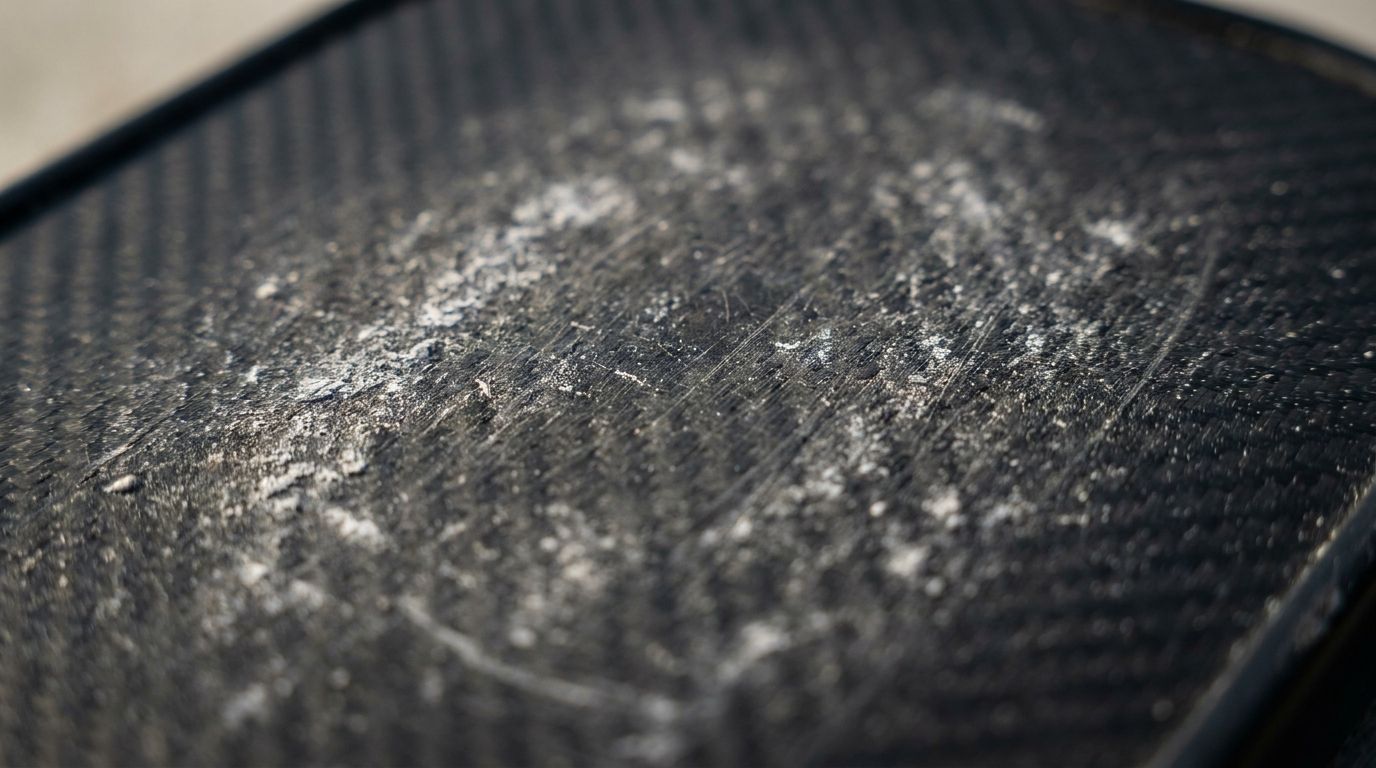
Cleaning Each Part of Your Paddle
The paddle face, edge guard, and grip each need a slightly different approach. Treating them all the same way is one of the most common mistakes players make.
Cleaning the Paddle Face
The paddle face is the most performance-sensitive part. It needs to be cleaned after every session, not just when it looks visibly dirty.
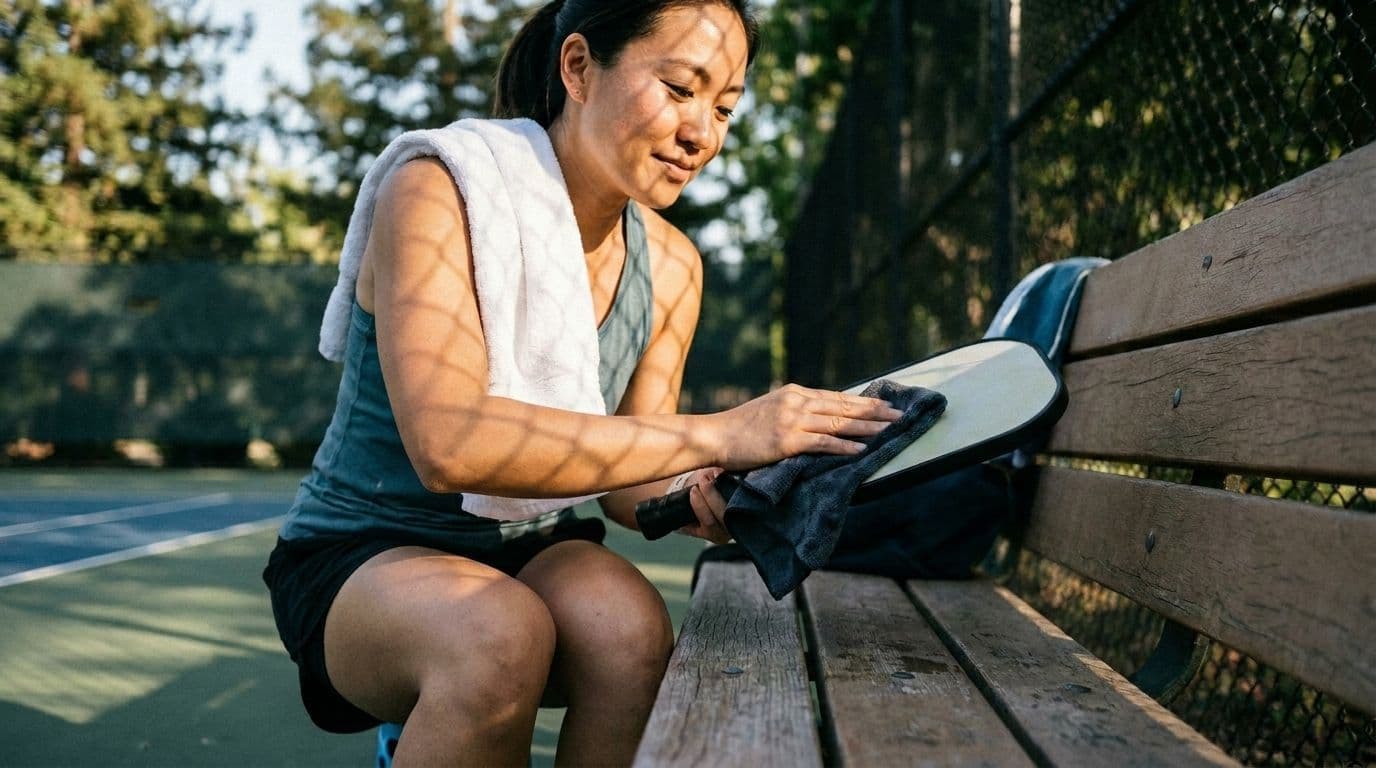
For most surfaces, a slightly damp microfiber cloth is sufficient. Wipe the face in short, firm strokes from the center outward. Use minimal moisture. The goal is to lift residue, not saturate the surface.
Do not use household cleaners, dish soap, or abrasive cloths. These strip surface coatings, degrade edge seals, and can introduce moisture into the core.
Plain water on microfiber is the safest and most effective routine for standard fiberglass and composite surfaces.
After wiping, dry the face immediately with the clean side of the cloth. Do not leave moisture sitting on the surface between sessions.
Pickleball Paddle Grip Cleaning: Preventing Sweat Buildup
The grip collects sweat, oils, and bacteria faster than any other part of the paddle. A slippery grip forces you to grip harder, which creates tension in your hand and forearm and directly affects touch shots near the kitchen.
After every session, wipe the grip down with a dry towel or cloth. For heavier sweat buildup, a slightly damp cloth works, but the grip must be fully dry before the paddle is stored.
Signs that the grip needs replacing rather than cleaning:
- The surface feels smooth and waxy rather than tacky
- Grip tape is peeling, cracking, or separating at the seams
- Your hand slips during hard exchanges even after wiping
- The original texture is no longer visible
Overgrips are inexpensive and easy to apply. Most players at the recreational level replace them every four to six weeks with regular play, or sooner if any of the above signs appear.
Cleaning the Edge Guard
The edge guard protects the paddle core from impact damage and moisture ingress. It accumulates court dust and scuff marks but rarely needs more than a wipe with a damp cloth.
Check the edge guard periodically for chips, cracks, or sections that have started to peel away from the paddle body. A compromised edge guard allows moisture into the core, which accelerates delamination. If you notice separation, address it before it spreads.
How to Clean a Carbon Fiber Pickleball Paddle
Carbon fiber paddle surfaces require a different cleaning approach because water alone is insufficient. The peel-ply texture on raw carbon fiber paddles traps ball residue deep in the weave pattern where a damp cloth cannot reach it.
Research on abrasive wear of carbon fiber reinforced epoxy composites published in shows that CFRP surfaces are particularly vulnerable to surface degradation when residue and particulate matter are allowed to accumulate, as the abrasive action accelerates texture loss faster than on other composite materials.
The Paddle Eraser Method
A paddle eraser, sometimes called a cleaning block or carbon fiber eraser, is a soft abrasive rubber block specifically designed to lift compressed residue from textured paddle faces without damaging the surface.
The cleaning process:
- Dry the paddle face completely before using the eraser
- Use short, firm strokes in one direction across the paddle face
- Work in sections from one side to the other
- Brush away the loosened residue with a clean dry cloth
- Do not apply water before or during the eraser step
The eraser method is safe for all carbon fiber surfaces. It removes ball polymer residue, clay, and compressed dust without stripping the surface texture that generates spin. Use it once a week with regular play, or any time your topspin shots feel noticeably flatter.
Damp Cloth After Eraser
Once the eraser step is complete, a light pass with a barely damp microfiber cloth removes any remaining debris and leaves the surface clean. Dry immediately.
Do not skip the eraser step and go straight to the cloth on a carbon fiber surface. The cloth alone will smear residue across the texture without lifting it.
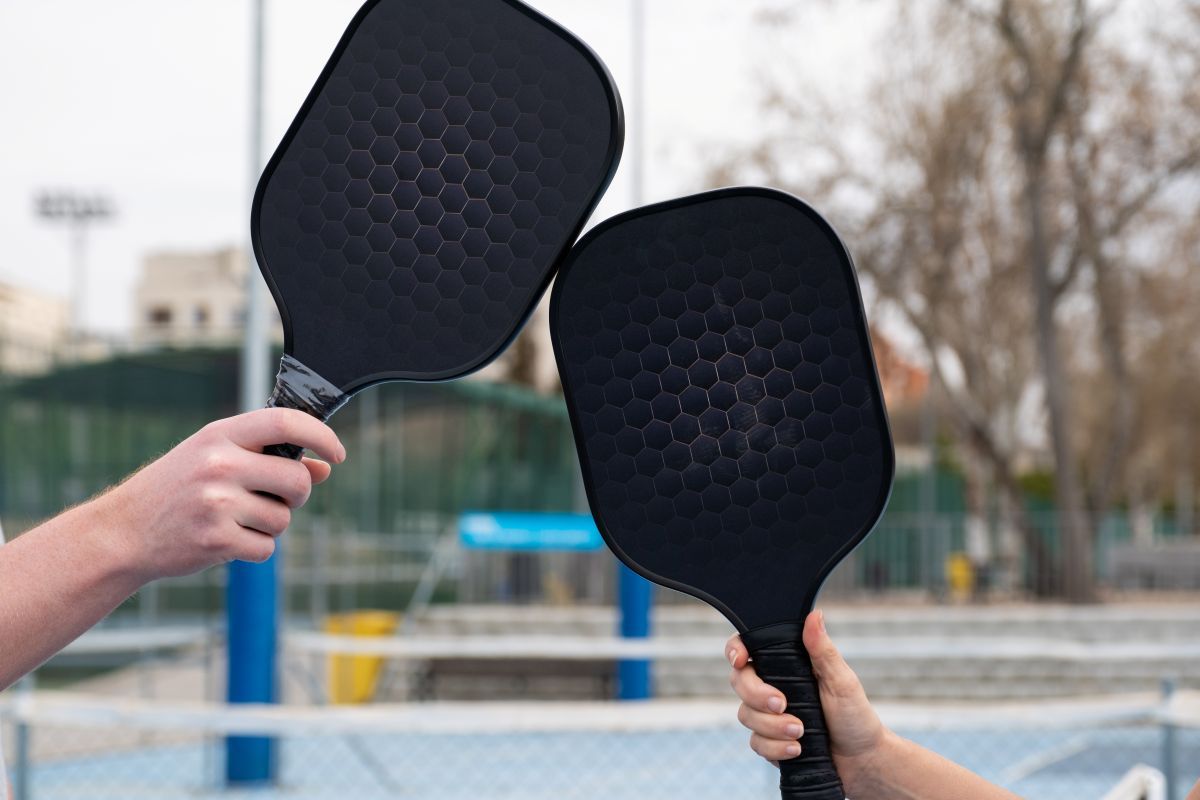
Storage and Handling: Protecting Paddle Life
Cleaning alone does not determine how long your paddle performs. Good pickleball paddle care extends beyond what you do after a session. Storage conditions between sessions account for a significant share of paddle degradation.
Temperature and Sunlight
Heat is the primary enemy of paddle longevity. Temperatures above 100°F soften the adhesive that bonds the face sheets to the polypropylene honeycomb core. Repeated heat exposure causes delamination and dead spots that no cleaning routine can reverse.
Never leave your paddle in a parked car during summer. A car interior can reach 140°F or higher within 30 minutes of parking. Store your paddle indoors at room temperature.
Direct sunlight causes the same type of heat damage at a slower rate. Avoid leaving paddles on outdoor benches or court bags exposed to sun between sessions.
Cold Temperatures
Extreme cold makes the paddle face brittle and reduces the elasticity of the edge seal and grip adhesive. Playing with a cold paddle increases the risk of edge guard cracking on mis-hits. If you play in cold conditions, keep the paddle in a bag or sleeve between points and warm it briefly before starting.
Protective Covers
A paddle cover or sleeve protects against surface scratches during transport. Paddle faces sliding against other equipment in a bag can cause micro-abrasions that degrade the surface texture faster than normal play.
Most paddle manufacturers include a sleeve. Use it. This is the lowest-effort protection step available and costs nothing.
Humidity and Moisture
Store paddles in a dry environment. Prolonged humidity exposure degrades the grip adhesive and can introduce moisture into edge seal gaps. If you play outdoors in humid or wet conditions, wipe the paddle down thoroughly before storing it.
What to Avoid When Cleaning Your Paddle
Several cleaning methods are commonly used but cause irreversible surface damage. None of them are worth the short-term convenience.
| Method to Avoid | What It Does | Better Alternative |
| Household cleaners | Strip coatings, degrade seals | Damp microfiber cloth |
| Rough abrasive pads | Remove surface texture permanently | Paddle eraser block |
| Running water or soaking | Moisture enters core | Damp cloth, dry immediately |
| Alcohol or solvents | Dissolve adhesives and grip coating | Dry towel wipe-down |
| Machine washing grip tape | Damages adhesive backing | Replace overgrip directly |
How Often Should You Clean Your Paddle?
Cleaning frequency depends on how often you play and under what conditions, but a clear baseline keeps the surface performing consistently.
After Every Session
Wipe the grip with a dry cloth. Wipe the paddle face with a damp microfiber cloth. This takes under two minutes and prevents residue from bonding to the surface between sessions.
Once Per Week With Regular Play
Use the paddle eraser on carbon fiber surfaces. For fiberglass or composite faces, the damp cloth routine is sufficient unless you notice reduced spin on topspin shots or visible residue buildup that wipe-downs are not removing.
When Performance Changes
If your spin shots feel noticeably flatter than usual, that is the most reliable signal that the paddle face needs a thorough clean rather than a quick wipe. Do the full eraser routine and compare performance in the next session.
Understanding how spin is generated during contact helps you recognize when paddle condition is the cause versus a technique issue. The guide to pickleball shot types and how they work covers the mechanics behind topspin, slice, and drive in practical terms.
When to Replace Rather Than Clean
Cleaning restores a dirty surface. It does not fix a worn one. Knowing when to replace the paddle rather than continuing to clean it saves you from playing with equipment that is holding your game back.
Signs the paddle face is genuinely worn, not just dirty:
- Spin does not return after a thorough eraser cleaning
- The surface looks visibly smooth with no texture remaining
- You hear a noticeably different sound at contact than when the paddle was new
- There are dead spots where the ball does not bounce normally off the face
- Edge guard damage has allowed moisture into the core
A worn surface cannot be restored. Once the texture is gone, the paddle is gone. For most recreational players, a paddle lasts 12 to 24 months with proper care. Players who train frequently may see performance degradation at the 6 to 9 month mark.
When you reach that point, the guide to pickleball equipment selection from paddle to full setup walks through what to prioritize in your next paddle given your current skill level and playing style.
Building Paddle Care Into Your Practice Routine
Consistent cleaning is easier to maintain when it is attached to an existing habit. Wipe your grip immediately after you put the paddle down at the end of a session. That single two-second action prevents the majority of grip degradation.
Keep a microfiber cloth in your paddle bag at all times. If it is not in the bag, it will not get used. A paddle eraser takes up almost no space and lasts months.
Players who take structured sessions seriously and train with intent tend to maintain equipment better because they understand how paddle condition connects to shot execution.
If you are working on building your game through structured practice drills, you will notice quickly when your paddle stops responding the way it should.
For clubs and players who want to develop structured play habits around coaching and competitive formats, Bounce connects players with certified coaches and organized sessions in their city where equipment performance actually matters.
Conclusion
Knowing how to clean a pickleball paddle correctly is one of the lowest-effort, highest-return habits in the sport.
Two minutes after every session protects the surface texture that generates spin, extends grip life, and gives you reliable feedback when something is genuinely wrong with the paddle rather than just dirty.
The method is straightforward: damp microfiber cloth on the face, dry cloth on the grip, paddle eraser weekly for carbon fiber surfaces, and storage away from heat and direct sunlight.
Do it consistently and your paddle performs like new for longer. Skip it and you will be blaming your technique for spin problems that a two-minute routine would have prevented.
For players building their game through structured coaching and organized play, Bounce connects you with certified coaches and competitive formats in your city where equipment condition and consistent practice both contribute to meaningful improvement.
FAQs
How do you clean a pickleball paddle?
Wipe the paddle face with a slightly damp microfiber cloth after every session. For carbon fiber surfaces, use a paddle eraser in short firm strokes first, then follow with the damp cloth.
Dry the face immediately after wiping. Never use household cleaners, abrasive pads, or excess water.
How to clean a pickleball paddle grip?
Wipe the grip with a dry towel immediately after every session to remove sweat and oils before they set. For heavier buildup, use a barely damp cloth and dry thoroughly before storing.
Replace the overgrip entirely once the surface feels smooth, waxy, or begins to peel. Most players replace overgrips every four to six weeks with regular play.
How often should you clean a pickleball paddle?
Wipe the grip and face after every session. Use a paddle eraser on carbon fiber surfaces once per week with regular play. Clean thoroughly any time you notice reduced spin or visible residue buildup that routine wiping does not remove.
Can you wash a pickleball paddle with water?
Minimal moisture on a microfiber cloth is fine for cleaning the face. Do not rinse, soak, or run a paddle under water. Excess moisture can enter through edge seal gaps and degrade the polypropylene honeycomb core, causing dead spots that are not reversible.
What is a paddle eraser and do you need one?
A paddle eraser is a soft rubber block designed to lift compressed ball residue from textured paddle faces without damaging the surface. If you use a carbon fiber paddle, you need one.
For fiberglass and composite surfaces, a damp microfiber cloth is sufficient for routine maintenance, but an eraser can restore performance if the surface has significant buildup.
Per USA Pickleball's approved equipment standards, players are responsible for ensuring paddle surfaces remain within regulation compliance during play. A clean surface is part of that responsibility.
Does cleaning a pickleball paddle restore spin?
Yes, if the surface is dirty rather than worn. Cleaning removes ball polymer residue, clay, and dust that fill in the surface texture and reduce friction.
If thorough cleaning does not restore spin, the surface is likely worn down rather than dirty, and the paddle should be replaced.