Advanced pickleball techniques represent the refinement of mechanics, positioning, and decision-making under pressure.
At higher levels of play, separation is created through precision, consistency, and intelligent shot selection rather than raw power. Advanced players control tempo, apply spin intentionally, and construct points with purpose instead of reacting impulsively.
Progressing beyond intermediate play requires reliable resets, disciplined transition movement, compact hand battles at the kitchen, and strategic patience. These layered skills combine footwork, paddle control, and probability-based choices into stable execution.
Structured coaching and competitive repetition accelerate this evolution, helping players transform technical ability into dependable performance.
What Separates Advanced Players From Intermediate Players?
The gap between intermediate and advanced players is often misunderstood. It is not defined by highlight shots. It is defined by reliability and efficiency.
Technical Control Under Pressure
Advanced players maintain shot tolerance during long rallies. They can sustain neutral exchanges without forcing errors. Their resets land consistently in the kitchen, even when absorbing heavy drives. Instead of swinging harder under pressure, they shorten their motion and prioritize paddle stability.
They also understand pace absorption. Rather than countering speed with more speed, they soften impact through grip relaxation and controlled paddle angles. This allows them to redirect the ball with minimal backswing. The hands remain compact, particularly during fast exchanges at the non-volley zone.
Most importantly, their mechanics hold up in uncomfortable positions. Whether stretched wide, retreating on defense, or transitioning forward, their fundamentals remain intact. This consistency creates pressure on opponents over time.
Strategic Awareness
Advanced technique is inseparable from strategy. Higher-level players recognize patterns early in rallies. They identify backhand weaknesses, movement limitations, and predictable tendencies.
They construct points in layers:
- Establish neutral control
- Create incremental imbalance
- Accelerate at the correct opportunity
Instead of attacking randomly, they wait for high-percentage balls. This patience increases efficiency and reduces unforced errors.
Footwork and Positioning
Footwork is often the hidden separator. Advanced players use compact adjustment steps before contact. They split-step consistently before the opponent strikes and maintain balanced weight distribution when transitioning from baseline to kitchen.
Below is a simplified comparison:
| Skill Area | Intermediate Player | Advanced Player |
| Resets | Inconsistent under pace | Reliable under pressure |
| Dinking | Neutral exchanges only | Manipulates height, spin, and direction |
| Speed-Ups | Reactive | Selective and strategic |
| Footwork | Larger recovery steps | Micro-adjustments and balance control |
| Decision-Making | Impulsive | Probability-based |
Advanced pickleball techniques are the result of integrating these elements simultaneously.
Advanced Pickleball Techniques at the Kitchen Line
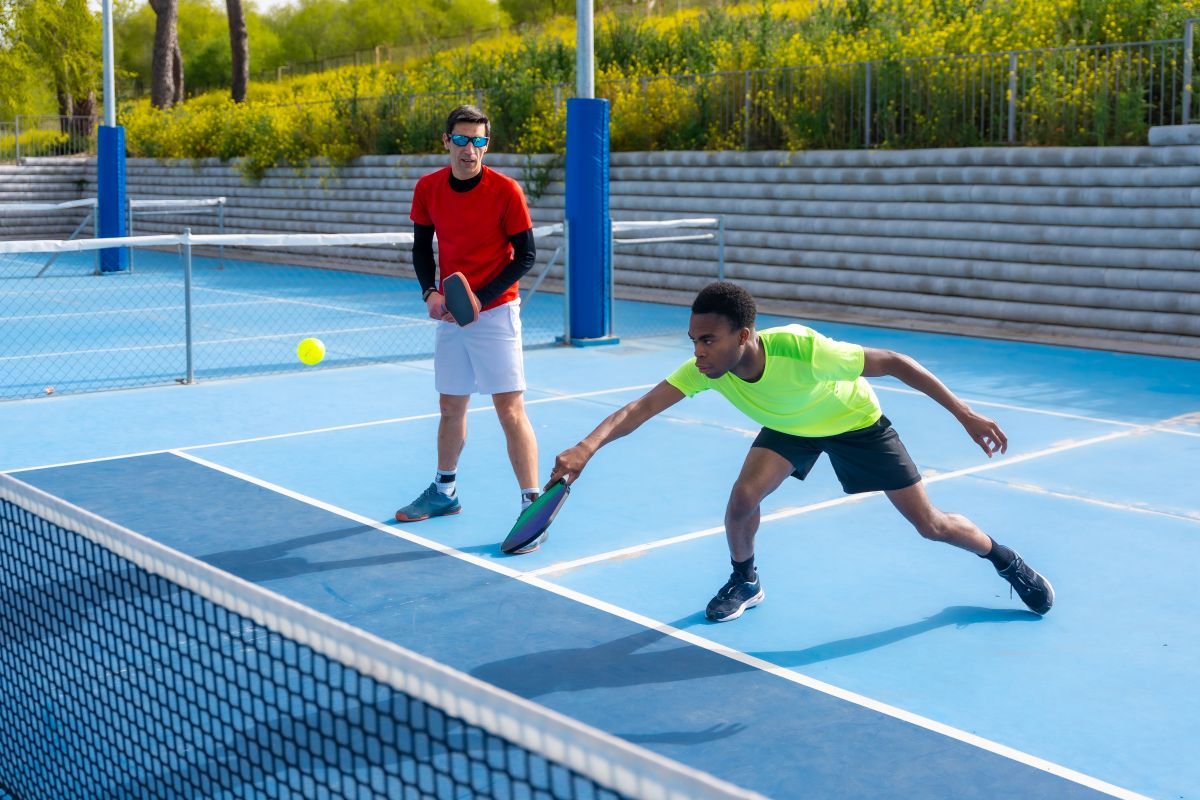
The non-volley zone is where advanced matches are decided. Control at the kitchen determines rally stability, offensive timing, and psychological pressure.
At higher levels, players are not simply trying to keep the ball in play. They are manipulating height, spin, and tempo to create attackable opportunities while minimizing their own exposure.
The Third-Shot Drop Variations
The traditional third-shot drop remains foundational, but advanced players rely on multiple variations to prevent predictability.
Rather than repeating the same arc and speed, they adjust spin, trajectory, and disguise based on opponent positioning.
Key third-shot drop variations include:
- Standard drop: Emphasizes arc and soft landing into the kitchen. The primary goal is a safe transition forward.
- Topspin drop: Adds forward rotation, increasing net clearance while keeping the bounce low.
- Hybrid drive-drop: Starts with a drive-like preparation, then softens into a dipping drop to force hesitation.
Execution depends on a slightly open paddle face, controlled lift from the legs, and relaxed hands. Advanced players prioritize height and margin over raw pace, ensuring the ball descends gently into the non-volley zone.
A reliable third-shot drop establishes forward transition. Without consistency here, sustained pressure at advanced levels becomes impossible.
The Fourth-Shot Reset
The fourth shot often determines rally direction. When facing aggressive third-shot drives, advanced players neutralize pace instead of countering recklessly.
The technical priorities are:
- Relaxed grip pressure at contact
- Slightly open paddle face
- Minimal backswing
- Lowered center of gravity
Body positioning is critical. The player absorbs the ball rather than swinging through it. The objective is a soft, unattackable reset that lands low in the kitchen. Height control matters more than depth.
A properly executed fourth-shot reset converts defensive pressure into a neutral exchange and stabilizes the rally immediately.
Dinking With Intent
Advanced dinking extends beyond safe exchanges. At this level, dinks are strategic tools designed to manipulate opponents.
Players intentionally vary:
- Height (forcing upward contact)
- Depth (pulling opponents forward or pushing them back)
- Spin (topspin for pressure, slice for skid)
- Direction (sharp cross-court angles vs middle stability)
Aggressive dinks target the opponent’s feet or stretch their reach. Neutral dinks maintain balance when no attackable opportunity exists.
Alternating pace and spin disrupts rhythm. The objective is not to rush a speed-up but to create a predictable pop-up through controlled pressure.
Speed-Ups and Counterattacks
Selective acceleration defines high-level kitchen play. Advanced players attack only when the ball rises above net height or drifts too far inside the court.
Effective speed-ups share common characteristics:
- Compact, wrist-driven motion
- Paddle out in front
- Minimal backswing
- Directional targeting to body or dominant hip
Counterattacks require constant readiness. The paddle position stays high and centered. When opponents initiate speed-ups, advanced players redirect to open space instead of blocking passively. This redirection shifts momentum immediately and maintains offensive initiative.
The Erne
The Erne is an advanced net-poaching maneuver executed by stepping outside the court boundary near the kitchen to intercept a cross-court dink before it bounces.
It is not a flashy move used randomly. It is a calculated interception based on pattern recognition.
Successful Erne execution requires:
- Anticipation of repetitive cross-court dinks
- Explosive lateral footwork
- Balanced landing outside the sideline
- Immediate recovery positioning
Timing is everything. If mistimed, the open court becomes vulnerable. When executed correctly, however, the Erne compresses reaction time and creates a decisive offensive advantage.
At advanced levels, kitchen dominance is built on disciplined patience combined with precise acceleration. Mastery of these techniques transforms the non-volley zone from a neutral space into a strategic battlefield controlled by intention rather than impulse.
Advanced Offensive Techniques
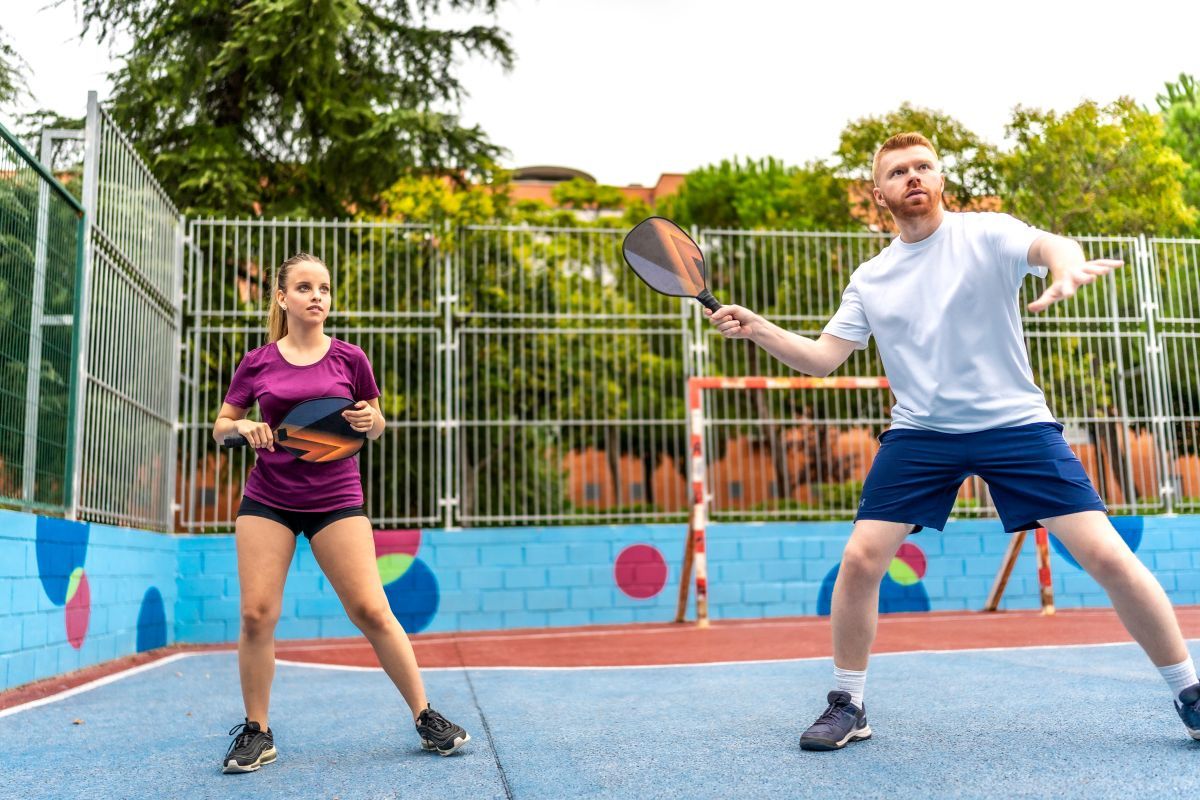
Offensive skill at advanced levels relies on spin, disguise, and geometry.
Spin-Based Drives
Topspin drives create downward pressure, allowing higher net clearance with aggressive pace. The paddle path moves low to high. Contact occurs slightly in front of the body to maximize rotation.
Spin increases margin. It allows players to swing confidently without sacrificing control. Placement remains prioritized over pure velocity.
The Roll Volley
The roll volley is a compact topspin volley executed at the kitchen. The paddle moves forward and slightly upward, brushing the ball to create controlled aggression.
Shoulder rotation remains minimal. Wrist stability ensures consistent contact. This shot turns neutral exchanges into offensive opportunities without excessive risk.
ATP (Around-the-Post)
The ATP exploits extreme angles. When opponents hit wide cross-court shots, advanced players allow the ball to travel outside the net post before striking parallel to the sideline.
Execution requires quick lateral movement and geometric awareness. The contact point must remain controlled to prevent overextension.
Offensive Lob Usage
Lobs at advanced levels are situational weapons. They target opponents leaning forward aggressively. Disguise is critical. The preparation mirrors a dink before lifting the ball over the opponent’s head.
Effective lobs land deep near the baseline. Height and depth balance must prevent overhead opportunities.
Defensive Advanced Pickleball Techniques
Defense separates competitive players from recreational participants.
Resetting From the Transition Zone
The transition zone is often the most vulnerable position. Advanced players focus on:
- Soft hands
- Minimal swing length
Knees bend, paddle remains out front, and the goal is a controlled drop into the kitchen.
Precision matters more than speed. Each reset shortens the opponent’s offensive window.
Countering Hard Speed-Ups
High-level matches include rapid exchanges. Advanced players maintain ready position at chest height. Blocking requires slight paddle angle adjustments. Redirecting pace to open space shifts momentum immediately.
Hands remain quiet and efficient. Large swings reduce reaction time and increase error probability.
Defending Overheads
When forced back by lobs, advanced players pivot quickly and turn shoulders early. Footwork includes crossover steps for speed. Defensive lobs aim high and deep to regain kitchen positioning.
Recovery remains disciplined. After defending, players re-establish balance and forward court presence as soon as possible.
Footwork Patterns Used by Advanced Players
Footwork supports every advanced pickleball technique. Without efficient movement, even strong mechanics break down under speed and pressure.
Advanced players prioritize positioning before execution, ensuring they strike from balanced, stable platforms rather than reaching or reacting late.
Core footwork patterns include:
Split-step timing
- Executed just before the opponent makes contact
- Keeps weight centered and reactive
- Improves first-step explosiveness in any direction
Micro-adjustment steps
- Small, quick positioning steps before contact
- Fine-tune spacing from the ball
- Prevent overreaching and off-balance swings
Lateral shuffles
- Maintain square positioning at the kitchen line
- Preserve balance during extended dink exchanges
- Reduce unnecessary crossover exposure
Crossover steps
- Used for rapid lateral court coverage
- Essential when chasing sharp angles or wide drives
- Generate more speed than shuffles when distance increases
Transition footwork is equally critical. Advanced players move forward with control rather than sprinting recklessly toward the non-volley zone. Key principles include:
- Stopping before striking during transition
- Setting feet before attempting resets
- Avoiding contact while drifting forward
Weight transfer remains subtle and efficient. Advanced players:
- Keep their center of gravity stable
- Shift weight smoothly from back to front when driving
- Avoid excessive leaning that compromises recovery
Advanced Doubles Strategy Techniques
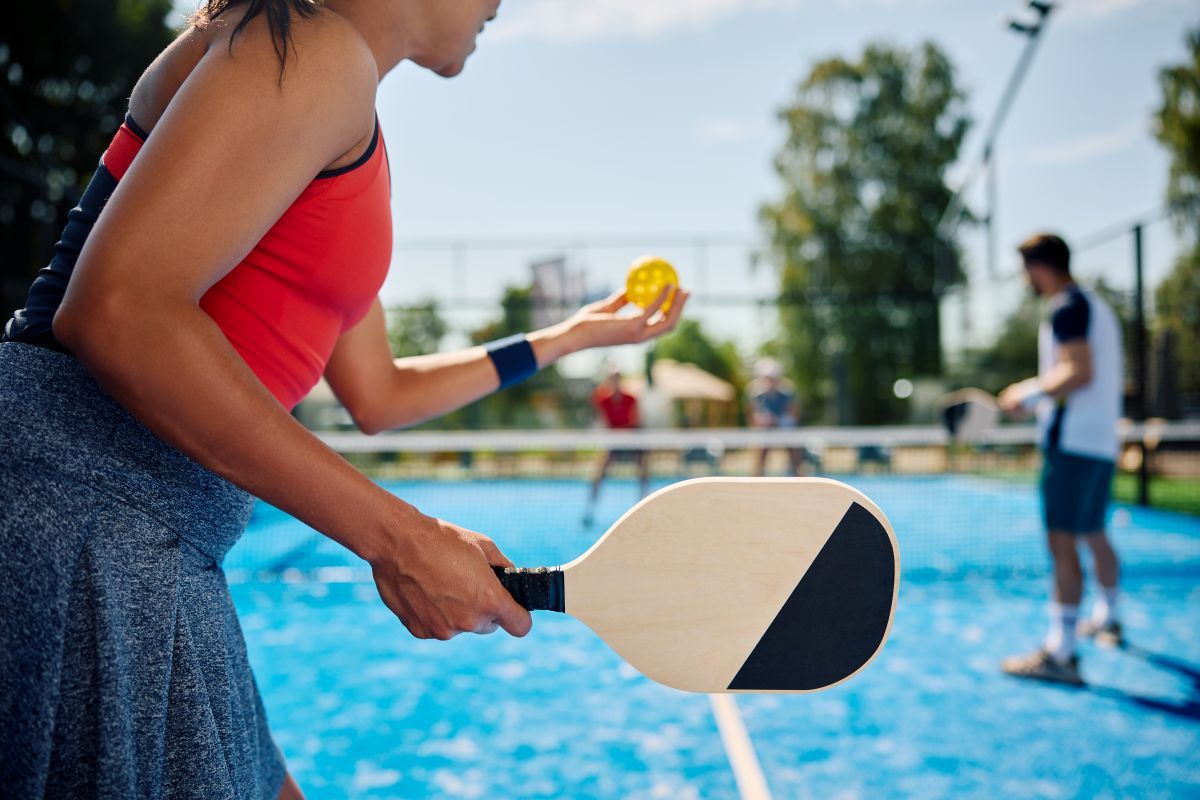
Doubles demands coordination and structure.
Stacking and Positioning
Stacking allows teams to optimize forehand dominance or isolate specific matchups. Advanced teams rotate deliberately to maintain strategic advantage.
Positioning adjusts based on opponent tendencies. Forehand-middle coverage reduces confusion and strengthens attack potential.
Communication Patterns
High-level teams communicate continuously. They call switches, signal lobs, and confirm middle responsibility. Clear communication prevents hesitation.
Non-verbal cues, such as paddle signals behind the back during serves, also support strategic variation.
Targeting Weaknesses
Advanced players analyze opponent patterns. They isolate weaker backhands, target slower lateral movement, and exploit hesitation during transitions.
Shot selection aligns with probability. Rather than chasing highlight winners, advanced teams build pressure methodically.
Shot Selection and Decision-Making at the Advanced Level
Decision-making transforms technique into competitive advantage. At advanced levels, players do not rely on instinct alone. They apply structured evaluation to every rally, balancing aggression with probability.
Advanced shot selection is guided by:
Risk vs. reward assessment:
- Avoiding low-percentage attacks during neutral exchanges
- Accelerating only on balls above net height
- Prioritizing depth and placement over raw speed
Rally context awareness:
- Recognizing when a point is stable vs. vulnerable
- Identifying when opponents are off balance
- Maintaining discipline instead of forcing winners
Momentum awareness also influences decision-making. Advanced players adjust strategy based on score and match flow.
When leading:
- Use controlled aggression
- Reduce unnecessary risk
- Extend rallies to pressure opponents into errors
When trailing:
- Increase patience
- Re-establish consistency
- Focus on neutral resets before accelerating
Opponent tendencies shape tactical adjustments. Advanced players actively gather data during rallies and adapt accordingly.
If an opponent struggles with pace:
- Increase controlled drives
- Target body positioning
- Apply topspin pressure
If an opponent excels in hand battles:
- Extend dink exchanges
- Reset aggressively instead of counterpunching
- Force movement rather than speed exchanges
How Coaching Accelerates Advanced Technique Development
Coaching accelerates refinement by shortening feedback loops. Instead of self-diagnosing errors, players receive immediate corrections on paddle angle, foot positioning, and timing.
Video analysis enhances awareness. Slow-motion review reveals mechanical inefficiencies invisible during live rallies. Progressive layering builds advanced techniques systematically, ensuring stability before speed increases.
Certified instructors from organizations such as PPR, PTR, and PCI provide structured progression pathways. Advanced clinics emphasize repetition under controlled intensity before transitioning to live-point integration.
Bounce connects players with these certified professionals through searchable city-based listings. Coaches maintain public profiles with scheduling tools and transparent pricing. Clubs list advanced clinics and competitive programs directly within the platform. This integration simplifies access to high-level instruction and organized competitive repetition.
As players engage consistently in structured environments, advanced pickleball techniques become habitual rather than situational. Precision replaces inconsistency. Patience replaces impulsiveness. Execution stabilizes under pressure.
Final Thoughts
Advanced pickleball techniques are built on disciplined mechanics, intelligent positioning, and strategic patience. They demand consistent execution under pressure and refined decision-making during extended rallies. Power alone does not sustain competitive success. Control, balance, and probability-based choices define high-level play.
True advancement occurs through repetition in structured environments. Exposure to competitive pace, certified coaching feedback, and organized programming accelerates refinement.
Mastery is not accidental. It is constructed through disciplined practice, strategic awareness, and sustained engagement in environments that challenge and elevate performance.
Ready to elevate your game? Visit Bounce to find advanced coaches, competitive leagues, and structured programs in your city - and start training at the level your skills demand.