Understanding the differences between a pickleball court vs tennis court is essential for anyone stepping into racket sports or transitioning between them.
While both sports share similarities in equipment and gameplay structure, the courts themselves create entirely different playing experiences. Court size, layout, and markings directly influence movement, strategy, and overall accessibility.
Official Dimensions of a Pickleball Court
A pickleball court is significantly smaller than a tennis court, measuring 20 feet wide by 44 feet long. This size remains consistent for both singles and doubles play, which simplifies the learning process and reduces spatial complexity for beginners. The compact dimensions are one of the key reasons why pickleball is widely considered more accessible and less physically demanding.
Beyond the playing lines, the recommended total space for a pickleball court is larger to allow for safe movement. Ideally, a full playing area extends to 30 feet by 60 feet, providing adequate room for:
- Serves
- Returns
- Lateral movement
This extra space is especially important in organized play and competitive environments where players require more freedom to move without obstruction.
One of the most distinctive features of a pickleball court is the non-volley zone, commonly referred to as the kitchen. This area extends 7 feet from the net on both sides and prevents players from hitting volleys while standing inside it. The kitchen introduces a strategic layer that emphasizes control, patience, and shot placement rather than raw power.
The net height in pickleball also differs from tennis. It measures 36 inches at the sidelines and 34 inches at the center, slightly lower than a tennis net. This reduced height encourages:
- Softer shots
- Controlled rallies
- Frequent net play
which are defining characteristics of the sport.
Pickleball Court Layout Breakdown
The layout of a pickleball court is simple but strategically impactful. While it appears straightforward, each line and section plays a specific role in shaping how points are constructed and how players position themselves during rallies.
At its core, the court is divided into two equal halves by the net. Each side includes clearly defined zones that guide both serving and gameplay:
- Left and right service areas on each side of the court
- A centerline that separates the two service boxes
- A structured system that ensures diagonal serving placement
The outer boundaries of the court define how players move and defend space. These lines establish the limits of play and influence shot selection:
- The baseline marks the back boundary of the court
- The sidelines define the lateral edges
- Players must keep shots within these boundaries to maintain a rally
- Serves must land diagonally in the opponent’s service box, reinforcing consistency and fairness
One of the most important features of the court is the non-volley zone, commonly known as the kitchen. This area fundamentally changes how players approach the net and construct points:
- The kitchen line sits 7 feet from the net on both sides
- Players cannot hit volleys while standing inside this zone
- It prevents aggressive net dominance and encourages controlled play
- Forces players to develop soft shots, dinks, and precise placement
Because of these elements, positioning on a pickleball court becomes a critical skill. Players must constantly adjust their location based on the ball, their partner, and the flow of the rally.
Mastering the layout is essential for improving consistency, controlling tempo, and executing advanced strategies.
Official Dimensions of a Tennis Court
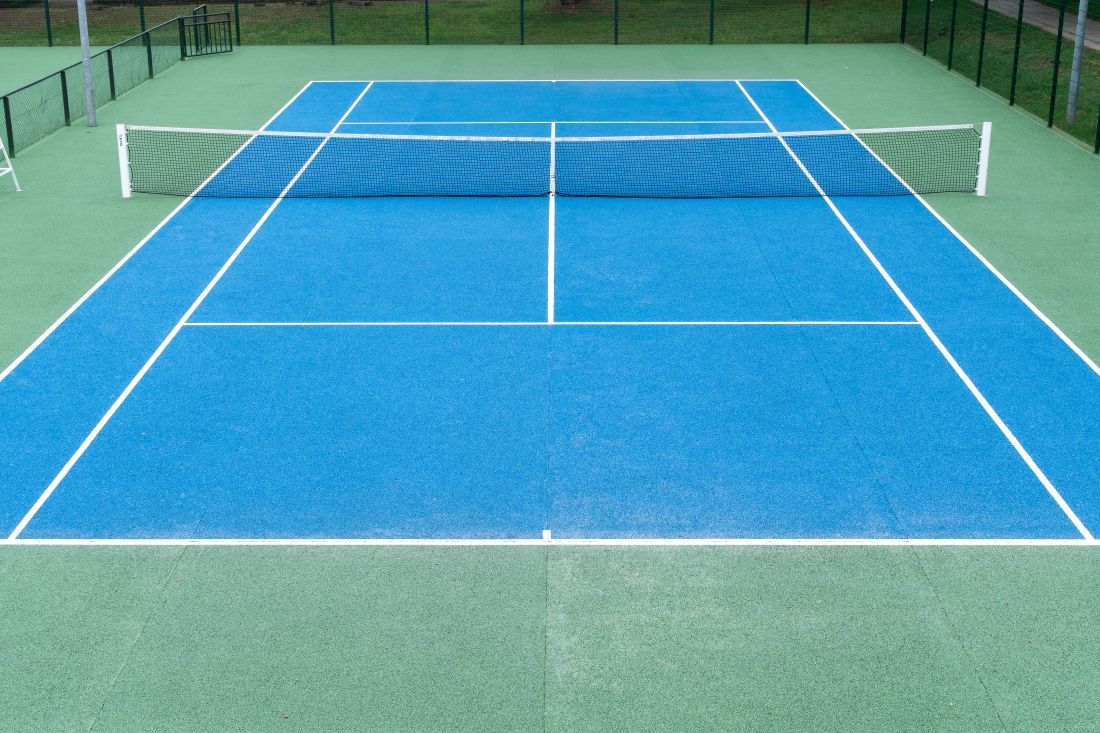
A tennis court is much larger than a pickleball court, and its dimensions directly influence the speed, movement, and physical demands of the game.
The court size varies depending on whether singles or doubles is being played, adding another layer of complexity.
- Length: 78 feet (standard for both singles and doubles)
- Width (Singles): 27 feet
- Width (Doubles): 36 feet
- The additional width in doubles introduces greater court coverage responsibilities and more dynamic positioning
The total recommended playing space extends beyond the marked lines to ensure safe and effective play, especially at higher levels:
- Recommended total area: Up to 120 feet by 60 feet
- Provides room for chasing deep shots and wide angles
- Supports high-speed rallies and advanced movement patterns
- Contributes to the greater physical demands of tennis compared to pickleball
The net specifications also play a key role in shaping gameplay and shot selection:
- 42 inches high at the posts
- 36 inches high at the center
Slightly higher than a pickleball net, encouraging:
- Topspin-heavy shots
- Powerful groundstrokes
- Aggressive baseline play
Unlike pickleball, tennis does not restrict net play with a non-volley zone:
- Players can approach and volley from any position
- Allows for offensive net strategies
- Supports a wide range of playing styles, including baseline-focused players and serve-and-volley specialists
Tennis Court Layout Breakdown
A tennis court features a more complex layout than a pickleball court, with multiple zones that dictate serving rules, positioning, and strategy during rallies.
The court is divided into structured sections that guide how points begin and develop:
- Each side is split into two service boxes
- The center service line divides these boxes
- Serves must land within the diagonally opposite service box
- These markings influence player positioning and rally structure
Boundary lines define the playable area and vary depending on the format:
- The baseline marks the back boundary
- The sidelines define the outer edges of the court
In doubles play, the alleys are included:
- Extra strips along each sideline
- Expand the playable width from 27 to 36 feet
- Increase strategic shot placement and angles
The absence of a kitchen creates a more aggressive and flexible playing environment:
- Players can attack the net freely
- Encourages quick point finishes with volleys and overheads
- Promotes a faster-paced and more physically demanding game
These layout elements combine to create a court that rewards power, endurance, and tactical versatility, distinguishing tennis clearly from the more compact and control-oriented structure of pickleball.
Key Differences Between Pickleball Court vs Tennis Court
| Feature | Pickleball Court | Tennis Court |
| Size | 20 x 44 feet | 78 x 36 feet (doubles) |
| Net Height | 34–36 inches | 36–42 inches |
| Court Zones | Includes kitchen | No kitchen |
| Movement | Compact, controlled | Extensive, high endurance |
| Game Pace | Slower, strategic | Faster, power-driven |
Court Layout Comparison: Visual and Functional Differences
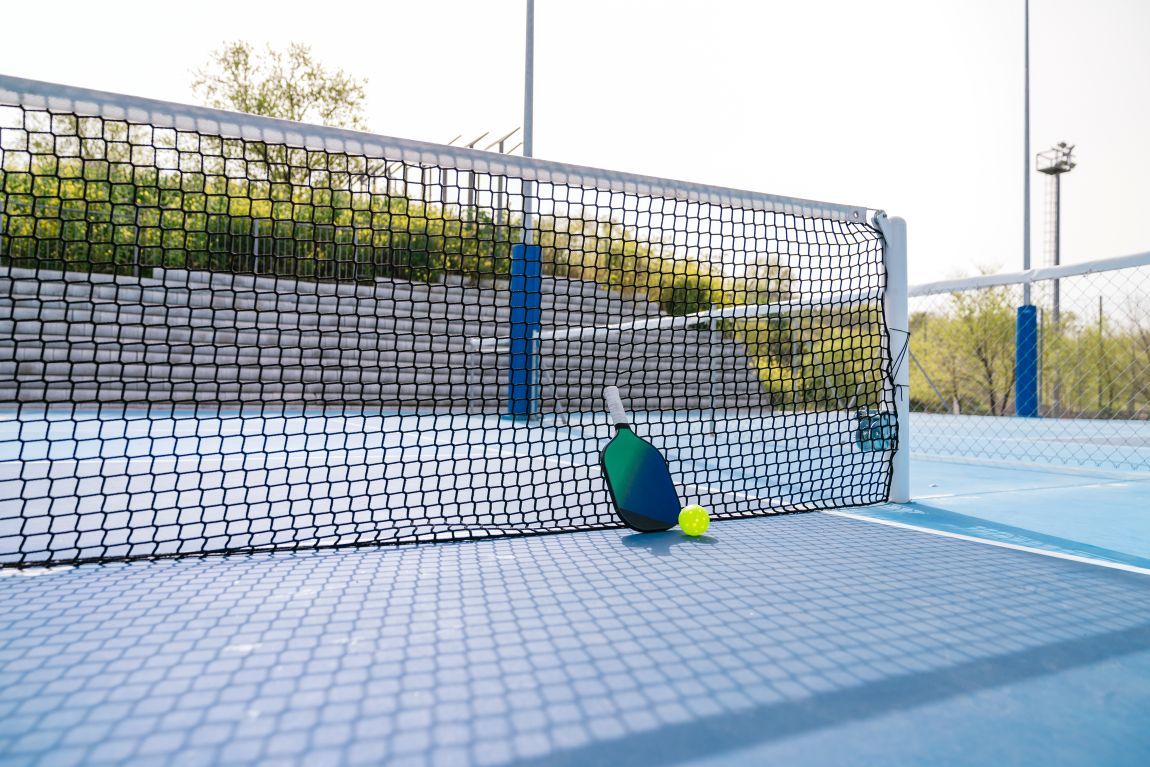
The layout of each court directly influences how the game is played, shaping movement patterns, shot selection, and overall strategy. While both sports share a net-based structure, the spacing and design create fundamentally different playing experiences.
On a pickleball court, the compact design keeps players close to the net, encouraging frequent exchanges and longer rallies. The kitchen zone further reinforces this by limiting aggressive net play and promoting controlled shots.
- Smaller court size keeps players in close proximity
- Encourages quick reactions and rapid exchanges
- The kitchen restricts volleys, reducing aggressive net dominance
- Promotes longer rallies built on consistency and control
In contrast, a tennis court spreads players across a much larger area. Baseline rallies are common, with players using topspin and power to push opponents back. The ability to move freely to the net adds another layer of strategy, allowing players to transition between defensive and offensive positions.
- Larger court dimensions increase movement and coverage demands
- Emphasis on baseline play and powerful groundstrokes
- Players can approach the net without restriction
- Supports varied strategies, including defensive and attacking play
Spacing also affects shot selection and tempo. Each sport develops its own rhythm based on how much court players must cover and how quickly they can recover between shots.
Pickleball emphasizes:
- Dinks and soft shots
- Drop shots and placement
- Controlled tempo and patience
Tennis emphasizes:
- Serves and aggressive returns
- Topspin groundstrokes
- Volleys and overhead finishes
These functional differences highlight why transitioning between the two sports requires adjustment. Players must adapt their timing, footwork, and shot mechanics to match the unique demands of each court, ultimately developing a broader and more versatile skill set.
Can You Play Pickleball on a Tennis Court?
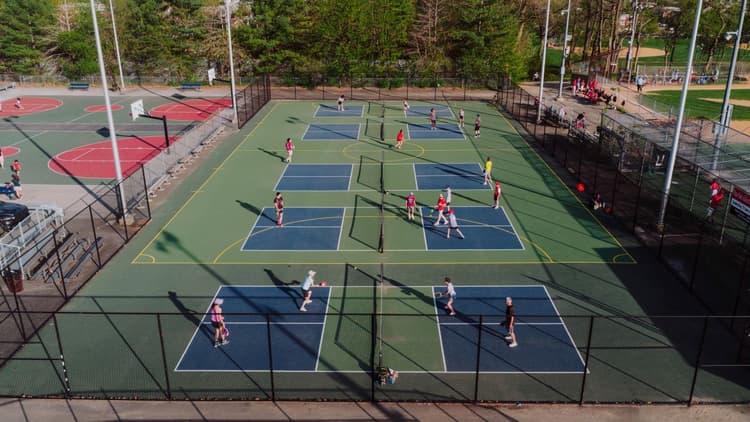
Yes, it is entirely possible to play pickleball on a tennis court, and this practice has become increasingly common as the sport grows. A standard tennis court can accommodate up to four pickleball courts, making it an efficient solution for facilities looking to support both sports.
Shared court usage allows clubs, parks, and recreational centers to maximize their space without requiring major infrastructure changes. This flexibility has played a key role in pickleball’s rapid expansion, especially in areas where dedicated courts are limited.
Temporary setups are often used for casual play. Players can bring portable nets and apply temporary lines using tape or chalk. These solutions are cost-effective and easy to implement, making them ideal for community events and recreational sessions.
Permanent conversions are also becoming more common. Facilities may choose to paint pickleball lines directly onto tennis courts, creating a multi-use surface that accommodates both sports. This approach provides a long-term solution for growing demand.
How Court Size Impacts Gameplay and Strategy
Court size is one of the most important factors influencing gameplay.
On a pickleball court, the smaller dimensions reduce the need for long-distance running, allowing players to focus on reaction time, positioning, and precision. This creates a more controlled and strategic style of play.
- Compact court reduces physical strain and limits long sprints
- Emphasizes quick reflexes and fast hand exchanges
- Encourages strong positioning near the net
- Rewards precision and consistency over power
In tennis, the larger court demands greater physical endurance and speed. Players must cover more ground, chase down shots, and maintain consistency over longer rallies. This increases the intensity of the game and rewards athleticism and stamina.
- Larger playing area requires extensive movement
- Demands speed, endurance, and recovery ability
- Encourages powerful strokes to control space
- Leads to longer and more physically demanding rallies
Shot selection is also affected by court size. Pickleball players rely on soft shots and placement, while tennis players use power and spin to control points. The difference in spacing changes how players construct rallies and approach each point.
Pickleball shot tendencies:
- Dinks and drop shots
- Controlled placement
- Slower, strategic buildup of points
Tennis shot tendencies:
- Topspin groundstrokes
- Powerful serves
- Aggressive finishing shots
Doubles play further highlights these differences. In pickleball, teams operate within a compact space, emphasizing coordination and communication. In tennis, doubles teams must manage a larger court, requiring broader coverage and more dynamic positioning.
Pickleball doubles:
- Tight formations near the net
- High emphasis on teamwork and communication
- Quick exchanges and shared court control
Tennis doubles:
- Greater court coverage responsibilities
- Use of alleys to create angles
- More dynamic positioning between baseline and net
These differences show how court size directly shapes strategy, influencing everything from movement and shot selection to teamwork and overall game intensity.
Conclusion
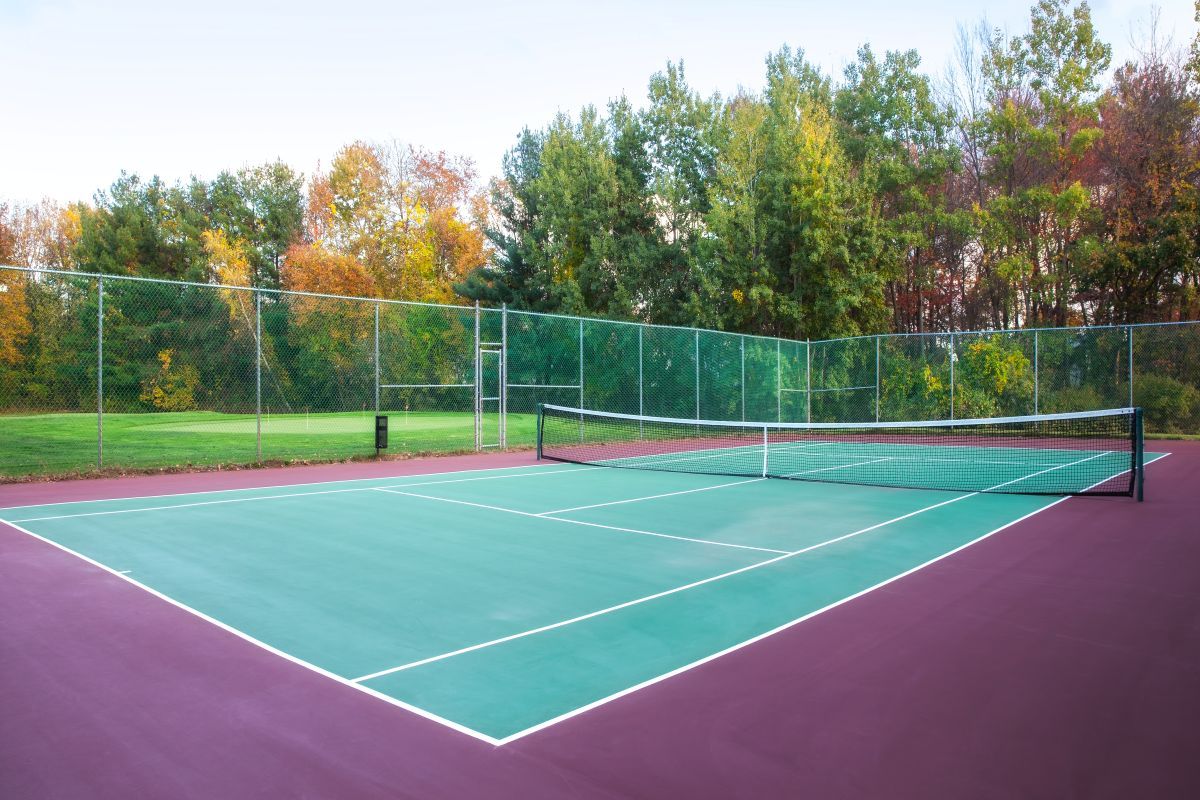
The comparison between a pickleball court vs tennis court highlights how differences in size, layout, and structure shape each sport’s identity. Pickleball’s compact court encourages control, precision, and accessibility, while tennis’s larger court emphasizes power, endurance, and versatility. Both offer unique experiences that appeal to different types of players and skill levels.
As multi-use courts become more common, understanding these differences becomes even more valuable. Players can take advantage of shared spaces, explore new formats, and expand their skills across both sports.
Platforms like Bounce make this transition seamless by helping players discover courts, connect with coaches, and join games in their city. If the goal is to play, learn, and connect through racket sports, Bounce provides a clear starting point to get involved and stay engaged.