

The name pickleball stands out in the world of sports. It is distinctive, memorable, and often surprising to those hearing it for the first time. As the sport continues to expand across communities worldwide, more people are asking a simple but important question: how did pickleball get its name.
The origin of the name is tied closely to the sport’s creation and the people behind it. Exploring this story reveals more than just a label - it uncovers the foundations of a game built on adaptability, creativity, and community.
The Origins of Pickleball as a Sport
Pickleball was invented in 1965 on Bainbridge Island, Washington, by three men: Joel Pritchard, Bill Bell, and Barney McCallum. The game was created as a way to entertain their families during the summer. With limited equipment available, they improvised using a badminton court, ping-pong paddles, and a perforated plastic ball.
Here we covered the full history of pickleball for a more in-depth dive.
The early version of the game was defined by adaptability and simplicity. The founders adjusted rules as they played, focusing on keeping rallies engaging and accessible for players of different ages. This flexibility allowed the game to evolve quickly, with changes made to improve consistency, fairness, and enjoyment.
As the game developed, the founders began formalizing rules. They introduced the non-volley zone (kitchen), refined serving mechanics, and standardized court dimensions. These changes transformed pickleball from a casual activity into a sport with a clear structure and competitive potential.
Over time, pickleball expanded beyond Bainbridge Island. Word spread through local communities, schools, and recreational centers. The sport’s low barrier to entry, combined with its social nature, helped it gain traction across the United States and eventually internationally.
How Did Pickleball Get Its Name? The Two Main Theories
The origin of the name “pickleball” has been widely debated, with two primary explanations emerging over time. Both stories are tied to the Pritchard family, yet they offer different perspectives on how the name came to be.
The “Pickles the Dog” Story
One of the most popular explanations is that the sport was named after the Pritchard family dog, Pickles. According to this story, the dog would chase after stray balls during early games, becoming a familiar and amusing presence on the court. Over time, the game supposedly took on the dog’s name.
This version gained widespread attention because it is simple, memorable, and easy to share. Media coverage, casual conversations, and even some early promotional materials reinforced this narrative. For many people, the idea of a dog inspiring the name of a sport adds a layer of charm and personality.
However, closer examination reveals inconsistencies. Historical accounts indicate that the dog was acquired after the game had already been named. This timeline raises questions about the accuracy of the story, suggesting that it may have developed as a lighthearted explanation rather than a factual origin.
Despite these inconsistencies, the “Pickles the dog” story continues to circulate. Its persistence highlights how storytelling can shape perception, even when evidence points in another direction.
The “Pickle Boat” Rowing Theory
The second and more historically supported explanation connects the name to the term “pickle boat”, commonly used in rowing. A pickle boat refers to a crew made up of leftover rowers from different teams, brought together to compete as a mixed group.
Joan Pritchard, Joel Pritchard’s wife, is credited with proposing this name. She observed that the new game combined elements from multiple sports, including:
- Tennis
- Badminton
- Table tennis
The term “pickle boat” captured this blend, making it a fitting description for a sport built from diverse influences.
This explanation aligns with the timeline of events. The name was reportedly chosen before the family acquired their dog, reinforcing the credibility of the rowing-based origin. It also reflects the thoughtful reasoning behind the name, emphasizing the sport’s hybrid nature.
The “pickle boat” theory provides a deeper understanding of the sport’s identity. It highlights how pickleball was intentionally designed to combine familiar elements into a new and accessible format.
Which Pickleball Naming Story Is True?
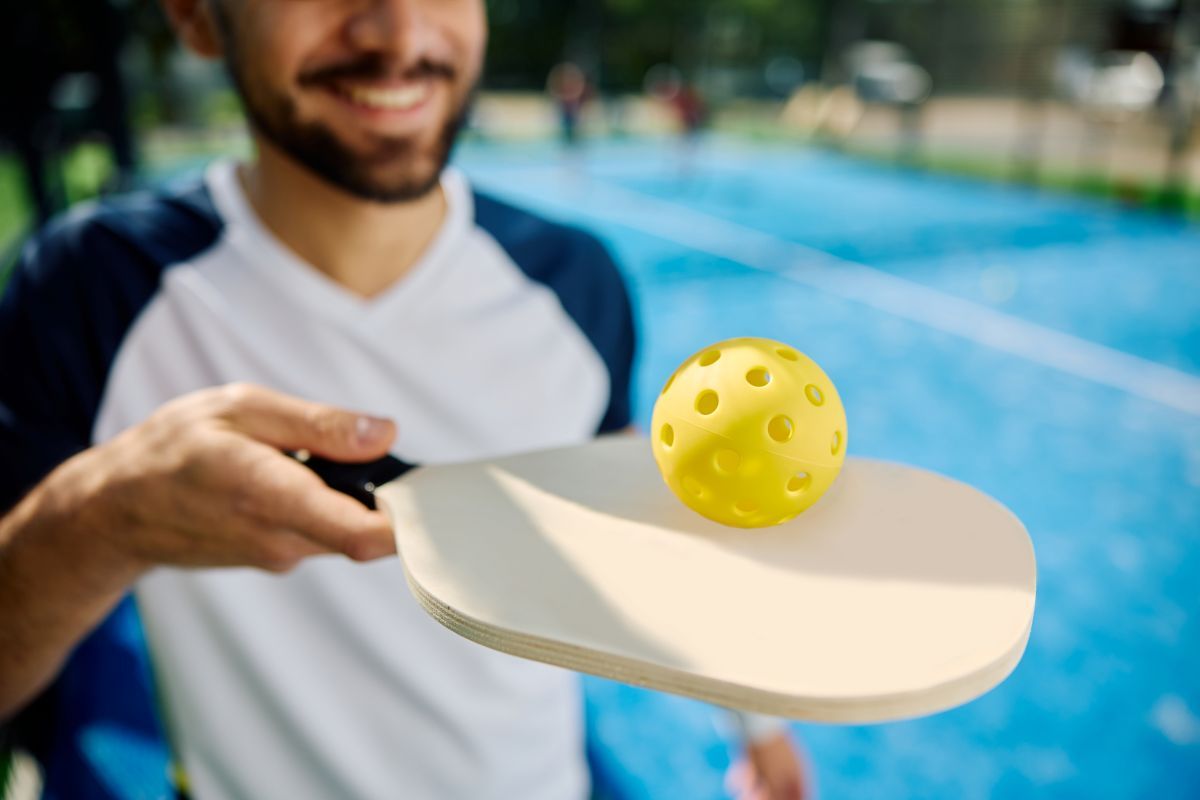
Evaluating both theories requires examining the available historical evidence. The key factor lies in the timeline of events, which strongly supports the rowing-based explanation.
The Pritchard family has clarified that the dog named Pickles was introduced after the game had already been established and named. This detail significantly weakens the credibility of the dog-related story as the original source of the name.
In contrast, the “pickle boat” explanation is consistent with both the timeline and the sport’s design. Joan Pritchard’s involvement in naming the game, along with her reference to rowing terminology, provides a clear and logical origin.
Several important points reinforce this conclusion:
- Chronological accuracy: The name predates the dog
- Direct attribution: Joan Pritchard explicitly connected the name to rowing
- Conceptual alignment: The sport combines elements from multiple disciplines
- Historical consistency: Early accounts support the rowing explanation
Even with this evidence, the dog story remains widely known. This persistence is largely due to its appeal and simplicity, which make it easier to remember and share. In many cases, popular narratives overshadow more accurate but less entertaining explanations.
The Evolution of Pickleball From Backyard Game to Global Sport
After its creation in 1965, pickleball gradually expanded beyond its original setting. Early adoption occurred through local communities, schools, and recreational programs, where the sport’s accessibility made it easy to introduce to new players.
The establishment of official rules and governing bodies played a critical role in its growth. Organizations such as the USA Pickleball Association (USAPA) helped standardize gameplay, organize tournaments, and promote the sport at a national level. These efforts created a foundation for competitive play and long-term development.
In recent years, pickleball has experienced rapid global growth. Professional tours, sponsorship deals, and media coverage have elevated its visibility. Cities across North America and beyond have invested in dedicated courts and programming, further accelerating participation.
Several factors have contributed to this expansion:
| Factor | Impact on Growth |
| Accessibility | Easy for beginners to learn quickly |
| Social nature | Encourages community engagement |
| Short match duration | Fits into busy schedules |
| Low equipment cost | Reduces barriers to entry |
As interest continues to grow, structured platforms have become increasingly important. Players now look for organized ways to improve, compete, and connect with others who share their interest in racket sports.
Players can use Bounce to find coaches, book clinics, join leagues, and discover local playing opportunities. This level of organization supports the sport’s continued expansion and makes participation more accessible at every level.
Frequently Asked Questions
Did pickleball get its name from a dog?
The idea that pickleball was named after a dog named Pickles is widely known but not historically accurate. Evidence shows that the name was established before the dog became part of the Pritchard family. While the story remains popular, it is considered a myth rather than the true origin.
What does “pickle” mean in pickleball?
The term “pickle” comes from the rowing phrase “pickle boat”, which refers to a mixed crew assembled from leftover rowers. This meaning reflects the sport’s design, as pickleball combines elements from multiple racket sports into a single game.
Who officially named pickleball?
Joan Pritchard is credited with naming pickleball. Her reference to the “pickle boat” concept provided a meaningful and accurate description of the sport’s hybrid nature. Her contribution remains a key part of pickleball’s history.
When was the name pickleball first used?
The name “pickleball” was introduced shortly after the game was created in 1965. It was used informally at first and later became the official name as the sport gained structure and recognition.


