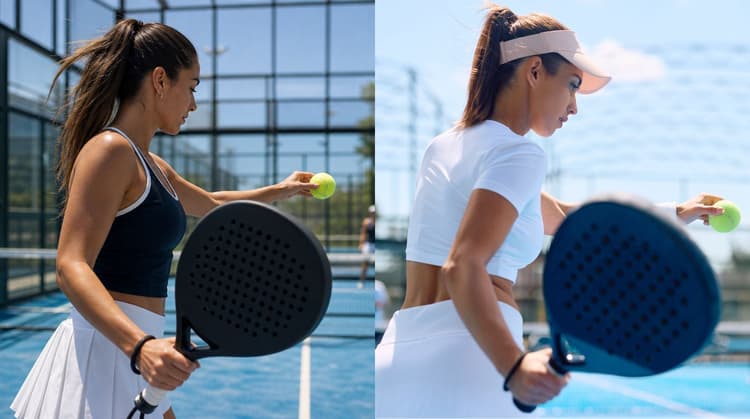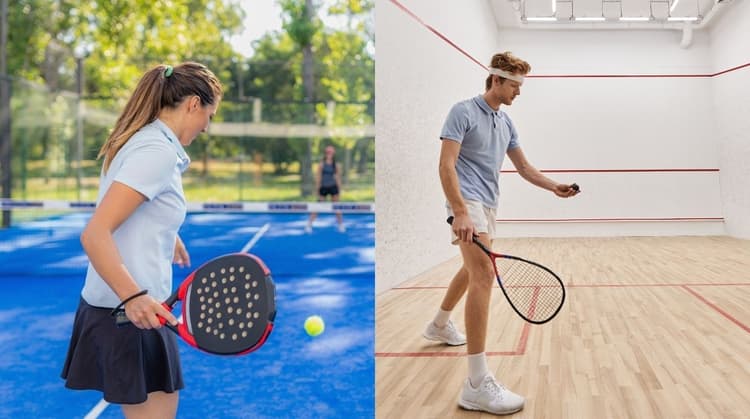
Most padel rackets last 80 to 120 sessions. For a player on court 2 to 3 times per week, that usually means 12 to 18 months.
For a player on court 4 to 5 times per week, that same racket may feel tired in 5 to 8 months. Use session count as the main clock because the foam, face, frame, and grip all wear from impact.
Want a quick answer? A recreational padel racket usually lasts 80 to 120 sessions before the foam loses pop or the frame starts feeling unstable. Track your sessions. Run a 30-second compression test every 6 to 8 weeks, then replace the racket when clean contact starts sending more vibration into your hand.
Build quality also affects how quickly those changes appear. Choosing between different padel racket types also affects durability, since shape, core firmness, and face material change how the racket handles repeated impact.
What wears out inside a padel racket
Four parts determine how long a padel racket lasts: the foam core, the hitting face, the frame, and the grip.
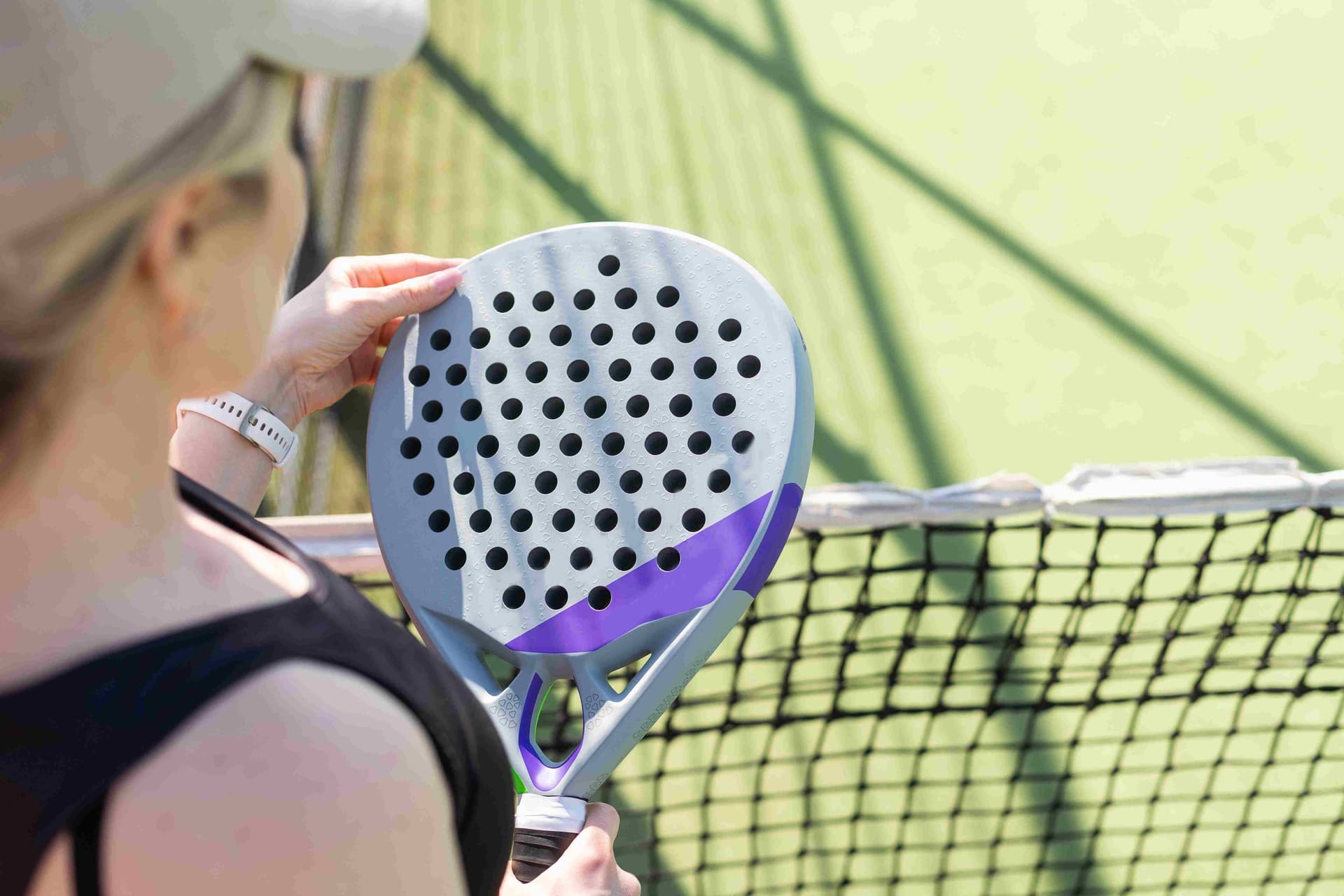
The International Padel Federation’s padel racket rule sets the official limits: total length up to 45.5 cm, maximum width of 26 cm, maximum thickness of 38 mm, and a perforated hitting surface with cylindrical holes in the center area measuring 9 to 13 mm. Both sides of the racket must be flat, and they may be smooth or rough.
The FIP rules define the object. Use determines lifespan.
Foam compression changes the feel first
Most padel rackets use EVA foam inside the head. That foam absorbs impact and returns energy to the ball. It also keeps vibration from traveling straight into your hand.
Every shot compresses the foam. After enough impacts, the foam stops rebounding the same way. The racket feels dull. The sweet spot feels smaller, so you start swinging harder for the same depth.
This is the failure most players miss because the racket can still look fine.
Face wear reduces spin and touch
The face of the racket creates friction on the ball. Rougher surfaces help with slice and touch on softer shots.
Padel balls carry fuzz and court grit. If you have compared a padel ball vs tennis ball, you already know the ball is part of the equipment story.
As the face smooths out, the racket loses bite. You feel it first on lobs and chiquitas, where touch matters more than raw pace.
Frame stress shows up on off-center hits
The frame takes the ugly contacts: wall scrapes, cage bumps, partner collisions, and late defensive shots near the glass.
Tiny cracks near the throat or top edge can make the response inconsistent. The ball jumps on one shot and dies on the next. You blame timing.
Check the frame every few weeks. Small cracks usually spread.
Grip wear creates hidden stress
A worn overgrip makes the racket twist at contact. That twist changes your swing path and adds stress through the throat.
It also makes you grip tighter. Mayo Clinic lists racket sports, poor form, poor equipment, and playing more than 2 hours a day as risk factors connected to tennis elbow.
A fresh overgrip keeps a healthy racket from taking extra punishment.
Padel racket lifespan by playing frequency
Session count gives you the cleanest estimate.
| Player type | Sessions per week | Expected lifespan | Main wear point | Replacement check |
| Occasional player | 1 | 18 to 24 months | Face and grip wear | Test every 8 weeks |
| Regular player | 2 to 3 | 12 to 18 months | Foam compression | Test every 6 to 8 weeks |
| Frequent player | 4 to 5 | 5 to 8 months | Foam and frame stress | Test monthly |
| Heavy player | 6 or more | 2 to 4 months | Core fatigue and cracks | Test every 2 to 4 weeks |
These ranges assume normal recreational play. Hard smashers should shorten the estimate. So should players who defend low near the glass or leave rackets in hot cars.
Players who use Bounce open play for weekly sessions can track this easily. Add one note after each session: date, court type, racket feel, and any arm feedback.
How to tell when your padel racket is done
A crack gives you a clear answer. The harder calls happen earlier.
Use these tests before the racket looks broken.
1. Run the thumb compression test. Press firmly into the face in several spots. A healthy racket pushes back evenly. A tired zone feels dense or dead.
2. Shake the racket near your ear. A clean racket should sound solid. Clicking or loose material means something inside has separated.
3. Compare clean contact. Hit 10 normal volleys and 10 controlled lobs. If the ball response changes shot to shot without a swing change, the foam or frame may be fading.
4. Watch your arm. More buzz in your hand or elbow on clean contact usually means the racket is absorbing less impact.
The last test matters. A racket that sends more vibration into your arm can change how you grip and recover after play.
What kills a padel racket faster
The fastest damage happens off the court.
Heat damages the setup
Heat is the off-court condition I would avoid most with EVA foam.
A parked car is the usual problem. A padel racket should not live in that environment.
Take the racket inside after you play. One lazy afternoon in a car can leave the racket feeling different the next time you hit.
Cold makes the racket feel harsher
Cold rackets feel harsher and less forgiving on hard contact.
If the racket has been sitting in a cold garage or trunk, let it warm up before you play. Hit easy for the first few games. Save the full-speed overheads until the racket and your arm are ready.
Wall contact chips the edge
Padel invites wall contact. That is part of the game.
Repeated scrapes along the top edge damage the frame. A protector strip is cheap and worth using, especially if you defend hard in the corners.
Moisture breaks down the setup
Sweat and humidity work into grips and small surface cracks.
Wipe the racket after play. Let the grip dry before it sits in a closed bag. Replace the overgrip before it gets slick.
How to make a padel racket last longer
A racket lasts longer when you remove avoidable damage.
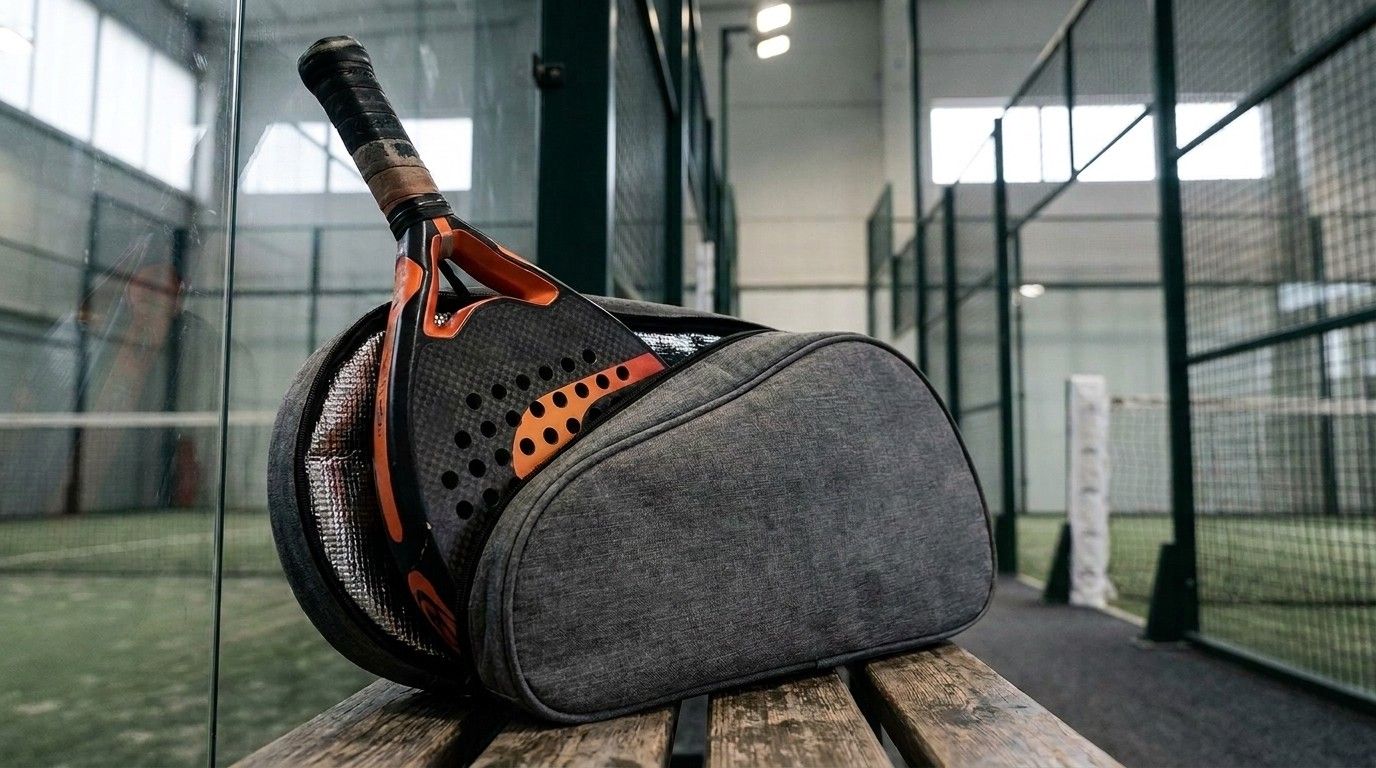
1. Store it in a thermal bag. This protects the racket from daily temperature swings.
2. Keep it out of the car. Treat the car as emergency storage only.
3. Wipe the face after every session. Use a soft cloth and a little water. Skip harsh cleaners.
4. Change the overgrip every 3 to 5 sessions. Heavy sweaters should change it sooner.
5. Add a frame protector. The top edge takes the most abuse near the glass.
6. Store it upright. Weight on the face compresses the foam over time.
7. Track sessions. Write the count inside your notes app. Guessing leads to late replacement.
A mid-tier racket that is stored well can outlast a more expensive racket that lives in a trunk.
When to replace a padel racket
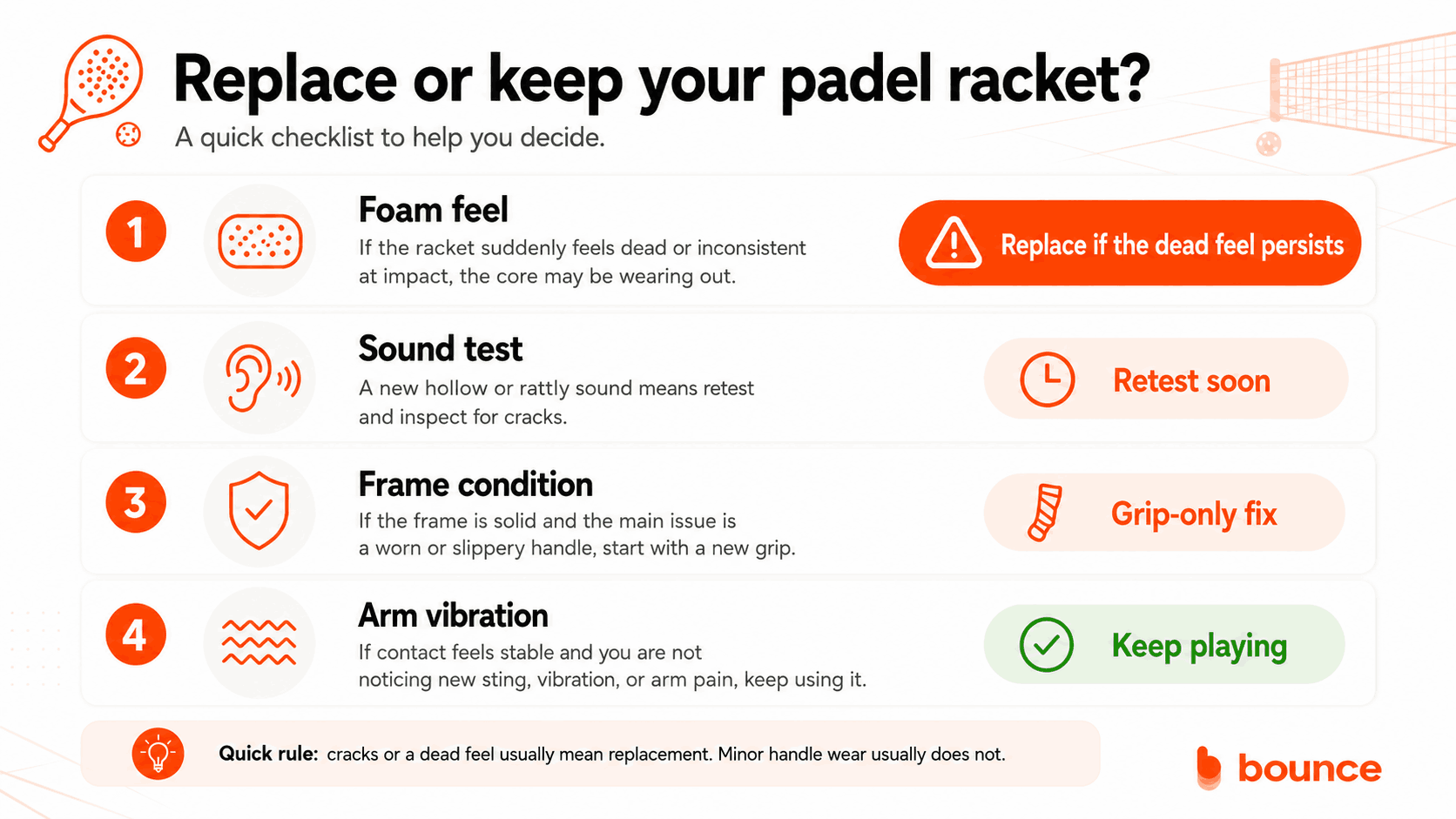
Replace your padel racket when the foam feels flat, the racket rattles, the frame cracks, or clean contact sends more vibration into your arm.
Replace before a visible crack becomes the only evidence. By that point, you have already played through weeks of worse feedback.
Use this decision table.
| Replace now | Retest soon | Keep playing | Grip-only fix |
| Racket rattles when shaken | Face feels slightly smoother | Response is consistent on clean contact | Grip is worn but frame feels solid |
| Frame crack near throat or top edge | Power feels down for 1 session | Surface scratches are cosmetic | Overgrip fixes slipping |
| Foam has dead spots under thumb pressure | More vibration only on mishits | No pain and no rattle | Grip feels slick after warmup |
| Ball response changes on clean shots | One poor session after a long break | No crack and no arm buzz | Grip turns in your hand |
Compressed foam stays compressed. Resting the racket for a week will not bring back its pop.
Players in Bounce leagues have a built-in session log because each match gives you another countable use. That makes replacement timing less guessy.
Are expensive padel rackets more durable?
Some expensive padel rackets last longer. Price alone is a weak predictor.
Durability comes from materials, build quality, foam density, and how you play. A firm EVA carbon racket may hold its feel longer than a soft fiberglass racket, but it may also feel harsher if your timing is still developing.
Buy for your current game. Then protect the racket you bought.
Players upgrading rackets should check the rest of the kit too. Shoes matter because bad court movement leads to late contact and extra frame hits. The difference between padel shoes vs tennis shoes gets obvious when you start defending corners.
Conclusion
How long does a padel racket last? Most recreational players get 80 to 120 sessions. The better question is whether the racket still gives you clean feedback.
Run the compression test every 6 to 8 weeks. Shake the racket. Check the frame. Notice vibration.
When the foam is dead, the racket is done.
For players building their game through structured coaching and organized play, Bounce connects you with certified coaches and competitive formats in your city.
FAQs
1. What is the lifespan of a padel racket?
A padel racket can remain usable for approximately six months to more than two years. Frequent players usually experience performance changes sooner, while occasional players may keep the same racket for several years if it avoids structural damage and is stored correctly. Reddit experiences ranged from about six months to three years.
2. How often should you replace a padel racket?
Replace it according to its condition and performance rather than following a strict calendar. Cracks, unusual vibration, permanent softening, reduced control and inconsistent rebound are stronger replacement signals than age alone.
3. How can you tell if a padel racket is worn out?
Compare its current sound, touch, rebound and control with how it originally performed. A racket may be worn if the face feels permanently softer, shots become unpredictable, vibration increases or the sweet spot appears less consistent.
4. Can a padel racket wear out without visible cracks?
Yes. Players repeatedly noted that a racket can lose its original feel and response before the face or frame visibly breaks. Internal foam and bonded materials can gradually change even when the outside remains presentable.
5. Do carbon padel rackets last longer than fiberglass rackets?
Carbon is generally more rigid and is often used to strengthen a racket, while fiberglass provides a softer and more flexible response. However, the complete construction, foam, playing frequency, impacts and storage conditions also determine durability, so carbon does not automatically guarantee a longer lifespan.
6. Does hot weather damage a padel racket?
Heat can change how the racket and its foam respond, often making the racket feel softer. Repeated exposure to extreme temperatures may also shorten its useful life, which is why manufacturers recommend thermal protection and advise against leaving rackets in a car.
7. Is an expensive padel racket worth it?
A more expensive racket may use more advanced materials, construction and vibration-management features, but price alone does not guarantee a longer life. The better purchase is the racket that suits the player’s level, comfort requirements and playing frequency.
8. Can you continue playing with a cracked padel racket?
Minor paint chips may be cosmetic, but a crack that enters the face or frame can affect stability, vibration and performance. Stop using the racket if the crack grows, the sound changes or impact causes discomfort.
9. How many padel rackets should you have?
One racket is normally enough for casual play. League, tournament and very frequent players may benefit from carrying a second familiar racket in case the main racket cracks, breaks or becomes unsuitable during a match.