Platform tennis and padel are enclosed doubles sports, but the courts produce different games.
Platform tennis uses a compact raised court surrounded by wire screens. It is generally played in cool or cold weather, although some regions now play year-round. Padel uses a larger court with walls and metal fencing and is played indoors or outdoors.
Want a quick answer? Platform tennis fits players with access to a cold-weather club who enjoy patient doubles, lobs, wire-screen rebounds, and one-serve pressure. Padel’s bounce serve and more uniform wall rebounds can make the first few rallies easier to read. Choose the sport you can play consistently.
Court size and enclosure change the rally
Platform tennis is played on a 44-by-20-foot court laid out on a 60-by-30-foot deck. A 12-foot wire screen surrounds the full playing area.
The net stands 34 inches high at the center and 37 inches at the posts. Courts are generally raised, which allows facilities to install heaters beneath the deck and keep the surface playable during cold weather. The American Platform Tennis Association’s rules set the official court, screen, net, ball, paddle, and playing standards.
The official padel court dimensions are 20 meters long and 10 meters wide, measured inside the enclosure. The net is 0.88 meters high at the center.
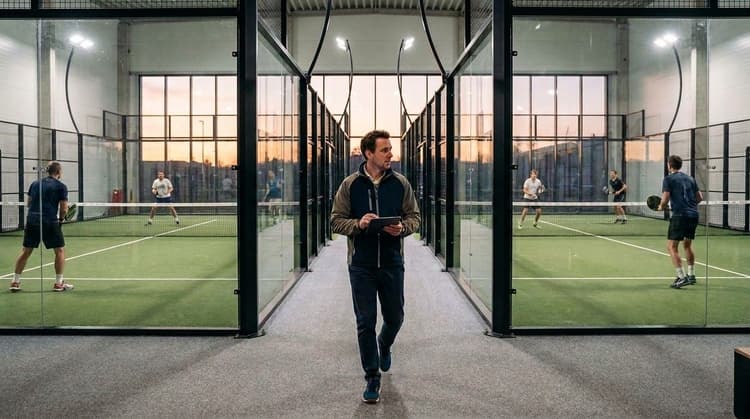
Padel courts combine walls with metal fencing. Under the International Padel Federation’s Rules of Padel, the playing surface may be cement, synthetic material, or artificial grass, provided it produces a regular ball bounce.
The boundaries behave differently.
In platform tennis, a ball that lands inside the court can rebound from the back or side screens and remain playable. Spin and the contact angle can make the return from the wire harder to predict.
In padel, the ball can rebound from the wall or fence after landing in the opponent’s court. The enclosure must produce a regular bounce, so the rebound is usually easier to read than a ball coming from platform tennis wire.
Platform tennis rewards patience around unpredictable screen balls. Padel gives players more room to move forward and defend from the back wall.
Platform tennis balls and padel balls feel different
Platform tennis uses a flocked rubber ball built to APTA standards for size, weight, and bounce. It feels denser than a padel ball and loses pace quickly after striking the deck or wire.
Padel uses a pressurized, felt-covered rubber ball close to a tennis ball in size. Its permitted pressure and bounce are lower than those of a standard tennis ball.
That difference changes the rally.
The platform tennis ball encourages lobs, patient volleys, and defensive screen play. The padel ball travels faster through the court and responds more cleanly after contact with the wall.
Cold conditions also affect platform tennis timing. The ball, deck, wind, gloves, and temperature can all change how a shot feels from one session to the next.
The paddles and rackets are built for each court
A platform tennis paddle is solid and perforated. APTA rules limit it to 18 inches in overall length and 12 inches in width. The hitting surface must be substantially flat, although a separate texturing material is permitted.
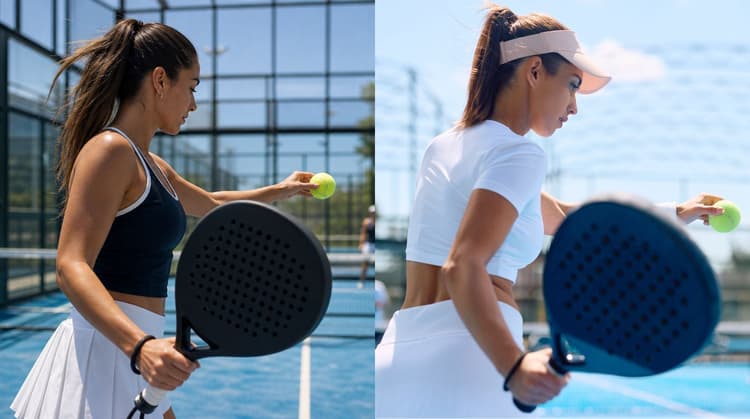
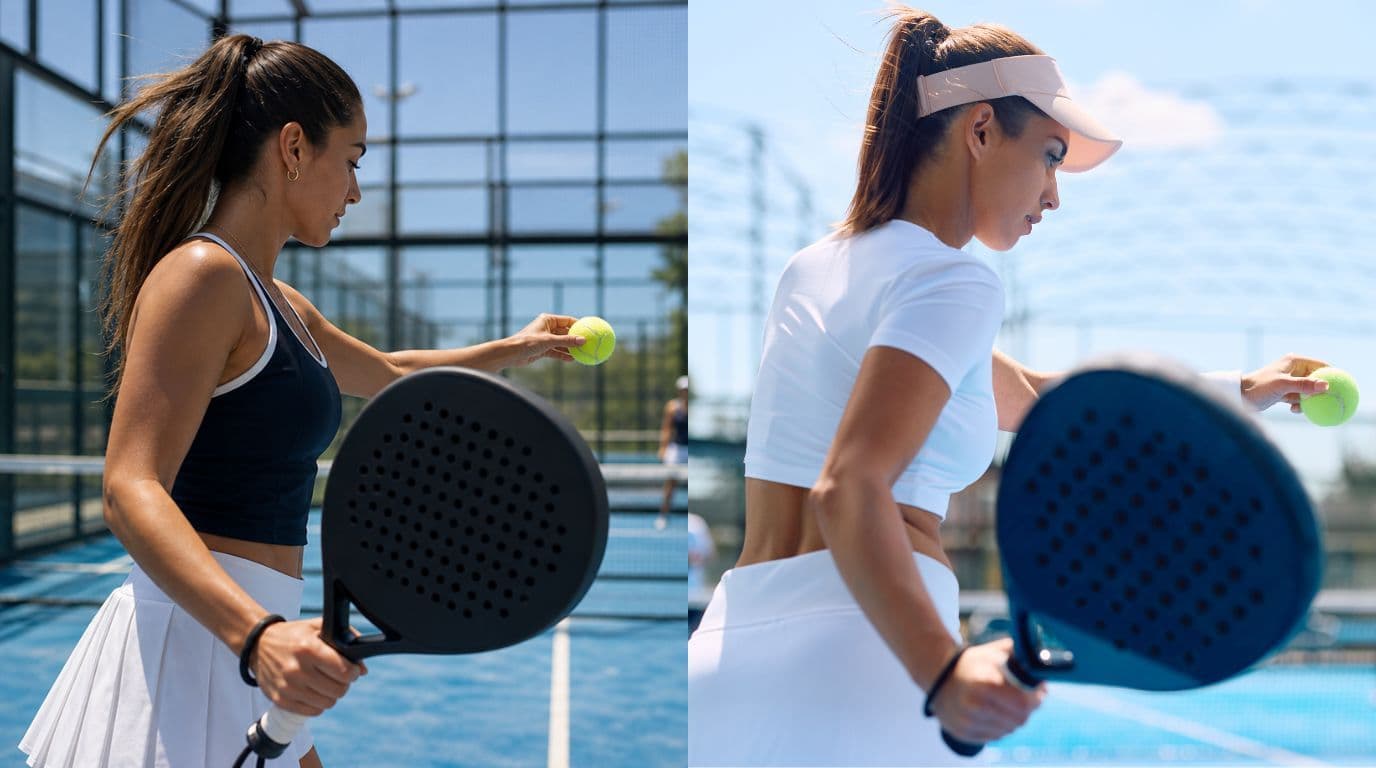
A padel racket is also solid, stringless, and perforated. It normally has a foam core with a fiberglass or carbon-fiber face.
FIP rules allow a maximum overall length of 45.5cm, a maximum width of 26cm, and a maximum thickness of 38mm. A non-elastic safety cord must be attached to the handle and worn around the wrist during play.
The main padel racket types use round, teardrop, or diamond shapes. Shape changes the balance point, sweet spot, and amount of help the racket gives on off-center contact.
A platform paddle and padel racket may look related. Their dimensions, cores, surfaces, and ball systems are built for different rebounds.
Serve rules create different pressure
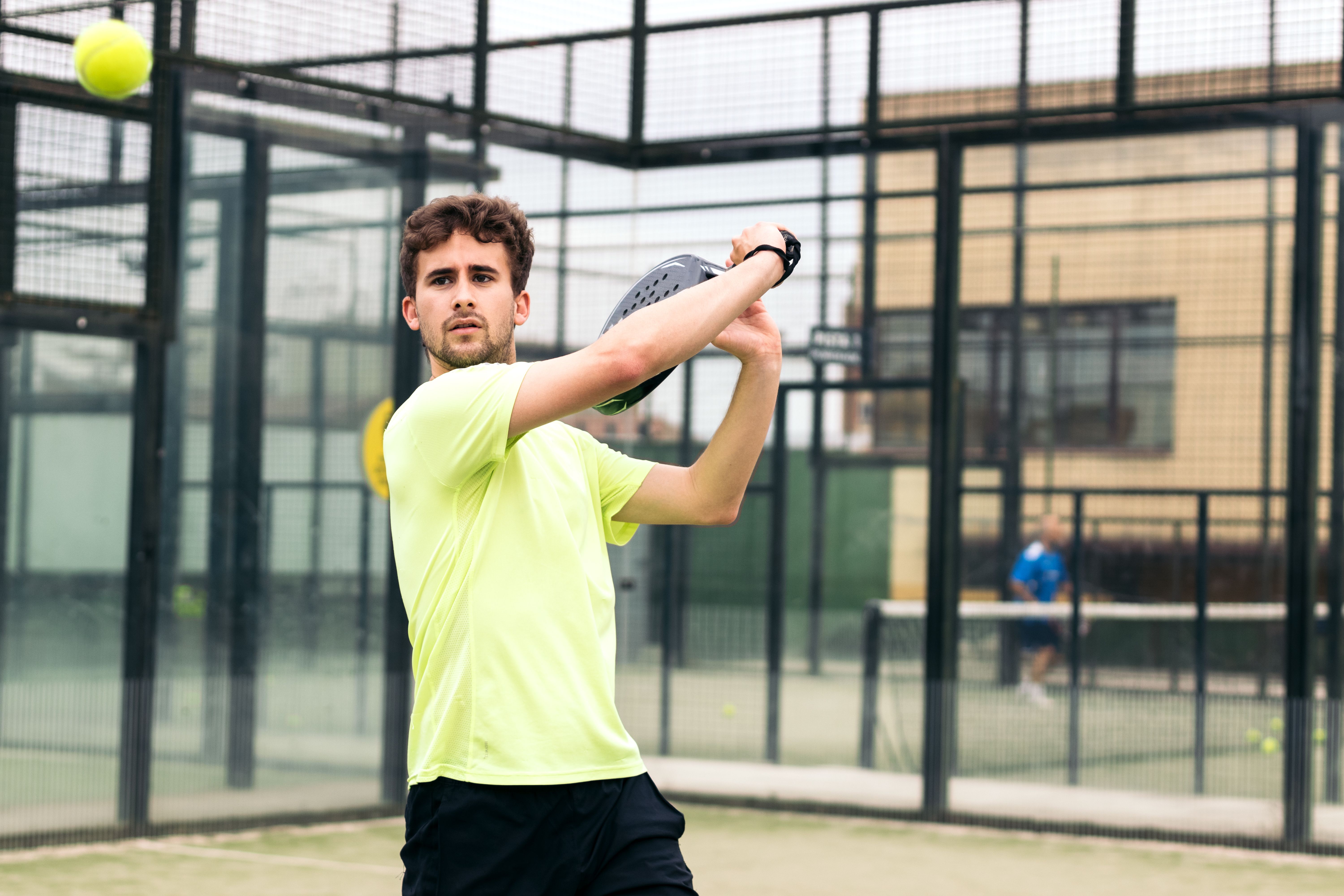
Platform tennis doubles gives the server one attempt.
The serve may be delivered overhand, underhand, or sidearm. It must travel diagonally and land inside the correct service court. If the serve is a fault, the server loses the point.
A platform tennis serve that touches the net cord and lands inside the correct service court stays live. There is no service let in that situation.
That one-serve rule changes the risk calculation. Servers still use pace, spin, and placement, but they cannot rely on a second attempt after missing.
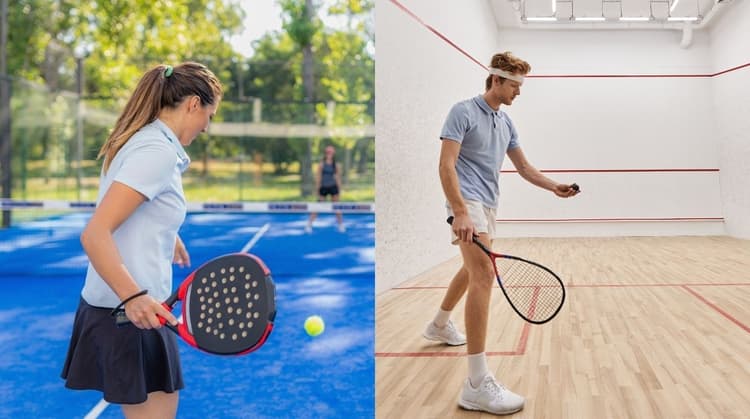
Padel gives the server two attempts. Under the padel serve rules, the player must bounce the ball inside the serving area and contact it at or below waist height. At least one foot must remain on the ground, and the ball must travel diagonally into the opposite service box.
The padel serve starts the rally rather than trying to end it. Good servers use placement and depth, then move forward with their partner to contest the net.
Scoring is familiar, with a few format differences
Both sports use tennis-style point calls: love, 15, 30, 40, and game.
Standard platform tennis uses advantage scoring. APTA rules also allow no-ad scoring in some formats to shorten games after deuce. Matches are commonly played as the best of 3 sets.
The 2026 FIP rules recognize three padel scoring options:
- Advantage scoring
- Star Point
- Golden Point
Under advantage scoring, a team must win 2 consecutive points after deuce. Star Point allows several advantage exchanges before a deciding point. Golden Point uses one deciding point immediately after deuce.
The scoring system used in padel depends on the competition or club format.
Screen play and wall play require different timing
Platform tennis is built around lobs and screen defense.
A good lob pushes the opposing team away from the net and creates time to reset position. Deep balls force players to judge the wire before choosing a return.
The screen takes pace off the shot and can send the ball back at an awkward angle. Strong defenders stay calm, move their feet, and wait until the rebound becomes readable.
Padel places more pressure on net position.
Basic padel strategy starts with moving forward as a pair, protecting the middle, and using the lob to push opponents away from the net.
At the back of the court, players learn when to strike before the wall and when to let the ball pass. A clean glass rebound can create a calmer contact point than a rushed half-volley near the baseline.
Both sports reward patient doubles play. The defensive skills are different enough that experience in one does not remove the adjustment period in the other.
Platform tennis is tied closely to cool-weather club play
The APTA describes platform tennis as an outdoor racket sport generally played in cool or cold weather. Some regions now run year-round programs, but the sport still has a strong winter identity.
Many courts sit at private clubs, municipal facilities, and community programs. The current APTA league directory lists approximately 50 leagues across the US, with established activity in Connecticut, New Jersey, Illinois, Michigan, Massachusetts, Pennsylvania, and several other states.
That club structure can make platform tennis easy to play regularly once you are inside an active local program. It can be difficult to find in areas without an APTA league or public-access court.
Padel has a broader and growing US footprint
Padel remains less common than tennis or pickleball in the US, but court access is expanding.
USA Padel, citing the Sports & Fitness Industry Association’s 2026 participation report, counted 1,073,000 Americans who played padel during 2025. The association also reported just over 1,000 courts across 31 states as of April 2026.
Local access still matters more than a national total.
Platform tennis may be easier to play if you already belong to a Northeast or Midwest club with an established league. Padel may be easier in a city with a new indoor club, open play, leagues, and regular social sessions.
APTA’s directories can help players locate platform tennis leagues and public-access facilities. For padel and other listed racket sports in supported cities, Bounce’s court finder shows nearby options.
Tennis players bring useful habits to both sports
Tennis players recognize the scoring, net positioning, and basic doubles spacing in both games.
Padel keeps more of the familiar groundstroke contact. The main adjustment is learning to trust the wall.
A tennis player’s first instinct is often to move forward and strike before the back glass. In padel, waiting for the rebound can create more time and a cleaner swing.
Platform tennis asks players to shorten their strokes, manage one-serve pressure, and accept that a clean-looking ball may return awkwardly from the wire.
The overhead also changes. Raw power solves fewer points because a deep smash can rebound from the screen and stay playable.
For players learning either sport, Bounce lessons lets you search for coaches by location, sport, skill level, and schedule. A coach can help with compact swings, partner spacing, and the timing required around enclosed boundaries.
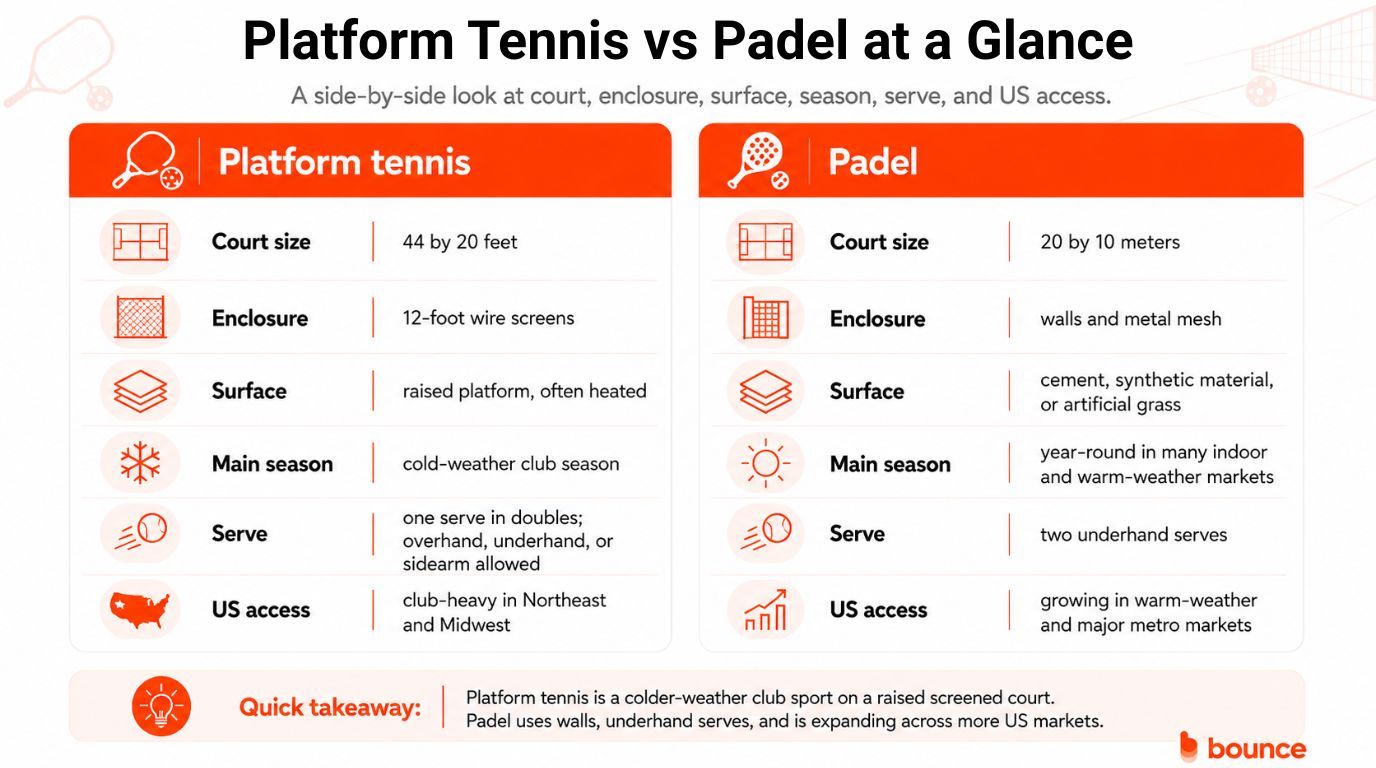
Platform tennis vs padel comparison
| Category | Platform tennis | Padel |
| Typical format | Doubles | Doubles |
| Court size | 44 by 20 feet | 20 by 10 meters |
| Full enclosure | 12-foot wire screens | Walls and metal fencing |
| Net height | 34 inches at the center | 0.88 meters at the center |
| Surface | Raised deck with an approved playing surface | Cement, synthetic material, or artificial grass |
| Main season | Cool or cold weather, with year-round play in some regions | Indoor or outdoor, depending on the facility |
| Paddle or racket | Solid perforated paddle, up to 18 inches long | Solid perforated racket, up to 45.5cm long |
| Serve | One serve in doubles; overhand, underhand, or sidearm | Two serves after a bounce, contacted at or below waist height |
| Net-cord serve | Remains live when it lands in the correct box | Repeated as a net serve when otherwise valid |
| Scoring | Advantage scoring, with no-ad formats also used | Advantage, Star Point, or Golden Point |
| Boundary rebound | Ball may be played after rebounding from the wire screen | Ball may be played after rebounding from the wall or fence |
| Learning adjustment | Reading variable wire rebounds | Reading the glass and moving as a pair |
| US access | Concentrated in club and league markets | Expanding across major metro areas and additional states |
| Best fit | Players who enjoy cool-weather doubles, lobs, and screen defense | Players who enjoy net play, enclosed-court rallies, and glass rebounds |
Which sport should you choose?
Choose platform tennis if you have access to an active club or league and enjoy patient doubles built around lobs, volleys, and defensive screen reads.
The one-serve rule adds pressure to every service point. Cold-weather conditions also give the game a character that indoor racket sports do not share.
Choose padel if you want a larger enclosed court, a bounce serve, and a rebound that is usually easier to predict.
Padel also has the larger international playing base. In the US, its growing club footprint may make it the more accessible choice in major metro areas.
The better option is the sport that fits your location and weekly schedule. Skill develops through court time, and neither game rewards a racket that stays in the bag.
For players building their game through coaching and organized play, Bounce connects you with coaches, courts, leagues, socials, and open-play sessions in supported cities.
FAQs
1. What is the main difference between platform tennis and padel?
Platform tennis uses a 44-by-20-foot raised court surrounded by taut wire screens. Padel uses a larger 10-by-20-metre court enclosed by glass walls and metal fencing. Both are predominantly doubles sports, but the different court materials create very different rebounds.
2. Is platform tennis the same as paddle tennis?
Platform tennis is commonly called “paddle” or “paddle tennis” by its players. However, POP Tennis was also historically known as paddle tennis and is a separate no-wall sport. This shared terminology is a common source of confusion.
3. Is padel like platform tennis?
Yes. Both are usually played as doubles, use solid paddles or rackets and allow rebounds from an enclosure. Platform tennis uses wire screens on a smaller raised court, while padel uses glass walls and metal mesh on a larger court.
4. Which is harder, platform tennis or padel?
Neither sport is universally harder. Platform tennis challenges players with wire-screen rebounds, a single serve and cold-weather conditions. Padel covers a larger court and adds specialised glass-wall defence, overheads and more movement through the middle of the court.
5. Can you use a padel racket for platform tennis?
Not in official competition unless the equipment meets the relevant APTA specifications and has been approved. Platform tennis paddles and padel rackets differ in dimensions, surface construction and governing-body requirements.
6. Is platform tennis played in rain or snow?
Platform tennis is designed for cool and cold-weather outdoor play, and many raised courts have heaters beneath the deck. Wet and cold conditions can affect the ball, so players may agree on more frequent ball changes and should follow facility safety rules.
7. Where is platform tennis most popular?
Platform tennis is most established in the United States and Canada. The APTA reports more than 36,000 members, and many established public and private facilities are concentrated in the Northeast, Midwest and other colder North American regions.
8. Is platform tennis a good workout?
Platform tennis can involve repeated lateral movement, volleys, overheads, quick reactions and long screen-based rallies. Match intensity varies according to player level, rally length and competitiveness, so it should not be assigned a fixed calorie figure without individual measurement.
9. Can you play pickleball on a platform tennis court?
The marked platform tennis court shares the same overall 44-by-20-foot dimensions as a pickleball court, but the service lines, net setup and surrounding screens differ. Recreational pickleball may be possible with suitable temporary markings and an adjusted net, subject to facility approval.
10. Can you serve overhand in platform tennis?
Yes. Platform tennis permits overhand, underhand or sidearm serves. In doubles, the server receives only one service attempt, and a serve that clips the net and lands in the correct service court remains in play.