How to choose a padel racket starts with your current skill level, then shape, weight, balance, core density, and face material. Most first-time buyers should start with a round, head-light racket around 350 to 360 grams, a soft EVA core, and a fiberglass face.
That setup gives you a larger sweet spot, faster hands at the net, and lower arm shock while your technique is still messy.
Want a quick answer? Beginners should choose round shape, head-light balance, 350 to 360 grams, soft EVA, and fiberglass. Competitive players can move toward teardrop or diamond shapes, higher balance, 370 to 380 grams, denser EVA, and carbon fiber once their timing is clean.
First-time buyers should prioritize comfort and control. Test the racket during volleys, wall returns, and overheads so you can judge how its weight and balance feel in real points.
What makes one padel racket different?
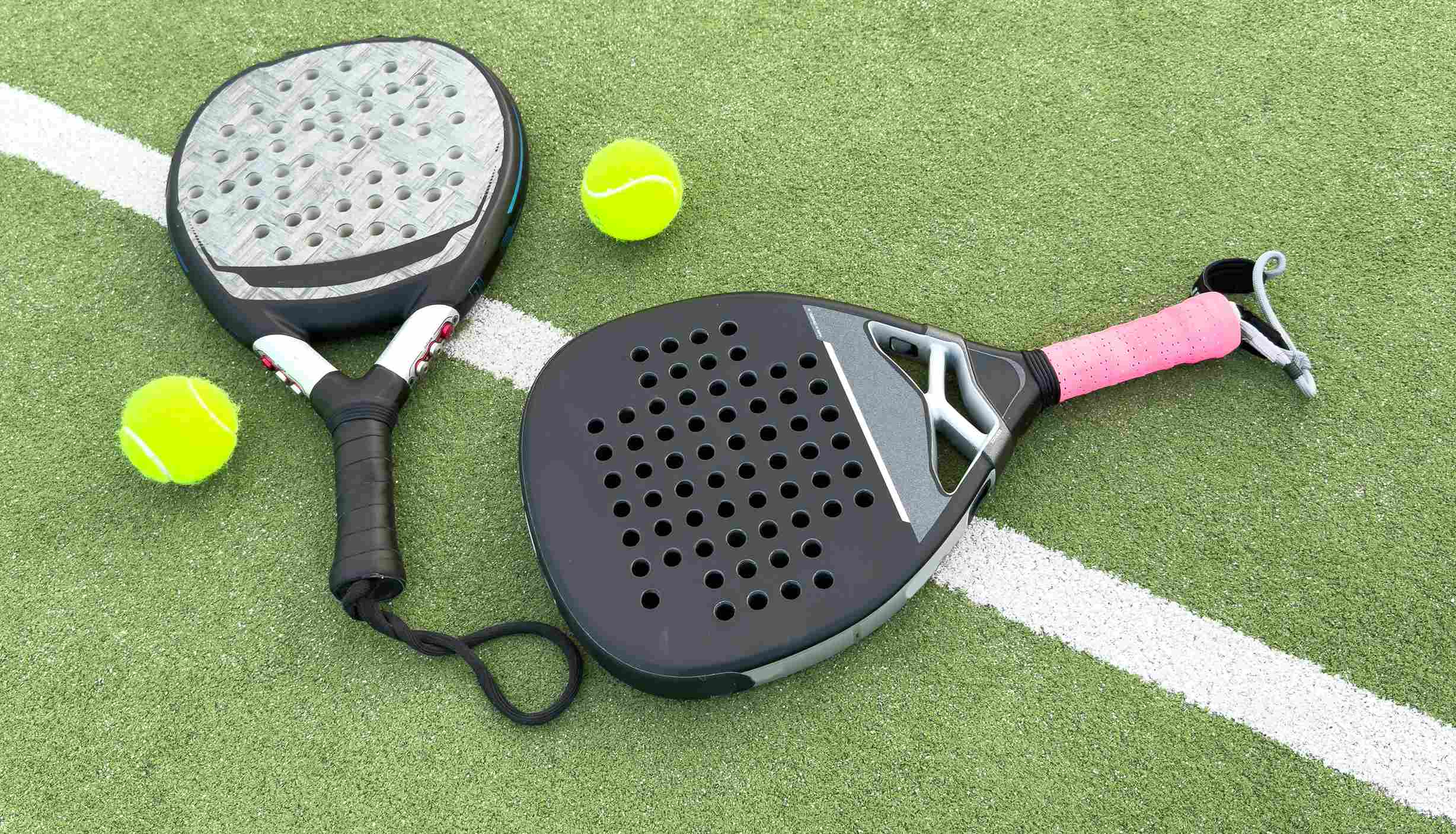
A padel racket is a solid, stringless racket with a perforated hitting face. The International Padel Federation’s official Rules of Padel cap the racket at 45.5cm total length, 26cm maximum width, 38mm maximum thickness, and require a wrist cord for organized play.
Every legal racket fits inside those limits.
What changes is the build: shape, weight, balance, core density, face material, handle length, and surface texture. Two rackets can weigh the same and feel completely different because the weight sits in a different part of the frame.
That is the part beginners usually miss. Price and brand name tell you very little until you know how the racket is built.
For a broader gear baseline, padel equipment is the place to understand the full setup around the racket.
Why racket fit matters in real games
A bad fit shows up fast.
Too much weight in the head slows your volleys. A core that feels powerful in the shop can feel harsh after 60 minutes of off-center contact. A grip that is too small makes you squeeze harder than you need to.
Mayo Clinic links tennis elbow to repeated wrist and arm motions, and it lists poor form or poor equipment as risk factors in racket sports. Comfort belongs in the buying decision from the start.
Your first racket should help you make cleaner contact. The big shot can wait.
Gear fit goes beyond the racket. Once you play weekly, padel shoes vs tennis shoes becomes a real decision because lateral support matters on a small court.
How to choose a padel racket
Work through these in order. Treat the specs as a system.
1. Read your current level honestly
Most players overrate themselves by one full tier.
If you have played fewer than 20 sessions, you are still a beginner. Athletic background helps, but padel has its own timing, glass reads, net positioning, and partner spacing.
A tennis player with good hands still needs time. A pickleball player with fast volleys still needs to learn the wall.
2. Choose the right shape
Round rackets have the largest centered sweet spot. That makes them the best first racket for most players.
Teardrop rackets move the sweet spot slightly higher. They fit players who can rally consistently and want a little extra punch without losing too much control.
Diamond rackets push the sweet spot toward the top of the frame. They are built for players who already strike cleanly and generate their own timing.
Hybrid rackets sit between teardrop and diamond. They can work for improving players, but only once mishits are less common.
3. Pick a weight you can move quickly
Most beginners should stay around 350 to 360 grams. That range is light enough for fast reactions and easier on the wrist during long sessions.
Progressing beginners can move toward 360 to 365 grams when contact gets cleaner. Weekly league players often fit well around 365 to 370 grams. Strong competitive players can handle 370 to 380 grams if the racket stays quick in the hand.
Weight is only useful if you can control it late in the point.
4. Match balance to your reaction speed
Head-light rackets shift weight toward the handle. They are easier to move at the net and pair well with round shapes.
Even balance gives you a cleaner split between control and punch. It usually fits teardrop rackets and improving players.
Medium-high balance adds power without making the racket feel like a hammer. Strong league players often land here.
Head-heavy balance creates the most smash power. It also punishes late hands and tired footwork.
5. Match core and face material to your contact quality
Soft EVA foam compresses more on contact. It gives beginners a friendlier feel and reduces the sting from mishits.
Medium-soft EVA suits players who want a little sharper response while keeping arm comfort. Medium EVA is the safest middle ground for many weekly players. Hard EVA belongs in the hands of players who already strike cleanly.
Fiberglass faces feel softer and more forgiving. Carbon fiber feels stiffer and more direct. Mixed faces sit between those two and make sense for players moving out of the beginner stage.
6. Check handle length and grip size
A standard handle suits most players.
A longer handle helps two-handed backhands and can feel natural for players coming from tennis. It also changes the balance, so test it before buying.
Grip size is a hand-fit question. You should be able to hold the racket securely without squeezing like you are trying to leave fingerprints in the handle.
7. Set your budget after fit
Price should come after shape, weight, balance, and core.
As a rough buying range, entry rackets and older models often sit around $60 to $120. First-owned beginner rackets often land around $100 to $170. Progressing player rackets usually sit closer to $150 to $250. Premium tour frames can run from $250 to $450 or higher.
Use those ranges as a sanity check.
A beginner racket priced like a tour frame is probably selling stiffness, carbon content, and pro-player branding. Those things will matter later.
They do very little for your first clean glass return.
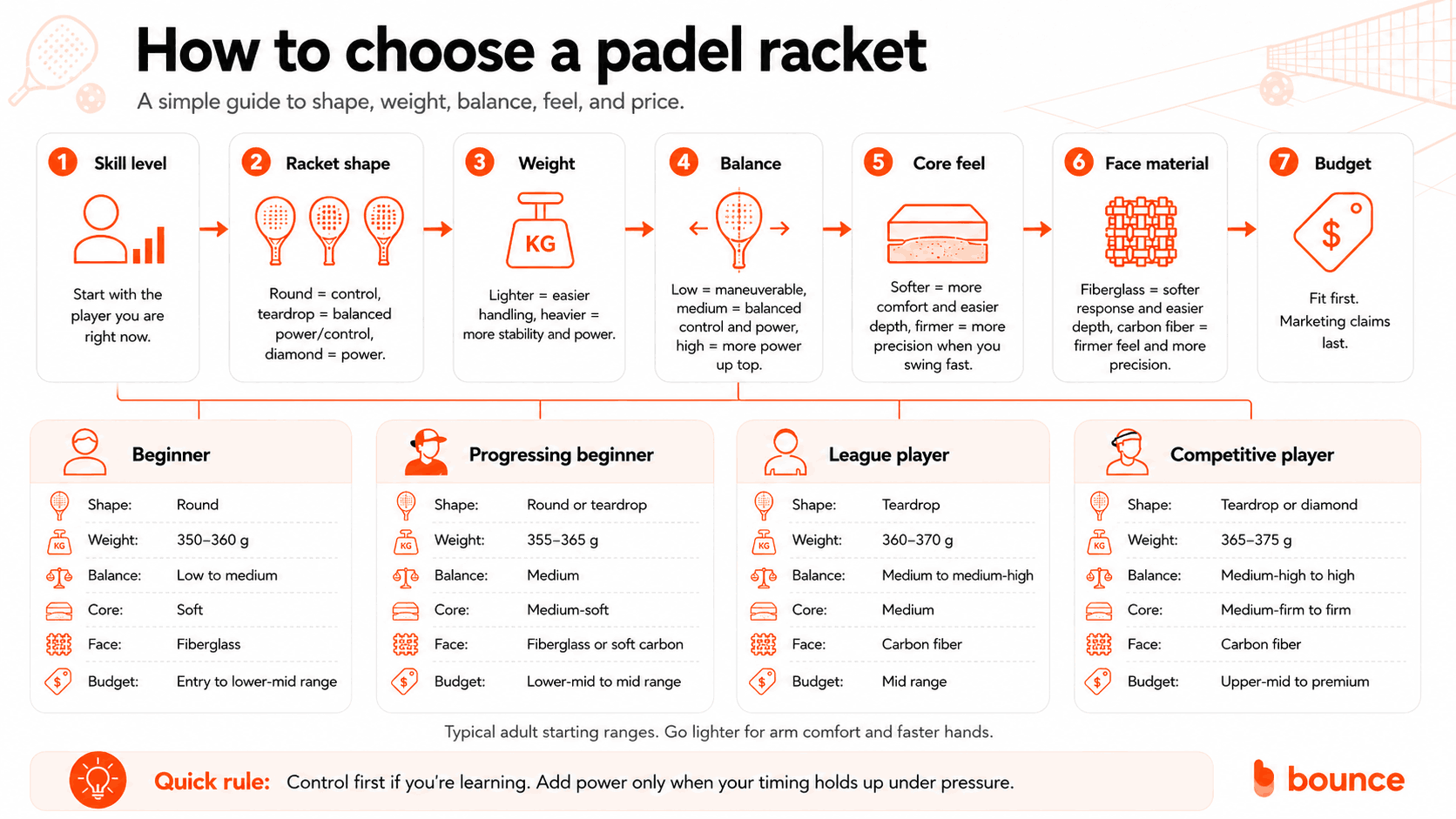
Padel racket comparison by skill level
The jump from beginner to league player is where most bad purchases happen.
Players want power before they have contact quality. The better move is to add only one demanding spec at a time.
That could mean teardrop shape while keeping soft EVA. Or medium EVA while keeping a round shape.
Stacking a diamond shape, hard core, head-heavy balance, and full carbon face all at once is how you buy a racket your game cannot use yet.
Common examples: four players, four rackets
The brand-new player
You play one social session a week and still miss the center of the racket face.
Buy a round, head-light racket around 350 to 360g with a soft EVA core and fiberglass face. You want comfort, control, and a sweet spot that helps when your feet are late.
The progressing beginner
You rally well, understand basic wall bounces, and can keep the ball in play under light pressure.
Stay round or move into a soft teardrop. Keep the balance light or even. A medium-soft core can add a cleaner response without turning every mishit into arm shock.
The weekly league player
You play matches most weeks and can finish points at the net.
A teardrop racket around 365 to 370g makes sense here. Even balance gives you enough power to attack without making defensive shots feel clumsy.
This is also where padel tips start to matter more than gear. The racket supports better choices. Your decisions still decide the point.
The competitive player
You strike cleanly, control the glass, and generate pace without forcing the swing.
A diamond or hybrid racket can work. Go toward denser EVA, carbon face material, and higher balance only if you can keep the racket stable late in long points.
If the racket feels powerful for 10 minutes and heavy by minute 45, it is too much racket.
Conclusion
Your first padel racket should make the game easier to learn.
Start with comfort and control. Add power as your timing, footwork, glass reads, and partner spacing improve.
The player you are today needs a racket that helps you make cleaner contact. That is how you become the player who can use the stiffer, heavier frame later.
For players building their game through structured coaching and organized play, Bounce connects you with certified coaches and competitive formats in your city.
FAQs
How do I know what padel racket is best for me?
Choose a padel racket based on your contact consistency, arm comfort, preferred balance, and current skill level. Test each racket during wall returns, volleys, lobs, and overheads, then judge how it handles near the end of the session. Brand comes after those checks.
How do I choose a padel racket shape?
Choose a round racket while you’re building reliable contact because its sweet spot is usually larger and closer to the center. Diamond rackets place the sweet spot higher and suit players with clean overhead timing. Teardrop rackets sit between those options and work well for an all-court game.
Is a light or heavy padel racket better?
A lighter racket moves faster during volleys, defence, and rushed contact. A heavier racket provides more stability against fast balls and carries more mass through overhead shots. Current adult models range from about 330 to 370 grams, with some ultralight beginner rackets near 300 grams, so choose by handling and balance as well as scale weight.
What’s the difference between cheap and expensive padel rackets?
Lower-priced rackets commonly use fiberglass faces, softer cores, and simpler frame construction. Higher-priced models tend to add carbon faces, firmer foam, molded surface texture, or adjustable weighting. Current official U.S. listings place many beginner rackets around $100 to $170, while advanced models commonly cost $250 to $420.
Is carbon fiber or fiberglass better for a padel racket?
Fiberglass has more flex and usually produces a softer feel with easier rebound at slower swing speeds. Carbon feels firmer and more direct when you strike the ball hard. Players building their technique usually get more help from fiberglass or a mixed face, while experienced hitters can make better use of carbon.
What is the best padel racket for beginners?
Most adult beginners should choose a round or oversized racket with a large sweet spot, manageable weight, low-to-even balance, and a softer face. A model around 340 to 360 grams works for many new players, though lighter options suit players who want quicker handling. Rent or demo a few rackets before buying because two models with similar specifications can feel very different during play