Padel equipment gets confusing faster than it should. You play once with a rental racket, then suddenly every buying guide is talking about diamond heads, EVA foam, rough surfaces, balance points, and shoes that look almost identical from the top.
The first decision is simpler: buy the pieces that protect your body and help you learn clean contact. Leave the rest alone until you have actually played enough padel to know what your game needs.
Quick answer: The three things you need to play padel are a racket, padel-specific shoes, and balls, although most venues provide balls and rental rackets. Start with a round-shaped racket in the 350-370g range, a soft foam core, and court shoes with a herringbone or omni sole. Everything else can wait until you have played 10-15 sessions.
This padel equipment guide is built for beginners and early recreational players. The goal is to help you buy once, avoid the obvious mistakes, and understand which specs matter before you spend real money.
Padel equipment at a glance
| Equipment | Buy now? | Best beginner choice |
| Padel racket | Rent first, then buy after 5-10 sessions | Round shape, soft foam core, 350-365g |
| Padel shoes | Yes, before your first regular session | Court shoe with herringbone, omni, or hybrid sole |
| Padel balls | Usually no | Use venue balls until you book courts independently |
| Overgrip | When you own a racket | Comfort grip replaced every few sessions |
| Racket protector | With your first racket | Top-edge protector to reduce frame chips |
| Padel bag | Later | Only once you carry gear regularly |
The padel racket: the equipment decision that matters most
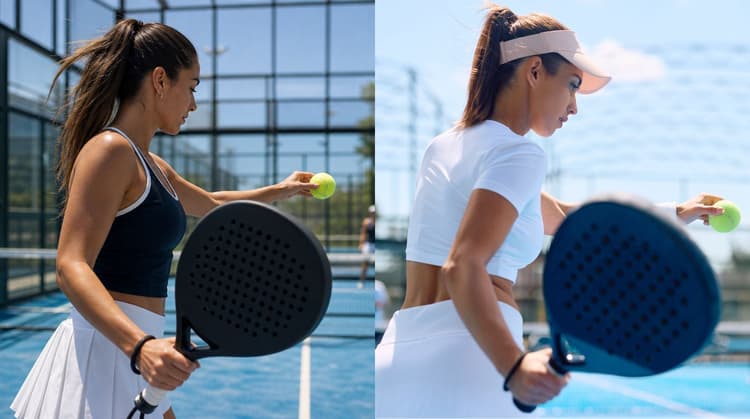
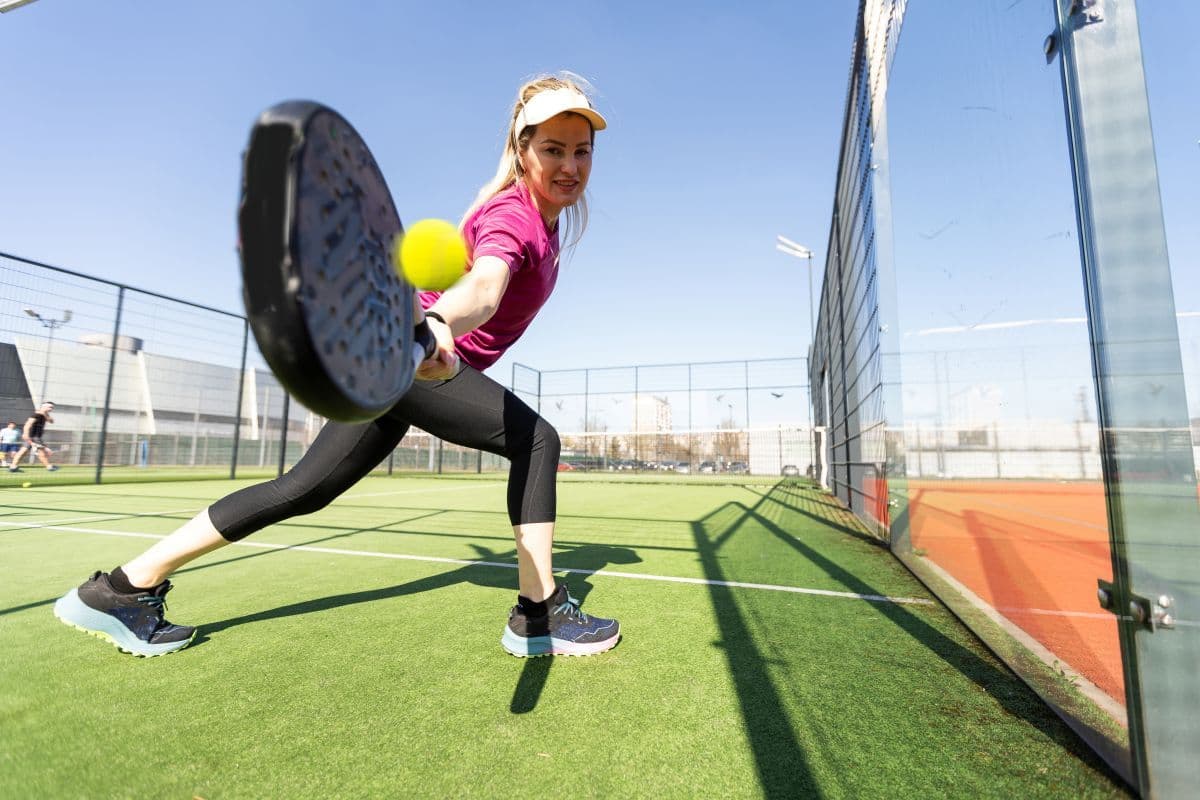
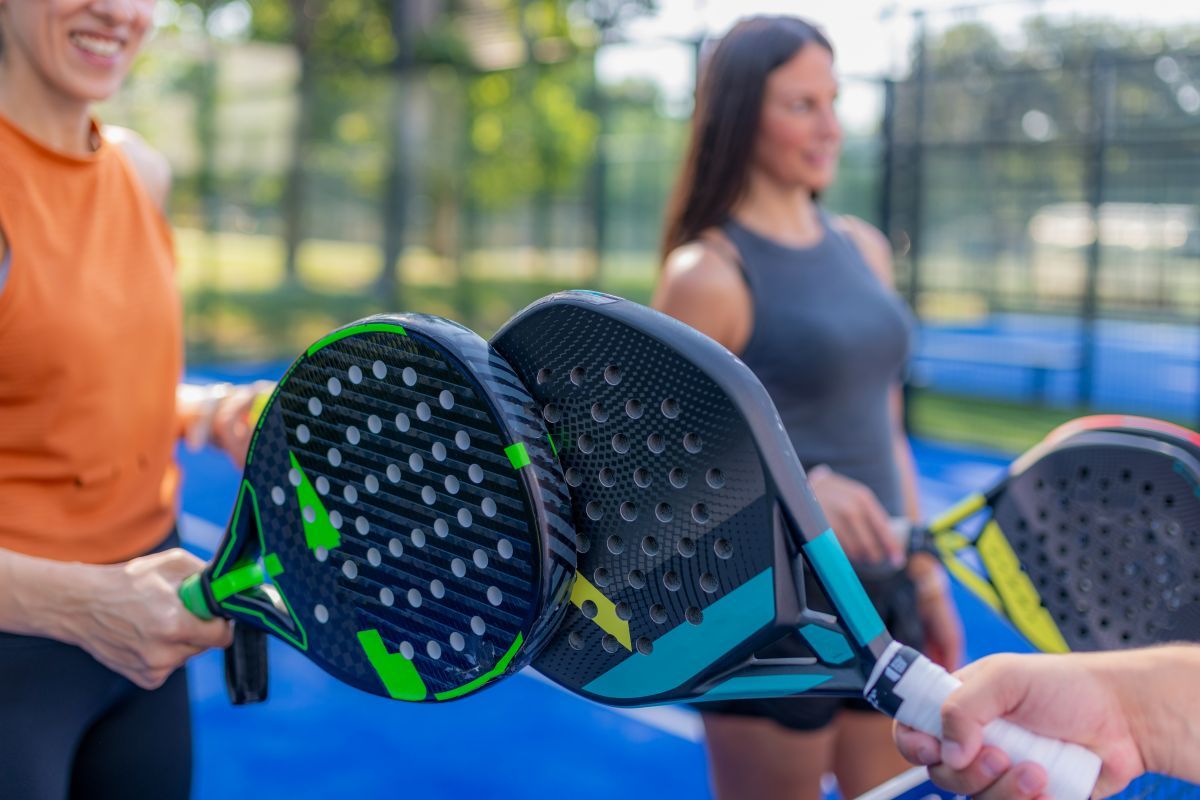
A padel racket is solid, perforated, and stringless. The racket usually has a foam core, a fiberglass or carbon fiber surface, and holes through the face. It is shorter and thicker than a tennis racket, and it always includes a wrist cord.
Official FIP rules list the maximum racket length at 45.5 cm, maximum width at 26 cm, and maximum thickness at 38 mm. The same rules require a non-elastic safety cord fixed to the handle, and its use around the wrist is obligatory during play. Wear the wrist cord.
If you want the official language, the International Padel Federation publishes the current Rules of Padel, including racket specifications and safety-cord requirements.
For U.S. players entering organized events, the USPA rules and regulations page is a useful secondary reference before tournament or league play.
Shape: the first choice
Racket shape controls where the sweet spot sits. That changes how forgiving the racket feels when you miss the exact center of the face. Beginners miss the center constantly, so forgiveness matters more than power.
| Shape | Sweet spot | Best for | Why it matters |
| Round | Center of the face | Beginners | Largest, most forgiving sweet spot. Off-center hits still travel cleanly. |
| Teardrop | Slightly above center | Improving recreational players | Blends control and power once timing improves. |
| Diamond | High on the face | Advanced attacking players | More power on clean hits, but a smaller sweet spot punishes mistakes. |
A beginner should not buy a diamond racket. The power only helps if you can contact the ball cleanly and early. Most new players will just make more errors.
Choose round first. Move to teardrop when your contact point and swing path are repeatable. Diamond can wait until you have a clear attacking game and enough match experience to use the extra weight at the top of the racket.
Core material: soft foam vs. EVA
Core material changes the way the racket absorbs impact. Softer cores give more comfort and a larger margin for poor contact. Firmer cores give a more direct response when your timing is good.
Soft foam feels more forgiving. It absorbs vibration, helps the ball leave the face with less harsh feedback, and makes the racket easier to use in cold conditions. For players still learning timing, that comfort matters.
EVA foam is firmer. It gives a cleaner, more direct response on solid contact, but it can feel unforgiving when you hit off-center. Cold weather can make a firm racket feel even stiffer.
Fewer than 30 sessions? Choose soft foam. If you play outdoors in cold weather, soft foam is also the safer first choice, even if you have some racket-sport background.
Surface material: fiberglass vs. carbon fiber
Surface material affects feel, stiffness, and price. Fiberglass bends more at contact, which usually feels softer on the arm. Carbon fiber is stiffer and more precise, but it asks more from the player.
Fiberglass is usually the better beginner surface. It is more comfortable, more forgiving, and typically cheaper. Carbon fiber starts to make sense once you can generate your own control and want a firmer response.
Arm comfort matters. If you have had elbow or wrist pain from tennis, pickleball, or gym work, do not chase a stiff carbon racket as your first purchase.
Weight: do not buy too heavy
Racket weight changes maneuverability. Heavier rackets can feel more stable, but they also make late contact and arm fatigue worse. Beginners already swing late. A heavy racket makes that problem louder.
Use this as a practical starting point:
- 350-360g: lighter, faster to move, easier on the arm. Good for beginners and players with elbow concerns.
- 360-370g: the best range for most recreational players. Enough mass without feeling slow.
- 370g+: more demanding. Better for stronger or advanced players with reliable timing.
Stay under 370g. That single rule prevents a lot of bad first purchases.
| Level | Shape | Core | Surface | Weight |
| Beginner, 0-30 sessions | Round | Soft foam | Fiberglass | 350-365g |
| Recreational, 30-100 sessions | Round or teardrop | Soft foam or EVA | Fiberglass or carbon | 360-375g |
| Advanced | Teardrop or diamond | EVA | Carbon fiber | 365-380g |
For players who want personalized guidance on choosing the right racket for their game, a session with a certified coach through Bounce gives you hands-on feedback that no buying guide can replicate.
Padel shoes: the must-buy before regular play
You can rent a racket. You usually cannot rent shoes. That makes footwear the first real padel equipment purchase for most beginners.
Padel uses short sprints, lateral cuts, pivots, and stops. Running shoes are built for forward motion. Their soles can grab too hard when you cut sideways, which increases the risk of rolling an ankle or stressing a knee.
Buy court shoes first. A basic pair with lateral support is more useful than an expensive racket during your first month.

| Sole type | Best surface | When to choose |
| Herringbone | Artificial grass with sand | Most outdoor padel courts and many club courts |
| Omni | Hard indoor courts | Indoor courts with concrete or resin surface |
| Hybrid | Mixed surfaces | Players who move between outdoor turf and indoor hard courts |
Most outdoor courts use artificial turf with silica sand. Indoor courts often feel harder and smoother. When in doubt, ask the venue what sole pattern they recommend before buying.
Padel balls: what to know before buying
Padel balls look like tennis balls, but they do not play the same. They run at lower pressure, which creates a slower bounce and longer rallies. That slower response is part of why padel feels more playable early.
FIP rules specify the ball’s bounce range and internal pressure range, and the same official documents page includes the list of FIP approved padel balls. In practical terms, the ball should feel familiar in your hand and slightly less lively once it starts bouncing.
Do not use tennis balls. They make the game faster and bouncier than it should be, which changes the timing and makes wall play harder for beginners.
Most venues provide balls for clinics, open sessions, and rentals. Buy your own once you start booking courts independently or playing with the same group every week.
Accessories: useful later, not on day one
Accessories are where beginners waste money. A few pieces help once you own a racket and play regularly. The rest can wait.
Overgrip
Overgrip is cheap. It is also the accessory you will use most. It wraps over the handle, absorbs sweat, improves comfort, and gives you a cleaner hold on the racket.
Replace it every 2-5 sessions depending on heat, sweat, and how often you play. If the handle feels slick or you start squeezing too hard, the grip is already past useful.
Racket protector
A racket protector is a thin strip that sits on the top edge of the frame. It helps reduce chips from low balls, wall scrapes, and contact with the court surface.
Buy it with the racket. A $10 protector can save the edge of a $120 racket. That is not complicated math.
Padel bag
A padel bag is useful once you carry shoes, a racket, balls, towel, and water. Before that, a normal backpack works.
Dedicated bags add padded racket compartments, ventilated shoe pockets, and space for grips and balls. They become useful when padel turns into a weekly habit, not before.
What to skip early
| Skip early | Why |
| Diamond racket | Too small a sweet spot for new players. |
| Heavy racket above 370g | More arm strain and slower late contact. |
| Tournament balls | Not needed before regular court booking. |
| Training aids | Court time or coaching is more useful. |
| Brand-specific accessories | Wait until you know your racket. |
Skip power gear early. Beginners need control, comfort, and repeatable contact. Power-focused equipment usually delays that.
How much padel equipment costs
A clean beginner setup does not need to be expensive. The point is to buy the pieces that support safe movement and consistent learning, then add extras once the sport sticks.
| Item | Budget range | When to buy |
| Padel racket | $60-$120 beginner, $120-$250 intermediate | After 5-10 sessions |
| Padel shoes | $60-$130 | Before your first regular session |
| Balls, can of 3 | $8-$15 | Once playing independently |
| Overgrip, pack of 3 | $8-$15 | When you own a racket |
| Racket protector | $5-$15 | With your first racket |
| Padel bag | $30-$80 | When you carry gear regularly |
Rent first. For the first 3-5 sessions, rented equipment is completely fine. You will learn more from 3 real sessions than from 3 hours comparing rackets online.
For players who want to try the sport before buying anything, Bounce lists clubs and organized sessions where equipment rental is often available at courts near you.
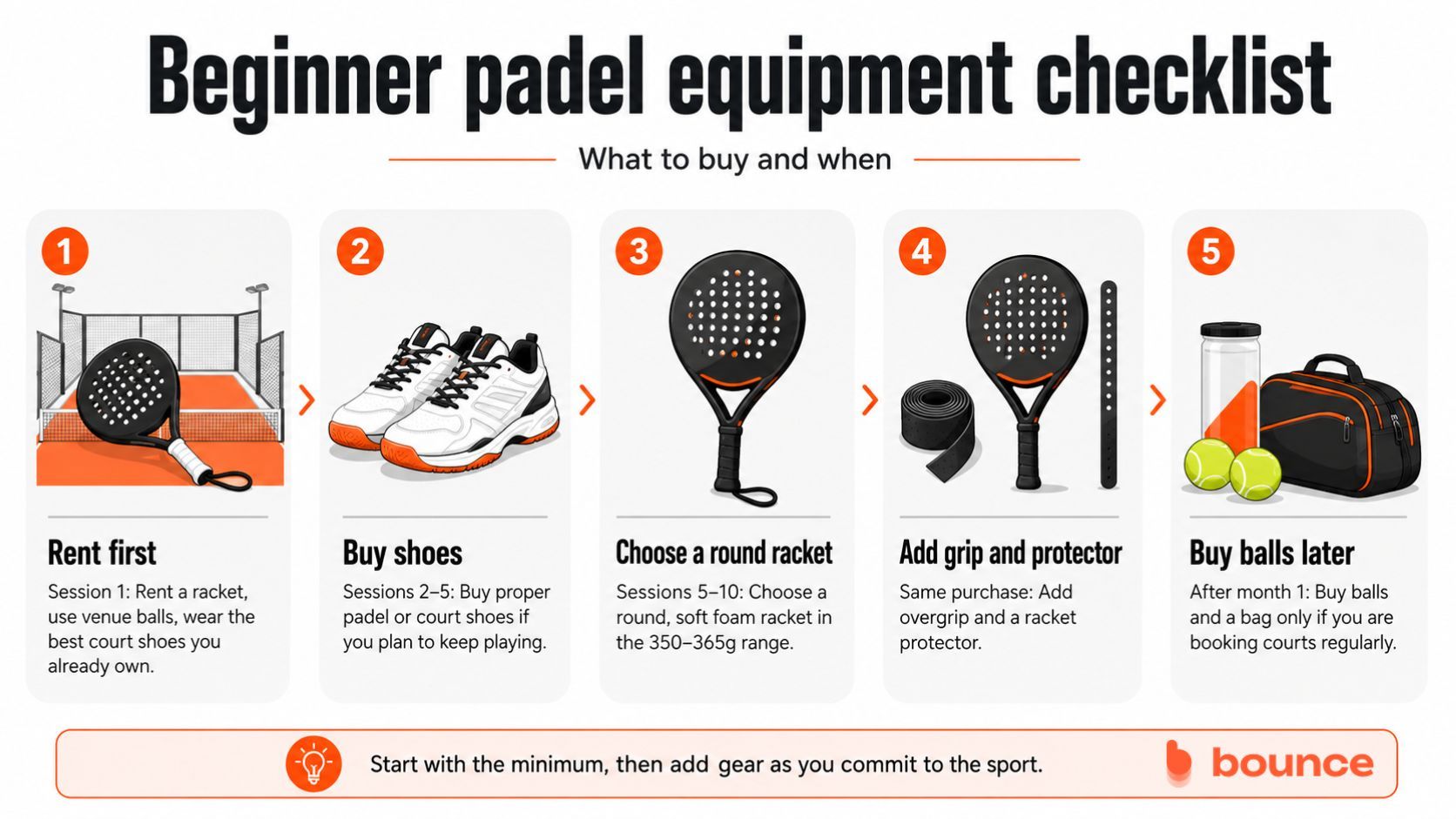
Beginner padel equipment checklist
Use this order if you are starting from zero:
- Session 1: Rent a racket, use venue balls, wear the best court shoes you already own.
- Sessions 2-5: Buy proper padel or court shoes if you plan to keep playing.
- Sessions 5-10: Choose a round, soft foam racket in the 350-365g range.
- Same purchase: Add overgrip and a racket protector.
- After month 1: Buy balls and a bag only if you are booking courts regularly.
Once your shoes and racket are sorted, the next step is learning to move, serve, and use the glass. The how to play padel guide covers the core shots and positioning habits that make equipment actually useful on court.
What to do after you buy the basics
Equipment should make learning easier. It can't replace court time. Once you have shoes and a forgiving racket, the next step is learning how to move, serve, use the glass, and control the middle of the court.
If you're not sure where to start with that, the guide to getting started in padel covers how to find a court, what to expect in your first session, and how to build from there.
For players who want structured coaching alongside their gear investment, Bounce connects you with certified coaches and organized racket-sport sessions in your city.
Conclusion
Padel equipment is simple when you buy in the right order. Shoes come first because they protect your movement. A racket comes after 5-10 sessions, when you know you actually want to keep playing.
For most beginners, the right first racket is round, soft, forgiving, and under 370g. Add an overgrip and protector when you buy it. Balls, bags, and extras can wait until padel becomes part of your weekly rhythm.
For players building their game through structured coaching and organized play, Bounce connects you with certified coaches and competitive formats in your city.
FAQs
What equipment do I need to start playing padel?
You need a racket, court shoes, and padel balls. For your first session, rent the racket and use venue balls if they are provided. Shoes are the one item worth buying early because running shoes are not built for padel movement.
What is the best padel racket for a beginner?
The best beginner padel racket is usually round-shaped, soft foam, fiberglass-faced, and 350-365g. That combination gives a larger sweet spot, better comfort, and more control while your timing develops.
Can I use tennis shoes for padel?
Some tennis shoes work for padel, especially if they have lateral support and a herringbone, omni, or hybrid sole. Running shoes are a poor choice because they are built for forward motion and can grip badly during sideways cuts.
How is a padel ball different from a tennis ball?
A padel ball looks similar to a tennis ball but is lower pressure and less lively. That lower bounce supports longer rallies and better control. Tennis balls make padel play too fast and bouncy.
How often should I replace my padel overgrip?
Most recreational players replace an overgrip every 2-5 sessions. Replace it sooner if the handle feels slick, your hand slips, or you start squeezing the racket harder than normal.
Do I need a padel-specific bag?
No, not at first. A normal backpack works until you are carrying shoes, rackets, balls, grips, and a towel every week. A padel bag becomes useful once the sport is part of your routine.
What is the difference between fiberglass and carbon fiber padel rackets?
Fiberglass rackets flex more at contact, which feels softer and more forgiving on the arm. Carbon fiber rackets are stiffer and give a more direct response on solid hits, but they're less forgiving off-center. Beginners are better off with fiberglass until their timing is consistent.
When should I upgrade my padel racket?
After 30-50 sessions, when your contact point is more reliable and you understand what you want from a racket. Before that, a beginner racket limits your mistakes more than it limits your game.