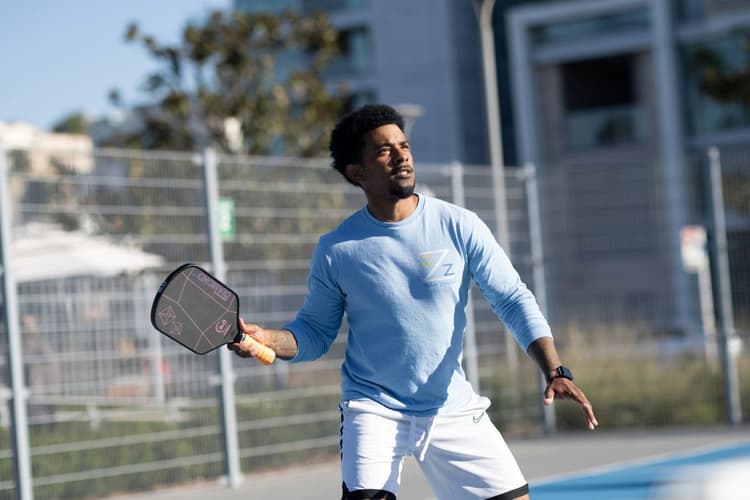
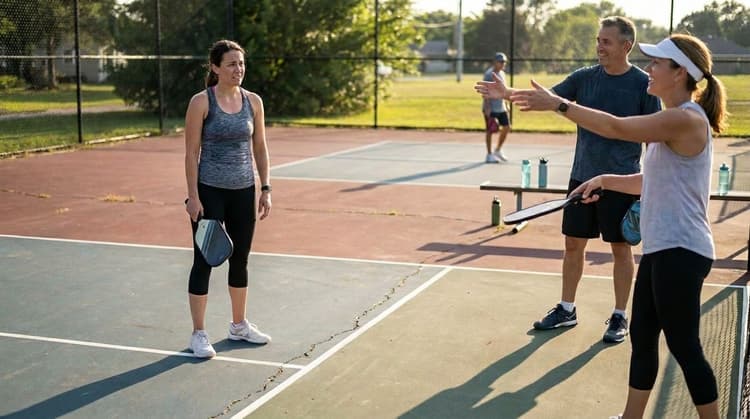
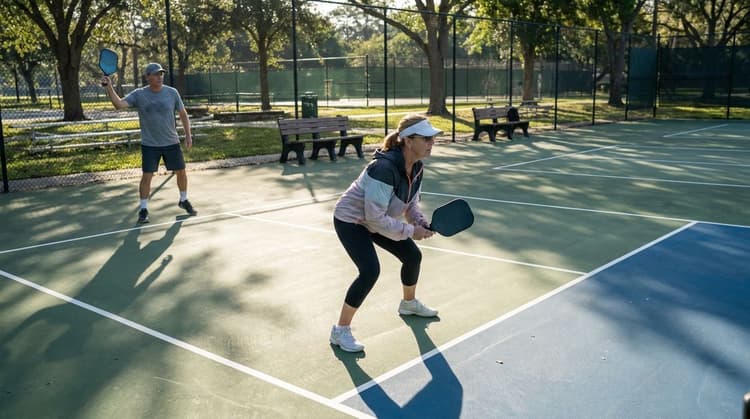
If you’re asking is pickleball an olympic sport, the answer right now is no. Pickleball is not part of the Olympic program, and it is not included in the official sports lineup for the Los Angeles 2028 Summer Games.
That simple answer is the one most readers want first. The more useful answer is what comes next: pickleball is no longer too small for the question to matter, but it is also not close enough that Olympic inclusion should be treated like a near-term certainty.
That distinction matters because plenty of articles on this topic blur the line. Some still talk as if LA28 is a live possibility. Others lean so hard into the sport’s momentum that they skip the slow, structural part of the story. For players, coaches, and casual fans, the truth is more grounded. Pickleball has real international ambition. It also still has real work to do.
Why pickleball is not in the Olympics right now
The biggest reason is straightforward: the Olympics do not add sports just because they are growing fast.
A sport needs broad international participation, stronger governance, and the right opening in the Olympic cycle. That helps explain why pickleball’s popularity alone is not enough, even if the sport keeps expanding.
There is also one practical point that settles the biggest misconception around this topic. The official LA28 Olympic sport program is already set, and pickleball is not on it. The added sports for Los Angeles 2028 are baseball/softball, cricket, flag football, lacrosse, and squash, not pickleball.
That means the sport is not “almost in” for 2028. That window is already closed. Any serious Olympic conversation now belongs to a later Games cycle.
What would need to happen before pickleball could become Olympic
Stronger and clearer international governance
A sport needs more than visibility. It needs an international structure that can represent it clearly and credibly.
That is one reason governance keeps coming up in this conversation. The International Pickleball Federation openly states that its long-term goal is official recognition by the IOC and eventual Olympic status. The Global Pickleball Federation also presents Olympic recognition as part of its broader development goals.
That is encouraging, but it also shows where the sport still is: in an organizing and expansion phase, not at the end of the process.
Broader worldwide participation
The Olympic pathway is international by design. Historically, the Olympic Charter has used broad participation standards for inclusion in the Summer Games, which is one reason global depth matters so much here. The Olympic Charter library is a useful place to understand that bigger framework.
For pickleball, that means continued growth outside the United States matters a lot. More national bodies, more organized events, more repeat competition, and more player-development systems all strengthen the sport’s long-term case.
The right timing
Even fast-rising sports can miss a cycle if the program is already set or if other sports are further along in the process.
That is why LA28 is no longer the real debate. The practical question is not whether pickleball can squeeze into Los Angeles. It is whether the sport can keep building enough international and institutional weight to become a credible candidate later.
Why people think pickleball could become Olympic one day
This is where the answer gets more interesting.
Pickleball has several qualities that make future Olympic talk feel reasonable. It is easy to learn, accessible across age groups, and social enough to grow quickly at the local level. It also has a competitive side that is easy to understand on first watch, especially for people who already know tennis, table tennis, or badminton.
That blend of accessibility and structure is a real strength. Sports that are simple to start often build communities faster, and stronger communities can support better coaching, more local competition, and a deeper international ecosystem.
That does not make Olympic inclusion inevitable. It just makes the long-term idea believable.
Why that still does not make Olympic inclusion imminent
This is where it helps to separate momentum from readiness.
Yes, pickleball has grown quickly. Yes, there is more organized international activity than there was a few years ago. Yes, multiple bodies are explicitly talking about Olympic recognition.
But none of that automatically means the sport is close to appearing at the Games.
The most common mistake in this space is treating popularity like the final hurdle. It is not. Olympic inclusion is as much about structure, recognition, and timing as it is about participation growth. That is why a sport can feel culturally big and still be institutionally early.
So when readers ask is pickleball an olympic sport, the most honest answer is not just “no.” It is “no, and the main reasons are more structural than promotional.”
What this means for players right now
For most players, Olympic status sounds important, but it has almost no impact on how you actually improve or play today.
Whether pickleball becomes an Olympic sport or not, your day-to-day progress still comes down to the same fundamentals: playing regularly, understanding shot selection, and getting comfortable under real match pressure.
That’s why the Olympic question is mostly a top-level conversation, not a practical one. It matters for governing bodies, international recognition, and long-term visibility. It does not change how you train this week or who you play with this weekend.
If anything, the current moment is more useful than an Olympic one. The sport is still accessible, local scenes are growing quickly, and it is easier than ever to find games, coaches, and entry points without needing a formal pathway.
That is why practical resources tend to help more than Olympic speculation. A solid pickleball shots guide, a realistic pickleball equipment guide, and the broader Bounce blog are all more useful to most players than debating whether the sport is one cycle away or two.
And for players who want more structure, Bounce can be a useful next step for finding local coaches, clubs, programs, and ways to play, helping turn curiosity into real racket-sports activity in your city.
Final thoughts
So, is pickleball on an Olympic path? Potentially, yes.
Is it already close enough that fans should expect it soon? Not yet.
That middle-ground answer is the one that best fits the evidence. Pickleball has grown into a serious international conversation, but the sport still needs more time, more structure, and more global depth before Olympic inclusion feels realistic rather than hopeful.
And if this question got you interested in the sport itself more than the Olympic angle, Bounce is worth checking as a practical way to move from reading about pickleball to actually playing more often.
FAQs
Is pickleball an Olympic sport right now?
No. Pickleball is not currently an Olympic sport.
Will pickleball be in the 2028 Olympics?
No. Los Angeles 2028 has already confirmed its sports program, and pickleball is not included.
What sports were added to LA28 instead?
The added sports are baseball/softball, cricket, flag football, lacrosse, and squash.
Could pickleball become an Olympic sport in the future?
Possibly. But it would likely need stronger international governance, broader worldwide participation, and continued progress through formal Olympic-recognition pathways.
Why do some articles make it sound like pickleball is close?
Mostly because the sport is growing fast and the Olympic angle makes a strong headline. But fast growth alone does not settle the governance, recognition, and timing questions.
Does Olympic status matter for regular players?
Not much in day-to-day play. For most people, better coaching, stronger fundamentals, easier access to local play, and more match experience matter far more than Olympic status.