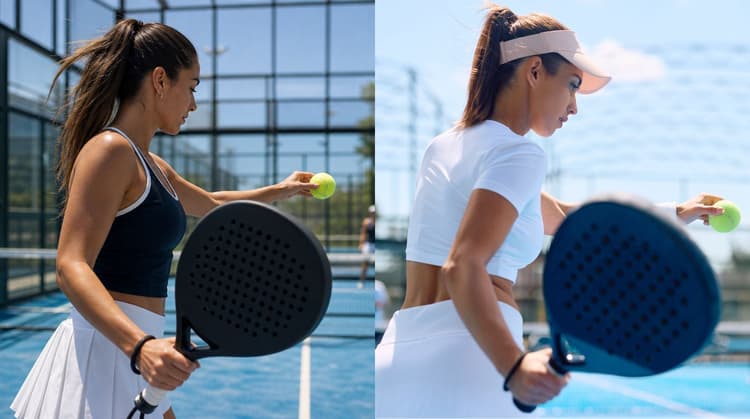
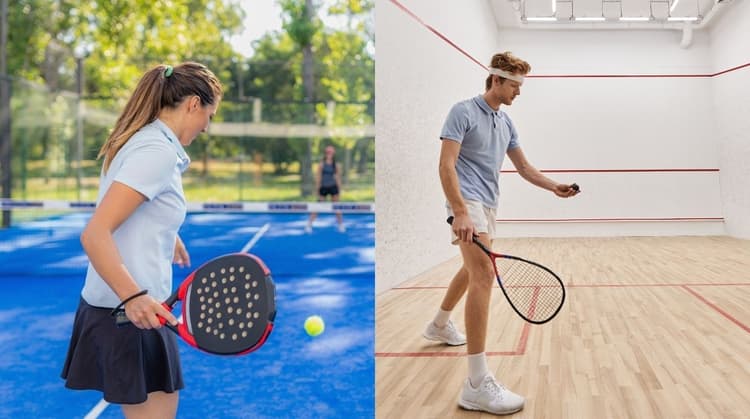
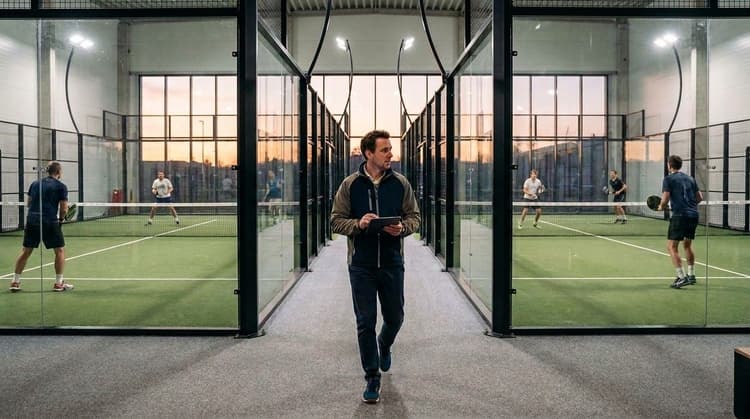
Pickleball has exploded in popularity, and with it comes a unique vocabulary that every player needs to understand. If you're stepping onto the court for the first time or refining your strategy, knowing the language of the game will help you communicate better, play smarter, and improve faster.
This complete A–Z glossary of pickleball terms covers everything from beginner basics to advanced slang used by experienced players.
A
Ace – A serve that is not touched by the opponent, resulting in an immediate point.
Approach Shot – A shot hit while moving toward the net, typically to transition from defense to offense.
Around-the-Post (ATP) – A legal shot hit outside the net post that lands in bounds on the opponent’s side without crossing over the net.
B
Backcourt – The area near the baseline on either side of the court.
Backhand – A stroke hit on the non-dominant side of the body.
Baseline – The back boundary line of the court where serves are initiated.
Banger – A player who prefers powerful, aggressive shots over soft, controlled play.
Body Bag – When a player hits the ball directly at an opponent, often winning the point.
Bounce It – A call to let the ball bounce rather than volley it.
Bert – An advanced poaching move where a player crosses in front of their partner to intercept a shot.
C
Carry – An illegal shot where the ball is held or scooped instead of struck cleanly.
Crosscourt – A shot hit diagonally across the court.
Counterattack – Turning a defensive shot into an offensive opportunity.
Court – The playing area where pickleball is played, measuring 20 feet wide by 44 feet long, divided by a net, and including key zones such as the baseline, sidelines, and the non-volley zone (kitchen).
D
Dead Ball – A ball that is no longer in play due to a fault or rule violation.
Dink – A soft shot that lands in the opponent’s non-volley zone, used to control rallies.
Double Bounce Rule – The rule requiring the ball to bounce once on each side before volleys are allowed.
Drop Shot – A soft shot that lands just over the net, forcing opponents to move forward.
Drive – A fast, low shot hit with power.
E
Erne – An aggressive volley taken by stepping outside the court near the kitchen.
Equipment Fault – A fault caused when equipment or clothing touches the net or interferes with play.
F
Falafel – A weak shot caused by poor contact, resulting in little power or distance.
Fault – Any rule violation that stops play or awards a point to the opponent.
Flapjack – A ball that must bounce before being hit (applies to the first two shots of a rally).
Foot Fault – A serving violation where a player steps on or over the baseline.
G
Groundstroke – A shot hit after the ball bounces.
Grip – How a player holds the paddle, affecting control and spin.
H
Half Volley – A shot hit immediately after the ball bounces.
Hinder – Any interference that disrupts play, often resulting in a replay.
K
Kitchen – The non-volley zone, a 7-foot area on both sides of the net where players are not allowed to hit volleys (shots taken before the ball bounces).
Kitchen Line – The boundary line marking the non-volley zone.
L
Lob – A high, arcing shot designed to push opponents toward the baseline.
Let – A serve that touches the net but still lands in the correct service area (depending on local rules, often replayed or considered live).
M
Midcourt – The area between the baseline and the kitchen.
Momentum Rule – Prevents players from stepping into the kitchen after a volley due to forward momentum.
N
Non-Volley Zone (NVZ) – The 7-foot area on both sides of the net where volleys are prohibited (also called the kitchen).
O
Overhead Smash – A powerful downward shot, typically used against lobs.
Open Paddle Face – Angling the paddle upward to create lift or control.
P
Paddle – The solid racket used to hit the ball.
Passing Shot – A shot that travels past an opponent at the net.
Pickled – Losing a game without scoring a single point.
Poach – Crossing into your partner’s area to intercept a shot.
Punch Volley – A firm volley with minimal backswing for quick control.
Putaway – A shot intended to end the rally decisively.
R
Rally – A sequence of shots exchanged between players.
Roll Volley – A volley that adds topspin for control and placement.
Reset Shot – A soft shot used to neutralize an opponent’s advantage and slow the pace.
S
Serve – The underhand shot that starts each point.
Service Court – The area where a serve must land.
Side Out – When the serving team loses the rally and the serve goes to the opponents.
Split Step – A small hop to prepare for quick movement and reaction.
Stacking – A positioning strategy used in doubles to optimize player strengths.
T
Targeting – Intentionally aiming shots at an opponent’s body.
Third Shot Drop – A soft shot played after the serve and return to gain control of the net.
Topspin – Forward spin that causes the ball to dip quickly.
Tweener – A shot hit between the legs, usually as a last resort.
U
Underspin (Backspin) – Spin that slows the ball and keeps it low after bouncing.
V
Volley – A shot hit before the ball bounces.
Volley Llama – A fault where a player volleys while standing inside the kitchen.
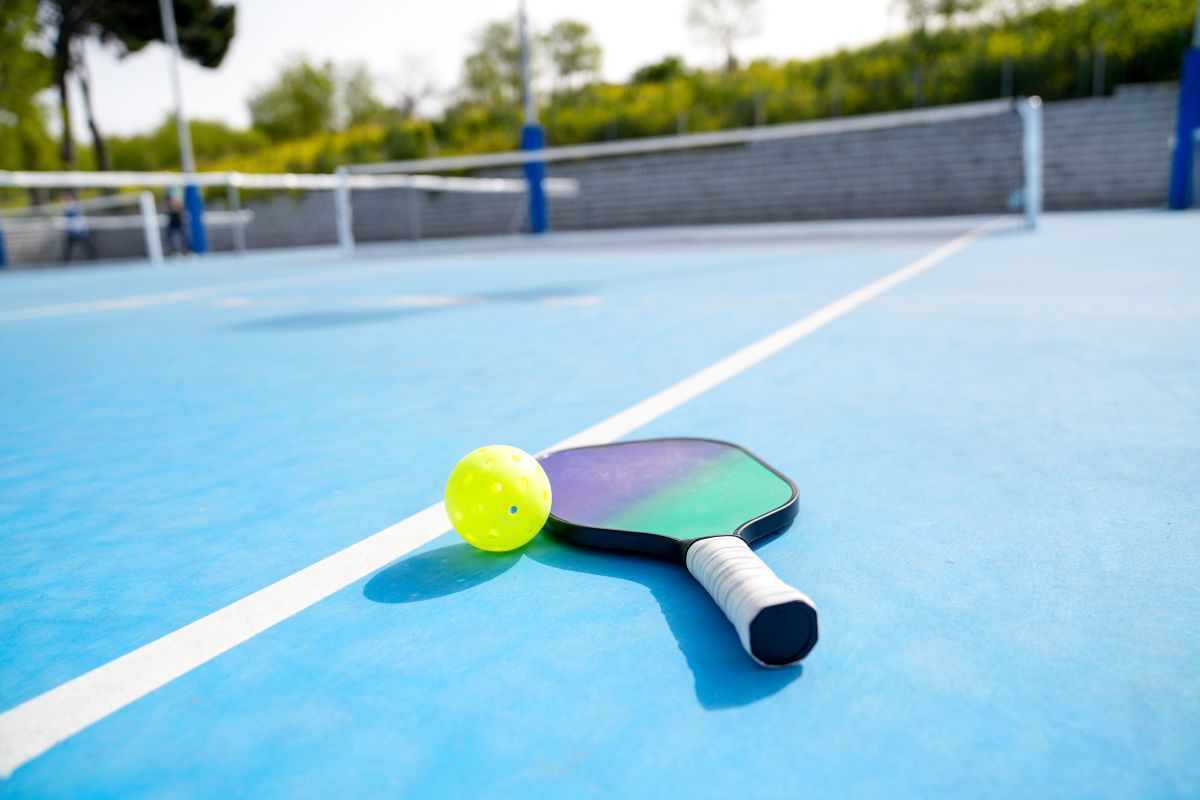
Pickleball may be easy to start, but mastering it requires understanding both technique and terminology. From basic rules like the double bounce to advanced shots like the Erne or ATP, every term represents a concept that can improve your game.
The next step is simple: apply what you’ve learned on the court. The more you play, the more these terms become second nature.
If you want to accelerate that progress, platforms like Bounce help you find courts, games, and players in your area - making it easier to turn knowledge into real skill.