Pickleball drills are the foundation of measurable improvement. Casual games build instincts, but structured repetition builds consistency, control, and confidence. Players who dedicate time to intentional practice develop cleaner mechanics, better shot selection, and stronger court awareness. Improvement becomes predictable rather than accidental.
A well-designed drill session isolates specific skills, reinforces proper movement patterns, and gradually increases pressure. Instead of relying on random rallies, players work on defined objectives such as third shot accuracy, transition resets, or dink consistency. Over time, these repetitions create reliable habits that hold up under competitive conditions.
This guide breaks down beginner, intermediate, advanced, and solo pickleball drills to help players at every level sharpen their game with purpose.
How to Structure Effective Pickleball Drills
Effective pickleball drills require more than just hitting balls back and forth. Structure and intention determine whether practice leads to progress. Every session should focus on a defined skill, include measurable goals, and emphasize quality repetition over speed.
Drills differ from match play because they isolate a single element of performance. In games, players react instinctively to varied situations. In drills, they repeat a controlled scenario until it becomes automatic. This approach strengthens mechanics and reduces unforced errors during real points.
To maximize training value, players should incorporate the following principles:
- Clear objectives for each drill
- High repetition volume with controlled tempo
- Technical focus before speed
- Accountability between partners
- Gradual progression in difficulty
A balanced session typically includes:
- A dynamic warm-up and short-court control work
- Skill-specific drills (dinks, drops, volleys, resets)
- Competitive application with constraints
- Reflection and feedback
Beginner Pickleball Drills: Building a Reliable Foundation
Beginners should focus on developing control, consistency, and proper mechanics. Power and speed can come later. A strong technical base prevents bad habits from becoming ingrained.
Drill 1: Controlled Dink Rally Drill
The dink is one of the most important shots in pickleball. This drill builds touch and placement inside the non-volley zone.
Players stand at the kitchen line and rally softly cross-court. The goal is not to win the rally but to sustain it. Emphasis is placed on maintaining a smooth paddle face and controlled arc over the net.
Key focus points:
- Soft grip pressure
- Slight upward lift for net clearance
- Targeting the opponent’s feet
- Keeping the ball below net height
Beginners should aim for 15–20 consecutive dinks before increasing pace or changing direction. This drill reinforces patience and precision, both essential for long-term growth.
Drill 2: Serve and Return Accuracy Drill
Serving sets the tone of each rally. Beginners should prioritize depth and consistency.
Place targets deep in the service box and assign point values. Players rotate serves while aiming for deep placement near the baseline. After the serve, the returner focuses on sending the ball deep and controlled back to the server.
This drill reinforces:
- Balanced stance
- Smooth swing path
- Controlled follow-through
- Depth control
A reliable serve and return reduce early rally mistakes and allow smoother transitions into neutral play.
Drill 3: Third Shot Drop Introduction Drill
The third shot drop allows baseline players to move forward safely. Beginners should practice trajectory and touch before attempting speed.
One player feeds a return to simulate a real rally. The serving player then executes a soft drop aimed at the opponent’s kitchen.
Important mechanics:
- Relaxed wrist
- Slightly open paddle face
- Controlled upward arc
- Balanced forward movement
Repetition develops feel. Players should aim for a minimum of 30 successful drops landing in the kitchen during each session.
Drill 4: Basic Volley Control Drill
Volley fundamentals require stability. Beginners should avoid swinging aggressively and instead focus on controlled blocking.
Partners rally at the kitchen line using short, compact motions. The objective is to maintain steady paddle positioning and absorb pace rather than create it.
Key benefits:
- Improved hand positioning
- Faster reaction time
- Better balance at the net
- Reduced pop-ups
Bounce connects beginners with instructional clinics that emphasize these fundamentals, ensuring players build strong technical foundations early in their development.
Intermediate Pickleball Drills: Transition and Pressure Control
Intermediate players often struggle in the transition zone. The goal at this level is mastering resets, multi-shot patterns, and controlled aggression.
Drill 5: Transition Zone Reset Drill
Players begin mid-court while opponents at the kitchen line feed moderate-paced balls. The mid-court player practices absorbing pace and resetting softly into the kitchen.
This drill strengthens:
- Half-volley control
- Soft hands under pressure
- Footwork balance
- Decision-making discipline
The objective is survival and advancement. Players should resist attacking from low contact points.
Drill 6: Third Shot Drop + Fifth Shot Continuation Drill
Intermediate players must learn to string shots together. This drill simulates serve, return, drop, and follow-up continuation.
Sequence:
- Serve
- Return
- Third shot drop
- Controlled fifth shot into kitchen
The repetition builds rhythm and reinforces patience during net approaches.
Drill 7: Cross-court Dink Consistency Challenge
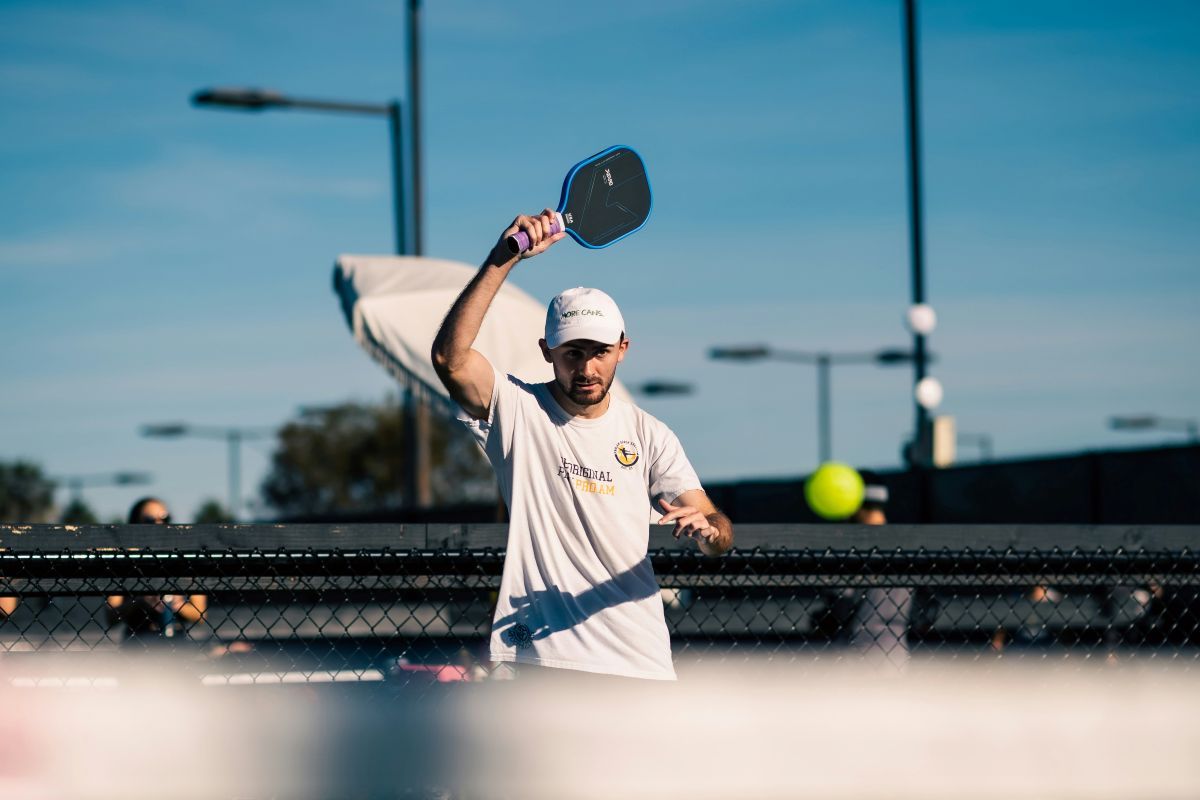
This advanced dink drill demands sustained rallies of 30–50 balls cross-court. Players focus on angle control and avoiding speed-ups unless clearly attackable.
Benefits include:
- Sharper angle precision
- Mental patience
- Footwork synchronization
- Enhanced ball placement awareness
Consistency at this stage separates strong intermediates from inconsistent competitors.
Drill 8: Speed-Up Recognition Drill
Players rally dinks until a ball sits slightly high. One player initiates a controlled speed-up while the other practices blocking or resetting.
The emphasis remains on:
- Recognizing attackable balls
- Maintaining balance during acceleration
- Controlled counter-volleying
- Smart shot selection
Intermediate-level clinics listed on Bounce frequently incorporate these pattern-based drills, helping players transition smoothly into more competitive environments.
Advanced Pickleball Drills: Competitive-Level Execution
Advanced players require drills that simulate real match conditions. Execution under pressure becomes the focus.
Drill 9: Live-Point Pattern Drill
This drill replicates realistic point construction:
- Serve
- Return
- Third shot
- Transition
- Net exchange
Players track successful patterns rather than isolated shots. The emphasis is on percentage-based strategy and disciplined movement.
Advanced athletes should aim for consistent execution across multiple sequences before increasing intensity.
Drill 10: Defensive Recovery Drill
One team attacks aggressively with drives and overheads. The defensive team focuses on resets and recovery positioning.
Core improvements include:
- Improved reaction speed
- Efficient court coverage
- Stronger defensive touch
- Composure under pressure
Defensive resilience often determines close match outcomes.
Drill 11: Middle Ball Communication Drill
In doubles, confusion over middle balls leads to errors. This drill defines forehand dominance, clarifies positioning, and sharpens communication timing.
Partners rotate responsibilities and verbally call shots during exchanges. The objective is eliminating hesitation and reinforcing trust.
How to structure the drill effectively:
- Start with cooperative dinks directed intentionally to the middle
- Assign forehand dominance to one player for a set number of repetitions
- Switch dominance roles after 10–15 exchanges
- Progress to faster volleys while maintaining verbal communication
- Add live-point play where middle-ball decisions determine scoring
Consistent practice of middle-ball communication transforms doubles teams from reactive pairs into coordinated units that control the center of the court with confidence.
Drill 12: Reaction Time & Hand-Speed Drill
Fast volley exchanges at the kitchen line build reflexes and confidence. Players rally quickly while maintaining control. This drill strengthens:
- Compact swing mechanics
- Rapid paddle preparation
- Anticipation
- Confidence during hand battles
Solo Pickleball Drills for Independent Practice
Not every player has access to a consistent partner, but that does not limit improvement. Solo pickleball drills allow athletes to sharpen mechanics, reinforce muscle memory, and build conditioning without relying on another player.
Independent practice is especially effective for refining technical skills such as paddle control, footwork efficiency, and serve accuracy.
When structured properly, solo sessions should mirror competitive demands. Instead of casually hitting balls, players should track repetitions, set measurable targets, and maintain game-like intensity.
Focused solo training develops discipline and prepares players to maximize the value of coached sessions and open play.
Wall Dink and Volley Drill
A solid wall drill can replicate many aspects of kitchen exchanges. Stand approximately 6–8 feet from a wall and aim for a consistent contact point slightly above net height. The objective is maintaining soft hands and precise paddle angles.
Begin with gentle dinks, focusing on minimal backswing and controlled lift. After achieving consistency, progress to alternating forehand and backhand contacts. Advanced players can reduce reaction time by stepping closer to the wall or increasing pace.
To increase effectiveness:
- Set a goal of 50 consecutive controlled contacts
- Alternate cross-body forehand and backhand touches
- Practice blocking harder rebounds to simulate speed-ups
- Focus on staying balanced and maintaining a stable base
This drill reinforces touch, control, and compact mechanics, all of which translate directly to stronger kitchen performance.
Serve Target Repetition
The serve is one of the few shots fully under a player’s control. Solo practice offers an ideal opportunity to develop reliability and depth.
Place cones, towels, or chalk targets near the baseline and sidelines within the service box. Aim for consistent deep placement rather than power. Track success rates out of 50 or 100 serves to measure progress over time.
To elevate this drill:
- Practice both flat and topspin serves
- Alternate between wide and middle targets
- Track first-serve percentage
- Incorporate a pre-serve routine to build consistency
Over time, this repetition strengthens rhythm and confidence. A dependable serve reduces early rally pressure and establishes control from the first contact.
Shadow Footwork Drill
Efficient movement separates average players from high-level competitors. Shadow footwork drills build agility, coordination, and positioning awareness without requiring a ball.
Move through realistic patterns across the court while visualizing specific shots. Emphasize balance, quick directional changes, and controlled stops.
Core movement sequences to rehearse:
- Split-step timing before simulated opponent contact
- Lateral shuffles along the kitchen line
- Forward transition steps from baseline to non-volley zone
- Recovery steps after wide or deep movement
To increase intensity:
- Use timed intervals (30–60 seconds per sequence)
- Add resistance bands for strength development
- Incorporate explosive starts and controlled deceleration
Strong footwork reduces fatigue, improves reaction time, and enhances shot quality under pressure.
Drive Repetition Drill
Controlled drives are critical for offensive pressure. Stand a comfortable distance from a wall and practice hitting low, penetrating drives while maintaining proper paddle angle and topspin mechanics.
Focus on:
- Compact backswing
- Clean contact point in front of the body
- Stable wrist position
- Forward weight transfer
Track how many consecutive drives stay below an imaginary net line marked on the wall. Advanced players can alternate between forehand and backhand drives to improve versatility.
Progressions include:
- Adding movement before each strike
- Practicing drive-to-reset transitions
- Increasing pace while maintaining control
This drill builds offensive consistency and ball-striking precision, both essential in competitive rallies.
Final Thoughts
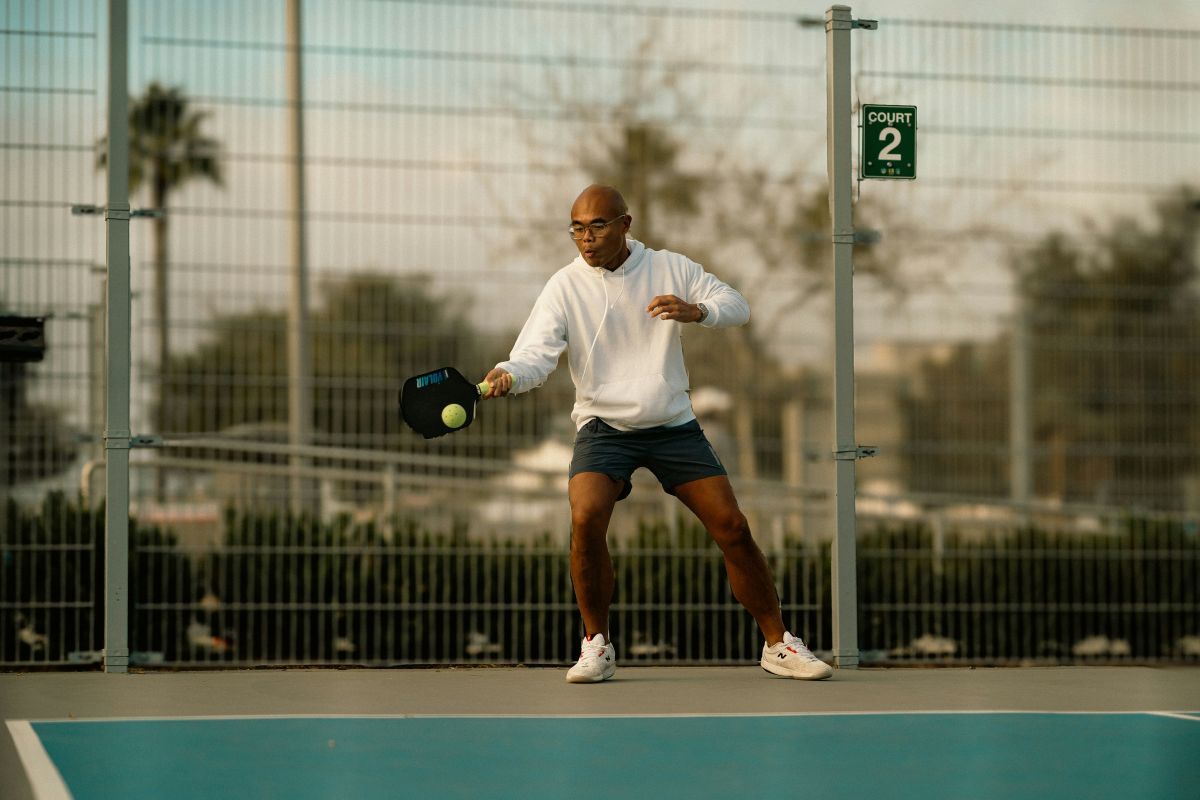
Improvement in pickleball does not happen by accident. Structured pickleball drills create predictable progress. Repetition builds reliability. Intentional practice eliminates weak spots. Competitive simulations reinforce confidence.
Players who combine fundamentals, transition mastery, and advanced pattern training see noticeable performance gains. Each drill serves a specific purpose and builds toward complete court control.
Access to consistent training environments accelerates development. Bounce connects players with coaches, clubs, and organized programming that prioritize structured improvement. Whether seeking beginner fundamentals or advanced competitive refinement, players can build a clear development path within their city.
Long-term success in pickleball comes from discipline and repetition. Drill with intention, track progress, and train with purpose, consistency will follow.