Choosing the correct footwear is one of the most overlooked performance decisions in court sports. The debate around pickleball shoes vs tennis shoes continues to grow as more players transition between the two games.
While both sports share similar court surfaces and lateral movement demands, the footwear requirements are not identical. Subtle design differences influence stability, responsiveness, injury prevention, and long-term durability.
Here you will find a comprehensive breakdown of outsole design, stability systems, cushioning philosophy, and durability considerations.
Quick Answer: What Is the Difference Between Pickleball Shoes and Tennis Shoes?
At a high level, the difference between pickleball shoes vs tennis shoes centers on movement demands and court coverage.
Tennis requires extensive baseline movement, sliding control, and prolonged rallies. Pickleball emphasizes shorter bursts, lateral resets, and repeated transitions around the non-volley zone.
The structural differences typically include:
- Outsole traction patterns tuned for different stop-and-go behaviors
- Cushioning distribution designed for either long impact absorption (tennis) or responsive court feel (pickleball)
- Weight and flexibility variations to enhance agility
- Durability reinforcement zones placed in different high-wear areas
Comparison Overview
| Feature | Pickleball Shoes | Tennis Shoes |
| Court Coverage | Compact, explosive movements | Full baseline and net coverage |
| Sole Pattern | Lateral traction emphasis | Herringbone sliding control |
| Weight | Generally lighter | Slightly heavier, reinforced |
| Durability Zones | Sidewall protection | Toe-drag reinforcement |
| Cushioning | Responsive, low-to-ground | Shock absorption focused |
While both fall under the umbrella of court footwear, the performance objectives differ significantly.
Understanding Court Movement: How Pickleball and Tennis Differ
A. Movement Patterns in Pickleball
Pickleball is played on a smaller court with a non-volley zone positioned close to the net. This structure encourages frequent lateral exchanges and short acceleration bursts rather than long sprints.
Players shift side to side repeatedly, often within a confined space, demanding rapid weight transfers and stable landings.
The compact nature of the court reduces extended baseline running but increases quick reset positioning. Movements are abrupt and repetitive, particularly during kitchen line exchanges.
Footwork efficiency becomes critical, and footwear must provide lateral containment and strong ground contact feedback.
The reduced court size does not lessen intensity. Instead, it compresses it. Rapid directional changes place significant stress on ankles and knees, making stability features essential.
B. Movement Patterns in Tennis
Tennis involves significantly greater court coverage. Baseline rallies require players to sprint diagonally, recover to center, and sometimes slide into shots depending on surface type. Vertical impact loads are higher due to repeated acceleration and deceleration over longer distances.
Serves and aggressive forehands often involve toe drag, especially on hard courts. Sliding mechanics on clay courts demand specific outsole designs to manage controlled movement. Cushioning becomes more critical because rallies can last longer and impact forces accumulate over time.
Tennis shoes are engineered to handle these extended movement demands while maintaining structural integrity.
C. Why Movement Dictates Shoe Construction
Footwear design follows biomechanics.
- In pickleball, lower-to-ground construction improves balance and reaction time.
- In tennis, enhanced cushioning systems reduce repetitive impact strain.
Lateral reinforcement zones vary because wear patterns differ.
Players who ignore these distinctions may not notice immediate problems. However, over weeks and months of frequent play, mismatched footwear can contribute to discomfort, instability, and unnecessary fatigue.
Outsole & Traction: Grip Differences Explained
A. Pickleball Shoe Outsoles
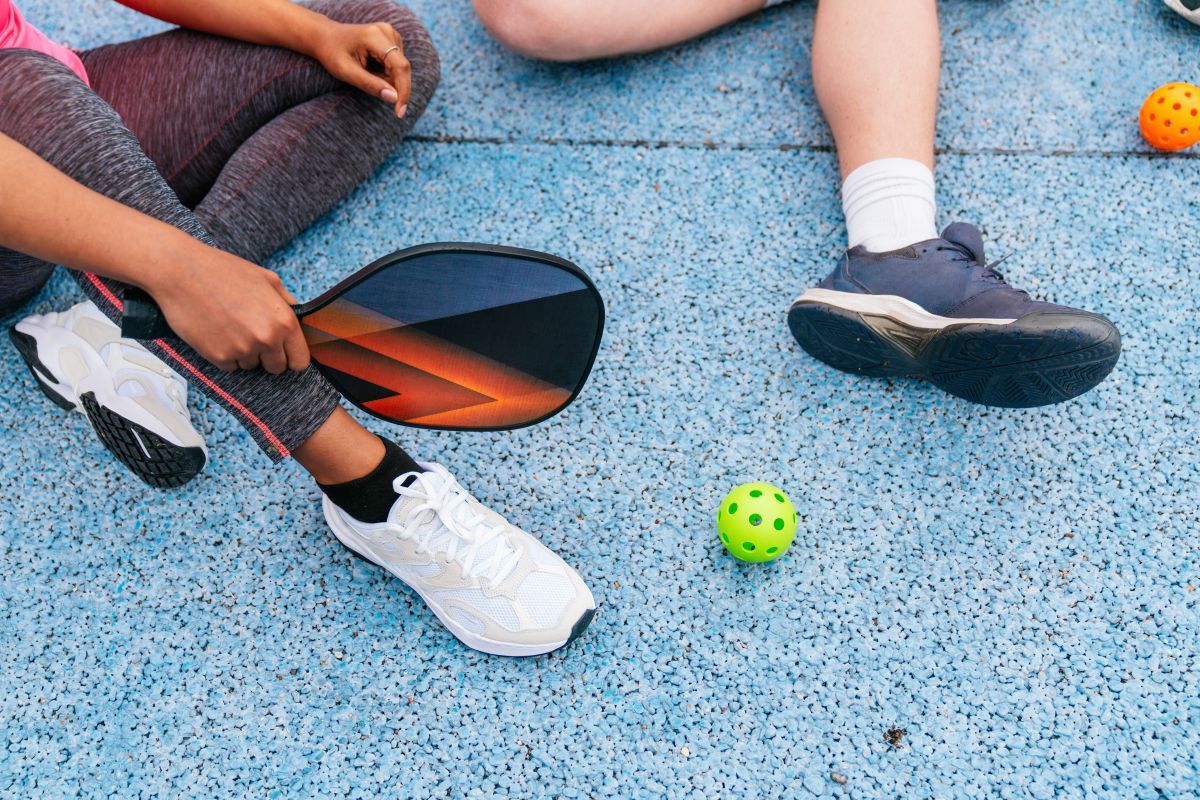
Pickleball shoes prioritize multi-directional traction for stop-and-go control. The outsole rubber compound is often optimized for hard outdoor courts or indoor gym floors. Grip patterns focus on lateral push-offs and quick deceleration.
Indoor pickleball shoes may use softer compounds to improve traction on polished surfaces. Outdoor models typically use more abrasion-resistant rubber to withstand rough hard courts.
Sidewall reinforcement is common to prevent rollover during lateral cuts. The outsole often extends slightly up the side of the shoe to enhance containment during quick direction changes.
B. Tennis Shoe Outsoles
Tennis outsoles frequently use herringbone tread patterns, especially for hard court and clay variations. The herringbone design balances traction with controlled sliding. Clay-specific models use deeper grooves to prevent clay buildup and allow smoother movement.
All-court tennis shoes aim for versatility, offering durability across multiple surfaces. Toe areas are heavily reinforced due to serve drag and aggressive forward movement.
The outsole is generally thicker and more rigid than many pickleball-specific models, reflecting the demands of extended baseline play.
C. Indoor vs Outdoor Pickleball Considerations
Surface type significantly affects shoe performance.
- Outdoor courts accelerate outsole wear due to rough textures.
- Indoor courts require reliable grip without excessive stickiness that can strain joints.
Understanding whether play occurs primarily indoors or outdoors helps determine the appropriate outsole construction.
Stability & Support: Injury Prevention Factors
Lateral sports require structured support systems. Both pickleball and tennis shoes include stability features, but their emphasis differs.
Key support elements include:
- Reinforced heel counters to prevent rear-foot collapse
- Secure midfoot lockdown systems for balance
- Durable sidewalls to reduce ankle rollover risk
- Structured arch support for alignment
Pickleball’s repeated lateral resets make ankle containment particularly important. Shoes with insufficient side reinforcement increase the likelihood of inversion injuries.
Tennis players face higher cumulative impact loads, so shock absorption in the heel and forefoot helps reduce stress on the Achilles tendon and knees.
Running shoes are not appropriate substitutes. Their forward-motion design lacks the lateral containment necessary for court sports.
Proper footwear enhances that technical development by supporting consistent movement patterns.
Cushioning & Responsiveness: Court Feel vs Shock Absorption
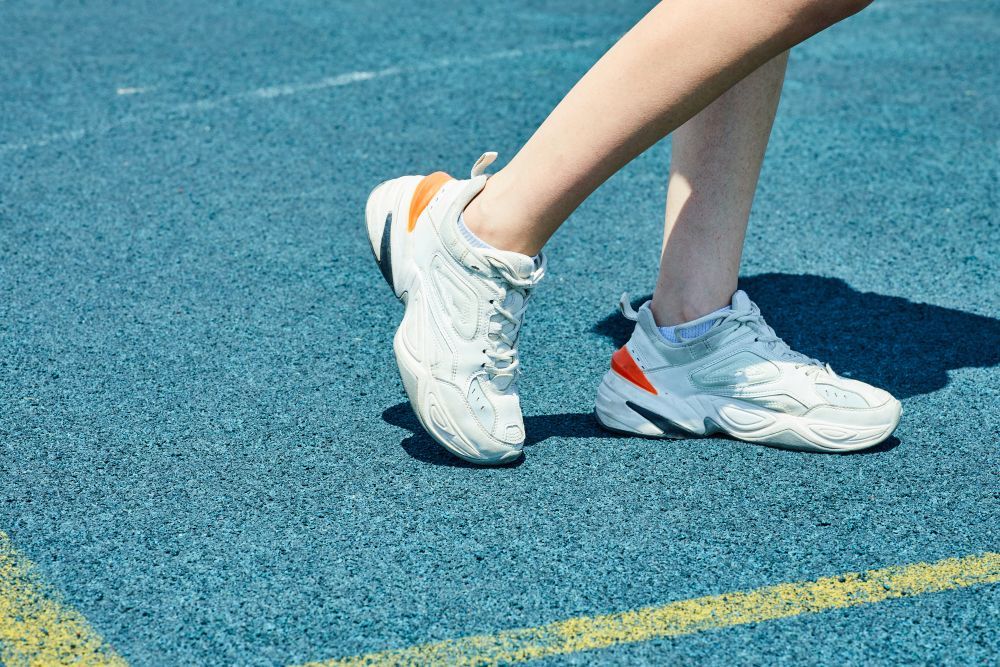
A. Pickleball Cushioning Priorities
Pickleball shoes typically emphasize responsiveness over bulk cushioning. A lower stack height improves ground feel, enabling quicker reaction times during fast exchanges. Energy return systems support short acceleration bursts without adding unnecessary weight.
Excessive cushioning can reduce stability during rapid lateral shifts. Therefore, many pickleball models aim for a balanced approach: enough shock absorption for comfort but firm enough to maintain agility.
Competitive players often prefer this connected-to-the-court sensation because it enhances control during kitchen play.
B. Tennis Cushioning Priorities
Tennis involves longer rallies and greater court coverage, requiring stronger impact absorption. Heel padding and midsole foam density are typically more substantial. This reduces cumulative joint stress during extended sessions.
The additional cushioning may slightly increase weight, but it supports durability and protection during high-impact movements.
Choosing between the two cushioning philosophies depends on how frequently and intensely a player competes.
Durability & Toe Drag: Which Wears Faster?
Durability patterns differ between sports.
Tennis shoes commonly feature reinforced toe caps to withstand serve drag and aggressive baseline pushes. Outsoles are built to endure sustained abrasion from sliding and long-distance court coverage.
Pickleball shoes experience more lateral edge wear due to constant side-to-side movement. Reinforced sidewalls and abrasion-resistant rubber compounds help manage this stress.
Outdoor play accelerates outsole breakdown in both sports. Players who participate multiple times per week may need replacements every several months, depending on intensity.
Can You Wear Tennis Shoes for Pickleball?
Tennis shoes can be worn for pickleball, especially for beginners or occasional players. They provide adequate lateral support and are safer than running shoes. However, performance trade-offs may appear as play frequency increases.
Tennis models may feel slightly heavier and less responsive during rapid kitchen exchanges. The added cushioning designed for longer rallies can reduce agility in tight spaces.
For casual recreation, tennis shoes are typically sufficient. For league play or competitive tournaments, pickleball-specific shoes often provide sharper lateral control and improved responsiveness.
Players transitioning between sports should evaluate how often they play each game. If pickleball becomes the primary activity, investing in sport-specific footwear may improve both comfort and performance.
Who Should Choose Pickleball-Specific Shoes?
Pickleball-specific footwear becomes increasingly important as a player’s intensity, frequency, and competitive exposure rise.
While casual players may perform adequately in general court shoes, consistent participation highlights the advantages of footwear engineered specifically for pickleball’s lateral and stop-and-go demands.
1. Recreational players competing two or more times per week
Players who step on the court multiple times weekly place repeated stress on their ankles, knees, and plantar fascia. The compact court leads to constant lateral resets and quick acceleration bursts.
Pickleball-specific shoes provide enhanced sidewall reinforcement, lower-to-ground stability, and improved agility, helping maintain balance during kitchen exchanges. Over time, this structural support reduces fatigue and improves movement efficiency.
2. League competitors and tournament players
Structured competition magnifies small performance details. Rapid transitions at the non-volley zone require precise foot placement and confident directional changes. Sport-specific footwear improves lateral containment and court feel, reducing hesitation under pressure.
Reinforced construction and responsive cushioning allow competitive players to move aggressively without sacrificing stability during high-speed rallies.
3. Players with a history of ankle instability or plantar discomfort
Athletes who have experienced ankle rolls, Achilles tightness, or plantar irritation benefit from the supportive architecture found in many pickleball models. Structured heel counters, targeted arch systems, and firm lateral containment reduce unnecessary joint stress.
Proper footwear becomes part of an injury-prevention strategy rather than simply a performance upgrade.
4. Developing players increasing their commitment to structured play
As participation becomes more consistent through leagues, clinics, and recurring match formats, footwear differences become more noticeable.
Platforms like Bounce connect players with organized play and coaching environments where movement quality directly impacts results. In these settings, properly matched shoes enhance confidence, efficiency, and long-term durability.
Choosing pickleball-specific shoes is less about trends and more about aligning equipment with physical demand. The more regularly a player competes, the more valuable sport-specific design becomes.
Conclusion
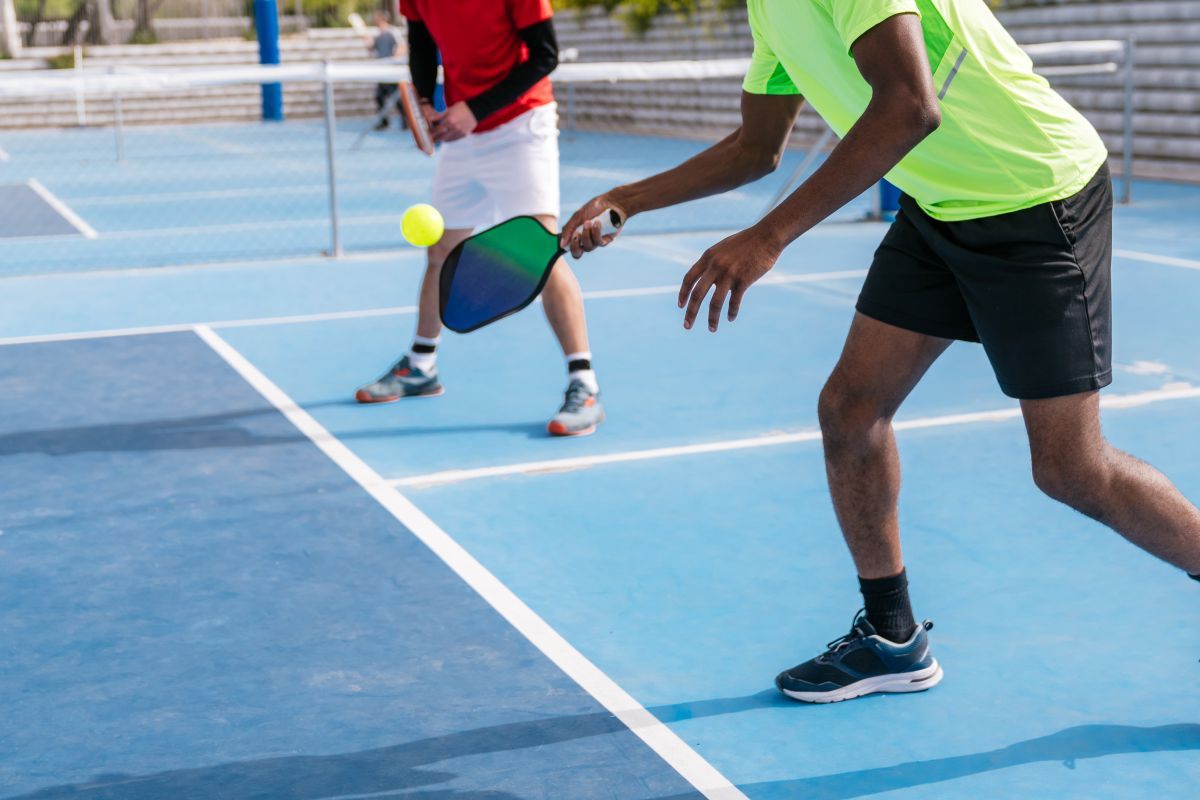
Understanding the distinctions between pickleball shoes vs tennis shoes allows players to align footwear with movement demands. Tennis emphasizes extended court coverage and shock absorption, while pickleball prioritizes lateral containment and responsive ground feel. Both serve important roles within their respective sports.
For casual crossover players, tennis shoes may provide adequate support for occasional pickleball sessions. As participation becomes more structured and frequent, sport-specific footwear delivers measurable benefits in agility, stability, and durability. The right shoe enhances confidence, protects joints, and supports consistent movement mechanics.
As pickleball continues expanding across North America, platforms like Bounce make it easier for players to access leagues, clinics, and competitive formats where equipment differences become evident. Consistent play reveals the advantages of properly matched footwear. Choosing wisely supports both performance and long-term health on the court.