Pickleball is popular for a reason: it’s simple to learn, quick to play, and easy to enjoy from the very first session. But as the sport has grown into structured open play, leagues, and tournaments, rules have become essential for maintaining consistency. Without a shared rulebook, pickleball would quickly turn into a different game from court to court—especially with serving rules, kitchen violations, and scoring formats.
Pickleball rules create a common standard that helps players compete fairly and confidently, whether you’re playing casually with friends or stepping into an organized environment for the first time. Once you understand the key rules—serving, scoring, the double-bounce rule, and the kitchen—you’ll immediately feel more comfortable during real games.
In the United States, official rules are maintained by USA Pickleball, the sport’s recognized National Governing Body responsible for standardized rules, tournament guidelines, and officiating procedures.
Want a quick answer? Serve diagonally crosscourt, let the serve and return bounce before volleying, and stay clear of the kitchen during a volley. Traditional side-out games go to 11 points, win by 2.
| Rule | What it means | Common beginner error |
| Serve | Send the ball diagonally into the opposite service court | Stepping on the baseline or serving into the kitchen |
| Two-bounce rule | The serve and return must both bounce | Volleying the return too early |
| Kitchen | You may enter it, but cannot volley while touching it | Carrying momentum into the NVZ after a volley |
Basic Pickleball Court Setup and Equipment Rules
Pickleball Court Dimensions
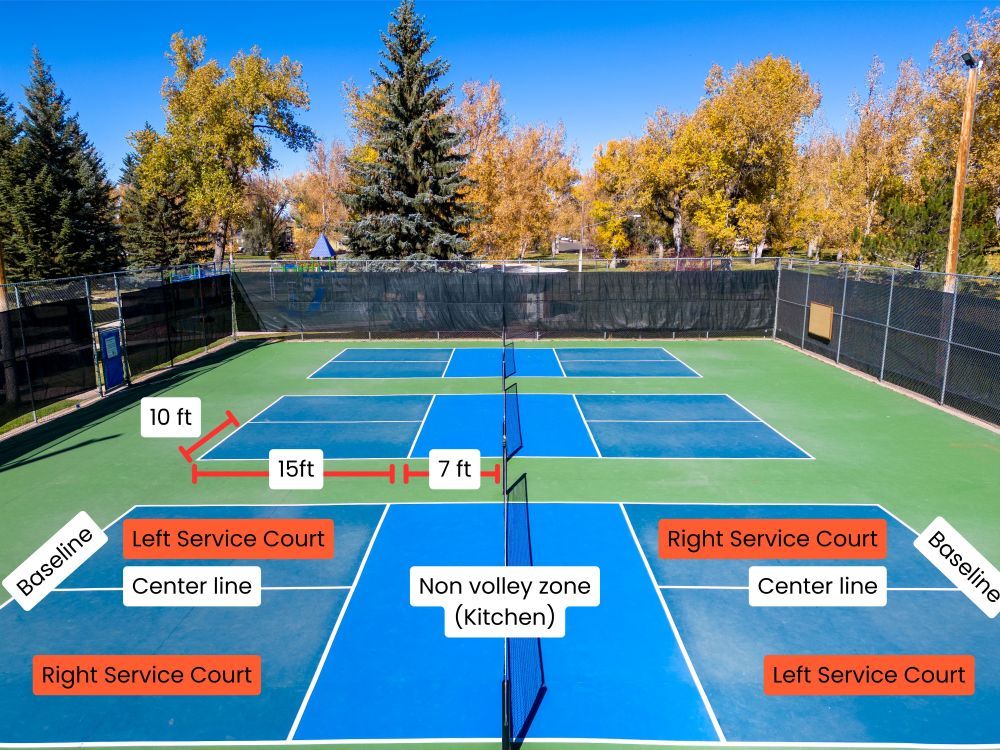
A standard pickleball court measures 20 feet wide by 44 feet long, and the court size is the same for both singles and doubles. The compact layout encourages longer rallies and rewards control, positioning, and smart placement over pure power.
The court includes:
- baselines at the back
- sidelines along the full length
- a centerline dividing the two service boxes
- two service courts on each side of the net
- the non-volley zone (the “kitchen”), a 7-foot area on both sides of the net where volleys are restricted
The net height is:
- 36 inches at the sidelines
- 34 inches at the center
Compared to tennis, a pickleball court is much smaller, which makes it easier for community facilities and multi-use spaces to add courts and run programs efficiently.
The Non-Volley Zone (Kitchen)
The kitchen is one of the most important rules in pickleball—and also one of the most misunderstood for new players.
The non-volley zone (NVZ) extends 7 feet from the net on both sides of the court. Its purpose is simple: it prevents players from camping at the net and smashing volleys downward at every opportunity. Without the kitchen rule, pickleball would become overly aggressive and far less beginner-friendly.
Here’s the key idea:
- ✅ You may stand in the kitchen at any time
- ❌ You may not volley while touching the kitchen or its boundary line
The kitchen rewards patience, controlled footwork, and soft shot execution—especially dinking. Once you start playing regularly, you’ll realize that many rallies are won at the kitchen line, not from the baseline.
Equipment Rules
Pickleball equipment is simple, but official rules still define what’s allowed—especially in competitive play.
Pickleball paddles must be:
- solid-faced (no strings)
- made from approved materials (graphite, composite, or wood)
Paddle size is limited by maximum combined dimensions:
- length + width cannot exceed 24 inches
Pickleballs are lightweight plastic balls with holes designed for indoor or outdoor play. In sanctioned events, balls and paddles must meet USA Pickleball equipment standards. Recreational groups can choose their own gear, although using approved equipment avoids surprises when you enter a tournament.
Pickleball Scoring Rules
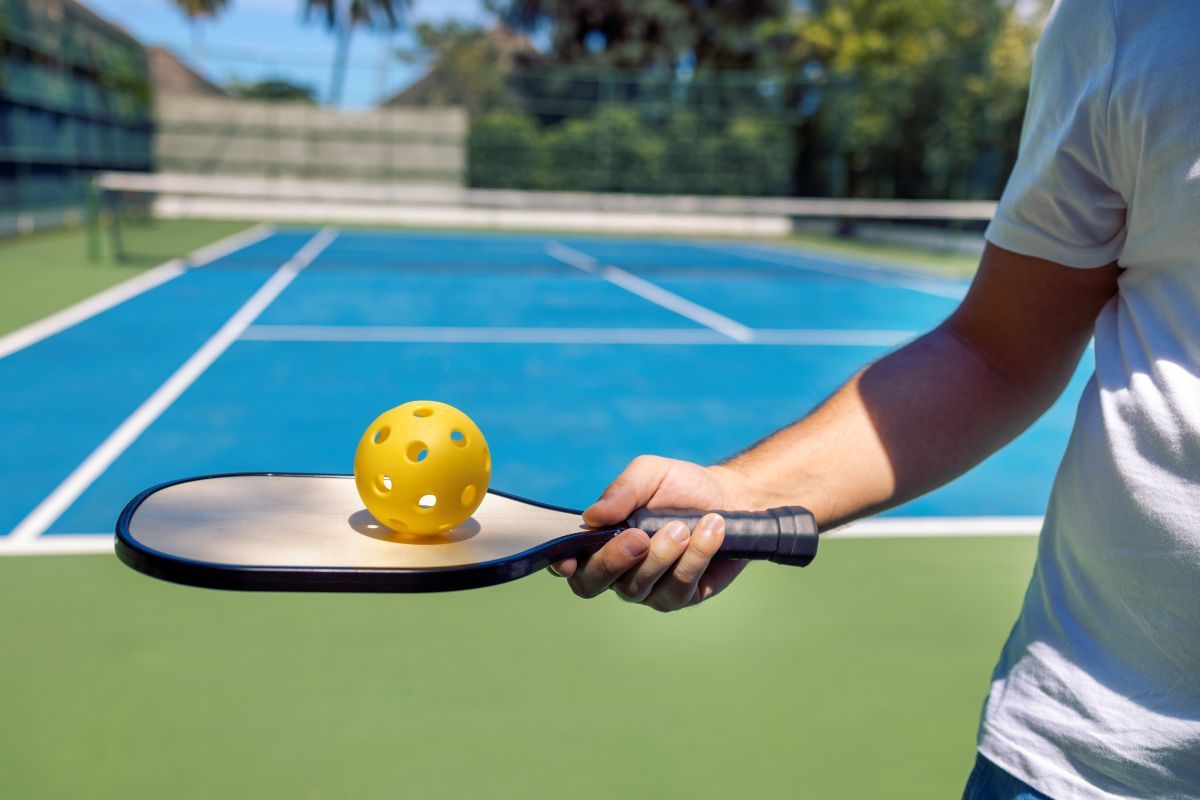
Scoring is one of the first parts of pickleball that feels confusing—especially in doubles. Once you understand the system, it becomes simple and predictable, but beginners often get tripped up by when points are awarded and how service rotation works.
Standard Scoring System
Traditional pickleball uses side-out scoring, meaning points can only be scored by the serving team.
Games are typically played to 11 points, and teams must win by a margin of two points. Tournament formats may extend games to 15 or 21 points, depending on the level and structure of competition.
The score is always called in a specific order:
- Server score
- Receiver score
- Server number in doubles play
Accurate score calling is a core responsibility of the serving team.
Singles vs Doubles Scoring
Singles Pickleball Score Call:
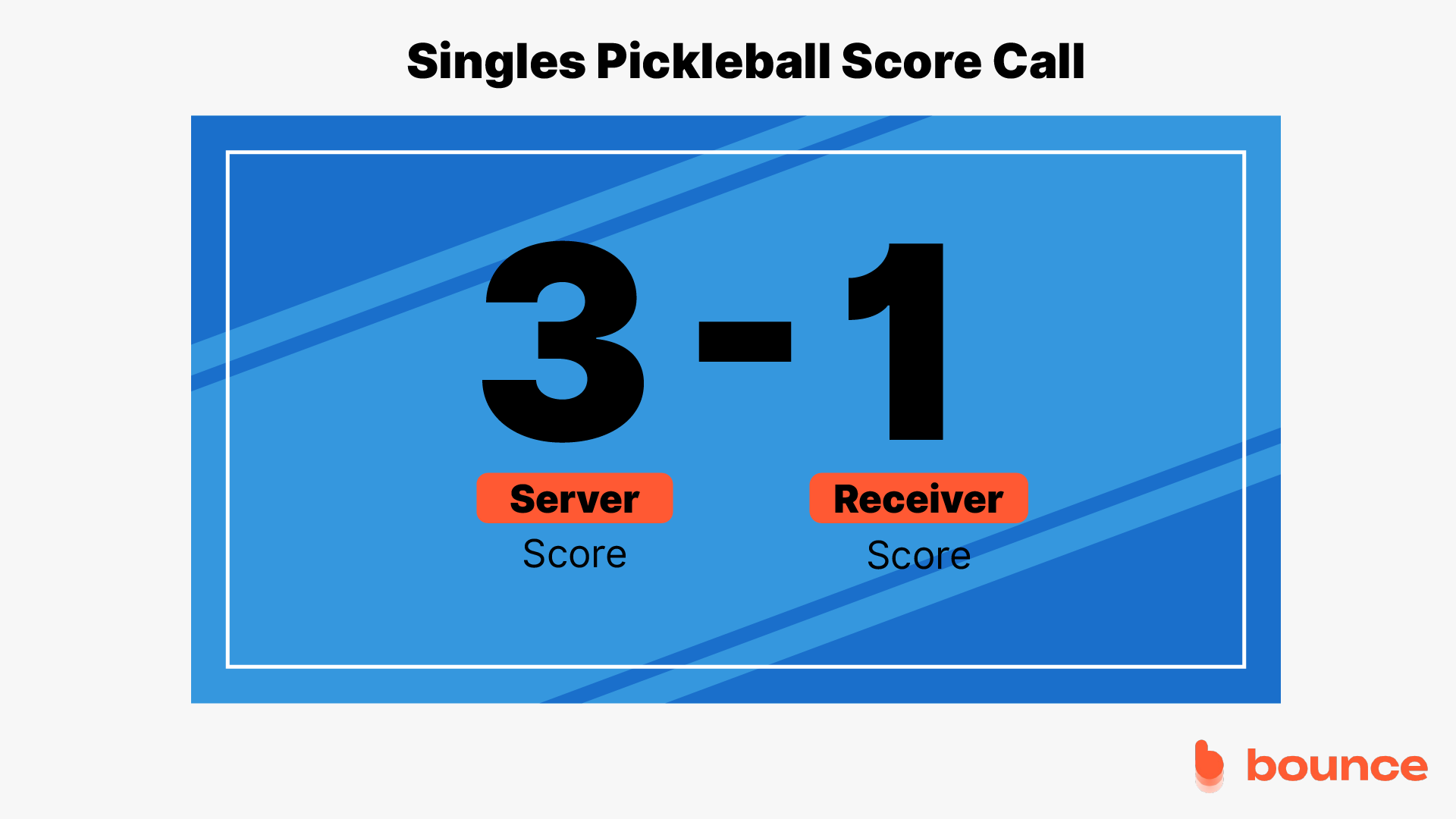
In singles pickleball, each player serves from the right service court when their score is even and from the left service court when their score is odd.
Doubles Pickleball Score Call:
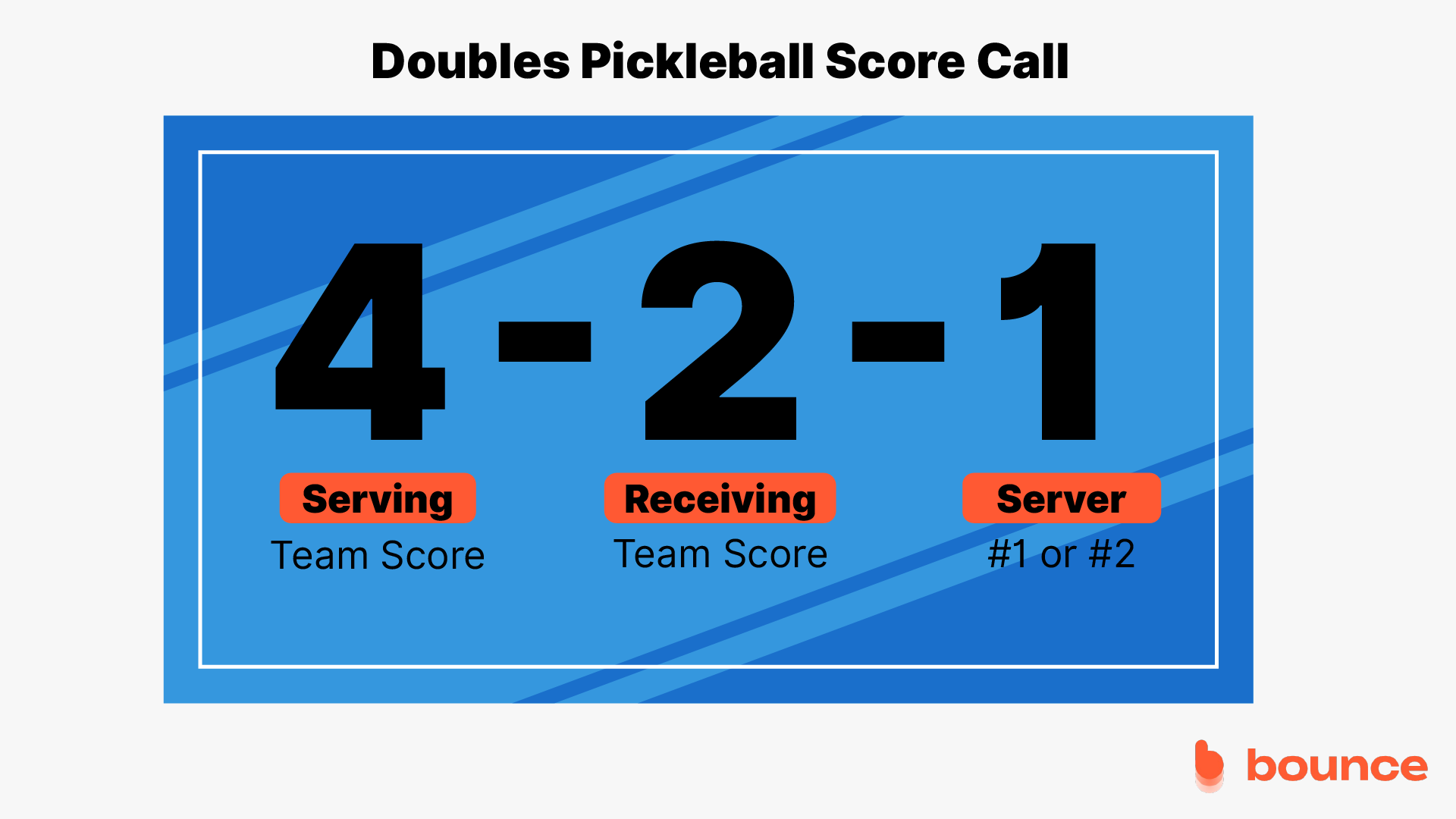
In doubles, both players on a team serve before a side-out occurs, except at the start of the game when only one player serves.
The starting score in doubles is announced as 0–0–2, indicating the second server to reduce early-game advantage.
Rally Scoring Variations
Some recreational leagues (and time-based formats) use rally scoring, meaning either team can score a point on any rally. This format speeds up games and can make scheduling easier during busy club nights.
Even if you mainly play traditional scoring, it’s helpful to recognize rally scoring in case a league or facility uses it for round robins or beginner sessions.
Serving Rules in Pickleball
A legal serve is diagonal and struck from behind the baseline. USA Pickleball permits two serve types: a volley serve, hit before the ball bounces, and a drop serve, hit after the ball drops. The requirements below apply to a volley serve; a drop serve has its own rules in the official rulebook.
Legal Serve Requirements
For a volley serve, your arm must move upward at contact, contact must be below the waist, and the paddle head must stay below your wrist. At the moment of contact, at least one foot must touch the playing surface behind the baseline, and neither foot may touch the baseline, court, or the imaginary extensions of the sideline or centerline.
A drop serve does not use the volley-serve motion restrictions, but you must release the ball and let it fall without propelling it.
If you step on or over the baseline before contact, that’s a foot fault, and the serve is lost.
These guidelines keep serves controlled and create a more rally-based sport—one of the reasons pickleball is so enjoyable for beginners.
Serve Placement Rules
Serves must:
- travel diagonally crosscourt
- land in the opponent’s service box
- clear the non-volley zone (kitchen)
If the serve lands in the kitchen or touches the kitchen line, it’s a fault.
Each player gets:
- one serve attempt
- except in the rare case of a replay situation under specific conditions
Common Serving Faults
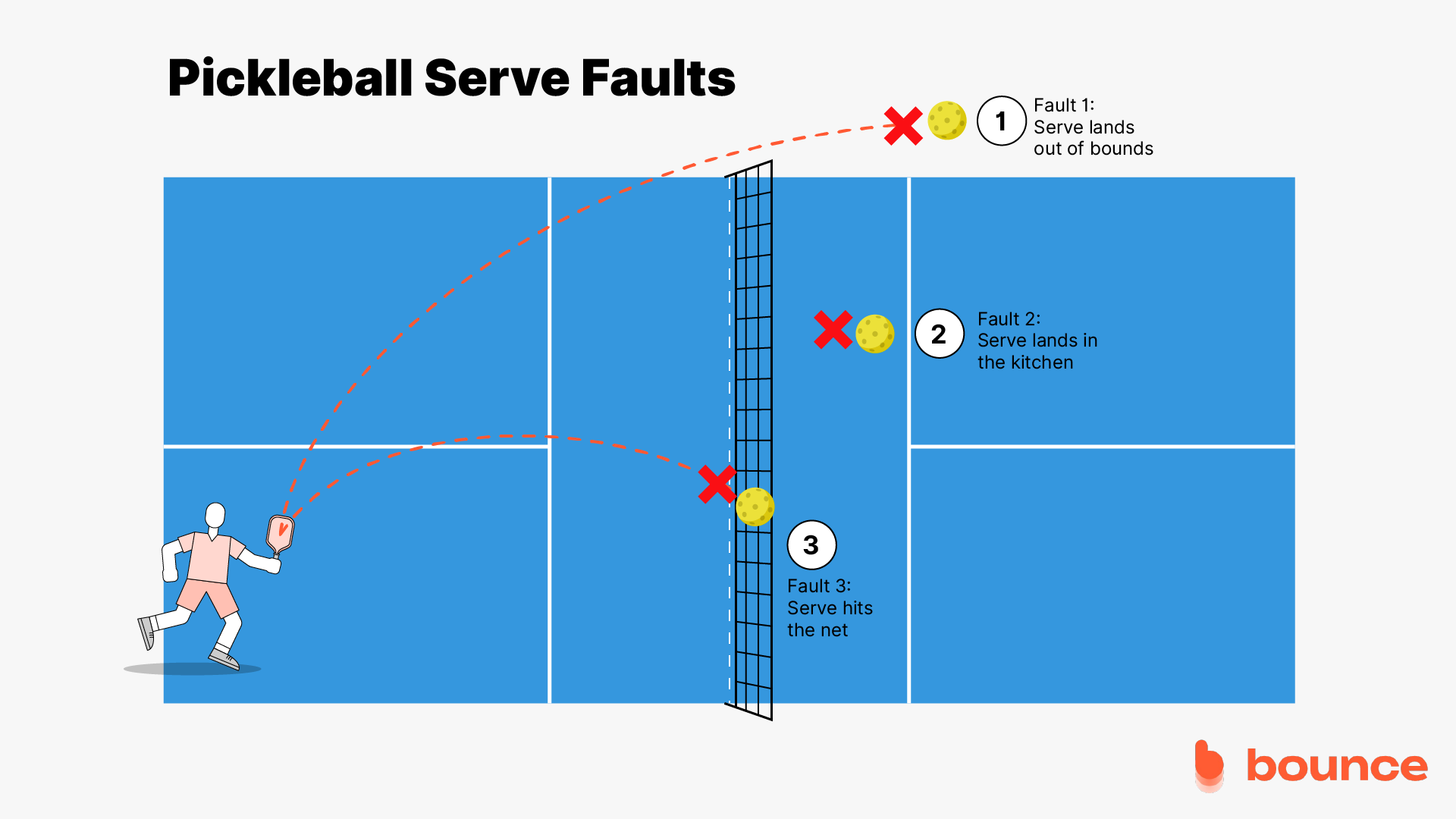
Most early points in beginner games are lost due to simple serving mistakes, not rallies. The most common faults include:
- illegal paddle motion
- stepping over the baseline (foot fault)
- serving from the wrong side
- landing the serve in the kitchen
- serving into the wrong service box
Bounce Lessons can help you build a repeatable serve under real-game pressure. A coach can spot an illegal volley-serve motion long before it becomes a tournament fault.
The Double-Bounce Rule
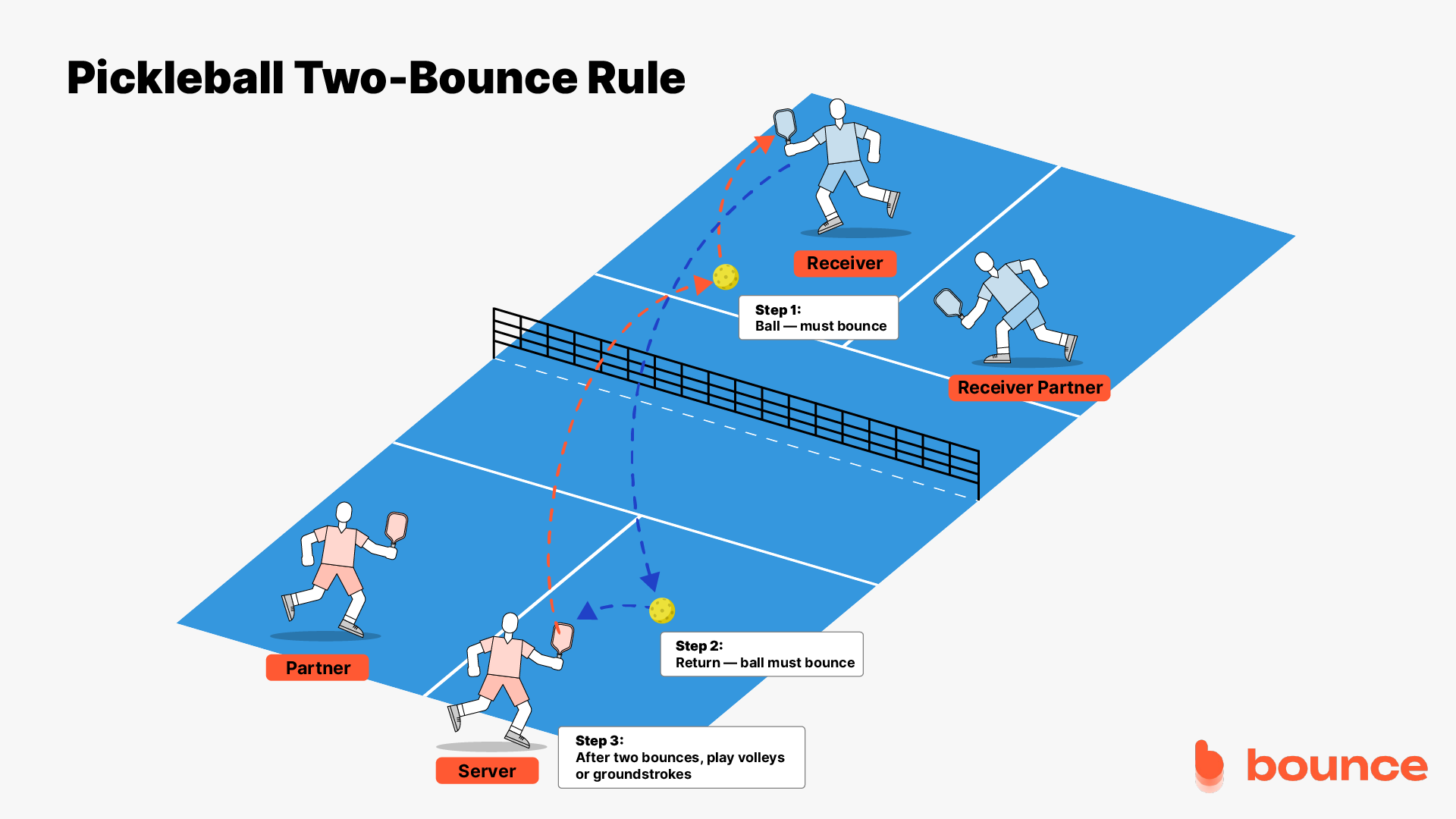
The double-bounce rule is one of pickleball’s defining features. It prevents immediate net rushing and gives both teams a fair chance to get into the point.
The rule requires:
- the serve must bounce once on the receiving side
- the return must bounce once on the serving side
- only after those two bounces can volleys happen
This opening sequence slows the start of rallies and makes points more balanced. It also reduces the advantage of aggressive net play, which is why pickleball feels more welcoming to new players.
If a team volleys too early (before the required bounces), it’s a fault.
Volleying Rules and the Non-Volley Zone
A volley is any ball hit in the air before it bounces.
Volleys are legal across most of the court, but the kitchen adds restrictions that make pickleball unique and strategic.
Non-Volley Zone Rules
Kitchen rules include:
- you can stand in the kitchen
- you can hit a ball after it bounces in the kitchen
- you cannot volley while touching the kitchen or the line
- momentum matters: if you volley outside the kitchen but step into it afterward, the volley is still illegal
That momentum rule surprises beginners, but once you know it, it prevents many “wait… was that legal?” moments.
Common NVZ Violations
The most frequent kitchen faults include:
- stepping on the kitchen line during a volley
- losing balance and falling into the kitchen after volleying
- letting your paddle, shoe, or clothing touch the kitchen during volley motion
These happen constantly in casual play and are a major reason why beginners benefit from learning rule awareness early.
Faults and Rule Violations in Pickleball
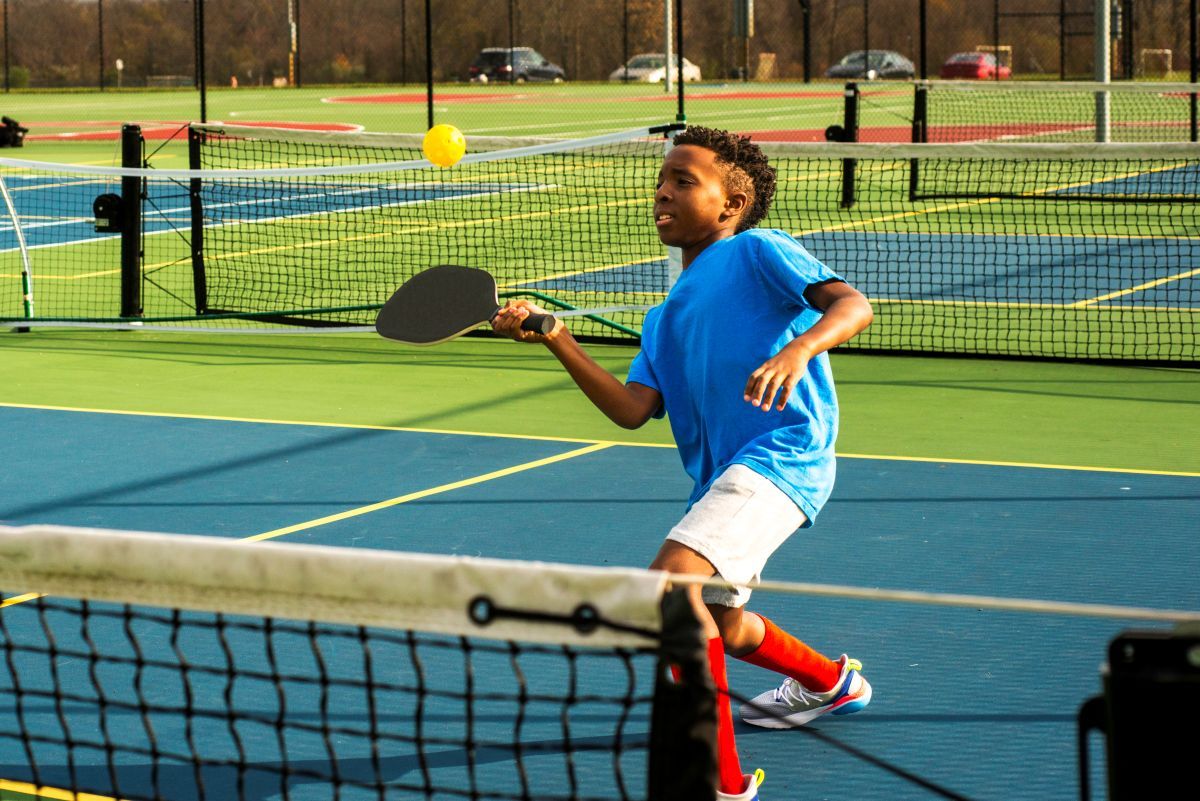
A fault is any rule violation that stops play. Depending on the format, a fault results in a loss of point or loss of serve.
Pickleball often relies on self-officiating, which is why basic rule understanding matters. Knowing what counts as a fault reduces disputes and makes games smoother.
Common Pickleball Faults
Typical faults include:
- Hitting the ball out of bounds
- Failing to clear the net
- Volleying illegally
- Double hits
- Serving violations
- Net contact by a player or paddle during a rally
Recreational vs Competitive Enforcement
In recreational play, players often replay disputed points or resolve calls informally. Competitive formats apply rules strictly, and referees may be present.
Learning the rules early makes it much easier to transition from casual play into organized leagues and tournament environments.
Singles Pickleball Rules (Quick Breakdown)
Singles uses the same core rules as doubles, but because each player covers the entire court, singles emphasizes movement, consistency, and smart shot placement.
Key singles rules:
- one player on each side
- one serve per service turn
- even score = serve right, odd score = serve left
- serve diagonally beyond the kitchen
- only the server scores in side-out scoring
- double-bounce rule applies
- kitchen rules apply fully
Singles rewards steady passing shots, depth, and positioning because you can’t rely on a partner for coverage.
Doubles Pickleball Rules (Most Common Format)
Doubles is the most widely played format and often the easiest for beginners to enjoy because it reduces court coverage and increases teamwork.
Key doubles rules:
- two players per team
- both players serve before a side-out (except the first service turn)
- serve diagonally and clear the kitchen
- after scoring, the serving team switches sides
- double-bounce rule applies at the start of every rally
- no volleys while touching the kitchen or line
- partners communicate for score, positioning, and line calls
Most doubles points are won through patient net control and consistent placement.
Line Calls and Sportsmanship Rules
Pickleball players make line calls on their own side of the court. If you are unsure, call the ball in. For the kitchen-line exception on a serve and the rest of the call process, see Bounce’s breakdown of pickleball line rules.
Good etiquette includes honest calls, clear score announcements, and respectful conduct. As pickleball grows, maintaining consistent sportsmanship is part of what keeps the sport welcoming and enjoyable.
Beginner Tips for Applying Pickleball Rules in Real Games
Knowing the rules is one thing—applying them under pressure is another. Beginners improve fastest when they focus on a few high-impact habits that prevent avoidable errors.
Key habits to build:
- Prioritize legal serves by maintaining an underhand motion, contacting the ball below the navel, and keeping both feet behind the baseline until contact.
- Respect the non-volley zone at all times, including avoiding kitchen line contact during volleys and understanding momentum-related violations.
- Apply the double-bounce rule consistently by allowing the ball to bounce once on each side before volleying.
- Call the score clearly and before every serve to reduce confusion and maintain proper game flow.
- Make honest line calls on your side of the court and give the benefit of the doubt to opponents when uncertain.
- Limit unforced errors by understanding fault rules, including net contact, foot faults, and out-of-bounds shots.
- Play with rule-aware partners and opponents who reinforce correct positioning, score tracking, and rule application.
- Participate in structured play environments, such as coached sessions, clinics, or organized open play, where rules are applied consistently and reinforced through repetition.
- Use Bounce Clinics or organized open play to rehearse score calls, service rotation, and kitchen movement with players who apply the rules consistently.
Final Thoughts
Pickleball rules form the foundation of fair, enjoyable, and competitive play. When players understand the rules, games become smoother, rallies last longer, and improvement happens faster—because fewer points are lost to preventable mistakes.
Put the rules into practice in your next game, then use Bounce to find a lesson, clinic, or organized session near you. Repetition with players who call the score and faults correctly makes the rules automatic.
Frequently asked questions about pickleball rules
What are the basic pickleball rules?
Serve diagonally, let the serve and return bounce, and do not volley while touching the kitchen. In traditional side-out scoring, only the serving side scores and the game usually ends at 11 points, win by 2.
Can you serve overhand in pickleball?
No. A volley serve must follow the underhand requirements in the USA Pickleball rulebook. You can also use a legal drop serve, where the ball is released and allowed to fall before contact.
Can you stand in the kitchen in pickleball?
Yes. You may stand in the kitchen and hit a ball there after it bounces. The fault occurs when you volley while touching the kitchen or when your volley momentum carries you into it.
Who can score in traditional pickleball?
Only the serving player or serving team scores in traditional side-out scoring. Rally scoring is different: the winner of each rally scores the point.
What happens if you are unsure whether a ball was out?
Call the ball in. In self-officiated pickleball, the player or team on that side of the court makes the line call and gives the opponent the benefit of doubt.