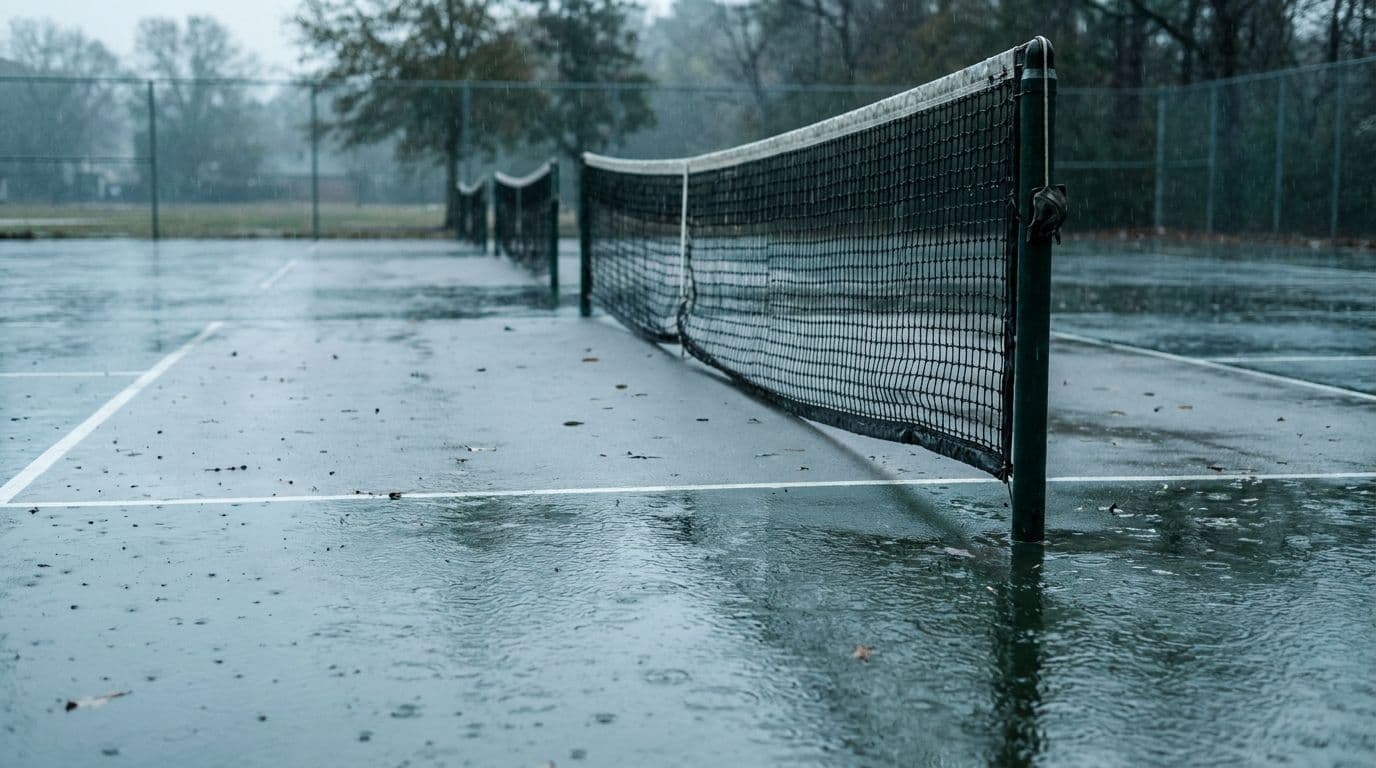
Technically, you can play pickleball in the rain. There is no rule that prevents it. But playing pickleball in the rain is not advisable, and most experienced players avoid it for good reason.
A wet court surface becomes significantly more slippery, the ball behaves unpredictably, and the injury risk from a single lateral cut or sudden stop increases sharply.
The smarter question is not whether you can play, but whether you should. That answer depends on how wet the court is, what the surface is made of, what gear you have, and how long you are willing to wait for conditions to improve.
This guide covers the risks you need to understand, what happens to your equipment in wet conditions, and what your best options are when rain cancels outdoor play.
Playing Pickleball on a Wet Court
There is an important distinction between playing while it is actively raining and playing on a court that got wet from earlier rain. Both carry risk, but they are different situations that require different decisions.
Playing While It Is Actively Raining
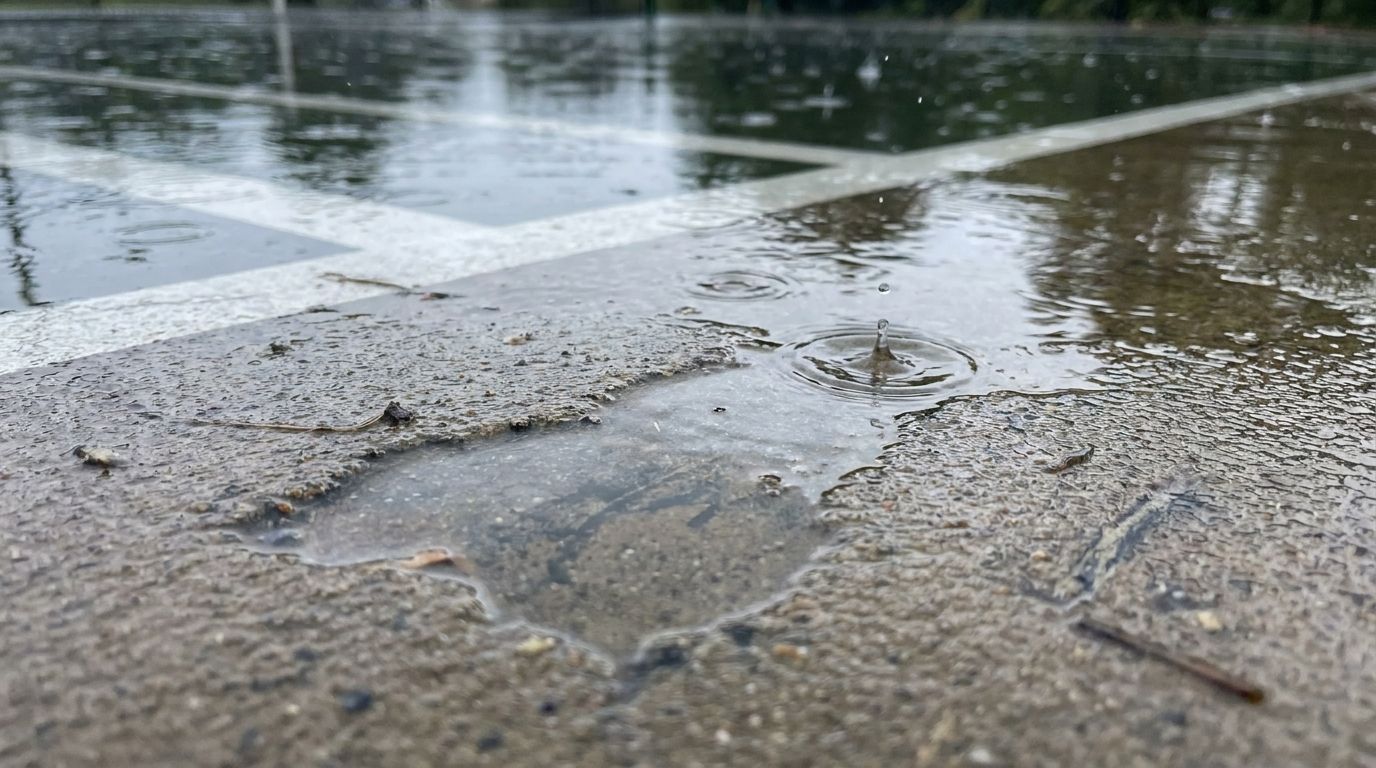
Rain falling during play creates multiple problems simultaneously. The ball collects water on its surface, adding unpredictable weight and altering its flight path and bounce. Your grip on the paddle deteriorates as the handle gets wet.
The court surface becomes slippery faster than you can adapt your movement. Visibility drops if the rain is heavy.
None of these factors get better as the session continues. They compound. Playing through active rain is a decision that rewards impatience with injury risk.
Playing After Rain Has Stopped
A post-rain court is a different challenge. The rain has stopped, but acrylic hard courts dry unevenly, with shaded areas and low spots staying wet long after sunny areas appear dry.
That inconsistency is exactly what causes players to misjudge the surface and fall.
Research on wet surface slip resistance across different court materials found that wet conditions can reduce slip resistance by up to 50% across sport surfaces, regardless of the material.
That number does not require heavy rain to apply. A light overnight shower can leave a court in conditions that halve its traction for the first hour of morning play.
The safest approach after rain is to wait until the court has fully dried or to dry it actively before play. Partial drying is not the same as safe drying.
Safety Risks of a Wet Pickleball Court
The injury risks on a wet court are not theoretical. They follow directly from how pickleball moves your body and what happens when traction disappears at the wrong moment.
Pickleball Court Slippery When Wet
Acrylic hard courts are the standard surface for outdoor pickleball. When dry, the silica sand embedded in the coating provides grip. When wet, that texture fills with a thin film of water that acts as a lubricant between your shoe sole and the surface.
The court that felt completely reliable in your morning warmup becomes significantly different after rain.
The movements pickleball demands are exactly the ones that become most dangerous on a slippery surface. Lateral shuffles at the kitchen line, explosive pushes off the back foot during a drive, and sudden stops when tracking a drop shot all require reliable traction.
A study on injury risk factors in sports including slippery playing surfaces identifies wet and slippery surfaces as significant fall hazards, with inadequate traction among the primary contributors to acute lower limb injury in court sport settings.
Ankle Sprains
Ankle sprains are the most common acute injury on a wet pickleball court. They happen most often during lateral direction changes when the foot slides instead of planting. The ankle rolls inward under the body's momentum, overstretching the lateral ligaments. Mild sprains resolve in days. Severe sprains involving ligament tears take weeks to months and may require physical therapy or surgery.
Pickleball's kitchen exchanges involve dozens of small lateral shifts per game. Each one represents an opportunity for the foot to slide on a wet surface at a moment when the player has committed their weight to a direction change.
ACL and Knee Injuries
ACL injuries are less common than ankle sprains but significantly more serious. They occur when the knee is forced into a rotational position under load, which happens during deceleration, pivoting, and change-of-direction movements.
Wet courts increase the likelihood of these movements because the foot slides rather than stopping cleanly, placing uncontrolled rotational stress on the knee joint.
Research on court surface friction and lower limb injury risk confirms that reduced traction during lateral movements creates conditions for ligament stress that would not occur on a dry court.
ACL injuries mean surgical reconstruction and six to twelve months of recovery. That is not a risk worth taking for a recreational session.
Falls and Impact Injuries
A full fall on a hard acrylic court is a serious event. The surface offers no cushioning, and the impact from a fall at pace can produce wrist fractures from a reflexive catch, hip contusions, shoulder injuries, and head contact if the fall is sudden and uncontrolled.
Older players face heightened risk because bone density and balance control both decline with age. Pickleball's appeal to players over 50 means that fall risk on wet courts deserves particular attention.
No game result or session completion is worth the recovery time a serious fall injury demands.
Wet Court Injury Risks at a Glance
| Injury Type | How It Happens on a Wet Court | Severity |
| Ankle sprain | Foot slides during lateral direction change | Mild to severe |
| ACL tear | Knee rotates under load during slide or pivot | Severe, surgical |
| Hip contusion | Direct fall impact on hard acrylic surface | Moderate to severe |
| Wrist fracture | Reflex catch during an uncontrolled fall | Moderate to severe |
| Shoulder injury | Impact or awkward landing after a fall | Moderate |
| Head contact | Fast, sudden fall with no time to brace | Potentially serious |
Knowing how to warm up and prepare your body before play reduces injury risk on any surface.
The pickleball warm-up and injury prevention guide covers the dynamic stretches and exercises that prepare your joints and muscles for the movement demands of the game, including the lateral cuts and quick stops where wet court injuries most often occur.
How to Dry a Pickleball Court Fast
If rain has passed and you want to get on the court as soon as safely possible, there are practical steps that speed up the drying process significantly.
Use a Court Squeegee
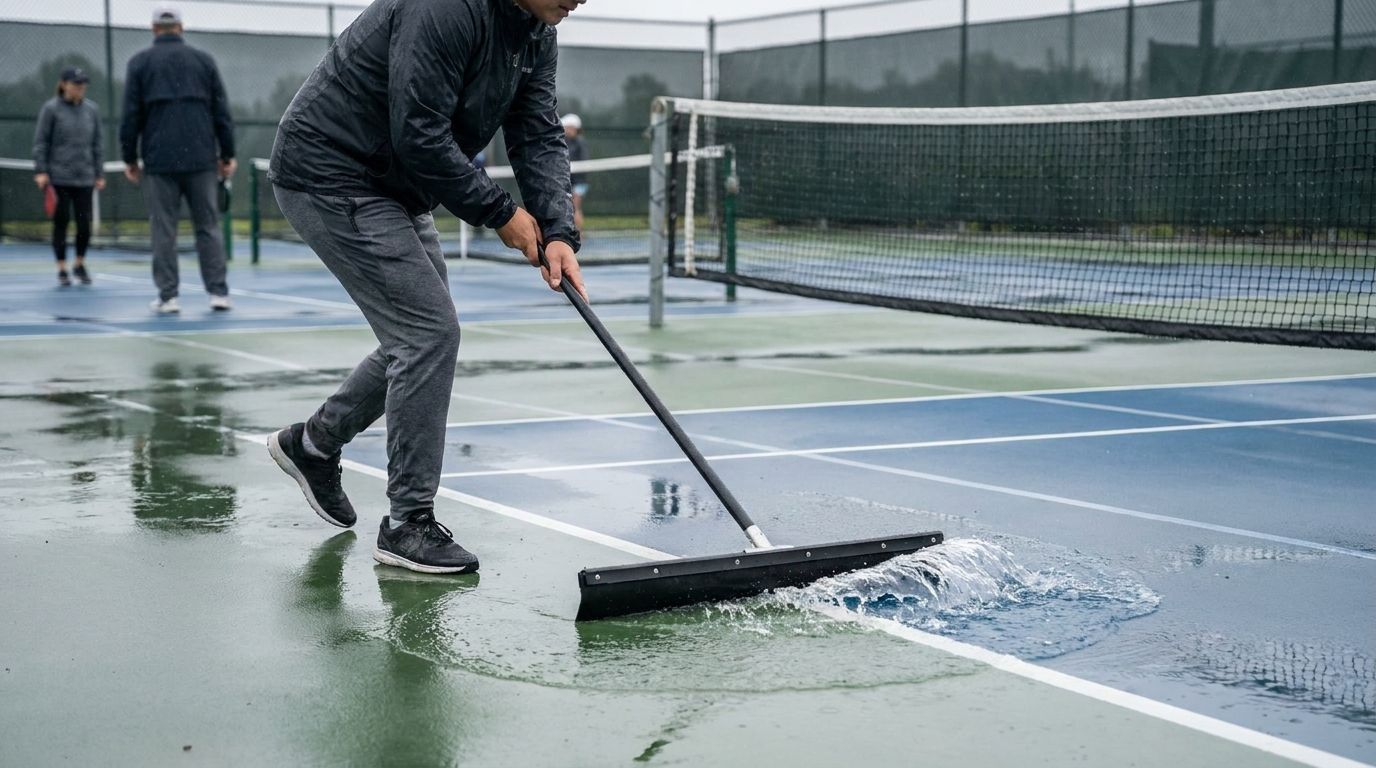
A wide court squeegee is the fastest way to remove standing water from an acrylic surface. Push the water to the edges and off the court in systematic parallel passes.
Start from the center and work outward so you are not pushing water back over already-cleared areas. A single pass with a good squeegee removes most of the standing water within five to ten minutes on a standard court.
Many recreation centers and club facilities keep court squeegees near the courts specifically for post-rain use. If you play at a public park, keeping a personal squeegee in your bag is a practical habit in wet climates.
Use Absorbent Towels on Edges and Lines
After squeegeeing the bulk of the water off the playing surface, the court lines and low spots near the net posts often retain a puddle. Absorbent towels or a court drying mat pressed onto these areas pulls up the remaining film.
Pay particular attention to the kitchen line area, where most lateral movements occur and where residual moisture is most dangerous.
Use a Leaf Blower for Faster Evaporation
A leaf blower directed across the court surface after squeegeeing significantly accelerates evaporation. The airflow breaks up the remaining water film and speeds drying time, particularly on humid days when natural evaporation is slow. This approach is most useful on courts with good drainage that do not have deep puddles but retain a surface sheen after squeegee treatment.
Check the Shaded Areas Last
Shaded sections dry far slower than sun-exposed areas. A court that looks dry from one end may still be wet in the shadow of a fence, tree, or building. Walk the full surface and check every shaded zone before you start. Wet patches hide in plain sight and that is exactly when players go down.
Wait for the Right Window
After heavy rain, the honest answer is that waiting is often the most sensible option. Even after active drying, an acrylic court that absorbs significant moisture may retain a surface slickness for 30 to 60 minutes after it appears visually dry. Running a few quick lateral shuffles at court speed before the first game is a practical final check.
Pickleball Paddle Water Damage and Equipment in Wet Conditions
Rain affects more than the court. Every piece of equipment you bring onto a wet court is affected, and some of that damage accumulates in ways that are not immediately visible.
Paddle Face and Core
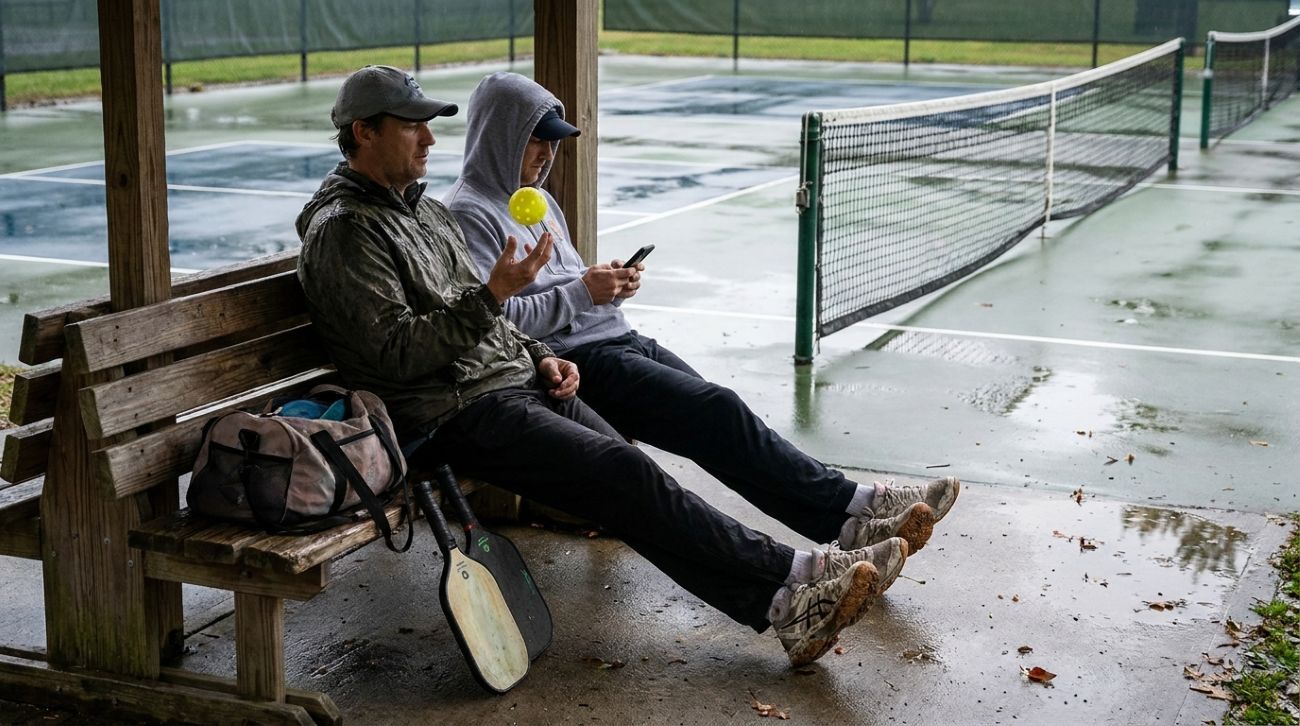
Modern pickleball paddles are not waterproof. Repeated moisture exposure can weaken adhesives, swell materials, or accelerate edge/face separation over time.
Delamination changes the sound and feel of the paddle, reduces power transfer, and eventually creates dead spots on the hitting surface.
Carbon fiber and graphite face paddles are less porous than fiberglass, but none are immune to sustained water exposure.
A single wet session is unlikely to cause visible damage, but regular play in wet conditions shortens paddle lifespan measurably. After any rain session, dry the paddle face and edges thoroughly with a towel before storage and allow it to air dry completely rather than sealing it in a bag.
Grip Tape
Grip tape absorbs water quickly. A wet grip loses its traction and becomes slippery, which forces you to squeeze harder to maintain control. That increased grip pressure contributes to forearm fatigue and raises the risk of elbow strain over time.
A saturated grip also takes much longer to dry than it looks like it should, and grips that dry with moisture embedded in them deteriorate faster.
Keeping a spare overgrip in your bag is the practical fix for wet play situations. Swapping to a fresh dry grip before conditions become problematic maintains your control and protects the underlying base grip from saturation.
For guidance on managing your full equipment setup, the complete pickleball equipment guide covers paddles, balls, footwear, and accessories with practical advice at every price point.
Pickleball Balls
Pickleball balls are hollow plastic with perforations, and water gets inside them. An outdoor ball that fills with water during rain play becomes noticeably heavier and bounces completely differently.
Shots that normally clear the net by a comfortable margin clip it. Drops that land in the kitchen fly long. The ball's behavior stops being reliable.
Indoor balls are even more susceptible because their larger holes allow water to enter and drain more freely. After rain play, shake water from the balls and allow them to dry fully before storage to prevent cracking along the seam.
Court Shoes
Wet court shoes lose traction faster than anything else on a wet surface. The rubber outsole that grips dry acrylic stops working when both the shoe and the court are wet. Check your tread before every session.
Worn soles on a wet court are a slip waiting to happen.
If you are playing in wet conditions, inspect your outsole before play. Newer shoes with full tread provide meaningfully better grip in marginal wet conditions, though no shoe makes a saturated court truly safe.
Equipment and Water Exposure: What to Watch For
| Equipment | Water Risk | How to Protect It |
| Paddle face/core | Delamination from water penetration | Dry thoroughly after play, air dry before storage |
| Grip tape | Loses traction, deteriorates faster | Carry spare overgrip, swap when saturated |
| Pickleball balls | Water inside alters bounce and weight | Shake dry and air dry fully after play |
| Court shoes | Outsole traction drops on wet acrylic | Check tread before play, replace worn shoes |
| Bag and accessories | Moisture damage to paddle if sealed wet | Leave bag open to air dry after wet sessions |
If wet conditions are cutting into your outdoor session time, working with a coach on your game between sessions keeps your development moving. Bounce connects you to certified pickleball coaches by city so you can book a lesson, join a clinic, or find indoor court time without losing momentum to a rainy week.
Indoor Pickleball When Raining: Your Best Alternatives
Rain is the most reliable argument for having an indoor option ready. Players who have already identified indoor venues near them never lose a session to weather. Players who have not tend to either play in unsafe conditions or skip play entirely.
Community Recreation Centers
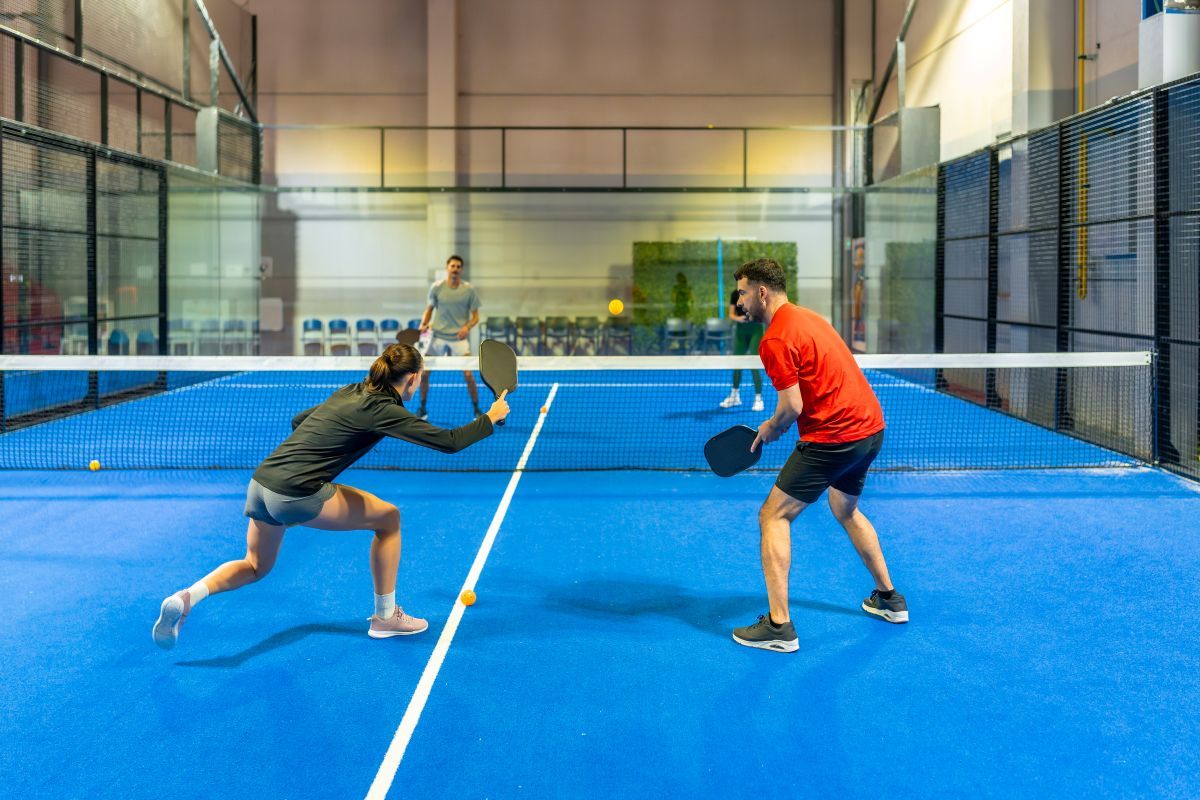
Recreation centers run by local parks and recreation departments are the most accessible indoor pickleball option in most cities.
Many have converted gym courts with portable nets or permanently marked pickleball lines on their hardwood floors. Drop-in pickleball sessions are common, and the cost is typically low or included in a standard facility membership.
The floor surface in a recreation center gym is usually hardwood or sport tile, which plays differently from an outdoor acrylic court. The ball bounces slightly higher and moves a little slower.
It takes a session or two to recalibrate your timing, but the trade-off for a dry, safe court is clearly worth it.
Dedicated Indoor Pickleball Facilities
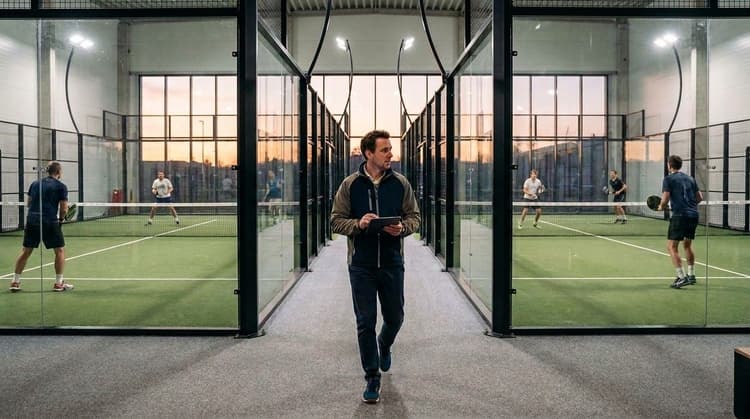
Dedicated indoor pickleball venues have expanded rapidly alongside the sport's growth. These facilities offer permanent courts with appropriate lighting, climate control, and surfaces designed specifically for pickleball.
Many operate on a court-booking model, and some offer memberships that include open play hours.
Indoor-specific pickleball balls are the standard at dedicated facilities because they perform better on smooth indoor surfaces.
If you are transitioning from outdoor play, bringing your own indoor balls or purchasing them at the facility saves the adjustment time of playing with an outdoor ball on an indoor court.
Tennis Clubs with Indoor Courts
Many tennis clubs have converted indoor courts for pickleball use or offer scheduled pickleball times on their indoor surfaces. These courts tend to be well-maintained and properly lit.
Club policies on court booking vary, but some offer day passes for non-members looking for a rainy day session.
School and University Gyms
School and university gymnasium facilities sometimes offer community access to their court space, particularly during off-peak hours or on weekends. Availability varies by institution, and some require prior arrangement or a facility pass.
In cities where dedicated indoor pickleball space is limited, this can be a practical fallback option.
YMCAs and Fitness Centers
YMCAs and larger fitness centers often run structured pickleball programming as part of their group fitness offerings. These sessions are typically drop-in or membership-based and provide a social play format that replicates open play outdoors.
The courts and nets are set up by staff, so there is no setup burden on the player.
Finding the right indoor venue before you need it is a better approach than searching during a rainstorm. The guide to getting started in pickleball covers how to find courts and communities in your area, which applies equally to indoor and outdoor play.
Frequently Asked Questions
Can you play pickleball in the rain?
You can, but it is not recommended. A wet court surface significantly reduces traction and increases the risk of ankle sprains, ACL injuries, and falls on the hard acrylic surface. The ball also behaves unpredictably when wet.
Most experienced players stop play when it rains and wait for the court to dry before resuming.
How slippery does a pickleball court get when wet?
Very slippery. Acrylic hard courts lose a significant portion of their slip resistance when wet. The silica sand in the coating that provides grip on a dry surface fills with water and stops functioning as designed.
Shaded areas and low spots stay slippery long after the rest of the court appears to have dried.
How do you dry a pickleball court after rain?
Use a wide court squeegee to push standing water to the edges first. Follow with absorbent towels on the court lines and low spots. A leaf blower speeds evaporation on courts with no deep puddles.
Check shaded areas last, as they stay wet significantly longer than sun-exposed sections. Allow 30 to 60 minutes after active drying on a heavily rained court before playing at full intensity.
Does rain damage pickleball paddles?
Extended water exposure can cause delamination, where the face material begins to separate from the core. A single wet session rarely causes visible damage, but regular play in rain conditions shortens paddle lifespan.
Dry your paddle face and edges thoroughly after any wet session and allow it to air dry completely before storing it in a closed bag.
What indoor venues offer pickleball when it rains?
Community recreation centers, dedicated indoor pickleball facilities, tennis clubs with indoor courts, YMCAs, fitness centers, and school or university gyms all offer indoor pickleball options in most cities.
Availability and booking policies vary by venue. Identifying at least one indoor option before your regular outdoor courts get rained out is the simplest way to maintain your session schedule.
Is it safe to play pickleball right after rain stops?
Not immediately. A court that looks dry may still have a water film on the surface, particularly in shaded areas. After heavy rain, give the court 30 minutes to an hour after active drying before playing at full competitive intensity.
Running a few lateral shuffles at pace before the first game is a practical way to test the actual grip level.
Conclusion
Playing pickleball in the rain is technically possible but genuinely risky. Wet acrylic courts lose traction sharply, the injury risks from a single slip are serious, and your equipment takes unnecessary damage in conditions that cannot be controlled.
The right call in most situations is to stop play, dry the court properly before resuming, or move indoors.
The players who stay healthy and develop consistently are the ones who manage their sessions intelligently. That includes knowing when to walk off a wet court, knowing how to dry it quickly when conditions improve, and having an indoor option ready when neither of those applies.
To find indoor courts, local coaches, and organized play in your area regardless of the weather, Bounce connects you to racket sport resources by city so you can keep playing no matter what the forecast says.