A fault in pickleball is any action that stops play because of a rule violation. That is the official definition straight from the USA Pickleball rulebook. When your team commits a fault, you either lose the serve or give the opposing team a point, depending on who is serving.
Faults happen on serves, returns, volleys, and in positional violations throughout the rally. Some are obvious, like hitting the ball into the net. Others catch players off guard, like the momentum rule in the kitchen.
Knowing every fault category keeps you from giving away free points and helps you make accurate calls during play.
This guide covers every major fault type in order of how often they come up, with the kitchen fault and foot fault sections going deeper because those are where the most disputes happen.
Common Pickleball Faults
Most faults fall into a handful of recurring categories. These are the violations you will encounter in almost every session, regardless of skill level.
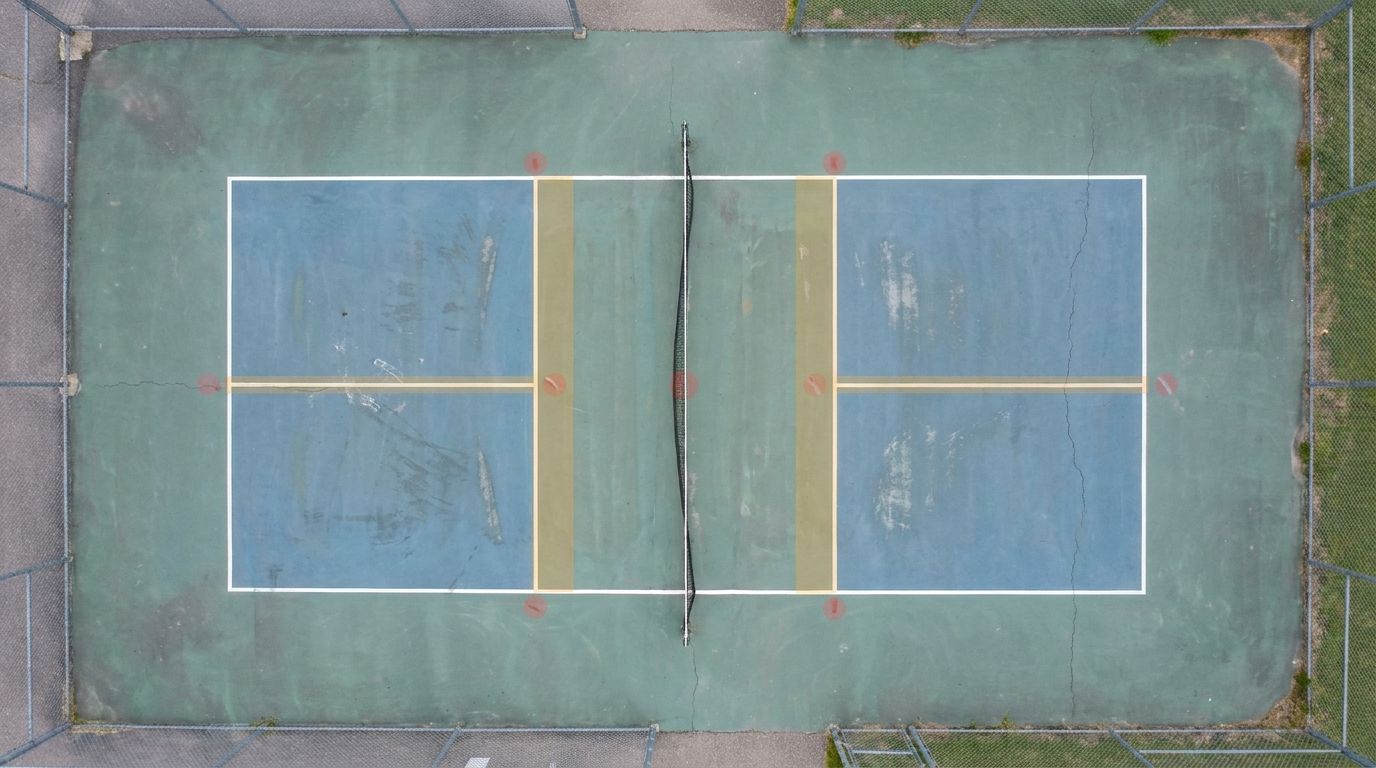
Ball Hit into the Net
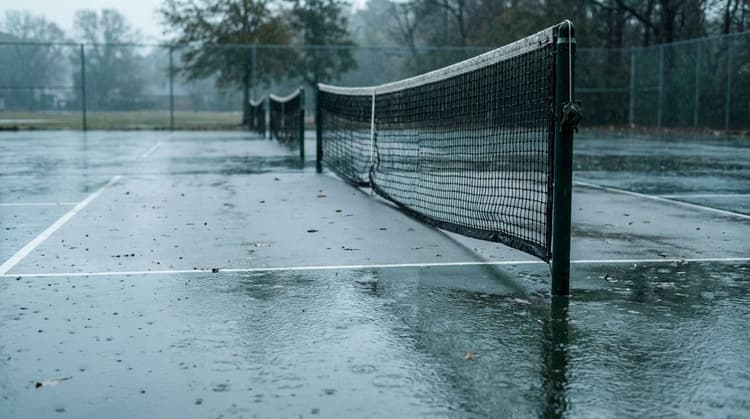
Any shot that fails to clear the net is a fault. This is one of the most common faults at every level and ends the rally immediately.
If the ball clips the net but still crosses and lands legally in the opponent’s court, play continues. A ball that passes through or under the net is also a fault.
Ball Hit Out of Bounds
A ball that lands outside the court boundaries is a fault against the team that hit it. The exception is if an opponent catches or touches the ball before it bounces out, which makes it a live ball.
Lines are always in, meaning a ball that touches any sideline or baseline is good. The only line exception is the kitchen line on a serve, where contact is a fault.
Ball Bounces Twice
If the ball bounces twice on your side before you return it, that is a fault. This applies throughout the rally, not just on the serve. Two bounces means the rally ends . One bounce on your side is always allowed. Two is a fault.
Volleying Before the Two-Bounce Rule Is Complete
After the serve, each side must let the ball bounce once before volleying. The receiving team must let the serve bounce. The serving team must then let the return bounce. Volleying before two bounces is a fault
Once both bounces have happened, either team can volley freely within the kitchen rules.
Touching the Net
Your paddle, body, or clothing touching the net or net post while the ball is in play is a fault. This most often happens when you reach across the net to return a shot or swing through with too much follow-through.
Net post contact is a fault, not just the net tape itself.
Ball Contacts a Player's Body
If the ball hits you, your clothing, or any part of your body other than your paddle hand below the wrist, it is a fault. This includes shirts, hats, wristbands, and shoes.
Only the paddle hand is legal . Any other body contact ends the rally.
Common Pickleball Faults at a Glance
| Fault Type | What Happens | Rule Reference |
| Ball into net | Shot contacts net, does not cross | Rule 7.F |
| Ball out of bounds | Ball lands outside court boundaries | Rule 7.G |
| Double bounce | Ball bounces twice before return | Rule 7.M |
| Two-bounce violation | Ball volleyed before required bounces | Rule 7.N |
| Touching the net | Player, paddle, or clothing contacts net | Rule 7.C |
| Body contact | Ball hits player outside paddle hand | Rule 7.H |
| Kitchen violation | Volley struck while in NVZ or on NVZ line | Rule 9.B |
| Foot fault | Incorrect foot position on serve or volley | Rule 4.A.3 |
Pickleball Service Faults
Service faults are a distinct category. They happen before the rally is properly underway and are governed by a separate set of rules under Section 4 of the rulebook.
Research on game knowledge and officiating accuracy in sport consistently identifies rule familiarity as the primary factor separating confident, accurate calls from hesitation and disputes.
Understanding exactly what a legal serve requires puts you on the right side of that divide.
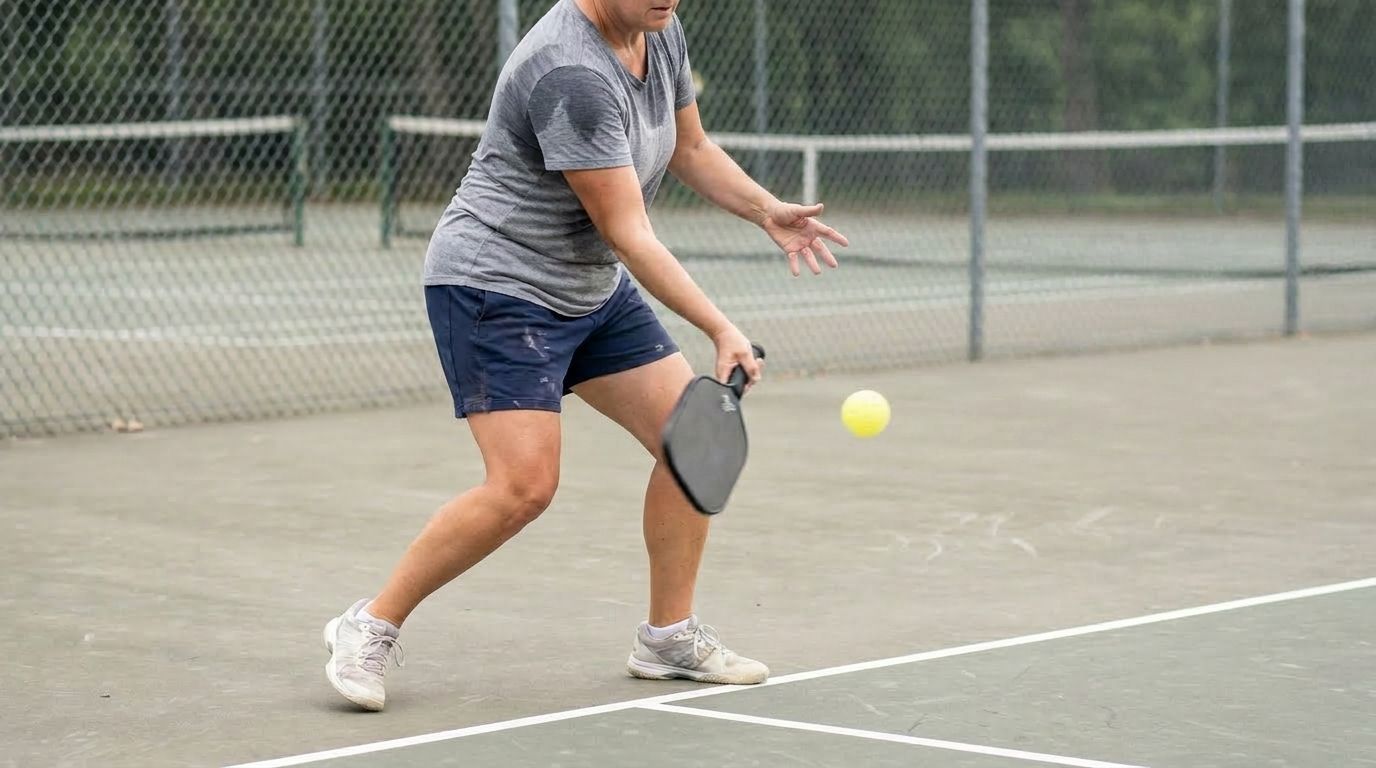
Illegal Serve Motion
A legal volley serve requires three conditions to be met simultaneously. The arm must be moving upward at contact. The paddle contact must occur below the waist. The paddle head must not be above the highest part of the wrist at contact.
Breaking any of these three conditions is an illegal serve and a fault.
The drop serve is the alternative option. Drop serve rules do not require the upward arc, below-waist contact, or paddle-below-wrist conditions.
The ball simply needs to be dropped naturally and struck after it bounces. A manipulated or thrown drop serve is still a fault.
Serve Lands in the Wrong Area
The serve must cross the net and land in the diagonally opposite service court. It must clear the kitchen entirely, including the kitchen line. A serve that clips the kitchen line is a fault, which is the reverse of all other line calls where touching the line is good. The serve must also land within the sidelines and the baseline of the receiving court.
Serve Hits the Net
A serve that clips the net and lands in the correct service court is live. A serve that hits the net and does not land in the correct service court is a fault.
Wrong Server or Wrong Service Court
Serving from the wrong side of the court or serving when it is your partner's turn to serve is a fault in doubles. Scoring determines which side you serve from. An even score means you serve from the right.
An odd score means you serve from the left. Getting this wrong is a service fault even if the serve itself is mechanically perfect. The full serving sequence for doubles play is covered in the pickleball doubles rules guide.
Only One Serve Attempt Allowed
You get one serve attempt per rotation. There is no second serve in pickleball. If your serve faults for any reason, the serve passes to your partner in doubles or to the other team in singles.
No replay, no second chance. This is one of the key differences from tennis that catches new players off guard.
Developing a clean, consistent serve that avoids these faults is one of the first skills worth investing in. Bounce connects you to certified pickleball coaches by city who can watch your serve mechanics and identify which fault patterns to correct before they become ingrained habits.
Pickleball Foot Fault Rules
Foot faults are position violations. Your feet were in the wrong place at the wrong time. There are two separate foot fault situations in pickleball, and they are governed by different rules.
Service Foot Fault
When serving, your feet must be behind the baseline at the moment of contact. At least one foot must be on the ground. Neither foot may touch the baseline or the court surface inside the baseline.
Centerline and sideline extensions also apply . Standing too far to the left or right, not just too far forward, is also a service foot fault.
This fault is most common when players step forward into their serve. The habit of shifting weight forward, natural in most throwing or hitting motions, pulls the lead foot onto or over the baseline before the paddle contacts the ball.
One clear drill to fix this: place your back heel against the baseline during practice serves and focus on keeping it planted through contact.
Non-Volley Zone Foot Fault
You cannot volley the ball while standing in the kitchen or on the kitchen line. The kitchen line is in bounds . Touching it with any part of your foot while volleying is a fault. This applies even if only your toe grazes the line.
You can stand in the kitchen any time you are not volleying, including to return a ball that has bounced inside it.
The kitchen foot fault trips up players during fast exchanges at the net. When you are reacting quickly to a hard drive or a speed-up shot, your feet may drift forward without you noticing. Building the habit of resetting your position after each shot keeps you behind the line and out of fault territory.
Pickleball Kitchen Fault: The Momentum Rule
The kitchen fault is the most disputed fault in pickleball. Most players understand you cannot volley from inside the kitchen. Fewer understand the momentum rule, which extends the fault beyond the moment of contact.
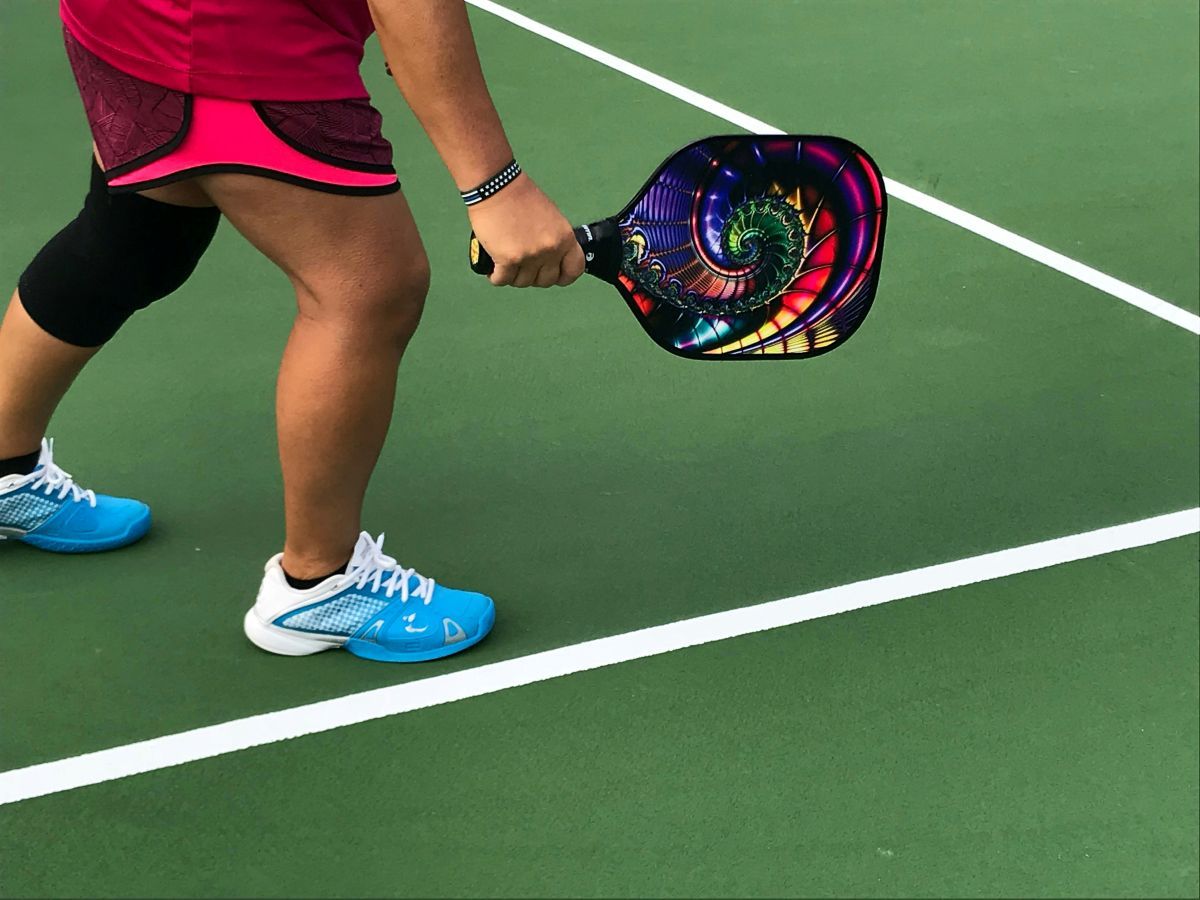
What the Momentum Rule Says
Rule 9.C states that if your momentum after volleying causes you to contact the kitchen or the kitchen line, it is a fault. This applies even if the ball is already dead when you step in.
The momentum fault has no time limit. You can volley cleanly from behind the line and then take a step forward five seconds later, but if that step is caused by the momentum of your volley, it is still a fault.
This catches players most often on aggressive volleys where the follow-through carries them forward. You hit the ball, it lands in bounds, you think you won the point, and then your foot crosses the line. Your opponent correctly calls the fault. The point goes to them.
The Momentum Rule Covers Your Partner Too
Rule 9.C explicitly includes partner contact that is also a fault against your team.
This situation comes up in doubles when players are side by side at the kitchen and one player stretches wide for a volley and bumps their partner forward. Both players need to be aware of their spacing during fast exchanges.
What Is Not a Kitchen Fault
You can enter the kitchen any time you are not volleying. If the ball bounces in the kitchen, you can step in to return it. You can stand in the kitchen between points.
You can reach over the kitchen line without touching it to volley, as long as your body and paddle do not cross into the kitchen space.
The non-volley zone applies to the court surface only, not the air above it. You can swing through the air space above the kitchen line without a fault as long as your feet stay outside the zone.
A thorough breakdown of every kitchen scenario is in the pickleball kitchen rules guide.
Kitchen fault disputes slow down games and create unnecessary tension. A clear understanding of both the foot fault and momentum rule, built through structured practice, prevents most of these arguments before they start.
The breakdown of common illegal pickleball serves and faults is a practical companion piece that covers the service side of these violations in full detail.
Pickleball Fault vs Let: What Is the Difference?
Players new to pickleball sometimes use fault and let interchangeably. They are not the same thing and the distinction matters.
What a Fault Is
A fault ends the rally with a consequence. The team that committed the fault loses the serve or concedes a point. There is no replay. The rally is over and the score changes accordingly. Every fault category covered above results in this outcome.
What a Let Is
A let stops play without a consequence. The rally is replayed from the serve. Lets are called when a distraction, external interference, or a specific rule situation prevents fair play from continuing.
Lets are uncommon in recreational pickleball and are called most often in officiated matches where a referee has the authority to stop play.
The Key Difference
A fault assigns blame and a consequence. A let assigns neither and restarts the point. If you hear a fault call, the rally is over and the score reflects it. If you hear a let, drop what you are doing and serve again.
Confusing the two costs points when players assume a disputed call is a let and pick up the ball instead of contesting a fault call properly.
Fault vs Let: Key Differences
| Factor | Fault | Let |
| Result | Rally ends with consequence | Rally replayed with no consequence |
| Score change | Yes | No |
| Who is affected | Team that committed the violation | Neither team |
| Common examples | Net, out of bounds, kitchen violation | Distraction, external interference |
| How common | Very common | Uncommon, mostly in officiated matches |
| Serve again? | No, fault result stands | Yes, entire rally replayed |
How Faults Are Called in Pickleball
In recreational play, players call their own faults. There is no referee. This is where rule knowledge becomes especially important. Knowing the rules means you call your own faults honestly, which keeps the game fair and your credibility intact.
Calling Your Own Faults
You are expected to call faults against yourself when you commit them.Call your own faults honestly . If your foot touches the kitchen line on a volley, you call it. If your shot hits the net, you acknowledge it.
The culture of pickleball depends on honest self-officiating.
Calling Faults on Opponents
You can call certain faults on your opponents, but only when you have a clear view of the violation. Foot faults on the serve are the most common opponent fault players call. You should not call faults you are not certain of. If in doubt, play on.
Calling faults you are unsure of creates disputes and erodes the trust that makes recreational play enjoyable.
Fault Disputes
When a fault call is disputed, the standard approach in recreational play is to replay the point. Neither team concedes, neither team scores. This is not technically required by the rules, but it is the accepted norm in most open play environments.
In tournament play, a referee makes the call and it is final.
How to Reduce Your Fault Rate
Most faults are correctable. They come from specific habits and mechanics that can be changed with deliberate practice.
- On serves: Lock your back heel behind the baseline before you start your serving motion. This prevents the forward drift that causes the most common service foot fault.
- On kitchen exchanges: Reset your feet after every volley. One deliberate step back between shots keeps you out of the fault zone during extended kitchen rallies.
- On the two-bounce rule: Train yourself to watch the ball bounce before swinging on the return of serve. Move back a step if necessary. The habit takes a few sessions to build but becomes automatic.
- On net contact: Shorten your follow-through on shots played near the net. Most net contact faults happen when a player overswings on a return close to the tape.
- On line calls: Give the benefit of the doubt on close calls. A ball on the line is in. Only call a ball out when you are certain it landed outside the boundary.
A nationwide study on pickleball injury patterns and player behavior found that players who underestimate the physical and rules demands of pickleball are more likely to commit preventable errors, including position violations and movement faults, particularly in the kitchen area.
Deliberate practice on positioning and rule awareness directly reduces both fault rates and injury risk.
Frequently Asked Questions
What is a fault in pickleball?
A fault is any action that stops play because of a rule violation. A fault by the receiving team gives a point to the serving team. A fault by the serving team results in a loss of serve.
Common faults include hitting the ball into the net, out of bounds, volleying before the two-bounce rule is complete, and kitchen violations.
What is a service fault in pickleball?
A service fault occurs when the serve violates any of the service rules, including an illegal motion, landing in the kitchen or out of bounds, hitting the net and not crossing, serving from the wrong position, or serving out of turn.
There is no second serve in pickleball. A service fault immediately ends the server's turn.
What is a foot fault in pickleball?
A foot fault in pickleball is a position violation involving your feet during a serve or volley. On the serve, your feet must stay behind the baseline and within the imaginary extensions of the centerline and sideline at contact.
During a volley, your feet cannot touch the kitchen or kitchen line. Both are faults with immediate consequences.
What is the kitchen fault in pickleball?
A kitchen fault is a violation of the non-volley zone rules. You cannot volley the ball while standing in the kitchen or on the kitchen line. The momentum rule extends this to post-volley movement.
If your momentum after a volley carries you into the kitchen, it is a fault, even if the ball is already dead.
What is the difference between a fault and a let in pickleball?
A fault ends the rally with a consequence. The team that committed it loses the serve or concedes a point. A let stops play without a consequence and the rally is replayed.
Lets are uncommon in pickleball and are most often called in officiated matches when external interference disrupts fair play.
Can you call a fault on your opponent in pickleball?
You can call certain faults on opponents when you have a clear, certain view of the violation. Service foot faults are the most common opponent fault players call. Only call faults you are certain of. If you are not sure, play on.
Calling questionable faults creates unnecessary disputes and breaks the flow of the game.
Does touching the kitchen line count as a kitchen fault?
Yes. The kitchen line is part of the non-volley zone. Touching the line with your foot while volleying is the same as stepping into the kitchen. This includes any contact, even a toe grazing the line.
The fault applies both during the volley and if your momentum after the volley carries you onto the line.
Conclusion
A fault is any action that stops play because of a rule violation. The most common faults come from hitting the ball out or into the net, violating the two-bounce rule, and kitchen violations.
Service faults cover illegal motion, wrong positioning, and bad serve placement. Foot faults cover baseline violations on the serve and kitchen line violations during volleys. The momentum rule makes the kitchen fault broader than most players initially expect.
Rule knowledge is not separate from game skill. Faults cost you free points. Knowing them means your calls are accurate and your games run cleanly.
To build your rule knowledge alongside real court practice, Bounce connects you to certified coaches, structured clinics, and local play in your city so you can apply what you know in actual match situations.