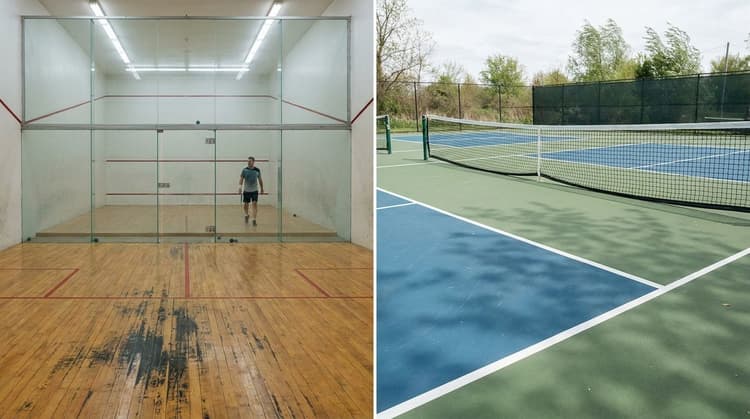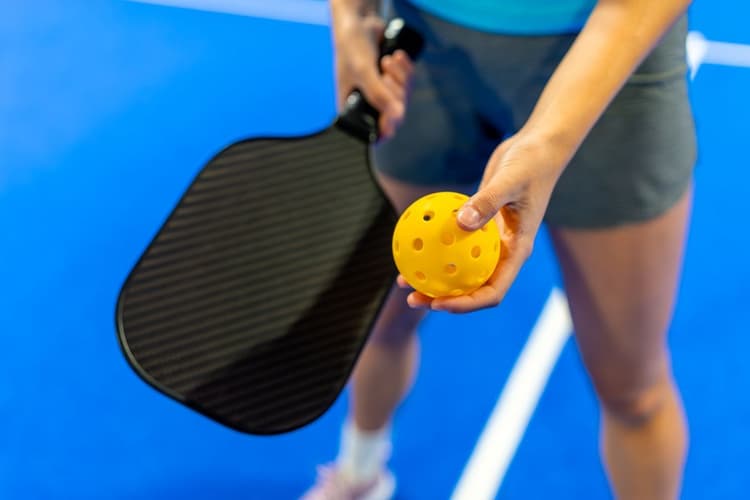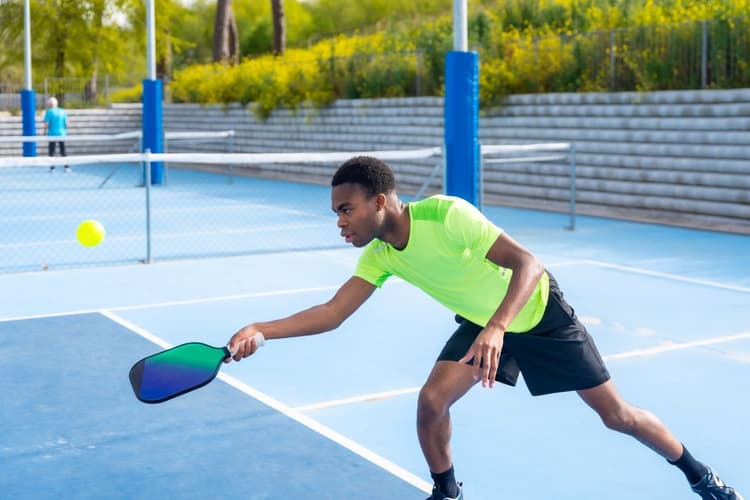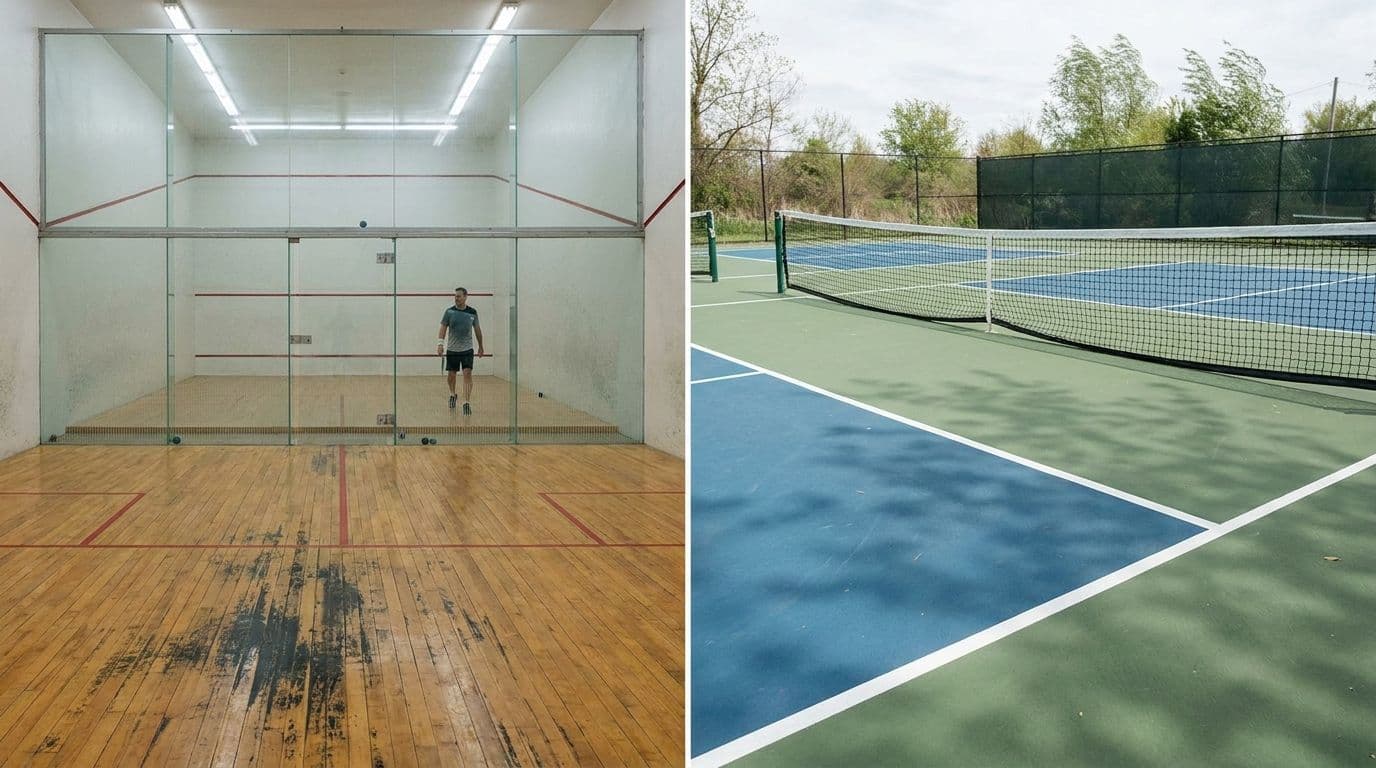
Both are racket sports built around quick reactions, sharp angles, and smart court positioning. But squash vs pickleball is a comparison between two games that feel almost nothing alike once you step onto the court.
Squash is played inside a four-walled enclosed court against a rubber ball. Pickleball is played on an open court over a net with a perforated plastic ball.
The surface structure, physical demands, equipment, and rules all differ in ways that shape completely different playing experiences. Squash is one of the most physically intense racket sports in the world.
Pickleball is one of the most accessible. Both reward precision, anticipation, and smart shot placement, but they develop those skills through very different movement patterns and tactical frameworks.
This guide covers every meaningful difference between the two sports, including court size, equipment, rules, physical demands, and what to expect if you decide to move from one to the other.
Squash vs Pickleball: Quick Comparison
Squash vs Pickleball at a glance
| Category | Squash | Pickleball |
| Court type | Enclosed, four walls, no net | Open court, net-based |
| Court size | 32 ft x 21 ft (singles) | 44 ft x 20 ft |
| Ball | Small rubber ball | Perforated plastic ball |
| Racket/Paddle | Strung racket, up to 27 inches | Solid paddle, no strings |
| Scoring | Point-a-rally to 11, best of 5 | Side-out scoring to 11, win by 2 |
| Players | Singles or doubles | Singles or doubles |
| Surface | Indoor only | Indoor or outdoor |
| Physical intensity | Very high | Moderate |
| Learning curve | Steep | Accessible |
Pickleball vs Squash Court Size
Court size is the most structural difference between the two sports, and it shapes everything about how each game is played.
Squash Court Dimensions
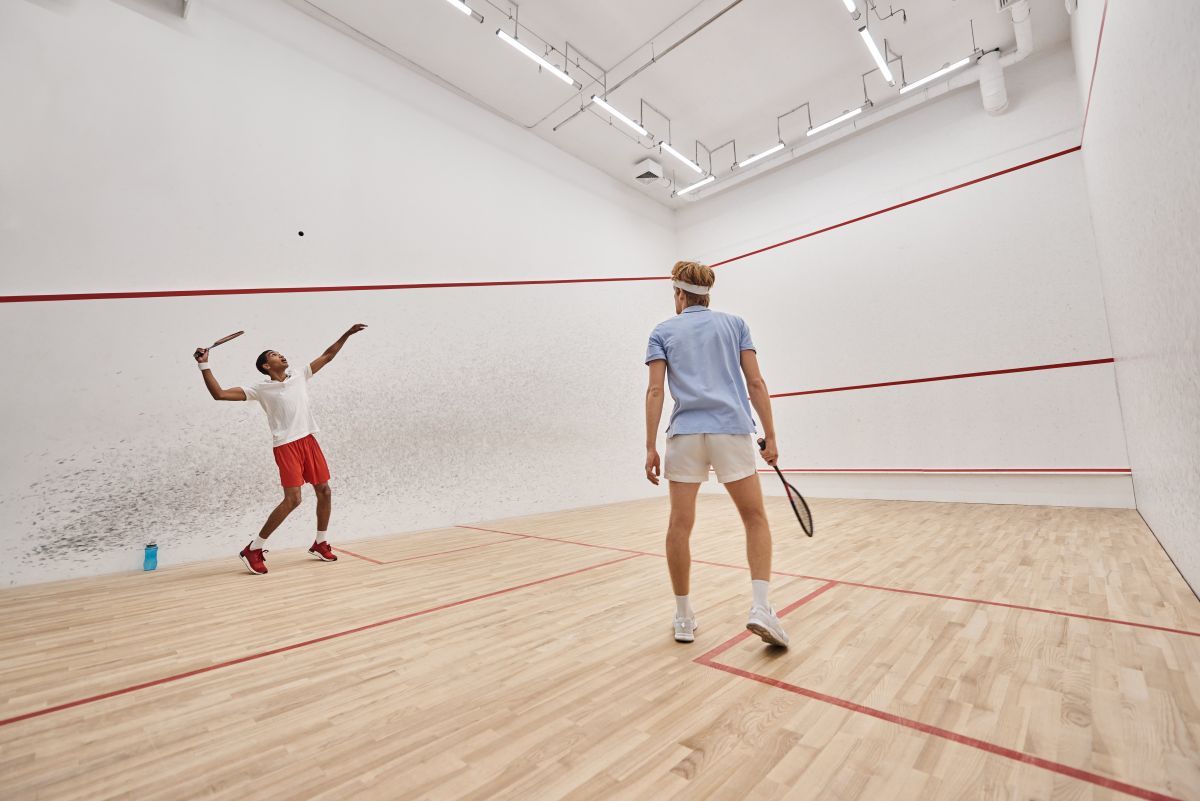
A standard squash singles court measures 32 feet long by 21 feet wide, with floor-to-ceiling walls on all four sides. The front wall is 15 feet high, the back wall is 7 feet high, and the court is entirely enclosed.
Players hit the ball against the walls rather than over a net, using the side walls and back wall as part of the playing surface.
The court has a tin at the bottom of the front wall, which acts as the equivalent of a net. Shots that hit the tin or fall below the out line are faults. The service box sits in each back quarter, and a short line divides the court into front and back halves.
These markings and the wall angles create a complex three-dimensional playing environment unlike any net-based court sport.
Pickleball Court Dimensions
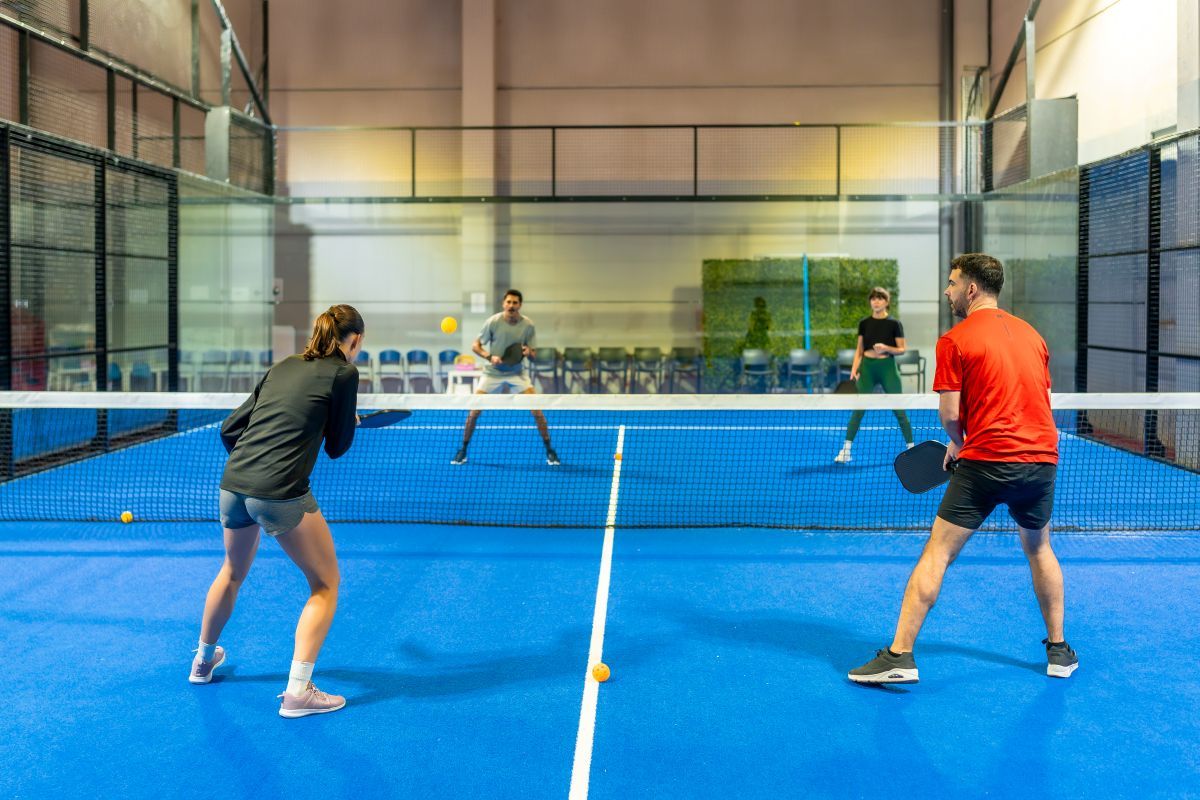
A pickleball court measures 44 feet long by 20 feet wide. It is open on all sides with a net at the center standing 34 inches high at the middle and 36 inches at the posts. The non-volley zone, known as the kitchen, extends 7 feet from the net on each side.
The court is divided into service boxes on either side of the centerline.
The pickleball court is similar in length to a squash court but narrower, and the playing format is fundamentally different. Instead of bouncing shots off walls, all play passes over the net and lands within the court boundaries.
The kitchen rule restricts volleying near the net, which creates a distinct soft game dynamic that does not exist in squash.
How Court Size Shapes the Game
Squash demands constant movement through all four corners of the court, with players returning to the T-junction at the center after each shot. The enclosed walls mean the ball is always live and angles multiply quickly, requiring rapid spatial awareness and explosive recovery speed.
Pickleball's compact open court keeps players closer together, particularly in doubles. The movement is primarily lateral and forward, with the kitchen line serving as the strategic focal point.
Most points are constructed through controlled exchanges close to the net rather than deep corner coverage.
Court Size Comparison
| Feature | Squash | Pickleball |
| Length | 32 ft (9.75 m) | 44 ft (13.4 m) |
| Width | 21 ft (6.4 m) | 20 ft (6.1 m) |
| Total area | 672 sq ft | 880 sq ft |
| Net | No net (tin on front wall) | 34 in at center |
| Walls | Four enclosed walls | Open court, no walls |
| Non-volley zone | None | 7 ft from net, both sides |
| Indoor/Outdoor | Indoor only | Both |
Rules: How Each Sport Is Played
The rule structures of squash and pickleball are built around completely different playing formats. Understanding both makes the sport-to-sport comparison much clearer.
How Squash Works
Squash is played inside a four-walled court. Each rally starts with a serve from the service box, and players alternate hitting the ball against the front wall above the tin and below the out line.
The ball can hit the side walls and back wall in any order after striking the front wall, giving players many angles and shot options.
The World Squash Federation and Professional Squash Association use point-a-rally scoring. Every rally awards a point regardless of who served. Games are played to 11 points, with a player needing to lead by two if the score reaches 10-10.
A match is typically best of five games. Full details on the official structure are covered in the US Squash rules documentation.
The key rule unique to squash is interference. Because both players share the same court space simultaneously, rules govern when a player must provide an unobstructed path to the ball.
Calling a let or a stroke when a player is blocked or impeded is a central part of squash officiating.
How Pickleball Works
Pickleball is played over a net on a court divided into service boxes and a non-volley zone. Each rally begins with an underhand serve hit diagonally crosscourt.
The two-bounce rule requires the serve and the return of serve to each bounce before either team can volley. After those two bounces, players may hit the ball out of the air or off the bounce.
Traditional pickleball scoring awards points only to the serving team. Games are typically played to 11 points, and a team must win by at least two.
The kitchen rule prohibits volleys while standing in or touching the non-volley zone, which is the defining tactical rule of the sport and creates the soft game exchanges that characterize most competitive play.
Rules Comparison
| Rule Element | Squash | Pickleball |
| Serving | From service box, hits front wall first | Underhand, diagonal, below waist |
| Scoring system | Point-a-rally (every rally scores) | Side-out (server scores only) |
| Game length | First to 11, win by 2 | First to 11, win by 2 |
| Match format | Best of 5 games | Best of 3 games |
| Key restriction | Ball must stay above tin, below out line | No volleying in kitchen |
| Let rule | Yes, for interference between players | No equivalent |
| Two-bounce rule | No | Yes, on serve and return of serve |
If pickleball's rules are new to you, the complete guide to getting started in pickleball covers everything you need from scoring and serving to kitchen rules and court etiquette, so you can walk onto the court ready to play.
Pickleball vs Squash Equipment Differences
The equipment in squash and pickleball reflects the fundamentally different demands of each sport. Every piece of gear serves a different purpose.
Racket vs Paddle
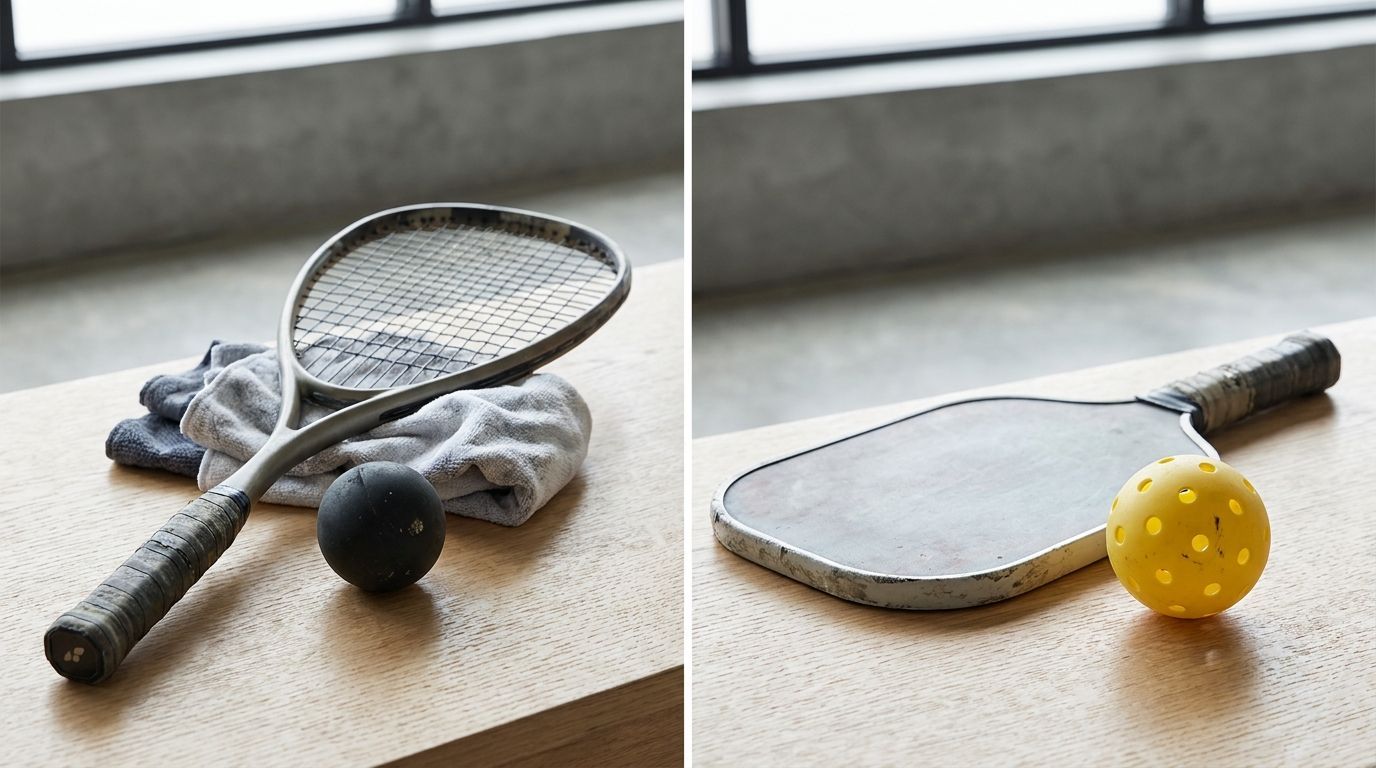
A squash racket is a strung implement with a maximum length of 27 inches under World Squash Federation specifications. The string bed gives the racket a trampoline effect, allowing players to generate significant power and spin on the ball.
The frame is lightweight, typically between 100 and 150 grams, and is designed for fast wrist-led swings in a compact space.
A pickleball paddle is solid, with no strings. It is shorter than a squash racket, with most paddles sitting between 15.5 and 17 inches in total length. The face is made from fiberglass, graphite, or carbon fiber bonded to a honeycomb core.
The solid construction produces a fundamentally different contact feel, with the ball departing quickly and cleanly rather than sitting in the string bed.
Ball Differences
Squash uses a small hollow rubber ball approximately 40mm in diameter. The ball must be warmed up before play because its bounce height and speed change significantly with temperature. Cold rubber balls barely bounce; warm balls are much livelier.
Professional matches use a double-yellow dot ball, which is the slowest and requires the most warm-up. Beginners typically use red or blue dot balls, which bounce more freely and make rallies easier to sustain.
Pickleball uses a perforated plastic ball roughly 73mm in diameter, available in indoor and outdoor variants. Outdoor balls have smaller holes and thicker walls to handle wind and harder court surfaces.
Indoor balls have larger holes and are softer. Neither version requires warm-up to reach playing temperature. The plastic ball travels slower than a squash ball in most situations and bounces more predictably on a flat surface.
Footwear and Other Equipment
Both sports require court-specific footwear with non-marking soles and lateral support. Squash shoes tend to have more padding on the lateral edge to handle the repeated sideways cutting and lunging movements of court coverage.
Pickleball shoes follow similar design principles but are increasingly available as sport-specific options as the market has grown.
Squash requires protective eyewear in many competitive formats due to the enclosed court and the risk of racket contact or a hard ball strike at close range.
Pickleball does not mandate eyewear, though some players wear it for protection during fast exchanges. The full range of gear for pickleball, from paddles to balls and footwear, is covered in the pickleball equipment guide.
Equipment Comparison
| Item | Squash | Pickleball |
| Hitting implement | Strung racket, up to 27 in, 100-150 g | Solid paddle, 15.5-17 in, 6-14 oz |
| Ball type | Hollow rubber, 40mm, temperature-sensitive | Perforated plastic, 73mm, stable |
| Ball variants | Double yellow / red / blue dot by speed | Indoor / outdoor |
| Court shoes | Lateral support, non-marking sole | Court shoes, non-marking sole |
| Eyewear | Recommended/required in competition | Optional |
| Cost to start | Moderate | Low to moderate |
Squash vs Pickleball Physical Demands
This is where the two sports diverge most sharply. They both produce a workout, but they stress the body in very different ways and at very different intensities.
Squash: One of the Most Demanding Racket Sports
Squash consistently ranks among the highest calorie-burning sports available. A PMC study on the physiological and performance demands of elite squash found that match play drives heart rates to 81-92% of maximum and requires contributions from both aerobic and anaerobic energy systems simultaneously, with 25% of playing time exceeding 90% of maximum oxygen uptake.
The enclosed court means the ball is almost always in play and players are constantly moving. The T-junction recovery pattern requires players to sprint to retrieve shots in all four directions and return to the center before the next shot arrives.
This creates a continuous, high-intensity interval demand that challenges cardiovascular fitness, leg strength, change-of-direction speed, and upper body endurance across a match that can last anywhere from 37 to 89 minutes.
The confined space also creates collision risk. Both players share the same court simultaneously, which means physical contact is common and the ability to move quickly without compromising your opponent's path to the ball is part of the technical skill set.
Pickleball: Moderate Intensity, High Sustainability
Pickleball is a moderate-intensity sport that is genuinely accessible across a wide range of ages and fitness levels. The compact court reduces the distance players need to cover per point.
The kitchen rule creates long soft exchanges that do not require explosive movement, and doubles play in particular can be sustained for extended periods without the cardiovascular load squash demands.
A study measuring heart rate and energy expenditure during pickleball play found that recreational doubles players averaged heart rates around 111-119 bpm, representing roughly 70-71% of predicted maximum heart rate, with over 70% of active play time falling in the moderate to vigorous intensity zone.
That is a meaningful workout, but well below the 81-92% of maximum heart rate that competitive squash consistently produces.
The key distinction is sustainability. Most recreational players can play pickleball for two hours without reaching the point of exhaustion that a single competitive squash match often produces.
This makes pickleball a more accessible entry point for players returning to sport after a break or managing the physical effects of aging.
Physical Demands Comparison
| Factor | Squash | Pickleball |
| Intensity level | Very high | Moderate |
| Average heart rate (competitive) | 81-92% of max | 60-75% of max |
| Calorie burn per hour | 600-1,000+ | 250-450 |
| Primary movement pattern | Explosive sprints to all four corners | Lateral shuffles, compact net exchanges |
| Aerobic demand | Very high | Moderate |
| Anaerobic demand | Significant | Low to moderate |
| Joint stress | Knees, ankles, back from lunges | Knees, ankles from lateral cuts |
| Accessibility by age | Best suited to younger, fit players | Accessible across all ages |
If you are drawn to pickleball's accessibility and want to get started with structured play, Bounce connects you to local coaches, clinics, and leagues by city, making it easy to build a consistent routine from your first session.
Gameplay and Strategy: How Each Sport Thinks
Both sports reward players who think ahead, but the strategic frameworks they operate within are completely different.
Squash Strategy
Squash strategy centers on court control and shot variation. The T-junction at the center of the court is the dominant position because it gives the fastest access to all four corners.
Skilled squash players work to drive their opponent away from the T through accurate length shots, tight rails along the walls, deceptive drops into the front corners, and well-timed boast shots that angle the ball off the side wall.
The rubber ball and enclosed walls allow for deceptive angles that do not exist in net-based sports.
A player can disguise a drop shot that looks identical to a straight drive until the last moment. The three-dimensional nature of the court, with shots hitting multiple walls, creates significantly more pattern variability than any court sport played over a net.
Pickleball Strategy
Pickleball strategy centers on kitchen control and shot construction. Most points are won at the non-volley zone, so the primary tactical goal is to reach the kitchen line safely and establish control from close to the net. The third shot drop, a soft shot from the baseline that lands in the kitchen and neutralizes the serving team's positional disadvantage, is the foundational strategic shot in competitive pickleball.
Once both teams are at the kitchen, points are constructed through patience. Soft dinks force opponents to hit upward, creating attackable opportunities. A well-timed speed-up shot breaks the dinking rhythm and forces a defensive response.
The balance between patience and aggression at the kitchen line defines intermediate and advanced pickleball in a way that has no direct parallel in squash.
Is Pickleball Easier Than Squash?
For most adults starting from scratch, pickleball is significantly easier to begin playing. The underhand serve is forgiving. The plastic ball is predictable. The rules are simple enough to learn in a single session. Most beginners can sustain a rally within their first hour on the court.
Squash has a steeper entry curve. The rubber ball bounces unpredictably until it warms up. The strung racket requires wrist and arm mechanics that take time to develop.
The enclosed court produces angles that are disorienting for new players used to net-based sports. And the physical demands mean that fitness has to be developed alongside technique, which adds a second dimension to the learning process.
Being easier to start does not mean pickleball is simpler to master. At the 4.0 level and above, pickleball demands sophisticated soft game mechanics, spin control, tactical patience, and fast-twitch reflexes that take years to develop.
The ceiling is high. It is the entry point that is more accessible.
Switching from Squash to Pickleball
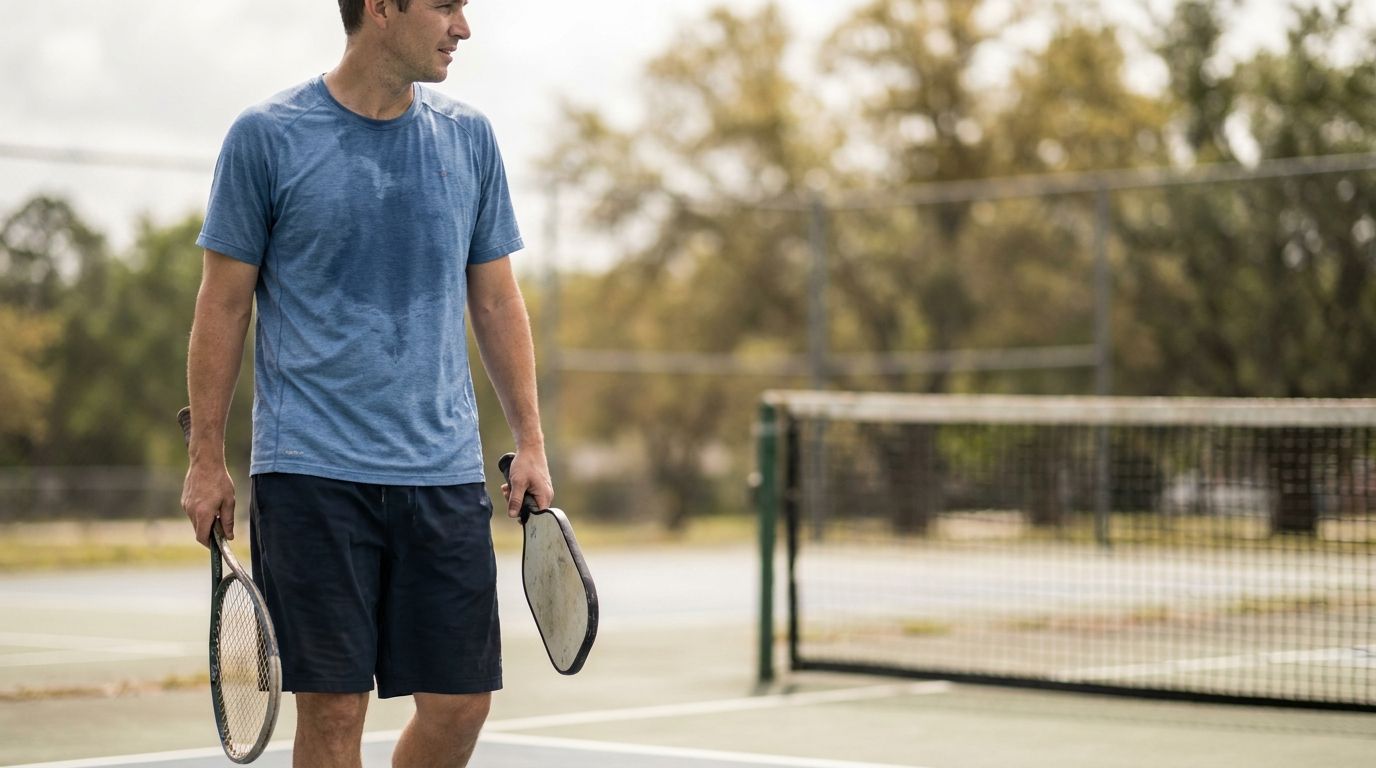
Squash players often find pickleball surprisingly accessible, but several instincts built in squash need deliberate adjustment before the transition clicks.
What Transfers Well
Court awareness and spatial positioning transfer directly. Squash players are trained to track fast-moving balls, read angles, and move efficiently within a compact space.
Those skills accelerate early development in pickleball. Hand speed and reflexes built through squash also carry over, particularly in fast kitchen exchanges where quick hands decide points.
Mental stamina, competitive focus, and the ability to construct points deliberately rather than just hitting hard are squash skills that apply immediately in pickleball.
Squash players generally understand that winning points requires building pressure rather than looking for outright winners on every shot.
What Requires Adjustment
The biggest instinct to override is the swing. Squash develops a wrist-led, full swing that generates power through racket head speed. Pickleball's solid paddle and denser ball reward a compact, controlled motion.
New pickleball players from squash frequently overhit their drives and dinks until they recalibrate their swing speed.
The serve is the other major adjustment. Squash serves can be delivered with power and variety from an upright position. Pickleball requires a strict underhand motion below the waist with a specific arc.
It feels unnatural for the first few sessions and requires deliberate practice to make it consistent.
The kitchen rule catches squash players off guard. Moving aggressively toward the net is fundamental squash positioning, but in pickleball, volleying near the net while in the kitchen is a fault.
Recognizing the non-volley zone boundary and resisting the instinct to crowd the net takes conscious repetition.
Getting Started After Squash
The transition typically takes a few sessions to feel natural rather than forced. Starting with open play rather than competitive matches allows you to experiment with swing mechanics and kitchen positioning without scoreboard pressure.
Booking a lesson early in the transition helps identify which squash instincts are useful and which need reprogramming before they become ingrained habits.
For a detailed look at what pickleball rewards compared to other racket sports, comparing pickleball and tennis as racket sports covers the tactical and physical contrasts that most crossover players encounter.
Conclusion
Squash and pickleball are both racket sports that reward positioning, anticipation, and smart shot construction. Everything else about them is different. Squash is enclosed, physically intense, and technically demanding from the first session.
Pickleball is open, accessible, and quick to learn, while still developing into a deep competitive sport at the advanced level.
If you want maximum physical output and a high-skill ceiling that takes years to reach, squash delivers. If you want a sport you can learn quickly, play socially, and sustain across decades without excessive joint stress, pickleball is the stronger fit.
Many players who have played both find that the hand skills and court intelligence from squash accelerate their pickleball development considerably.
To find local pickleball courts, coaches, and organized play in your area, Bounce connects players to racket sport opportunities by city so you can get on court and build your game at whatever level you are starting from.
Frequently Asked Questions
Is squash harder than pickleball?
Squash has a steeper learning curve and significantly higher physical demands than pickleball. The rubber ball, enclosed court angles, and interference rules all take longer to grasp than pickleball's rules. Pickleball is easier to start, but both sports become complex and technically demanding at higher levels
Can squash players pick up pickleball easily?
Squash players typically adapt to pickleball faster than players from non-racket backgrounds. Hand speed, court awareness, and the ability to construct points deliberately transfer well. The main adjustments are the swing mechanics, the underhand serve, and the kitchen rule, all of which require deliberate reprogramming of squash instincts.
Which sport burns more calories?
Squash burns significantly more calories than pickleball. Competitive squash drives heart rates to 81-92% of maximum and can burn 600 to 1,000 or more calories per hour.
Pickleball burns approximately 250 to 450 calories per hour depending on intensity and play format. Squash is one of the highest calorie-burning sports available; pickleball falls in a moderate intensity range similar to brisk walking or light cycling.
What equipment do you need for each sport?
Squash requires a strung racket, a rubber ball appropriate for your level, court shoes with non-marking soles, and protective eyewear for competitive play. Pickleball requires a solid paddle, a plastic ball in the appropriate indoor or outdoor variant, and court shoes.
Entry costs for both sports are comparable, though squash court access tends to require club membership, while pickleball courts are increasingly available in public parks.
Which sport is better for fitness?
Squash delivers a more intense cardiovascular and full-body workout per session. Pickleball delivers a more sustainable workout that most players can maintain more consistently over time.
For raw fitness output per session, squash wins. For long-term fitness because you actually keep playing, pickleball's lower barrier tends to produce more consistent activity, particularly for players over 50.
Are the courts the same size?
No. A squash court measures 32 feet by 21 feet and is fully enclosed with four walls. A pickleball court measures 44 feet by 20 feet and is open on all sides with a net at the center.
The footprints are similar in area but the playing formats are completely different, with squash using the walls as part of the playing surface and pickleball using net-based play.