If you have ever wondered what pickleball courts are made of, the short answer is that most are built on either concrete or asphalt and finished with an acrylic coating on top. That coating is what gives courts their color, texture, and the consistent bounce players rely on.
Understanding what goes into a court matters more than you might think. The surface you play on affects how the ball bounces, how your feet grip the ground, and how your joints feel after a two-hour session.
Not all courts are equal, and knowing the differences helps you play smarter and choose better facilities.
This guide covers every major pickleball court surface type, explains how they compare indoors and outdoors, and gives you a clear answer on which surface best supports consistent play.
Pickleball Court Surface Types
There are three materials that make up the base layer of virtually every pickleball court: concrete, asphalt, and sport tile. Each one is then typically finished with a surface coating designed to support the ball and protect your joints.
Knowing which base material sits beneath your feet tells you a lot about how the court will perform over time and what the playing experience will feel like.
USA Pickleball publishes official court specifications that define construction standards used across recreational and competitive facilities.
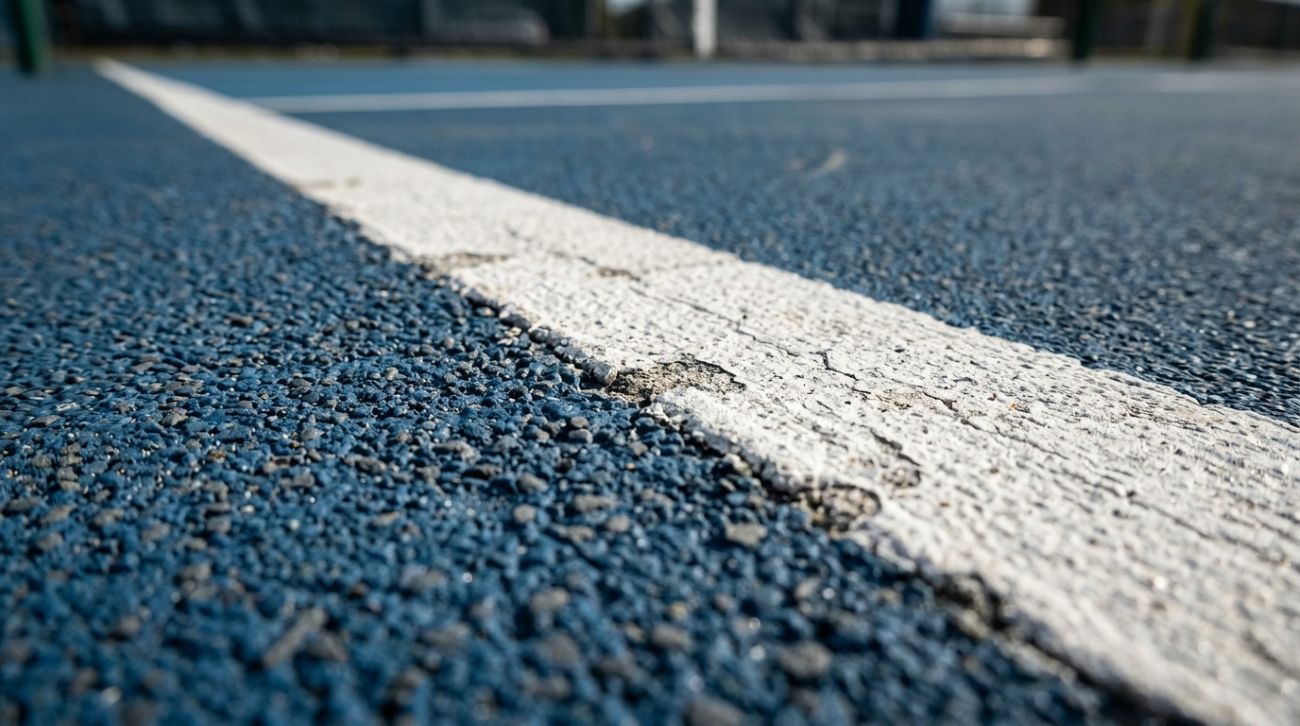
Concrete
Concrete and asphalt are the two most common base materials. Concrete is often preferred for dedicated long-term courts, while asphalt is common in public parks and converted facilities.
Concrete is dense, durable, and holds its shape well over years of use. Courts built on concrete tend to stay level and resist cracking better than asphalt when they are properly constructed.
The downside is hardness. Concrete transmits more impact to your knees, hips, and ankles than softer surfaces do. Players who log a lot of hours on concrete courts often notice joint fatigue more quickly, particularly if the court has no cushioned coating on top.
For competitive and club-level play, concrete is the standard choice. Its consistency and longevity make it the preferred base at most dedicated pickleball facilities.
Asphalt
Asphalt is the second most common base material. It is cheaper and faster to install than concrete, which is why many public parks and recreational facilities use it. Courts converted from parking lots or older tennis courts are often built on asphalt.
Asphalt is softer than concrete, which can feel easier on your joints in the short term. However, it expands and contracts more with temperature changes. This movement leads to surface cracking over time, especially in regions with cold winters or extreme heat.
When comparing pickleball court concrete vs asphalt, concrete wins on durability and performance. Asphalt wins on upfront cost and installation speed. Many public facilities use asphalt as a starting point and upgrade with a quality acrylic coating to extend the court's lifespan.
Sport Tile
Modular sport tile is a newer option made from interlocking polypropylene panels. Each tile snaps together over an existing flat surface, making installation simple and reversible.
You will see sport tile used most often at temporary events, multi-use gyms, and facilities that need to convert a space quickly.
The texture and bounce characteristics of sport tile differ from hard courts. The ball tends to play a little slower, and the surface has a slight give underfoot. Some players prefer this feel; others find it inconsistent compared to a sealed hard court.
Sport tile works well as a short-term or budget solution. For permanent facilities with serious programming, most operators still prefer a concrete or asphalt base with an acrylic finish on top.
Acrylic Pickleball Court Coating: What It Does and Why It Matters
The surface you actually play on is almost never raw concrete or asphalt. What you are standing on is an acrylic pickleball court coating applied in multiple layers over the base material.
This coating layer does most of the work in shaping your playing experience.
Acrylic coatings are water-based systems that include a resurfacer applied directly to the base, followed by color coats mixed with a silica sand aggregate.
The sand is what creates the textured, slightly gritty surface that gives your shoes traction and controls how the ball comes off the court.
The thickness of the coating, the coarseness of the sand, and the number of layers all affect how the finished court plays. Finer sand produces a smoother surface with faster ball speed.
Coarser sand slows the ball down and gives players more time to react. Most recreational and club courts use a medium grit, which balances pace and control.
For players looking to find well-maintained courts in their area, Bounce connects you to courts, coaches, and local play opportunities by sport and city so you can find the right surface for your game without guessing.
Pickleball Court Surface Comparison
| Surface Type | Key Strength | Key Weakness |
| Concrete | Durable, consistent, long lifespan | Hard on joints, higher install cost |
| Asphalt | Lower cost, faster to install | Cracks over time, less stable |
| Sport Tile | Easy to install, removable | Inconsistent bounce, not permanent |
| Acrylic Coating | Controls pace, grip, and appearance | Requires proper base to work correctly |
Outdoor vs Indoor Pickleball Court Surface
The surface demands for outdoor and indoor courts are different, and that gap shows up in how courts are built, maintained, and experienced by players.
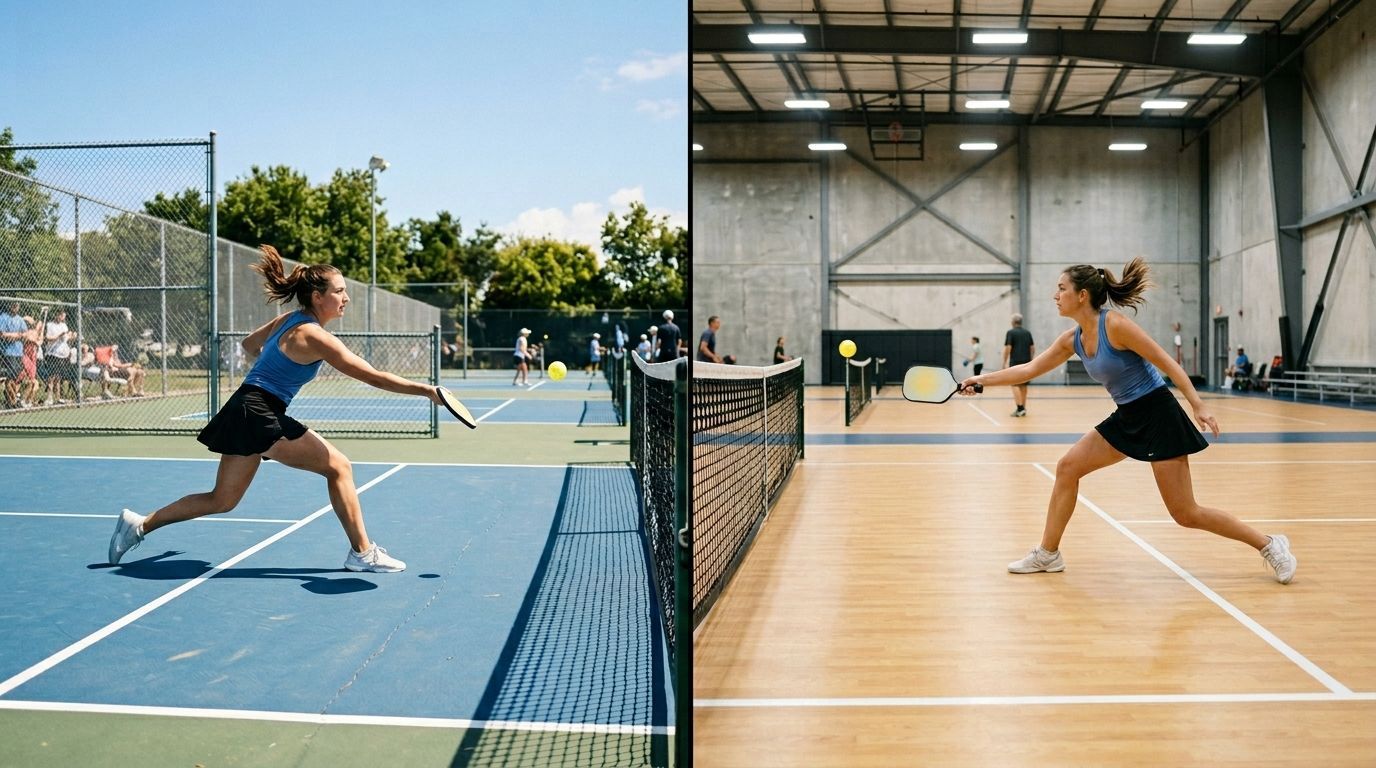
Outdoor Pickleball Court Surface
Outdoor courts are almost always built on concrete or asphalt with an acrylic coating system on top. That coating needs to handle UV exposure, rain, temperature swings, and heavy foot traffic year-round.
Quality outdoor coatings are thicker and more weather-resistant than their indoor counterparts.
Sun and rain are the two biggest enemies of an outdoor court surface. Prolonged UV exposure fades the color coat and breaks down the acrylic binders over time.
Standing water accelerates cracking and can cause the coating to peel away from the base if drainage is poor.
Well-built outdoor courts slope slightly to allow water to run off. They are also resurfaced on a regular cycle, typically every four to eight years depending on use and climate.
If you play on an outdoor court that feels slippery when wet or shows visible cracking, the surface is due for maintenance.
Indoor Pickleball Court Surface
Indoor courts have more options. Some are purpose-built with an acrylic hard court finish similar to outdoor courts. Others use cushioned sport surfaces, rubber flooring, or sealed hardwood, particularly in gyms and recreation centers that host multiple sports.
Cushioned surfaces reduce joint stress noticeably. If you have knee or hip issues, playing on an indoor cushioned court will feel different from a concrete-base outdoor court immediately.
The ball also plays slightly differently, bouncing a little higher and slower on softer surfaces.
The biggest practical difference with the outdoor vs indoor pickleball court surface comes down to weather control. Indoor courts stay consistent year-round.
You never deal with wind affecting your drops, sun glare disrupting your overhead, or a wet surface slowing down rallies.
Outdoor vs Indoor Court Surface at a Glance
| Factor | Outdoor | Indoor |
| Base Material | Concrete or asphalt | Concrete, cushioned panels, or wood |
| Weather Impact | Direct: sun, rain, cold affect playability | None: controlled environment year-round |
| Joint Impact | Higher on concrete-base courts | Lower on cushioned surfaces |
| Ball Behavior | Consistent on quality surfaces | Slightly slower on cushioned courts |
| Maintenance Cycle | Resurfacing every 4-8 years | Lower maintenance, periodic cleaning |
How Court Surface Affects Your Game
The surface beneath your feet has a direct effect on ball speed, bounce height, your movement patterns, and how your body feels after play. These are not small differences.
Ball Bounce
Harder surfaces like concrete produce a truer, more predictable bounce. The ball comes off the court at a consistent angle and height, which makes it easier to time your shots.
Softer or more textured surfaces introduce variability that can disrupt your footwork and positioning.
If you want to understand how court dimensions interact with bounce behavior, the guide to pickleball court dimensions and official layout gives a useful overview of how every element of court design connects to the playing experience.
Speed of Play
Smoother coatings produce faster ball speed. Rougher, higher-grit surfaces slow the ball down slightly and give players more reaction time.
Most recreational courts are built for a medium pace, but you will notice the difference if you play on a particularly smooth or rough surface.
The court surface also affects your footwear grip. An overly smooth court makes lateral cuts harder to execute safely. A court with good texture allows you to push off and change direction with confidence, which matters especially near the kitchen line.
Joint Stress
This is where surface choice has its biggest long-term impact. Playing regularly on concrete with no cushioning layer creates cumulative stress on your knees, ankles, and hips.
A comparative study on court surfaces and injury risk found that surface hardness directly influences the physical load placed on players' joints, a finding that carries over to pickleball given how similar the hard court construction is across racket sports.
If joint recovery is a concern for you, indoor cushioned surfaces or outdoor courts with a cushioned acrylic system are worth prioritizing when you have the option.
What Goes Into Building a Pickleball Court Surface
If your facility is adding dedicated courts or you are thinking about a backyard setup, understanding the construction sequence helps you make informed decisions about cost and quality.
The Base Layer
Everything starts with the sub-base. A well-prepared sub-base is compacted gravel or crushed stone that provides stable drainage and prevents the base material from shifting.
Skipping this step is the most common cause of premature cracking.
On top of the sub-base, concrete or asphalt is poured and finished to a smooth, level surface. The thickness of this layer matters. Courts built too thin crack under heavy use and temperature changes.
Most professional courts use a minimum of four inches of concrete or three inches of asphalt, in line with sport surface construction standards that also apply to pickleball hard courts.
The Acrylic Finish
Once the base has cured, the acrylic system goes down in stages. First comes a resurfacer or filler coat to seal any minor imperfections and improve adhesion. Then the color coats, mixed with sand aggregate, are applied to create the playing surface.
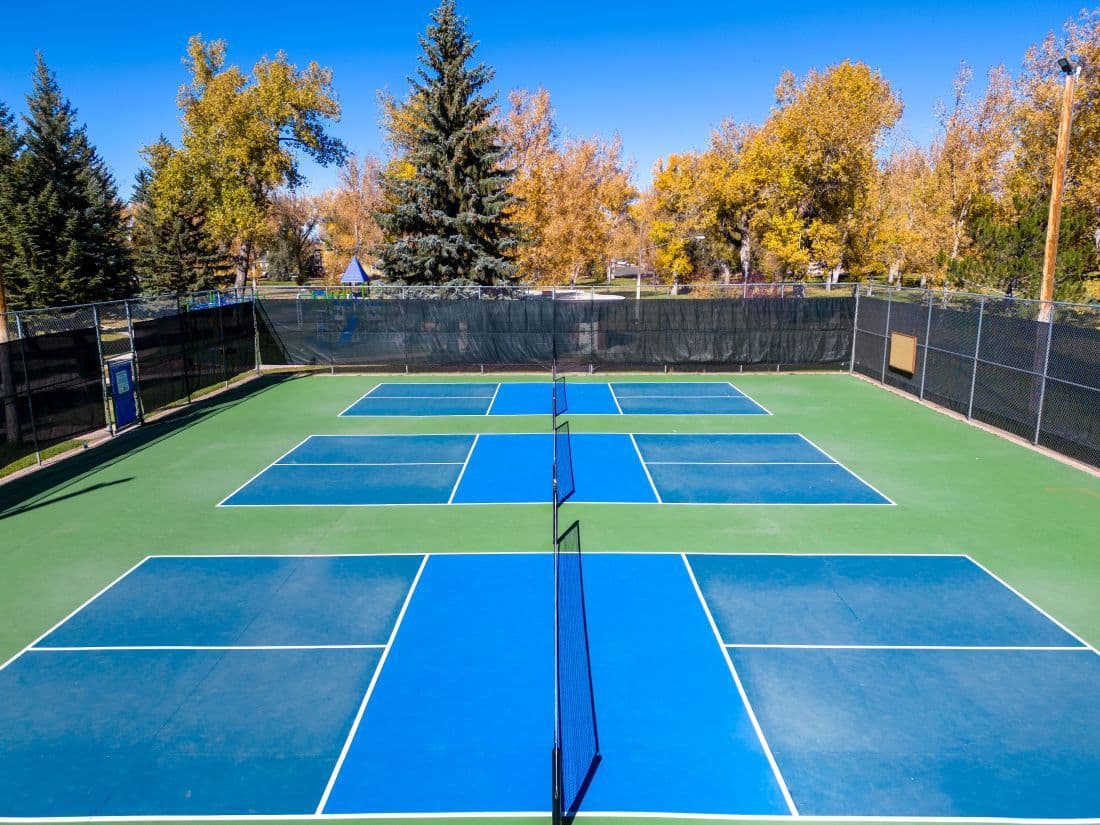
Color selection is usually practical rather than aesthetic. Courts commonly use blue or green for the playing area and a contrasting color for the kitchen to help players track boundaries quickly.
The non-volley zone rules make that visual distinction especially important during fast exchanges near the net.
If you are looking for a coach to help you adjust your game to different court surfaces, Bounce lists certified coaches by sport and location, making it easy to find someone with hands-on experience teaching on local courts.
Best Surface for Pickleball Court: Which One Should You Choose?
The best surface for a pickleball court depends on the use case, budget, and climate. There is no single right answer, but there is usually a clear best choice for a given situation.
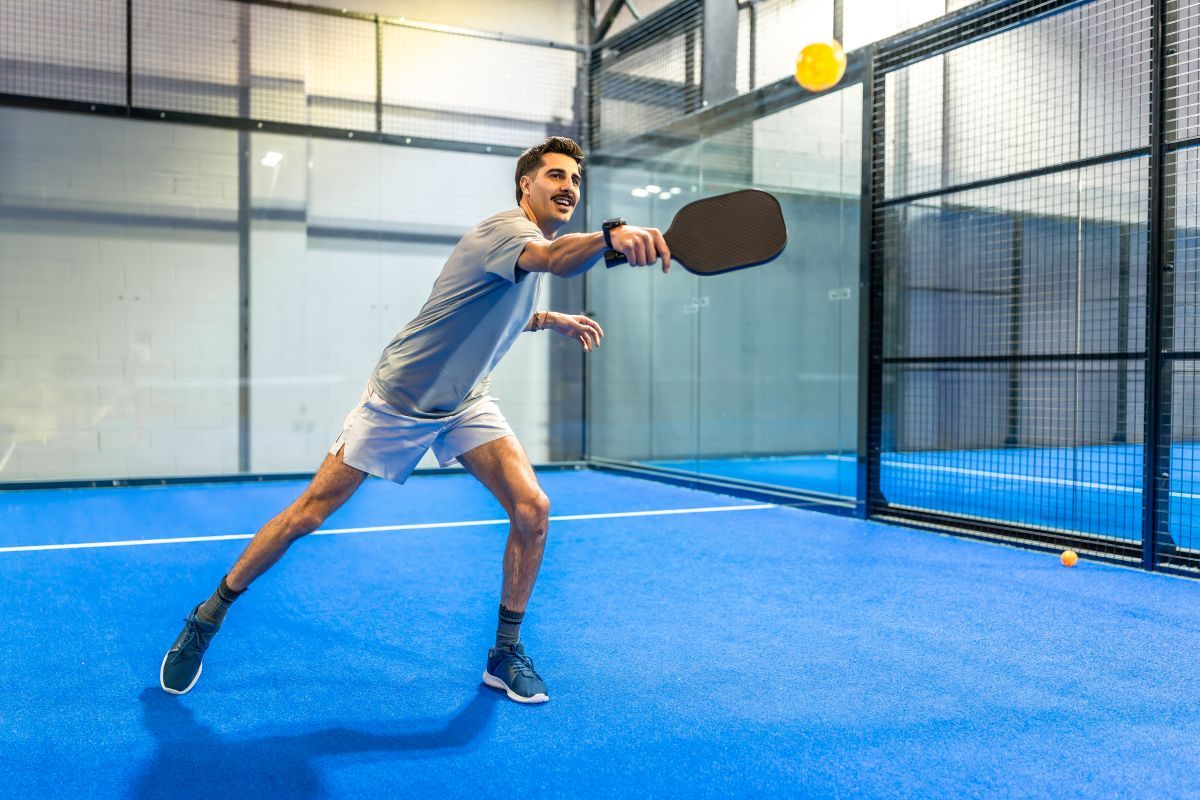
For permanent outdoor courts, a concrete base with an acrylic color coating is the industry standard. It outperforms asphalt on longevity and surface stability, and the acrylic finish can be customized for pace and grip.
The upfront cost is higher, but the total cost over ten to fifteen years is lower because you resurface less often.
For facilities on a tighter budget or those converting existing tennis courts, asphalt with a quality acrylic coating is a reasonable alternative. It requires more frequent maintenance, but it delivers a playable surface at lower initial cost.
Converting tennis courts to pickleball is one of the most practical ways facilities are meeting demand quickly, and the process follows the same surface logic described here.
For indoor courts in multi-sport gyms, a cushioned acrylic system or sport tile over a hard base offers a good balance between joint protection and consistent bounce.
If the space is dedicated to pickleball, an acrylic hard court finish is preferred by most competitive players.
For backyard or residential courts, concrete with a standard acrylic finish is the most durable long-term option. Sport tile works if you need portability or are not ready to commit to a permanent surface.
Which Surface Fits Your Situation?
| Situation | Recommended Surface |
| Permanent outdoor club or facility | Concrete base + acrylic coating |
| Public park or municipal court | Asphalt base + acrylic coating |
| Indoor gym, multi-sport space | Cushioned acrylic or sport tile |
| Backyard residential court | Concrete + standard acrylic finish |
| Temporary or portable setup | Interlocking sport tile |
How to Identify a Court That Needs Resurfacing
Court surface quality degrades gradually. Knowing what to look for helps you avoid injuries and report issues to facility operators before they become serious.
- Visible cracking: Hairline cracks are normal over time, but deep or spreading cracks mean the base is shifting and the surface needs professional attention.
- Faded color coat: Sun fading reduces the visual contrast between court zones. A faded kitchen line makes it harder to track your position during fast exchanges.
- Slick or shiny patches: When the texture grit wears away in high-traffic areas, the surface loses grip. These patches become dangerous when wet.
- Puddles after rain: Pooling water indicates drainage problems or surface depressions. Water sitting on the court accelerates surface breakdown.
- Ball bouncing irregularly: If the ball skips or bounces unevenly at different parts of the court, the surface has uneven wear or hidden damage underneath.
Courts that show multiple signs from this list are usually past the point where simple cleaning or minor repairs will solve the problem. Full resurfacing is the appropriate fix.
Conclusion
Pickleball courts are built on a concrete or asphalt base and finished with an acrylic coating system that controls grip, ball speed, and surface appearance. The base material determines durability and long-term cost.
The coating determines how the court plays day to day.
Concrete with an acrylic finish is the preferred choice for most permanent outdoor courts. Indoor courts have more flexibility and often use cushioned systems that reduce joint stress without sacrificing performance.
Sport tile fills the gap for portable or temporary setups.
If you want to find courts near you, book a lesson, or join a local league, Bounce connects players to courts, coaches, and programming by city.
Whether you are playing on an outdoor concrete court or an indoor cushioned surface, the right resources help you make the most of your time on the court.
Frequently Asked Questions
What is the standard surface for a pickleball court?
The standard surface for a pickleball court is a concrete or asphalt base with an acrylic color coating on top. The coating provides texture for grip, controls ball pace, and gives the court its color.
This combination is used at the recreational, club, and professional levels.
Is concrete or asphalt better for a pickleball court?
Concrete is generally the better long-term choice. It is more stable, resists cracking better over time, and provides a more consistent playing surface.
Asphalt costs less upfront and installs faster, but it requires more frequent maintenance and is more prone to surface movement caused by temperature changes.
How long does a pickleball court surface last?
A properly built and maintained court surface typically lasts between eight and fifteen years before full resurfacing is needed. Courts exposed to extreme weather, heavy daily use, or built on an inadequate base will need resurfacing sooner.
The acrylic color coat may need touch-ups every four to six years even on well-built courts.
Does the court surface affect how pickleball is played?
Yes, significantly. Surface material affects ball speed, bounce height, and how much grip your shoes get during lateral movement. Harder surfaces produce faster play and a truer bounce. Cushioned or softer surfaces slow the ball slightly and reduce joint stress.
Players switching between court types often need a short adjustment period to recalibrate their timing.
Can I play pickleball on a tennis court surface?
Yes. Most tennis courts use a surface that works well for pickleball. The main adjustments are adding temporary court lines and lowering the net to the correct height.
Many facilities now use converted tennis courts for pickleball as a practical way to meet growing demand without new construction.
What is an acrylic pickleball court coating?
An acrylic pickleball court coating is a water-based finishing system applied over a concrete or asphalt base. It consists of a resurfacer coat followed by color coats mixed with a silica sand aggregate.
The sand creates the texture that gives players grip and controls ball speed. Acrylic coatings are the industry standard for both indoor and outdoor hard courts.