Understanding what a volley is in pickleball is one of the fastest ways to improve your game. The volley is a foundational shot that separates beginner players from those who can control rallies and dictate pace. While it may look simple - just hitting the ball before it bounces - it is governed by specific rules and requires precise technique.
Mastering volleys allows players to dominate the net, apply pressure, and shorten points. At the same time, misunderstanding the rules - especially around the kitchen - can lead to frequent faults.
This guide breaks everything down clearly, from definition to strategy, so you can build confidence and improve quickly.
What Is a Volley in Pickleball?
A volley in pickleball is when a player hits the ball out of the air before it bounces on the ground. This typically happens when players are positioned near the net, where reaction time and control are critical. Unlike baseline shots, volleys are:
- Quick
- Compact
- Designed to keep pressure on your opponent
In practical terms, imagine your opponent hits the ball toward you and instead of letting it bounce, you intercept it mid-air and send it back. That action is a volley. Because the ball never touches the ground, volleys reduce reaction time for your opponent and speed up the rally.
Volleys are most commonly used at the non-volley zone line (the kitchen line), where players aim to maintain an advantageous position. From this area, players can cut off angles, redirect shots, and keep their opponents on the defensive. This is why understanding volleys is essential for anyone progressing beyond beginner level.
It’s also important to distinguish volleys from other shots. A volley is not the same as a dink or a groundstroke. A dink is a soft shot that lands in the kitchen after bouncing, while a groundstroke is hit after the ball bounces. The defining feature of a volley is simple: no bounce before contact.
Where Can You Volley in Pickleball?
One of the most important parts of learning what is a volley in pickleball is understanding where volleys are allowed. This is where the non-volley zone, commonly called the kitchen, comes into play. The kitchen is the area near the net where volleying is strictly prohibited.
Players are not allowed to hit a volley while standing inside the kitchen. This rule exists to prevent players from dominating the net with aggressive overhead shots, keeping the game balanced and strategic. If volleys were allowed in this zone, rallies would become overly aggressive and less skill-based.
The rule extends beyond just where you stand. Even if you hit the volley while outside the kitchen, your momentum cannot carry you into it afterward. This means that if you step or fall into the kitchen after hitting a volley, it is still considered a fault. Balance and body control are just as important as shot execution.
Another key detail is that the kitchen line itself counts as part of the kitchen. If your foot touches the line during a volley, it is a fault. This is one of the most common mistakes among beginners, especially during fast exchanges at the net.
Understanding this rule changes how you position yourself. Skilled players stay just behind the kitchen line, ready to volley while maintaining control of their movement. This positioning allows them to stay aggressive without risking faults, which is critical for consistent play.
Key Rules for Volleys in Pickleball
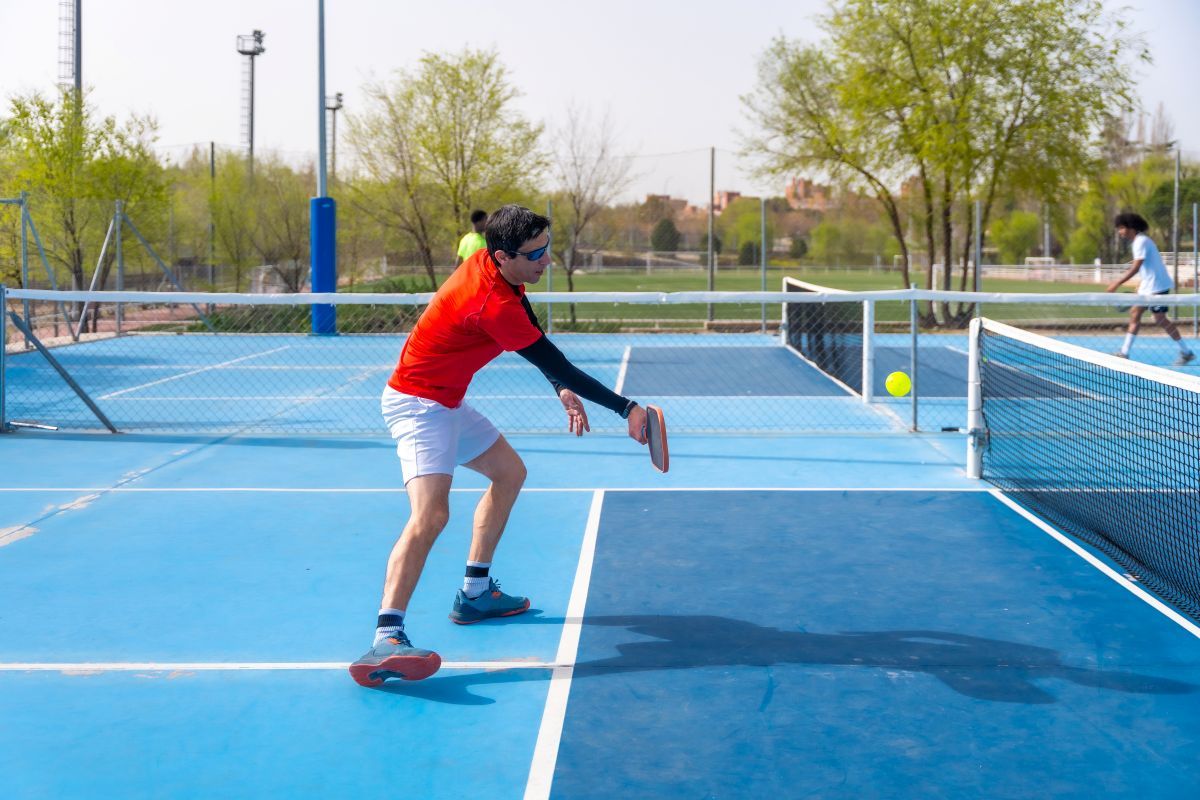
1. The Ball Must Be Hit Before It Bounces
The defining rule of a volley is that the ball must be struck before it touches the ground. If the ball bounces - even slightly - it is no longer considered a volley. This distinction is fundamental because it separates volleys from groundstrokes and other shots.
In fast-paced rallies, especially near the net, recognizing whether the ball will bounce or not becomes critical. Players must make quick decisions and position themselves accordingly. Misjudging this can lead to poor shot selection or missed opportunities.
This rule also influences reaction time. Because volleys happen before the bounce, players have less time to prepare, making compact movements and readiness essential for success.
2. You Must Be Outside the Kitchen (Non-Volley Zone)
One of the most important rules tied to what is a volley in pickleball is the restriction around the non-volley zone, commonly called the kitchen. Players are not allowed to hit a volley while standing inside this area.
This includes not only your feet but any part of your body or equipment. Even slight contact with the kitchen or its boundary line during a volley results in a fault. The line itself is considered part of the kitchen, which makes foot placement especially important.
This rule exists to maintain balance in the game. Without it, players could dominate the net with aggressive shots, reducing the strategic nature of rallies.
3. The Momentum Rule (No Stepping Into the Kitchen After a Volley)
The kitchen rule extends beyond where you stand at the moment of contact. Your momentum must also be controlled after hitting the volley. If your movement carries you into the kitchen - even after the ball has left your paddle - it is still a fault.
This is one of the most misunderstood aspects of pickleball rules. Many beginners assume that once contact is made, the rule no longer applies. In reality, the entire motion of the volley - including follow-through - must be completed outside the kitchen.
Because of this, balance and body control become critical skills. Players must learn to stop their forward movement or stabilize themselves after hitting a volley to avoid unnecessary errors.
4. The Kitchen Line Counts as Part of the Kitchen
A small but crucial detail is that the kitchen line is considered part of the non-volley zone. This means that if your foot touches the line while volleying, it is treated the same as stepping fully into the kitchen.
This rule often catches beginners off guard, especially during fast exchanges where precise foot placement is difficult. Even experienced players must stay aware of their positioning to avoid accidental faults.
Maintaining a slight buffer behind the line is a common strategy. This allows players to volley aggressively without risking contact with the kitchen boundary.
5. Volleys Are Allowed Anywhere Else on the Court
Outside of the kitchen restrictions, volleys can technically be performed from anywhere on the court. As long as you hit the ball before it bounces and remain outside the non-volley zone, the shot is legal.
However, most effective volleys happen near the net. This is because being closer reduces your opponent’s reaction time and increases your ability to control the rally. Volleying from deeper positions is possible, but it is generally less effective and riskier.
Understanding this helps players make better positioning decisions. Moving toward the kitchen line is a key part of improving your ability to volley consistently and effectively.
Why These Volley Rules Matter for Your Game
These rules are not just technical details - they shape the entire strategy of pickleball. The restriction on volleys in the kitchen creates a unique dynamic where positioning, patience, and control are just as important as power.
Players who fully understand these rules make fewer unforced errors and maintain better court positioning. They are also able to play more aggressively without crossing into faults, which is a major advantage during competitive rallies.
Ultimately, mastering these rules is a key step in progressing as a player. Once they become second nature, you can focus more on strategy and execution rather than worrying about violations.
Volley vs Groundstroke: What’s the Difference?
Understanding the difference between a volley and a groundstroke is essential if you want to fully grasp what is a volley in pickleball and how to use it effectively during a match.
| Aspect | Volley | Groundstroke |
| When Contact Happens | Before the ball bounces | After the ball bounces |
| Court Position | Near the net (kitchen line) | Baseline or mid-court |
| Reaction Time | Very fast, limited time to react | More time to prepare |
| Swing Style | Compact, short “punch” motion | Full swing with follow-through |
| Primary Purpose | Apply pressure, speed up play | Control rally, build points |
| Shot Type | Offensive and aggressive | Neutral or defensive |
| Control vs Power | Focus on placement and control | Mix of power and placement |
| Common Use Case | Net exchanges, finishing points | Rallying, setting up next shot |
| Risk Level | Higher risk if mistimed | Lower risk due to bounce time |
| Player Positioning Goal | Maintain net control | Transition toward the net |
A volley is all about speed, positioning, and pressure, while a groundstroke focuses on control, timing, and rally development. As players improve, the ability to transition between these two shots becomes a major advantage.
By understanding when to use each, you develop a more complete game - balancing patience from the baseline with aggression at the net, which is exactly what defines strong pickleball players.
Why Volleys Are Important in Pickleball
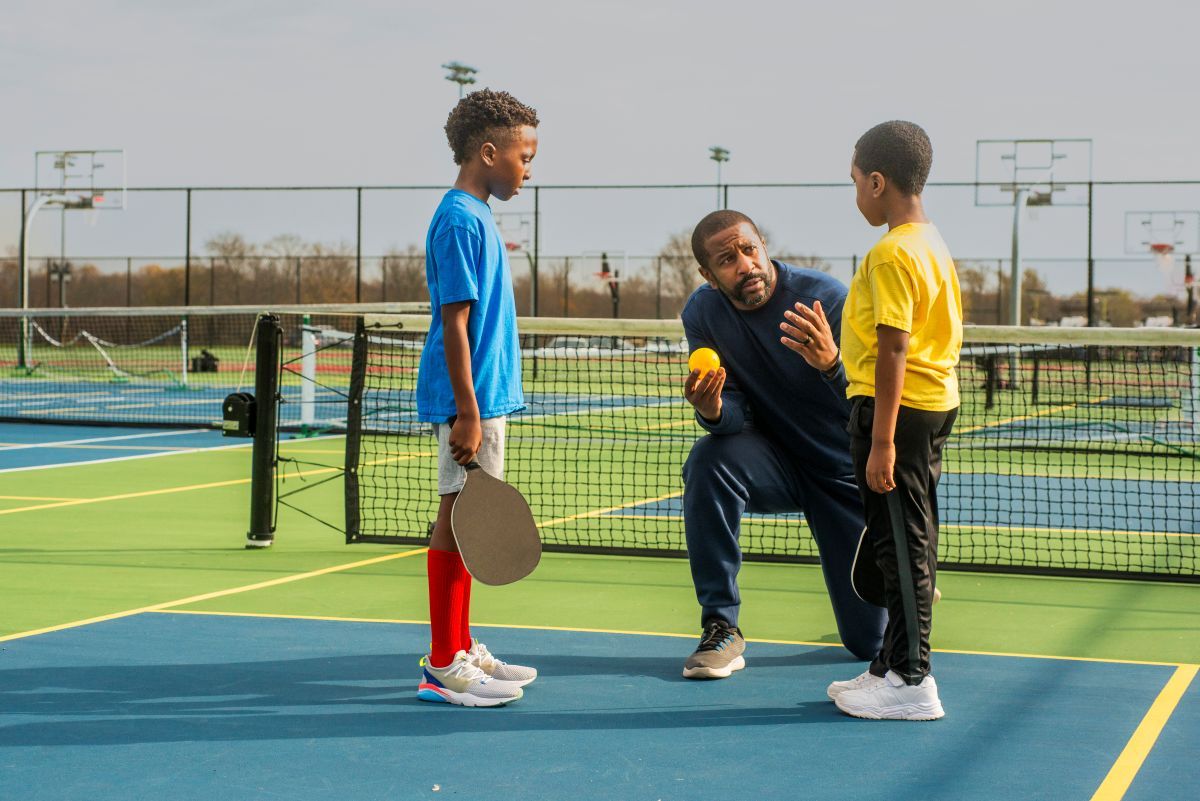
Volleys play a central role in pickleball because they directly influence control, pace, and point outcomes.
- Control the net: Players at the kitchen line have the strongest positional advantage
- Speed up rallies: Hitting before the bounce reduces opponent reaction time
- Apply constant pressure: Forces opponents into defensive and uncomfortable shots
- Finish points faster: Helps avoid long rallies and close out points efficiently
- Improve court positioning: Encourages movement toward the most dominant area on the court
- Create offensive opportunities: Turns neutral balls into attacking chances
- Essential for progression: Required skill to compete at intermediate and advanced levels
Mastering volleys is one of the fastest ways to gain an advantage and become a more complete pickleball player.
Types of Volleys in Pickleball
There are several types of volleys, each serving a specific purpose. Understanding these variations helps deepen your knowledge of what is a volley in pickleball and how to apply it effectively during a match.
| Volley Type | Description | When to Use It | Key Benefit |
| Forehand Volley | Hit on the dominant side with a natural motion | Standard net exchanges | Easy control and directional accuracy |
| Backhand Volley | Hit across the body with a compact motion | Fast exchanges and defensive situations | Quick reactions and consistency |
| Punch Volley | Firm, short stroke with minimal backswing | Attacking higher balls | Applies pressure and keeps ball low |
| Block Volley | Soft redirection that absorbs incoming pace | Handling hard shots or resets | Neutralizes power and regains control |
| Angle Volley | Directed at sharp angles instead of straight ahead | Pulling opponents off the court | Creates openings and forces movement |
Each type of volley adds versatility to your game. As you improve, combining these shots allows you to adapt to different rally situations, control opponents, and play more strategically at the net.
How to Hit a Proper Volley (Step-by-Step)
Executing a proper volley requires technique, not strength. Once you understand what is a volley in pickleball, refining your mechanics becomes the next priority.
- Start with the right positioning: Stand near the kitchen line with knees slightly bent and your paddle up in front of your body
- Keep your swing compact: Use a short, controlled motion instead of a large backswing to improve accuracy and reduce errors
- Make contact in front of your body: This ensures better control and prevents late or off-balance shots
- Use a “punch” motion: Rely on a firm, controlled movement from your shoulder and arm rather than wrist flicking
- Maintain paddle stability: Keep the paddle face steady to guide the ball where you want it to go
- Reset quickly after contact: Return to your ready position immediately to prepare for the next shot
- Stay balanced throughout: Control your movement to avoid stepping into the kitchen after the volley
Mastering these fundamentals leads to more consistent volleys, better control at the net, and stronger overall performance during rallies.
Common Volley Mistakes (And How to Fix Them)
Even after understanding what is a volley in pickleball, many players struggle with execution due to common mistakes. Identifying and correcting these issues leads to faster improvement.
| Mistake | What Happens | Why It’s a Problem | How to Fix It |
| Swinging too much | Large backswing during volleys | Reduces control and increases errors | Use a short, compact motion |
| Poor posture | Standing upright instead of staying low | Slower reactions and poor balance | Bend knees and stay in an athletic stance |
| Bad positioning | Staying too far from the kitchen line | Limits reach and volley opportunities | Move closer to the net (kitchen line) |
| Overhitting the ball | Trying to add too much power | Leads to balls going out of bounds | Focus on placement over power |
| Stepping into the kitchen | Losing balance during or after contact | Results in a fault | Control momentum and stay balanced |
Correcting these habits early makes a significant difference. With consistent practice, players can turn these common mistakes into reliable strengths.
Beginner Tips to Improve Your Volleys Faster
Improving your volleys comes down to consistency and smart habits.
- Keep your paddle up at all times: Reduces reaction time and prepares you for fast net exchanges
- Focus on consistency over power: Controlled shots are more effective than aggressive, error-prone hits
- Aim for your opponent’s feet: Low shots are harder to return and often force mistakes
- Stay at the kitchen line: This is the most advantageous position for volleying and controlling rallies
- Use soft hands when needed: Helps absorb pace and improves control during fast exchanges
- Practice compact movements: Short, controlled swings lead to better accuracy and fewer errors
- Repeat in real game situations: Consistent play builds confidence and muscle memory over time
- Play with better players when possible: Increases pace and improves your reaction skills faster
Improvement happens faster when you combine repetition with real play. Finding structured games, clinics, and coaching can reinforce these habits and help turn practice into consistent performance.
Conclusion
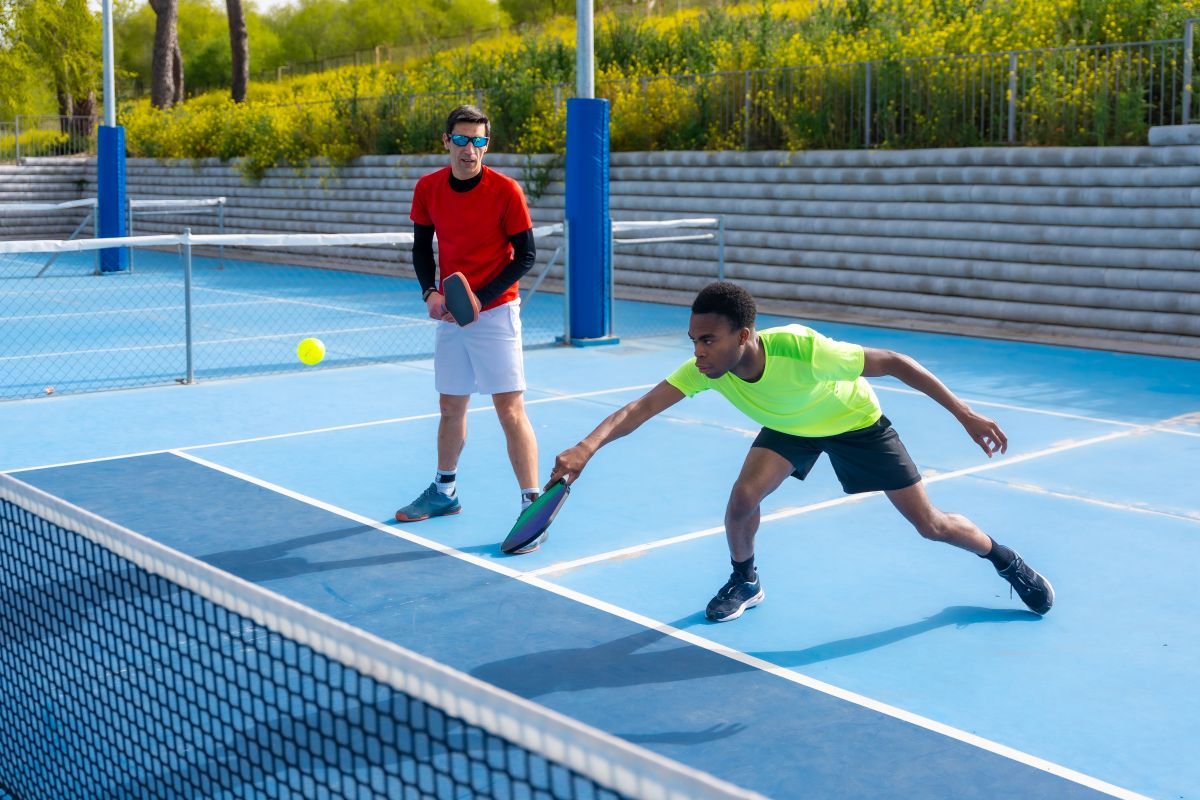
The answer to what is a volley in pickleball is simple, but mastering it takes practice and awareness. It is more than just hitting the ball before it bounces - it is a skill that combines positioning, control, and strategy.
Understanding the kitchen rule, refining your technique, and avoiding common mistakes are all essential steps. As you improve, volleys become a powerful tool for controlling rallies and winning points.
Progress comes from applying these concepts in real play. The more you engage in structured games, lessons, and consistent practice, the faster your skills develop. Players who actively seek out opportunities to play and learn improve far more quickly than those who rely on occasional games.
If you want to accelerate that progress, the next step is simple: play more, play smarter, and connect with the right people. Platforms like Bounce make it easy to find local players, coaches, and organized sessions - helping you turn knowledge into real on-court improvement.