Understanding pickleball line rules is fundamental to playing the game correctly and confidently. The official standards for these rules are established and maintained by USA Pickleball, the national governing body that publishes the sport’s official rulebook and updates competitive guidelines each year.
Every rally, every serve, and every close call depends on knowing whether a ball is in or out according to those established rules.
Even experienced players occasionally hesitate on tight shots near the baseline or sideline, and that hesitation can cost points. Mastering line rules - based on the official framework - eliminates uncertainty, improves fairness, and strengthens overall performance.
The Core Principle: Are Lines In or Out in Pickleball?
The foundational rule is simple and absolute:
All boundary lines in pickleball are considered “in.”
If any part of the ball touches any portion of a boundary line, the ball is in play. This applies to:
- Baselines
- Sidelines
- Centerline
- Non-volley zone (kitchen) line (with one important serving exception explained below)
This principle removes ambiguity. The line is not out, the line is part of the court. Players sometimes mistakenly believe that the ball must land fully inside the painted area. That is incorrect. Even minimal contact with the line counts as a legal shot.
There is one special situation: during a serve, if the ball touches the non-volley zone line, it is a fault. That exception does not apply during rallies. It applies only to serves.
Understanding this core rule provides the framework for interpreting every close call in pickleball.
Pickleball Court Lines Explained
A. Baseline Rules
The baseline marks the back boundary of the court. It runs parallel to the net and defines the maximum depth a shot may land while remaining in play.
If a ball touches the baseline - even slightly - it is in. This includes:
- Deep serves landing on the baseline
- Defensive lobs that clip the back edge
- Hard drives that skim the back line
Baseline calls are often difficult because depth perception from across the court can be misleading. Fast-moving shots appear long when they are not.
The correct approach is to focus on whether you see visible space between the ball and the line. If no space is visible, the ball is in.
Players frequently misjudge baseline shots due to:
- Late visual tracking
- Standing too far inside the court
- Anticipating the ball will travel long
Maintaining balanced positioning improves baseline accuracy significantly.
B. Sideline Rules
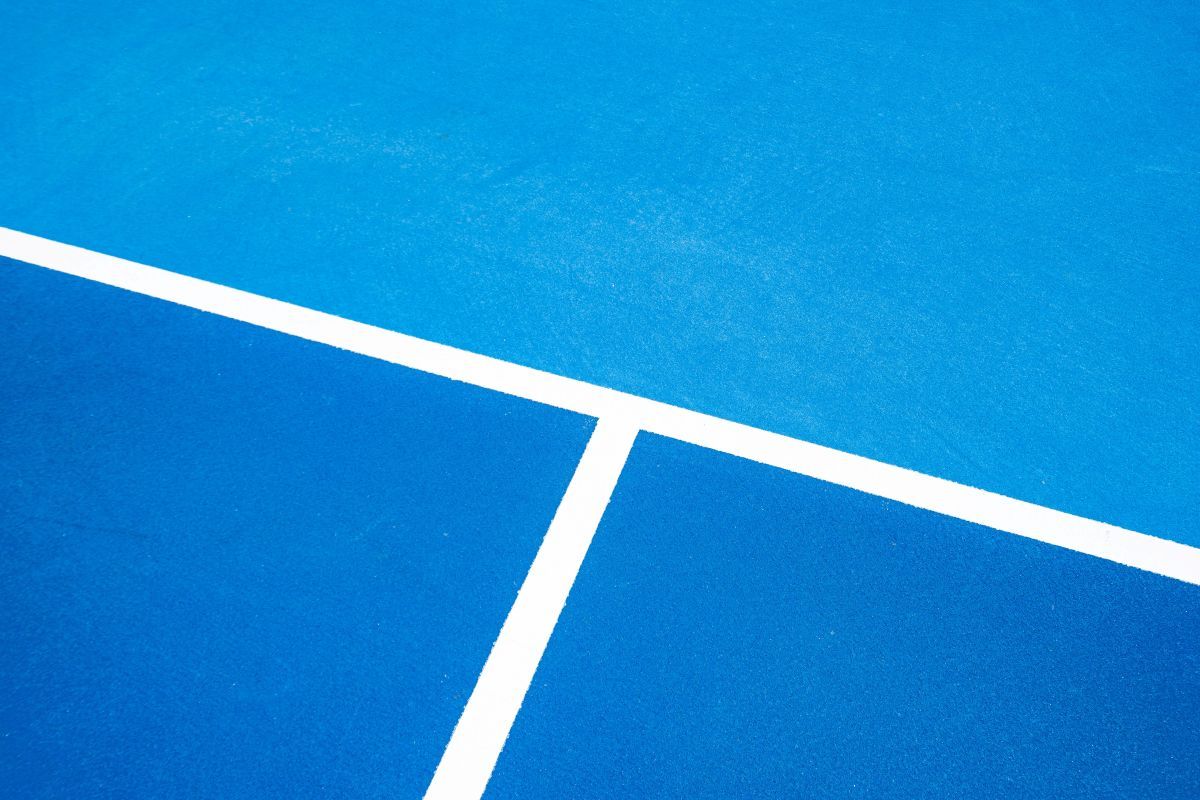
The sidelines define the lateral boundaries of the court. Like all other boundary lines, they are considered in.
If the ball contacts the sideline, even barely, the shot counts. This applies to:
- Crosscourt drives
- Sharp angle dinks
- Passing shots down the line
- Wide serves landing on the service boundary
Spin can complicate sideline judgments. Topspin pulls the ball down late, and sidespin can curve shots toward the line unexpectedly. Players should focus on the point of first contact with the ground, not the direction the ball spins afterward.
Common sideline mistakes include:
- Calling a ball out based on angle rather than actual contact
- Relying on sound instead of visual confirmation
- Overruling a partner without clear visibility
The standard remains consistent: if the ball touches the line, it is in.
C. Centerline Rules During the Serve
The centerline divides the service courts. It determines whether a serve lands in the correct diagonal box.
A serve that touches the centerline is in, provided it lands in the proper service court and clears the non-volley zone. This is true in both singles and doubles.
In doubles, players sometimes misunderstand which server corresponds to which service court. However, the rule regarding the centerline remains unchanged. Contact with the line is valid.
Proper awareness of the centerline ensures:
- Correct diagonal serve placement
- Reduced service faults
- Cleaner communication between partners
The centerline functions strictly as a divider; it does not create an out-of-bounds area.
D. The Non-Volley Zone (Kitchen) Line
The non-volley zone (NVZ), commonly called the kitchen, has one important exception in pickleball line rules.
During a serve:
- The ball must clear the entire non-volley zone
- If the serve touches the kitchen line, it is a fault
During a rally:
- A ball that touches the kitchen line is in
- The line functions like any other boundary line
This distinction is critical. Players often confuse the serve rule with general rally rules. The kitchen line only causes a fault when contacted by the serve.
Additionally, the kitchen line determines foot positioning during volleys. A player may not volley while touching the non-volley zone line or standing inside the kitchen. However, that is a foot fault rule, not a ball landing rule.
Pickleball Line Rules for Serves
Serving introduces specific line requirements. A legal serve must:
- Land diagonally in the correct service court
- Clear the non-volley zone entirely
- Remain within the sideline and baseline boundaries
Here is how line contact applies to serves:
- Serve hits baseline: In
- Serve hits sideline: In
- Serve hits centerline: In
- Serve hits non-volley zone line: Fault
The kitchen line is the only line that creates a serving fault upon contact.
Servers should prioritize depth and margin. Targeting close to lines increases pressure but also raises the risk of faults. Controlled aggression produces the best results.
Accurate serving improves through repetition and structured play. Organized leagues and clinics listed through Bounce provide environments where players practice serve placement under competitive conditions. Consistent match exposure reinforces proper understanding of serve-related line rules.
Pickleball Line Rules During Rallies

During live rallies, the rule is straightforward: any boundary line is in. This includes:
- Baselines
- Sidelines
- Centerline
- Non-volley zone line
The only factor that can change legality during a rally involves player position. For example, volleying while touching the kitchen line results in a fault, but the ball landing on that line is still legal.
Momentum faults also occur independently of ball placement. If a player volleys and their momentum carries them into the kitchen - even after striking the ball - the point is lost. This rule relates to player movement, not ball contact.
Close-call etiquette matters. In recreational play:
- The receiving team calls balls on their side
- If unsure, the call favors the opponent
- Clear communication prevents conflict
Confidence in rally line calls grows with consistent match experience. Playing structured formats builds composure in high-speed exchanges. Bounce connects players with leagues, organized socials, and competitive events where practical application of pickleball line rules becomes second nature.
How to Make Accurate Line Calls in Pickleball
A. The “See Space” Principle
The most reliable method for judging in/out calls is simple:
- If you see space between the ball and the line, the ball is out.
- If you do not see space, the ball is in.
This standard reduces emotional or anticipatory judgments. Players must commit to visual evidence rather than expectation.
Proper positioning improves call accuracy:
- Stay balanced
- Track the ball to the bounce
- Avoid leaning prematurely
Consistent visual discipline strengthens reliability.
B. Player Responsibility in Recreational Play
Pickleball places strong emphasis on integrity and sportsmanship. Players make calls on their side of the net.
Key responsibilities include:
- Making clear and immediate calls
- Avoiding delayed decisions
- Granting benefit of doubt to opponents
- Communicating calmly with partners
Doubles teams should designate responsibility zones to avoid confusion. Typically, the player closest to the ball makes the call. Partners should avoid overruling unless they have a significantly better angle.
C. Tournament Line Call Procedures
In tournament settings, procedures are more structured. Referees may be present to:
- Oversee line calls
- Resolve disputes
- Enforce serving and positioning rules
If a referee is assigned, their decision overrides player disagreement. In higher-level events, line judges may assist.
Players must still:
- Make calls promptly
- Avoid excessive appeals
- Respect official rulings
Understanding official standards prepares players for competitive progression.
Common Misunderstandings About Pickleball Line Rules
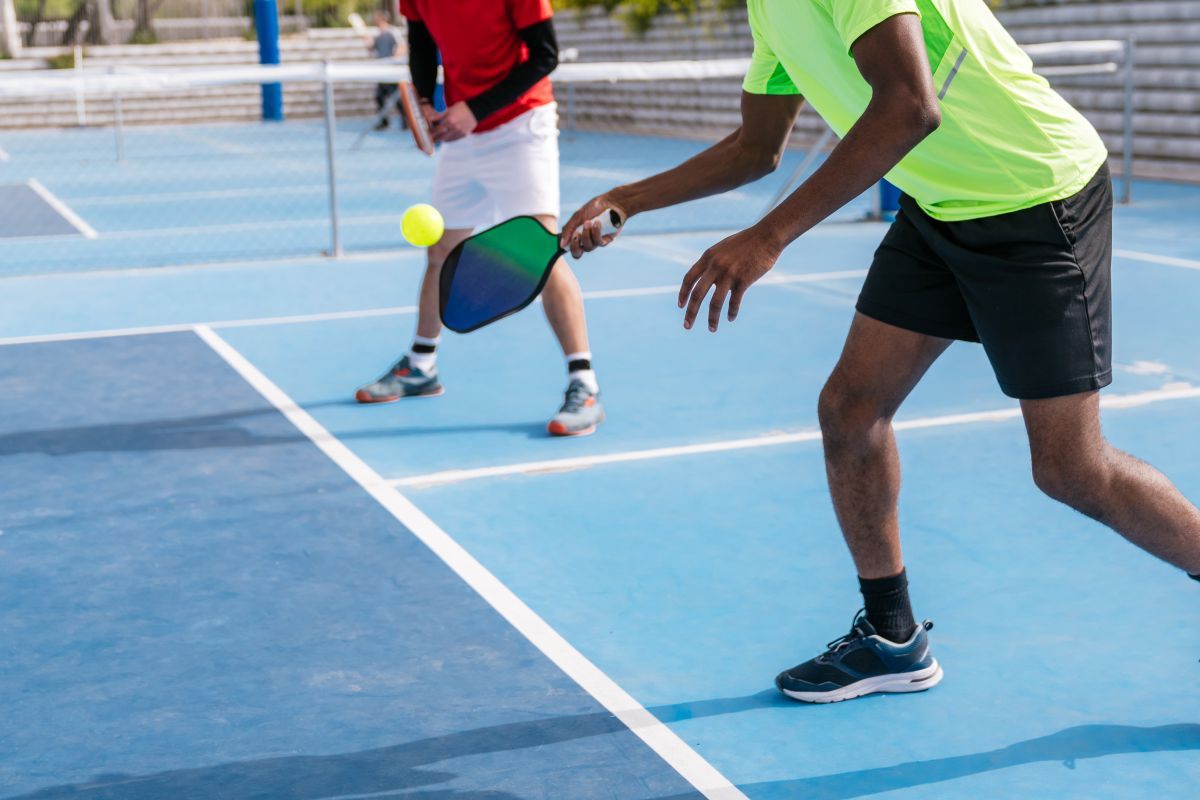
Several misconceptions frequently cause confusion:
- Believing the line is out: All lines are in. The painted boundary is part of the court.
- Confusing kitchen serve rules with rally rules: The kitchen line only causes a fault when contacted by the serve.
- Calling balls out based on sound: Sound can be deceptive. Always rely on visual confirmation.
- Overruling a partner without clear evidence: Partners should defer unless they have a superior angle.
- Assuming a ball must land fully inside the line: Any contact with the line counts as in.
Correcting these misunderstandings immediately improves match flow and player confidence.
Doubles vs Singles: Does Anything Change?
The actual pickleball line rules do not change between singles and doubles. All lines remain in, and the kitchen serve exception remains consistent.
However, doubles introduces additional complexity:
- More angles create more close calls
- Communication must be faster
- Partners share responsibility
In singles, one player makes all calls on their side. In doubles, both players must coordinate without hesitation. Clear verbal cues such as “out” or “bounce” reduce confusion.
Conclusion
A clear understanding of pickleball line rules removes hesitation and builds decisive play. Knowing that all lines are in - except the kitchen line on serves - allows players to make confident calls and compete with integrity. Accurate line judgments protect fairness, reduce disputes, and create smoother, more competitive matches.
Consistency with boundary rules also sharpens strategy. Players place serves more effectively, defend with better positioning, and attack tight margins with greater control. When line calls become instinctive, overall performance improves.
If you want to play, improve, and compete with clarity in your city, Bounce brings the entire racket sports ecosystem together - making it easier to learn, compete, and grow your game.