Understanding pickleball rules singles is the foundation for playing confidently and competitively. Singles may look simple - just two players on the court - but the rules demand precision, movement discipline, and complete court awareness.
Every serve, return, and positioning decision must align with official guidelines to avoid unnecessary faults.
Unlike casual backyard play, regulation singles follow a clearly defined structure. Serving mechanics, score calling, court positioning, and non-volley zone restrictions all matter. Players who master the rules early build cleaner habits and reduce unforced errors as competition increases.
This guide explains pickleball singles serve rules, scoring structure, faults, positioning requirements, and official governance in complete detail. By the end, you will understand not just what the rules are, but how they operate together to create fair and structured competition.
Serving Rules in Pickleball Singles
The serve begins every rally, and in singles, it carries even greater importance. Because only one player covers the full court, a legal and consistent serve sets the tone for each point.
Legal Serve Requirements
Official rules, as published by USA Pickleball, outline strict serving mechanics:
- The serve must be underhand
- Contact with the ball must occur below the server’s waist
- The paddle head must move in an upward arc
- At least one foot must remain behind the baseline at contact
- The serve must travel diagonally and land within the opponent’s correct service court
- The serve must clear the non-volley zone completely
The server cannot step on or over the baseline during contact. Both feet must remain outside the court boundaries until the ball is struck. A foot fault at the moment of contact results in an immediate loss of serve.
The ball must land within the diagonal service box. If it lands on the centerline, baseline, or sideline, it is considered in. If it touches the non-volley zone line on the serve, it is a fault.
The Two-Bounce Rule
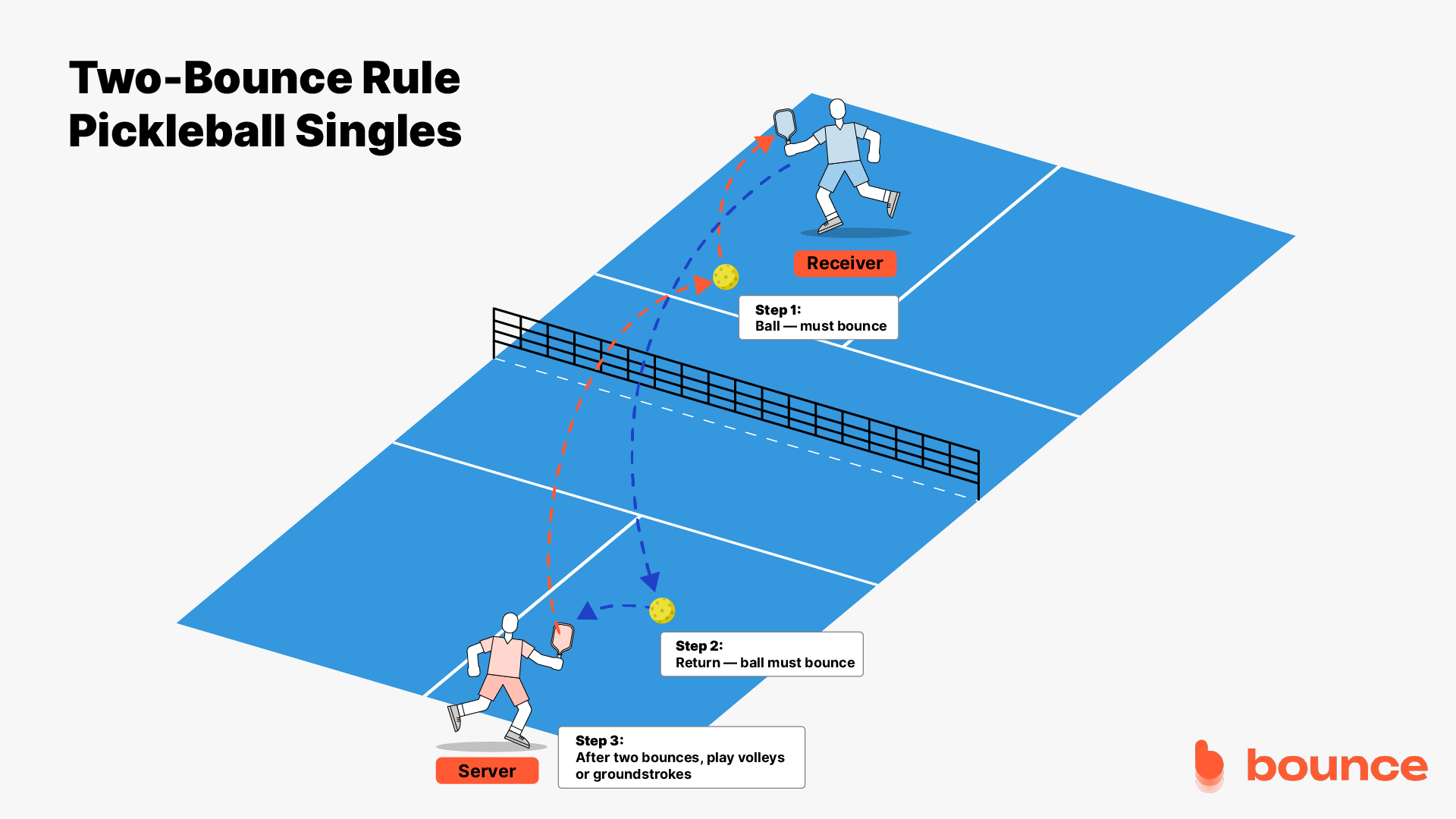
One of the defining elements of pickleball rules singles is the two-bounce rule.
After the serve:
- The serve must bounce before the receiver returns it.
- The return must bounce before the server hits the third shot.
This rule prevents immediate net dominance and extends rallies. It ensures both players have the opportunity to establish position before aggressive volley exchanges begin.
The two-bounce rule applies at the start of every rally without exception. Violating it results in a fault.
Server Positioning Based on Score
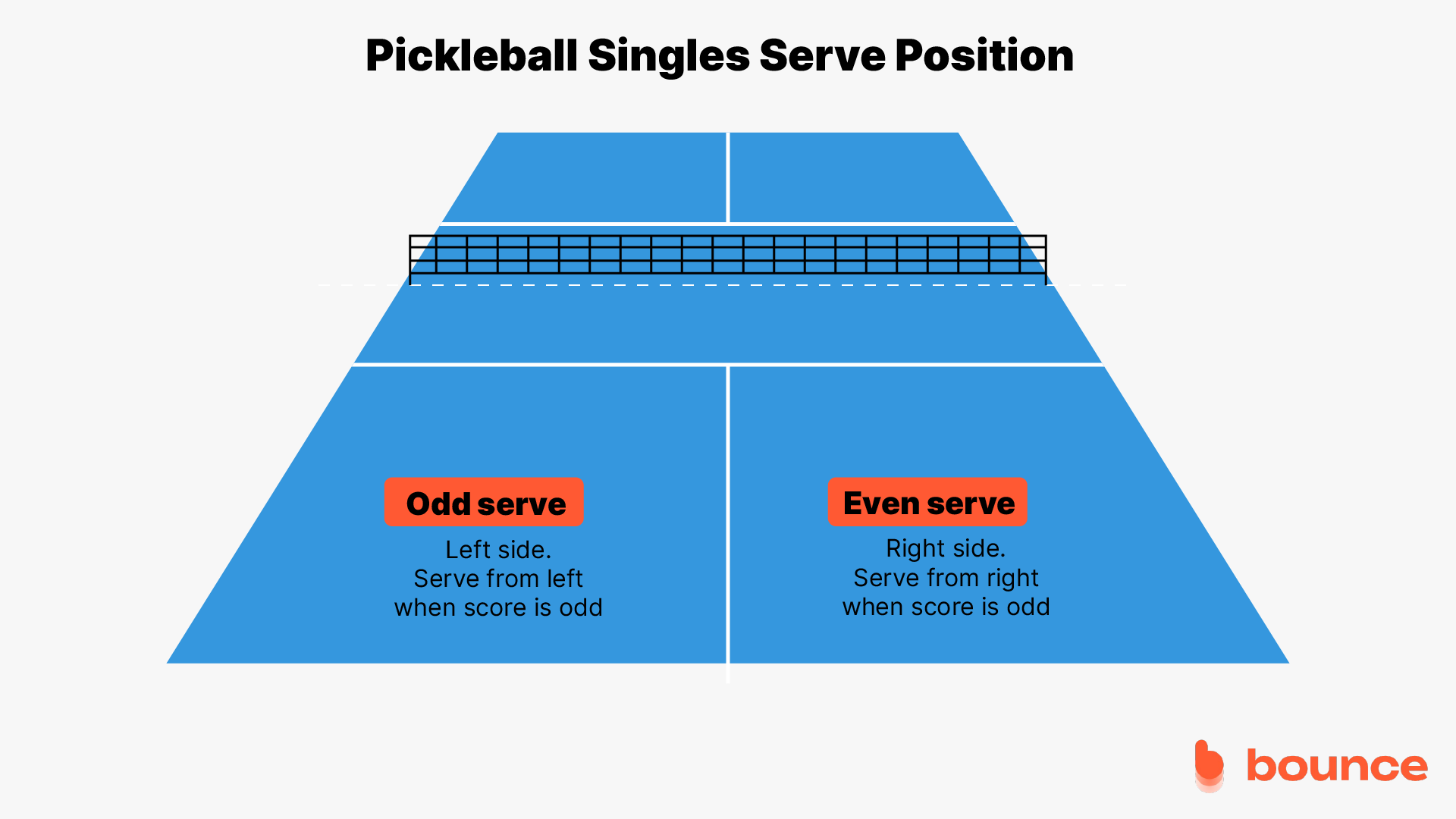
In singles, positioning is tied directly to score:
- When the server’s score is even, the serve is delivered from the right service court
- When the server’s score is odd, the serve is delivered from the left service court
The server switches sides after each point won on their serve. If the server loses the rally, service transfers to the opponent.
Unlike doubles, there is only one server. There is no second server and no partner rotation. This makes singles scoring simpler but requires players to track side changes carefully.
Common Serving Violations
Even experienced players commit serving errors. Common faults include:
- Serving from the wrong side based on score
- Contacting the ball above the waist
- Failing to clear the non-volley zone
- Stepping on the baseline during contact
- Serving before clearly calling the score
Disciplined mechanics prevent these mistakes. Repetition builds consistency, and structured instruction accelerates learning.
Pickleball Singles Scoring Explained Clearly
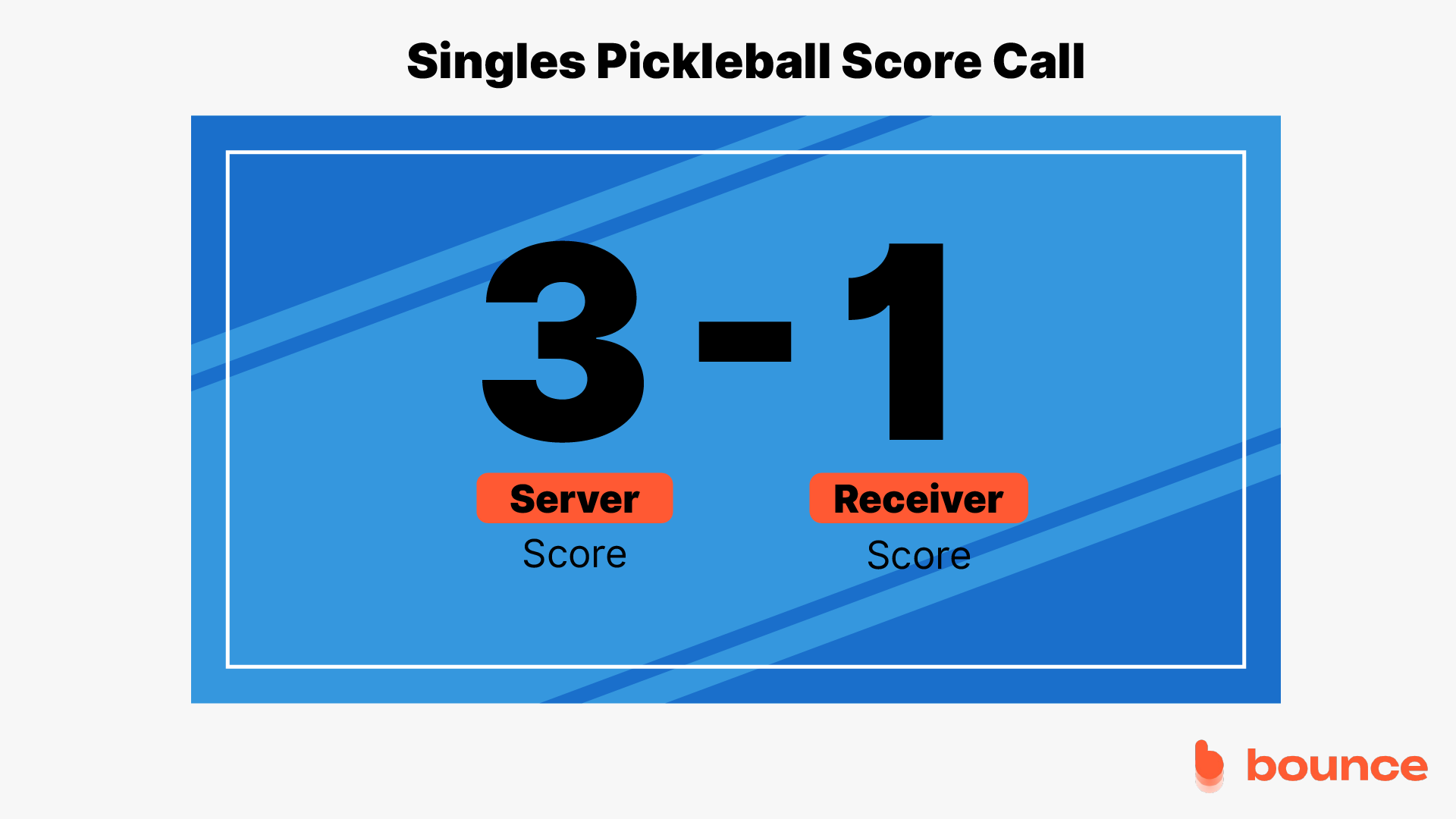
Scoring in singles is straightforward but must be called properly to avoid confusion.
Traditional Scoring System
Most recreational and tournament singles matches follow traditional scoring:
- Games are played to 11 points
- A player must win by 2 points
- Only the server can score points
If the server wins the rally, they earn a point and continue serving from the opposite service court. If the server loses the rally, service transfers to the opponent.
Matches in tournament settings may extend to 15 or 21 points, but the win-by-two requirement remains consistent.
Calling the Score Properly
In singles, the score consists of two numbers:
Server’s score – Receiver’s score
For example:
- 4–2
- 7–6
- 10–8
The server must call the score clearly before initiating the serve. Failure to call the score may result in confusion or disputes during competitive play.
Unlike doubles, there is no third number because there is no second server.
Rally Scoring Variations
Some leagues and events use rally scoring, where points are awarded on every rally regardless of server.
Professional tours such as the Professional Pickleball Association and APP Tour may implement alternative scoring formats depending on event structure.
However, beginners should master traditional scoring first. It remains the standard in most recreational environments and is the official baseline format.
Return of Serve Rules in Singles
The return of serve is governed by clear regulations and plays a crucial role in shaping the rally.
The receiver must allow the serve to bounce before striking the ball. Contacting the serve in the air is illegal. After returning the serve, the ball must land in bounds and clear the net.
The return must bounce before the server’s third shot. This completes the two-bounce sequence.
In singles, return positioning is flexible. The receiver may stand anywhere behind the baseline at the moment of the serve. However, stepping into the court before the serve is struck is not permitted.
A strong return typically aims deep into the server’s court, buying time to advance toward the non-volley zone. While strategy evolves over time, the rule structure remains constant.
Key return considerations include:
- Allow the serve to bounce fully
- Avoid stepping into the court prematurely
- Keep the return within boundaries
- Prepare to move forward after contact
Faults in Pickleball Singles
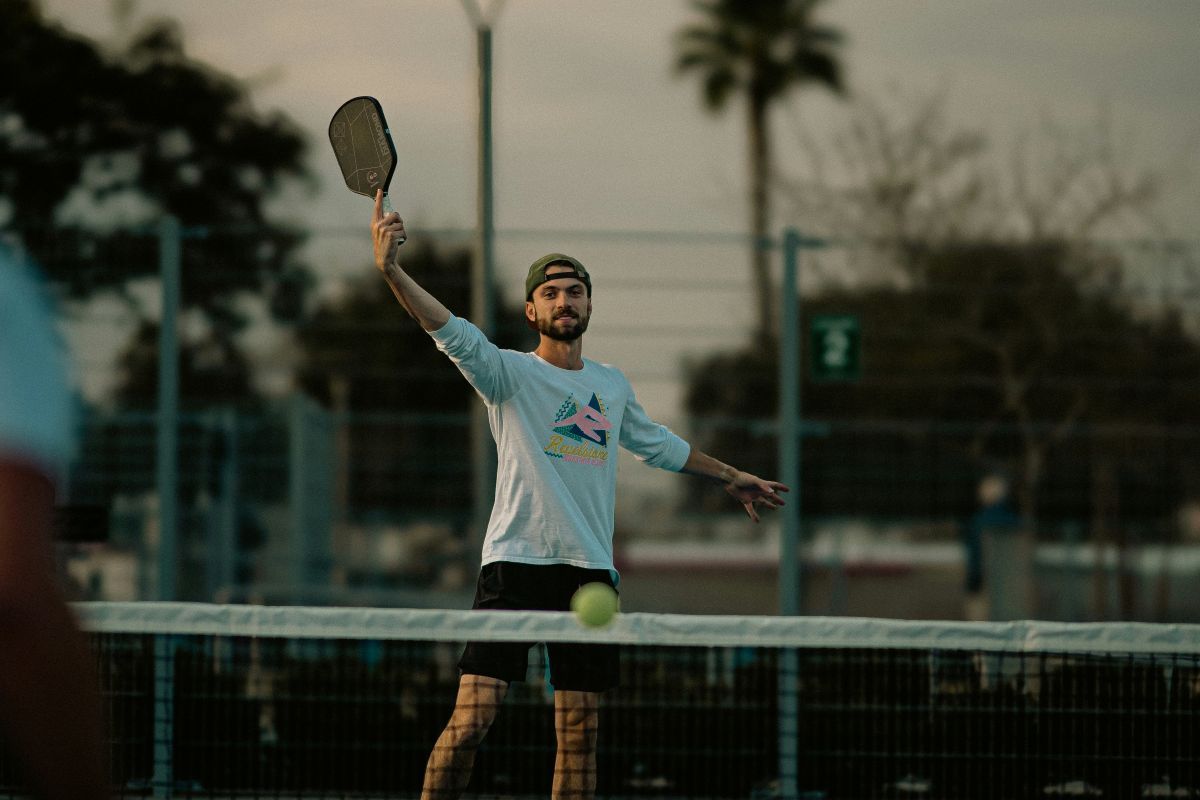
A fault ends the rally immediately. Understanding what constitutes a fault is essential for clean match play.
Standard Faults
Common singles faults include:
- Hitting the ball out of bounds
- Failing to clear the net
- Volleying before the two-bounce sequence is complete
- Double hitting the ball (if not continuous motion)
- Serving to the incorrect court
- Touching the net during play
- Carrying or catching the ball
Any violation results in either loss of serve or loss of rally, depending on who committed the fault.
Non-Volley Zone (Kitchen) Rules Explained
The non-volley zone, commonly called the kitchen, extends 7 feet from the net on both sides.
Key rules:
- Players may stand inside the kitchen
- Players may not volley while touching the kitchen or kitchen line
- If a player volleys and momentum carries them into the kitchen, it is a fault
- On the serve, the ball may not land in the non-volley zone
The kitchen line is considered part of the non-volley zone. Stepping on the line while volleying counts as a violation.
These rules prevent players from dominating the net with aggressive overheads and maintain balance between offense and defense.
Positioning & Movement Rules in Singles
In singles, players are responsible for covering the entire 20’ x 44’ court. There is no partner to share court space.
After serving, the player must recover quickly to prepare for the return. After returning, the receiver must decide when to approach the non-volley zone.
Movement must always respect boundary lines. A player cannot reach over the net plane unless the ball has already crossed to their side.
Key positioning requirements:
- Serve from correct side based on score
- Switch sides after each point won on serve
- Stay behind baseline during serve contact
- Avoid illegal volleys in the kitchen
- Respect net plane rules
Because singles demands more court coverage, conditioning and footwork are critical. However, rule compliance always comes first.
Structured practice environments help reinforce these habits. Bounce connects players with certified coaches and organized singles leagues that ensure rule clarity during match play. Playing in regulated settings accelerates improvement and eliminates confusion.
Let Serves & Line Calls
Modern pickleball rules eliminate the traditional “let” serve. If a serve clips the net but lands in the correct service court beyond the kitchen line, play continues.
All boundary lines - baseline, sideline, and centerline - are considered in. The only exception is the non-volley zone line during a serve, which results in a fault if contacted.
In recreational matches, players make their own line calls. Calls should be clear, immediate, and based on what the player sees on their side of the court.
In sanctioned events, referees may oversee line calls and scoring enforcement. Official tournament play follows standards established by USA Pickleball.
Where to Practice Pickleball Singles Rules Correctly
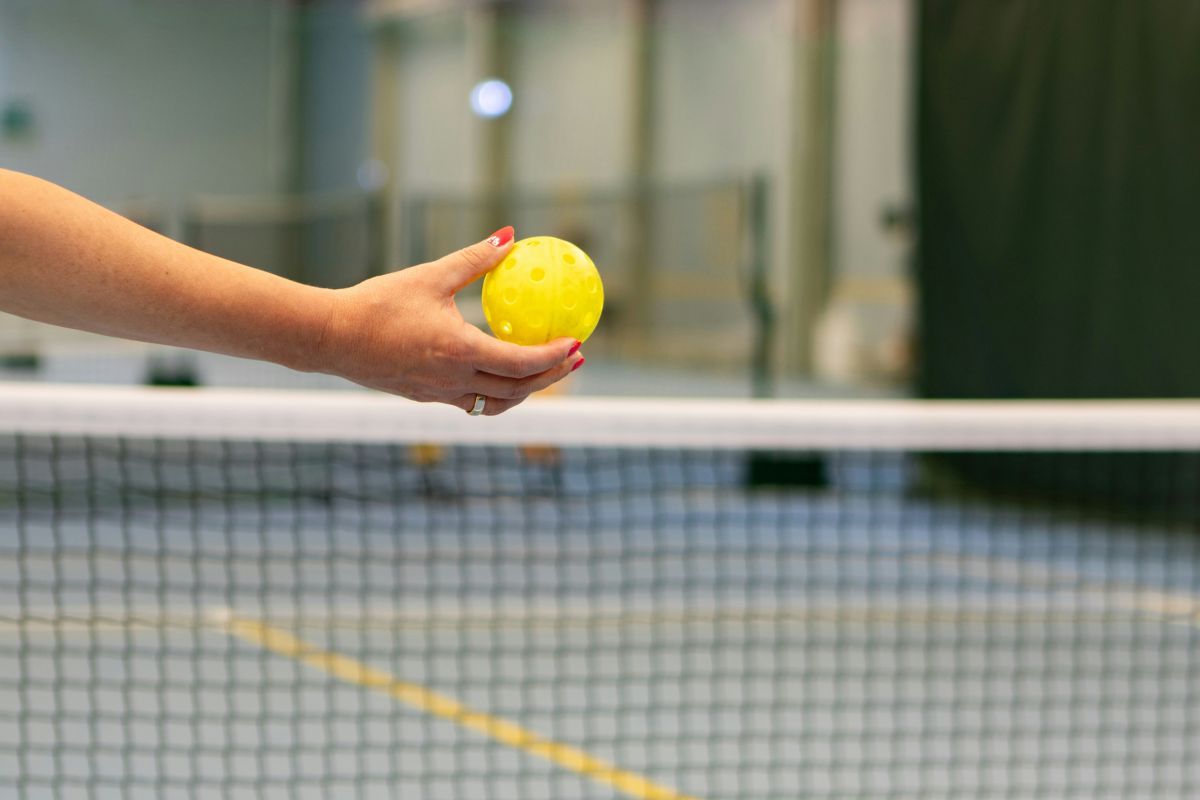
Understanding rules intellectually is only the first step. Applying them in live play builds confidence and consistency.
Practicing on regulation courts reinforces spatial awareness, playing in structured leagues reinforces correct scoring procedures, and receiving feedback from certified instructors accelerates mechanical correction.
Bounce brings these elements together in a city-based ecosystem. Players can:
- Find certified pickleball coaches affiliated with major organizations
- Book private singles lessons and group clinics
- Join leagues and competitive formats like River Leagues
- Discover clubs and organized programming in their city
As pickleball continues to grow across North America, having a centralized place to learn and compete helps players transition from casual play to organized competition without friction.