

Learning how to practice pickleball alone is one of the fastest ways to improve consistency, control, and confidence on the court. Independent training removes distractions, eliminates rushed decision-making, and allows you to focus on one variable at a time.
Players who commit to structured solo sessions often develop cleaner mechanics and stronger fundamentals than those who rely only on recreational games.
Solo practice is not about mindless repetition. It is about deliberate skill development, measurable progress, and disciplined execution. When structured correctly, practicing pickleball alone strengthens serve reliability, dink control, transition stability, and footwork efficiency.
These improvements directly transfer to competitive match play.
Can You Really Improve by Practicing Pickleball Alone?
Improvement in pickleball depends on repetition quality, not just match volume. Practicing alone gives players full control over tempo, focus, and skill emphasis.
Instead of reacting to unpredictable rallies, solo sessions allow players to isolate weaknesses and repeat correct movement patterns.
Certain skills improve especially quickly during solo training:
- Serve accuracy and placement
- Third-shot drop consistency
- Dink trajectory control
- Reset mechanics
- Footwork timing and balance
- Paddle angle discipline
When practicing with partners, errors are often masked by rally continuation. During solo training, mistakes are clear and measurable. This clarity accelerates correction.
The key distinction is between repetition and intentional repetition. Hitting 100 balls without focus reinforces bad habits. Hitting 100 balls with specific targets, measured outcomes, and consistent form builds lasting improvement. Players who treat solo practice as structured training consistently see stronger in-game performance.
Bounce supports this development by helping players later apply their refined skills in leagues, clinics, and private lessons. Independent practice builds the base; structured play tests it.
Essential Equipment for Solo Pickleball Practice
Practicing alone does not require a complex setup, but smart equipment choices improve efficiency.
Paddle Selection
Use a paddle that matches your competitive play setup:
- Appropriate grip size
- Comfortable weight (light for control, heavier for stability)
- Consistent surface texture for spin practice
Switching paddles frequently during solo sessions reduces feedback consistency.
Ball Type
- Outdoor balls for harder surfaces and wind conditions
- Indoor balls for gym practice and smoother surfaces
Training with the same ball type used in matches ensures realistic feedback.
Practice Tools
- Target cones or flat markers
- Chalk or tape to mark kitchen height on a wall
- Ball hopper for high-repetition serve sessions
- Tripod for recording technique
- Portable net for driveway or backyard training
A simple wall and a dozen balls are enough to begin. Advanced setups improve efficiency but are not mandatory.
Wall Drills: The Foundation of Solo Pickleball Practice
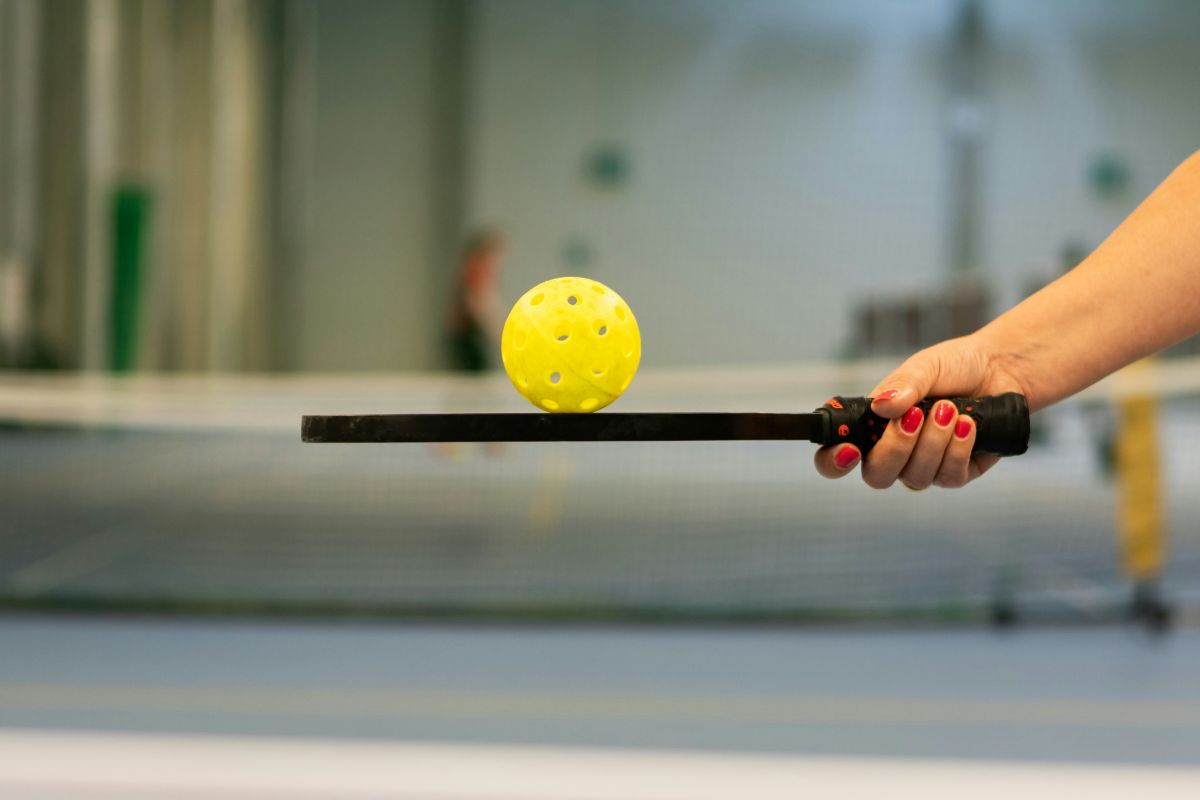
Wall training builds control, reaction speed, and consistency. The wall never misses and always returns the ball, making it one of the most efficient solo tools.
A. Dink Control Drill Against the Wall
Mark a line at kitchen height (34–36 inches). Stand 6–8 feet away and aim for a soft, controlled arc that clears the line and lands just below it.
Focus on:
- Soft grip pressure
- Compact swing
- Consistent contact point
- Maintaining a low athletic stance
Track consecutive successful touches. Start with a goal of 25 and gradually increase. This drill develops touch control, which determines kitchen dominance in competitive play.
B. Volley Reaction Drill
Stand closer to the wall and hit firm but controlled volleys. Keep your paddle in front of your body and minimize backswing.
Emphasize:
- Quick hands
- Stable wrist position
- Balanced stance
- Split-step timing before each contact
Increase speed gradually without sacrificing control. Reaction training improves defensive resilience during fast exchanges.
C. Third Shot Drop Simulation
Step back 12–15 feet. Feed the ball to yourself and practice a soft drop that clears the marked kitchen line.
Key mechanics:
- Slightly open paddle face
- Smooth upward lift
- Controlled follow-through
- Balanced forward momentum
Track your success rate out of 20 attempts. Aim for 70–80% consistency before increasing pace.
D. Drive Repetition Drill
From mid-distance, practice controlled drives with topspin.
Focus on:
- Low-to-high swing path
- Proper weight transfer
- Contact slightly in front of the body
- Controlled power, not maximum speed
Wall drives improve baseline confidence and prepare players for offensive opportunities.
How to Practice Pickleball Alone on a Court
If you have access to a full court, solo sessions can simulate real point construction.
A. Serve Repetition and Target Practice
Place cones deep in each service box corner. Hit 50 serves per side. Track:
- Total successful serves
- Depth accuracy
- Wide placement percentage
A strong serve sets the tone for every rally. Serve discipline alone can add multiple points per match.
B. Serve + Transition Drill
After serving, immediately move forward as if preparing for a third-shot drop. Practice:
- Split-step timing
- Controlled advancement
- Balanced stop at mid-court
- Simulated drop motion
Even without a return, this drill reinforces transition patterns.
C. Shadow Footwork Patterns
Footwork separates consistent players from erratic ones. Rehearse:
- Lateral shuffle from sideline to sideline
- Forward transition steps
- Drop-step recovery
- Kitchen-to-baseline retreat simulation
Shadow movement builds muscle memory without ball distraction.
D. Drop Feed Reset Drill
Self-feed from mid-court and execute soft resets into the kitchen. Concentrate on:
- Absorbing imaginary pace
- Short backswing
- Soft hands
- Balanced stance
Reset proficiency determines survival in transition battles.
Bounce helps players apply these solo skills by booking clinics and competitive leagues where real opponents test control under pressure.
Solo Pickleball Practice Plan: Beginner to Advanced Progression
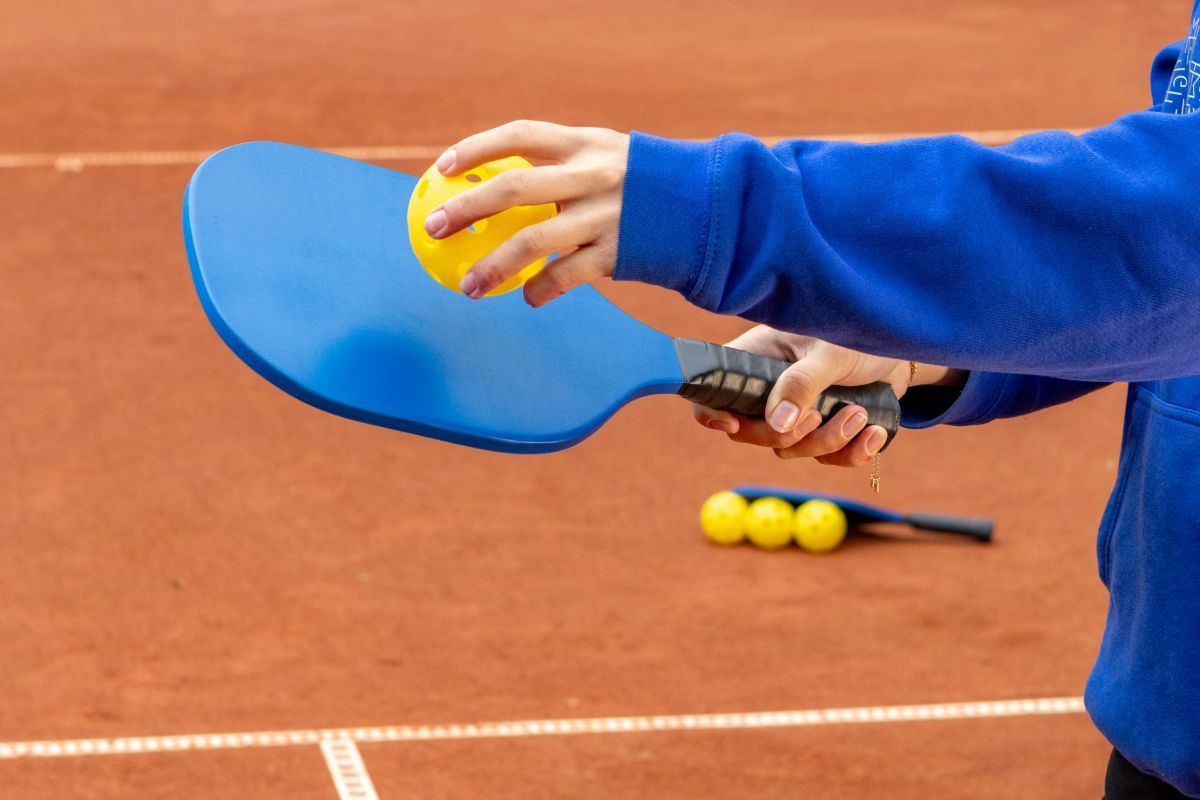
Improvement requires progression, not random drilling.
Beginner Focus
Beginners should prioritize:
- Serve consistency
- Basic wall dinks
- Controlled drives
- Fundamental footwork
Structure:
- 5 minutes warm-up movement
- 10 minutes wall dinks
- 10 minutes serve repetition
- 5 minutes footwork shadow
Total: 30 minutes
Consistency matters more than speed.
Intermediate Focus
Intermediate players refine control under pressure.
Priorities:
- Third-shot drops
- Transition resets
- Target-based serves
- Faster volley exchanges
Structure:
- 10 minutes wall control drills
- 15 minutes drop repetition
- 15 minutes serve + transition simulation
- 5 minutes footwork reinforcement
Total: 45 minutes
Track measurable success rates.
Advanced Focus
Advanced players sharpen precision and endurance.
Training emphasis:
- High-volume drop accuracy
- Drive placement
- Speed-up control
- Defensive reset reliability
Structure:
- 15 minutes high-speed wall volleys
- 20 minutes drop accuracy tracking
- 15 minutes serve targeting under fatigue
- 10 minutes advanced footwork patterns
Total: 60 minutes
Advanced improvement depends on strict discipline.
Weekly Solo Pickleball Training Schedule Example
Consistency across weeks builds compounding gains.
3-Day Model
- Day 1: Serve + drop focus
- Day 2: Wall control + volleys
- Day 3: Transition resets + footwork
5-Day Model
- Day 1: Serve depth
- Day 2: Dink consistency
- Day 3: Drop accuracy
- Day 4: Drive precision
- Day 5: Integrated full-session simulation
Track metrics weekly:
- Highest consecutive dink record
- Serve percentage out of 100
- Drop accuracy rate
- Reset success rate
Data removes guesswork. Numbers reveal progress clearly.
Turning Solo Practice Into Real-Game Improvement
Solo work only matters if it transfers to matches. Focus on applying measurable skills during competition.
Improvements should translate into:
- Higher first-serve percentage
- Fewer missed third-shot drops
- Cleaner transitions to the kitchen
- Stronger defensive resets
Use independent training to eliminate unforced errors first. Aggression comes later.
Conclusion
Understanding how to practice pickleball alone transforms improvement from casual repetition into structured development. Solo training strengthens mechanics, builds discipline, and increases measurable consistency.
The most successful players treat independent sessions as non-negotiable training time. They track progress, refine technique, and commit to steady volume.
Independent training builds the foundation. Structured play tests it. Bounce connects both sides of that equation by bringing together coaches, clubs, leagues, and city-level programming in one ecosystem.
Commit to structured solo practice, measure progress, and apply skills in competitive environments. Improvement becomes predictable when effort becomes intentional.


