The difference between indoor and outdoor pickleball comes down to three things: the ball you use, the surface you play on, and how those two factors shape the pace and feel of the game.
Indoor balls are softer with 26 larger holes, designed for controlled gym environments. Outdoor balls are harder with 40 smaller holes, built to handle wind and rough court surfaces.
The surface and ball together determine how the ball bounces, how you move, what shoes you wear, and what strategy works.
Most players discover these differences by accident: grabbing an outdoor ball for a gym session and finding it skips unpredictably off the wood floor, or bringing indoor balls outside and watching them drift sideways in a light breeze.
Understanding the differences before they become on-court frustrations makes both environments more enjoyable and helps you prepare the right gear, adjust your expectations, and build the right habits for wherever you play.
If you are new to the sport, knowing what changes between environments is one of the first things worth getting clear on.
Indoor vs Outdoor Pickleball Balls: The Core Difference
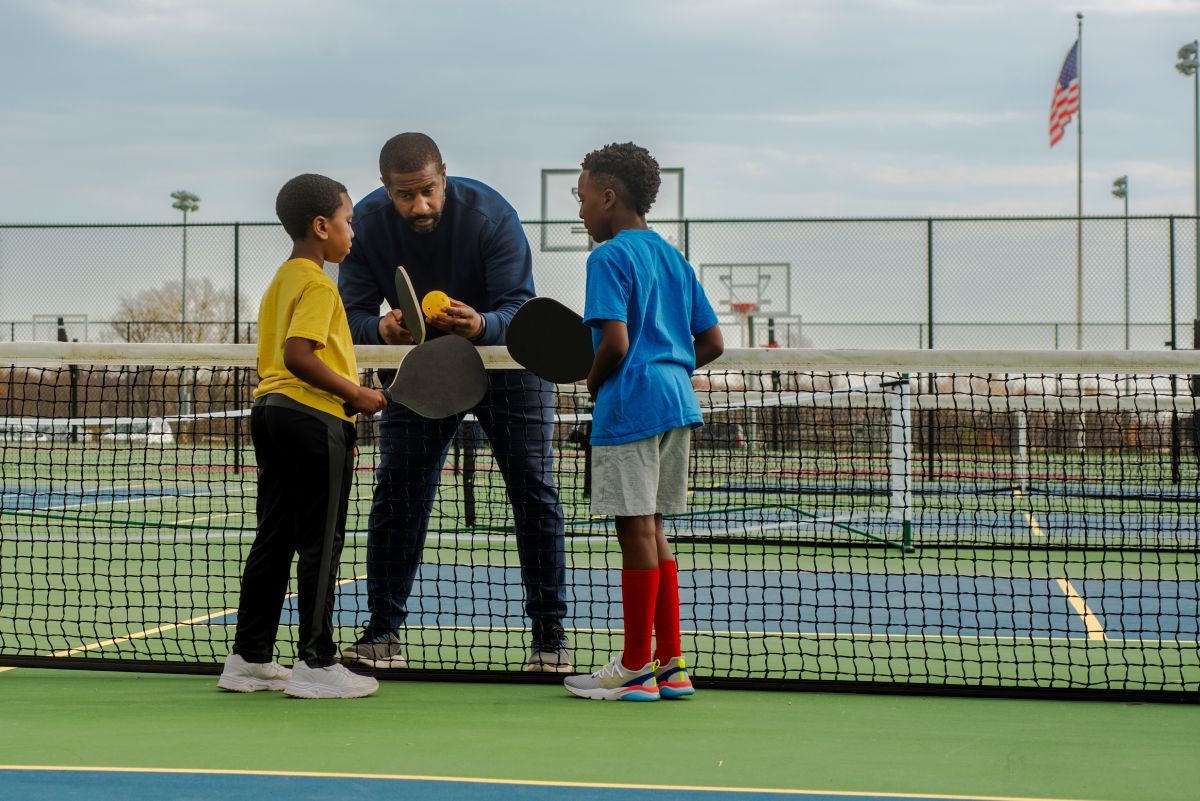
The most important equipment difference is the hole pattern. Indoor balls have 26 larger holes. Outdoor balls have 40 smaller holes. According to USA Pickleball's official rulebook, Rule 2.D.1 specifies that a ball must have a minimum of 26 to a maximum of 40 circular holes, with the design conforming to flight characteristics.
That single design decision drives most of the other differences in weight, hardness, bounce, durability, and how the ball behaves in the air and off the court.
Why hole count matters
Indoor environments are wind-free and climate controlled, so indoor balls do not need aerodynamic stability.
The 26 larger holes create more air drag, which slows the ball slightly and produces a softer, more predictable flight path that suits the precision-oriented style of indoor play.
Outdoor courts expose the ball to wind, gusts, and variable air currents. The 40 smaller holes on outdoor balls create less drag and more aerodynamic stability, helping the ball hold a straighter line even in breezy conditions.
Hardness and material
Indoor balls are made from a softer plastic compound that creates a more forgiving feel off the paddle and a quieter playing experience on gym floors. Outdoor balls use harder, more rigid plastic designed to withstand the abrasive surfaces of concrete and asphalt and resist wear from UV exposure and temperature fluctuation.
The hardness difference affects every shot. Softer indoor balls compress slightly more on paddle contact, creating better feel and spin potential. Harder outdoor balls rebound more quickly, generating a faster pace of play.
Weight and bounce
Both ball types fall within the official weight range of 0.78 to 0.935 ounces as specified in the USA Pickleball Equipment Standards Manual, but outdoor balls tend to sit toward the heavier end of that range to improve stability in wind.
Indoor balls produce a higher bounce on smooth gym floors due to their softer material. Outdoor balls produce a lower, firmer bounce on harder court surfaces.
Durability
Outdoor balls are more durable overall, but they fail differently than indoor balls. Outdoor balls crack or go out-of-round, especially in cold weather where the hard plastic becomes brittle and prone to splitting.
Indoor balls become soft and mushy over time rather than cracking, making drives increasingly difficult to execute as the ball loses its shape.
Both types need to be replaced regularly. Outdoor balls carry the specific risk of cracking mid-session in cold conditions, which makes carrying spares important for winter outdoor play.
Indoor vs outdoor pickleball balls
| Feature | Indoor Ball | Outdoor Ball |
| Number of holes | 26 (larger holes) | 40 (smaller holes) |
| Plastic hardness | Softer compound | Harder, more rigid |
| Weight tendency | Lighter end of range | Heavier end of range |
| Bounce | Higher on smooth surfaces | Lower, firmer on hard courts |
| Flight behavior | More air drag, slower | Wind-resistant, more stable |
| How it wears out | Softens and loses shape | Cracks, especially in cold |
| Durability | Less durable overall | More durable overall |
| Best use | Gym floors, sport courts | Concrete, asphalt courts |
Pickleball Court Surface: Indoor vs Outdoor
The surface difference is the reason the two ball types exist in the first place. Surface material determines how the ball bounces, how fast it moves, how much traction you can generate, and how much stress each session places on your joints and footwear.
Indoor court surfaces
Most indoor pickleball courts share space with basketball or volleyball facilities, making hardwood gym floors the most common indoor surface. Synthetic sport court tiles and rubberized flooring are also used in dedicated indoor facilities.
These surfaces are smooth, consistent, and predictable. The ball bounces cleanly and evenly, which makes shot placement more reliable and rally quality higher relative to the pace of play.
The smoothness that makes indoor surfaces predictable also makes them more demanding on footwear. Outdoor shoes with hard rubber soles can feel slick on polished wood and become a genuine slip hazard if there is any moisture or sweat on the floor.
Outdoor court surfaces
Outdoor pickleball courts are almost universally built on concrete or asphalt, usually finished with an acrylic color coating that provides texture and weather protection. These surfaces are harder, rougher, and more variable than gym floors.
Ball bounce on outdoor surfaces is lower and firmer because the rigid base material returns less energy to the ball than a sprung hardwood floor does.
The harder surface has a meaningful impact on joint stress. Research on pickleball injuries in the aging athlete confirms that concrete surfaces transmit more impact force to the ankles, knees, and hips than wood or synthetic sport court tiles.
This is why outdoor footwear with more cushioning and lateral support is genuinely important, not just a preference.
Surface and bounce: what actually changes
The combination of ball type and surface type creates a noticeably different bounce experience in each environment.
Indoors, the softer ball on a smooth floor produces a higher, slower bounce that sits up and gives you more time to set up shots. Outdoors, the harder ball on rough concrete produces a lower, quicker bounce that you need to reach faster.
Neither is better in absolute terms, but adjusting between the two takes conscious effort, especially if you primarily play in one environment and occasionally visit the other.
How Gameplay Differs: Indoor vs Outdoor Pickleball
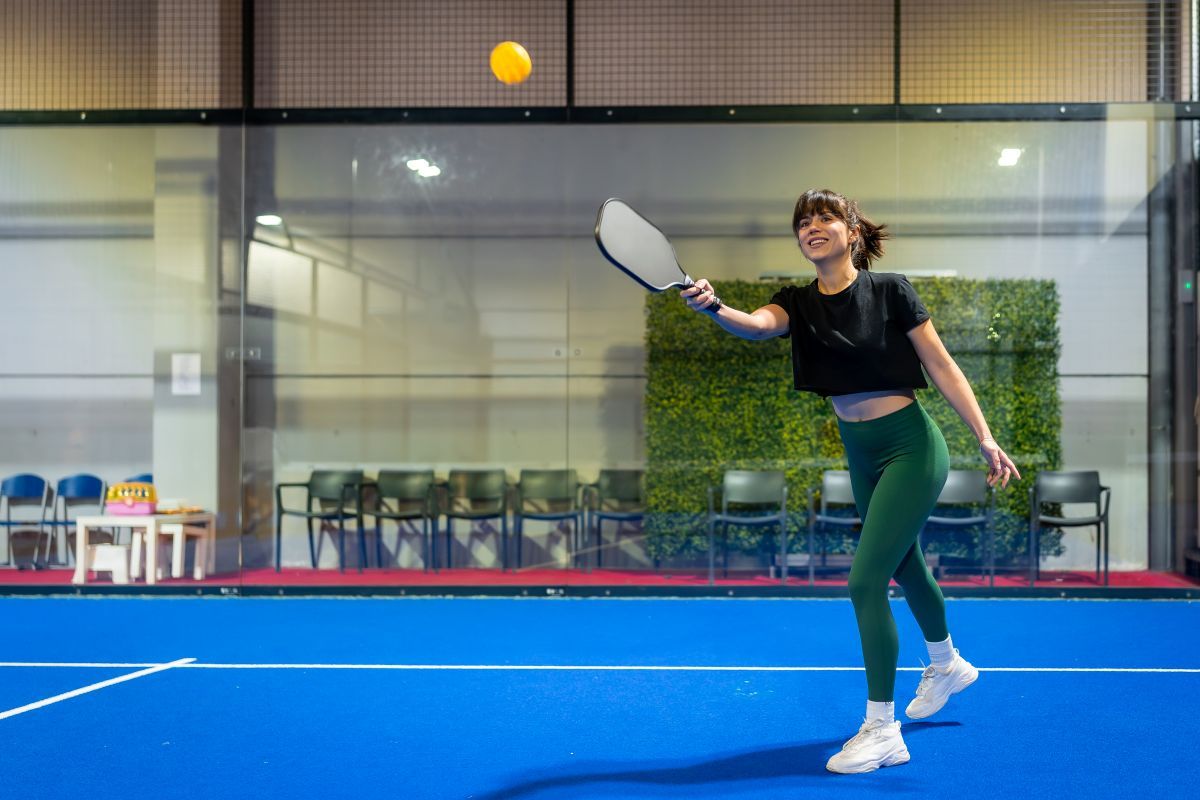
The environment shapes how fast points develop, what shot patterns are most effective, how you position yourself, and which skills matter most for competitive performance.
Pace of play
Indoor play is consistently slower than outdoor play. The softer ball, higher bounce, and smooth surface all reduce the speed of exchanges and give you more time between shots.
This creates a game that rewards precision, patience, and soft-game control more than raw power.
Outdoor play is faster because the harder ball travels more quickly, the lower bounce reduces reaction time on groundstrokes, and wind adds an unpredictability that pushes players toward more decisive shot selection rather than extended soft exchanges.
Wind and environmental factors
Wind is the defining variable that separates outdoor pickleball from indoor play entirely. A crosswind affects lob placement, dink trajectories, and serve direction in ways that require constant in-game adjustment.
Players who primarily play indoors often find their first outdoor sessions frustrating not because of the court or the ball, but because shots they can place reliably in a still environment behave differently in even a moderate breeze.
Sunlight, shadows, and glare also affect outdoor play in ways that have no indoor equivalent, particularly on courts not oriented optimally relative to the sun.
Strategy and shot selection
Outdoor play rewards power and aggressive shot-making more than indoor play does. The lower bounce means drives and groundstrokes stay lower after landing, making them harder to handle, and the faster pace creates less time for the measured dink exchanges that define indoor strategy.
Indoors, the kitchen game is even more central to success. The slower ball and higher bounce mean that drives are easier to track and return, which shifts advantage toward players who can work the soft game patiently.
Lobs are also less effective indoors because the controlled environment makes them easier to track and overhead.
Which environment suits which player
Indoor pickleball is generally more accessible for newer players. The slower pace, more predictable bounce, and absence of environmental variables create a setting where technique and decision-making are easier to develop.
The controlled environment also makes coaching and clinic formats more effective.
Outdoor play suits players who have developed a solid technical base and want to add the dimensions of power, adaptability, and environmental awareness that make the game more demanding.
Whether you play indoors, outdoors, or both, finding the right session format and skill-matched opponents accelerates development faster than playing in the wrong environment for your current level.
Bounce connects players with indoor and outdoor courts, open play sessions, and certified coaches in their city, making it easier to find the right environment for where you are in your game.
Indoor vs Outdoor Pickleball Shoes: What Changes and Why
Indoor and outdoor pickleball shoes differ primarily in the rubber compound used for the outsole. That single material difference creates different grip levels, different durability timelines, and different safety profiles depending on the surface.
Wearing the wrong shoe for the surface is one of the most common and most preventable sources of on-court injury in pickleball.
Indoor pickleball shoes
Indoor shoes are built with a softer gum rubber outsole that grips smooth gym floors and synthetic sport court surfaces effectively. The gum rubber compound creates a contact that holds during lateral cuts and pivots without leaving scuff marks on the floor, which is a requirement at most indoor facilities.
These shoes are typically lighter than outdoor models because the smooth surface requires less outsole durability.
Using indoor shoes on outdoor courts is not recommended. The soft rubber wears down rapidly on abrasive surfaces and the shallow tread pattern provides less grip on textured concrete.
Outdoor pickleball shoes
Outdoor shoes use a harder, more durable rubber compound that resists wear on concrete and asphalt. The tread pattern typically features deeper grooves and a more aggressive design that sheds dust, grit, and small debris from the court surface during lateral movement.
The harder compound provides reliable traction on textured surfaces but delivers less grip on smooth gym floors, making outdoor shoes on hardwood a safety concern.
Outdoor courts also demand more cushioning in the midsole because the harder surface transmits more impact force to your joints on each step. This is a meaningful protection consideration for players in high-volume outdoor play schedules, not just a comfort feature.
What if you play both?
Players who split time between indoor and outdoor courts face a genuine tradeoff. Using a single shoe for both surfaces means accepting compromised performance and faster wear in at least one environment.
The practical options are rotating between a dedicated indoor pair and a dedicated outdoor pair, or choosing a court-specific shoe designed with a compound that balances grip on smooth surfaces and durability on rough ones.
The balance model will not perfectly match a dedicated shoe in either environment, but it handles both adequately for players who do not want to manage two pairs.
The full range of pickleball equipment decisions , from ball choice to paddle selection and footwear, is worth understanding in the context of how you actually play.
Can You Use Outdoor Pickleball Balls Indoors?
Technically yes, but it is not recommended and will produce a noticeably worse experience in most situations. Outdoor balls on smooth gym floors behave erratically.
The harder plastic interacts differently with polished wood than with textured concrete, producing a bounce that feels bouncier, livelier, and harder to control than the surface is designed to support.
Going the other direction is worse. Indoor balls on outdoor courts wear out rapidly on the abrasive surface. The softer plastic degrades quickly under the friction of concrete or asphalt, and the 26 larger holes make the ball highly susceptible to wind drift in even mild outdoor conditions, making consistent shot placement genuinely difficult.
Using each ball type in its intended environment is not just a performance recommendation. It also extends equipment lifespan and reduces the cost of replacing balls that wear out prematurely.
Indoor vs Outdoor Pickleball: Full Comparison
The table below consolidates the key differences across all dimensions for easy reference.
| Category | Indoor Pickleball | Outdoor Pickleball |
| Ball holes | 26 larger holes | 40 smaller holes |
| Ball hardness | Softer plastic | Harder plastic |
| Ball bounce | Higher, slower | Lower, firmer, faster |
| Court surface | Hardwood or synthetic sport tiles | Concrete or asphalt with acrylic coat |
| Pace of play | Slower, more deliberate | Faster, more aggressive |
| Environmental factors | None, controlled lighting and temperature | Wind, sun, glare, temperature |
| Dominant strategy | Kitchen game, soft shots, placement | Power, driving, wind adjustment |
| Shoe outsole | Soft gum rubber, non-marking | Harder rubber, deeper tread |
| Joint impact | Lower (forgiving surface) | Higher (hard surface) |
| Better for beginners | Yes, more controlled environment | Better once fundamentals are solid |
| Ball durability issue | Softens and loses pop over time | Cracks, especially in cold weather |
Which Should You Play: Indoor or Outdoor Pickleball?
Both formats offer a complete pickleball experience, and most committed players eventually play both. The question of which to prioritize depends on your current level, your goals, and the practical realities of what courts are available to you.
Choose indoor pickleball if
- You are newer to the sport and want a more forgiving environment to build technique without wind, sun, and surface variability adding complexity.
- You want to focus on developing your soft game, kitchen control, and placement-based strategy without the pace pressure that outdoor balls and surfaces create.
- You live in a climate where outdoor play is seasonal and want consistent access to the sport year-round.
- You play in a group or clinic setting where the controlled environment makes coaching and structured skill development more effective.
Choose outdoor pickleball if
- You have a solid technical foundation and want to add power, environmental adaptability, and faster court speed to your game.
- You prefer the open-air social environment of park and community courts over gymnasium settings.
- You are training for competitive play, where outdoor formats and outdoor balls are standard in most sanctioned events.
- You want access to more court options, since outdoor courts are more widely available in most communities than dedicated indoor facilities.
Conclusion
The differences between indoor and outdoor pickleball are real, practical, and worth understanding before you show up to a session with the wrong ball or the wrong shoes.
Ball design drives almost everything: the softer 26-hole indoor ball produces a slower, higher-bouncing game suited to precision and patience, while the harder 40-hole outdoor ball creates a faster, lower-bouncing game that demands more power and adaptability.
The surface reinforces those differences, the shoes follow from the surface, and the strategy follows from all of it. Knowing what changes between environments makes you a more adaptable player and ensures that neither an unexpected format nor a missing piece of gear catches you off guard.
Whether you are looking for indoor courts, outdoor sessions, or a coach who can help you develop across both environments, Bounce connects players with courts, open play, and certified coaches in their city. Find your next game and play it with the right gear.
FAQs
What is the main difference between indoor and outdoor pickleball?
The main differences are the ball design, the court surface, and the pace of play. Indoor balls have 26 larger holes and softer plastic for gym floors. Outdoor balls have 40 smaller holes and harder plastic for concrete and asphalt.
These differences produce different bounce behavior, game speed, and strategy requirements in each environment.
Can you use outdoor pickleball balls indoors?
Technically yes, but it is not recommended. Outdoor balls on smooth gym floors bounce erratically and play faster than the indoor environment is designed for. The harder plastic makes the game feel more rushed and less controlled than it should on a gym surface.
Can you use indoor pickleball balls outdoors?
It is not recommended. Indoor balls wear out rapidly on abrasive outdoor surfaces, and the 26 larger holes make them highly susceptible to wind drift, making consistent shot placement very difficult in any outdoor conditions.
What shoes should I wear for indoor pickleball?
Shoes with a soft gum rubber outsole that is non-marking on gym floors. These provide the grip needed for lateral movement on smooth surfaces without leaving scuff marks. Outdoor shoes with hard rubber soles are a safety risk on polished gym floors, especially if there is any moisture present.
What shoes should I wear for outdoor pickleball?
Shoes with a harder, more durable rubber outsole and a deeper tread pattern that handles dust, grit, and the abrasive texture of concrete and asphalt. More midsole cushioning than indoor shoes is also beneficial due to the higher joint impact of harder outdoor surfaces.
Is indoor or outdoor pickleball better for beginners?
Indoor pickleball is generally more accessible for beginners. The slower pace, more predictable bounce, and absence of wind and sun create a controlled environment where technique and game sense are easier to develop.
Most coaches recommend starting indoors and transitioning to outdoor play once the foundational skills are established.
Why do indoor and outdoor pickleball balls have different hole counts?
Hole count affects aerodynamic behavior. Outdoor balls have 40 smaller holes to resist wind interference and maintain a stable flight path in variable outdoor conditions.
Indoor balls have 26 larger holes because wind is not a factor indoors, and the larger holes create more air drag that slows the ball and produces the softer, more controlled flight suited to indoor play.
Does pickleball strategy change between indoor and outdoor play?
Yes, significantly. Indoor play rewards patience, soft-game control, and kitchen-line exchanges because the slower ball makes drives easier to handle and the kitchen game more decisive.
Outdoor play rewards more aggressive shot-making, power groundstrokes, and wind-adjusted lobs because the faster ball and lower bounce create less time for measured exchanges.