Most pickleball injuries are preventable. The right pickleball stretches before and after play prepare your muscles for the demands of the game and help your body recover once you are done.
Skip that routine and you are carrying tight muscles and cold joints onto a court that punishes both.
Pickleball involves quick lateral cuts, explosive pushes off the kitchen line, repeated overhead swings, and sudden stops. None of those movements are kind to muscles that have not been warmed up.
Rushing into play without a proper warm-up is the most common cause of pickleball injuries, especially among players who compete intensely but play infrequently.
Board-certified orthopedic surgeons at Lee Health consistently see this pattern in their clinics, where the weekend warrior profile accounts for a disproportionate share of preventable injuries.
This guide covers the full picture: what to do before you play, how to address the most common injury sites, and what your body needs after the last point is finished.
Static vs Dynamic Stretching in Pickleball
Before getting into specific movements, it is worth being clear on this distinction. Doing the wrong type of stretching at the wrong time is one of the most common mistakes players make.
Dynamic Stretching: Before You Play
Dynamic stretching means moving through a range of motion repeatedly. Leg swings, arm circles, hip rotations, and walking lunges all fall into this category. The movement warms the tissue, increases blood flow, and prepares your joints for the directions they will move during play.
Dynamic stretching before a match improves performance and reduces injury risk. It activates the muscles you are about to use rather than lengthening cold tissue, which is what static stretching does.
Static Stretching: After You Play
Static stretching means holding a position for 20 to 45 seconds. A standing quad stretch, a seated hamstring stretch, or a cross-body shoulder hold all count. These lengthen muscle tissue that has been shortened and tightened during play.
Doing static stretches before your warm-up on cold muscles can actually reduce power output and increase injury risk. Save them for your cool-down when muscles are already warm and pliable.
Static vs Dynamic Stretching at a Glance
| Factor | Dynamic Stretching | Static Stretching |
| When to use | Before play | After play |
| What it does | Warms tissue, activates muscles | Lengthens and relaxes muscles |
| Movement type | Controlled, repeated motion | Held position, 20-45 seconds |
| Examples | Leg swings, arm circles, hip rotations | Hamstring hold, quad stretch, shoulder cross |
| Injury risk if timed wrong | Low | High if used on cold muscles before play |
Dynamic Warm-Up for Pickleball
A solid dynamic warm-up takes 8 to 12 minutes. Do not rush it. These movements are not optional extras; they are the foundation that protects you through every point you play.
Leg Swings
Stand next to a fence or wall for balance. Swing one leg forward and back in a controlled arc, gradually increasing the range of motion over 10 to 15 repetitions. Then swing the same leg side to side across your body. Switch legs and repeat.
This opens the hip flexors and activates the glutes and hip stabilizers, which do a significant amount of work during lateral movement at the kitchen line. Tight hips are a primary contributor to knee and lower back strain in pickleball.
Arm Circles and Cross-Body Swings
Start with small forward and backward arm circles, gradually increasing the diameter over 10 rotations in each direction. Follow with cross-body arm swings, sweeping both arms across your chest and out to the sides in a rhythmic pattern for 15 to 20 repetitions.
These movements warm the shoulder joint and rotator cuff, which absorb significant stress during overhead swings and backhand drives. Cold shoulder muscles are one of the leading contributors to rotator cuff injuries in racket sports.
Hip Circles and Torso Rotations
Stand with your feet shoulder-width apart and rotate your hips in full circles, 10 in each direction. Then place your hands on your hips and rotate your torso left and right through a full range of motion for 15 repetitions each way.
Pickleball requires constant trunk rotation, especially on groundstrokes and serves. Warming the lumbar spine and hip complex before play significantly reduces the risk of lower back strain during longer sessions.
Walking Lunges
Take 10 to 12 walking lunges across the court or along the baseline. Keep your front knee over your ankle, drive your back knee toward the ground, and alternate legs with each step. Add a torso rotation toward your front knee to engage the core simultaneously.
Lunges prepare the quadriceps, hamstrings, glutes, and calves for the explosive lateral and forward pushes that define pickleball movement. They also activate the stabilizing muscles around the ankle and knee that protect those joints during sudden direction changes.
Lateral Shuffles
Shuffle side to side along the kitchen line or baseline for 30 seconds at moderate intensity. Keep your knees bent, stay low, and push off the outside foot on each direction change. This replicates the exact movement pattern you will use in actual play.
Lateral shuffles are particularly valuable because they warm the muscles and connective tissue in the direction of motion pickleball actually demands. Most people warm up in straight lines. Pickleball primarily moves you sideways.
Light Paddle Work
Spend the final two to three minutes of your warm-up hitting soft dinks, gentle volleys, and short controlled groundstrokes with a partner. Start at half pace and gradually build intensity. This bridges the gap between physical warm-up and match-ready readiness.
Light paddle work activates your hand-eye coordination and gets your reaction timing calibrated before the first competitive point. It is also the most sport-specific warm-up you can do.
If you are newer to pickleball and want structured guidance on building your pre-match preparation, the complete guide to getting started in pickleball covers the physical fundamentals alongside the rules and court etiquette you need from day one.
If you want structured court time that builds these habits from the start, Bounce connects you to local coaches and clinics by city so you can develop a proper pre-match routine with guidance rather than guesswork.
Pickleball Injury Prevention Exercises
Beyond the warm-up, certain exercises performed regularly off the court reduce the likelihood of the injuries that end pickleball seasons prematurely. The most common are elbow tendinopathy, knee strain, ankle sprains, and shoulder impingement.
Targeted work on each area addresses the root cause before symptoms appear.
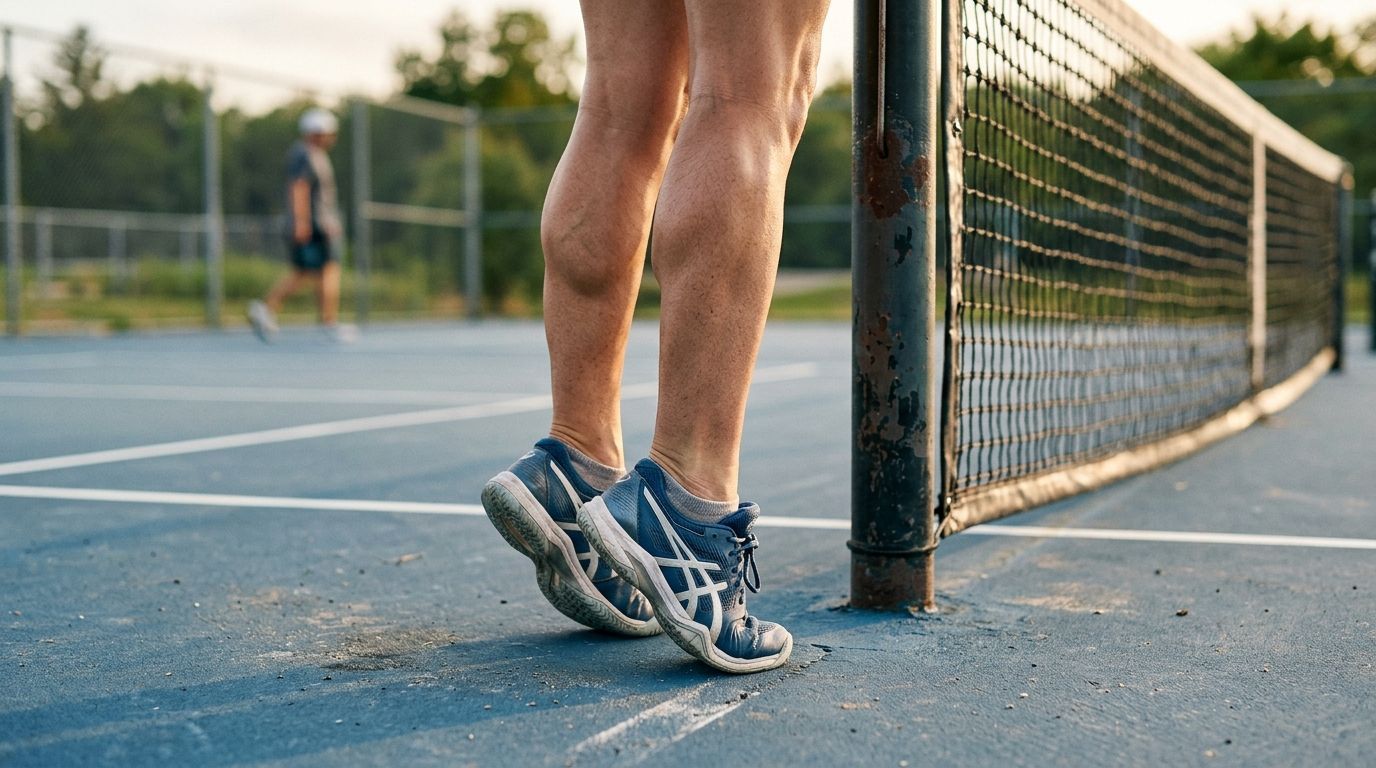
Calf Raises for Ankle Stability
Stand on both feet and slowly rise onto your toes, hold for two seconds, then lower back down. Complete three sets of 15 repetitions. Progress to single-leg calf raises as strength builds.
Ankle sprains are one of the most frequent acute injuries in pickleball, typically occurring during lateral direction changes. Strengthening the calf complex and improving ankle stability through regular calf raises builds the structural support that protects that joint during play.
Glute Bridges for Knee Protection
Lie on your back with knees bent and feet flat on the floor. Drive your hips toward the ceiling, squeezing your glutes at the top, and hold for two seconds before lowering. Three sets of 15 repetitions. Add a resistance band around the knees for greater activation.
Weak glutes force the knees to absorb more load during lateral movement and lunging. Strengthening the glute complex offloads the knee and reduces the risk of patellar tendinopathy, one of the most common overuse injuries in regular pickleball players.
Shoulder External Rotation with Band
Attach a resistance band to a fixed point at elbow height. Stand sideways, hold the band with your far hand, and keep your elbow bent at 90 degrees against your body. Rotate your forearm outward slowly, hold briefly, and return. Three sets of 12 to 15 repetitions each side.
The rotator cuff is under repeated stress during overhead shots, backhand drives, and volleys. Strengthening the external rotators specifically reduces impingement risk and supports shoulder longevity across thousands of swings per season.
Pickleball Elbow Stretches
Pickleball elbow is a term used for lateral epicondylitis, the same overuse condition commonly called tennis elbow. It develops from repetitive gripping and wrist extension during drives and volleys.
The forearm extensor muscles become inflamed at their attachment point on the outside of the elbow.
The National Council on Aging's pickleball injury guidance highlights that proper warm-up and targeted stretching are the most effective tools for managing and preventing overuse conditions like pickleball elbow before they become chronic.
Wrist Flexor Stretch
Extend one arm in front of you with your palm facing up. Use your other hand to gently bend your fingers and wrist downward toward the floor. Hold for 30 seconds and repeat three times on each side.
This stretches the wrist flexor group on the underside of the forearm. Tight wrist flexors contribute to the muscle imbalance that accelerates elbow tendinopathy. Perform this stretch both before and after play.
Wrist Extensor Stretch
Extend one arm in front of you with your palm facing down. Use your other hand to gently bend your wrist and fingers downward toward the floor. Hold for 30 seconds and repeat three times on each side.
This targets the extensor muscles on the top of the forearm, the primary site of lateral epicondylitis. Keeping these muscles supple reduces the cumulative stress at the elbow attachment point and allows faster recovery between sessions.
Forearm Self-Massage
Use your thumb to apply firm pressure along the length of the forearm extensor muscles, working from the elbow toward the wrist. Spend 60 to 90 seconds on each arm. Focus on tender spots and apply sustained pressure rather than quick strokes.
Self-massage of the forearm extensors breaks up adhesions in the muscle tissue that develop from repetitive gripping. Doing this after play and on rest days maintains tissue quality and reduces the likelihood of progressing from mild soreness to a full inflammatory flare.
Eccentric Wrist Extension
Hold a light dumbbell or water bottle with your palm facing down. Slowly lower your wrist toward the floor over three seconds, then use your other hand to assist the return. Three sets of 15 repetitions. This is a rehabilitation and prevention exercise, not just a stretch.
Eccentric loading of the wrist extensors is clinically supported for managing and preventing lateral epicondylitis. It rebuilds tendon resilience progressively and is one of the most effective off-court interventions for players dealing with persistent elbow discomfort.
Pickleball is one of the most physically sustainable court sports available, but that requires managing your body intelligently.
The breakdown of what pickleball does for your health covers how the sport affects your cardiovascular system, joints, and overall fitness, helping you make smarter decisions about how often and how intensely to play.
If elbow discomfort is already affecting your game, working with a certified coach on grip pressure and swing mechanics can address the root cause faster than stretching alone. Bounce lists certified pickleball coaches by city so you can book a session focused on technique corrections that reduce forearm strain directly.
Full Pre-Match Stretch Sequence
Here is the complete sequence in order. Run through this before every session, not just when you feel tight.
- Leg swings: Forward and back, then lateral. 12 reps each direction, each leg.
- Arm circles: Small to large. 10 forward, 10 backward, each arm.
- Cross-body arm swings: 15 to 20 repetitions.
- Hip circles: 10 in each direction.
- Torso rotations: 15 each side.
- Walking lunges with rotation: 10 to 12 total steps.
- Lateral shuffles: 30 seconds at moderate intensity.
- Wrist flexor and extensor stretches: 30 seconds each side, each direction.
- Light paddle work: 2 to 3 minutes of soft dinks and controlled groundstrokes.
Total time: 10 to 12 minutes. That is the investment that keeps you on the court instead of sitting out with a preventable injury.
Cool Down Stretches After Pickleball
The cool-down is where most players cut corners. You finish your last game, pack your bag, and leave. That habit accumulates into chronic tightness over months and years.
A proper post-game cool-down takes 8 to 10 minutes. Muscles are fully warm after play, which means they respond better to static stretching now than at any other point in your day.
This is when holding a stretch actually changes tissue length rather than just creating temporary sensation.
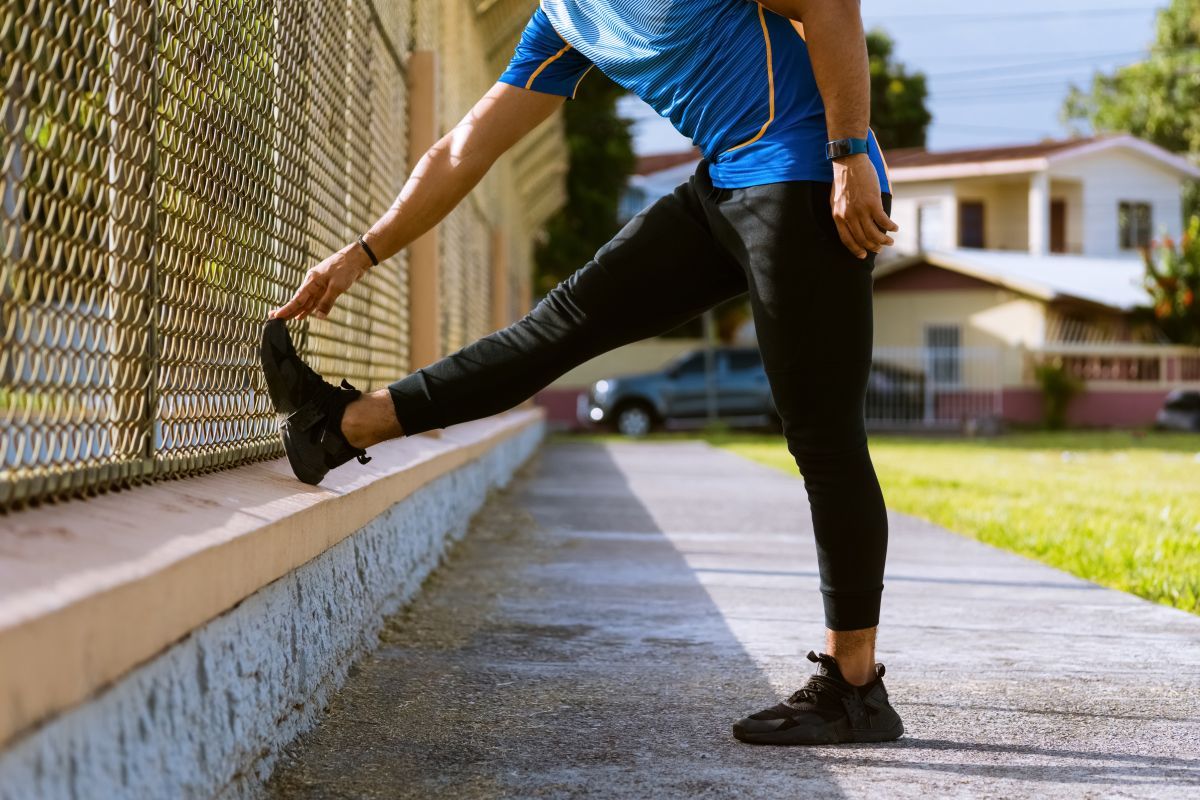
Standing Quad Stretch
Stand on one foot and pull the opposite heel toward your glute, keeping your knees together and standing tall. Hold for 30 to 45 seconds and switch sides. Use a fence or wall for balance if needed.
The quadriceps absorb repeated loading during court movement, especially during the explosive push-off patterns at the kitchen line. Stretching them after play maintains length in the muscle and reduces post-session soreness.
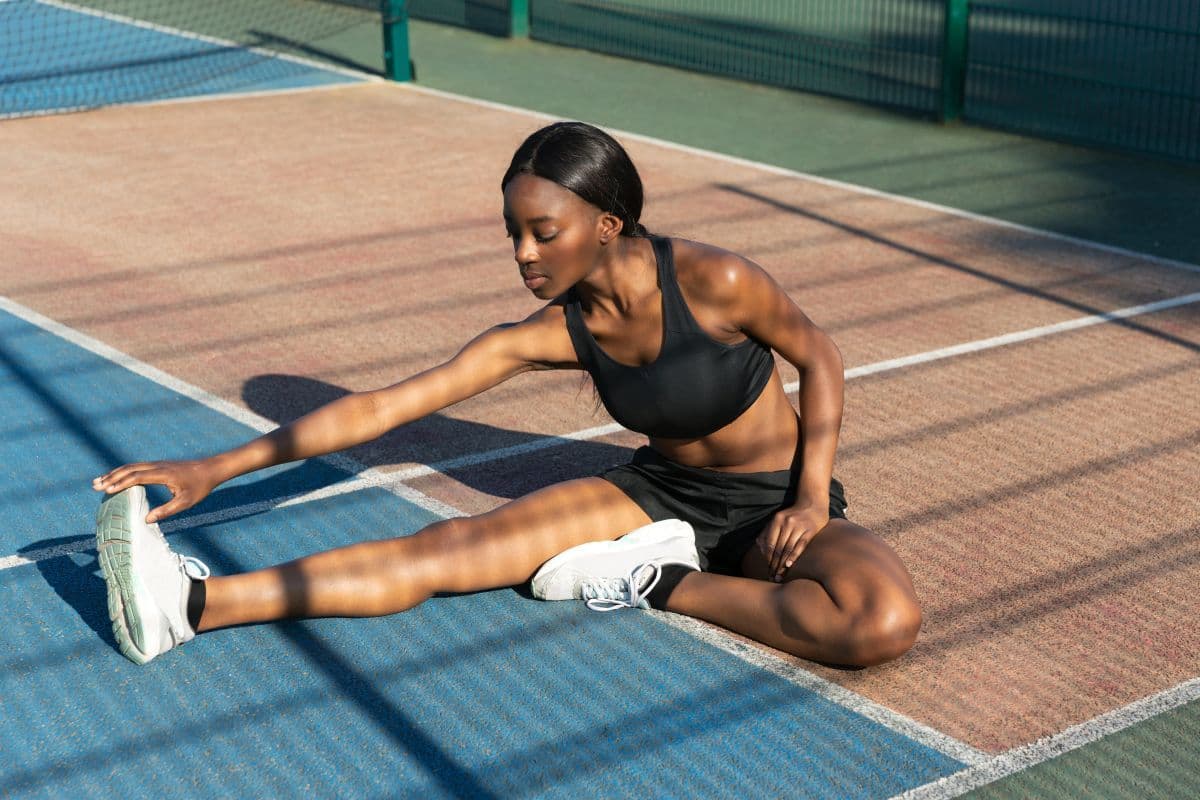
Seated Hamstring Stretch
Sit on the ground with both legs extended. Reach forward toward your feet, keeping your back flat rather than rounded. Hold for 30 to 45 seconds. Flex one foot at a time to vary the stretch through the calf as well.
Tight hamstrings contribute to lower back tension and limit the full range of motion in hip hinge movements. This stretch is particularly important after long sessions involving repeated baseline-to-kitchen transitions.
Hip Flexor Stretch
Step into a lunge position with one knee on the ground. Tuck your pelvis slightly and drive your hips forward until you feel a stretch in the front of the back leg's hip. Hold for 30 to 45 seconds each side.
The hip flexors shorten significantly during extended periods of court movement and are chronically tight in most adults who sit during the day. Releasing them after play reduces anterior pelvic tilt and the lower back discomfort that often follows long sessions.
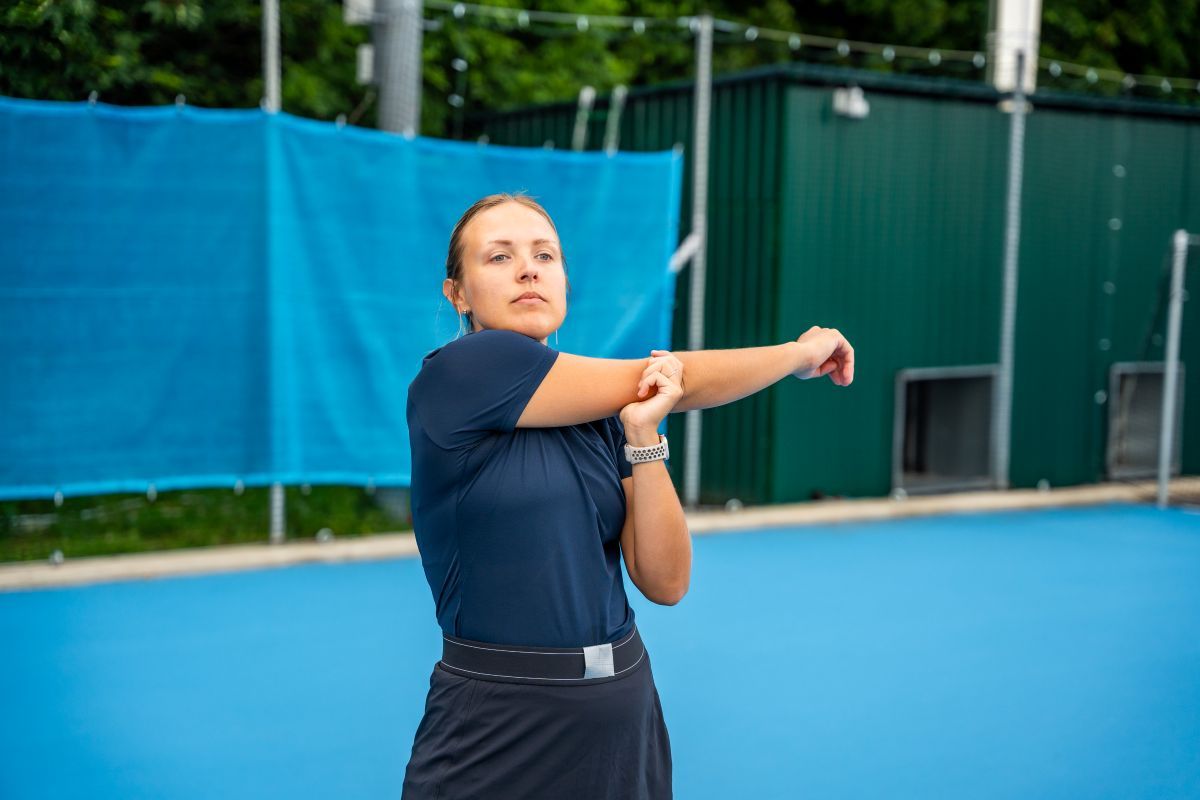
Cross-Body Shoulder Stretch
Bring one arm across your chest at shoulder height and use the opposite hand to press it closer to your body. Hold for 30 seconds and switch sides.
The posterior shoulder capsule tightens during overhead and backhand play. This stretch addresses that directly and supports rotator cuff health by maintaining balanced flexibility across the shoulder joint.
Calf and Achilles Stretch
Step one foot back and press the heel into the ground, keeping the back leg straight. Hold for 30 seconds for the gastrocnemius. Then slightly bend the back knee and hold for another 20 seconds to reach the soleus and Achilles tendon. Switch sides.
The calf complex is under load throughout pickleball play, particularly during the rapid deceleration that happens at the kitchen line. Stretching it post-game reduces the risk of Achilles tendinopathy, which is one of the more serious overuse conditions in the sport.
Chest Opener
Clasp your hands behind your back, straighten your arms, and gently lift them while opening your chest toward the ceiling. Hold for 20 to 30 seconds.
Repeated forward paddle movements cause the chest muscles to shorten over time. The chest opener counteracts that pattern and helps maintain upright posture, which affects both injury risk and movement efficiency on the court.
Conclusion
The right pickleball stretches before and after play are not optional. Dynamic warm-up prepares your body for the lateral cuts, sudden stops, and overhead loads that pickleball demands. Targeted injury prevention exercises build the structural resilience that keeps you playing week after week. A proper cool-down restores muscle length and reduces the chronic tightness that accumulates over a season.
The players who stay healthy longest are not the ones who avoid hard play. They are the ones who manage their bodies as deliberately as they manage their game.
To find local coaching, structured clinics, and consistent play opportunities that support your long-term development, Bounce connects you to courts, coaches, and programming in your city so you can build good habits alongside better skills.
Frequently Asked Questions
How long should I warm up before pickleball?
Eight to twelve minutes is the appropriate window for most players. That covers the full dynamic warm-up sequence, including leg swings, arm circles, hip rotations, lunges, shuffles, and light paddle work. Do not compress it below eight minutes, even on days when you are rushed.
Should I stretch before or after pickleball?
Both, but with different types. Dynamic stretching belongs before play to warm the muscles and activate the joints. Static stretching belongs after play when muscles are already warm and tissue responds well to being lengthened.
Static stretching before a cold warm-up can reduce power and increase injury risk.
What causes pickleball elbow?
Pickleball elbow is lateral epicondylitis, caused by repetitive stress on the forearm extensor muscles during gripping and wrist extension. It develops gradually from accumulated loading across many sessions.
Wrist flexor and extensor stretches, forearm self-massage, and eccentric wrist extension exercises are the most effective tools for managing it.
How do I prevent knee pain from pickleball?
Glute bridges, calf raises, and lateral band walks strengthen the muscles that protect the knee joint during pickleball's lateral movement demands. A thorough dynamic warm-up that includes walking lunges and lateral shuffles also prepares the knee for the directional loads it encounters during play.
What stretches help after pickleball?
The most effective post-game stretches address the primary muscle groups loaded during play: standing quad stretch, seated hamstring stretch, hip flexor stretch, cross-body shoulder stretch, calf and Achilles stretch, and a chest opener. Hold each for 30 to 45 seconds and work through both sides.
Can stretching prevent all pickleball injuries?
No. Stretching reduces injury risk significantly but does not eliminate it.
According to a review of pickleball injuries and player safety, a complete prevention approach includes proper warm-up, progressive training loads, appropriate footwear, and attention to technique. Stretching is a necessary component of that system, not a substitute for the rest of it.