You pick up a paddle, check the price, and pause. Eighty dollars. A hundred and fifty. Two hundred and twenty. The question comes naturally: why are pickleball paddles so expensive?
It is a fair question, especially when the sport itself is supposed to be accessible.
The short answer is materials and manufacturing. The face material, core construction, and the process used to bond them together all drive cost significantly.
A paddle built from raw carbon fiber using a thermoforming process costs far more to produce than one assembled from fiberglass and foam. That gap shows up directly in the retail price.
This guide breaks down exactly what you are paying for at each price point, what the technology differences actually mean for your game, and whether a more expensive paddle is worth the investment for where you are right now.
Pickleball Paddle Materials Comparison
The face material is the single biggest driver of paddle cost. It determines how the ball feels off the surface, how much spin you can generate, and how the paddle holds up over time.
Moving up the material ladder means paying more, but you also get measurably different performance.
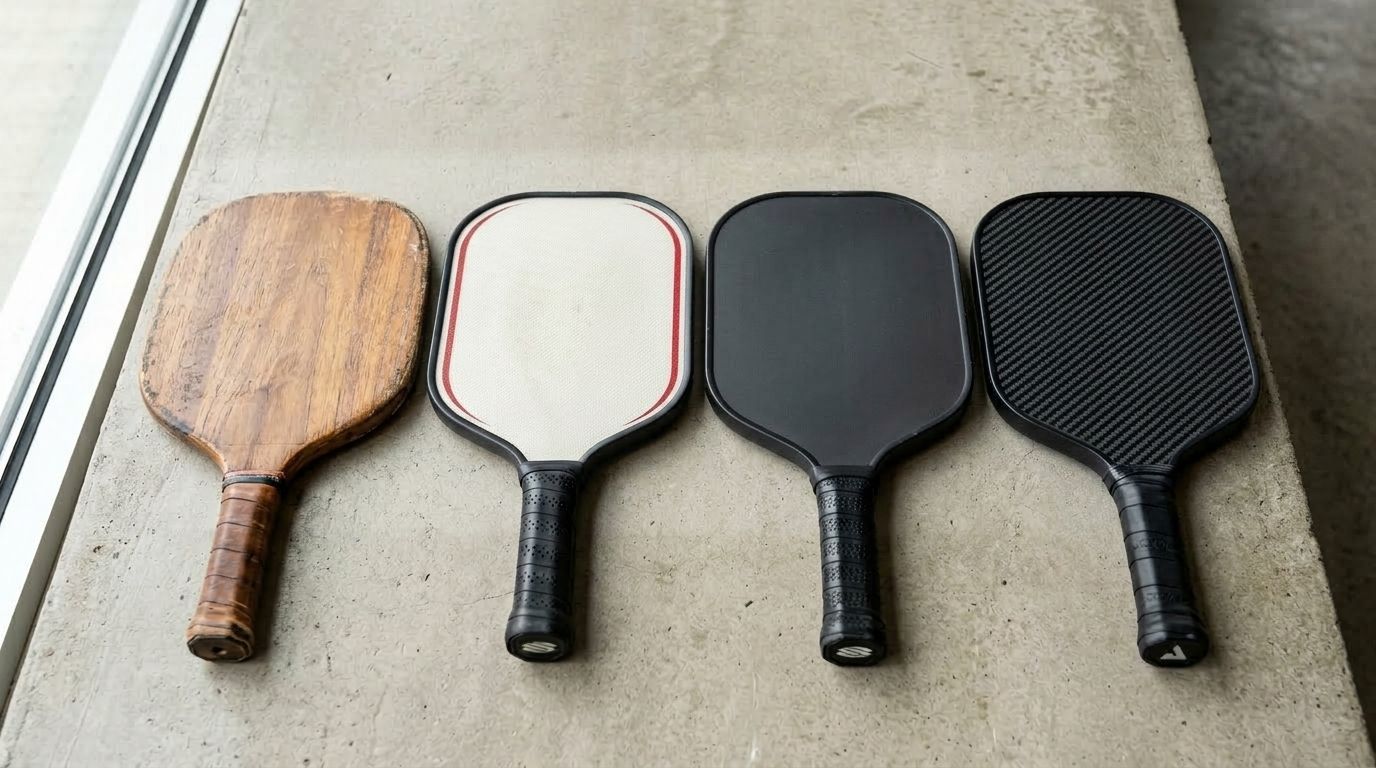
Wood: $10 to $30
Wood paddles are where the sport started. They are heavy, stiff, and offer almost no feel or feedback. They still exist as entry-level options for gym classes and casual backyard play, but they limit your development quickly.
If you are playing regularly even twice a week, you have already outgrown this category.
Composite and Fiberglass: $40 to $100
Composite paddles use a fiberglass face over a polymer or nomex core. Fiberglass is softer than graphite or carbon fiber, which gives it a slight flex at contact.
That flex produces a larger sweet spot and a more forgiving response on off-center hits, making it a practical choice for beginners and recreational players.
The tradeoff is ceiling. Fiberglass paddles generally produce less spin and less precision at the advanced level because the material gives too much at contact. For players focused on developing control and feel, the softness becomes a limitation rather than a benefit.
Graphite: $80 to $150
Graphite paddles introduced a meaningful step up in responsiveness. Graphite is stiffer than fiberglass, which means less energy is absorbed at contact and more is transferred directly to the ball.
The result is a crisper, more connected feel with better feedback on every shot.
The face is typically a thin graphite sheet bonded to a polymer honeycomb core. The core thickness and cell size affect how the paddle plays at the kitchen versus the baseline.
At this price range, you are getting a paddle capable of supporting serious development through the intermediate level.
Carbon Fiber: $120 to $250 and above
Carbon fiber is the premium tier. It offers a superior strength-to-weight ratio compared to graphite, better durability, and a textured surface that generates significantly more spin.
Raw carbon fiber face paddles have become the standard choice at the competitive and advanced recreational level.
The higher cost reflects both the material itself and the precision required to manufacture it consistently.
According to research on carbon fiber production costs, raw material and labor costs are the primary contributors to carbon fiber's overall price, and those costs carry directly into any finished product built from it, including pickleball paddles.
Pickleball Paddle Materials at a Glance
| Material | Price Range | Key Strength | Best For |
| Wood | $10-$30 | Durability, low cost | Casual backyard play only |
| Fiberglass/Composite | $40-$100 | Forgiving sweet spot | Beginners, recreational players |
| Graphite | $80-$150 | Crisp feel, good feedback | Intermediate to advanced players |
| Carbon Fiber | $120-$250+ | Spin, precision, durability | Advanced and competitive players |
Carbon Fiber vs Graphite Pickleball Paddle
This is the comparison most players land on when they are ready to invest in a serious paddle. Both are stiff, lightweight face materials that offer better feel than fiberglass. The differences between them are real but often overstated in marketing.
What Makes Carbon Fiber Different
Carbon fiber is composed of long chains of carbon atoms bonded in a crystalline structure. That structure makes it stronger and stiffer per unit of weight than graphite.
According to research on the fabrication and properties of carbon fibers, carbon fibers exhibit excellent tensile strength, high stiffness, and strong resistance to deformation under load, properties that translate directly into how a paddle face responds at contact.
The surface of a raw carbon fiber face is also more textured than graphite. That texture grips the ball longer at contact, which generates more spin on drives, serves, and drops.
At the advanced level, spin production is one of the clearest differences between a carbon fiber and graphite paddle.
Where Graphite Still Holds Up
Graphite paddles are not outclassed in every situation. A high-quality graphite paddle with a well-tuned polymer core still performs at a serious level, particularly for players who prioritize touch and soft game control over spin and pop.
The lower price point also means you can invest in a graphite paddle earlier in your development without overspending.
For players between 3.0 and 3.5 who are still building fundamentals, a graphite paddle at the $100 to $130 range is a sensible step. Moving to carbon fiber makes more sense when your technique is consistent enough to notice and use the performance difference.
Carbon Fiber vs Graphite: Key Differences
| Factor | Carbon Fiber | Graphite |
| Surface texture | Rougher, more grip | Smoother, less spin |
| Spin generation | Higher | Moderate |
| Feel at contact | Crisp, connected | Slightly softer |
| Weight | Lighter for same stiffness | Slightly heavier per stiffness unit |
| Durability | Higher | Good but slightly less |
| Price range | $120-$250+ | $80-$150 |
| Best player level | Advanced, competitive | Intermediate to advanced |
Manufacturing Technology and Research and Development Cost
The face material alone does not explain the full price of a premium paddle. How the paddle is manufactured matters just as much. Two paddles using the same carbon fiber can perform very differently depending on the construction process.
Core Construction
Most paddles use a polymer honeycomb core. The cell size and core thickness determine how the paddle plays at different speeds. Thicker cores absorb more energy and produce a softer, more controlled response, which suits kitchen play.
Thinner cores are stiffer and generate more pop for baseline driving.
Higher-end paddles are precision-engineered with specific core thicknesses measured in millimeters. Getting that consistency across every unit in a production run requires tighter quality control and more expensive tooling, both of which add to cost.
Thermoforming Technology
Thermoforming is one of the most significant manufacturing advances to hit the pickleball paddle market in recent years. In a thermoformed paddle, heat and pressure are applied during construction to fuse the face material and core together into a single unified structure.
The result is a paddle that is more rigid and consistent than a traditionally glued construction. The face and core do not flex independently at contact, which means energy transfer is more direct and power output is higher.
Thermoformed paddles also tend to hold their performance characteristics longer because delamination, where the face begins to separate from the core over time, is significantly reduced.
The thermoforming process requires specialized equipment and adds production time and cost. That is a primary reason thermoformed paddles typically sit at the higher end of the price range.
When you pay above $150 for a paddle today, there is a strong chance thermoforming is part of what you are buying.
Research and Development
Paddle manufacturers at the premium level invest heavily in research and development. Testing face textures, core densities, edge guard materials, and handle construction all costs time and money before a single unit reaches the market.
Smaller brands running higher-volume lower-cost production do not carry these R&D costs, which is one reason budget paddles can be priced so much lower.
USA Pickleball also maintains an approved paddle list that requires testing for compliance with surface roughness and performance standards.
Getting a paddle certified and keeping it on the approved list is an ongoing cost that factors into what players pay at retail.
Understanding how paddle technology has evolved makes choosing the right one much easier. The complete pickleball equipment guide covers paddles alongside the full setup you need, with clear explanations of what matters at each level of play.
Other Factors That Drive Paddle Prices Up
Face material and manufacturing get most of the attention, but several other components contribute to a paddle's final cost.
Handle and Grip Construction
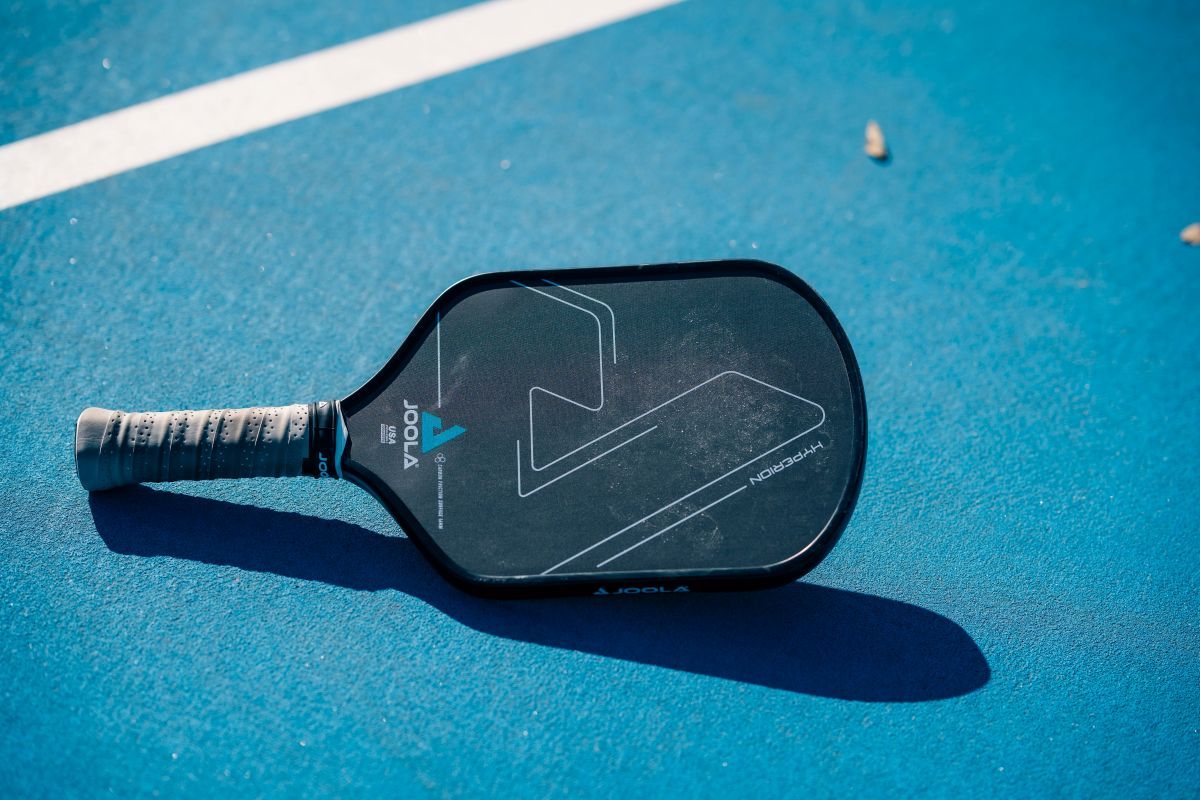
Premium paddles use ergonomic handles designed to reduce wrist strain and improve grip stability during extended play. The grip itself is typically a perforated cushion wrap that absorbs sweat and maintains traction.
Higher-end grip materials wear more slowly and feel more consistent throughout a session.
Handle shape also varies. Some paddles use a wider, flatter handle for players transitioning from tennis. Others use a rounded grip suited to the continental grip common in pickleball.
Getting this right requires design investment that cheaper paddles skip.
Edge Guard and Structural Integrity
The edge guard protects the paddle face from ground contact and impacts on the court surface.
Budget paddles use basic plastic guards that can crack or separate over time. Premium paddles use more durable materials with tighter bonding to the face, which extends the paddle's useful life considerably.
Edgeless paddle designs have also emerged, where the face material extends to the full perimeter without a separate guard. This increases the usable hitting surface and eliminates the dead spot that traditional edge guards can create.
Edgeless construction requires more precise manufacturing and costs more to produce.
Brand Positioning and Market Demand
Part of what you pay for in a premium paddle is also the brand behind it. Established paddle brands invest in professional endorsements, tour presence, and sponsorships that contribute to retail pricing.
The sport's rapid growth has also created strong demand that allows brands to maintain higher price points without losing buyers.
That does not mean all premium pricing is justified by performance. Some paddles are priced above their actual value because demand allows it.
Learning what materials and construction methods actually affect your game protects you from paying for marketing rather than technology.
If you want personalized guidance on choosing the right paddle for your current level and playing style, Bounce connects you to certified pickleball coaches by city who can give you hands-on recommendations without the guesswork.
Are Expensive Pickleball Paddles Worth It?
This depends almost entirely on where you are in your development.
When the Answer Is Yes
If you are playing three or more times per week and your technique is consistent, a higher-end paddle will make a noticeable difference. Carbon fiber provides spin you can actually use.
A thermoformed construction gives you pop and precision that cheaper paddles cannot replicate. At 3.5 and above, your skills are refined enough to feel and use the performance gap.
Durability also matters at this frequency. A $180 carbon fiber paddle that holds its performance for two years costs less per session than a $70 composite that degrades in six months. The economics work in favor of a better paddle when you play consistently.
When the Answer Is No
Below 3.0, your game will not benefit meaningfully from a $200 paddle. At that stage, your consistency, footwork, and shot selection are developing faster than your ability to detect the performance differences between materials.
A solid mid-range graphite paddle at $80 to $120 is the smarter spend.
The same logic applies to players who play once a week or less. If court time is limited, technique repetition matters more than equipment. Invest the difference in a few lessons instead.
For guidance on choosing the right paddle for your skill level and play frequency, the how to choose a pickleball paddle guide gives a practical framework based on your actual player profile.
The Middle Ground
The $100 to $150 range is where most serious recreational players land for good reason. You get graphite or entry-level carbon fiber performance, solid core construction, and durability that holds up through regular play.
It is the range where the price-to-performance ratio is strongest for the majority of players.
Is a More Expensive Paddle Worth It? A Quick Guide
| Player Profile | Recommended Range | Reasoning |
| Beginner, plays 1x/week | $40-$80 | Fundamentals matter more than materials |
| Recreational, 2-3x/week | $80-$130 | Best price-to-performance ratio |
| Best price-to-performance ratio | $120-$180 | Carbon fiber or thermoformed worth considering |
| Competitive 3.5+, frequent play | $150-$250+ | Premium tech will be felt and used |
Conclusion
Pickleball paddles are expensive because the materials and manufacturing processes that produce meaningful performance are genuinely costly to work with. Carbon fiber requires precision production.
Thermoforming requires specialized equipment. High-quality cores and grip construction all add up.
Whether that cost is worth it for you comes down to your skill level and how often you play. Spend on better equipment when your technique is consistent enough to feel and use the difference.
Until then, the mid-range graphite paddles in the $80 to $130 window give you strong performance without overpaying.
If you want to find the right paddle for where your game actually is right now, Bounce connects you to local coaches and structured play opportunities that help you develop faster, with the right gear to back it up.
Frequently Asked Questions
Why do pickleball paddles cost so much?
Premium pickleball paddles are expensive because of the materials used in their construction, primarily carbon fiber and advanced polymer cores, and the manufacturing processes required to build them consistently.
Thermoforming technology, USA Pickleball certification testing, and research and development costs all contribute to the retail price.
Is a $200 pickleball paddle worth it?
It depends on your skill level and play frequency. At 3.5 and above with regular play, a premium paddle provides spin, power, and durability that justifies the cost. Below 3.0 or for infrequent players, a mid-range paddle at $80 to $130 is the better investment.
What is the difference between graphite and carbon fiber paddles?
Carbon fiber paddles are stiffer, lighter per unit of strength, and generate more spin due to a rougher surface texture. Graphite paddles offer good feel and feedback at a lower price point but produce less spin and slightly less precision at the advanced level.
Both are significantly better than fiberglass or composite options.
What is a thermoformed pickleball paddle?
A thermoformed paddle is built using heat and pressure to fuse the face material and core into a single unified structure during manufacturing. This makes the paddle more rigid, increases power transfer at contact, and reduces delamination over time.
Thermoformed paddles generally sit at the higher end of the price range.
What is the best paddle material for intermediate players?
Graphite or entry-level carbon fiber is the right material range for intermediate players. Both offer better feel and spin potential than fiberglass without requiring the budget of a top-tier carbon fiber thermoformed paddle. The $100 to $150 range covers this category well.
Do cheaper pickleball paddles wear out faster?
Generally, yes. Budget paddles use lower-grade face materials and adhesives that break down more quickly under regular play. The face can lose its surface texture and spin potential within a few months of heavy use.
Premium paddles hold their performance characteristics longer, which often makes them more economical over time despite the higher upfront cost.