You do not need a racket, a regular partner, or a private lesson to try padel for the first time.
If you are asking, “how do I get started playing padel,” the answer is more practical than most beginners expect: find a court, book a beginner-friendly session, wear the right shoes, and borrow the rest. Most new players can rally in their first hour. The glass takes longer.
Quick answer: Find a padel court, show up with court shoes, and borrow or rent a racket. Most venues run beginner sessions with rental gear, and the basic rules take about 10 minutes to understand. Your first goal is not to win points. It is to keep the ball in play, read the glass, and move with your partner.
What Padel Is
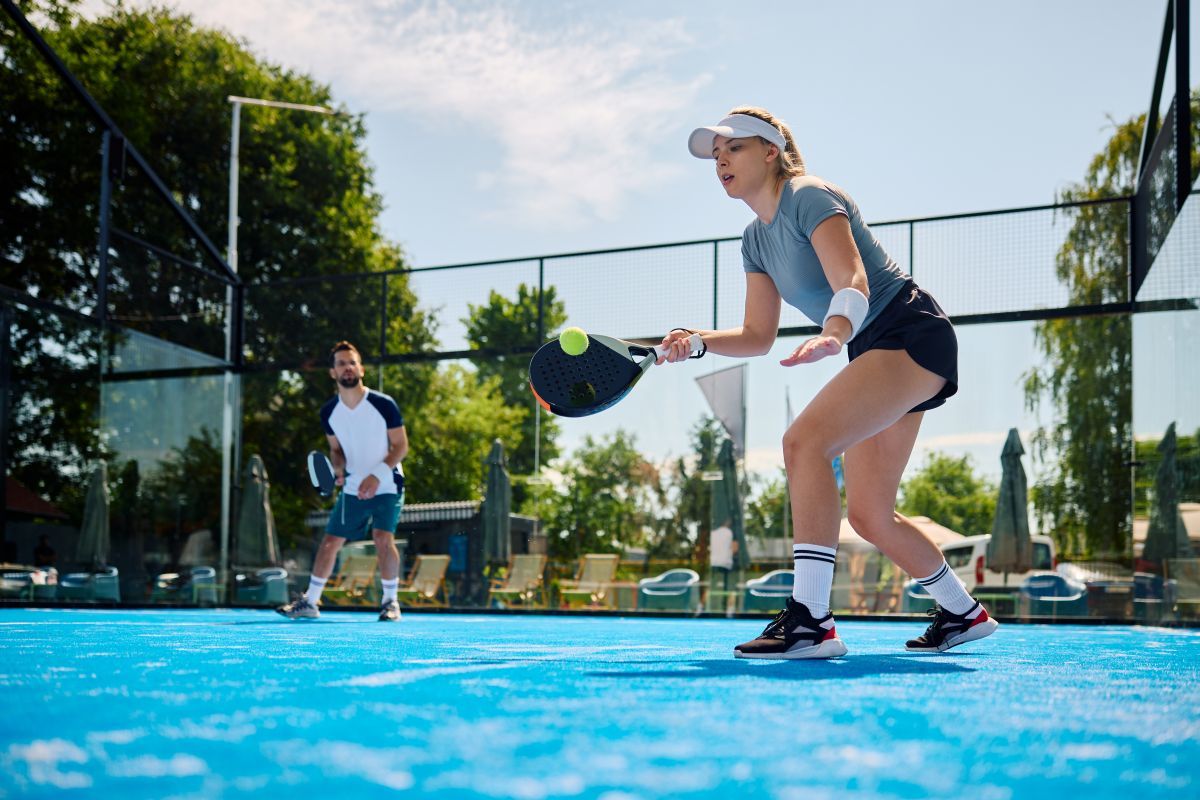
Padel is a doubles racket sport played on an enclosed court with glass walls. You use a solid, perforated racket, a lower-pressure ball, and tennis-style scoring. The serve is underhand, the ball can rebound off the glass after it bounces, and most points are won through placement rather than power.
If you want the full picture before your first session, the beginner guide to padel covers the court layout, how scoring works, and how padel compares to other racket sports.
The basic swing is simple. The wall decisions take a few sessions.
| First-session task | What to do | Why it matters |
| Find a court | Look for beginner open play, intro nights, or group clinics. | An empty court does not give a beginner enough structure. |
| Find players | Book a social session, mix-in, or beginner match. | Padel is built around doubles, so you need 4 players. |
| Bring shoes | Wear court shoes with lateral support. | Running shoes are poor for side-to-side movement. |
| Rent gear | Borrow or rent a racket at the venue. | You do not know what racket you like yet. |
| Learn 3 rules | Serve underhand, let the ball bounce, use the glass after the bounce. | These rules cover most first-session confusion. |
Step 1: Find a padel court near you
Start with the simplest search: “padel courts near me.” Then check the booking options for each venue. You are looking for beginner open play, intro nights, group clinics, or mix-in sessions. A court rental is fine if you already have 3 friends. For a true first session, structure helps more.
The USPA Where to Play directory is a better starting point if you are looking for padel courts in the U.S. It lists clubs and venues by location, so you can check what is near you before booking. Once you find a court, look for beginner clinics, open sessions, or social play nights rather than only renting an empty court.
You should also check tennis clubs and fitness clubs you already know. Many facilities add padel courts before they build a full padel program, so the best beginner option may be hiding at a club you already pass every week.
For city-based discovery, Bounce helps players find courts, clubs, coaching, and organized racket-sport sessions in one place. Use it as a first stop when you want a venue with an actual path into play, not just a booking calendar.
Step 2: Find players to play with
Padel is almost always played as doubles. That means you need 3 other people, which sounds like a barrier until you realize most clubs already solve this problem for beginners.
Ask the venue for an open session, beginner social, intro night, or mix-in. These formats are built for players who do not have a full group yet. You book your spot, the club fills the court, and nobody expects polished padel.
Other practical ways to find players:
- Bring 1 friend and book a beginner mix-in, so the club can fill the other 2 spots.
- Use player-matching features in court-booking apps when available.
- Join local Facebook groups, WhatsApp groups, or club community chats.
- Ask the front desk which sessions are safest for first-time players.
This is also where Bounce fits naturally. If you want beginner sessions, leagues, and social formats where the court, partners, and structure are already set up, Bounce can help you find those options by city.
Step 3: Bring the right shoes and rent everything else
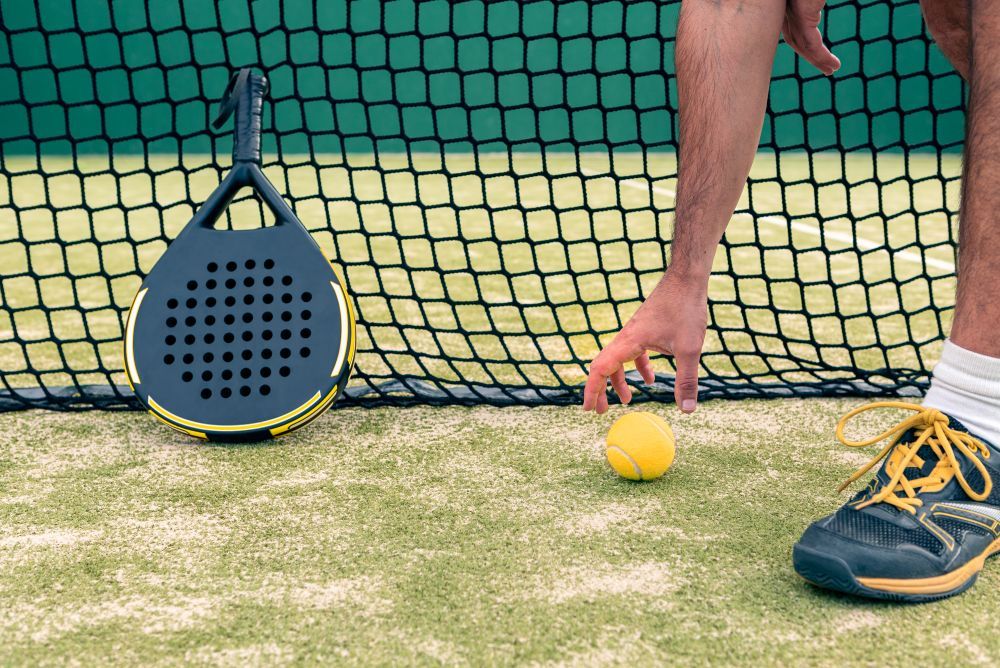
The one thing that actually matters before your first session is court shoes with lateral support. Padel is full of short side steps, stops, pivots, and recoveries. Running shoes are built mainly for forward motion, which is exactly why they feel wrong once the rally pulls you sideways.
For artificial turf and sandy padel courts, the LTA recommends herringbone soles for grip. Indoor courts often call for non-marking soles.
If you're deciding between padel-specific footwear and what you already own, this breakdown of padel shoes vs tennis shoes covers the differences worth knowing before you buy.
| Item | What to do for session 1 | When to buy your own |
| Racket | Rent or borrow one at the venue. | After 5 to 10 sessions, if you know you enjoy padel. |
| Balls | Use the balls supplied by the venue or organizer. | Buy later if you start booking your own courts. |
| Shoes | Wear court shoes with lateral support. | Before or soon after session 1 if you plan to keep playing. |
| Clothing | Standard athletic wear is fine. | No padel-specific clothing needed. |
| Water | Bring a bottle. | Always. Changeovers are short. |
When you do buy a racket, keep it boring. A round or teardrop-shaped beginner racket around 350 to 365g with a soft EVA core gives you a larger sweet spot and better control. You do not need a power racket while your timing is still late.
For a full breakdown of what to buy and when, the padel equipment guide covers rackets, balls, and gear by experience level.
Step 4: Learn the basics before you arrive
You do not need the full rulebook before session 1. You need enough to avoid stopping every point.
The official rules come from the International Padel Federation, and FIP lists the current Rules of Padel on its documents page. For a first session, start with the 3 rules below.
The serve
Serve underhand. Bounce the ball first, hit it at or below waist height, and send it diagonally into the opposite service box. You get 2 chances.
If the serve hits the net and still lands in the correct box, it is usually a let and you serve again. If it lands in the box and then hits the back glass, it is good. If it hits the side mesh on the serve, it is a fault.
Scoring
Padel scoring looks like tennis: 15, 30, 40, game. A set usually goes to 6 games with a 2-game lead, and a match is usually best of 3 sets.
At 40-40, many recreational games use golden point: one deciding rally wins the game. Some competitions use different formats, including Star Point in FIP events, so always ask the organizer before the first game.
Wall play
This is the rule that makes padel feel strange at first: the ball must bounce before the glass matters. If your shot hits the opponent’s glass or fence before it bounces in their court, you lose the point. If it lands in the court first and then hits the glass, the rally continues.
On your side, the glass can help you. If the ball bounces, hits your back glass, and comes forward, you can play it. That adjustment takes most beginners 2 to 3 sessions, so do not panic when you misread the first few rebounds.
If you want the full rules version after your first session, read the padel rules breakdown. It goes deeper on faults, service lets, scoring formats, and wall scenarios.
| Beginner mistake | What happens | Better habit |
| Volleying the serve return | The return must bounce first. | Wait, then return with control. |
| Serving without a bounce | Fault. | Drop the ball, let it bounce, then serve. |
| Hitting straight into opponent glass | Point lost. | Make the ball land in the court first. |
| Touching the net | Point lost. | Stop before your momentum carries you forward. |
| Double-hitting the ball | Point lost. | One clean contact per team shot. |
Step 5: Book a beginner clinic after you have tried one session
A beginner clinic is the best starting point for most people, but I would usually play once before booking one. That first open session gives you a feel for the court, the glass, and the questions you actually need answered.
Group clinics are usually the best value because they combine instruction, court time, and other beginners. They are also less intense than a private lesson, which matters when you are still learning where to stand.
Private coaching makes more sense after 5 to 10 sessions. At that point, you have real patterns to fix: late glass reads, rushed volleys, weak lobs, or poor court spacing. Before that, a private coach spends half the lesson explaining basics you could learn in a group setting.
If you want a deeper technique primer before or after that clinic, this step-by-step padel guide is the next logical read.
Step 6: Know what the first 3 months should feel like
A realistic timeline helps. Padel feels friendly early because you can rally quickly. It gets interesting once you start making decisions around the glass, net, and partner movement.
| Stage | What it feels like | What to focus on |
| Sessions 1 to 3 | You are learning the court, serve, and glass. Misreads are normal. | Keep rallies alive and call middle balls. |
| Sessions 4 to 10 | The wall starts to make sense. You notice when to lob and when to move forward. | Play 1 beginner clinic and 1 open session per week. |
| Month 2 to 3 | You can serve consistently, rally, and play structured points. | Build consistency, net positioning, and partner movement. |
| 6 to 12 months | A regular player can start pushing toward 3.0 with coaching and frequent play. | Add targeted lessons and competitive formats. |
For real improvement, 2 sessions per week is the minimum. 3 is better in the first 3 months because court feel fades quickly when you only play once every couple of weeks.
Step 7: Use these beginner habits from day 1
Your first few sessions should not be about hard shots. They should be about habits that keep you useful on court.
- Say “mine” and “yours” early. Middle balls cause most beginner confusion. Calling the ball prevents collisions and hesitation.
- Stay level with your partner. If one player is at the net and the other is trapped near the glass, the court opens up.
- Lob when you are under pressure. A high, deep lob gives you time to move forward and reset the point.
- Keep the racket prepared. Most beginner errors happen because the racket starts too low or swings too big.
- Use the glass instead of fighting it. After the ball bounces, wait half a beat and let the rebound come into your hitting zone.
If you want more structured advice on building your game faster, the padel tips guide covers court positioning, shot selection, and the habits that separate beginners from intermediate players.
Conclusion
Getting started in padel is mostly a sequence problem. Find the right court, choose a beginner session, bring court shoes, rent the racket, and learn the few rules that stop play from getting confusing.
The first session will feel messy. That is normal. The walls are supposed to challenge your timing, and doubles movement takes a little trust.
By session 3, you should know whether the sport has stuck. If it has, book a beginner clinic, play 2 times per week, and start building the habits that make padel fun: controlled serves, smarter lobs, cleaner wall reads, and better movement with your partner.
For players ready to find coached sessions, beginner leagues, and organized play near them, Bounce connects you with courts, coaches, and formats in your city.
FAQs
Do I need to bring my own racket to play padel?
No. Most padel venues rent or lend rackets, especially for beginner sessions. Rent for your first 5 to 10 sessions, then buy once you know you enjoy the sport and understand what racket shape feels comfortable.
Can I play padel if I have never played tennis?
Yes. Tennis experience helps with basic racket control, but padel is easier to start because the serve is underhand and rallies develop quickly. Complete beginners can usually rally in their first session.
How long does it take to get good at padel?
Most beginners feel comfortable with basic rallies after a few sessions. If you play 2 times per week, you can reach a functional beginner level in 2 to 3 months. A solid intermediate level usually takes longer, often 6 to 12 months of regular play.
What shoes should I wear for padel?
Wear court shoes with lateral support. On artificial turf or sandy courts, herringbone soles are usually the safest choice for grip and movement. Avoid running shoes because they are built for forward motion, not repeated side-to-side stops.
Can I play padel alone or do I always need 3 other players?
Standard padel is doubles, so a normal match needs 4 players. Some clubs have singles courts or solo drills, but beginners are better off joining open sessions, socials, or beginner clinics where the venue helps fill the court.
How do I find people to play padel with?
Start with your local padel venue and ask for beginner open play, mix-ins, or intro nights. You can also use booking apps, local WhatsApp groups, Facebook groups, and city-based platforms like Bounce that organize racket-sport sessions.