Padel for beginners feels familiar for about 30 seconds.
Then the walls get involved.
The court is smaller than a tennis court. The ball can rebound off glass. The serve is underarm. And most points are won by the team that understands where to stand, rather than the team that swings hardest.
Want a quick answer? Padel is a doubles racket sport played on a 10m x 20m enclosed court with glass and metal mesh walls. You serve underarm, use a solid perforated paddle, and score like tennis. Most beginners feel functional after 2 to 3 sessions, then more comfortable after 4 to 6.
This guide covers the court, gear, scoring, serving, wall rules, basic positioning, and what to expect from your first few sessions.
Padel court dimensions for beginners
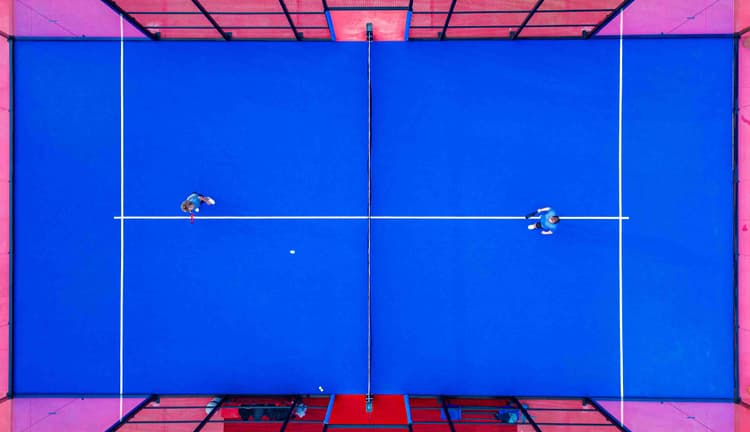
A standard padel court is 10 meters wide and 20 meters long. The net divides the court into two 10m x 10m halves.
The court is enclosed by glass walls and metal mesh. The back walls are usually 3 meters of glass with another meter of mesh above. The side walls combine glass and mesh, depending on the court design.
The walls are part of the game.
A ball that lands in your opponent's court and then hits the glass is still live. Your opponent can play it after the wall rebound, as long as the ball has not bounced twice on the ground.
That is the first big adjustment for new players. In tennis, the ball leaving the court usually ends the point. In padel, the wall often keeps the point alive.
The official rules and equipment standards are set by the International Padel Federation, usually shortened to FIP.
| Court element | Measurement | What beginners should know |
| Court length | 20 meters | The net splits the court into two equal halves |
| Court width | 10 meters | Standard padel is doubles |
| Net height | 88 cm at center | Slightly lower than a tennis net |
| Service line | 6.95 meters from the net | This creates the service boxes |
| Back wall area | Roughly 3 meters from service line to back glass | This is where most defensive wall play happens |
| Singles court width | 6 meters | Less common than doubles courts |
A padel court's playing rectangle is smaller than a doubles tennis court. That smaller space is why the sport feels quick, social, and reactive from the first session.
Padel equipment for beginners
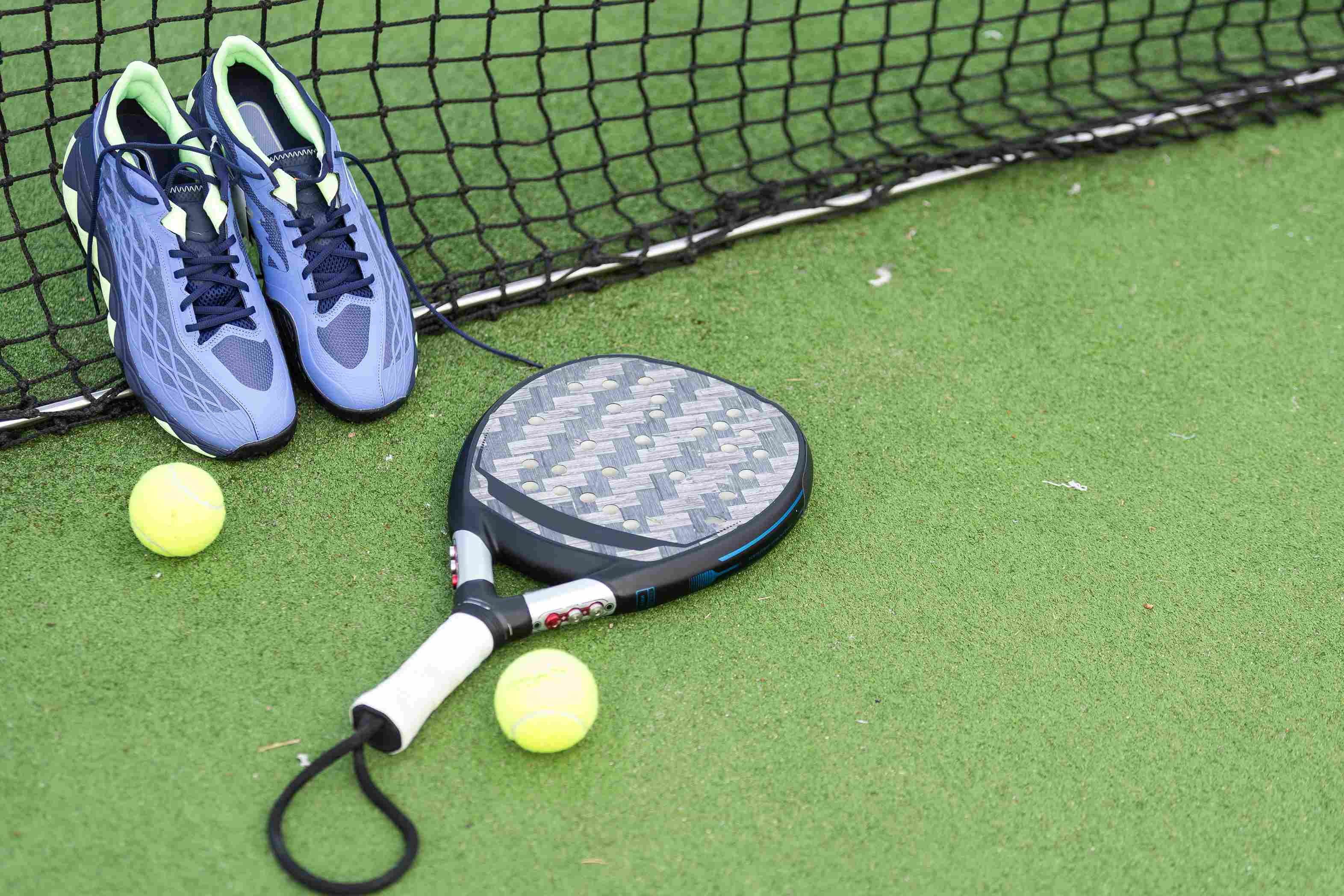
You do not need much to start playing padel.
The padel gear you actually need comes down to a paddle, padel balls, and court shoes. Most clubs rent paddles, so your first session does not require a full gear purchase.
Padel paddle
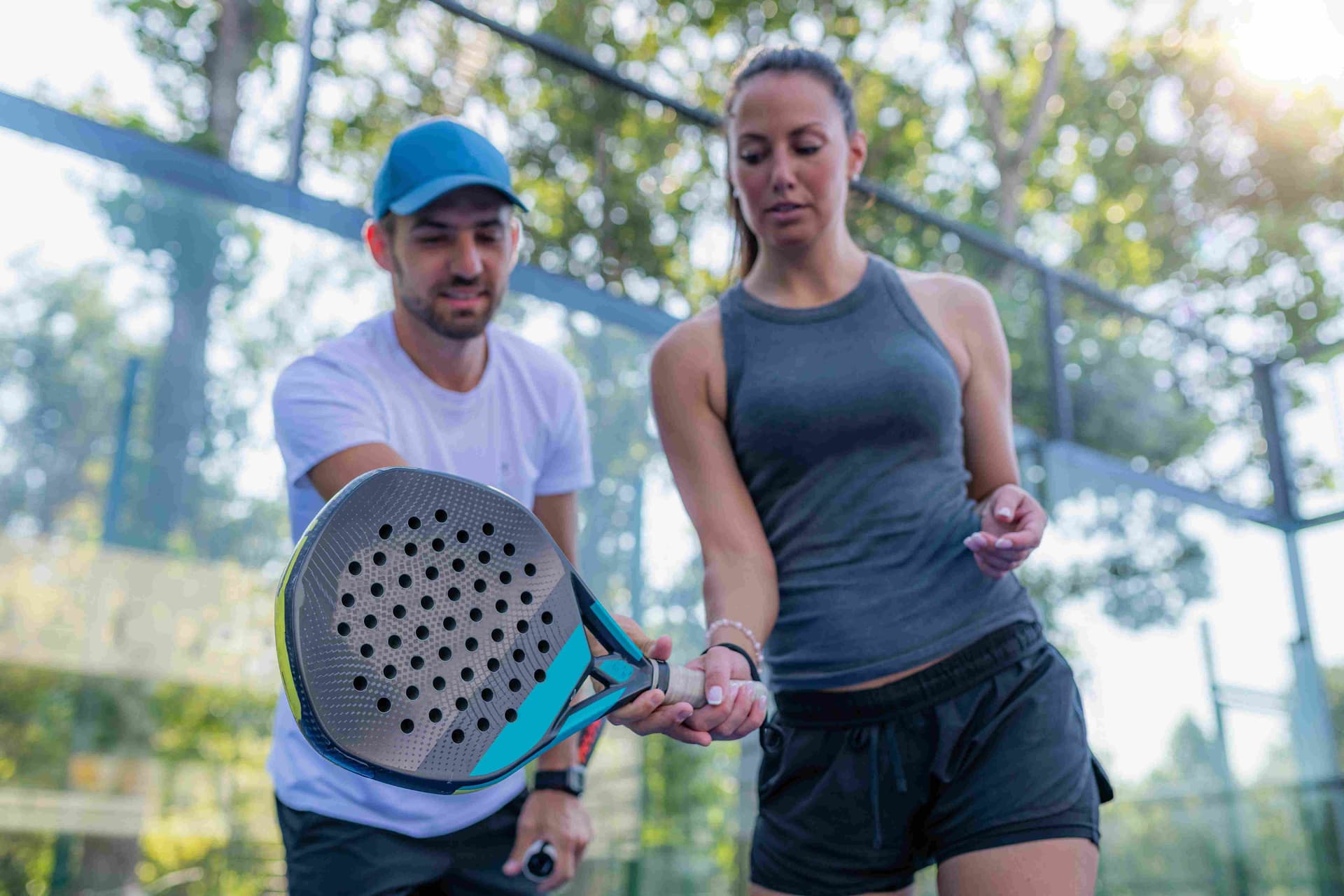
A padel paddle is solid and perforated. It has no strings.
Most beginner paddles use fiberglass or carbon fiber faces over a foam or EVA core. The holes reduce air resistance and make the paddle easier to move through contact.
For your first paddle, choose a round shape with a lower balance point. That gives you a larger sweet spot and more control when your timing is still rough.
A beginner does not need a high-end carbon fiber paddle. A reliable round paddle in the $80 to $150 range is fine for starting out.
Beginner paddle rule: control matters more than power. If you cannot place the ball, extra speed just sends mistakes faster.
FIP regulations cap padel rackets at 45.5 cm long, 26 cm wide, and 38 mm thick. Any paddle sold by a reputable padel brand should already meet those limits.
Padel balls
Padel balls look almost identical to tennis balls, but they play slightly softer.
They are usually a little less pressurized than tennis balls, which helps control the rebound off turf and glass. That lower pressure is part of why padel rallies can last longer even on a smaller court.
Use balls labeled for padel. Tennis balls can feel too lively, especially when they come off the back glass.
Padel shoes
Shoes matter more than most beginners expect.
Padel courts usually use artificial turf with sand or textured grip. Running shoes slide poorly during lateral movement and can catch at the wrong time. Tennis shoes can work, but the difference between padel and tennis shoes comes down to outsole grip.
Look for padel shoes or clay-court tennis shoes with a herringbone or omni-directional tread. You want grip when changing direction, without feeling stuck to the surface.
Padel rules for beginners
Padel uses tennis scoring: 15, 30, 40, game.
Most matches are played as best of 3 sets. A set is usually played to 6 games, and you must win by 2 games. At 6-6, many formats use a tiebreak.
At deuce, some competitions use Star Point, also commonly called golden point in recreational settings. One point decides the game, and the receiving team chooses which side receives the serve.
Here is the beginner version before the details.
| Beginner rule | What it means |
| Serve underarm | Bounce the ball first, then hit it at or below waist height |
| One bounce allowed | If the ball bounces twice on your side, you lose the point |
| Walls are live | The ball can rebound off glass or mesh after it lands in court |
| Serve goes diagonal | The serve must land in the opposite service box |
| Doubles is standard | Most padel is played 2 vs 2 |
| Control beats power | Hard shots into glass usually give the point away |
How the walls work in padel
The walls are the part beginners usually misread.
The ball must land in the court before it touches any wall on your opponent's side. If you hit the ball directly into your opponent's glass before it bounces on their court, you lose the point.
Once the ball lands in the court, the wall becomes part of the rally.
If your opponent hits a ball that lands on your side and then rebounds off your back glass, you can still play it. You can let the wall help you. You can also hit the ball into your own back wall in some defensive situations to send it back over the net.
The cleanest rule is this:
Ground first, then wall.
If the ball hits the wall before the ground on your opponent's side, it is out. If it lands first and then hits the wall, it is live.
Beginners usually rush this. They step forward and try to cut off balls that would have been easier after the glass. Give yourself space. Let the ball come off the wall when the angle makes sense.
How to serve in padel
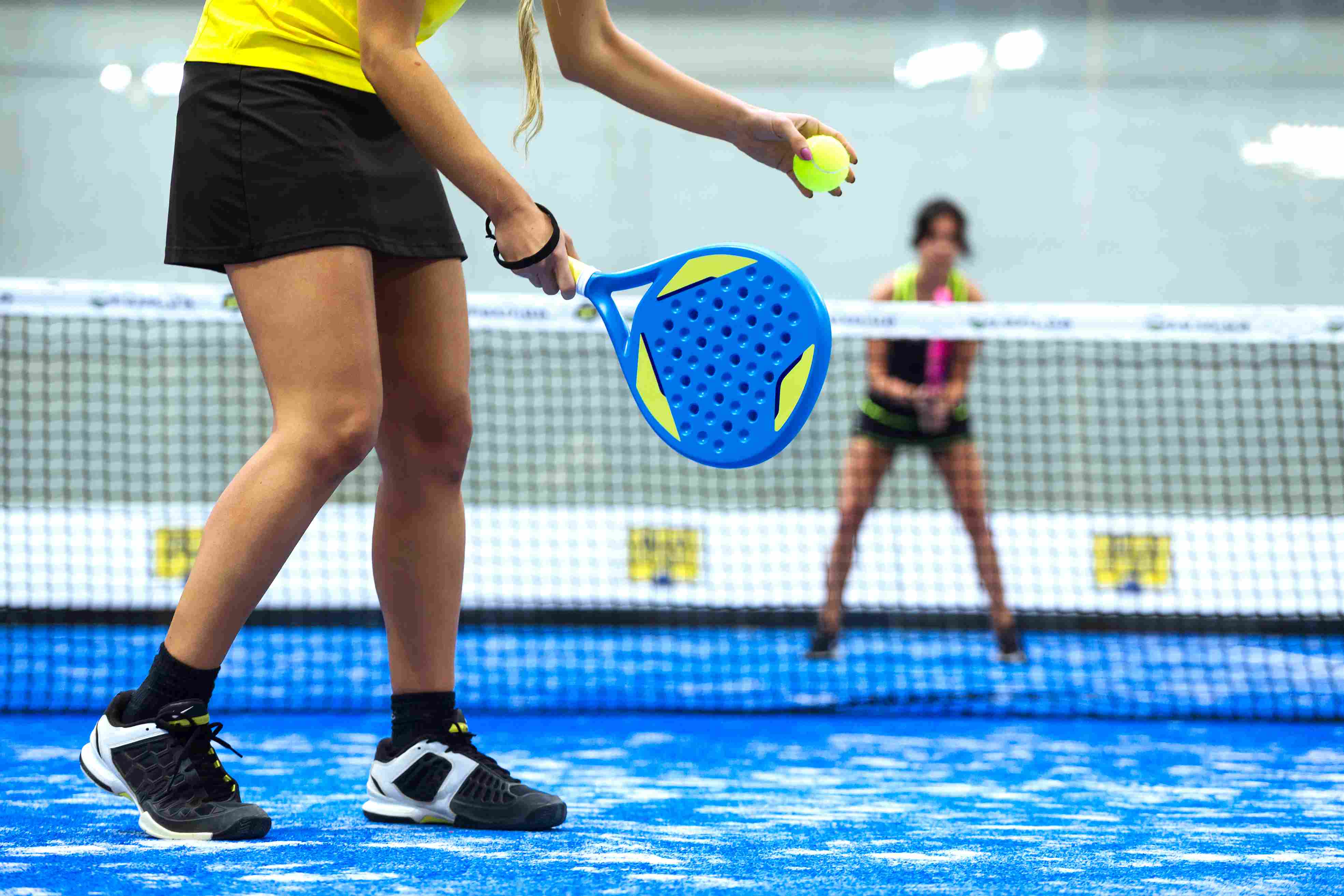
The padel serve is underarm.
You stand behind the service line, bounce the ball, and hit it at or below waist height. The ball must travel diagonally into the opposite service box.
You get 2 serve attempts per point.
A legal serve must:
| Serve rule | Beginner version |
| Start behind the service line | Keep your serving position behind the line before contact |
| Use a bounce | Drop or bounce the ball before hitting it |
| Stay at or below waist height | No overhead serve |
| Go diagonal | Aim into the opposite service box |
| Clear the net | If it clips the net and lands in, replay the serve |
| Avoid the side mesh after landing | If it lands in the box and then hits mesh before the second bounce, it is a fault |
A serve that lands in the correct box and then hits the back glass is good. A serve that lands in the correct box and then hits the side mesh before the second bounce is a fault.
The goal is placement. Hit a slow, reliable serve that starts the point. Beginners lose too many free points by trying to make the serve dangerous.
Padel serving order in doubles
Padel serving order is simple once you separate the game from the set.
One player serves the entire game. The other team serves the next game. Partners alternate their team's service turns through the set.
Within each service game, the server starts from the right side and alternates sides after each point.
Example:
| Game | Serving team | Server |
| Game 1 | Team A | Player A1 |
| Game 2 | Team B | Player B1 |
| Game 3 | Team A | Player A2 |
| Game 4 | Team B | Player B2 |
That order stays fixed through the set.
The receiver stands diagonally across from the server. The returner must let the serve bounce before hitting it.
The server's partner can stand wherever they want, but most teams place the server's partner near the net. That gives the serving team a better chance to take the attacking position after the return.
Where beginners should stand in padel
Padel is a doubles-first sport. Positioning works as a team.
The biggest beginner mistake is drifting around alone. If one player moves forward and the other stays deep, the court opens. Good opponents will find the gap.
Move together.
When your team is attacking
When your team has control of the rally, both players move toward the net.
The usual attacking position is roughly 3 to 4 meters from the net. From there, you can volley, close space, and force your opponents into harder defensive shots.
The net is the best place to win points. Beginners should learn that early.
You do not need to crush the ball from the net. Short, firm volleys into open space are enough.
When your team is defending
When your opponents control the net, move back.
Give yourself room between your body and the back glass. Standing too close to the wall traps you. Standing a few steps forward gives you space to read the bounce and swing.
Defense in padel is not panic. It is usually lob, reset, or wait for the ball to come off the glass.
When your team is returning serve
The returner starts behind the service line and must let the ball bounce. The returner's partner usually starts deeper too.
A deep return gives your team time to move forward. A weak return gives the serving team the net.
Basic padel shots beginners should learn first
You do not need every shot to enjoy padel.
Start with the shots that let you survive rallies and understand the game.
| Shot | What it does | Beginner goal |
| Groundstroke | Hit after the bounce | Keep the ball deep and controlled |
| Volley | Hit before the bounce near the net | Place the ball, do not swing big |
| Lob | Lift the ball over opponents at the net | Move them back and reset the point |
| Bandeja | Controlled overhead with slice | Keep position without overhitting |
| Wall rebound | Play the ball after glass | Buy time and stay in the point |
The lob is your best beginner weapon. It gets opponents away from the net and gives your team time to recover.
Wall play is the skill that feels strangest at first. Tennis and pickleball players usually want to cut the ball off early. In padel, patience often gives you the easier shot.
Once you are past the first few sessions, the padel tips that actually move your game go deeper on shot selection, partner movement, and how to use the back wall without guessing.
Your first 3 padel sessions should have a plan
Most beginners try to learn everything at once.
That creates messy points and bad habits.
Use the first 3 sessions to build the game in order.
| Session | Main focus | What to ignore for now |
| Session 1 | Serve, scoring, basic court position | Hard winners |
| Session 2 | Wall rebounds and lobs | Fancy spin |
| Session 3 | Moving with your partner | Winning every point |
Session 1 should feel awkward. The glass will make you late. The serve will feel too simple. You will stand in the wrong places.
That is normal.
By session 2 or 3, most players can keep a rally going and understand the basic flow of the point. Comfort usually comes after 4 to 6 sessions.
Common beginner mistakes in padel
The fastest way to improve is to stop giving points away.
Most beginner errors are predictable.
| Mistake | What happens | Better habit |
| Swinging too hard | The ball flies into the glass or fence | Use 60% pace and aim deeper |
| Standing against the back wall | You lose space to swing | Leave room for the rebound |
| Rushing every wall ball | You hit from a bad position | Let the glass help when the angle allows |
| Staying split from your partner | Opponents hit through the gap | Move forward and back together |
| Trying to smash early | You lose control of the point | Use lobs and controlled volleys first |
The beginner who keeps the ball in play will beat the beginner who tries to look advanced.
Padel rewards control first. Power comes later.
Padel vs tennis for beginners
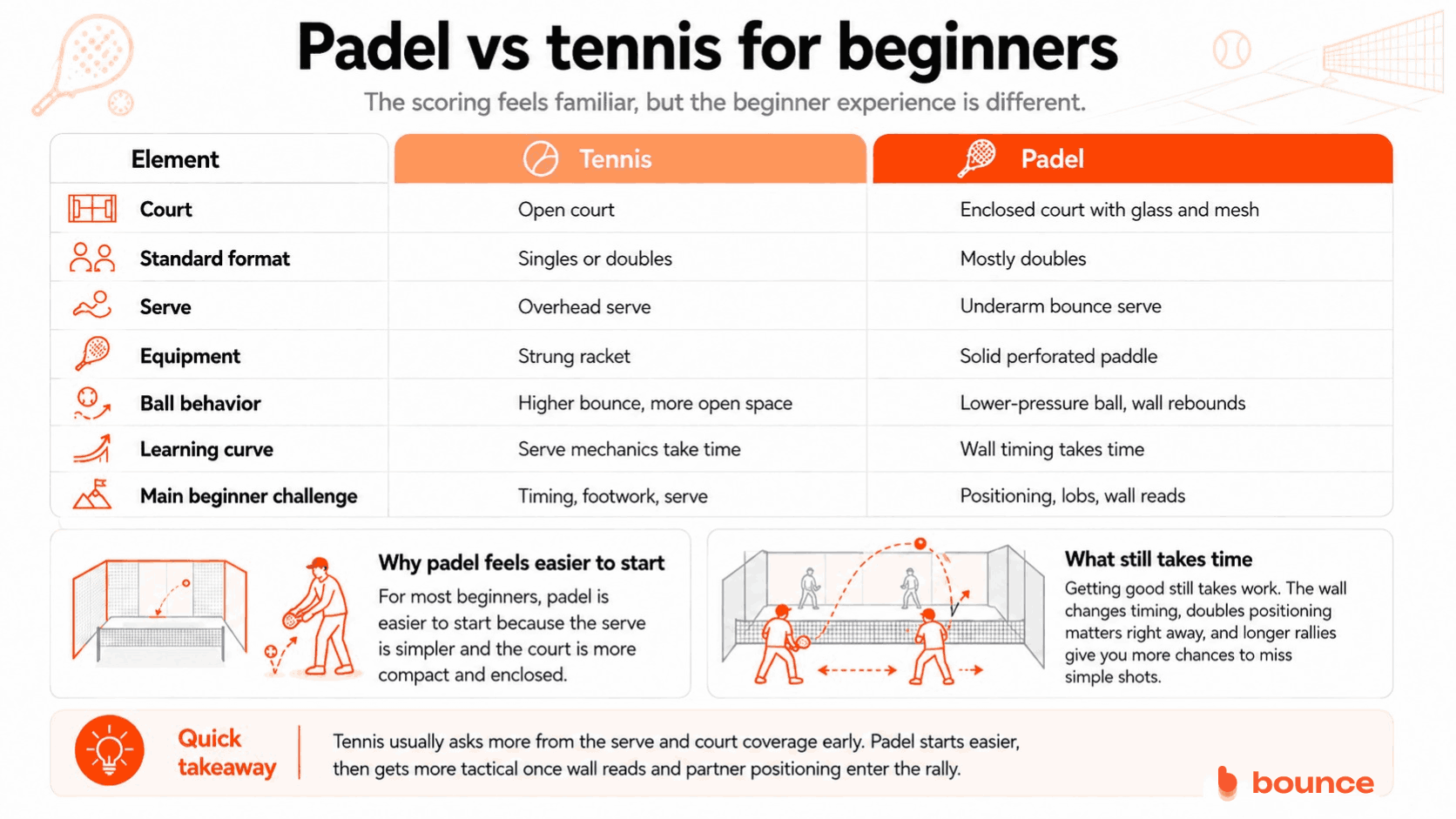
Padel and tennis share scoring, net play, and some stroke patterns.
The beginner experience feels different.
| Element | Tennis | Padel |
| Court | Open court | Enclosed court with glass and mesh |
| Standard format | Singles or doubles | Mostly doubles |
| Serve | Overhead serve | Underarm bounce serve |
| Equipment | Strung racket | Solid perforated paddle |
| Ball behavior | Higher bounce and more open space | Lower pressure feel and wall rebounds |
| Learning curve | Serve mechanics take time | Wall timing takes time |
| Main beginner challenge | Timing, footwork, serve | Positioning, lobs, wall reads |
For beginners, padel is usually easier to start than tennis because the serve is simpler and the court is smaller.
Getting good still takes work.
The wall makes timing more complicated. Doubles positioning matters immediately. And because rallies last longer, you have more chances to make simple mistakes.
Where padel comes from and why it is growing
Padel was invented in Acapulco, Mexico, in 1969 by Enrique Corcuera. The sport grew through Spain and Latin America before spreading heavily across Europe.
The full padel origin story explains how a home court with walls turned into one of the fastest-growing racket sports in the world.
The global numbers are large now. Playtomic's 2026 Global Padel Report lists 58,300 courts, nearly 20,000 clubs, and 19.4 million players worldwide, with projected growth to 91,000 courts by 2028.
The US is earlier in the curve. Court access is still uneven, especially outside major cities, but clubs are opening in markets where tennis, pickleball, and boutique fitness already have strong demand.
That matters for beginners. In some cities, you can find beginner clinics and open play easily. In smaller markets, you may need to travel or join a club waitlist.
How to find your first padel game
Your easiest first session is a beginner clinic.
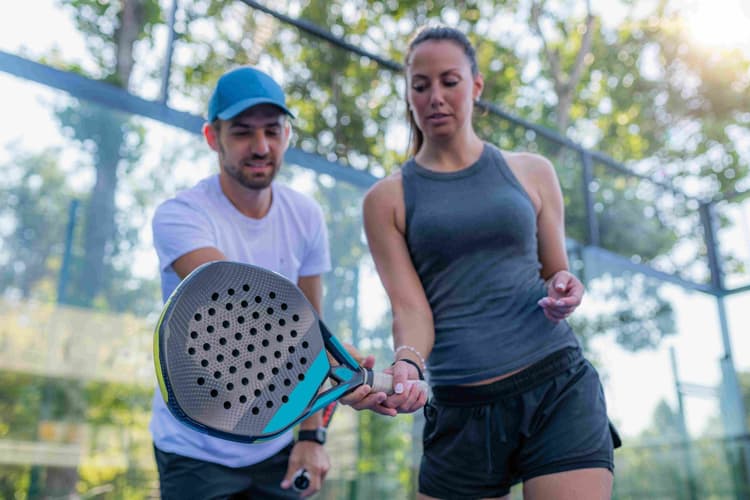
A clinic gives you a coach, a court, and players around your level. You will learn the serve, wall basics, and doubles positioning faster than you would in a random match.
Open play can also work, especially if the group is beginner-friendly. Ask before you show up. A mixed-level open play with no instruction can be rough for a first-timer.
If you want help from the start, Bounce can help you find racket-sport lessons, courts, and organized play by location. A single beginner session is usually enough to clean up the serve, wall timing, and doubles positioning before bad habits settle in.
Next steps for new padel players
Book a beginner session. Rent a paddle. Wear court shoes if you have them.
Then focus on 4 things: get the serve in, move with your partner, use the lob, and give the wall enough time to help you.
You will miss more balls than expected in the first hour. Fine.
The learning curve flattens quickly once the wall stops feeling random.
Padel is easy to start socially. Getting good is the better problem.
Frequently asked questions
How long does it take to learn padel?
Most beginners can understand the rules and hold basic rallies within 2 to 3 sessions. Playing comfortably in a doubles match usually takes 4 to 6 sessions. Wall play takes longer because the ball rebounds differently depending on speed, spin, and angle.
What are the basic rules of padel for beginners?
Padel is usually played as doubles on a 10m x 20m enclosed court. You serve underarm into the diagonal box, score like tennis, and can use the glass walls after the ball lands in the court. The ball can bounce once on your side. If it bounces twice, you lose the point.
Can I use a tennis racket for padel?
No. Padel uses a solid perforated paddle without strings. A tennis racket is different equipment and is not used for padel. Most clubs rent padel paddles if you do not own one yet.
Is padel easier to learn than tennis?
For most beginners, yes. The underarm serve is easier than a tennis serve, and the smaller court makes rallies more accessible. The harder part is learning wall rebounds and doubles positioning.
How many players do you need for padel?
Standard padel is played as doubles, with 4 players on court. Singles padel exists on narrower courts, but it is far less common. Most beginner clinics and open play sessions are built around doubles.
What is the difference between padel and paddle tennis?
Padel uses glass walls, metal mesh, an underarm bounce serve, and a solid perforated paddle. Paddle tennis and platform tennis use different courts, equipment, and rule sets. The padel vs paddle tennis breakdown explains the differences in more detail.
Do you need special shoes for padel?
Padel-specific shoes help because most courts use artificial turf. Clay-court tennis shoes can also work well. Running shoes are a poor choice because they are built for forward motion, not repeated lateral cuts.
Is padel safe for beginners?
Padel is generally beginner-friendly because the serve is underarm and the court is smaller than a tennis court. Close-range volleys and enclosed-court rebounds still require awareness. A review in the British Journal of Sports Medicine found that racket sport eye injuries are more common in enclosed court settings, so some players choose protective eyewear.