Padel levels give players a shared way to describe skill. Most clubs and rating tools use a scale that starts with complete beginners and ends with elite players who compete nationally or professionally.
The exact numbers vary by country and platform, but the purpose stays simple: help you enter the right clinic and find fair matches.
Want a quick answer? Padel levels usually run from 1 to 7, with level 1 meaning a new player and level 7 meaning professional or elite national standard. A level 3 player can rally and use the glass, while a level 4 player starts building points with real tactical intent. This guide explains each level, how to assess your own game, and what to work on next.
This is for players who have played a few times and want to stop guessing. It is also for tennis and pickleball players trying to understand where their existing skills land on a padel court.
What padel levels mean
Padel levels are skill categories based on what a player can repeat in a real match: control, glass use, recovery position, and decision-making.
The International Padel Federation, or FIP, is the world governing body for padel and publishes the official Rules of Padel. Recreational skill levels are usually handled by clubs, tournament platforms, rating systems, and national associations.
So when someone says they are a level 3 or level 4 padel player, they are usually talking about a practical club rating. The number helps organizers build fair matches and cleaner clinics. It also helps you pick a category based on the player who shows up every week.
Padel levels chart from beginner to elite
Padel clubs use different rating systems, so this simplified 1–7 chart is a practical guide. Check the definitions used by your club, coach, league, or tournament before registering at a specific level.
| Padel level | Player category | What it looks like in a match | What usually holds the player back |
| Level 1 | New player | Makes basic contact, learns the bounce, and begins understanding scoring and court positions | Racket control, spacing, and recovery after each shot |
| Level 2 | Beginner | Sustains short rallies, serves legally, and begins reading simple back-wall rebounds | Serve consistency, return placement, and wall timing |
| Level 3 | Developing player | Rallies at a moderate pace, uses basic lobs and volleys, and moves with a partner | Shot selection, court position, and control under pressure |
| Level 4 | Intermediate | Serves and returns with purpose, defends the glass, uses the bandeja, and moves between defence and the net | Corner defence, overhead consistency, and recognising when to attack |
| Level 5 | Advanced tournament player | Builds points across several shots, controls net position, changes pace, and competes regularly | Maintaining accuracy and sound decisions against faster opponents |
| Level 6 | National-level or semi-professional player | Anticipates patterns early, punishes short balls, and controls points during high-level competition | Repeating the same precision, movement, and decisions against elite opposition |
| Level 7 | Elite professional | Competes successfully against top professional players and performs under sustained match pressure | Tiny tactical margins, recovery demands, and consistency across a full professional schedule |
Use the table as a working guide. A club coach or match-based rating system will give you a cleaner read than one self-assessment after a good match.
Level 1: Complete beginner
In this 1–7 guide, Level 1 describes a player learning the rules, court positions, and basic ball control. The pace feels quick, rebounds from the glass are unfamiliar, and players are still judging how much space they need.
| Skill area | Level 1 marker |
| Serve | Starts points with a legal underhand serve but has limited depth and placement |
| Rally | Makes contact with slower balls and sustains a few controlled shots |
| Walls | Misreads back-glass rebounds or steps forward before the ball reaches the glass |
| Court position | Moves late, leaves large gaps, or changes position without their partner |
| Match awareness | Watches the ball closely but has limited awareness of their partner and both opponents |
At this level, coaching helps because grip and spacing settle fast. Those habits are easier to build now than to repair later.
Level 2: Beginner
Level 2 players can keep a slow rally going. They know the basic rules and can play a casual match with fewer stoppages.
The game still feels reactive. You see the ball, chase it, and try to get it back.
A level 2 player usually has one big issue: the ball travels without a chosen destination. The serve goes in with a vague target. The lob lands short and leaves the opponents at the net.
This is where padel tips for beginners start to matter. The best early players are rarely the strongest hitters. They learn spacing and glass timing before chasing winners.
Level 3: Beginner-intermediate
In this 1–7 guide, Level 3 describes a developing player who can sustain rallies, use simple wall rebounds, and move with a partner. Padel starts to feel more controlled because you’re making decisions based on court position rather than reacting to every ball in the same way.
You can use the glass on routine balls, keep medium-paced rallies going, and move toward the net after a good lob. Your next step is choosing the right shot under pressure and recovering to the right position with your partner.
| Skill area | Level 3 marker |
| Serve | Lands legal serves consistently and directs some serves toward the glass or body |
| Rally | Sustains medium-paced rallies using controlled forehands, backhands, lobs, and volleys |
| Walls | Reads simple back-wall rebounds and lets the ball reach the glass when appropriate |
| Net play | Moves forward with a partner after a good lob and begins holding a balanced net position |
| Match awareness | Notices open space, opponent position, partner movement, and when to reset the rally |
The main weakness is tactical. Level 3 players need to choose the shot that fits the point.
That is the difference between surviving a rally and building one.
Level 4: Intermediate
Level 4 is the first serious club level.
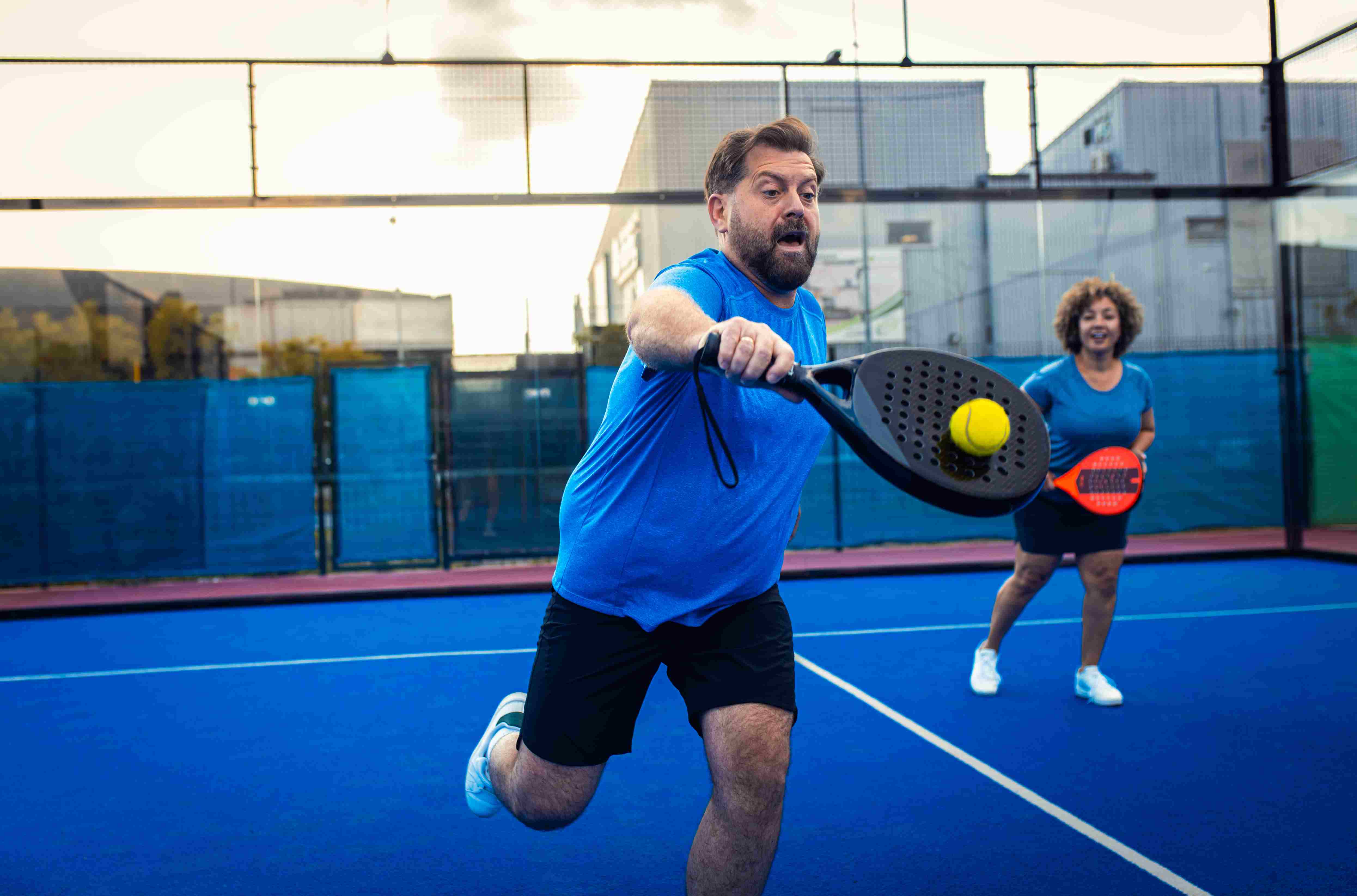
A level 4 player has a working bandeja, uses lobs to reset or win net position, and serves to a chosen zone. The player also knows when a ball is worth attacking.
This is the level where hard hitting starts to betray people. A flat ball into the corner often rebounds cleanly off the back glass and gives the other team pace to work with. Better players feed on rushed pace and loose placement.
The level 4 player wins by choosing better. They slow the ball down, push opponents back with height, and attack after creating space.
Players coming from tennis often need time here. A strong tennis background helps with hand skills and court awareness, but the wall changes the logic of the point.
Players coming from pickleball usually understand the soft game faster, although the glass still takes work. The differences show up quickly for anyone comparing padel vs pickleball in real games.
Level 5: Advanced club player
Level 5 players can beat most casual club players and compete in strong local events.
They have a full shot menu: bandeja, víbora, controlled lob, and volley change. They also understand that the best shot is often boring.
The jump from level 4 to level 5 is mostly about repeatability under pressure. Lots of players can hit a good bandeja in warm-up. Level 5 players can hit it at 4-4, after a long rally, with both opponents holding the net.
This level also starts to expose equipment choices. A racket that feels fine for casual games can feel unstable when the pace rises. Players still figuring that out should understand how padel equipment changes control and forgiveness before buying a racket based on marketing copy.
Level 6: Competitive player
Level 6 players train with intent. They compete in strong amateur draws, regional events, or national age groups.
The difference here is speed of recognition. Level 6 players see the point earlier. They read the opponent’s contact, adjust before the ball crosses the net, and know which ball they want 2 shots from now.
They also punish loose positioning. A level 4 player may miss the opening. A level 6 player sees it and takes court space before you realize you gave it away.
The British Padel Rating System, listed by iPadel, places tournament-level players around 5.0 and high tournament or nationally ranked players from 5.5 upward. That is a useful reminder: advanced club play and true competitive play are separate categories.
Level 7: Elite amateur or professional
Level 7 is elite padel. These players compete professionally, hold strong national rankings, or sit near that standard.
At this level, the sport is faster and calmer at the same time. The ball moves quickly, but the decisions are clean. Players have already built the pattern before the pressure arrives.
The FIP maintains world rankings for elite players, with ranking points attached to international competition. That ranking structure belongs in a different universe from local club ratings, which is why level 7 should be used carefully in recreational settings.
How to find your padel level
Self-rating is where I see players get into trouble most often.
You should rate the player who shows up every week. The better test is simple: what can you do reliably against opponents who are trying to beat you?
- Can you serve to a chosen target 7 times out of 10? If the serve only lands somewhere legal, you are still in the level 2 range. Target control points toward level 3.
- Can you use the back glass on purpose? Reactive wall play is beginner padel. Choosing the glass because it gives you a better contact point is level 3 behavior.
- Can you tell which balls are attackable before contact? Level 3 players often decide during the swing. Level 4 players decide earlier.
- Do you have one overhead you trust in a real match? Warm-up success is only a preview. Match pressure is the test.
- Can you reset a point under pressure? The best intermediate players know when the point needs height and time.
The fastest way to check your level is to play with a clean group. Skill-based clinics on Bounce can put you with players in a similar range when the session is grouped by level, which gives you a better read than random open play.
You will know in one session if the ball speed and spacing match where you think you are.
How match-based rating systems fit in
A coach rating and a match-based rating answer different questions.
A coach can tell you what your game looks like. A match-based rating tells you what your results say.
World Padel Rating describes itself as the official rating system of the USA and Canadian Padel Associations. It also says ratings reflect real match results, with rating confidence based on activity.
WPR also explains why self-assessment has limits: a new player’s initial survey rating is treated as low-confidence until match data or a coach review supports it. That is the right instinct. The score has to enter the conversation.
For US players, the USA Padel Association site points membership and several ranking pages toward WPR-connected properties. That makes WPR worth understanding if you plan to enter sanctioned USPA events.
How to move from one padel level to the next
Players usually move up by fixing one repeatable weakness that affects several points per match. This simplified progression uses whole levels for clarity. Club and national rating systems may define each level differently.
| Current level | Main gap | Training focus |
| Level 1 to 2 | Basic contact and rules | Grip, ready position, legal serve, scoring, and simple rally rhythm |
| Level 2 to 3 | Ball control | Serve targets, basic back-glass timing, slower rally tolerance, and recovery position |
| Level 3 to 4 | Tactical decisions | Recognising attackable balls, choosing resets, using controlled lobs, and moving with your partner |
| Level 4 to 5 | Repeatability under pressure | Point patterns, net transitions, bandeja control, overhead selection, and match review |
| Level 5 to 6 | National-level competition | Physical preparation, tournament routines, opponent analysis, and recovery between matches |
| Level 6 to 7 | Professional results | Full-time training, coaching support, tournament scheduling, recovery planning, and results against ranked professionals |
The Level 3-to-4 transition is where padel becomes more tactical. Level 3 players can sustain points. Level 4 players begin shaping them through shot selection, partner movement, and earlier reads.
A common mistake happens before contact. You move late, choose the wrong height or direction, then attack a ball that needed a reset.
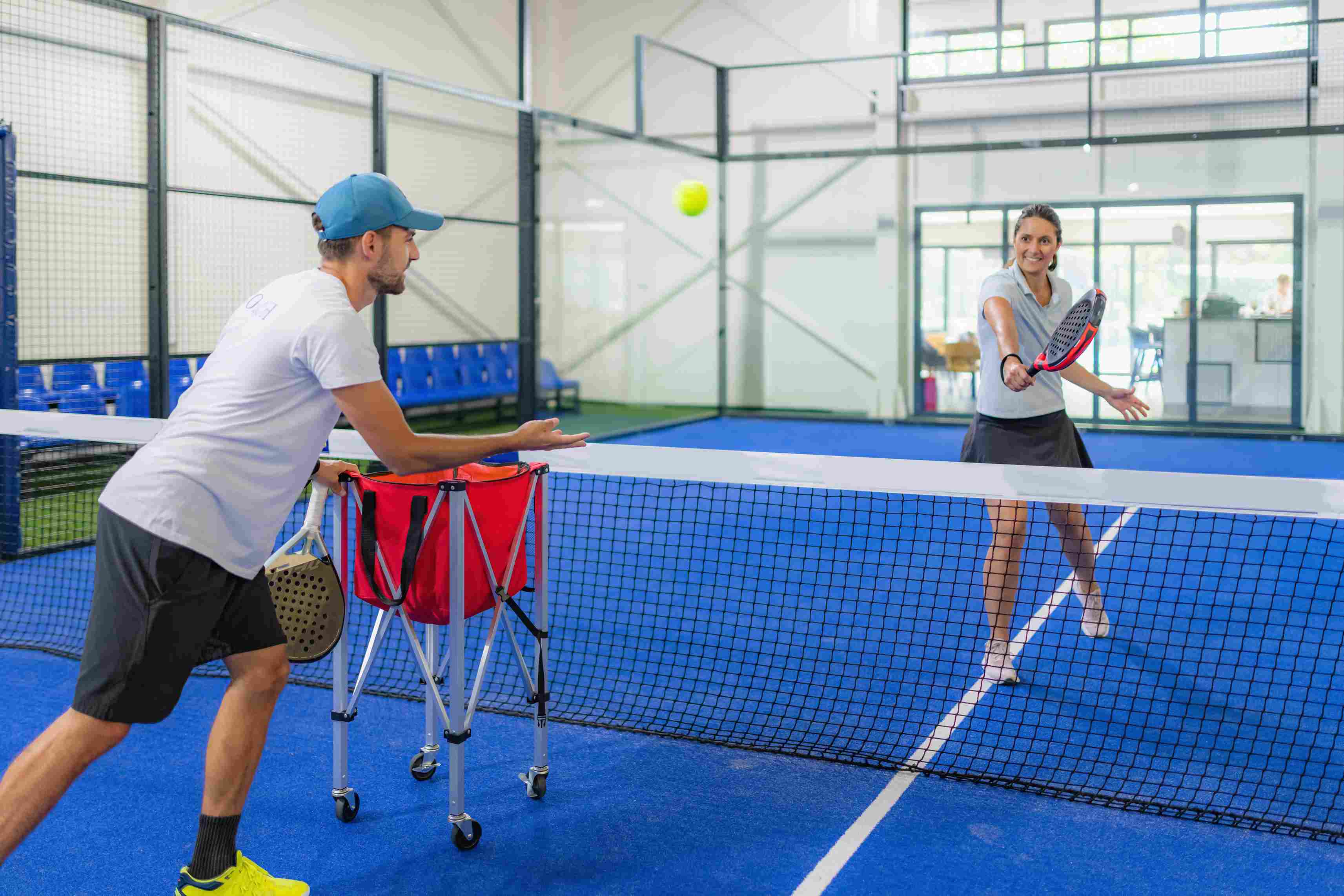
A coach can identify that pattern while the point is still unfolding. Padel lessons on Bounce let you search for coaching by sport and location, which is useful when you need focused work on wall defence, net movement, or overhead selection.
How padel levels compare to tennis and pickleball
Experience in another racket sport can speed up the first few sessions, though every background brings habits that need adjusting. Padel asks players to use the glass, move as a pair, shorten their swings, and choose position before power. LTA beginner coaching includes all 4 skills from the early stages.
| Background | What usually transfers | What needs rebuilding |
| Tennis | Split-step timing, volleys, tracking lobs, and basic racket control | Compact swings, underhand serving, glass use, pair movement, and slower point construction |
| Pickleball | Soft hands, compact volleys, patience near the net, and partner awareness | Back-court depth, wall timing, overhead movement, and playing farther from the net |
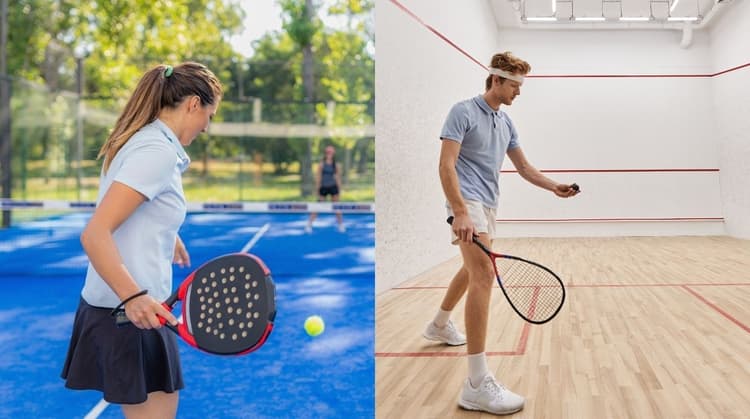
| Squash | Reaction speed, comfort tracking rebounds, and movement out of corners | Net positioning, partner spacing, shorter swings, and padel’s bounce-before-wall rules |
| New racket-sport player | Few established movement or swing habits | Contact quality, spacing, scoring, and reading the ball after the glass |
Most athletic racket sport players can reach level 3 quickly with regular play. Level 4 still takes padel-specific training.
Common mistakes when choosing a padel level
Entering the category above your real match level. Ambition is fine. Bad matchmaking wastes the match.
A tournament category should reflect your current level under pressure. Training up a level is useful. Competing far above your level usually turns into 45 minutes of chasing balls beyond your current reads.
Rating your best shot as your whole game
Level 4 requires serve placement, wall use, recovery, partner movement, and point selection.
Level 5 requires repeatable shot selection under pressure. Padel level is built from the whole match.
Treating level 3 as almost advanced
Level 3 is a good player in progress. It is also the level where many players stall because they rely on consistency and never learn tactical pressure.
Level 4 is a bigger jump than it looks.
Ignoring partner movement
Padel is doubles by default. Your level depends partly on whether you move with another person.
A player with solid shots who leaves gaps, overcommits to the net, or fails to cover the middle will struggle above level 3.
Conclusion
Padel levels are useful because they make improvement visible. You can stop saying “beginner” or “intermediate” and start naming the skill gap in front of you.
Level 2 means you are building control. Level 3 means you are starting to use the glass. Level 4 means you are reading the point. Level 5 means you can repeat that under pressure.
Pick the honest level, then train the next gap.
For players building their game through structured coaching and organized play, Bounce connects you with certified coaches and competitive formats in your city.
FAQs
How many levels are there in padel?
Padel has no single worldwide level system. Clubs commonly group players as beginner, upper beginner, intermediate, or advanced, while some use numbers or letters. Check how the club defines each level before joining a match or clinic.
What padel shots should a beginner know?
A beginner should learn the serve, return, forehand, backhand, lob, volley, and basic back-wall return. These shots let you start points, sustain rallies, defend the glass, and move toward the net with control.
What is an upper beginner level in padel?
An upper beginner can rally with basic control and understands where to stand during defence and net play. Their next shot priorities are the lob under pressure, controlled volley, wall return, chiquita, and an introductory bandeja.
What padel shots should an intermediate player know?
An intermediate player should control serves, returns, lobs, volleys, wall exits, bandejas, and basic smashes during live points. They should also choose shots based on position instead of attempting the same attack from every ball.
How do I know my padel level from my shots?
Judge your level through consistency, placement, recovery, and decision-making across full matches. One successful víbora matters less than your ability to defend the glass, land a deep lob, hold the net, and recover after an overhead.
How can I improve my padel level through shot practice?
Practice repeatable patterns that appear during matches: serve and first volley, lob and advance, wall return and reset, and bandeja and recover. Set a target such as 15 successful balls from 20 attempts before increasing speed or adding a harder shot.