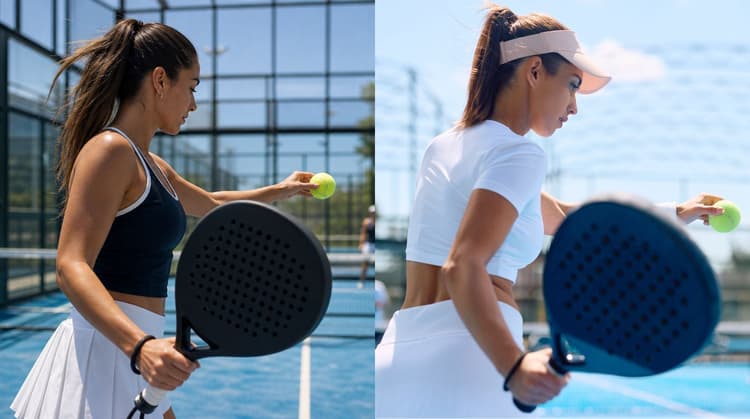
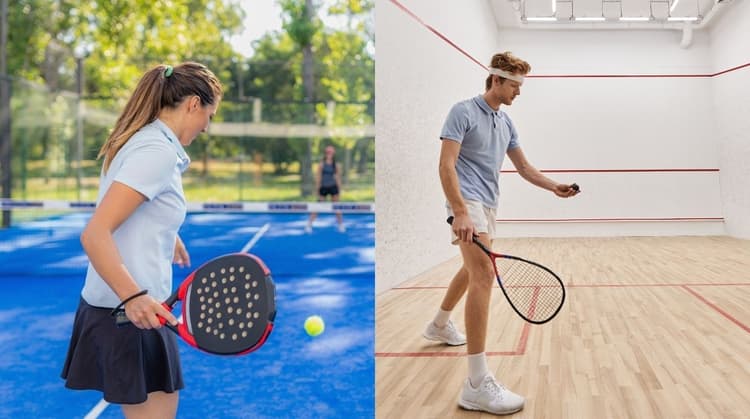
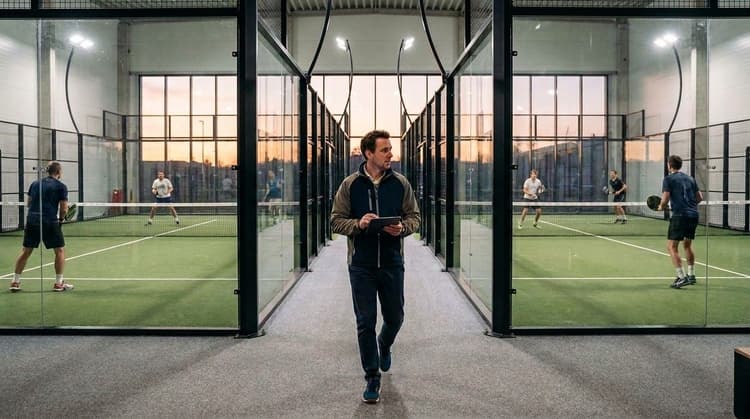
Padel vs pickleball are both doubles-focused racket sports, but they diverge on almost everything else. Padel is played on a 20m x 10m court enclosed by glass walls; pickleball uses a smaller open court (13.4m x 6.1m) with a non-volley zone.
The comparison between padel vs pickleball has become increasingly relevant as both sports continue expanding across cities, clubs, and recreational communities.
Each offers a unique combination of accessibility, strategy, and social play, attracting players from tennis, squash, and other racket sports. Understanding how they differ is essential for choosing the right fit or transitioning between them effectively.
Padel vs pickleball: quick comparison
The two sports differ most on court structure: padel uses an enclosed glass-walled court (20m x 10m) where rebounds are part of play; pickleball is an open court (13.4m x 6.1m) built around a non-volley zone.
At a glance, padel vs pickleball differs significantly in structure, gameplay mechanics, and overall experience.
While both are doubles-focused and social in nature, the environments and strategies diverge quickly once play begins.
| Category | Padel | Pickleball |
| Court Type | Enclosed with glass walls | Open court |
| Court Size | Larger (similar to doubles tennis) | Smaller (badminton-sized) |
| Scoring System | Tennis scoring (15-30-40) | Side-out or rally scoring |
| Equipment | Solid racket, pressurized ball | Paddle, perforated plastic ball |
| Gameplay Style | Strategic, rebound-based | Control-focused, non-volley zone emphasis |
| Learning Curve | Moderate (requires wall understanding) | Easier for beginners |
The key takeaway is that padel emphasizes spatial awareness and rebound strategy, while pickleball prioritizes control, placement, and net play. These differences shape everything from rally patterns to player positioning.
What Is Padel?
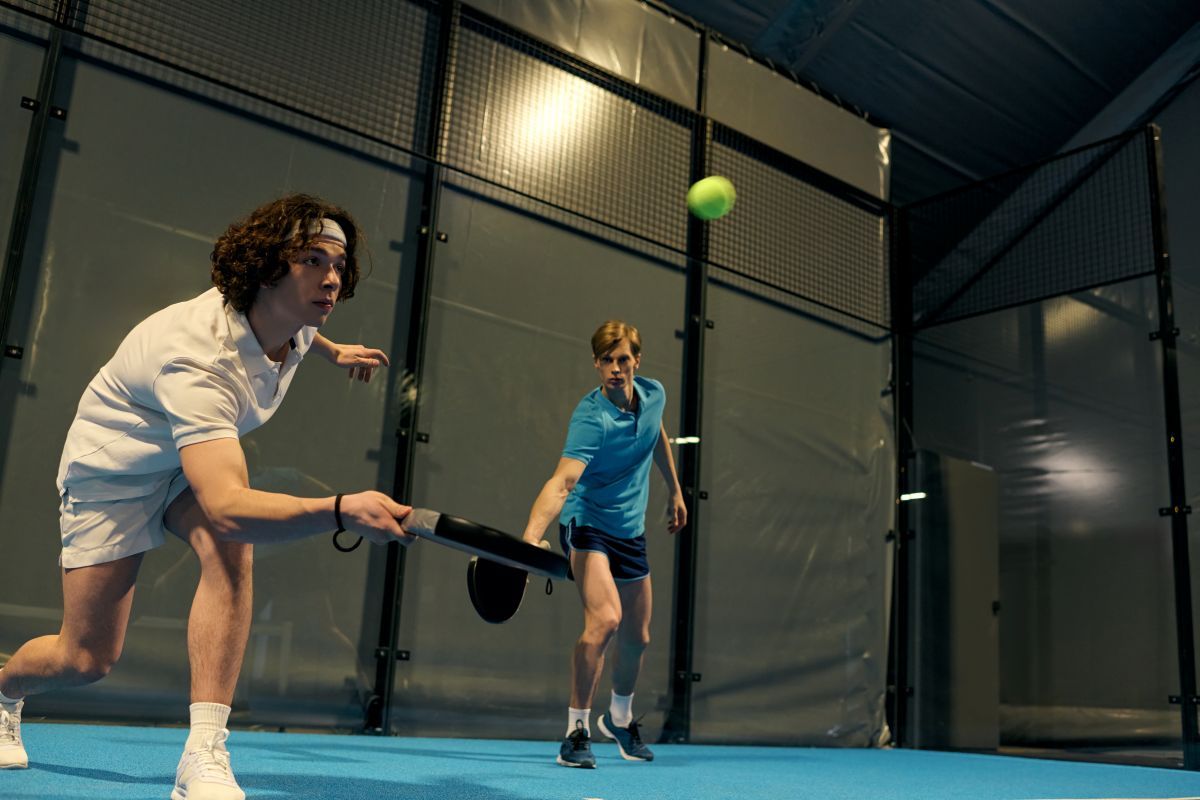
Padel is a doubles racket sport played on a 20m x 10m court enclosed by glass walls, where rebounds off those walls are a core part of play.
Padel originated in Mexico, and padel's history as a sport is one of the stranger origin stories in racket sports. It gained widespread popularity in Spain and Argentina before expanding globally. It is played on an enclosed court surrounded by glass and mesh walls, which are actively used during play. This structural feature creates a dynamic environment where rebounds are not only allowed but essential to strategy.
The sport is almost exclusively played in doubles, which reinforces teamwork and positioning as core components. Players must constantly adjust to angles created by the walls, making anticipation and court awareness critical. Unlike traditional racket sports, the ball can bounce off walls after hitting the ground, extending rallies and increasing the complexity of each point.
Padel rackets are solid and perforated, without strings. Players new to the sport often overestimate how much padel equipment they need to get started. The racket design limits excessive power and encourages controlled shot-making.
The ball is similar to a tennis ball but slightly less pressurized, contributing to longer rallies. This combination of equipment and court design results in a game that balances pace with strategy.
The growth of padel is strongly tied to club environments. Most courts are purpose-built, often located in dedicated facilities or premium sports clubs. This creates a structured playing experience, where access is typically organized through bookings, memberships, or scheduled sessions.
What Is Pickleball?
Pickleball is a racket sport played on a smaller open court (13.4m x 6.1m) with a non-volley zone 7 feet from the net that shapes almost every decision in the game.
Pickleball's growth in North America has been one of the most consistent in recreational sports. It blends elements of tennis, badminton, and table tennis into a format that is easy to learn but difficult to master. The sport is played on a smaller, open court with a net similar in height to tennis but lower.
A defining feature of pickleball is the non-volley zone, commonly referred to as the kitchen. Players cannot hit the ball in the air while standing in this zone, which fundamentally shapes gameplay. This rule encourages softer shots, controlled rallies, and strategic placement rather than aggressive power.
The paddle used in pickleball is solid and typically made from composite or polymer materials. The ball is lightweight and perforated, producing a slower pace compared to tennis or padel. This allows players to engage in longer exchanges focused on precision and consistency.
Pickleball’s accessibility is one of its strongest advantages. Courts can be built specifically or created by converting existing tennis courts. This flexibility has accelerated its adoption across parks, community centers, and private clubs. As a result, players can often find games more easily without requiring specialized facilities.
Padel vs Pickleball Court Differences
The most visible difference is court size and structure: padel courts are enclosed with glass walls and nearly twice the size of a pickleball court. That difference changes how players move, shoot, and think.
The court is one of the most defining elements when comparing padel vs pickleball, as it directly shapes movement, shot selection, and overall strategy.
Differences in size, structure, and layout create two completely distinct playing environments that influence how each sport is experienced.
| Feature | Padel Court | Pickleball Court |
| Court Dimensions | Approximately 20m x 10m | Approximately 13.4m x 6.1m |
| Court Type | Enclosed with glass walls and metal fencing | Open court with no walls |
| Wall Usage | Walls are actively used in gameplay for rebounds | No wall interaction; ball must stay within boundary lines |
| Net Height | Similar to tennis | Slightly lower than tennis |
| Key Zones | No restricted volley zone | Includes non-volley zone (kitchen) extending 7 feet from the net |
| Gameplay Dimension | Three-dimensional (bounce + wall rebounds) | Two-dimensional (direct ball trajectory only) |
| Movement Patterns | Wider lateral coverage and reactive positioning | Compact movement centered around the kitchen line |
| Rally Dynamics | Longer rallies with unpredictable rebounds | Controlled rallies focused on placement and consistency |
| Strategy Impact | Emphasis on angles, anticipation, and wall usage | Emphasis on positioning, soft game, and net control |
These structural differences define how each sport feels in practice. Padel creates a dynamic, reactive environment shaped by wall rebounds, while pickleball offers a more controlled and compact court experience focused on precision and positioning.
Padel vs Pickleball Rules Explained
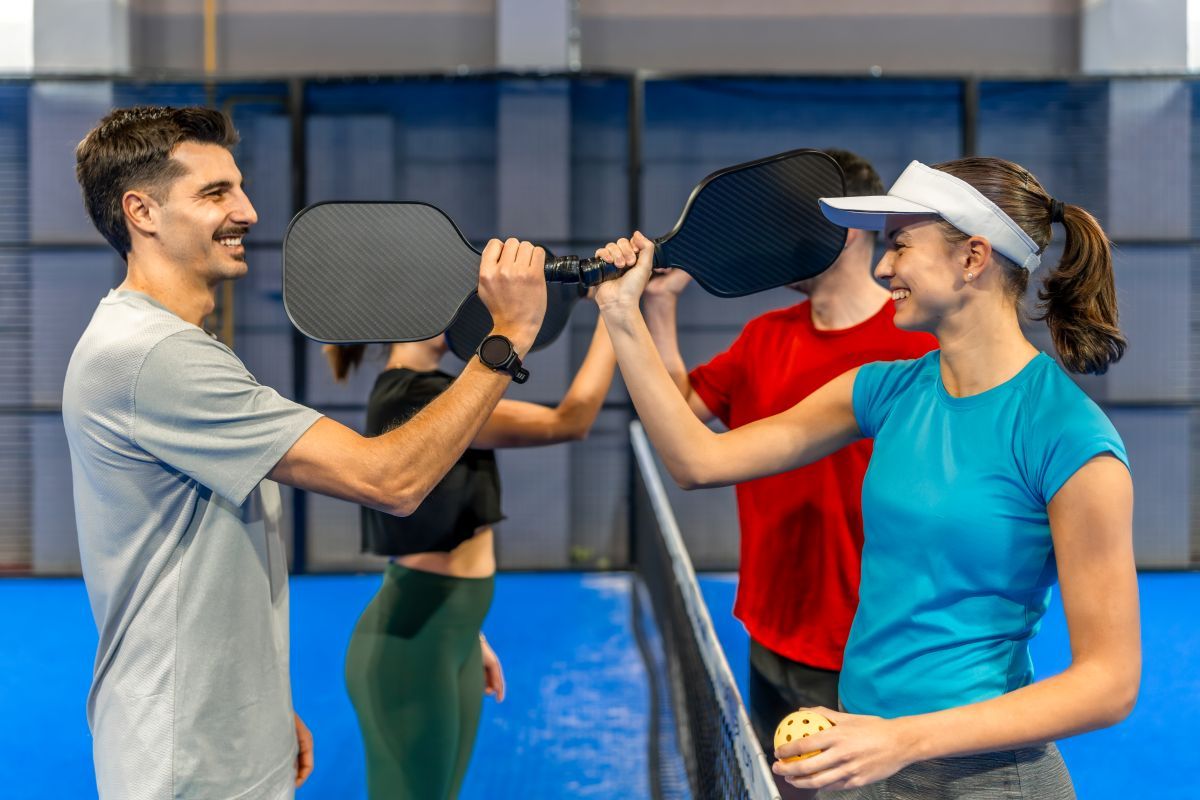
Both sports use underhand serves, but padel follows International Padel Federation tennis scoring (15-30-40) while USA Pickleball governs pickleball with side-out scoring to 11, win by 2. The non-volley zone in pickleball and the wall-rebound rules in padel are the two mechanics that define each game.
Serving Rules
- Padel requires an underhand serve, hit diagonally into the opponent’s service box. After the bounce, the ball may contact the wall and remain in play. This introduces immediate complexity, as returns can involve wall rebounds.
- Pickleball also uses an underhand serve but with stricter contact rules. The paddle must strike the ball below waist level, and serves must clear the non-volley zone without bouncing first.
Scoring System
- Padel follows traditional tennis scoring: 15, 30, 40, and game. Matches are typically played in sets, which adds a structured competitive format familiar to tennis players.
- Pickleball commonly uses side-out scoring, where only the serving team can earn points, although rally scoring is also used in some formats. Games are often played to 11 points, requiring a two-point margin.
Ball in Play
- In padel, the ball can bounce off walls after hitting the ground, extending rallies and creating opportunities for recovery and counterplay.
- In pickleball, once the ball lands outside the boundaries or fails to clear the net, the rally ends. There is no wall interaction, making shot placement more direct.
Faults and Violations
- Pickleball includes the double bounce rule, requiring the ball to bounce once on each side before volleys are allowed. The kitchen rule prevents volleys near the net.
- Padel faults include hitting the ball directly into the opponent’s wall without a bounce or sending it outside the court without proper trajectory.
These rule differences create distinct pacing. Padel rallies tend to be more dynamic and extended, while pickleball rallies are structured around controlled exchanges and positional discipline.
Gameplay and Playing Style Differences
Padel rewards wall-reading and reactive positioning. Pickleball rewards precision, soft hands, and kitchen-line discipline. The two games feel completely different even though both use a net and a ball.
The contrast in gameplay is where padel vs pickleball becomes most noticeable, as each sport emphasizes different skills, pacing, and tactical decision-making. These differences shape how points are constructed and how players approach competition.
| Aspect | Padel | Pickleball |
| Core Playing Style | Strategy driven by angles, rebounds, and positioning | Focus on precision, patience, and control |
| Use of Environment | Heavy reliance on walls and rebounds | No external elements; direct ball play only |
| Rally Structure | Dynamic rallies with frequent transitions between offense and defense | Controlled rallies built on consistency and gradual advantage |
| Net Play | Important but balanced with baseline and wall play | Dominant area of play, especially at the kitchen line |
| Shot Selection | Includes lobs, smashes, volleys, and wall-assisted shots | Emphasizes dinks, drops, and controlled drives |
| Power vs Control | Allows for aggressive power, especially with overhead smashes | Rewards placement and touch over raw power |
| Decision-Making | Reactive and adaptive due to unpredictable rebounds | Calculated and methodical, focused on shot placement |
| Tempo | Fast-paced and reactive, with changing dynamics | Steady and controlled, with deliberate exchanges |
| Skill Emphasis | Anticipation, spatial awareness, and teamwork | Consistency, touch, and positional discipline |
These gameplay differences define the overall experience of each sport. Padel offers a dynamic and reactive style shaped by wall interactions, while pickleball delivers a structured, control-oriented game centered around precision and consistency.
Equipment Comparison: Padel vs Pickleball
Both sports use solid-faced implements with no strings. Padel rackets are heavier and allow more spin; pickleball paddles are lighter and built for touch. The balls differ too: padel uses a pressurized ball close to tennis, pickleball uses a perforated plastic ball.
Equipment plays a crucial role in shaping the experience of padel vs pickleball, directly influencing shot mechanics, rally pace, and overall playing style. Differences in rackets, paddles, and balls create distinct technical demands for each sport.
| Equipment Aspect | Padel | Pickleball |
| Racket / Paddle Type | Solid, stringless racket with perforations | Solid paddle made from composite or polymer materials |
| Weight & Feel | Slightly heavier, stable feel for controlled power | Lightweight and highly maneuverable for quick reactions |
| Surface Design | Textured surface to enhance spin and control | Smooth or lightly textured surface focused on precision |
| Ball Type | Pressurized ball similar to tennis (slightly softer) | Plastic ball with holes (wiffle-style) |
| Ball Speed & Bounce | Moderate speed with consistent bounce | Slower speed with reduced and predictable bounce |
| Power Potential | Allows for greater power, especially on smashes | Limited power; emphasizes controlled shots |
| Spin Capability | Higher spin potential due to racket surface and ball interaction | Moderate spin, more dependent on paddle technique |
| Control & Touch | Balanced between control and power | Strong emphasis on touch, placement, and finesse |
| Adaptation Required | Requires adjustment to rebound timing and racket feedback | Requires adjustment to softer ball response and paddle control |
These equipment differences significantly impact how each sport is played. Padel supports a wider range of shot-making, including power and spin, while pickleball prioritizes control, touch, and consistent placement, shaping two distinct playing experiences.
Padel vs Pickleball: Which One Should You Choose?
For players coming from tennis, padel adapts faster because the scoring and court scale are familiar. For everyone else, pickleball has a shorter learning curve and far more publicly available courts.
Choosing between padel vs pickleball depends on individual preferences, playing style, and access to facilities. Each sport offers a distinct experience that appeals to different types of players.
Padel is well-suited for those who enjoy strategic gameplay, dynamic rallies, and team coordination. The use of walls introduces complexity that rewards anticipation and creativity. Players with a background in tennis or squash often adapt quickly to its mechanics.
Pickleball is ideal for players seeking accessibility, quick learning, and consistent gameplay. Its smaller court and simplified rules make it approachable, while still offering depth at higher levels. The emphasis on control and positioning creates a rewarding progression path.
Access to quality play opportunities often determines long-term engagement. Platforms like Bounce simplify this process by connecting players with local coaches, clubs, and organized programs. Instead of relying on fragmented sources, players can find structured opportunities to experience both sports within their city.
Conclusion
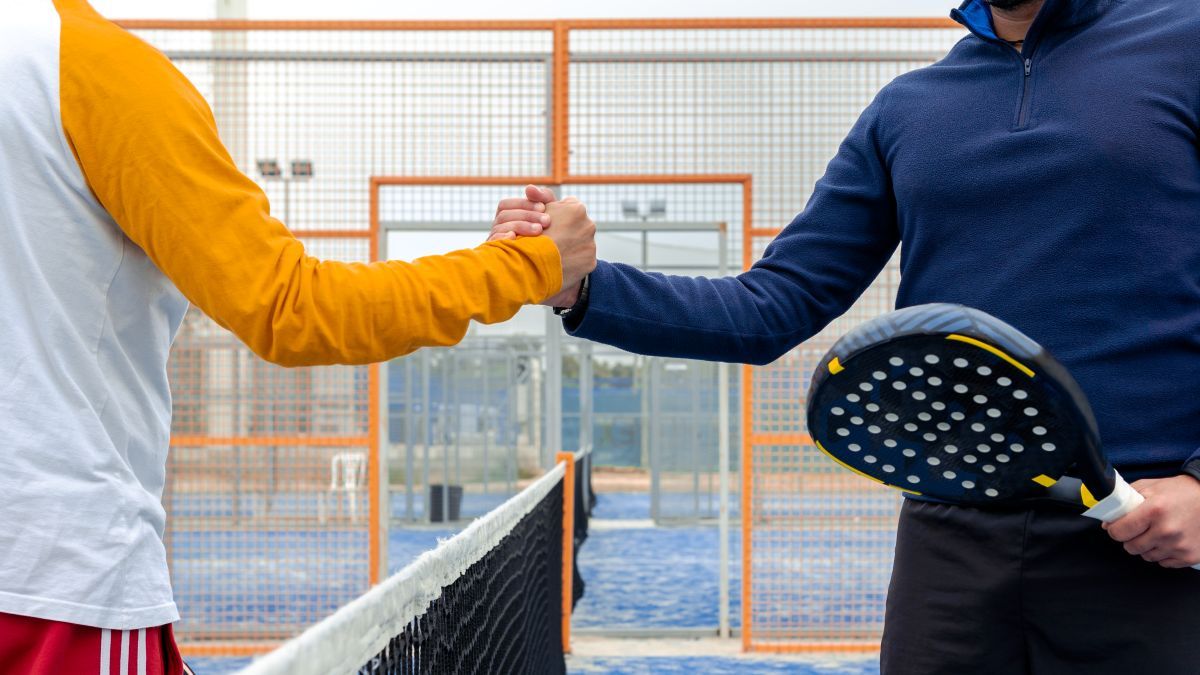
The comparison of padel vs pickleball highlights two distinct approaches to racket sports, each defined by its court design, rules, and style of play.
Padel delivers a dynamic, strategy-driven experience shaped by wall interactions, while pickleball offers a controlled, accessible game built around precision and consistency. Both provide strong pathways for skill development and social play.
Finding the right environment to play is often the deciding factor. Bounce serves as a central platform where players can discover courts, connect with coaches, and join structured programs in their city.
Frequently asked questions
Is padel harder than pickleball?
Padel has a steeper learning curve because the walls add a spatial dimension that takes time to read. Pickleball's rules are simpler and the court is smaller, which most beginners navigate faster. Players from tennis typically find padel more familiar; players with no racket background tend to find pickleball more accessible.
Why is pickleball more popular than padel in the US?
Pickleball has roughly a 60-year head start in the US, and its courts can be created by converting tennis courts or any flat hard surface. That infrastructure advantage is significant. Padel requires purpose-built enclosed courts, which are expensive to construct and still limited outside major cities.
Is padel as noisy as pickleball?
Padel is generally quieter. The pressurized padel ball makes a softer sound on contact compared to the sharp pop pickleball produces at impact. Pickleball noise has generated real complaints at residential courts, while padel's enclosed glass structure contains more sound within the court.
Is padel a rich man's sport?
Padel carries that reputation, especially in Europe, where courts are typically found in private clubs with membership fees. In the US, it's still primarily club-based. Pickleball is more accessible: public courts are common across the country, and a starter paddle runs under $50. Padel equipment costs more and court access outside major cities is limited.
What is padel called in America?
Padel is called padel in the US, though it's sometimes confused with platform tennis or paddle tennis, which are different sports with different court designs. The International Padel Federation governs the sport worldwide. In the US, padel is growing but still niche relative to pickleball.