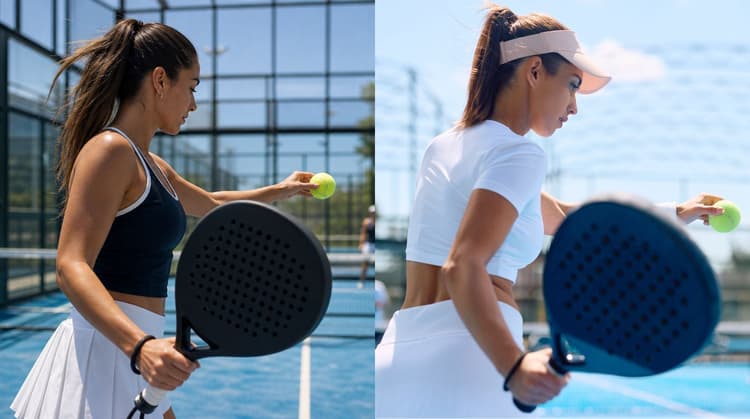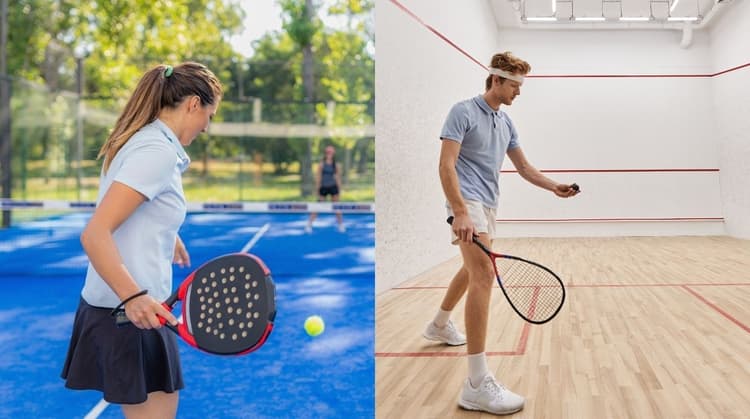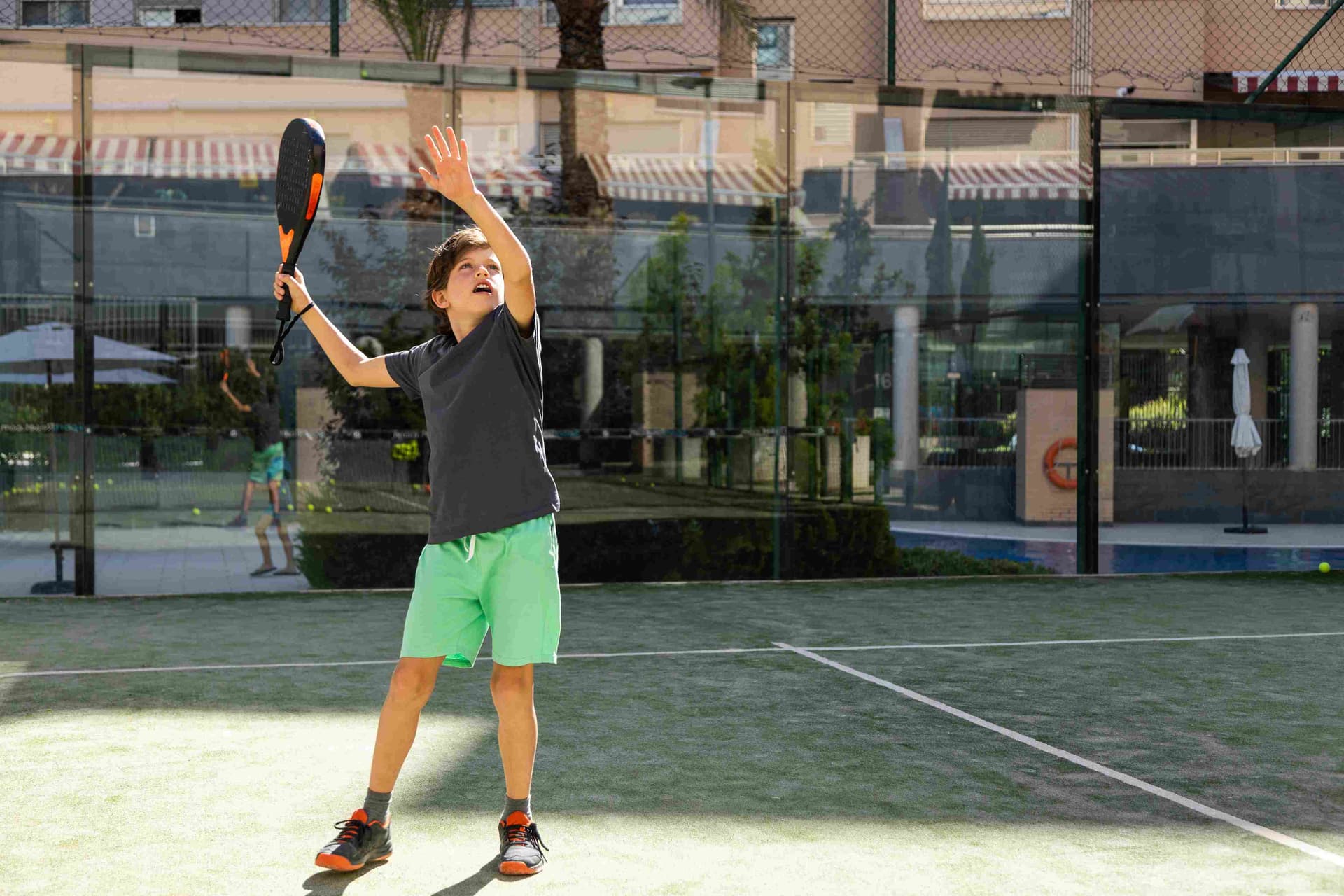
Most beginners treat the padel serve as a formality. Drop the ball, swing underhand, start the point.
Then the first close call happens. The ball clips the net. Someone steps on the service line. The serve lands, hits the cage, and the court splits on the call.
Want a quick answer? A legal padel serve starts behind the service line, bounces once inside the server's service box, is struck underhand at or below waist level, and lands diagonally inside the receiver's service box. The server gets 2 attempts. A serve that clips the net and still lands correctly is replayed as a let.
Use this as the working version of the rulebook: service motion, foot position, faults, lets, receiver rules, doubles rotation, and the 2026 FIP update. The exact rule language comes from the FIP Rules of Padel 2026, with practical checks added for beginners.
What makes a padel serve legal
A legal padel serve has 6 requirements. Miss one and the serve is a fault.
- Start in the correct service area. The server stands behind the service line, between the imaginary extension of the center service line and the side wall. Under the 2026 wording, the player starts with one foot behind the service line and stays in that service area until the ball is served.
- Bounce the ball inside your service box. The ball has to bounce on the ground inside the box where you are standing to serve. Under the 2026 rulebook, the ball may not cross the service line or the imaginary center-line extension before you strike it.
- Keep your feet off the lines. Your feet may not touch the service line or the imaginary center line during the serve. A line touch is a foot fault.
- Strike the ball at or below waist level. The official rule uses waist level, measured at the moment of contact. A high toss is allowed only if you still hit the ball at or below your waist.
- Serve diagonally into the receiver's box. From the right service box, you serve cross-court into the receiver's opposite box. Then you alternate sides after every point.
- Treat contact as the serve. Once you make contact with the ball, or make an intentional attempt to hit it, the serve has happened.
If you come from another racket sport, the easiest comparison is padel vs pickleball: both sports limit the serve so the point can develop, but padel adds the wall and cage rules right away.
Where to stand before serving
Stand in the service area on your side of the court, behind the service line and between the center-line extension and the side wall. The first point of a game starts from the right side. After each point, the server moves to the other side.
You can use small foot movements that do not change the service position. Walking, running, or jumping through the serve is a fault in officiated play.
Most beginners should start close to the center line. That angle gives you a safer cross-court target and makes the next move to the net easier.
For players joining organized games, Bounce open play gives you doubles reps where this rotation starts to feel automatic after a few games.
Serve faults in padel: what actually counts
A fault happens when the serve breaks one of the legal requirements. Two faults on the same point give the point to the receiving pair.
The biggest beginner mistakes are contact height, foot position, diagonal direction, and confusion between glass and metal fencing.
- You hit the ball above waist level. Fault. The contact point decides the call.
- The ball crosses out of your service box before contact. Fault under the 2026 FIP wording. The serve bounce must stay inside the serving box until you hit it.
- Your foot touches the service line. Foot fault. The line is part of the restriction for your feet.
- The serve lands outside the receiver's service box. Fault. On the receiver's side, the lines count as good.
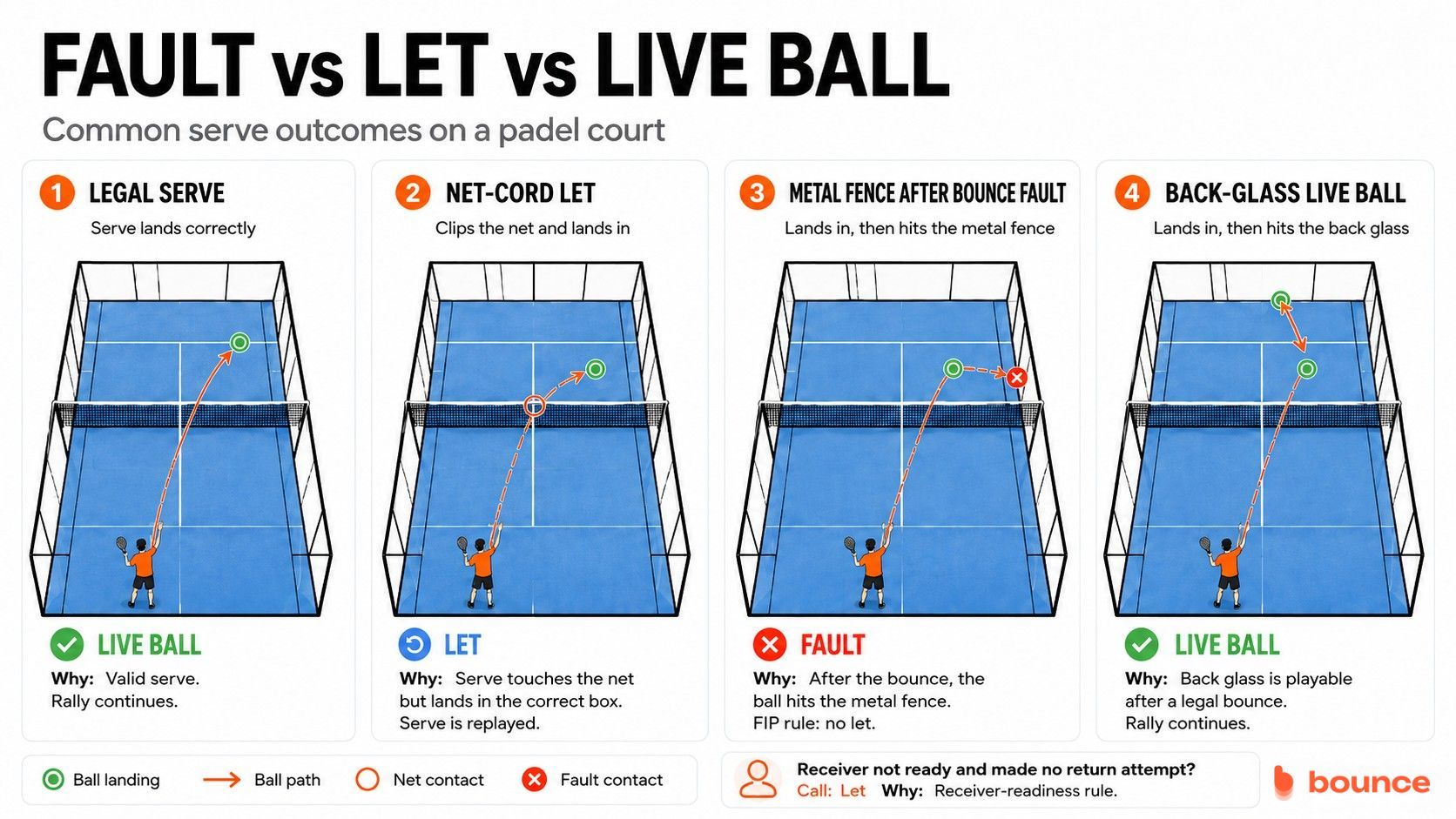
- The serve lands in the correct box, then hits the metal fence before the second bounce. Fault. The cage is treated differently from the back glass on a serve.
- The serve lands in the correct box, then hits the back glass. Ball in play. The receiver still has to return it before the second bounce.
- You drop the ball and intentionally miss or decline to hit it. Fault. An intentional attempt or contact counts as the serve.
Source note: FIP Rule 7 lists serve-fault conditions, including receiver-box misses, metal-fence contact after the legal bounce, and server infringements of Rule 6.
Fault vs let vs live ball
| Scenario | Call | Why |
| Serve lands in the wrong service box | Fault | Diagonal target rule missed |
| Serve lands outside the receiver box | Fault | Lines count as good, outside the lines is out |
| Serve hits the server-side wall before crossing the net | Fault | Server-side obstruction before the serve reaches the other court |
| Serve clips the net and lands correctly | Let | Serve is replayed |
| Serve clips the net and lands out | Fault | The net touch does not fix an out serve |
| Serve lands, then hits receiver-side back glass | Live ball | Back glass is playable after a legal bounce |
| Serve lands, then hits receiver-side metal fence | Fault | FIP treats fence contact on a serve as a fault before the second bounce |
| Receiver was not ready and made no return attempt | Let | Receiver-readiness rule |
The let rule: when you replay a serve
A let means the serve is replayed. The most common let is a net-cord serve that still lands inside the receiver's service box and avoids the metal fence before the second bounce.
If the let happens on a first serve, the point restarts with 2 serves. If it happens on a second serve, the server repeats the second serve.
Receiver readiness can also create a let. If the receiver tries to return the serve, they lose the right to claim they were not ready.
The LTA official padel rules explain the same beginner-facing version: net cord plus correct landing box means you retake the serve.
The 2026 FIP serve update
The useful 2026 FIP update for beginners is the bounce rule. The server has to bounce the ball within the correct service box, and the ball may not cross the service line or imaginary center-line extension before contact.
So if your drop catches the edge of the box and skips across the line before you hit it, expect a fault in organized play.
The updated wording also uses one foot behind the service line at the start of the service. Your feet still cannot touch the service line or the imaginary center line.
Receiver rules: what you do after the serve lands
The receiver has a shorter checklist.
Let the serve bounce inside your receiving service box. Then return it before the second bounce. You can stand anywhere on your side of the court, and your partner can stand anywhere on your side too.
If the serve lands legally and rebounds off the back glass, keep playing. If the served ball hits you or your racket before it bounces, the server wins the point.
The receiver's setup depends partly on gear and surface. If you are still sorting that out, padel equipment covers rackets, balls, shoes, and the pieces that matter for a first month of play.
Serving rotation in doubles
Padel is played as doubles in the official format. The serving team keeps serve for the whole game, then the other team serves the next game.
Inside a service game, the server alternates boxes after every point: right, left, right, left. At the start of the next service game for that pair, partners alternate who serves.
The receiving pair chooses who receives from each side at the start of the set. Once set, that order stays in place during the set. In a tiebreak, players change ends every 6 points.

Common serve mistakes beginners make
- Trying to win the point with the serve. Padel rewards the serve-and-move pattern. Hit a controlled serve, then take 2 steps toward the net.
- Letting the toss get too tall. A high bounce pushes contact above waist level. Keep the drop small and the swing compact.
- Mixing up glass and cage rules. After a legal serve bounce, back glass keeps the ball live. Metal fence before the second bounce makes the serve a fault.
- Standing too wide too soon. A wide starting spot can work later. Beginners usually get better margin near the center line.
For the full serve-and-move habit, padel tips is the better next step because the serve only matters if your first position after contact is useful.
If you want a coach to check your contact height, stance, and first move after the serve, Bounce lessons connect players with coaches who teach padel fundamentals in a real doubles context.
Conclusion
The padel serve is built to start the rally. That is the point.
Get the 6 legal requirements right: correct starting position, bounce inside your service box, feet off the lines, below-waist contact, diagonal target, and a clean attempt. Then learn the calls: fault, let, and live ball.
For players putting those rules into organized play, Bounce connects you with padel clubs, certified coaches, open play, and structured doubles formats in your city.
FAQ
Can you serve overhand in padel?
An overhand serve is a fault. The serve has to be struck underhand after a bounce, with contact at or below waist level.
How many serves do you get in padel?
You get 2 serves per point. If the first serve is a fault, you get a second serve. If the second serve is also a fault, the receiving pair wins the point.
What is a let serve in padel?
A let serve usually happens when the serve touches the net cord and still lands in the correct receiving service box. The serve is replayed. If it was a second serve, you repeat the second serve.
Can a padel serve hit the side wall or cage?
A serve that hits any wall, fence, or object on the server's side before crossing the net is a fault. On the receiver's side, a serve that lands correctly and then hits the back glass is live. A serve that lands correctly and then hits the metal fence before the second bounce is a fault.
Where do you stand to serve in padel?
Stand behind the service line, between the imaginary extension of the center service line and the side wall. Your feet cannot touch the service line or the imaginary center-line extension.
What changed in the padel serve rules in 2026?
The main change for everyday players is the bounce wording. The ball has to bounce inside the correct server's service box and cannot cross the service line or imaginary center-line extension before you strike it.
Can you volley a serve in padel?
The receiver must let the serve bounce in the receiving service box before returning it. If the served ball hits the receiver or their racket before bouncing, the server wins the point.