Most padel players see a high lob and swing for a winner.
Better players wait for the right ball. When it comes, they know whether to hit flat, kick it high off the glass, play por tres, or leave the smash alone.
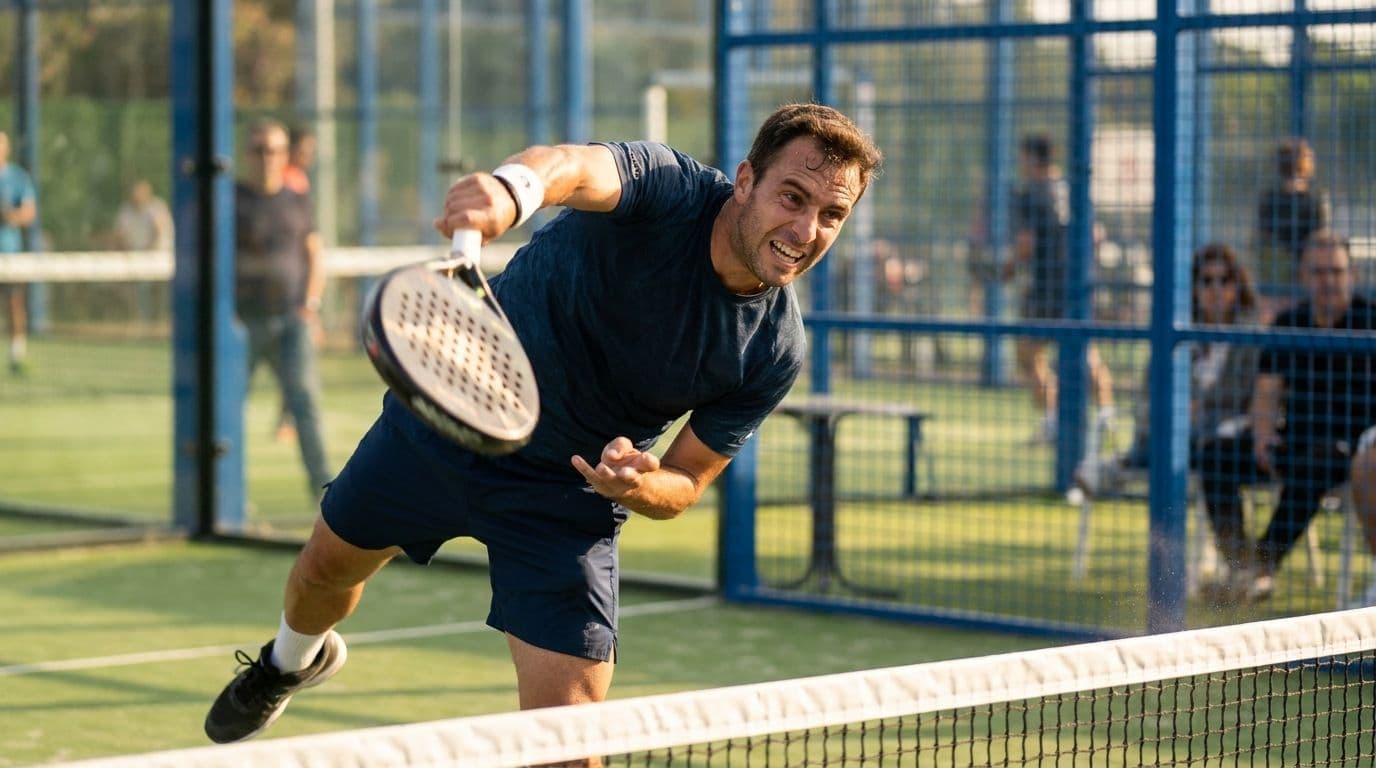
The padel smash looks simple: overhead ball, full swing, maximum power. In match play, it is one of the easiest shots to misuse. Wall geometry, court position, and spin decide whether you win the point or feed the next ball to your opponent.
A peer-reviewed analysis of professional padel smashes found that flat and topspin smashes produce the highest share of winning points among smash types, near 60%. The same study found that effectiveness drops when players move away from the net area. That is the whole lesson.
Position matters as much as power.
Want a quick answer? A padel smash is an overhead shot used to finish the point or force a weak reply. Use it when the ball is above head height and you are close enough to the net to control the angle. From deeper court positions, a bandeja, vibora, or lob is usually the better shot.
| Situation | Best shot |
| High ball inside service box | Flat smash or por tres |
| High ball near service line | Kick smash |
| Shoulder-height ball | Bandeja or vibora |
| Deep ball in back third | Lob or controlled overhead |
This guide covers the mechanics, the main smash types, the por tres, the bandeja and vibora decision, and the drills that make the shot usable in a real match.
Padel smash technique: the mechanics that create power
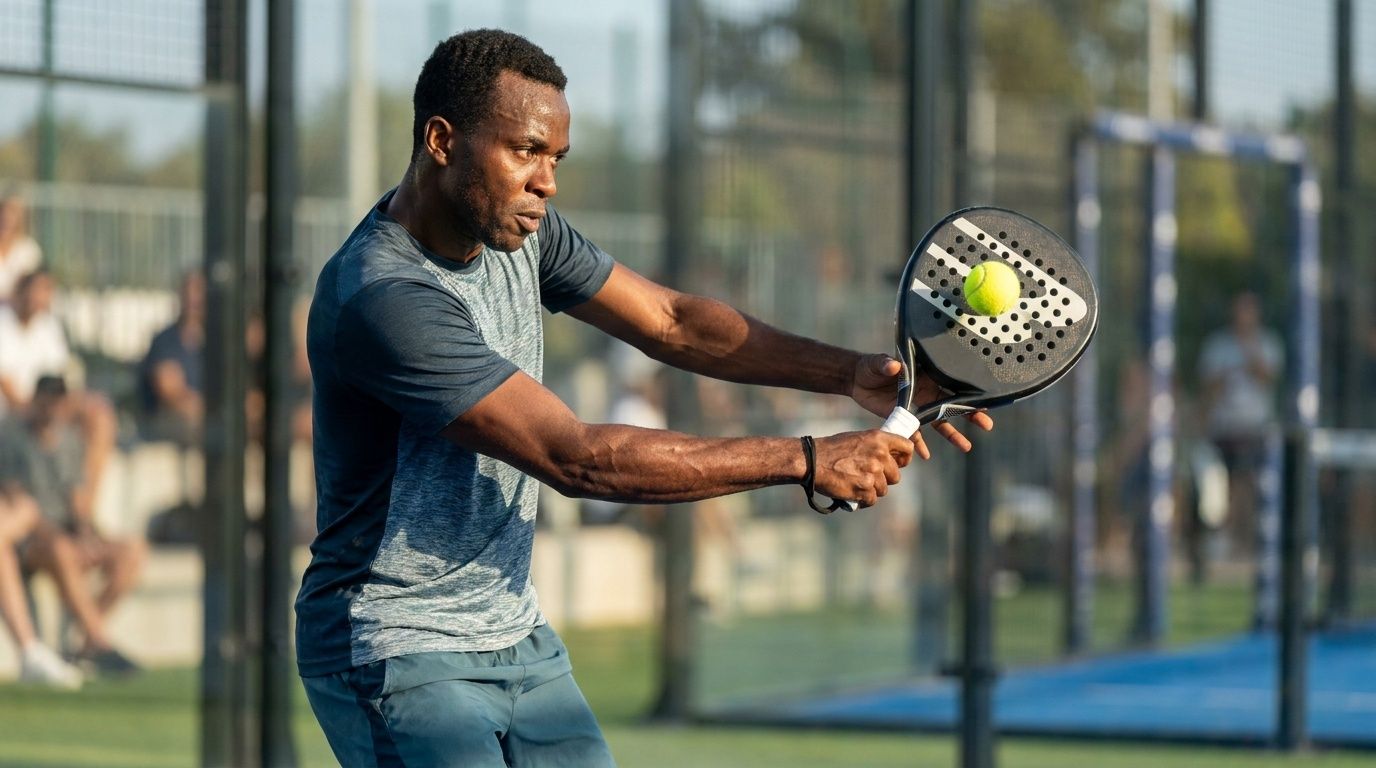
The swing starts from the ground.
Turn sideways early. Load the back leg. Keep the non-dominant hand up so it tracks the ball and keeps your shoulders turned. Then let the hitting arm move up and through contact.
The racket should meet the ball slightly in front of the hitting shoulder, at full extension. Too far back, and the racket face closes early. Too far in front, and you reach. Both mistakes drain power and make the ball easier to defend.
Topspin comes from the way the arm and forearm move through contact. A biomechanics review of padel movements describes the smash as an explosive combination of wrist flexion and forearm pronation. Think of wrist and forearm action as the finish to the chain: legs, torso, shoulder, then forearm.
Grip matters too. Most intermediate and advanced players use a continental or slight eastern grip for overheads because it allows pronation through contact. A heavy western grip makes the ball flatter and limits shot variety under pressure.
The contact zone
The clean contact point is 15 to 20 centimeters in front of the dominant shoulder, at maximum arm extension.
From there, the follow-through controls the result. Full pronation sends the ball down with more kick. A sliced finish sends it flatter and lower. Beginners usually miss by chopping down at the ball, then watching it crash into the net.
Think up, through, then across.
Technique checklist by phase
| Phase | Key position | Common error |
| Preparation | Racket head up, non-dominant hand tracking the ball | Late setup, racket drops too early |
| Loading | Weight back, shoulder turned, elbow high | Flat arm, no shoulder rotation |
| Contact | Full extension, 15 to 20 cm in front of shoulder | Contact behind body, weak pronation |
| Follow-through | Pronation across the body | Swinging down into the net |
| Recovery | Step forward or reset toward center | Watching the shot instead of recovering |
The main padel smash types and when to use each
Most guides list the smash types. The useful question is when each one makes sense.
That depends on 4 things: ball height, court position, opponent position, and your balance.
The flat smash
The flat smash drives the ball directly into the opponent's court with minimal topspin. It works best when the ball is above head height and you are inside the service box or close to the net.
Use it when the opponents are out of position and the open court is there. A flat smash from deep in your half usually sits up after the bounce and gives the opponents a clean defensive lob.
The flat smash is simple in theory. It is ruthless only from the right spot.
The kick smash
The kick smash uses topspin to make the ball jump high after the bounce and back-wall contact. It can force defenders above shoulder height, push them off balance, or make the ball come back toward your side.
The racket path moves up and through the ball. The contact still happens in front of the body, but the face closes through the hit. The ball dips, bites the court, and comes off the glass higher than a flat smash.
Use the kick smash when the ball is high enough and you have time to get under it. If your feet are late, the kick disappears.
The por tres
The por tres is the smash that exits the court over the 3-meter side wall. The ball bounces on the opponent's side, hits the side wall, and travels out.
The name means "for three" in Spanish, referring to the 3-meter fence. The shot needs angle and topspin. A hard flat por tres attempt usually hits too low on the wall and comes back into play.
Use the por tres from near the net when the lob lands close enough to the middle of the court. From the back third, the side-wall angle is too tight for most players.
Shot selection by court zone
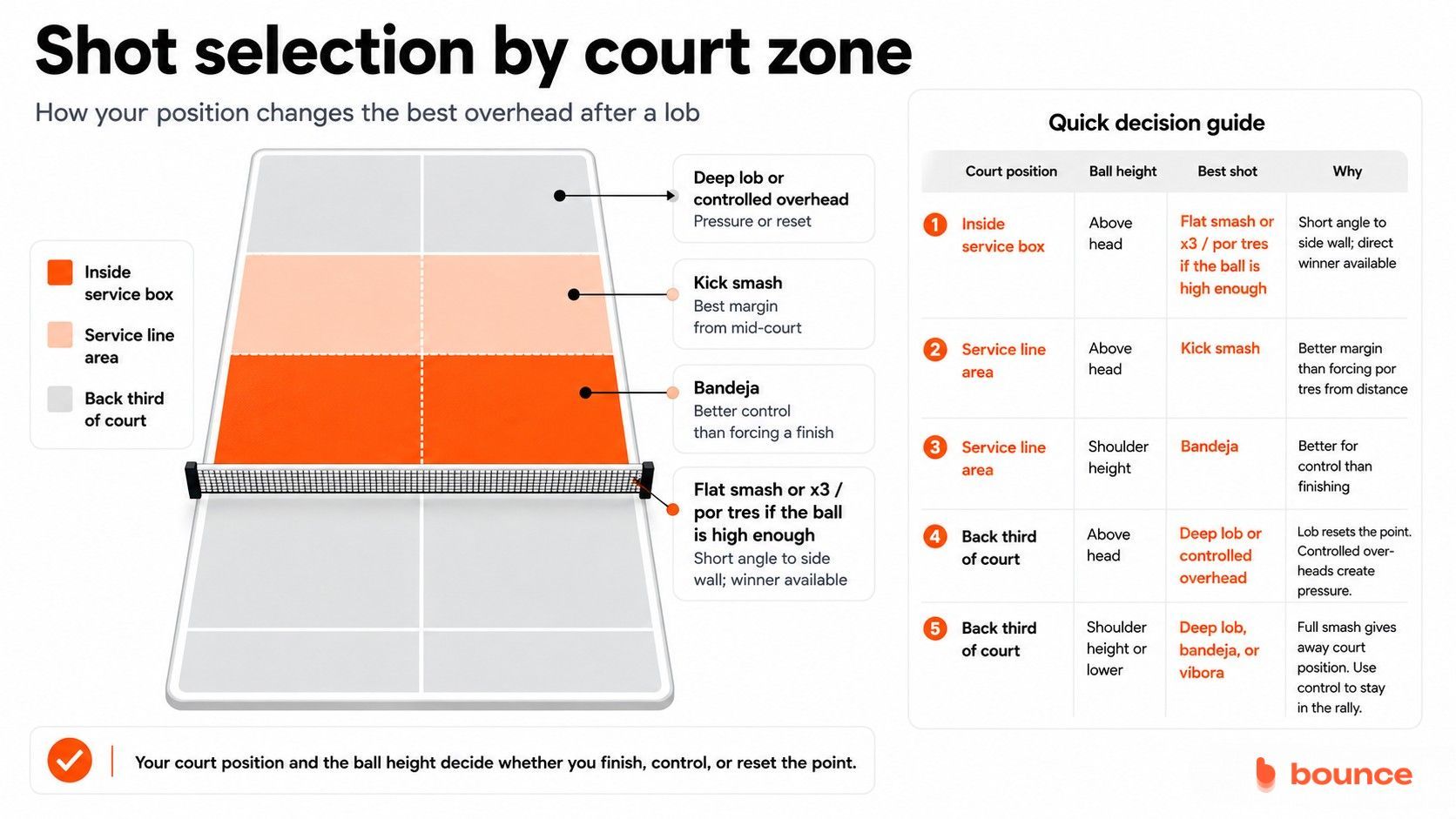
Your position when the lob lands determines which overhead is available.
| Court position | Ball height | Best shot | Why |
| Inside service box | Above head | Flat smash or por tres | Short angle to side wall; direct winner available |
| Service line area | Above head | Kick smash | Better margin than forcing por tres from distance |
| Service line area | Shoulder height | Bandeja | Better for control than finishing |
| Back third of court | Above head | Kick smash or deep lob | Smash can create pressure, lob can reset the point |
| Back third of court | Shoulder height or lower | Lob, bandeja, or vibora | Full smash gives away court position |
For players testing shot selection in live points, Bounce gives you structured match reps through leagues and socials, where every lob has a consequence.
The case for holding back
The back court punishes impatient smashes.
A rushed overhead from deep usually gives opponents the ball they want: a comfortable defensive lob or a block into open space. The shot feels aggressive. The result is weak.
When a lob pushes you backward and the contact point drops, play the lob, bandeja, or vibora. That keeps the rally alive and gives you a chance to recover the net.
The rule is simple: forced smash, bad smash.
The bandeja: the overhead between a smash and a lob
The bandeja is a controlled overhead built for one job: keep the net.
It trades power for placement and time. The grip pressure stays firm through contact, the swing is more controlled, and the ball travels flatter than a kick smash. You are sending the ball deep while giving yourself time to move forward again.
Use the bandeja when the ball is around shoulder height and a full smash is unavailable. It forces the opponents back without pulling you completely out of position.
Players who only chase smashes lose the net too easily. The bandeja exists because many overheads are pressure balls, not finish balls.
Smash vs bandeja vs vibora: the decision table
| Shot | Ball height | Court position | Main outcome | Recovery goal |
| Flat smash | Above head | Inside service box | Direct winner or back-wall winner | Hold net |
| Kick smash | Above head | Mid-court or back | High bounce forces a defensive reply | Move forward |
| Por tres | Above head | Inside service box | Ball exits over side wall | Hold net |
| Bandeja | Shoulder to head height | Mid-court or back | Controlled depth | Keep net |
| Vibora | Shoulder to head height | Mid-court or back | Side spin into glass or fence | Recover forward |
Understanding the wall geometry for the por tres
The por tres is the flashiest smash in padel. It is also the easiest one to misunderstand.
Players see it in match clips and try to copy it by hitting harder. Power helps, but angle and topspin do the real work.
The ball needs to land in the court, climb off the side wall, and clear the 3-meter fence. A practical target is the upper part of the side wall, with the ball landing 1 to 2 meters from the side fence before it hits the wall.
Topspin raises the wall bounce. Flat contact sends the ball lower and keeps it in play.
Court geometry decides which smash angles are available. The padel equipment guide is useful if you want the court, racket, and ball basics in one place.
How to train the padel smash
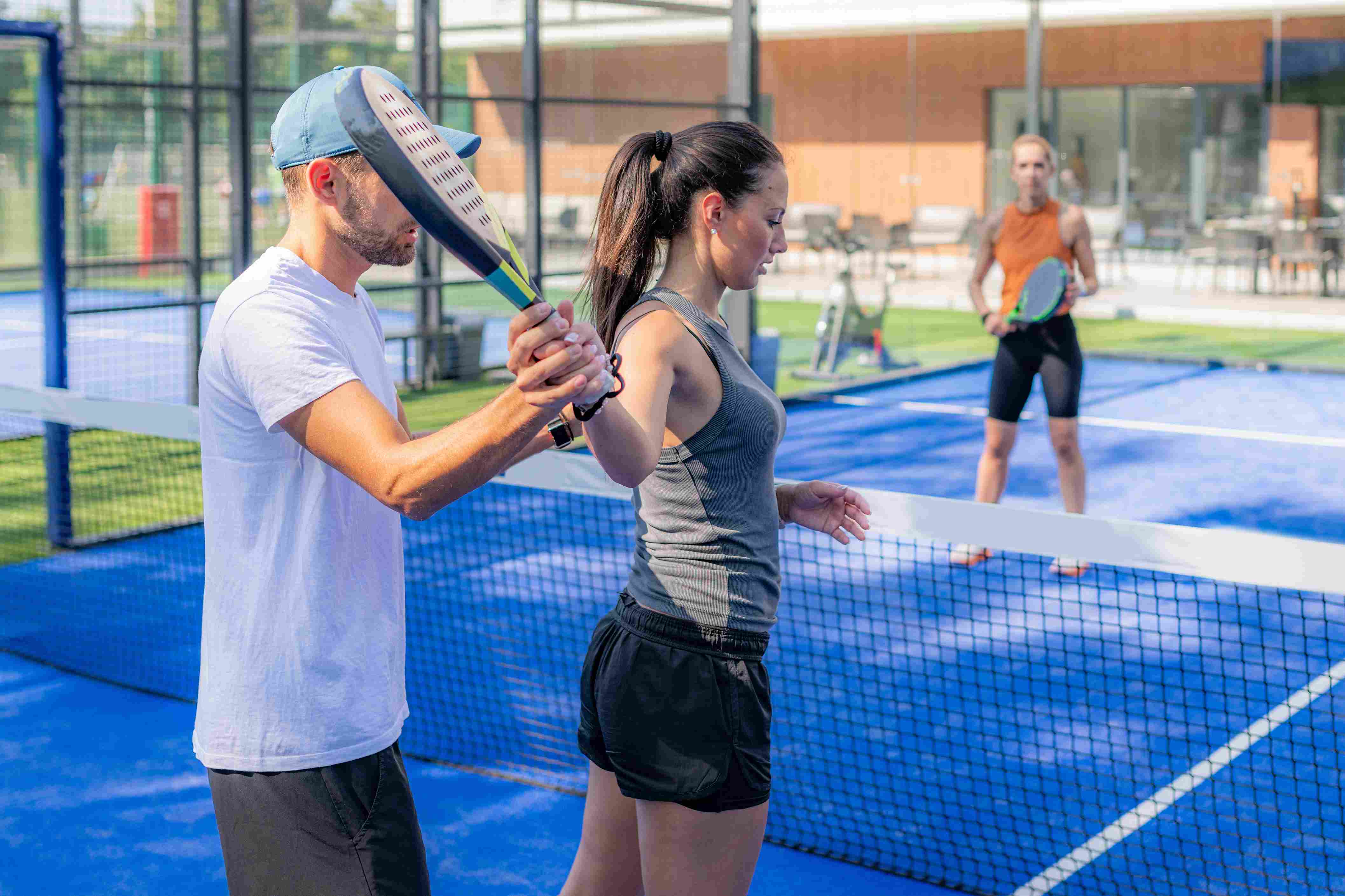
The most common training mistake is hitting the same smash from the same feed over and over.
That builds one pattern. Matches do not give you one pattern. Lobs arrive at different heights, speeds, and depths. Good training forces you to choose.
Basket drill
Start from the service box. Have a feeder toss high lobs to the same zone. Hit 8 to 10 reps of the flat smash, then 8 to 10 kick smashes, then 8 to 10 por tres attempts.
Then change the feed. The player has to read the ball height and choose the shot before swinging.
That second version is the real drill.
Discipline drill
Play points with one rule: smashes from behind the service line are out.
Use a bandeja, vibora, or lob from those positions. The drill trains the restraint most players need before the smash becomes reliable in matches.
Wall practice for por tres
Use an empty court and aim for the side wall at roughly 2 to 3 meters high. Count how many balls clear the fence.
If the ball keeps coming back into play, check the angle and spin before you swing harder.
If you want a coach to check your contact point, grip, and recovery pattern, use a live feed instead of another isolated basket drill.
What professional data shows about smash effectiveness
Professional match data supports what good players learn by feel: the smash works when the court position is right.
The peer-reviewed smash analysis found that flat and topspin smashes produced the highest percentage of winning points among smash types, near 60%. The same paper found that this efficiency drops when players move away from the net area.
A separate study on performance dynamics in professional padel found that smashes, bandejas, and volleys are among the most effective shots for securing winners. It also found that bandejas account for a large share of unforced errors, which makes shot quality and timing matter even more.
The lesson for club players is boring and useful: be more selective.
A smash you choose well is a weapon. A smash you force is a handoff.
If your overheads break down because your court position is late, the padel tips guide is the better next read.
Four mistakes players make on the padel smash
Hitting from too deep
The back third of the court is usually a recovery zone. A full smash from there fails because the angle is wrong, the setup time is short, and opponents at the net can cover the obvious targets.
Use a lob, bandeja, vibora, or controlled kick instead.
Hitting flat from a low ball
A shoulder-height ball asks for a different swing. A flat smash from that height usually catches the net or sits up for the opponent.
Use a bandeja or vibora and keep the net.
Aiming at the body
Body smashes feel aggressive, but they rarely win points cleanly. The opponent blocks the ball back with little effort.
Aim for open court, deep glass, or the side-wall angle when it is available.
Watching the shot
A smash that does not end the point still needs recovery. Step forward if the ball forces a weak reply. Reset toward the middle if the opponents defend it.
The shot finishes after recovery.
Train your padel smash with a certified coach
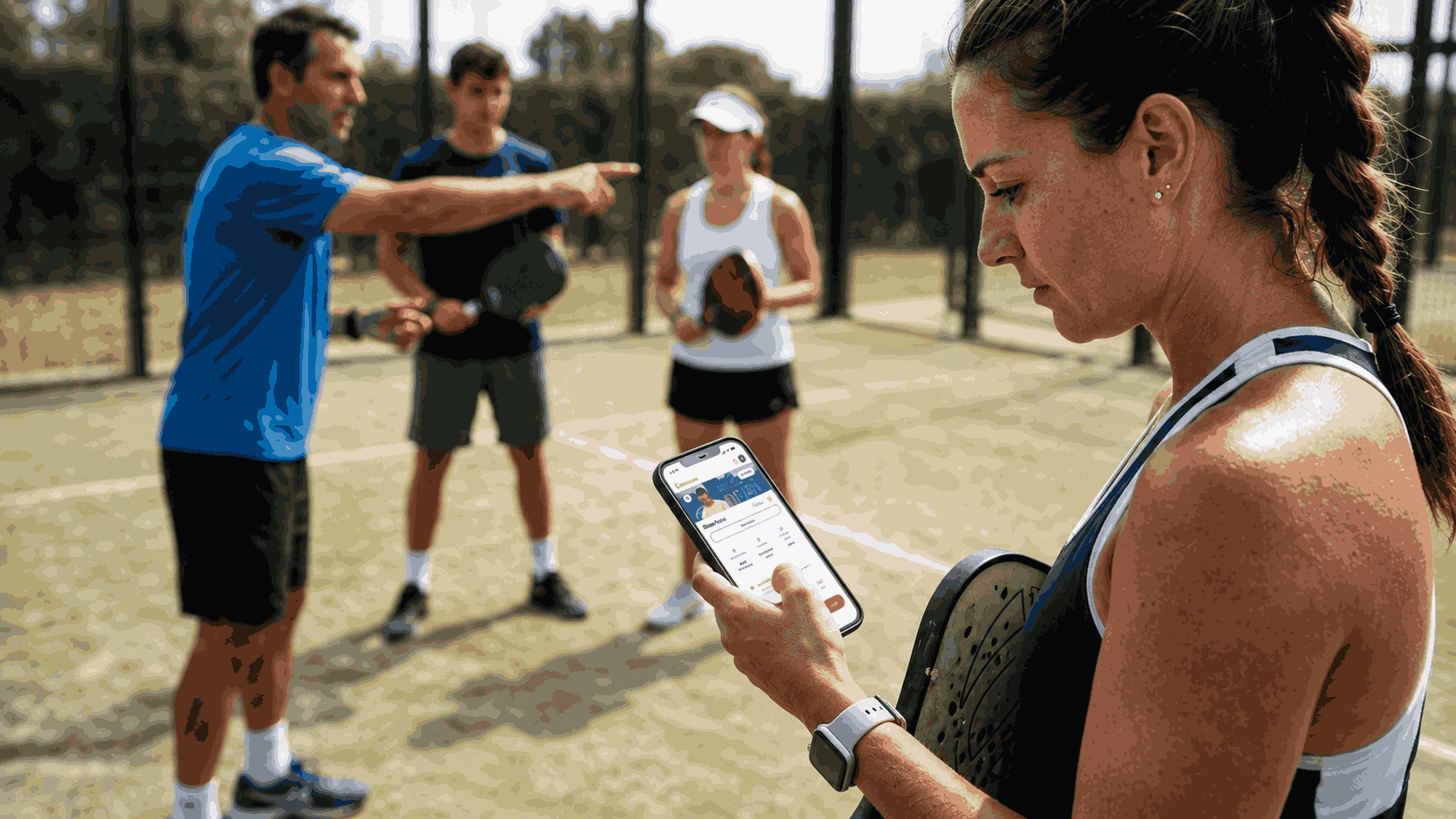
Reading technique helps. Coaching makes the fix obvious faster.
A coach can see whether your problem is contact point, grip, shoulder turn, pronation, or recovery. Most players feel the miss in one place and cause it somewhere else.
For players who want feedback on their overhead mechanics, Bounce connects players with certified padel coaches through lessons, searchable by location, sport, and skill level.
Coming from another racket sport changes how you read overheads. The padel vs pickleball comparison explains what carries over and what does not.
The padel smash starts with shot selection
Some overhead balls are smash opportunities. Many are bandejas, viboras, or lobs.
The flat smash, kick smash, and por tres each have a specific window. The best players do not force that window open. They wait for it, then swing with purpose.
Work on technique. Work on position. Work on restraint.
For players building their game through structured coaching and organized play, Bounce connects you with coaches, lessons, leagues, and racket sports programming in your city.
Frequently asked questions about the padel smash
What is a padel smash?
A padel smash is an overhead shot hit at full arm extension, usually in response to a high lob. The goal is to finish the point or force a weak defensive reply.
The main attacking versions are the flat smash, kick smash, and por tres.
How do you hit a padel smash?
Turn sideways early, load the back leg, and track the ball with your non-dominant hand. Contact the ball slightly in front of your hitting shoulder at full extension, then pronate through the ball and recover.
If the ball drops behind you, use a bandeja, vibora, or lob instead.
When should you smash in padel?
Smash when the ball is above head height and you are close enough to the net to control the angle. Inside the service box, a flat smash or por tres can finish the point.
From deeper court positions, a bandeja, vibora, or lob is usually safer.
What is a kick smash in padel?
A kick smash uses topspin to make the ball bounce high after it lands and hits the back glass. It works best when the ball is above head height and you have time to get under it.
The shot depends on clean contact and spin more than raw force.
What is a por tres in padel?
A por tres is a smash that sends the ball out over the 3-meter side wall after it bounces and hits the wall. It needs the right angle, a high contact point, and topspin.
It is usually played from near the net, not from the back third of the court.
What is the difference between a smash and a bandeja in padel?
A smash is a more aggressive overhead used to finish the point or force a weak reply. A bandeja is a controlled overhead used to keep the net position when the ball is too low or too deep for a full smash.
If the ball is around shoulder height, the bandeja is usually the better shot.
How do professionals smash in padel?
Professional players choose the smash based on position, contact height, and opponent location. Match analysis shows that powerful smashes can win a high share of points when used from the right area.
The takeaway for club players is simple: wait for a clean ball.
How do you practice the padel smash?
Start with basket drills from the service box so you can repeat the contact point. Then add decision drills where the feed changes and you must choose between flat smash, kick smash, por tres, bandeja, vibora, or lob.
For por tres, practice against the side wall on an empty court before trying it in matches.