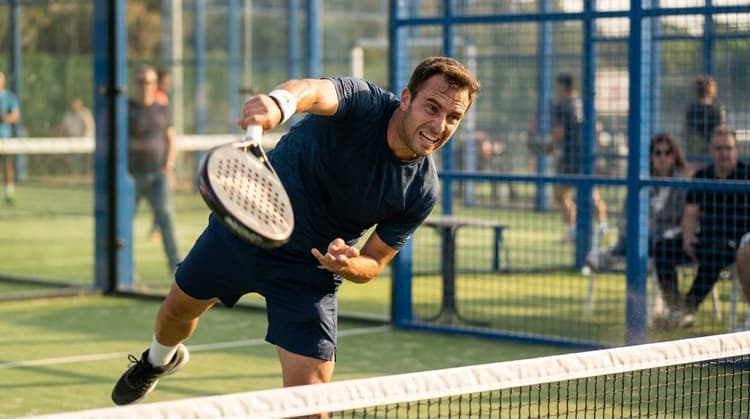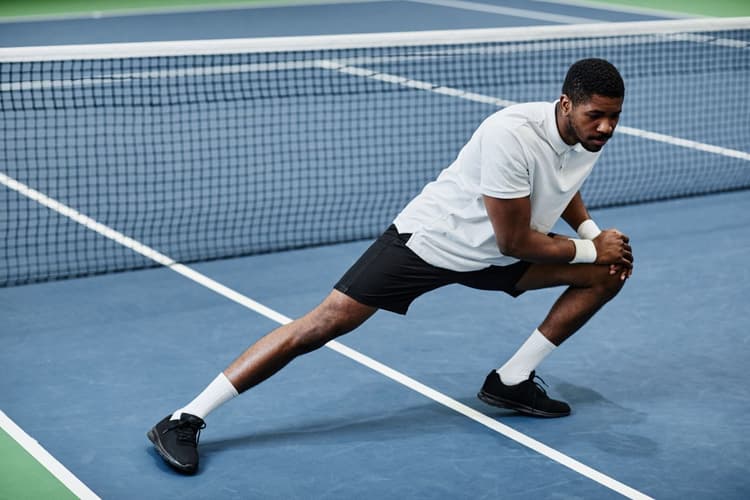
Most players show up to the court, grab a few practice dinks, and call it a warm-up.
That's just starting cold at a slightly shorter distance.
A real pickleball warm-up takes 10 minutes. It raises your core temperature, primes the muscles you're about to load hard, and gets your nervous system firing at match speed. Your first game is better: crisper dinks and a faster split-step from point one.
Want a quick answer? The best pickleball warm up exercises include lateral shuffles to raise heart rate, leg swings and lunge-with-rotation for hip and spine mobility, arm circles and wrist rotations for shoulder and elbow prep, and shadow swings with your paddle to activate sport-specific movement.
Do dynamic movement only before play. Save static holds for after. The full routine takes 10 minutes. If you have 2 minutes, the minimum is: 30 seconds of shuffles, 10 leg swings per leg, 10 arm circles each direction, and 10 shadow dink swings.
Why dynamic warm-up matters more than you think
Cold muscles are measurably less pliable. Blood flow is restricted. Connective tissue (tendons and ligaments in your Achilles, knee, and shoulder) is stiffer and more vulnerable to small tears under sudden load.
Pickleball specifically demands explosive lateral movement, sudden stops, overhead reaches, and quick hand exchanges at the kitchen. None of these are forgiving on a body that hasn't been primed.
The injury prevention angle is only half the story. Research published in the British Journal of Sports Medicine shows that structured warm-up protocols improved athletic performance metrics by 6 to 11% in racket sport populations. Your reaction time improves. Your muscle contractile force goes up. Your neuromuscular coordination, the thing that makes your dinks land where you intend, fires more reliably.
That first game after a proper warm-up plays differently than the first game cold. Most recreational players have never noticed because they've never done the comparison.
There's also a mechanic worth understanding. Research on dynamic versus static stretching consistently shows that holding a static stretch for 20 to 30 seconds before play can temporarily reduce power output by up to 8%. Warm muscles elongate. Cold muscles under tension become less explosive. The old gym-class habit of reaching for your toes before you run is biomechanically backwards.
Dynamic movement (actively moving through a range of motion) prepares the body for play. Static holds belong after the session.
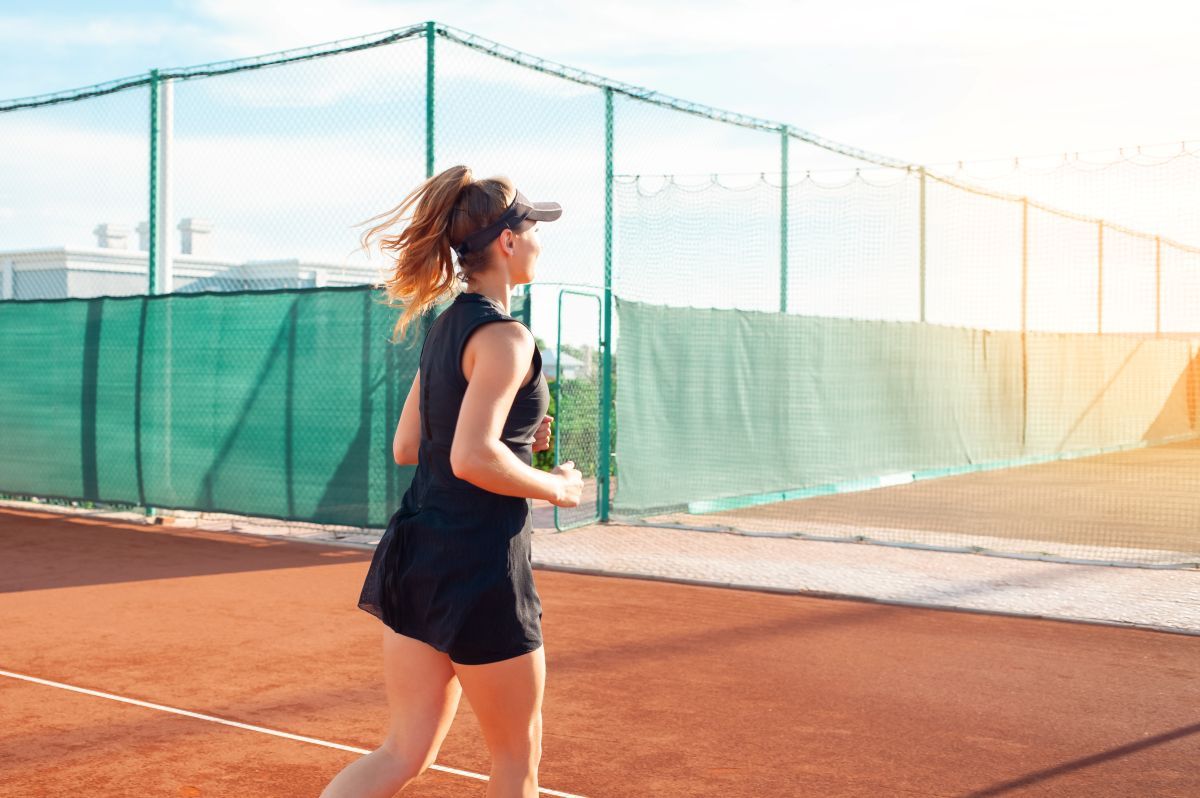
Phase 1: Pulse raisers (2 minutes)
The first job is to raise your core temperature and get blood moving into the muscles you're about to use. You're waking the system up, not loading it.
Lateral shuffles (60 seconds)
Move side to side along the kitchen line or baseline. Low stance, feet shoulder-width, stay on the balls of your feet.
Why this specific movement: the lateral shuffle is the single most common movement pattern in recreational doubles pickleball. You use it to adjust position at the kitchen, to track down wide balls, and to recover after a stretch volley. Starting your warm-up with it means the first real shuffle in your match isn't the first one your muscles have seen that day.
Do 4 to 5 full-width shuffles each direction. Keep your hips low.
High-knee march with arm drive (30 seconds)
Lift each knee to hip height while swinging the opposite arm forward. Slower and more deliberate than running. You're activating hip flexors, glutes, and shoulder girdle simultaneously.
Why this matters: pickleball requires split-step timing, a small jump that lands you in a balanced, ready position just as your opponent contacts the ball. High-knee marches prime the same muscle activation sequence.
Brisk walking or light jog (30 seconds)
If you have court space, jog the perimeter. If you're off-court, walk fast for 30 seconds. By the end of phase 1, you should feel a slight warmth in your legs and a light elevation in breathing. Warm, not winded.
Phase 2: Hip and lower body mobility (3 minutes)
The hips are the engine of pickleball movement. Lateral lunges, split-steps, and the drive into a third shot drop all load through the hip joint and adductors. Cold hips limit your range and put compensatory stress on your knees.
Leg swings: forward and back (10 reps each leg)
Stand next to a fence or wall for balance. Swing one leg forward and back in a controlled arc. Let gravity do the work at the end of each swing rather than muscling it. Increase the arc gradually over the 10 reps.
This mobilizes the hip flexor and hamstring, the muscles that load under a forward sprint to the kitchen and the pivot into a lunge return.
Leg swings: lateral (10 reps each leg)
Same setup, but swing the leg across your body and out to the side. This opens the hip abductors and adductors, which take the most load during lateral shuffle movement.
Forward lunge with rotation (5 reps each side)
Step forward into a lunge. As you hold the bottom position, rotate your torso toward the front knee, arms out, chest open. Step back and repeat on the other side.
This is the most complete single exercise in a pickleball warm-up. It loads the hip flexor, opens the thoracic spine, and activates the core rotation that drives every forehand and backhand swing you'll make. If you only do one mobility exercise, do this one.
Lateral lunge (5 reps each side)
Step wide to one side, bend that knee, keep the opposite leg straight. Push back to center and repeat on the other side. This directly mimics the defensive shuffle-and-plant that happens when you're chasing a wide dink or recovering from a poach.
Phase 3: Shoulder, elbow, and wrist activation (2 minutes)
Shoulder and elbow injuries are the most common upper-body presentations in pickleball. The rotator cuff takes repeated load from serving, overhead smashes, and high volleys. The lateral and medial epicondyle (the attachment points for forearm extensors and flexors) get worn down by grip load and wrist-snap mechanics.
Most warm-up articles mention arm circles and move on. The wrist and forearm don't get nearly enough attention relative to how much load they actually take. Given the documented rise in pickleball-related injuries among players 50 and older, especially elbow and shoulder presentations, this phase deserves its own time.
Arm circles (10 forward, 10 backward, each arm)
Start with small circles and progress to full range. The shoulder joint relies on synovial fluid for lubrication; circular motion distributes that fluid across the joint surface. Do both forward and backward to hit the full rotator cuff.
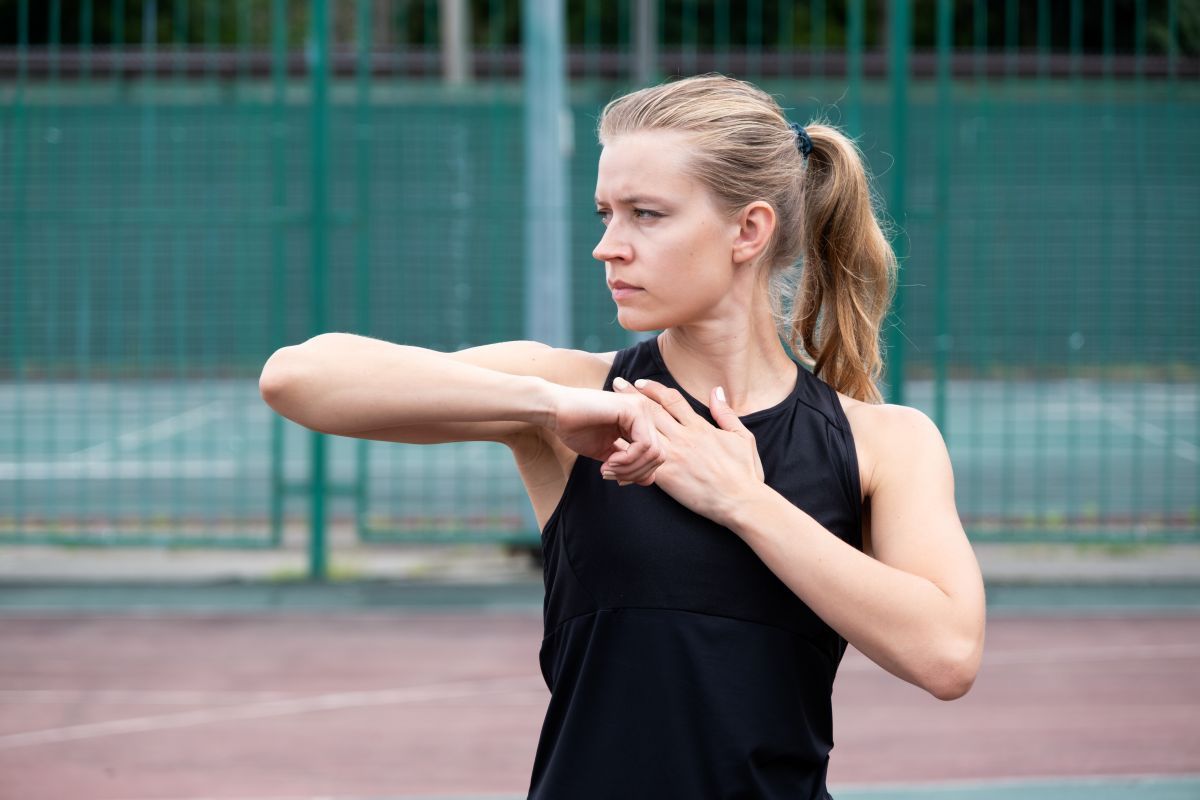
Cross-body arm pulse (10 reps each arm)
Bring one arm across the chest and use the opposite hand to gently press it in. Don't hold; pulse through it 10 times. This activates the posterior rotator cuff and the rear deltoid, which decelerate every swing you make. Skipping this is one of the primary causes of chronic shoulder soreness after pickleball sessions.
Wrist circles (10 reps each direction, each wrist)
Hold one arm out in front, make a fist, and rotate the wrist in full circles. 10 clockwise, 10 counterclockwise. Then switch arms.
This is the most skipped warm-up exercise in pickleball. Every dink, volley, and third shot drop loads through the wrist joint. The tendons that cross the wrist (the flexor carpi radialis and extensor carpi radialis) are the same tendons that become inflamed in lateral epicondylitis. Cold wrists under grip load tear those tendons incrementally.
Forearm supination and pronation (10 reps each arm)
Hold your arm at 90 degrees, elbow bent. Rotate your palm up, then down. Slow and controlled. This directly rehearses the forearm rotation that happens in every topspin dink and brush-volley you'll hit.
Shoulder blade squeezes (10 reps, 2-second hold)
Stand tall, squeeze your shoulder blades together, hold 2 seconds, release. This activates the rhomboids and mid-trapezius, the stabilizers that keep your shoulder joint in a safe position during overhead work.
Phase 4: Spine and core activation (1 minute)
Pickleball swing mechanics run through the thoracic spine. Stiff thoracic rotation limits power, overloads the lower back, and reduces your ability to turn into cross-court shots.
Torso rotations (10 reps each direction)
Stand with feet shoulder-width, arms out to the sides. Rotate slowly from the thoracic spine, driving the movement through your mid-back rather than just twisting at the waist. This is the same movement your body uses on every forehand and serve.
Cat-cow (5 slow reps)
On hands and knees, or standing with hands on thighs: round your spine upward (cat), then arch downward (cow). 5 deliberate cycles. This mobilizes the lumbar and thoracic vertebrae before you put rotational load on them.
Phase 5: On-court activation with your paddle (2 minutes)
The last phase closes the gap between warm-up and actual play. Your nervous system needs a few rehearsal reps of the exact movement patterns you're about to execute at match intensity.
Shadow dink swings (15 each side)
No ball. Stand at your kitchen position. Simulate forehand and backhand dink mechanics: compact swing, low contact point, neutral grip. The goal is groove. Your first real dinks of the session should feel like repetitions of something familiar, not something cold.
Split-step to ready position (10 reps)
Start in your ready stance. Take a small jump, land balanced on both feet in athletic position, then immediately step into a forehand or backhand ready position. This is the exact footwork sequence that starts every pickleball exchange. Ten rehearsal reps mean your body fires it automatically when the rally starts.
Shadow overhead (5 reps)
Simulate your overhead smash motion at slow speed: full arm extension, slight shoulder external rotation, no jump. You're telling your rotator cuff what's coming. Five slow reps is enough.
For Bounce open play sessions where you rotate partners: if you're waiting for a court, run phases 1 through 4 off-court while you wait. The two-minute on-court phase goes faster when the body is already warm.
Warm-up for players 50 and above
The same sequence above applies. But a few adjustments matter at this age group.
Add 2 minutes to phases 1 and 2. Synovial fluid takes longer to circulate in older joints. Rushing the pulse-raiser phase increases knee and hip risk significantly. Pickleball injury data consistently shows that lower extremity strains are most common in the 50-plus demographic, and almost all are preventable with adequate warm-up time. If you're newer to the sport, pickleball for seniors covers how to get started safely alongside the fitness habits that keep you on court long-term.
Do each mobility movement through a smaller range first. Start leg swings at half-arc for the first 5 reps, then increase. Let the joint open gradually.
Pay extra attention to the Achilles. Add 15 slow calf raises and 10 ankle circles to phase 2. The Achilles is the most catastrophic pickleball injury in older players. Two minutes of targeted prep is worth it every single time.
Total time: 12 to 15 minutes instead of 10. That's the only real adjustment.
The 2-minute floor warm-up
You ran late. The court opened early. Someone wants to start immediately.
You can skip the full routine in an emergency. But you can't skip all of it.
These 4 moves in 2 minutes are the absolute minimum before stepping on the court:
- Lateral shuffles — 30 seconds, full-width each direction
- Leg swings — 10 reps each leg, both planes (60 seconds total)
- Arm circles + wrist circles — 10 reps each, both arms (30 seconds)
- Shadow dink swings — 10 each side (30 seconds)
You've covered your cardiovascular system, your primary joints, and your sport-specific movement patterns. It's not your full routine, but it's the floor.
For players working on developing their game alongside proper physical prep, Bounce lessons with a certified pickleball coach include structured warm-up and cool-down as part of the coaching session, so the habits get built in from the start.
Cool-down: what to do after you finish
The post-session cool-down gets skipped even more than the warm-up. Most players walk off the court and straight to their car.
That's where DOMS (delayed-onset muscle soreness) and chronic tightness build up.
After your last game, spend 3 to 5 minutes walking to let your heart rate settle. Then run through these static holds, 20 to 30 seconds each:
- Standing hamstring stretch (foot on bench or low surface)
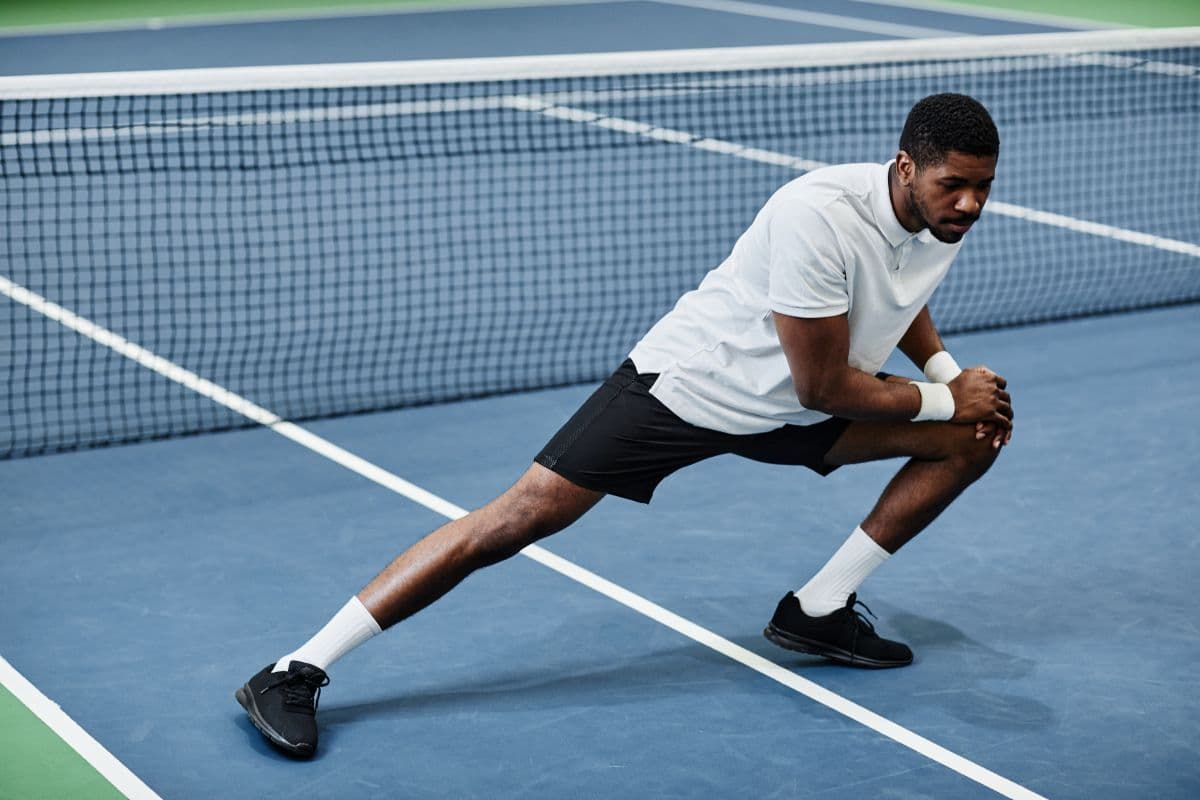
- Hip flexor lunge stretch (low lunge, front shin vertical)
- Chest opener (hands clasped behind back, gentle lift)
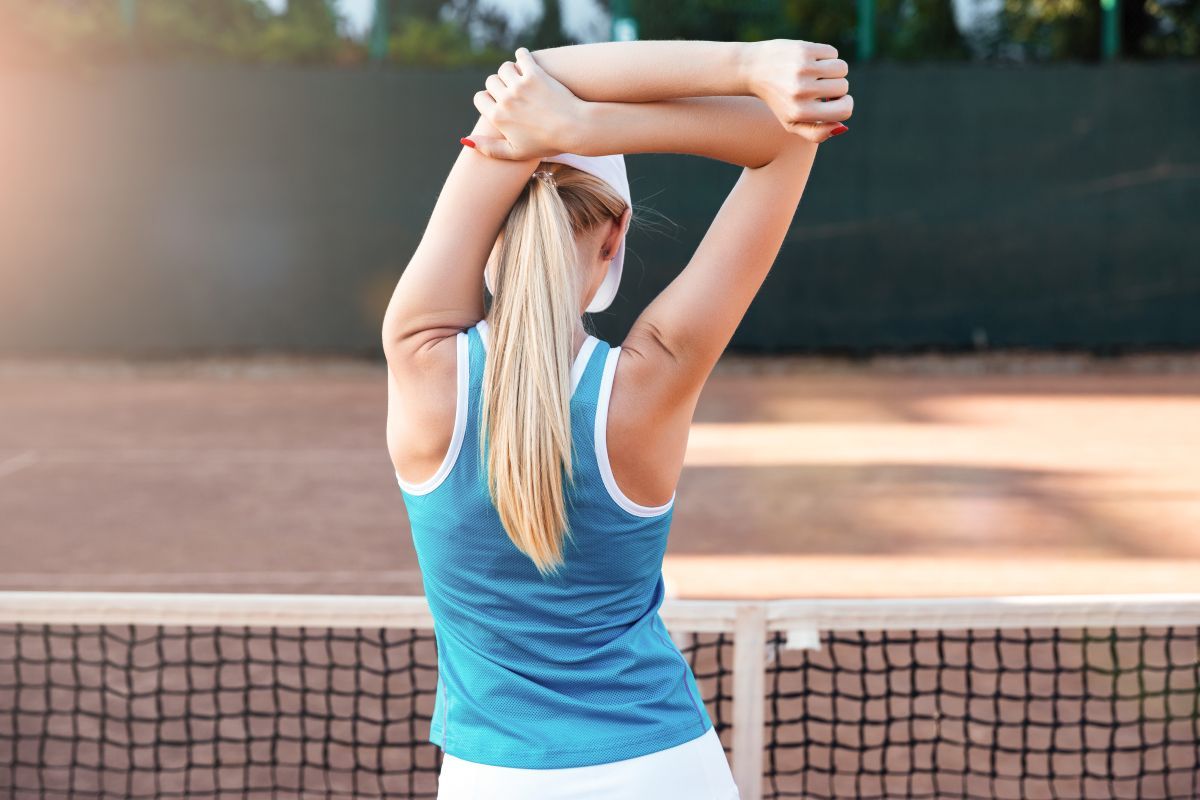
- Cross-body shoulder stretch (now held, not pulsed)
- Standing calf stretch (foot against wall, heel on floor)
This is where static stretching belongs. According to Mayo Clinic, stretching warm muscles after exercise is when the greatest flexibility gains occur, and the risk of strain is lowest. Warm muscles elongate more effectively, the holds produce real flexibility gains, and you'll notice reduced soreness in your next session within 2 to 3 weeks of consistent cool-down work. Pickleball's fitness benefits compound fastest when recovery is built into the habit, not treated as optional.
Quick-reference warm-up table
| Phase | Time | Key exercises | What it prepares |
| Pulse raisers | 2 min | Lateral shuffles, high-knee march, light jog | Heart rate, blood flow, lateral footwork |
| Hip and lower body | 3 min | Leg swings, lunge-with-rotation, lateral lunge | Split-step, kitchen movement, lunge recovery |
| Shoulder, elbow, wrist | 2 min | Arm circles, wrist circles, forearm rotation | Serve, overhead, dink mechanics, elbow protection |
| Spine and core | 1 min | Torso rotations, cat-cow | Forehand power, serve rotation, back protection |
| On-court activation | 2 min | Shadow swings, split-step drill, shadow overhead | Neuromuscular readiness for live play |
| TOTAL | 10 min |
Conclusion
A 10-minute warm-up changes your first game. Your dinks land cleaner and your footwork fires faster, from point one instead of taking three games to find your footing.
The five phases above are built around the specific movements pickleball demands: lateral shuffles, hip rotation, wrist and elbow prep, and on-court activation with your paddle. No equipment. No partner. Just a consistent routine before you step on the court.
Run the routine before every session. Add the cool-down after. Your body will feel the difference within a week, and your game will catch up shortly after.
For players ready to build these habits into a structured training plan, Bounce connects you with certified pickleball coaches, open play sessions, and clinics where preparation is built into the process.
FAQ
What are the best warm up exercises for pickleball?
The most effective pickleball warm up exercises combine lateral shuffles (to prime footwork), leg swings and lunge-with-rotation (for hip and spine mobility), arm circles and wrist rotations (for shoulder and elbow activation), and shadow dink swings with your paddle (for neuromuscular readiness). Do them in that order: pulse raisers first, then mobility, then sport-specific movement. The full routine takes 10 minutes.
How long should you warm up before playing pickleball?
10 minutes is the standard. That's enough time to raise core temperature, work through dynamic mobility, prep key joints (shoulder, elbow, wrist, hip, knee), and run on-court activation. Players 50 and above should add 2 to 5 extra minutes, particularly in phases 1 and 2. For tournaments or ladder matches, extend to 12 to 15 minutes and add more paddle work at the end.
Should you stretch before or after pickleball?
Do dynamic stretches before playing and static holds after. Dynamic movement (actively moving through a range of motion) prepares the nervous system and joints without reducing power output. Static holds (staying in one position for 20 to 30 seconds) are better after play, when muscles are warm and ready for elongation work. Holding static stretches before play can temporarily reduce muscle explosiveness, which is the opposite of what you want going into a match.
What causes pickleball elbow and how does warming up prevent it?
Pickleball elbow is lateral or medial epicondylitis, inflammation at the tendon attachment points on the outer or inner elbow. It develops from repetitive grip load and wrist-snap mechanics on cold, unprepared forearm muscles. Wrist circles, forearm supination/pronation, and gentle elbow circles before play prepare those tendons progressively. USA Pickleball's injury prevention resources consistently cite warm-up as the primary preventive measure for overuse injuries at the elbow.
What's the minimum warm-up if you're short on time?
2 minutes covers the floor: 30 seconds of lateral shuffles, 10 leg swings per leg (both planes), 10 arm circles and wrist circles per arm, and 10 shadow dink swings per side. You've activated your cardiovascular system, primary joints, and sport-specific movement pattern. It's not complete, but it's substantially better than stepping onto the court cold.
Do pickleball warm-ups improve performance or just prevent injury?
Both. Research in racket sport populations shows structured warm-up protocols improve performance metrics by 6 to 11%. Reaction time, muscle contractile force, neuromuscular coordination, and movement accuracy all improve. In practice, that means your first set of dinks is more precise, your split-step fires faster, and your serve mechanics are more consistent from point one. The performance gain is what most recreational players don't realize they're leaving on the court by skipping the warm-up.
What warm-up adjustments should players over 50 make?
Players over 50 should extend the pulse-raiser and hip mobility phases by 2 minutes each, start every mobility exercise at half range of motion before progressing, and add dedicated Achilles prep: 15 calf raises and 10 ankle circles. The Achilles is the most catastrophic pickleball injury in this age group, and it's almost entirely preventable. Total warm-up time at 50-plus should run 12 to 15 minutes rather than 10.