A pickleball court that is properly maintained plays better, lasts longer, and costs significantly less to own over time. The opposite is also true: deferred maintenance turns minor cracks into structural problems, faded lines into dispute-prone boundaries, and neglected nets into safety liabilities.
Most of the damage that shortens a court's lifespan is preventable with consistent, low-effort habits rather than expensive interventions.
Whether you manage a single backyard court or oversee a multi-court recreational facility, the fundamentals of court care are the same.
Surfaces need to be cleaned regularly, inspected for damage, protected against water and weather, and periodically resurfaced when the coating has thinned past the point of useful protection. Equipment needs its own separate maintenance cycle.
This guide covers the full scope of court maintenance: daily and weekly cleaning routines, surface care by material type, crack inspection and repair, long-term resurfacing planning, net and post upkeep, and seasonal preparation.
Why Pickleball Court Maintenance Matters
The connection between maintenance and court lifespan is direct. A surfaced court that is properly built and consistently maintained can last up to ten years before significant structural intervention is required.
A court that receives only occasional attention may need resurfacing within three to four years, and one that is genuinely neglected can develop drainage failures and structural cracking that require complete reconstruction rather than repair.
There is also a safety dimension that goes beyond longevity. Surface cracks catch feet during lateral movements. Standing water after rain creates slip hazards. Faded court lines cause disputes and disrupt game flow. Loose net posts shift during play.
All of these are foreseeable outcomes of deferred maintenance and all of them carry real injury risk.
Research on athletic playing surfaces and injury risk confirms that surface condition is a direct factor in player safety outcomes. Court owners have both a practical and a duty-of-care reason to keep surfaces in good condition, particularly at facilities that host organized sessions or competitive events.
How to Clean a Pickleball Court: Daily and Weekly Steps
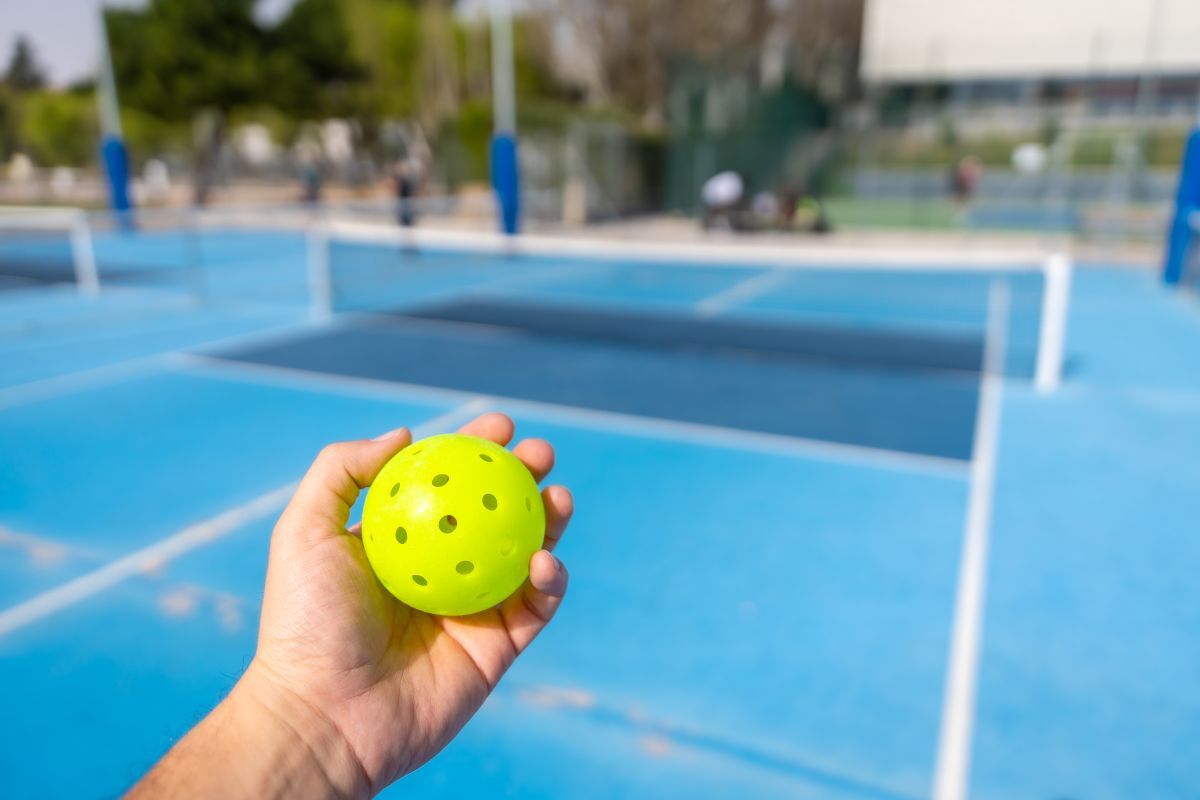
Cleaning correctly is the single most important routine maintenance skill for any court owner. It prevents surface staining, organic material buildup, and abrasive debris accumulation that gradually degrade acrylic coatings and create slip hazards.
It also gives you regular opportunities to spot damage before it worsens.
Daily cleaning
A five-minute walk-through each day is the baseline standard for any court in regular use. Use a leaf blower or a soft-bristle push broom to clear leaves, twigs, dust, and any debris that has settled since the last session.
Remove organic material promptly: leaves, grass clippings, bird droppings, and tree sap all stain acrylic surfaces when left in contact with moisture and heat.
Check for and remove any standing water, which can lead to discoloration and surface peeling if left sitting. Confirm the net tension is correct and nothing has been left on the court overnight.
Weekly cleaning
Once a week, give the surface a deeper clean using a damp mop or a gentle rinse from a garden hose. This helps remove fine dust and residue that sweeping alone can miss. If mold or mildew appears, especially in shaded or low-traffic areas, use a diluted mix of one part household bleach to four parts water with a small amount of detergent.
Always spot-test in a low-visibility area first and confirm it is safe for your court’s acrylic coating before applying it more widely.
Monthly checks
Once a month, inspect the court lines for fading, chipping, or cracking. Lines that are difficult to read force players to make judgment calls on boundary shots and reduce the quality of play.
Check the perimeter for edge deterioration and examine the net headband, posts, and hardware for wear. Document any changes you observe so you can track whether conditions are stable or worsening over time.
Pickleball Court Surface Care by Material Type
Effective surface care is not the same across all court types. Asphalt and concrete are the two most common base materials for outdoor pickleball courts, and they respond differently to weather, cleaning, and damage.
Understanding those differences helps you apply the right care at the right time.
Asphalt courts
Asphalt is the more forgiving base material in terms of installation cost and shock absorption, but it requires more frequent resurfacing attention because it is more susceptible to temperature-related movement.
In cold climates, freeze-thaw cycles expand and contract the asphalt repeatedly, widening existing micro-cracks over successive winters. In hot climates, UV exposure softens the surface and causes the binder to degrade faster.
Asphalt courts benefit from UV-protective acrylic coatings applied on schedule and from having hairline cracks addressed before water infiltration begins the freeze-thaw cycle of expansion.
Concrete courts
Concrete is more structurally durable and maintains surface smoothness longer than asphalt, but it is harder on players' joints and more prone to significant structural cracking when the base shifts or settles.
Concrete cracks tend to be wider and more defined than asphalt cracks and often require more extensive repair before resurfacing can be applied.
The advantage of concrete is that with proper surface sealing it can remain in serviceable condition for a decade or more without the frequency of resurfacing that asphalt courts typically require.
Acrylic coating systems
Most outdoor pickleball courts are finished with an acrylic color coating over the base material. This coating provides the playing surface texture, color, and weather protection.
It wears over time through foot traffic, UV exposure, and cleaning cycles. When the acrylic thins past a certain point, traction decreases, ball bounce becomes inconsistent, and the base material is exposed to moisture.
Protecting the acrylic coating through appropriate cleaning methods and avoiding surface abuse, such as dragging equipment across it or using salt for winter ice removal, extends its useful life significantly.
Pickleball Court Crack Repair: What to Do and When
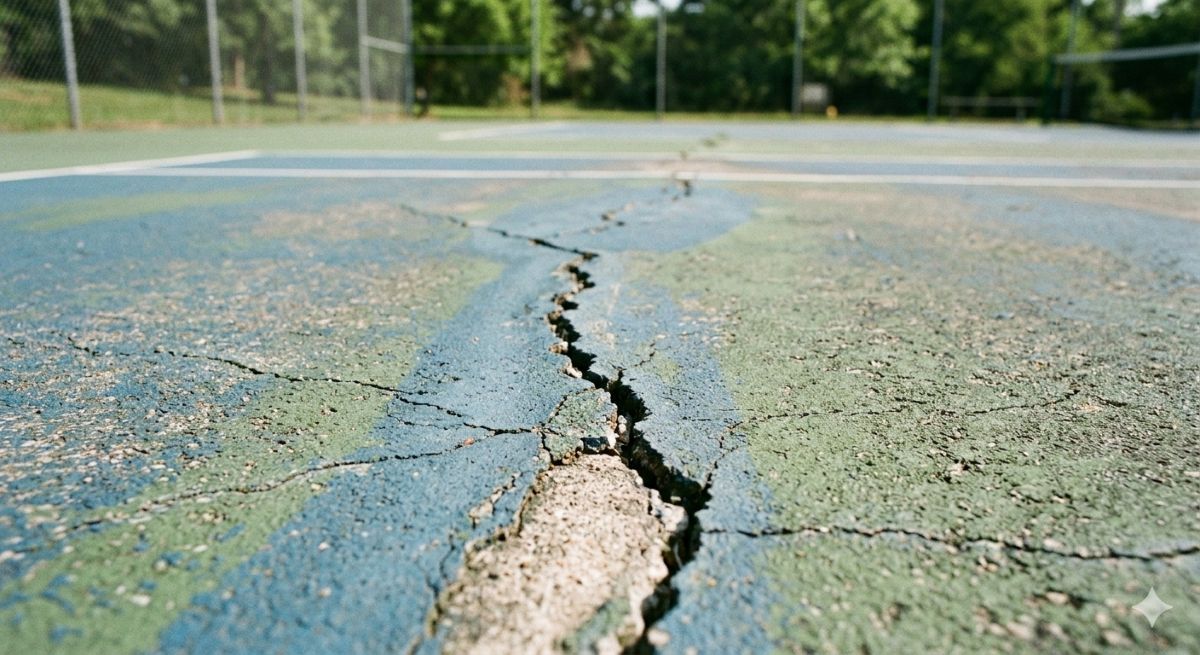
Crack repair is one of the most time-sensitive maintenance tasks a court owner faces. Cracks that are caught early and treated correctly stay manageable. Cracks that are ignored expand through moisture infiltration and freeze-thaw cycles, eventually requiring either full resurfacing or, in the worst cases, base reconstruction.
How to assess crack severity
Not all cracks require the same response. Hairline cracks less than one-eighth of an inch wide are cosmetic concerns that can be addressed with a flexible acrylic crack filler during routine maintenance.
Cracks between one-eighth and one-quarter of an inch wide require a more substantial repair using materials specifically formulated for sports court surfaces.
Cracks wider than one-quarter of an inch, or any crack that has raised edges on either side indicating base movement, signal that surface-level repair is unlikely to hold. Resurfacing or professional structural assessment is warranted at that point.
How to fill a court crack correctly
Clean the crack thoroughly before applying any filler, removing all debris, dust, and organic material from inside the crack. Apply an acrylic-based crack filler formulated specifically for sports court use, not household concrete filler or caulk, which does not have the flexibility to move with the court surface as temperatures change.
Feather the edges of the repair smoothly into the surrounding surface and allow it to cure fully before resuming play. After the filler has cured, apply a compatible acrylic color coat over the repaired area to restore surface texture and prevent the repair from becoming a friction anomaly during play.
What not to use for crack repair
Standard concrete or asphalt patching products, including many hardware store fillers, are not appropriate for sports court crack repair. They cure rigid and do not flex with the surface under temperature changes, causing the patch to fail and the crack to re-open within one to two seasons.
Only use products specifically designed and rated for acrylic sports court applications. When in doubt, consult a professional court repair contractor before applying any material.
Pickleball Court Resurfacing: When and Why
Resurfacing is the most significant scheduled maintenance intervention in a court's lifecycle. It involves cleaning, crack repair, and applying fresh acrylic coatings to restore the playing surface, protect the base material, and refresh court lines.
Understanding when it is genuinely needed versus when it can be deferred protects both your court and your budget.
Resurfacing timeline
Most outdoor pickleball courts need resurfacing every five to eight years under normal use conditions. The actual timeline depends on usage volume, climate exposure, and how consistently routine maintenance has been performed.
Courts that receive consistent daily cleaning and prompt crack repair regularly reach or exceed the longer end of that range, while courts with deferred maintenance typically fall within the shorter end or below it.
Lightly used residential backyard courts may go seven to ten years before resurfacing is necessary if maintained carefully. High-traffic community or club courts operating through multiple sessions daily may need resurfacing as frequently as every three to four years.
If you are planning or budgeting for a resurfacing project, the guide to building your own pickleball court covers the full cost and planning considerations involved.
Signs that resurfacing is needed
- Cracks returning after repair: Cracks that reopen within one season of repair indicate that the base is moving and the existing coating no longer has enough integrity to bridge the movement.
- Inconsistent ball bounce: When the ball produces noticeably different rebound height in different areas of the court, the surface texture has worn unevenly enough to affect play quality.
- Loss of traction: A slick feeling underfoot during lateral movement, especially in humid or morning-dew conditions, indicates the acrylic texture layer has thinned past the point of safe play.
- Persistent standing water: Puddles that remain an hour after rain has stopped indicate surface depressions deep enough that leveling is needed before new coating can be applied.
- Severe line fading: Lines that cannot be clearly distinguished at playing distance are a safety and gameplay concern independent of the surface coating condition.
What the resurfacing process involves
Professional resurfacing begins with a thorough surface clean, followed by assessment and repair of all cracks and drainage issues. A base coat is applied to fill minor surface imperfections and improve adhesion.
Intermediate coats build thickness and durability. A final color coat provides the playing texture and appearance.
Court lines are re-striped to regulation dimensions after the final coat has cured. Each layer must cure fully before the next is applied, which means the full process typically takes two to three days minimum and longer in humid or cool conditions.
For players looking for well-maintained courts in their area rather than managing their own, Bounce connects players with vetted courts, open play sessions, and organized events in their city, so finding a quality playing surface is a search rather than a project.
Equipment and Net Maintenance
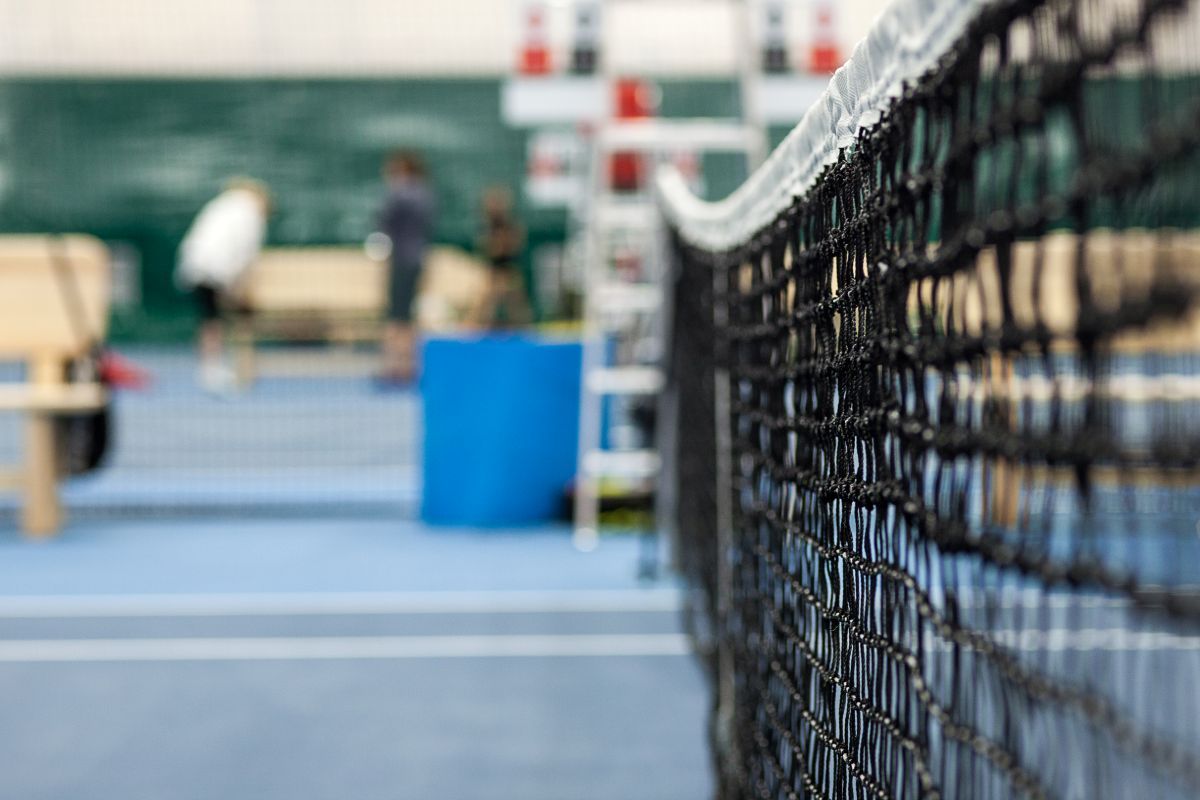
Net and post maintenance is consistently one of the most overlooked aspects of court upkeep. The net and post system is in contact with the elements every day of the season and degrades in ways that affect both gameplay and player safety if not maintained on a schedule.
Net height and tension checks
Net height must be 36 inches at the sidelines and 34 inches at the center. If you are unsure how to measure or where exactly to position the tape, the official court dimensions guide covers net setup alongside the full court layout.
Check net height with a measuring tape at least once a month and after any severe weather.
Tension that is too loose allows the net to sag during play, affecting shot trajectories. Tension that is too tight puts unnecessary strain on the posts, the net cable, and the center strap, accelerating wear on all three components.
Headband and net fabric cleaning
Clean the net headband monthly using warm water and a mild detergent. Avoid cleaning products that contain bleach, as they degrade synthetic net materials over time.
Wipe down the net fabric with a damp cloth when visible dirt or debris has accumulated.
For courts in high-pollen environments or near trees, headband cleaning may need to happen more frequently during peak seasons to prevent organic staining.
Post and hardware inspection
Inspect the posts and all metal hardware, including cranks, sleeves, and brackets, monthly for rust, corrosion, and structural integrity. Posts that have developed rust should be treated with a rust-inhibiting compound before the corrosion reaches the load-bearing sections.
Give each post a firm manual shake test to confirm it is seated securely. A post that shifts under moderate lateral pressure needs to be re-anchored before it becomes a safety issue during play.
Off-season net storage
In climates with harsh winters or extended off-seasons, removing the net and storing it indoors is the most effective way to extend its lifespan. UV exposure, freeze-thaw cycling of trapped moisture, and ice accumulation all degrade net materials significantly faster than indoor storage allows.
If the net must remain on the court through winter, loosen the center strap to reduce tension on the cable and treat post hardware for corrosion resistance before the season ends.
Seasonal Maintenance: What to Do and When
Each season creates distinct maintenance demands. Treating them as a scheduled cycle rather than reacting to problems as they emerge keeps court quality consistent and prevents seasonal transitions from accelerating damage.
Spring
Spring is the most important inspection period of the year. Assess the full court surface for cracks that formed or widened over winter. Clear the surface of debris accumulated during the off-season, including leaves and organic material that has been sitting on the acrylic through wet conditions.
Inspect court lines for fading, the net and posts for winter corrosion, and the drainage channels for blockage from winter debris. Address any issues found during the spring inspection before the main playing season begins.
Summer
In summer, frequency of cleaning increases because foot traffic, pollen, dust, and heat all compound surface stress. Check drainage after thunderstorms and remove standing water with a squeegee promptly.
Courts in direct sun may benefit from a UV-protective sealant coat applied at the start of the hot season to slow acrylic degradation. Do not use salt-based ice melt products even if unseasonable cold occurs, as salt causes irreversible acrylic surface damage.
Autumn
Leaf fall is the dominant autumn maintenance challenge. Courts near trees require daily blowing or sweeping during peak leaf fall to prevent organic staining from wet leaves sitting on the acrylic surface.
Conduct a thorough pre-winter inspection in late autumn covering the full surface, all court lines, nets, posts, and drainage systems. Address any repairs before freezing temperatures arrive, since crack fillers and acrylic products cannot be applied effectively in cold or wet conditions.
Winter
In cold climates, minimize court use during freeze-thaw conditions, as wet courts with sub-freezing overnight temperatures experience the most rapid crack expansion. Use only plastic shovels or brooms for snow removal, never metal tools that score the acrylic surface.
Avoid all salt and chloride-based de-icers. If the court is in a region where winter use is limited, this is the ideal time to plan and schedule resurfacing or crack repair work for early spring.
Pickleball Court Maintenance Schedule at a Glance
The table below consolidates recommended maintenance tasks across daily, weekly, monthly, seasonal, and long-term timeframes as a reference for court owners and facility managers.
| Frequency | Tasks |
| Daily | Remove debris with a leaf blower or broom. Remove standing water. Check net tension. Quick visual inspection for new damage. |
| Weekly | Damp mop or hose rinse. Treat mold or mildew if present. Inspect net and posts. Review court lines for fading. |
| Monthly | Inspect all court lines. Clean net headband. Check post stability and hardware for rust. Document any surface changes. |
| Seasonal | Spring: full damage inspection and repair. Summer: UV sealant, drainage checks after storms. Autumn: pre-winter inspection. Winter: crack protection, equipment storage. |
| Annual | Professional surface assessment. Clean and treat post hardware. Repaint faded court lines if not addressed through the season. |
| Every 5 to 8 years | Full resurfacing with crack repair, base coat, color coat, and line re-striping. |
For players who want reliable access to well-kept courts without managing their own facility, Bounce makes it easy to find courts, coaches, and organized sessions in your city, so playing time stays focused on the game rather than the infrastructure behind it.
Common Court Maintenance Mistakes to Avoid
Most court damage that requires expensive correction is the result of a small number of recurring mistakes rather than unusual circumstances.
- Pressure washing during routine cleaning: Strips acrylic coating and forces water under the surface. Reserve for pre-resurfacing preparation only.
- Using non-sports-grade crack fillers: Hardware store products cure rigid and fail quickly on sports court surfaces. Always use materials rated for acrylic court applications.
- Ignoring hairline cracks: Small cracks become large cracks through water infiltration and freeze-thaw cycles. Address them during routine maintenance before they require structural repair.
- Using salt or chloride ice melt: These products irreversibly damage acrylic coatings and should never be used on any sports court surface.
- Dragging equipment across the court: Score marks from dragged chairs, equipment bags, or maintenance gear create surface abrasion that compromises the acrylic coating.
- Leaving organic material on the surface: Leaves, grass, and bird droppings cause permanent staining when left in contact with moisture. Remove them during every daily walk-through.
- Over-tightening the net: Excess tension strains the cable, center strap, and post hardware simultaneously, shortening the lifespan of all three components.
When to Call a Professional
Routine maintenance is within the capability of any court owner or facilities team. Some situations require professional assessment and intervention rather than owner-managed repair.
Knowing the boundary between them prevents costly DIY mistakes on problems that need specialist skills and materials.
Call a professional court contractor when damage goes beyond minor surface wear. This includes cracks wider than a quarter inch, raised edges that suggest base movement, or standing water that remains after rain despite proper drainage.
Widespread texture loss, reduced traction, or visible heaving and settlement in the base are also clear signs. If you are planning resurfacing work, professional assessment is essential to ensure the repairs last.
USA Pickleball's official court construction and surface guidelines provide a standards-based framework for evaluating court conditions and determining when professional intervention is warranted.
The cost of preventive professional maintenance is consistently lower over a court's lifespan than the cost of addressing damage that was allowed to escalate.
For courts that host regular competitive play or organized sessions, the connection between court condition and player safety is direct and worth managing proactively rather than reactively.
Conclusion
Pickleball court maintenance works best as a system rather than a one-time task. A consistent routine that includes daily debris removal, weekly cleaning, monthly inspections, seasonal prep, and resurfacing every five to eight years helps keep the court safe, playable, and cost-efficient.
This layered approach supports long-term performance and extends the life of the surface.
Most damage that shortens a court’s lifespan is preventable with consistent upkeep. Keeping the surface clean, repairing small cracks early, and protecting the acrylic coating all play a role in avoiding costly repairs.
Planning resurfacing on a realistic schedule, instead of waiting for visible decline, helps maintain quality and performance over time.
For players who want to focus on the game rather than the infrastructure, Bounce connects you with well-maintained courts, open play sessions, and coaches in your city. Find your next game and leave the court care to someone else.
FAQs
How often should a pickleball court be cleaned?
Debris removal and a quick visual inspection should happen daily for any court in regular use. A more thorough rinse or mop-down should occur weekly. Monthly checks should cover net, posts, and court lines comprehensively.
How often does a pickleball court need resurfacing?
Most outdoor courts need resurfacing every five to eight years under normal conditions. Courts with high daily traffic may need it every three to four years. Courts with consistent maintenance and low use may go beyond eight years. The surface condition, not the calendar, is the most reliable indicator.
What is the best way to remove debris from a pickleball court?
A leaf blower provides the fastest and least abrasive method for daily debris removal. A soft-bristle push broom works well for more adherent debris. Avoid stiff wire brushes or metal tools that score the acrylic surface.
Can I pressure wash my pickleball court?
Not during routine maintenance. Pressure washing strips acrylic coatings and forces water under surface layers, accelerating delamination. Reserve any pressure washing for the preparation phase immediately before full resurfacing, when the existing coating will be replaced.
What should I use to fill cracks in a pickleball court?
Use acrylic-based crack fillers specifically formulated for sports court surfaces. Standard concrete or caulk products cure rigid and fail quickly because they cannot flex with the surface under temperature changes. For cracks wider than one-quarter of an inch, consult a professional before applying any filler.
How do I know when my court needs resurfacing rather than just crack repair?
If cracks return within one season of repair, if ball bounce has become noticeably inconsistent across the surface, if traction feels reduced during lateral movement, or if standing water persists after drainage channels are clear, the coating has reached the end of its useful life and resurfacing is needed.
How do I maintain the pickleball net?
Check net height monthly and after severe weather. Clean the headband monthly with warm water and mild detergent, avoiding bleach products. Inspect posts and hardware for rust monthly and treat any corrosion before it reaches load-bearing sections.
In harsh winter climates, remove and store the net indoors during the off-season.
Is it safe to use salt to remove ice from a pickleball court?
No. Salt and chloride-based de-icing products cause irreversible damage to acrylic court surfaces. Use a plastic shovel or broom for snow removal and avoid chemical ice treatments on any sport court surface.