Structured pickleball drills for beginners accelerate improvement far more effectively than casual play alone. While recreational games build familiarity, focused repetition builds consistency, control, and movement efficiency.
Beginners who dedicate time to deliberate practice develop stronger mechanics, fewer unforced errors, and more confidence during competitive points.
Early skill development in pickleball is less about power and more about precision. Consistent serving, controlled returns, stable footwork, and soft hands at the kitchen line create the foundation for long-term progress.
Players who master these elements early avoid plateauing at the intermediate level and build habits that transfer directly into match situations.
Why Pickleball Drills for Beginners Matter
Practicing beginner pickleball drills builds muscle memory and reinforces proper movement patterns. Repetition reduces hesitation and improves reaction time.
Instead of thinking through each swing or step, players begin to execute automatically, freeing mental energy for strategy and positioning.
Drills also reduce unforced errors, which are the primary barrier to advancement at the beginner level. Missed serves, short returns, rushed volleys, and uncontrolled drives often stem from inconsistent technique. Targeted drills isolate these weaknesses and provide a controlled environment to correct them.
Another critical benefit of drills is improved court awareness. Beginners frequently struggle with positioning during transitions from baseline to kitchen. Structured repetition teaches when to advance, how to split-step, and how to recover after contact.
Key skill categories beginner drills should address include:
- Serve consistency
- Return depth and height
- Third-shot control
- Dinking accuracy
- Basic footwork and balance
- Net positioning fundamentals
When these elements are practiced intentionally, players build a stable performance base that supports more advanced tactics later.
1. Serve and Return Drills for Beginners
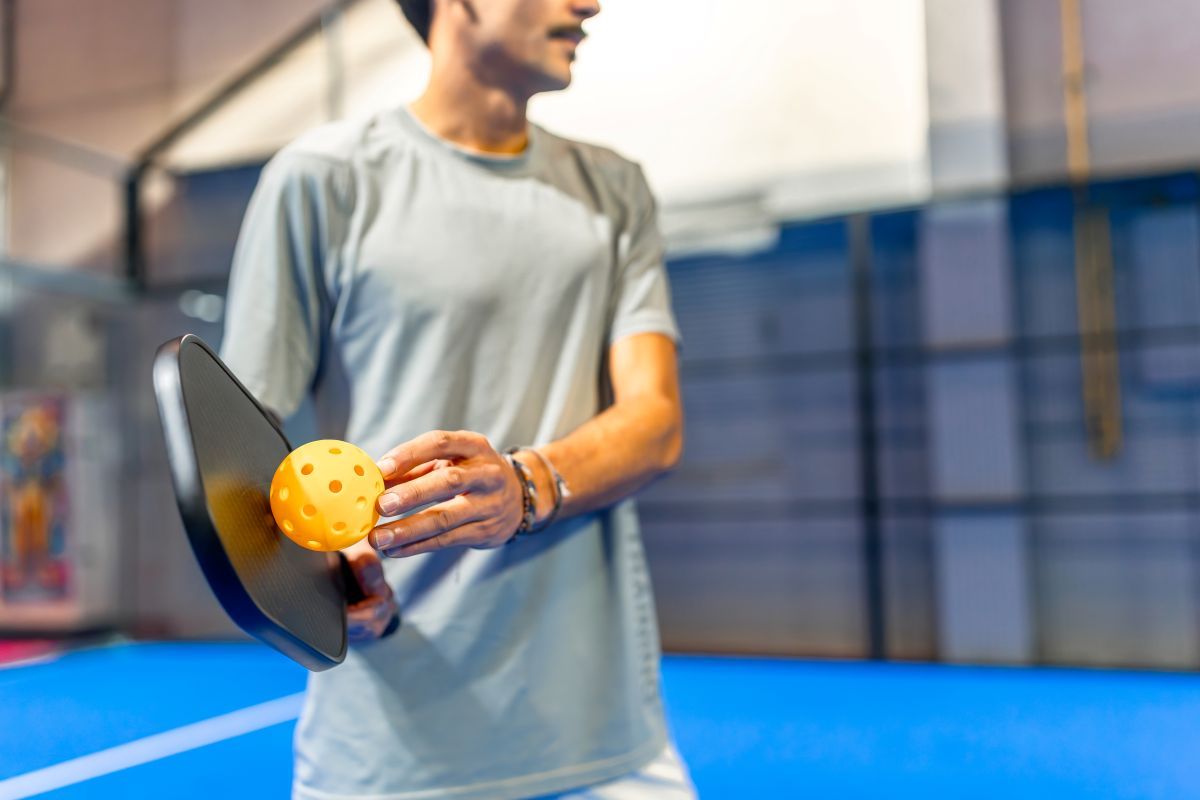
Serving and returning establish point control. Beginners often overlook this phase, yet it determines whether they start on offense or defense.
Target Serving Drill
This drill improves depth and placement consistency.
Setup:
- Place cones or visual markers in deep crosscourt and down-the-line zones.
- Serve 20 balls aiming for one specific target.
- Track how many land within the designated zone.
Focus on:
- Smooth swing path
- Controlled contact
- Deep trajectory beyond the service line
Power should remain secondary to consistency. A serve that lands deep 80% of the time is more valuable than a fast serve that misses frequently.
Deep Return Repetition Drill
The return of serve should travel high and deep, buying time to approach the kitchen line.
Execution:
- Partner serves at moderate pace.
- Return crosscourt with height.
- Emphasize landing within three feet of the baseline.
Benefits include:
- Improved depth control
- Better transition timing
- Reduced rushed approaches
Crosscourt Serve-and-Return Exchange
This cooperative drill builds rhythm.
- Server delivers controlled serves.
- Returner responds crosscourt.
- Continue rally for 5–8 shots.
This sequence reinforces placement awareness and improves early-point stability.
2. Dinking Drills for Beginners
The non-volley zone demands touch, patience, and control. Dinking is not a soft rally; it is a precision exchange designed to create attackable opportunities.
Stationary Crosscourt Dink Drill
Partners stand at opposite kitchen corners and exchange controlled crosscourt dinks. Focus on:
- Soft grip pressure
- Compact backswing
- Balanced stance
Maintain a goal of 20 consecutive dinks without error.
Forehand-Only and Backhand-Only Dinking
Limiting shots to one side strengthens weaker strokes and increases confidence under pressure.
Benefits:
- Improved paddle angle control
- Better anticipation
- Increased consistency on the backhand side
20-Ball Consistency Challenge
Track consecutive successful dinks before an error occurs. Restart the count after each mistake.
This drill builds:
- Mental discipline
- Controlled tempo
- Error reduction awareness
Many beginner clinics emphasize structured kitchen control sessions, pairing players by skill level to maintain appropriate rally tempo.
3. Third-Shot Drop Drills for Beginners
The third-shot drop transitions the serving team from baseline defense to net offense. It is a cornerstone skill for long-term development.
Drop Feed Drill
Self-feed from the baseline and attempt to land the ball softly in the opponent’s kitchen.
Key focus:
- High arc trajectory
- Soft contact
- Controlled follow-through
Repetition builds confidence before adding movement.
Cooperative Third-Shot Progression
Partner stands at kitchen line and blocks gently.
Sequence:
- Serve.
- Return.
- Drop.
- Reset exchange.
This drill teaches shot height awareness and recovery positioning.
Depth Control Ladder Drill
Alternate between:
- One deep drive
- One soft drop
This pattern improves decision-making and touch adjustment.
4. Volley and Net Reaction Drills
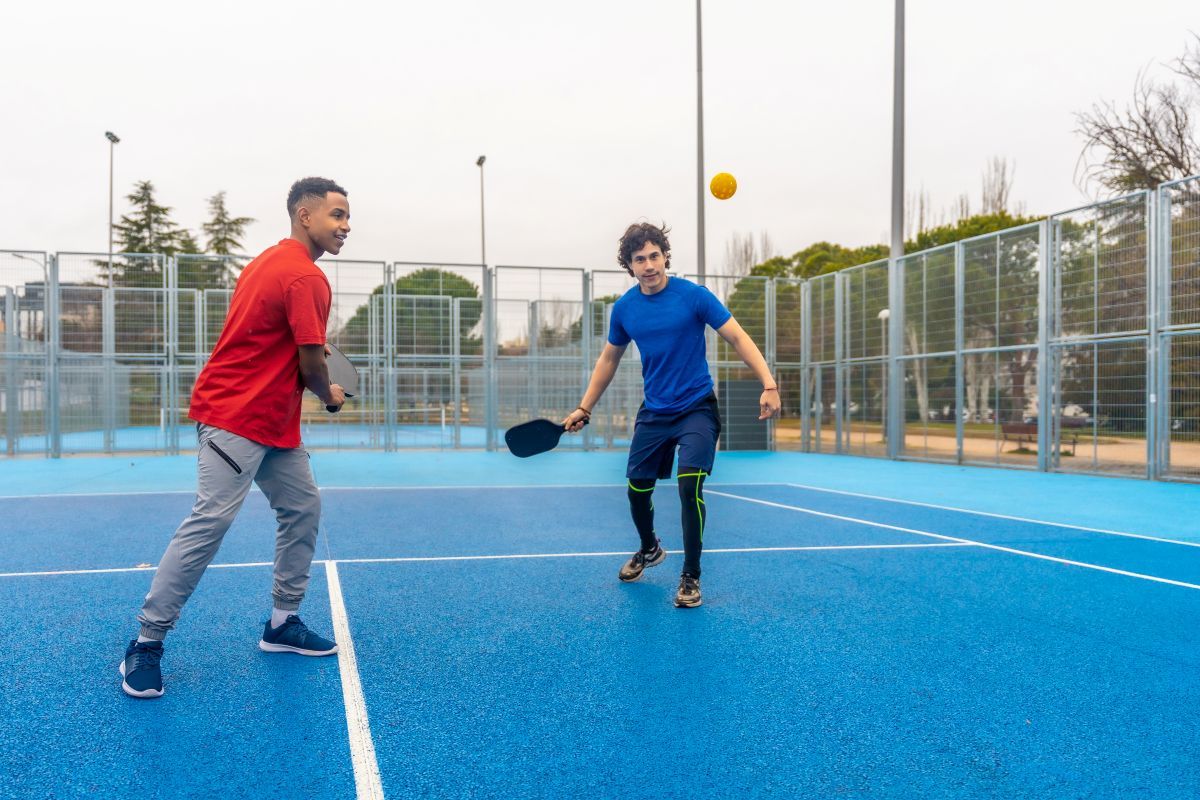
Net exchanges require quick hands and compact mechanics.
Rapid-Fire Volley Exchange
Stand 6–8 feet apart and exchange controlled volleys.
Focus on:
- Minimal backswing
- Stable wrist position
- Quick paddle reset
Reset Drill Under Pressure
One partner hits moderate drives; the other blocks softly into the kitchen.
Objective:
- Absorb pace
- Maintain soft contact
- Avoid pop-ups
Hands Speed Drill
Short, controlled exchanges at increasing tempo improve reflexes and sharpen reaction time, paddle readiness, and compact mechanics at the kitchen line.
Players stand at the non-volley zone and exchange rapid volleys using minimal backswing, keeping the paddle in front of the body and maintaining balance. Begin at a controlled pace and gradually increase speed while focusing on quick resets rather than power.
As consistency improves, alternate between forehand and backhand sides to add lateral movement and simulate realistic pressure.
Key benefits:
- Faster hand speed during net exchanges
- Improved paddle reset position
- Better wrist stability and control
- Increased composure in fast volley battles
5. Footwork Drills for Beginner Pickleball Players
Footwork determines positioning, balance, and shot quality.
Split-Step Timing Drill
Practice small split steps timed with opponent contact.
Benefits:
- Faster directional change
- Improved reaction speed
- Better balance before impact
Transition Zone Movement Drill
Start at baseline and move forward after hitting a drop shot. Focus on:
- Controlled forward momentum
- Ready position at kitchen
- Immediate recovery stance
Key elements:
- Stay low
- Avoid crossing feet
- Maintain paddle in ready position
This drill teaches efficient forward movement.
Lateral Shuffle Pattern Drill
Practice side-to-side movement at kitchen line.
Structure:
- Shuffle right three steps.
- Shuffle left three steps.
- Repeat continuously.
Proper lateral movement prevents reaching and improves balance.
Structured environments help beginners internalize these movement patterns faster. City-based ecosystems such as Bounce connect players with clinics that incorporate movement drills into progressive training plans.
Solo Pickleball Drills for Beginners
Practicing alone still produces measurable improvement.
Wall Dink Drill
- Stand 7–10 feet from a wall
- Mark a “kitchen line” target
- Practice soft dinks aiming below that line
Benefits include:
- Immediate feedback
- Paddle angle awareness
- Controlled contact repetition
Shadow Swing Practice
Without a ball, rehearse:
- Serve motion
- Drop shot swing path
- Volley positioning
Serve Repetition Challenge
Track:
- 50 consecutive legal serves
- Percentage landing deep
Target Accuracy Ladder
Place markers and attempt progressive placement accuracy.
Solo training builds discipline and reinforces mechanics between group sessions.
How to Progress from Drills to Real Games
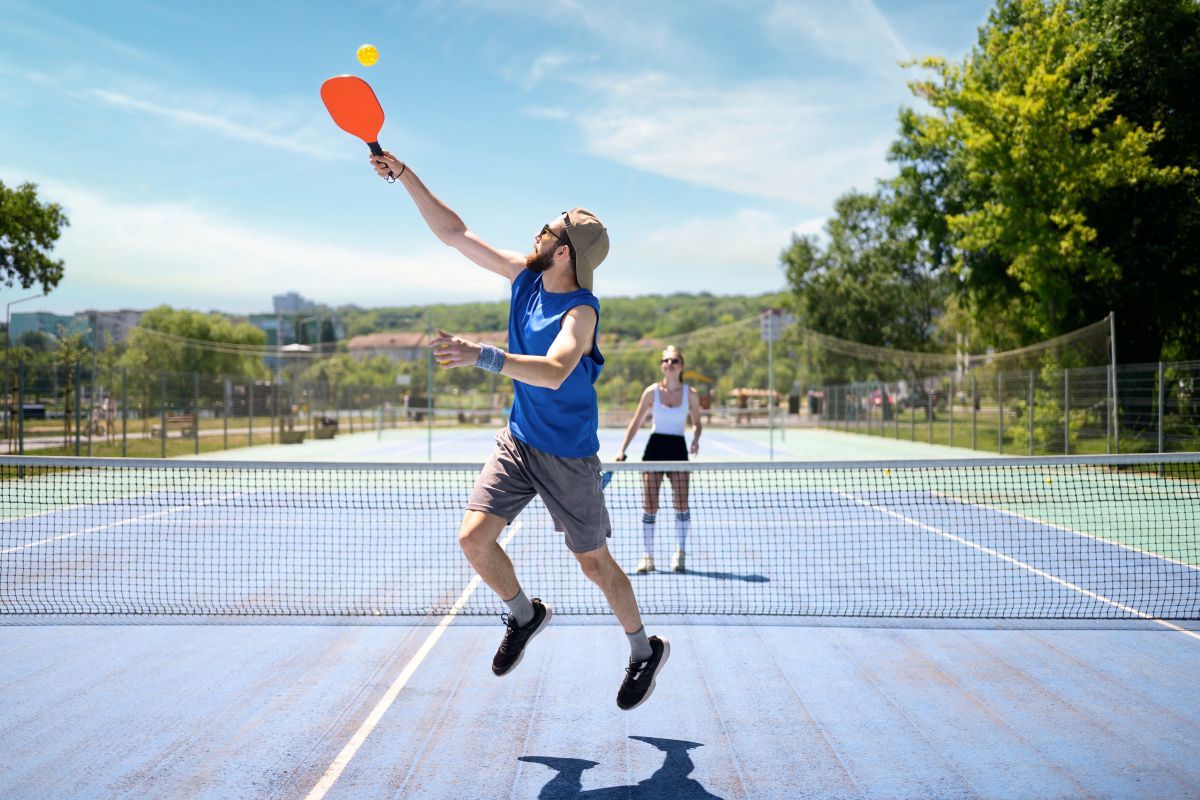
Drills alone are not sufficient; application under realistic conditions is essential.
Transition gradually:
- Begin with cooperative rallies
- Introduce light competitive scoring
- Add full-point scenarios
Controlled point-start drills help bridge the gap between repetition and live play.
Skill-matched environments accelerate this progression. Beginners who enter appropriately leveled leagues and clinics gain exposure to consistent rally lengths without overwhelming pressure.
Bounce’s city-based ecosystem allows players to discover beginner leagues and coaching programs that match their current level, ensuring a smooth transition from practice to competition.
Tracking improvement over time is critical. Monitor:
- Serve percentage
- Dink consistency count
- Third-shot success rate
- Unforced error frequency
Objective measurement builds accountability and encourages sustained improvement.
Weekly Beginner Drill Plan (Sample Template)
A structured weekly plan reinforces balanced development.
| Day | Focus | Drill Categories |
| Monday | Serve + Return | Target serves, deep returns, crosscourt exchanges |
| Wednesday | Dinking + Footwork | Crosscourt dinks, lateral shuffle drills |
| Saturday | Third-Shot + Controlled Games | Drop feeds, cooperative progression, light match play |
This rotation ensures:
- Balanced skill development
- Repetition across categories
- Practical application
Consistency in scheduling produces compound improvement over time.
Conclusion
Mastering the fundamentals through structured pickleball drills for beginners builds a durable foundation for long-term success. Repetition strengthens mechanics, improves confidence, and reduces errors that limit progression.
Players who commit to disciplined practice sessions develop stability at the baseline, precision at the kitchen, and smoother transitions between phases of play.
Improvement becomes sustainable when drills are paired with structured environments that reinforce technique and provide feedback. Organized clinics, leagues, and lesson formats offer accountability and progression pathways.
City-based ecosystems like Bounce reduce friction by connecting players with coaches, clubs, and programming tailored to their level, making consistent training easier to maintain.
A focused weekly routine, measurable goals, and deliberate repetition transform beginner players into confident competitors. The foundation built through disciplined drill work ultimately defines performance under pressure, and consistency in these early stages determines long-term growth in the sport.