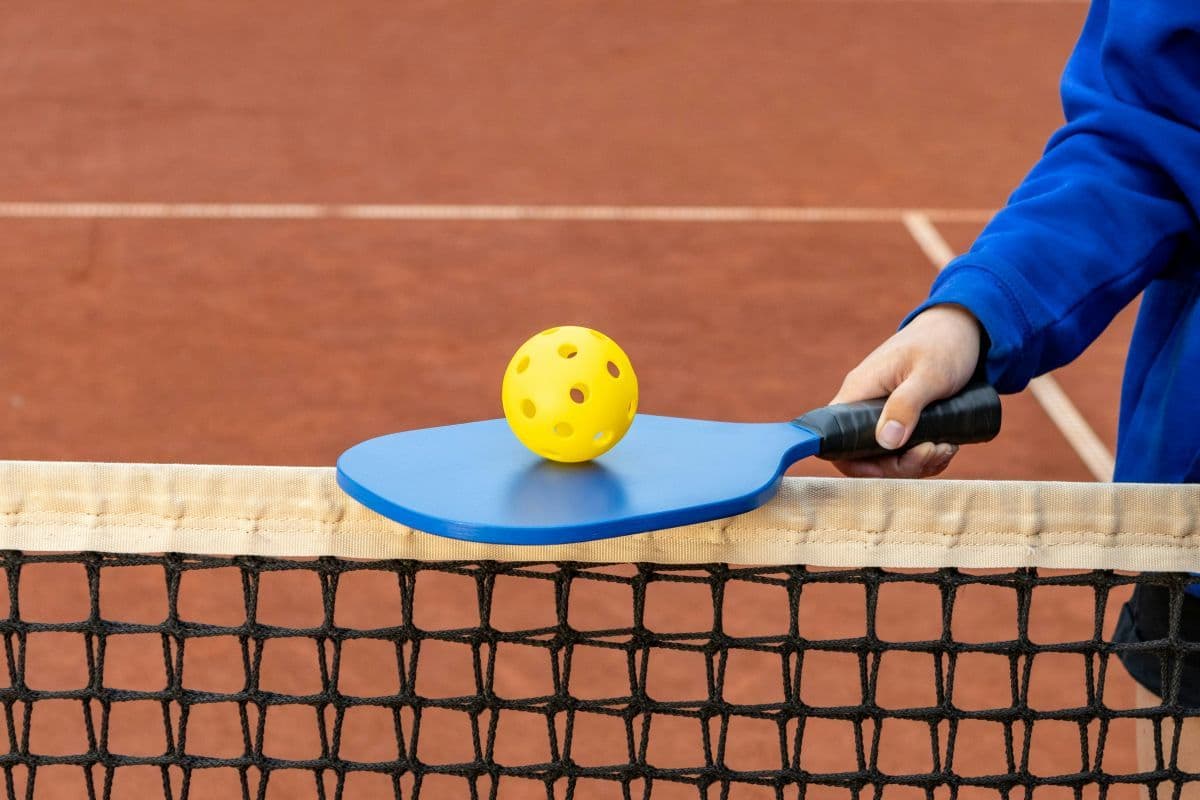
If you want to improve your soft game, the pickleball drop shot is one of the most important skills to build. It helps you move from the baseline or transition zone toward the kitchen without feeding your opponents an easy ball to attack. For beginner and intermediate players, that changes everything.
A lot of players understand what the shot is supposed to do but still struggle to trust it. They hit it too hard, try to be too precise, or rush the contact point. That is normal. The drop shot is not really a power shot at all. It is a control shot. Once you stop forcing it and start treating it as a touch-and-positioning skill, it becomes much more reliable.
That matters because pickleball rewards players who can move forward under control. According to the official USA Pickleball rules, the non-volley zone, often called the kitchen, is a seven-foot area on each side of the net where volleying is restricted. Getting close to that line matters, but getting there safely matters just as much.
What a drop shot actually does
A drop shot is a soft shot hit from deeper in the court that lands in or near your opponent’s kitchen. The goal is usually not to win the point immediately. The goal is to make the ball difficult to attack so you and your partner can move forward.
That is why the shot is such a big part of real match play. Most points are won at the kitchen line, which is why players work to get there as soon as they can. A good drop shot helps you make that move without turning the rally into a speed contest from a bad position.
This is also why the shot feels different from a drive. A drive is flatter and firmer. A drop needs more shape, softer hands, and more patience. You are not trying to overpower anyone. You are trying to change the rally.
When to use a pickleball drop shot
The best time to use a drop shot is usually when you are still moving up the court and need a controlled ball that buys you time.
After the return of serve
One of the most common uses is the third shot. After your team serves and your opponents return deep, you are often hitting from farther back. That is where a softer ball into the kitchen can help neutralize the receiving team’s early advantage.
USA Pickleball’s return-of-serve strategy page emphasizes how important it is for the returning team to move toward the kitchen right after the return. That is exactly why the serving team so often needs a quality drop on the next ball.
From the transition zone
This may be the most important moment for the shot. If you are caught between the baseline and the kitchen, trying to hit hard from there often makes things worse. A controlled drop can reset the pace and help you keep advancing.
When a drive is not the right answer
Some opponents handle pace well. If your drives are just sitting up for counters, a drop may be the smarter option. It gives you another way to build the point instead of repeating the same pattern.
How to hit a better drop shot
Most players do better when they simplify the mechanics.
Keep the swing compact
Big backswings usually create timing problems. The drop shot works better with a short, controlled motion. Think lift and guide, not hit and muscle.
Start low and send the ball with shape
A drop has to clear the net and then fall softly. That usually means you need a gentle upward path through the ball. Not a scoop, and not a pop-up. Just enough shape to give yourself margin.
Relax your grip
Too much tension is one of the fastest ways to hit drops too deep. Softer grip pressure usually improves feel. If your hand and forearm are locked up, the ball tends to come off the paddle too hard.
Stay balanced at contact
If you are rushing, lunging, or drifting backward, touch becomes harder. Set your feet when you can. Even one small adjustment step can make the shot feel much easier.
Aim for safe, not perfect
A lot of players miss because they try to land the ball on the exact front inch of the kitchen. That is not necessary. A slightly higher, slightly safer drop that avoids attack is still a good drop.
Common mistakes that ruin the shot
The first big mistake is swinging too hard. Players often know they need “soft hands,” but then they still take a drive swing at the ball. That almost always leads to a drop that carries too deep.
The second mistake is trying to hit the shot too flat. Without enough arc, the ball clips the net or forces you to overcompensate with more pace. The drop needs margin.
The third mistake is hitting it while still out of control. It is much harder to hit a quality soft shot while you are still moving wildly through contact. Control starts before the paddle touches the ball.
Another common problem is impatience. Players want the shot to become dependable right away. But the drop shot is a feel skill. It improves with repetition, feedback, and better spacing, not just with effort.
If you are still sorting out where this shot fits into the bigger picture, Bounce’s pickleball shots guide is a strong next read because it shows how drops, drives, dinks, resets, and volleys work together.
Drills that actually help
The best drills for the pickleball drop shot are the ones that train height, depth, and repeatability.
Baseline-to-kitchen target drill
Stand at the baseline and aim repeated drops into a broad target area in the kitchen. Do not chase perfection. Focus on net clearance, arc, and landing depth.
Transition-zone reps
Have a partner feed balls while you start in the transition zone. Your job is to hit a controlled drop, then move forward under balance. This drill is useful because it trains the real purpose of the shot, not just the contact.
Crosscourt soft-game drill
Crosscourt gives you a little more space to work with and can make the shape of the shot easier to feel. It is a good place to build confidence.
Drop then recover
Hit a drop and immediately recover your court position. Many players practice the shot but forget the movement after it. The real skill is not just landing the ball softly. It is using that ball to earn better positioning.
Equipment can also affect feel more than people expect. If your paddle setup feels too stiff, too heavy, or just hard to control, Bounce’s pickleball equipment guide can help you think through what actually suits your current level.
How it fits into real match play
The drop shot is not a fancy extra. It is a core transition tool.
That matters because a lot of recreational players treat it like an advanced shot they will learn someday. In reality, it is part of how you build a complete game. The more comfortable you become with the shot, the less trapped you feel at the baseline or mid-court.
It also improves your decision-making. Not every third ball should be a drop. Not every ball should be driven either. Good players learn to recognize when to apply pace, when to reset, and when to soften the rally. That judgment is a big part of leveling up.
This is especially true for players coming from tennis. Tennis instincts often encourage bigger swings and more pace from the back of the court. Bounce’s guide to transitioning from tennis to pickleball is useful here because many former tennis players need to soften their instincts before their touch game starts to click.
For players who want more structure around that process, Bounce can be a useful next step for finding lessons, courts, or ways to practice more often with purpose. That is often what turns a decent drop shot into a dependable one.
How long it takes to trust the shot
Usually longer than players want, but less time than they fear if they practice it the right way.
The breakthrough often comes when you stop trying to hit a perfect drop and start trying to hit a reliable one. A good drop is not always dramatic. It just needs to keep your opponents from attacking comfortably and help you move forward.
Think of the skill in stages. First you learn the feel. Then you repeat it often enough to trust it. Then you start choosing it well under pressure. That final stage is where the shot becomes a real weapon.
And if you want more skill-development reading after this, the Bounce blog has broader pickleball and tennis guides that help connect one-shot practice to better overall play.
FAQs
What is a pickleball drop shot?
A pickleball drop shot is a soft shot hit from deeper in the court that lands in or near the opponent’s kitchen, helping you move forward without giving them an easy attack.
Why is the drop shot important in pickleball?
It helps players transition toward the kitchen line, which is one of the most important positions on the court.
Why do I keep hitting my drop shot too deep?
The most common reasons are too much swing, too much tension, or trying to hit the ball too hard instead of using a softer, more controlled motion.
Should I hit a drop shot or a drive?
It depends on the situation. A drive can work well when you can pressure opponents with pace, while a drop is often better when you need to neutralize the rally and move forward.
How do I practice a better pickleball drop shot?
Use target drills, transition-zone reps, and repetition-based soft-game practice that focuses on consistency more than perfection.
Do I need coaching to improve my drop shot?
Not always, but good feedback can speed things up. If you feel stuck, structured practice or lessons can help you improve faster.