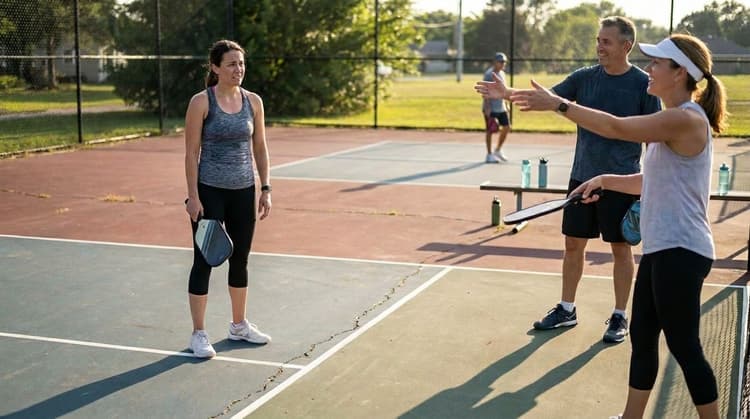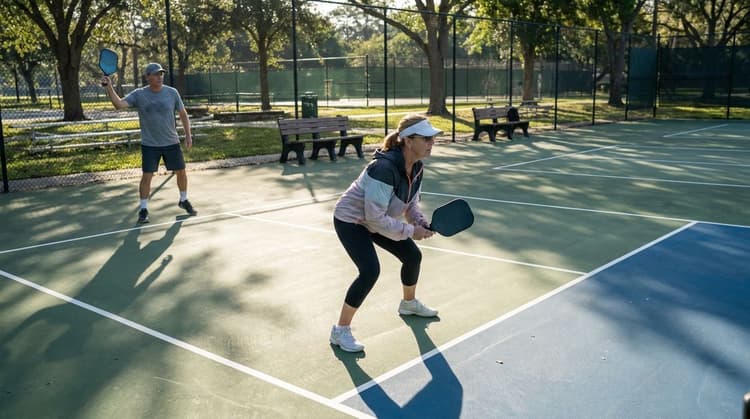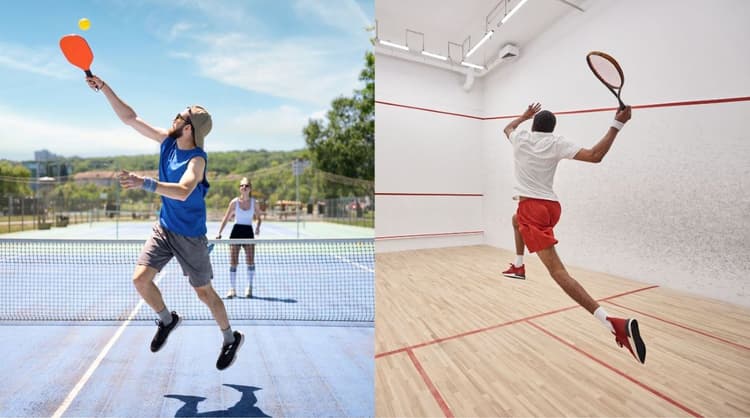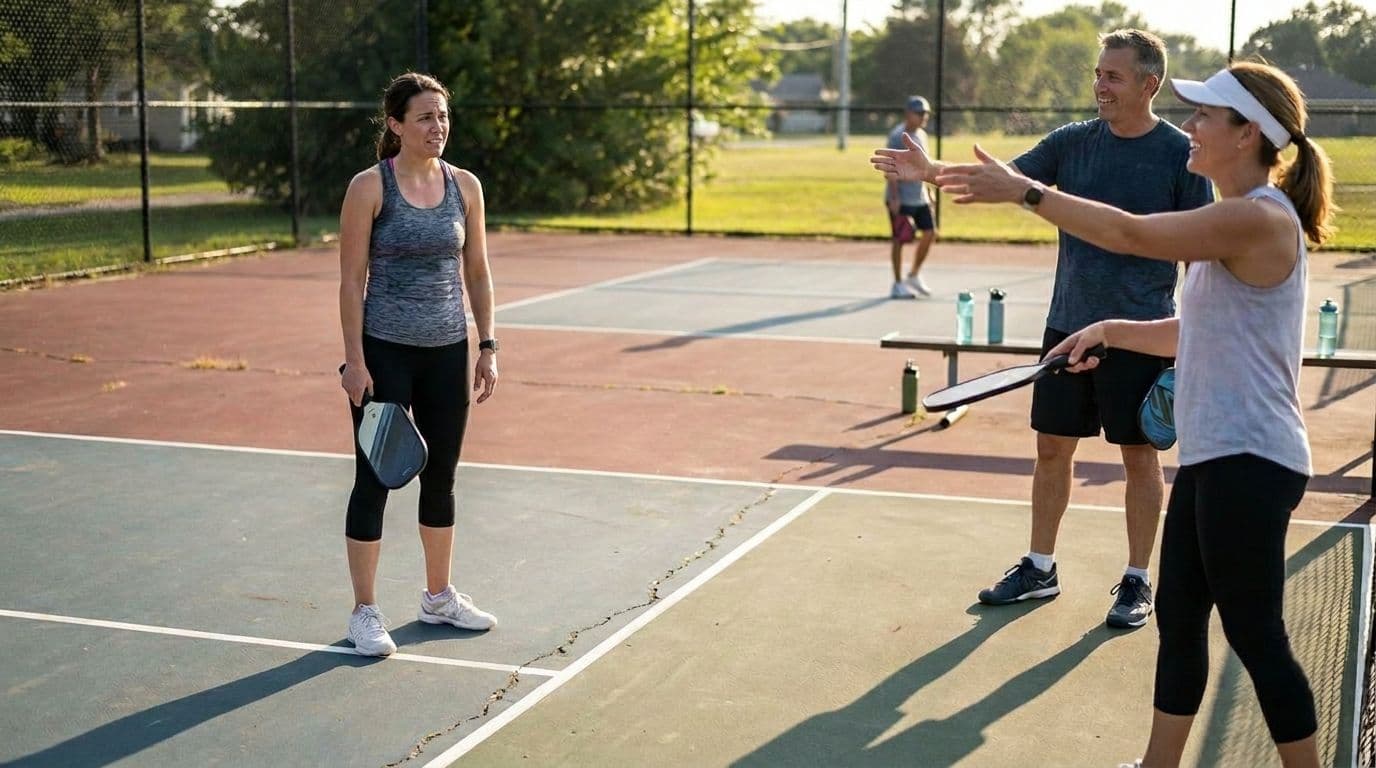
Your first rec game moves fast. Within 20 minutes you have heard “dink it,” “she got pickled,” “nice Bert,” “stay out of the kitchen,” and “shake-n-bake, go go go.” Nobody explains any of it. You just nod and try to keep up.
Want the short version? Pickleball slang falls into court zones, named shots, shot quality, player styles, doubles calls, scoring terms, and court culture. Use this as a scan-first guide. Find the term, read the plain meaning, then get back on court.
Source note: Some terms in this guide come from official pickleball rules, including non-volley zone, volley, fault, serve, side out, and scoring. Others are common court slang used by players, coaches, and commentators. For rules-based terms, this article follows the USA Pickleball Official Rulebook.
| If you heard this term... | Start here |
| Kitchen, dink, NVZ, reset | Kitchen and court-zone terms |
| Erne, Bert, ATP, Nasty Nelson | Named shots |
| Meatball, speedup, falafel | Shot quality and contact slang |
| Banger, dinker, baseline player | Player types and styles |
| Stacking, poaching, Shake-n-Bake | Doubles-specific lingo |
| Pickled, golden pickle, side out | Scoring and game-state slang |
| Open play, DUPR, skinny singles | Court culture and the social side |
Most common beginner terms: kitchen, dink, NVZ, side out, banger, and pickled. Learn these first and most rec-court conversations will make sense.
The kitchen and the NVZ
Most pickleball slang starts around the 7-foot zone on each side of the net. For the full legal breakdown, use the kitchen rules guide.
| Term | Plain meaning | When you will hear it |
| Kitchen | The informal name for the non-volley zone. You can stand in it, but you cannot volley from it. | “Stay out of the kitchen.” Usually said after someone volleys while touching the zone. |
| NVZ | Short for non-volley zone. Same place as the kitchen, just the official name. | Coaches and rule-minded players use “NVZ.” Rec players usually say “kitchen.” |
| Dink | A soft shot hit from near the kitchen line into the opponent’s kitchen. | “Dink it cross-court.” It keeps the ball low and forces the opponent to hit upward. |
| Dinking war | A long exchange of dinks between both sides. | Used when neither team wants to speed up first. It looks slow until you understand the pressure. |
| Reset | A soft shot that slows down a fast rally and gets the point back to neutral. | You will hear it when someone is getting attacked and needs to drop the ball softly into the kitchen. |
| Volley Llama | A funny name for volleying while standing in the kitchen. | The phrase is silly. The fault is real. |
Named shots: the ones with real stories
These are the flashy terms players remember first. For more context on advanced shots, the advanced pickleball techniques guide explains where shots like the Erne and ATP fit into point construction.
| Term | Plain meaning | Quick note |
| Erne | A volley hit after stepping or jumping outside the sideline near the kitchen corner. | Your feet are outside the court when you make contact, so the kitchen does not apply. |
| Bert | An Erne executed on your partner’s side of the court. | Riskier than an Erne because you cross the court and leave your side exposed. |
| ATP | Around the post. A shot hit around the net post instead of over the net. | It happens when a ball pulls you wide enough to create the angle. |
| Nasty Nelson | A serve that intentionally hits the non-receiving partner. | Legal under the rules, irritating in practice, and remembered forever by the person who got hit. |
| Scorpion | A defensive move where a player drops low and attacks a body ball from a crouched position. | Useful against speedups aimed at the chest or shoulder. |
| Tweener | A desperation shot hit between the legs. | Usually happens when chasing a lob toward the baseline. |
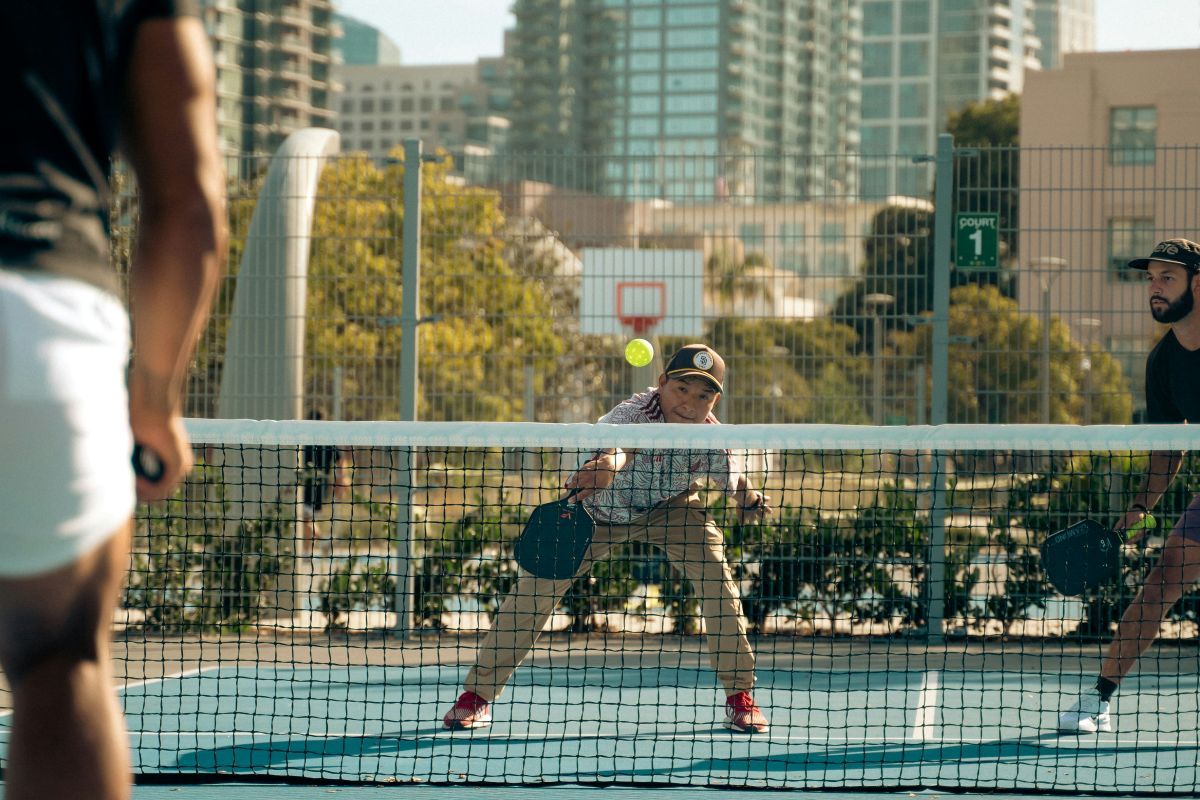
Shot quality and contact slang
| Term | Plain meaning | Quick note |
| Falafel | A weak, dead shot with almost no pace. | Usually comes from poor contact or an off-center hit. |
| Meatball | An easy ball sitting high in the strike zone. | When you get one, attack it. |
| Speedup | A sudden attack during a slow dink exchange. | Good speedups target the hip or shoulder. Bad ones get countered immediately. |
| Roll shot | A low topspin shot that dips after crossing the net. | It creates pressure without turning the rally into a full speedup. |
| Punch volley | A short, firm volley with almost no backswing. | Used at the net when there is no time for a full swing. |
| Body bag | A shot aimed directly at the opponent’s body to jam them. | Legal and tactical, especially against slow hands. |
| Fly swatter | A missed smash that gets dumped into the net. | The swing looks like someone swatting a fly. |
| Let Ace | A serve that clips the net, lands in, and cannot be returned. Under current USA Pickleball rules, let serves are live. | Rare, legal, and annoying for the returner. |
| Nutmeg | A shot that goes through the opponent’s legs. | Usually accidental. Always memorable. |
Court zones and positioning
| Term | Plain meaning | Why it matters |
| No man’s land | The area between the baseline and the kitchen line. | You pass through it. You do not camp there. |
| Midcourt | A neutral name for the same middle area. | Less dramatic than no man’s land, but usually the same space. |
| Kitchen line | The boundary at the front of the non-volley zone. | Controlling this line is one of the main goals in doubles. |
| T-zone | The spot where the centerline meets the kitchen line. | A ball placed there can split two players’ coverage. |
Player types and playing styles
| Term | Plain meaning | How to handle it |
| Banger | A player who drives the ball hard and avoids soft play. | Reset the ball, get to the kitchen, and make them hit up. |
| Dinker | A player who wins through soft, patient kitchen play. | Stay low and be ready for speedups when the ball gets high. |
| Bangerball | A match style built around hard drives and minimal soft play. | Fun, loud, and chaotic. Strong reset skills calm it down. |
| Kitchen player | A player whose strength is the soft game at the net. | Expect long dink rallies and controlled pressure. |
| Baseline player | A player who stays back and hits groundstrokes. | Common among beginners and tennis converts. The kitchen line usually wins over time. |
If you are stuck in baseline habits or trying to move past bangerball, structured coaching helps faster than guessing. Bounce connects players with certified pickleball coaches in their city for exactly that kind of adjustment.
Doubles-specific lingo
Most recreational pickleball is doubles, so partner calls matter. For the larger framework, the pickleball doubles rules and strategy guide covers positioning, score calling, and rotations.
| Term | Plain meaning | When it matters |
| Stacking | A positioning strategy that keeps players on preferred sides regardless of the score rotation. | Useful with lefty-righty teams or when one player has a stronger side. |
| Half-and-half | A simpler setup where each partner owns one side all game. | Easier than full stacking, especially under pressure. |
| Poaching | Crossing into your partner’s half to intercept a ball. | High reward when timed well. High risk when your side is left open. |
| Shake-n-Bake | A two-player play: one drives the third shot, the partner crashes forward to finish. | Works only if the drive forces a weak return. |
| Switch | A call telling your partner to cover the side you just left. | Needed when one player gets pulled wide. |
| Crash | Rushing the net aggressively after a strong approach. | One good lob can punish it immediately. |
Scoring and game-state slang
| Term | Plain meaning | Quick note |
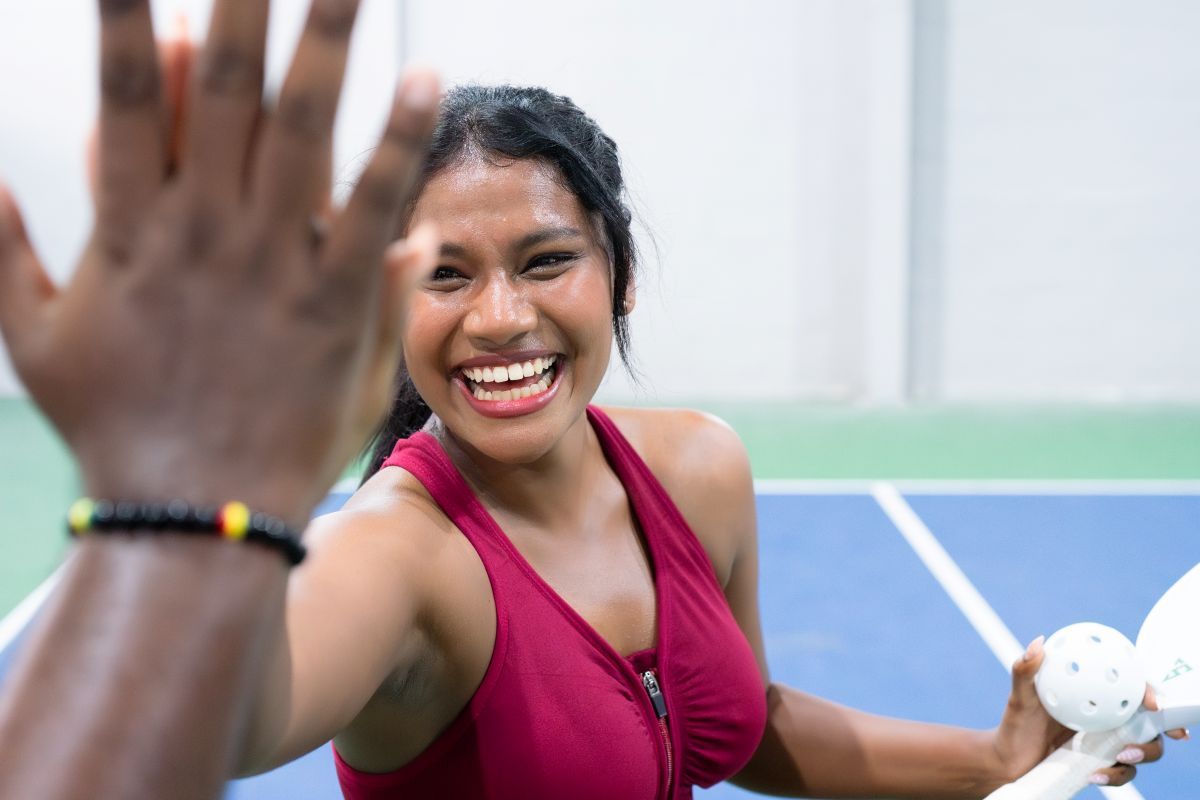
| Pickled | Losing a game without scoring a point, usually 0-11. | “We got pickled” means the scoreboard was ugly. |
| Golden pickle | Winning 11-0 without the starting server ever losing serve. | Harder than a regular shutout. Players mix these up all the time. |
| Side out | The serving team loses the rally and the serve transfers to the opponents. | In traditional scoring, only the serving team can score. |
| Rally scoring | A scoring format where every rally awards a point. Major League Pickleball uses rally scoring in DreamBreakers, where games are played to 21. | It changes match momentum because points keep moving. |
Court culture and the social side
| Term | Plain meaning | Where it shows up |
| Open play | Unstructured drop-in play where players rotate on and off courts. | The easiest way most beginners start playing. |
| Round-robin | A structured format where players rotate partners and opponents on a schedule. | Better for players who want organized games without a full tournament. |
| Rec play | Recreational play, separate from rated or tournament play. | Usually more relaxed and forgiving about mixed skill levels. |
| DUPR | Dynamic Universal Pickleball Rating. It assigns players a numerical skill rating based on match results. VAIR is a newer alternative for players who want another approach to skill verification. | Used for leagues, rated play, and skill-based grouping. |
| Skinny singles | A singles drill played on half the court width. | Great for practicing angles, placement, and court positioning. |
Bounce runs organized round-robins, leagues, and social formats in cities across North America for players who want something more structured than pickup.
Terms players confuse
| Confusing pair | The difference |
| Kitchen vs NVZ | Same place. Kitchen is the casual name. NVZ is the official term. |
| Dink vs reset | A dink builds the soft game. A reset slows down pressure and gets the rally back to neutral. |
| Pickled vs golden pickle | Pickled means 0-11. Golden pickle means 0-11 without the starting server losing serve. |
| Stacking vs switch | Stacking is planned before the point. Switch is a live call during the rally. |
| Erne vs Bert | An Erne happens on your side. A Bert uses Erne mechanics on your partner’s side. |
Conclusion: learn the language, then play the game
Knowing the slang does not make you a better player. But it does make you feel like you belong on the court faster, and that feeling matters when you are still figuring out which end of the paddle to hold.
The language is part of the culture. Once you know it, you stop nodding along and start following the point, the strategy, and the conversation after the game.
For players building their game through structured coaching and organized play, Bounce connects you with certified coaches and competitive formats in your city.