The pickleball lob shot gets blamed for two different problems.
Beginners use it as a bailout. Better players ignore it until the exact moment it can steal court position. Both habits come from the same mistake: treating the lob like a random high ball instead of a shot with a specific job.
The lob punishes forward weight.
Want a quick answer? The pickleball lob shot works best when your opponent is at the kitchen line, leaning forward, and expecting another low ball. Use a disguised low-to-high swing, aim deep near the baseline, and favor the opponent's backhand shoulder or non-paddle side when the angle is available.
What a pickleball lob shot actually does
A lob is a high-arc shot that travels over an opponent's reach and lands near the baseline.
That is the definition. The strategy is sharper.
A good lob pulls an opponent off the non-volley zone line, usually called the kitchen. That matters because the kitchen line is where good doubles teams squeeze the court. They take balls early. They close angles. They make you hit up.
A lob changes that shape.
When a player is leaning forward at the kitchen, retreating is awkward. They have to turn, sprint, track the ball overhead, and hit while moving backward. A clean lob gives you time to move in or forces them to hit a weaker reply from deep.
The shot fails when you use it against a player who is already back. Then the lob gives them time, space, and a free overhead. That is how a clever idea turns into a ball hit through your shoes.
The lob is legal under normal pickleball play. USA Pickleball's official rules and rules summary govern serves, faults, volleys, line calls, and the non-volley zone. There is no special rule that makes a rally lob cheap or illegal.
Offensive and defensive lobs use different arcs
Most players talk about "the lob" like it is one shot.
It is cleaner to split it into 2 shots: offensive lob and defensive lob.
| Category | Offensive lob | Defensive lob | What it means |
| Best contact area | Kitchen line or just behind it | Transition zone or deeper court | Shorter distance favors attack, deeper contact favors survival |
| Arc | Lower and flatter | Higher with more hang time | The offensive version must clear reach and drop fast |
| Main goal | Win space or force a weak reply | Buy time and reset | Choose based on pressure level |
| Biggest miss | Short ball into an overhead | Floating ball that lands shallow | Depth matters more than height |
An offensive lob works because it is disguised as a dink. The swing starts the same. The stance looks the same. The opponent reads low ball, then has to chase high ball.
A defensive lob works when you are under pressure and need time. It should land deep enough to keep the opponent from stepping into a smash. If it lands short, you gave them the easiest ball of the rally.
For a wider shot vocabulary, Bounce's breakdown of pickleball shots helps place the lob beside drops, drives, dinks, volleys, and resets.
How to hit a pickleball lob with control
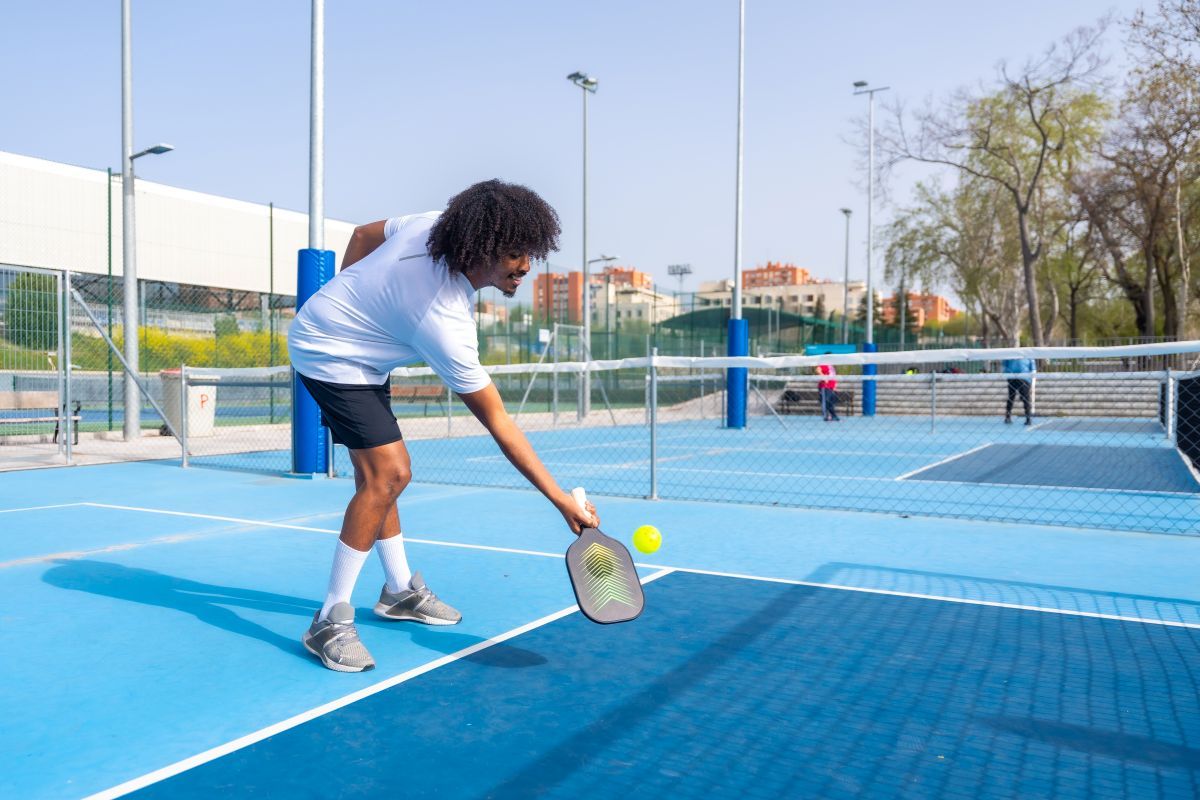
The phrase "low to high" is correct, but it is too vague to help much.
Use this sequence instead.
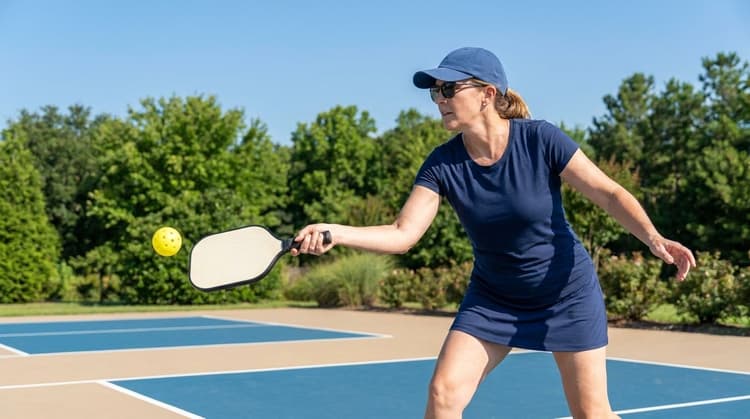
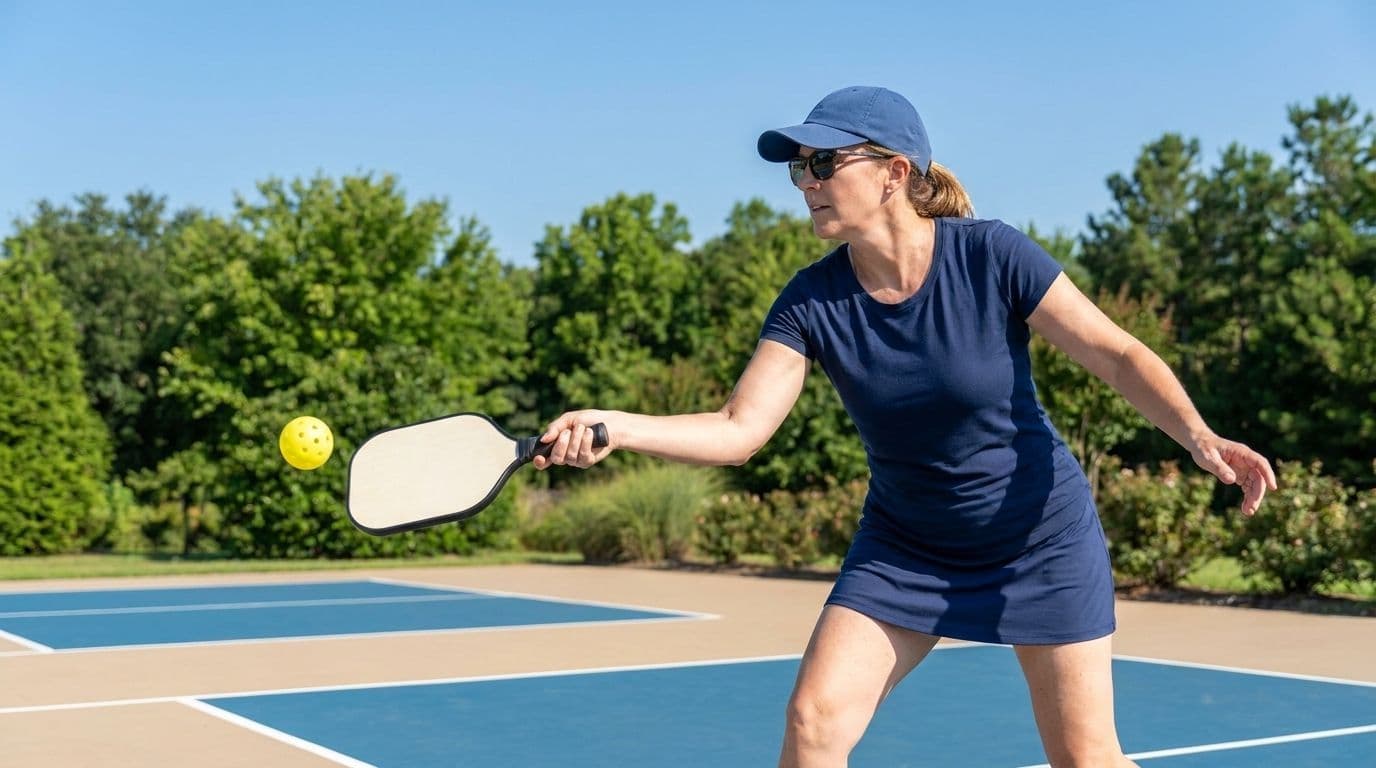
1. Set up like a dink. Bend your knees, keep your paddle in front, and hold your weight slightly forward. The disguise starts before the swing.
2. Contact the ball in front of your body. Reaching kills depth control. Move your feet early so the ball is close enough to lift cleanly.
3. Use your legs first. Straighten your knees as the paddle rises. Your legs create height without a giant backswing.
4. Brush up the back of the ball. A flat push hangs. A brushing motion adds topspin and helps the ball dive near the baseline.
5. Finish toward the target. Cross-court lob, finish across your body. Down-the-line lob, finish straighter and higher.
6. Keep the wrist quiet until late. The late change in paddle path is where the disguise lives. Show dink as long as possible, then lift.
Your swing should feel smaller than you expect.
A big backswing tells the opponent what is coming. It also makes the contact point late, which is why so many lobs sail long or sit short.
How to hit a backhand lob
You need a backhand lob because opponents will target your weaker side once they know you can lob off the forehand.
Use a continental grip or a slight backhand grip. Turn your hitting shoulder toward the net, keep the paddle face slightly open, and lift from your legs. The follow-through should go up and across your body.
The backhand lob is harder to spin. Prioritize depth first. A deep backhand lob that lands within 3 to 5 feet of the baseline is useful, even without heavy topspin.
Why topspin makes the lob harder to defend
A flat lob floats. It gives the opponent time to read, turn, and load for an overhead.
A topspin lob drops faster and kicks forward after the bounce. That second piece matters. Even when the opponent reaches it, they are often running away from the net with the ball moving away from them.
Racket-sport research keeps coming back to anticipation. Players respond earlier when they can read body position, racket position, movement, and sound cues. A disguised topspin lob strips away the easy early read, then makes the ball harder to handle after the bounce. Research on anticipation training in tennis and multisensory anticipation in badminton supports the same principle: earlier information improves response.
So disguise is technique. Spin is pressure.
When to use the pickleball lob shot
Use the lob when the opponent's position gives you a real advantage.
Opponent at the kitchen line with forward weight
This is the best window.
Look at their shoulders. If they are leaning in, paddle out front, expecting a dink or speed-up, they are vulnerable behind them. The lob works because their first move has to be backward.
Both opponents are at the kitchen in doubles
This is where the lob can break a solid doubles formation.
When both opponents are tight to the non-volley zone, one player has to retreat and the other has to decide whether to cover middle, switch, or stay. That moment creates errors. Bounce's pickleball doubles strategy goes deeper on spacing, middle coverage, and how teams lose structure near the kitchen.
Your opponent has a weak overhead
Some players can dink all day and still panic overhead.
Test it early with one high ball in a neutral score situation. If they backpedal, swing late, or slap the ball long, you have information. Keep the lob available.
Your last shot pulled them wide
A wide dink or sharp angle can open the lob on the next ball.
The reason is footwork. A player recovering from a lateral stretch is slow to reverse backward. If they lunge wide and start leaning back into the court, lift the next ball over the outside shoulder.
Sun or wind changes the tracking problem
Sun behind you can make overhead tracking harder for the opponent. Wind at your face can also help hold a lob in the court.
Use both carefully. Wind behind you carries the ball long. Sun can help you, but a poorly placed lob still gets punished.
If you want to test these reads without turning every point into a pressure test, Bounce open play is a good place to work on live decision-making against different player types. You need real opponents for this shot. A wall will not teach you who can retreat, who panics overhead, and who reads your setup early.
When to avoid the lob shot
The lob gets ugly when the court position is wrong.
Opponent is already in the transition zone or near the baseline
A player who is already back has time to load.
Against that player, the lob becomes a free overhead or a clean drop back into your feet. Keep the ball low and make them move side to side instead.
The player is tall, fast, and comfortable overhead
Height expands the danger zone.
A ball that clears a 5'8" player might sit perfectly for a 6'2" player with long arms. Watch reach, footwork, and overhead quality before you commit to the shot more than once.
You are stretched wide or late
A lob needs touch and contact control.
If you are reaching outside your body, your paddle face opens too much or closes too early. That usually means long, short, or net. Reset low when you can. Lob only when you can get the ball in front.
Wind is at your back
Outdoor pickleball punishes lazy height.
With wind behind you, a normal lob carries deeper than expected. Take pace off, add topspin, or choose a lower ball instead.
Your setup gives it away
A visible backswing turns the lob into a warning sign.
Good opponents watch your paddle. If the face opens early, they are already turning before you make contact. Keep the setup identical to your dink until the last beat.
The score makes the risk too expensive
At 10-10, the best lob is the one you have already earned.
Use it if you have the read, the angle, and the contact point. Skip it when the idea comes from panic. The lob has enough built-in risk without adding a rushed decision.
Cross-court and down-the-line lobs use different geometry
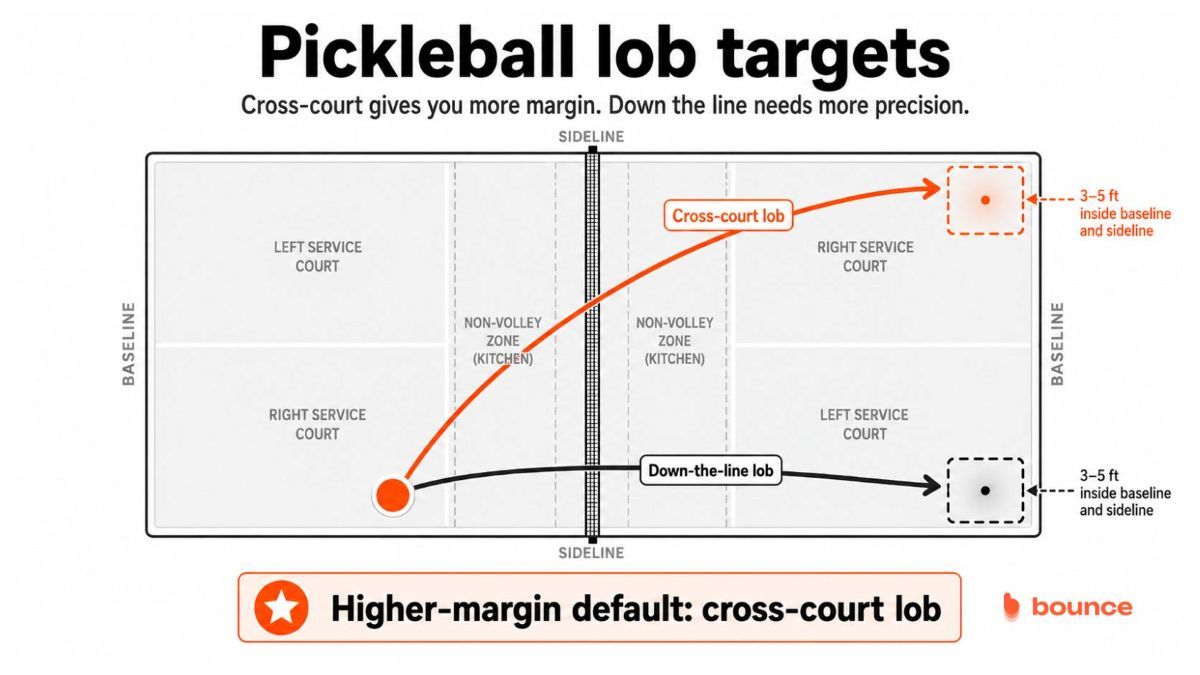
A pickleball court is 20 feet wide and 44 feet long. That size is small enough that a few feet decide whether your lob lands deep or becomes an overhead.
The cross-court lob gives you more room. The diagonal path lets the ball travel longer before it has to drop. That is why cross-court is the safer default.
The down-the-line lob has a smaller window. It can work, especially over a backhand shoulder, but the ball has to clear the player and drop faster.
| Aim | Best use | Main risk | Target |
| Cross-court | Default offensive lob | Too much hang time | Deep corner, 3 to 5 feet inside baseline |
| Down the line | Backhand-shoulder target | Short ball into overhead | Sideline third, deep but inside |
| Middle lob | Confuse doubles coverage | Easy ball if both read it | Between retreating players |
| Defensive high lob | Reset under pressure | Floating short | Deep center, away from sharp angles |
For most players, cross-court should be the first option. Down the line becomes useful when the opponent's backhand overhead is weak or when their outside shoulder is exposed.
How to defend a lob
Defending lobs starts before the ball goes up.
At the kitchen line, keep your shoulders stacked over your hips. If you lean too far forward, you have already made the retreat harder.
When the lob goes over you, turn and run. Do not backpedal. Backpedaling is slow, awkward, and risky. Turn your outside shoulder, sprint to the landing spot, and decide early whether you can hit overhead or need a defensive return.
Your choices are simple.
- If you can get behind the ball, hit an overhead or controlled deep volley.
- If you are still running, send a deep return through the middle.
- If your partner has the better angle, call the switch early.
- If you recover the ball deep, work back toward the kitchen behind a low reset.
The pickleball kitchen rules matter here because the next exchange often happens near the non-volley zone again. Players who defend the lob well usually lose the point later because they rush back in and volley from a bad spot.
Defend first. Rebuild the point second.
The lob serve works as a changeup
A lob serve is a high-arc serve aimed deep into the service box.
It is slow. That is the point. It changes eye level, rhythm, and return timing. It can bother players who crowd the baseline or rush their return swing.
Keep the serve legal. USA Pickleball's serve rules require the volley serve motion to move upward, contact below the waist, paddle head below the wrist at contact, and a diagonal landing inside the opposite service court. The drop serve has separate allowances, which the USA Pickleball rules summary explains.
Use this setup:
1. Start with your normal serving stance.
2. Open the paddle face slightly.
3. Contact the ball in front of your body.
4. Lift through the ball with shoulder and legs.
5. Finish high, with the ball landing deep in the service box.
The lob serve works best as an occasional changeup against 3.0 to 3.5 players who struggle with high, slow balls. A prepared receiver will step back, let it drop, and drive the return deep.
Use it once. Store the reaction. Bring it back later if the return was weak.
Four drills to build a reliable lob shot
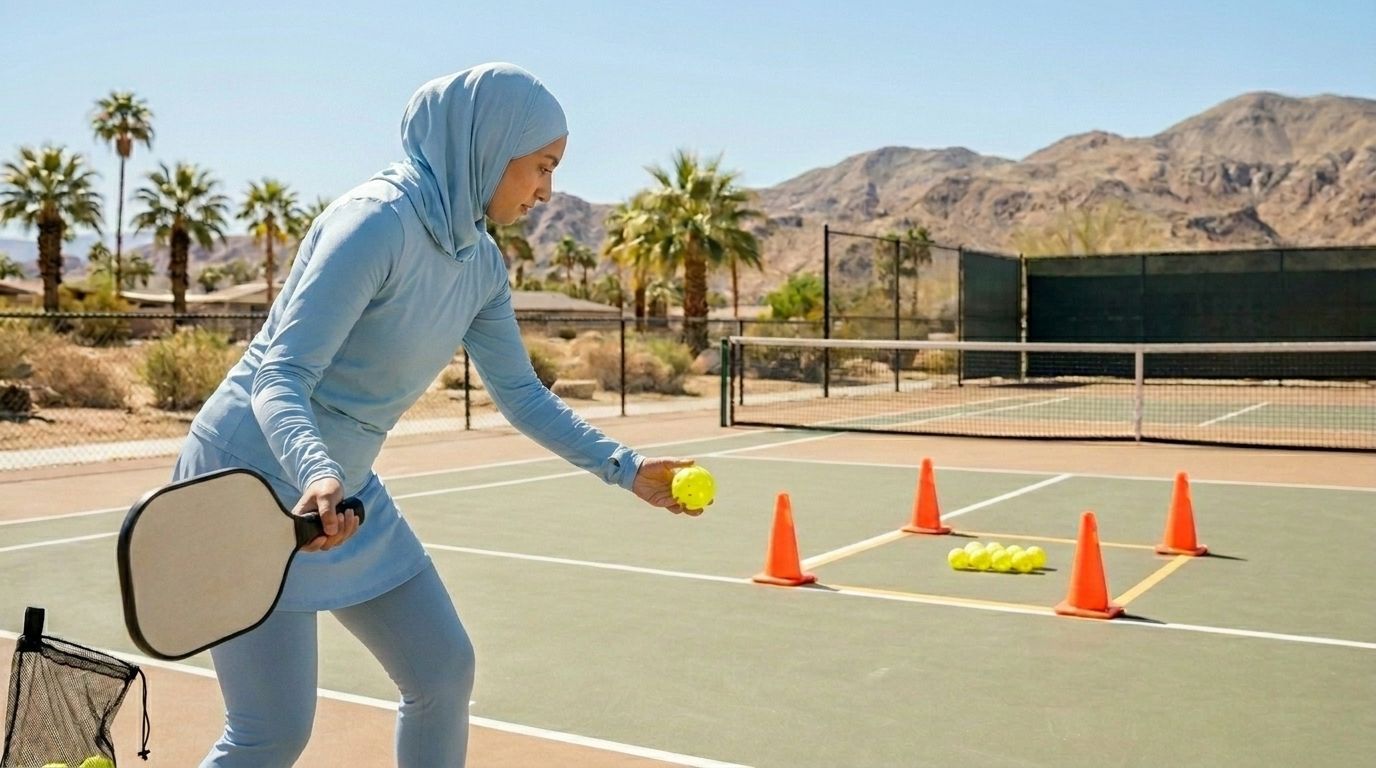
The lob breaks down in matches because players practice height without practicing disguise.
Use drills that force the decision and the setup.
Drill 1: Dink-to-lob switch
Rally cross-court dinks with a partner at the kitchen.
Your partner calls "lob" at random. You hit the lob immediately from the same stance you were using for the dink.
Target: 7 of 10 lobs land in the deep half of the court.
Pass condition: your partner should say the lob was hard to read before contact.
Drill 2: Topspin lob target
Place 2 cones 3 feet inside the far baseline, one near each deep corner.
Hit 20 topspin lobs from the kitchen line. Brush up the back of the ball and finish toward the target.
Target: 12 of 20 lobs land within 5 feet of either cone.
Pass condition: at least half of the successful balls kick forward after the bounce.
Drill 3: Backhand lob on the move
Have a partner feed balls to your backhand side while you move laterally.
Hit a backhand lob without stopping fully. Use your legs, keep the contact point in front, and aim deep middle.
Target: 8 of 15 clear the opponent's reach zone and land in the back half of the court.
Pass condition: no wild misses more than 5 feet long.
Drill 4: Lob and recover
Start at the kitchen line. Hit a lob, then recover to a ready position as your partner tracks it and returns.
Play the point out from there.
Target: win or neutralize 6 of 10 points after the lob.
Pass condition: you recover before the opponent contacts the ball.
If you cannot tell whether the miss comes from contact point, paddle face, footwork, or timing, Bounce lessons can connect you with a coach who can diagnose it in one session. The lob is a small-mechanics shot. Guessing at the fix usually wastes weeks.
Conclusion
The lob belongs in your game when you can read forward weight, hide the setup, and land the ball deep.
Use it from a position of control. Add topspin when you can. Favor cross-court geometry. Respect the players who move well overhead.
A good lob changes the point because it forces a player to run away from the strongest position on the court.
For players building their game through structured coaching and organized play, Bounce connects you with certified coaches, courts, lessons, leagues, and open play in your city.
FAQ
Is the lob shot legal in pickleball?
The lob shot is legal in pickleball during normal rally play. USA Pickleball's official rules cover serves, faults, volleys, line calls, and the non-volley zone, and the lob is treated like any other legal rally shot when it lands in bounds.
How high should a pickleball lob go?
A pickleball lob should clear the opponent's extended reach and still drop inside the baseline. For many recreational players, that means a peak around 10 to 14 feet, depending mainly on the opponent's height and your contact point.
Where should I aim a pickleball lob?
Aim deep, usually 3 to 5 feet inside the baseline. Cross-court is the safer default because the diagonal path gives the ball more room to travel and drop. Down the line works best when you can target a weak backhand overhead.
When should you lob in pickleball doubles?
Lob in doubles when both opponents are tight to the kitchen line and at least one player has forward weight. The best target is usually the weaker overhead or the player whose backhand shoulder is exposed.
What is a defensive lob in pickleball?
A defensive lob is a high shot used to buy time when you are under pressure. It should land deep enough to keep the opponent from stepping into an easy overhead. The main goal is to reset court position.
How do you defend against a lob in pickleball?
Turn and run instead of backpedaling. Get behind the ball when possible, then choose an overhead or a deep middle return based on your balance. Use a reset when you are still moving and need time. At the kitchen line, keep your shoulders from leaning too far forward so your first step backward is faster.