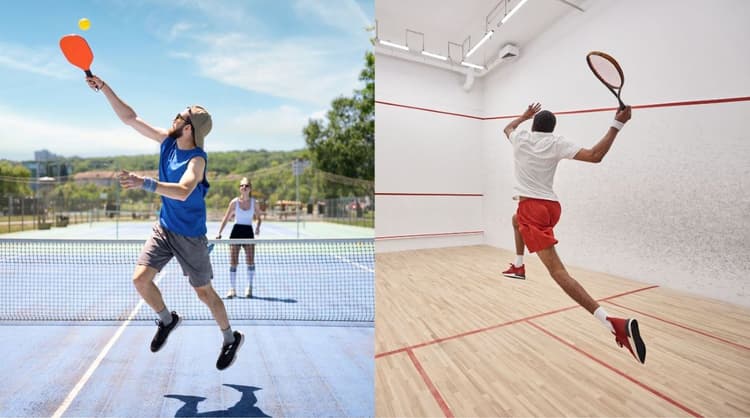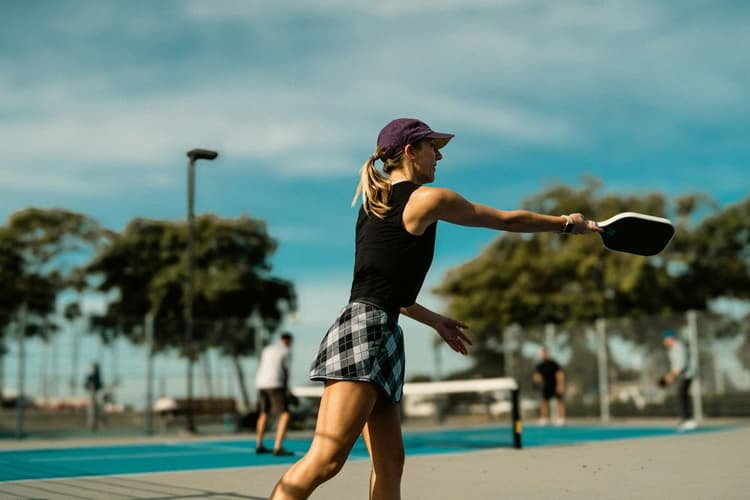
Squash and pickleball both sit under the racket-sports umbrella. That is about where the similarity starts to thin out.
Squash is faster, more enclosed, and harder on your conditioning. Pickleball is easier to access, quicker to learn, and more social from the first session. Choosing between them is less about which sport is “better” and more about what you want from the hour you spend on court.
Quick answer: Squash delivers the harder workout and the steeper learning curve. Pickleball is easier to start, easier to find in most U.S. cities, and more welcoming for mixed-age recreational play. This guide compares both sports across rules, fitness, cost, access, injury risk, and player fit.
Court and equipment: what each sport costs to start
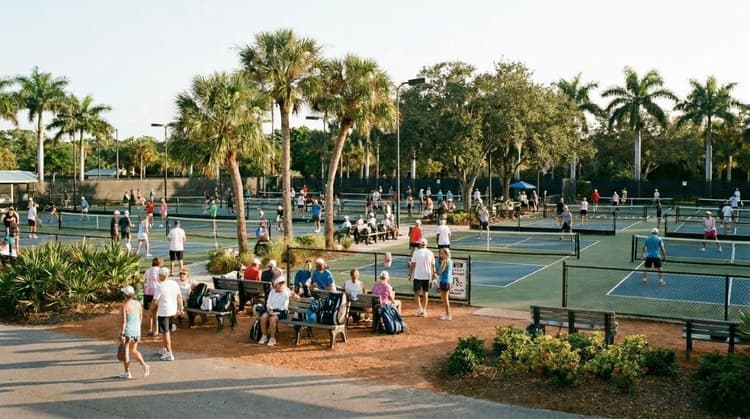
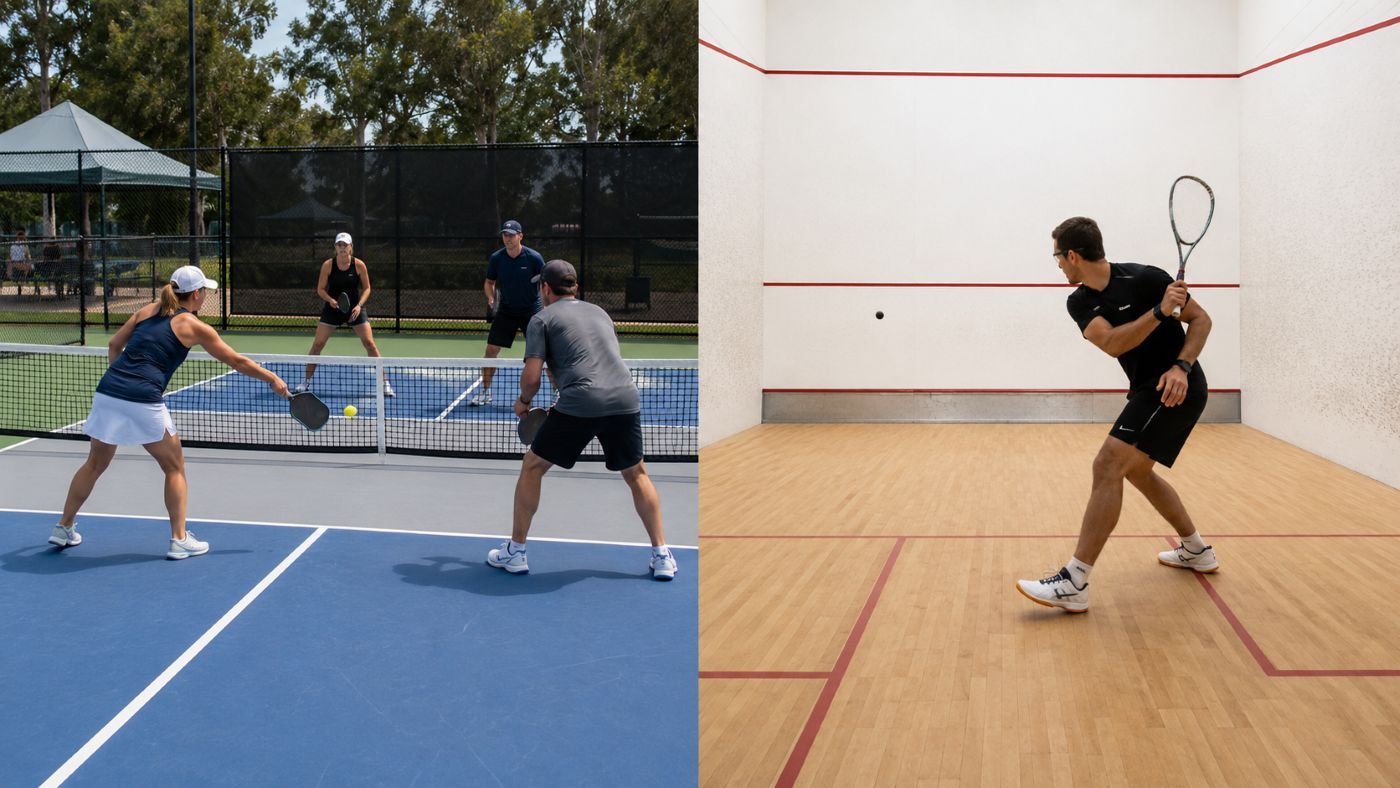
Access is the first real split between these sports. Pickleball can happen at public parks, recreation centers, schools, tennis facilities, and dedicated pickleball clubs. Squash needs an enclosed indoor court. That single requirement changes the cost, the schedule, and the number of places you can play.
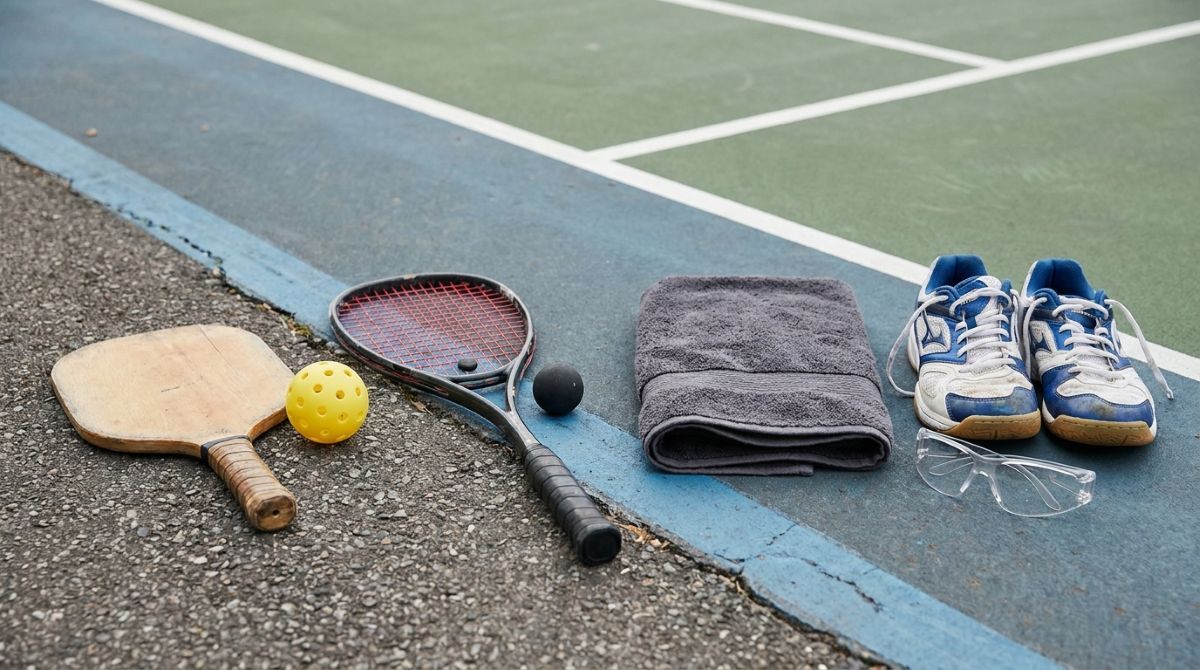
Pickleball is played on a 20 × 44-foot court with a net that is 36 inches high at the sidelines and 34 inches at the center. The 2026 official pickleball rules confirm the court size and the 7-foot non-volley zone on each side of the net. You need a solid paddle and a plastic perforated ball. A realistic beginner setup usually lands between $40 and $120, depending on the paddle you choose.
Pickleball also has the stronger public-access footprint. USA Pickleball’s 2025 Annual Growth Report lists 18,258 places to play and 82,613 known courts in the Pickleheads database. Those courts include a mix of dedicated facilities, public parks, shared spaces, and converted courts. The number works best as an access signal.
Squash is played in a fully enclosed 21 × 32-foot court with four walls in active play. You need a strung racquet, a hollow rubber ball, and protective eyewear. A basic setup usually runs $80 to $300 before court fees or club dues. The Racquet Sports Institute’s U.S. squash facility overview estimates about 1,000 known squash facilities in the U.S. with more than 3,000 courts.
That difference is the practical story. You can try pickleball with borrowed gear at a public court. Squash usually asks you to find a facility, book a court, and pay before you know whether the game fits you.
For players deciding where to start, Bounce helps you find coaches, open play, and local racket-sports sessions in your city. That matters most when the real obstacle is finding the right place to play.
| Category | Pickleball | Squash |
| Court | 20 × 44 feet, open court | 21 × 32 feet, enclosed four-wall cour |
| Primary setting | Outdoor or indoor | Indoor only |
| Starter gear | Paddle and plastic ball | Racquet, rubber ball, protective eyewear |
| Typical beginner cost | $40 to $120 | $80 to $300 before court fees |
| U.S. access picture | 18,258 places to play and 82,613 known courts in USA Pickleball’s 2025 report | About 1,000 facilities and more than 3,000 courts, per Racquet Sports Institute estimates |
Pickleball vs squash rules: how each sport plays
The rule differences are easy to list. The better question is what they create on court.
Pickleball
Pickleball uses an underhand or drop serve hit diagonally into the opposite service court. The serve must clear the kitchen, which is the 7-foot non-volley zone on each side of the net. The ball must bounce once on each side before either team can volley. Standard pickleball uses side-out scoring: only the serving side scores points. Games are typically played to 11, win by 2. Rally scoring exists as a provisional option in the 2026 USA Pickleball rulebook, but side-out scoring remains the standard format most players learn first.
That structure shapes the sport. The kitchen slows down pure power and rewards touch, patience, and placement. The serve starts the point and usually sets up the rally. The full pickleball rules guide gives more detail on scoring, the kitchen, and common faults.
Squash
Squash is played inside a four-wall court. Every legal shot must hit the front wall above the tin and below the out line. The ball can use the side and back walls before or after it reaches the front wall, depending on the shot. The official squash rules use point-a-rally scoring to 11, win by 2.
The walls are the whole game. A beginner can swing hard and still lose because the ball comes off the back wall at an angle they did not read. Squash rewards fitness, court sense, and the ability to recover before the next shot arrives.
| Rule element | Pickleball | Squash |
| Court walls | None | Four walls in play |
| Serve | Underhand or drop serve, diagonal, must clear the kitchen | Serve hits the front wall and lands in the opposite back quarter |
| Scoring | Standard side-out scoring to 11, win by 2 | Point-a-rally scoring to 11, win by 2 |
| Default recreational format | Doubles is common, singles also exists | Singles is the default |
| Net or wall target | Net and open court | Front wall, side walls, and back wall |
| Signature constraint | 7-foot kitchen limits volleys | in, out lines, and wall angles shape every rally |
Squash vs pickleball workout: intensity, cardio, and injury risk
Squash is usually the harder conditioning test. The court is smaller, the ball comes back off the walls, and the recovery window between shots is short. Pickleball can still be a real workout, especially in singles or competitive doubles, but recreational play usually sits in a more moderate intensity zone.
Calories burned
Squash calorie estimates often land around 700 calories per hour or higher for vigorous play, depending on body size and pace. Pickleball research is more moderate. A peer-reviewed review of pickleball’s exercise profile reported mean energy expenditure around 355 kcal per hour in one middle-aged and older-adult study. Competitive singles, hotter conditions, and longer sessions can push that higher. The baseline still sits below squash.
So the clean comparison is this: squash is the higher-intensity sport per hour. Pickleball is more accessible and easier to repeat several times per week without the same recovery cost.
Cardio demand
Squash keeps you under pressure because the walls extend the rally and reduce dead time. You sprint, stop, twist, and recover inside a tight space. That makes the heart-rate demand more continuous.
Pickleball has more natural pauses. Doubles also spreads the workload across four players. That makes it easier to play longer and stay social, but it lowers the average cardio demand for many recreational players.
Injury risk by age
Squash asks more from the knees, ankles, hips, and eyes. The ball is fast, the court is enclosed, and direction changes come quickly. Protective eyewear exists for a reason.
Pickleball has its own injury profile: falls, ankle and knee issues, elbow irritation, shoulder pain, and overuse from frequent play. The lower-impact court pattern helps. Risk still remains real. Players coming back to sport after time away should treat warm-up, footwear, and load management seriously. A short warm-up before pickleball is a better habit than hoping the first game will loosen everything up.
If you want coaching around footwork, safe movement, or sport-specific conditioning, Bounce connects players with certified coaches by city and sport. That helps when your goal is safer, repeatable play across the week.
| Player group | Squash fit | Pickleball fit | Practical call |
| Under 40 and well-conditioned | Strong fit if you want intensity | Strong fit if you want strategy and social play | Either works. Pick by goal. |
| 40 to 60 | Good fit with conditioning and mobility work | Very strong fit for regular recreational play | Pickleball is the easier weekly habit. |
| 60+ or returning after time off | Possible with prep and medical common sense | Usually the safer starting point | Start with pickleball unless you already have a squash base. |
| Past knee, ankle, or shoulder issues | Higher demand on joints and quick stops | Lower impact, but still requires warm-up and court shoes | Get cleared if pain is current or recent. |
How long does it take to get good?
Pickleball has one of the friendliest learning curves in racket sports. Most beginners can keep a basic rally alive during the first session. The ball moves slower than a squash ball, the court is open, and the paddle face gives immediate feedback.
The hard part comes after the beginner stage. Dinking, third-shot drops, resets, kitchen positioning, and smart speed-ups take time. A regular player can reach a solid recreational level in 2 to 3 months, but the tactical ceiling keeps climbing after that.
Squash is rougher early. New players have to learn the ball, the walls, the angles, the serve, the front-wall target, and how to clear space safely after contact. Sustaining clean rallies can take months. The reward is depth: squash gives you years of technical and physical development if you stick with it.
Players coming from tennis usually adapt faster to both sports because they already understand spacing, timing, and racket control. The pickleball vs tennis comparison gives helpful context if tennis is your reference point.
| Learning factor | Pickleball | Squash |
| First playable rally | Often in the first session | Usually takes longer |
| Main early challenge | Kitchen patience and ball control | Reading wall angles and recovering safely |
| Beginner frustration level | Low to moderate | Moderate to high |
| Skill ceiling | High | Very high |
| Best learning environment | Open play, beginner clinics, lessons | Club sessions, lessons, regular partner play |
Social life and fun: which sport builds community faster?
Pickleball wins on easy social entry. Doubles is common, open play is normal, and mixed-age sessions are part of the sport’s identity. You can show up alone and still get folded into games.
Squash communities can be excellent, but they usually form around clubs, schools, and regular playing partners. The entry path is narrower. Once you are in, the community can be tight. Getting in takes more effort.
The fun also feels different. Squash is intense and absorbing. Pickleball is more conversational between points and more forgiving during play. One gives you the pressure cooker. The other gives you a game you can keep playing with more people, more often.
Squash vs pickleball: head-to-head comparison
| Category | Pickleball | Squash |
| Intensity | Moderate for most recreational doubles, higher in singles | High, especially in competitive singles |
| Calories per hour | About 355 kcal/hour in one study; higher with harder play | Often cited around 700+ kcal/hour for vigorous play |
| Learning curve | Easier first session | Steeper first 3 months |
| Equipment entry cost | $40 to $120 typical beginner setup | $80 to $300 before court access |
| Court access | Much broader U.S. access footprint | Facility-dependent and usually paid |
| Default format | Doubles is common | Singles is standard |
| Indoor/outdoor | Both | Indoor |
| Primary risk pattern | Falls, elbow, shoulder, ankle and knee issues | Knee, ankle, shoulder, and eye injury risk |
| Best fit | Social, beginner, mixed-age, and return-to-sport play | Conditioning-first players who like intense singles |
Which sport is right for you? Four player profiles
The fitness-first player. You want the hardest workout per hour. Squash is the stronger choice. It asks more from your lungs, legs, and recovery between points.
The social player. You care about regular games and meeting people. Pickleball is built for that. Open play, doubles, clinics, and mixed-level sessions make entry easier.
The former tennis or badminton player. Your hand-eye coordination transfers to both. Squash will challenge your movement and timing more. Pickleball will get you into playable games faster.
The 50+ player returning to sport. Pickleball is usually the better first step. The impact profile is more forgiving, access is easier, and the learning curve gives you quick feedback without needing peak conditioning on day one.
Conclusion
Squash gives you more intensity, more wall-based problem solving, and a higher early conditioning demand. Pickleball gives you faster access, a shorter runway to real rallies, and a broader recreational community.
Pick the sport that matches the habit you actually want. If you want a demanding indoor singles workout, choose squash. If you want a social racket sport you can play often, learn quickly, and keep improving in, choose pickleball.
When you are ready to start, Bounce can help you find certified coaches, open play sessions, and structured programs in your city.
Frequently asked questions
Is squash harder than pickleball?
Yes, for most beginners. Squash demands more conditioning, faster reactions in a confined space, and a better understanding of wall angles. Pickleball is easier to start because the ball is slower, the court is open, and doubles play reduces the physical load.
Which burns more calories, squash or pickleball?
Squash usually burns more calories per hour because rallies are more continuous and recovery windows are shorter. Pickleball still provides meaningful exercise, especially in singles or competitive doubles, but most recreational doubles play is more moderate.
Does pickleball use rally scoring like squash?
Standard pickleball uses side-out scoring, where only the serving side scores. Squash uses point-a-rally scoring to 11, win by 2. USA Pickleball has provisionally approved rally scoring as an option, but side-out scoring remains the standard format most players learn first.
Can a squash player learn pickleball quickly?
Yes. Squash players bring good hand-eye coordination, quick feet, and comfort with racket-sport timing. The adjustment is learning patience at the kitchen, softer paddle control, and pickleball’s slower tactical rhythm.
Which sport is better for older adults?
Pickleball is usually the better starting point for older adults because it is lower impact, easier to access, and more social. Squash can still work for fit older players with good mobility, but the court demands and injury risk are higher.
Do squash and pickleball use the same equipment?
They use different equipment. Pickleball uses a solid paddle and a lightweight plastic ball with holes. Squash uses a strung racquet, a small rubber ball, and protective eyewear. The equipment feels completely different in the hand and produces a different style of contact.