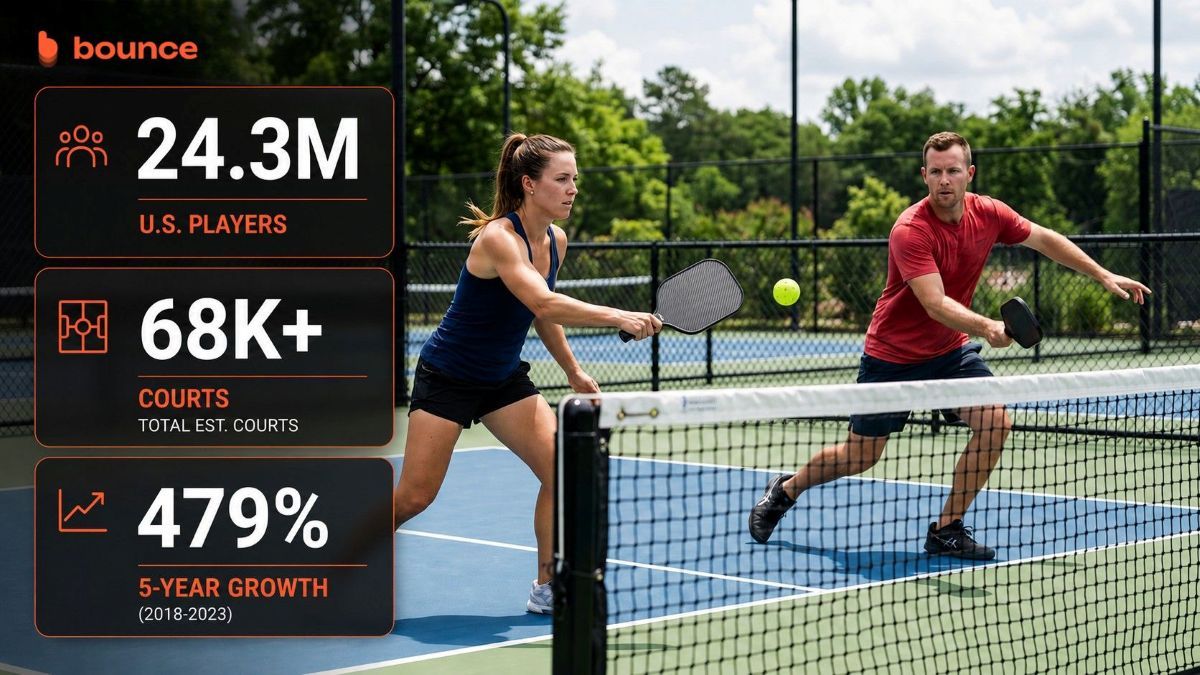
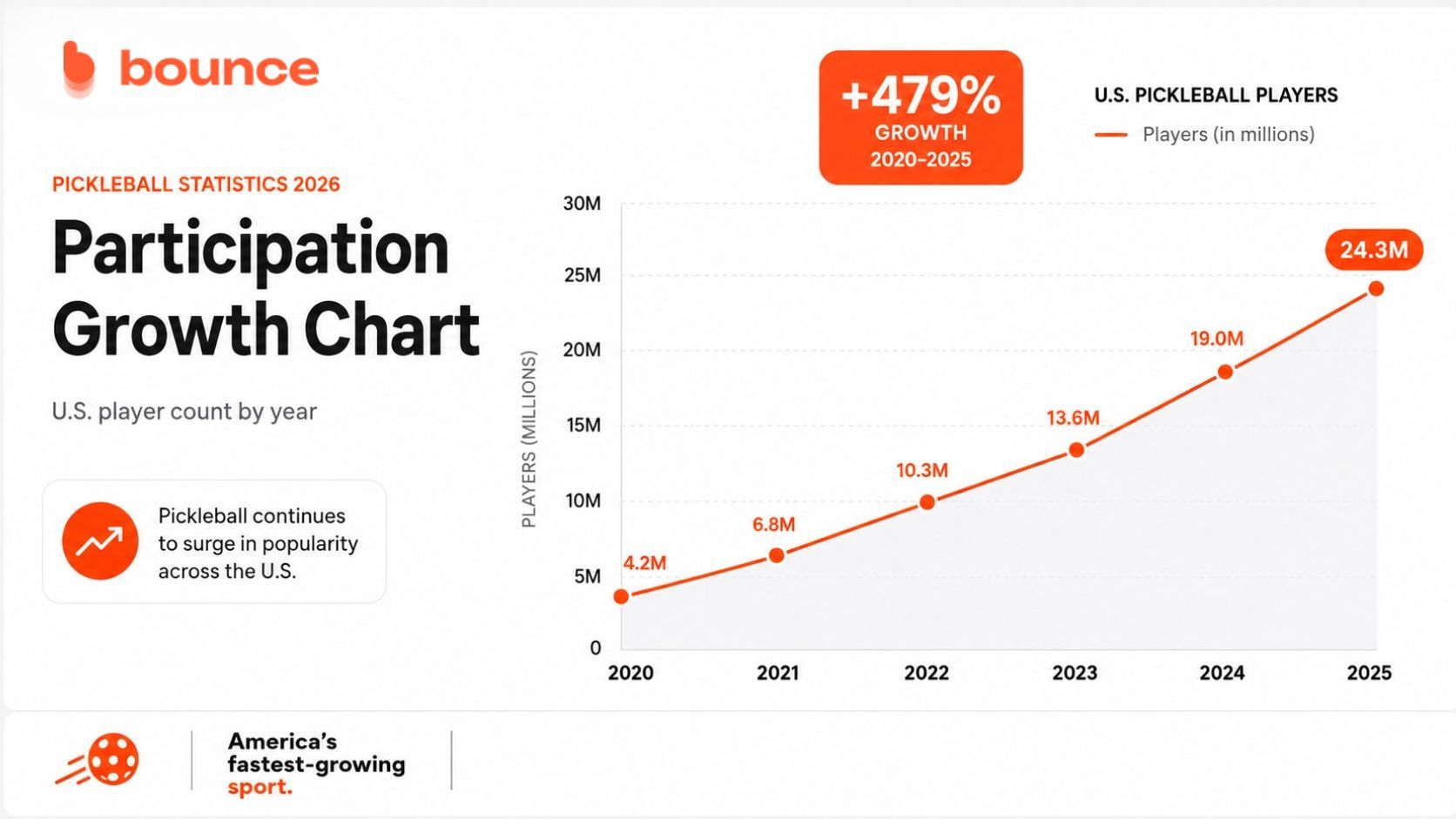
24.3 million Americans played pickleball in 2025. That is up from 4.2 million in 2020, a 479% increase in 5 years, making pickleball one of the fastest-growing sports in the country.
The numbers behind that growth explain why the sport feels different now. Courts are filling up. Cities are adding facilities. Pro events are drawing real audiences. The average player is now 34.8 years old, so the old retirement-sport label is badly out of date.
This is the 2026 snapshot of pickleball’s growth, court demand, and market momentum: who is playing, where courts are being built, how pro pickleball is scaling, what the industry is worth, and where injury patterns are showing up.
The useful part is not the raw count. It is what the numbers reveal: the sport is younger than expected, court supply is chasing demand, and pickleball has moved from casual recreation into a serious participation and business story.
Quick Answer
Want the short version? Pickleball has moved from a fast-growing niche to a major recreational racket sport. The U.S. player base reached 24.3 million in 2025, court supply is still behind demand, and the sport is getting younger, more competitive, and more commercial at the same time.
- 24.3 million Americans played pickleball in 2025.
- U.S. participation grew 479% from 2020 to 2025.
- The average player age is now 34.8, down from 41 in 2020.
- The Pickleheads database tracked 68,458 U.S. courts in USA Pickleball's 2024 Annual Growth Report.
- SFIA estimated $855 million in court construction investment was needed over the next 5 to 7 years.
- Pickleball-related emergency department injuries rose with participation, with falls, fractures, and wrist injuries leading the data.
Player participation statistics
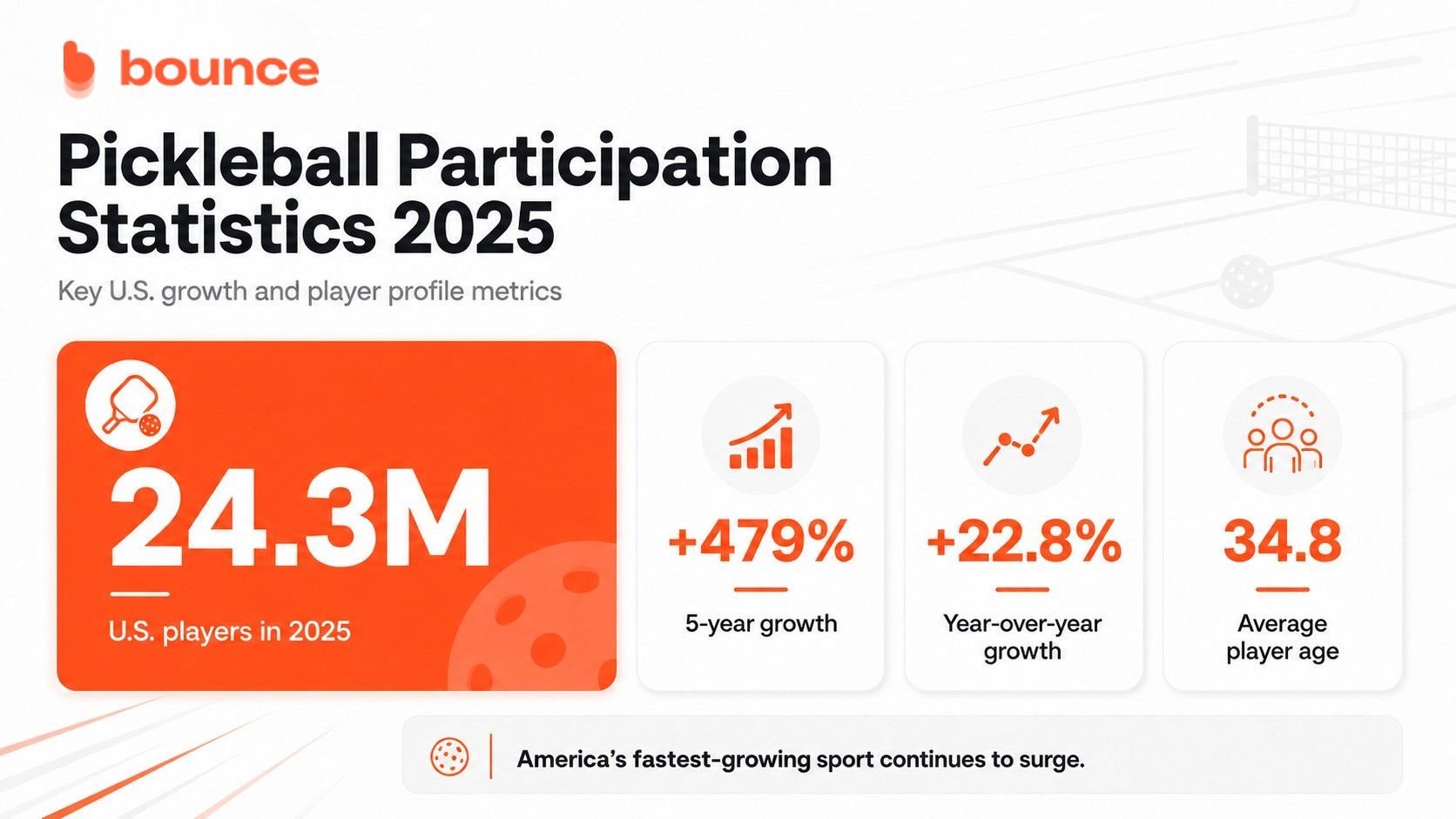
Pickleball went from 4.2 million U.S. players in 2020 to 8.9 million in 2022, then kept compounding. According to the SFIA Topline Participation Report, year-over-year growth from 2024 to 2025 was 22.8%. A large base growing that quickly is rare in recreational sport.
| Metric | Figure | Source |
| Total U.S. players (2025) | 24.3 million | SFIA Topline Participation Report |
| 5-year growth (2020-2025) | +479% | SFIA Topline Participation Report |
| 3-year growth (2022-2025) | +171.8% | SFIA Topline Participation Report |
| Year-over-year growth (2024-2025) | +22.8% | SFIA Topline Participation Report |
| Players in 2020 (baseline) | 4.2 million | SFIA Topline Participation Report |
The practical read is simple: pickleball is adding new players and keeping enough of them to change local demand. That matters more than the headline growth rate. One viral year can spike participation. Five years of growth changes court schedules, coaching demand, club programming, and city planning.
Casual vs. core players
The 24.3 million breaks down in a useful way. Casual players, meaning 1 to 7 sessions per year, account for 16.8 million players. Core players, meaning 8 or more sessions per year, account for 7.48 million. Both groups grew from 2024 to 2025, according to the SFIA participation data.
Casual growth shows the sport is still bringing new people in. Core growth shows some of those people are turning into regular players. That second part is what turns a trend into a habit.
From 2022 to 2023 alone, pickleball added over 1 million children under 18. That youth pipeline matters because it changes how the sport gets taught, where courts are built, and how clubs think about programming. For your first pickleball tournament, there have never been more entry points.
Who plays pickleball: demographics
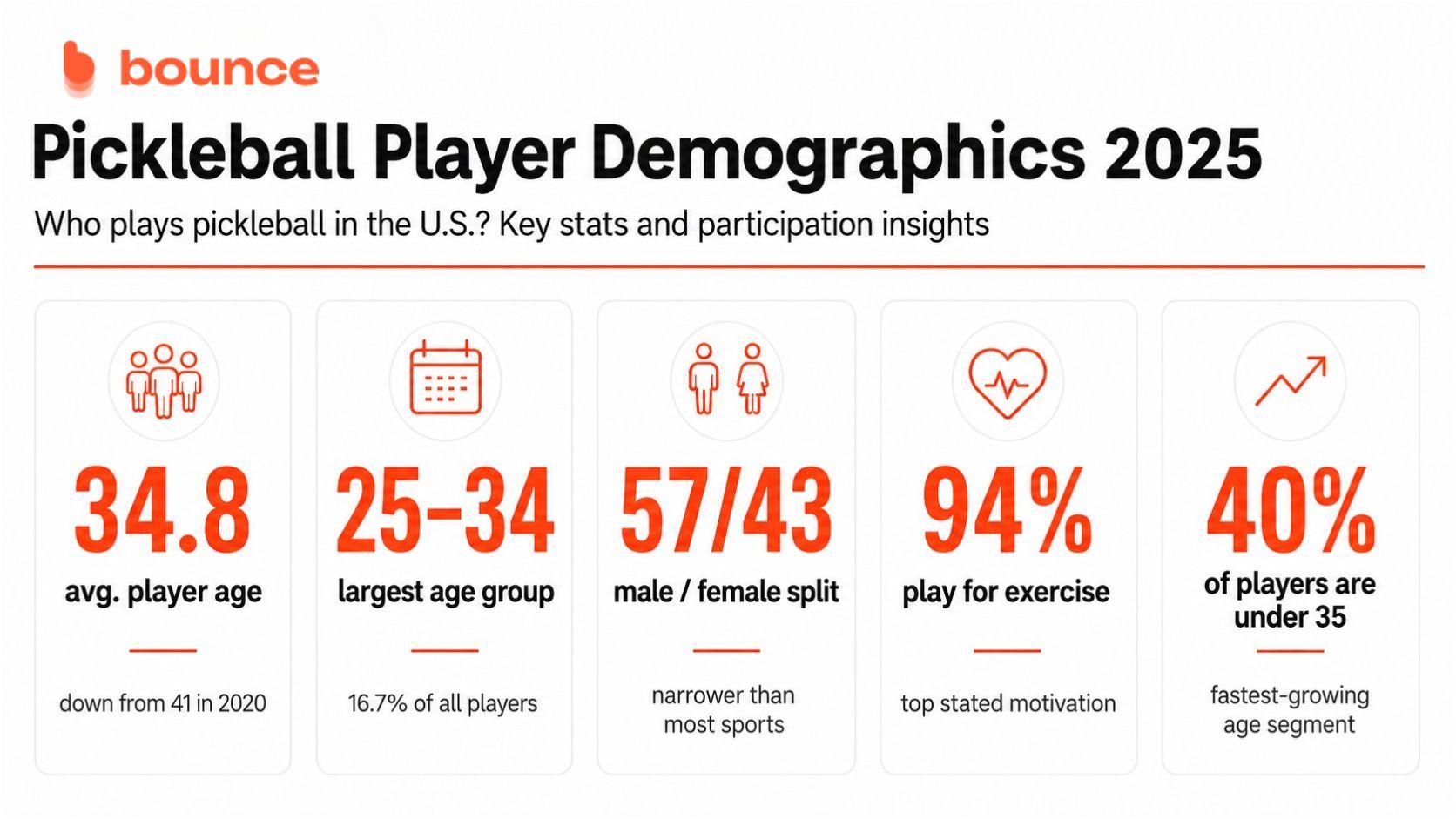
The average pickleball player is 34.8 years old. Five years ago, the average was 41. The sport's center of gravity has shifted an entire generation.
Largest single pickleball age group is players aged 25–34 at 16.7% of all participants. Players 65 and over are second at 15.4%, followed by the 18–24 bracket at 13.3%. SFIA also reported that every age group saw participation growth in 2023, the third straight year that happened.
The under-35 crowd now makes up 40% of all players. The retiree-only story is outdated.
The gender split is 57% male and 43% female, per the SFIA Pickleball Market Playbook. That gap is narrower than many competitive sports, which helps explain why mixed doubles, social formats, and beginner clinics scale so well.
SFIA surveyed avid players on why they play. The top answer was physical exercise, cited by nearly 94% of respondents, followed by fun, competition, and social interaction.
That tracks with the sport on court. Pickleball gives players movement, short bursts, hand speed, balance work, and social accountability in the same session.
A small study from NC State found that older adult players reached recommended weekly levels of moderate to vigorous physical activity through recreational pickleball, and the CDC physical activity guidance for older adults recommends at least 150 minutes of moderate-intensity aerobic activity each week.
Growth is easier to understand once you feel it locally. Bounce helps players find coaches, leagues, and organized play near them.
Court and facility statistics
Courts are the sport's biggest constraint. There are a lot of them. There still are not enough.
The USA Pickleball 2024 Annual Growth Report put the national count at 68,458 courts, tracked through the Pickleheads database. The same report said 18,455 new courts were added in 2024 alone.
Dedicated pickleball facilities grew 55% year-over-year, according to SFIA. That is an important distinction. Converted tennis courts help. Purpose-built facilities signal that operators believe demand can support full-time programming, leagues, clinics, and events.
The supply gap
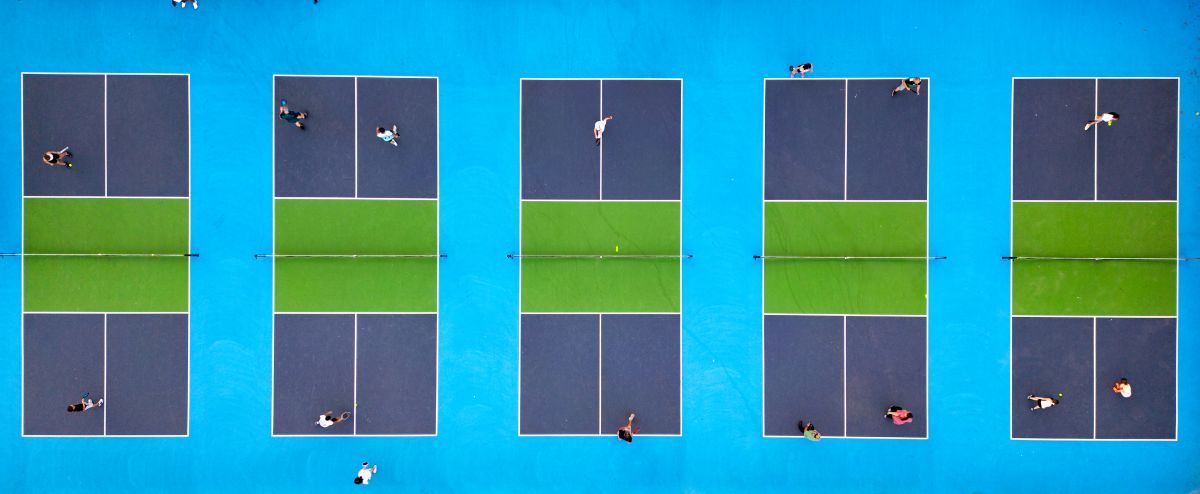
Demand is still outrunning construction. SFIA estimated $855 million in court construction investment was needed over the next 5 to 7 years to meet demand.
That number explains the friction players feel every week: full open-play sessions, waitlists, converted gyms, and prime-time courts booked before dinner. Growth feels exciting on a chart. On the ground, it feels like 16 people waiting to rotate onto 2 courts.
For players struggling to find available courts, Bounce surfaces open play, clubs, and local formats in available cities.
Tournament infrastructure
USA Pickleball sanctioned 142 tournaments in 2024, including the Biofreeze USA Pickleball National Championships and 13 Golden Ticket events. It also awarded $45,350 in grants supporting 33 community programs, 4 collegiate initiatives, and 102 youth-focused projects.
Equipment approvals show the same pressure. USA Pickleball processed 1,713 new paddle and ball submissions in 2024. Of those, 1,225 paddles and 81 balls were approved, and 476 new manufacturers and brands registered that year.
That matters for players because equipment choice is getting harder, not easier. More paddles means more options, but also more noise. For newer players, court time and coaching still matter more than chasing the newest face material.
Professional pickleball statistics
The pro numbers that tend to surprise people are not the player counts. They are the attendance, broadcast, and sponsorship figures.
More than 320,000 fans attended PPA Tour and MLP events in 2024, up 40% from 2023. That is live attendance: people buying tickets, traveling to venues, and watching in person.
Professional pickleball aired across FOX, CBS, ESPN, ESPN2, Amazon Prime, Tennis Channel, FS1, FS2, and CBS Sports Network in 2024. PPA and MLP national telecasts exceeded 350 hours of national coverage.
The peak TV moment came when the PPA Mesa Arizona Cup broadcast on FOX drew 501,000 viewers, reported as the largest pro pickleball TV audience at the time. PickleballTV also recorded more than 1 billion minutes watched in 2024.
Sponsorship revenue grew 50% from 2023 to 2024 across PPA Tour and MLP. That is the number brand teams watch because it suggests sponsors are returning with larger commitments, not simply testing the sport once.
The pro game still has work to do. Viewership spikes do not automatically become stable weekly audiences. But the gap between rec growth and pro awareness is shrinking, and that gives the sport more paths to stay visible.
Pickleball market size and industry data
Market size estimates vary by research firm, so the source matters. Treat these as directional numbers, not exact scorekeeping.
Maximize Market Research valued the global pickleball market at $1.77 billion in 2025 and projected it could reach nearly $3.50 billion by 2032 at a 10.2% CAGR. Global Market Insights estimated the pickleball equipment market at $480.6 million in 2025, with a projected 5.6% CAGR from 2026 to 2035.
Those estimates are not identical because they measure different slices of the industry. One looks at the broader pickleball market. The other focuses on equipment. The shared direction is what matters: participation growth is turning into commercial demand.
Equipment market
In the GMI equipment estimate, paddles accounted for about $239 million, or roughly 49.7% of total equipment revenue. North America held about 40.9% of global equipment market share.
The paddle share makes sense. Paddles are the purchase players obsess over first, and they are the product category where performance claims, testing rules, and upgrade cycles collide. Shoes may matter more for injury prevention, especially for older players, but paddles drive the equipment conversation.
For context on how the sport's court footprint compares with its racket-sport neighbor, the pickleball vs. tennis court comparison shows why facilities can fit more pickleball activity into the same amount of space.
Pickleball injury statistics
Injury data deserves a clean read because the numbers are easy to misread.
A peer-reviewed study in PubMed Central analyzed pickleball-related injuries presenting to U.S. emergency departments. The estimated number of ED injuries reached 13,690 in 2022, up from 611 in 2013. That is a 22-fold increase, according to the injury trend study.
| Metric | Figure |
| Estimated U.S. ED injuries in 2022 | 13,690 |
| Comparison to 2013 | 22x greater (611 in 2013) |
| Most common injury mechanism | Falls |
| Most common diagnosis | Fractures |
| Most injured body part | Wrist (12.7% of all injuries) |
| Age group most at risk | 65-80 years old |
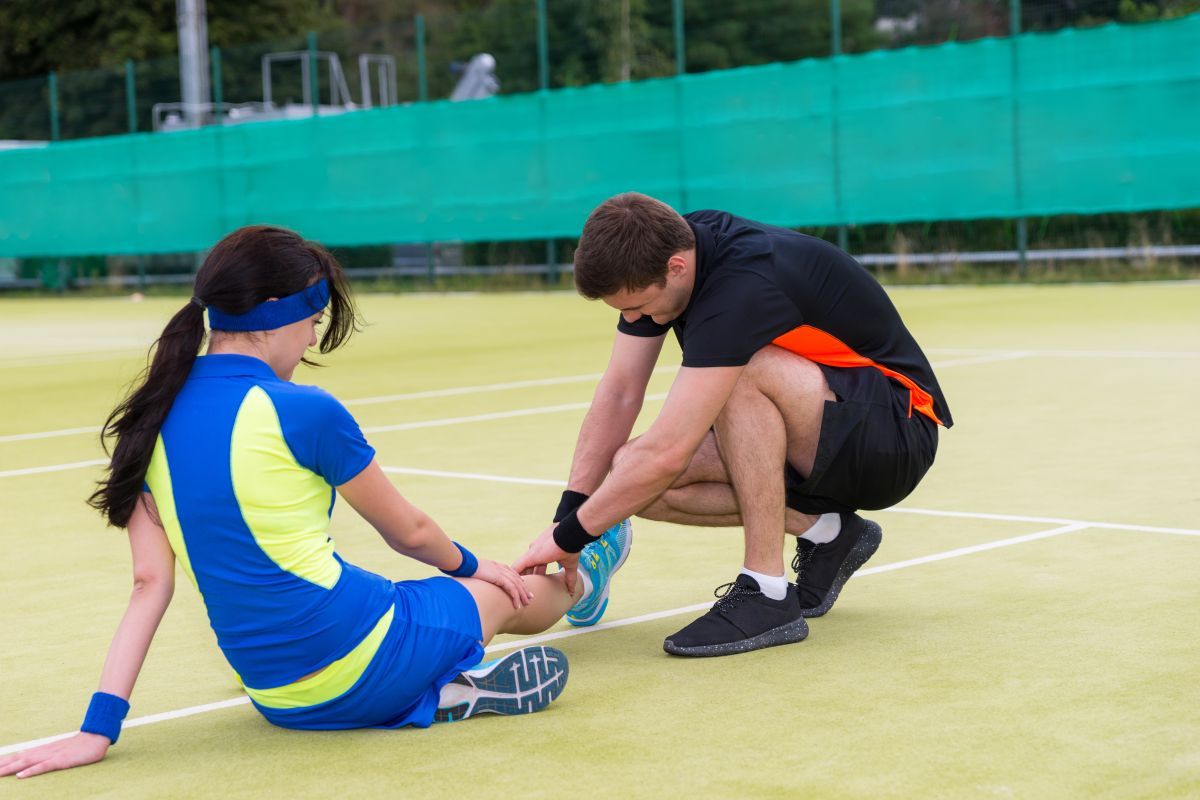
The 22-fold increase sounds alarming until you put it next to participation growth. In 2013, the sport had a much smaller player base. By 2022, SFIA counted 8.9 million U.S. players. More players create more total injuries, even when the sport remains accessible.
The useful part of the injury data is specific: falls are the mechanism, fractures are the diagnosis, wrists are the common target, and players 65-80 carry the most risk. For that group, court surface awareness and proper footwear matter more than paddle choice. The pickleball shoes vs. tennis shoes guide gets into why lateral support matters on court.
Global pickleball statistics
The U.S. still gets most of the attention. The international numbers show how quickly the sport is spreading.
Asia
A 2025 UPA Asia and YouGov study found that about 1.9 billion people across 12 Asian territories had heard of pickleball. About 812 million had played at least once, and 282 million played at least once a month.
Those numbers dwarf the U.S. base. They also suggest something important: pickleball's future growth may be shaped as much by Asia as by North America.
Canada
A January 2025 national survey from Pickleball Canada estimated 1.54 million Canadians were currently playing, up 57% since 2022 and 15% from 2024.
Australia
The Pickleball Association of Australia doubled its membership base in 12 months, and one published Australian pickleball data roundup estimated about 40,000 people playing across the country.
Global player count
Across all markets, active pickleball participation is commonly estimated above 30 million players. The Asian awareness and trial numbers suggest that estimate may be conservative, depending on how strictly “active player” is defined.
That definition matters. Someone who tried pickleball once is not the same as a weekly player. For cities, clubs, and brands, the important number is monthly or repeat participation because that is what drives court demand, coaching demand, and league formation.
Conclusion
The numbers point in one direction: pickleball has moved past the early growth phase. With 24.3 million U.S. players, 68,458 tracked courts, $855 million in estimated court construction need, and major participation signals outside North America, the sport's next problem is capacity.
That is what players already feel. More people want to play than many local systems can handle cleanly. Courts, coaches, leagues, clinics, and social formats have to catch up.
Growth only matters if players can actually get on court. Bounce helps players find courts, certified coaches, leagues, and organized play near them.
FAQ
How many people play pickleball in the United States?
24.3 million Americans played pickleball in 2025, per the SFIA Topline Participation Report. That is up from 4.2 million in 2020, a 479% increase over 5 years.
What is the fastest-growing sport in America?
Pickleball has been named one of the fastest-growing sports in the United States for multiple consecutive years. SFIA reported 22.8% year-over-year growth from 2024 to 2025.
How many pickleball courts are in the U.S.?
USA Pickleball's 2024 Annual Growth Report said the Pickleheads database tracked 68,458 courts across the country, with 18,455 added in 2024 alone.
What is the pickleball market worth?
Estimates vary by research firm. Maximize Market Research valued the global pickleball market at $1.77 billion in 2025, while Global Market Insights estimated the equipment market alone at $480.6 million in 2025.
What are the most common pickleball injuries?
Falls are the leading mechanism in emergency department injury data, with fractures as the most common diagnosis. Wrist injuries accounted for 12.7% of reported injuries in one peer-reviewed study, and players ages 65-80 faced the highest injury risk.
Is pickleball popular outside the United States?
Yes. UPA Asia research estimated that 812 million people across 12 Asian territories had played pickleball at least once. Pickleball Canada estimated 1.54 million current players in Canada in January 2025.
Who plays pickleball most?
The largest U.S. age group is 25-34, making up 16.7% of players. The gender split is 57% male and 43% female, and the average player age is 34.8.