In 2025, the Sports & Fitness Industry Association put US pickleball participation at 24.3 million players. The United States Padel Association, citing SFIA data, says padel crossed 1 million US players in the same reporting cycle.
That is the domestic gap. Globally, padel has the cleaner official international count. The International Padel Federation’s 2025 World Padel Report says padel has more than 35 million players worldwide. FIP also counts 77,300 courts across 150 nations and 20 dependent territories.
Want a quick answer? Pickleball is far more popular in the US right now. Padel has the wider official international footprint. If you live in the US, pickleball is probably easier to find this weekend. If you are looking at global growth, padel is already spread across far more countries.
This comparison breaks down US participation, international reach, court supply, growth constraints, and what the numbers mean for players choosing where to spend court time.
How many people actually play each sport
Start with the cleanest domestic comparison: same country, same research cycle, same participation source.
SFIA puts pickleball at 24.3 million US players in 2025. USPA says padel crossed 1 million US players, also using SFIA participation reporting.
That makes pickleball roughly 23 times larger in the US.
The global picture changes the comparison. FIP estimates more than 35 million padel players worldwide, with courts across 150 nations and 20 dependent territories.
The gap is reporting quality. Pickleball still lacks one official international system that tracks active players country by country as cleanly as SFIA tracks US participation.
For local access, Bounce’s court finder is the faster check. National numbers tell you which sport is bigger. A court map tells you what you can actually play after work.
Pickleball’s growth story, in numbers
Pickleball reached 24.3 million US players because it solved the access problem first.
SFIA reports 479% US participation growth from 2020 to 2025. That means the sport moved from a small recreational category into a mainstream participation sport in 5 years.
USA Pickleball’s own infrastructure data backs up the same story. Its 2025 Annual Growth Report says the Pickleheads location database added more than 2,300 places to play in 2025, bringing the US total to 18,258 locations. USA Pickleball also grew to 104,828 members nationwide.
That growth did not happen by accident.
Pickleball courts fit into existing parks, gyms, private clubs, and converted tennis spaces. The rules are easy enough to explain in 5 minutes. The first hour usually feels playable, even when the player has bad footwork and no shot discipline yet.
That is the engine behind pickleball’s growth: low access friction, fast early rallies, and enough depth to keep serious players from getting bored.
The player base helps too. Pickleball is strong with 25-to-44-year-olds, and it still has real traction with 65-plus players. That range is one reason pickleball demographics look different from sports that depend on one age group to carry the whole category.
Padel’s growth story, in numbers
Padel is building from a different base.
In the US, padel is still early. USPA’s 1 million-plus player count is meaningful, but the sport still has nowhere near pickleball’s domestic court density.
Globally, padel is much further along. FIP says the sport now has more than 35 million players and 77,300 courts worldwide. The same report says clubs grew by 16.1% and courts rose by 15.2% compared with the prior year.
That is the real padel story. The US is catching up to a sport that already has deep roots in Spain, Latin America, and parts of Europe.
The first-time experience is different too. Padel is easier to start than tennis because the court is smaller and the serve is underhand. But the walls punish lazy positioning. A player who understands angles will improve faster than a player who just chases every ball down.
That is why a few practical padel tips can save a beginner weeks of frustration.
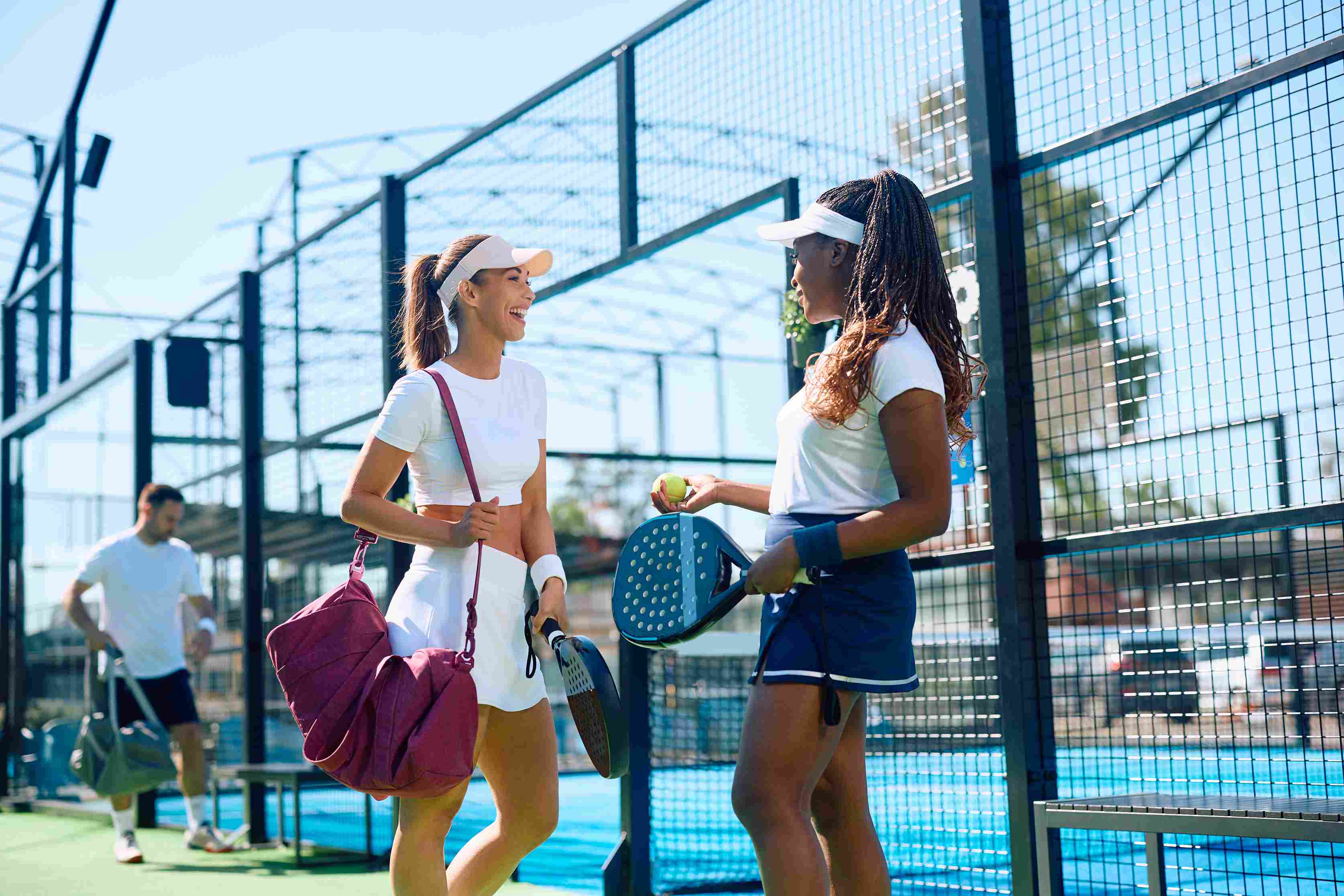
Why the two sports keep growing differently
The main difference is court supply.
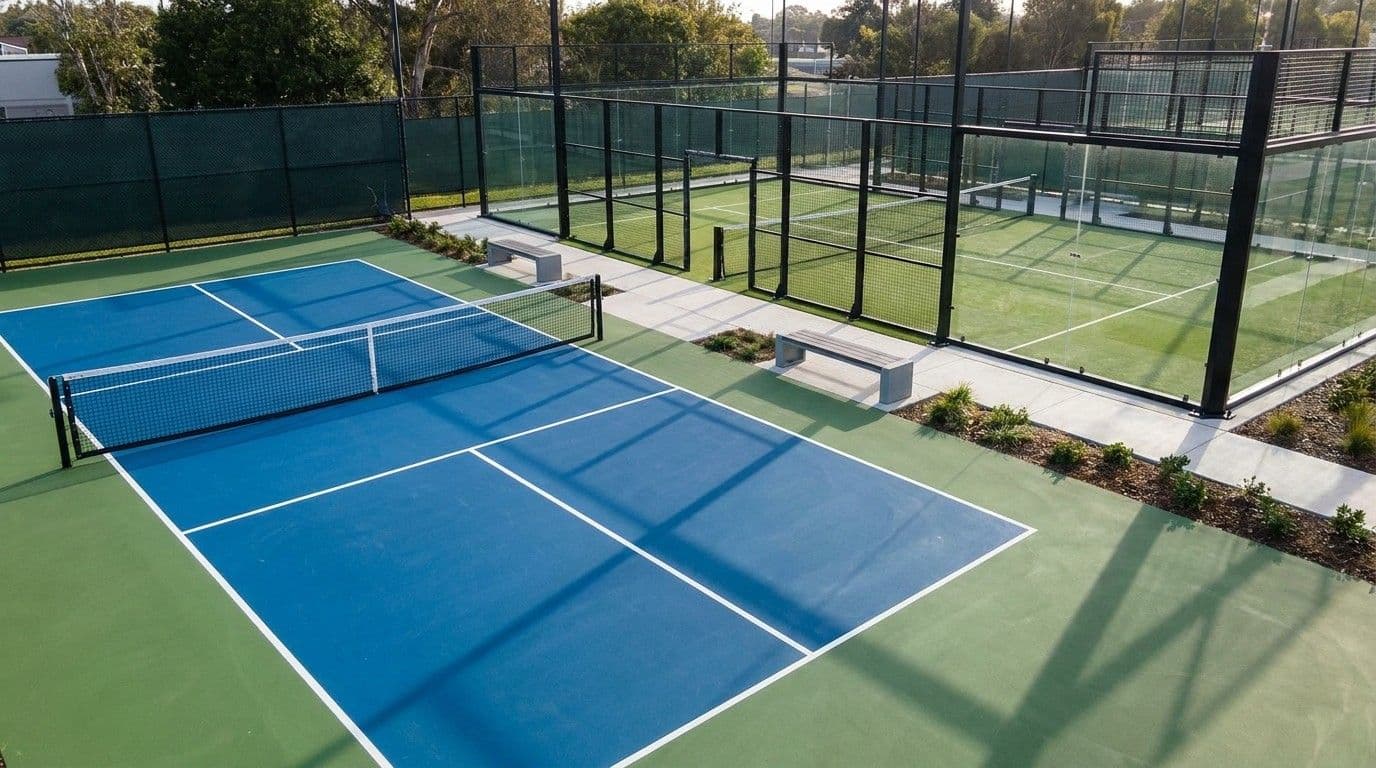
Pickleball can grow inside existing recreational spaces. A city can convert tennis courts, paint lines in a gym, or add dedicated courts to a park. That makes supply easier to create.
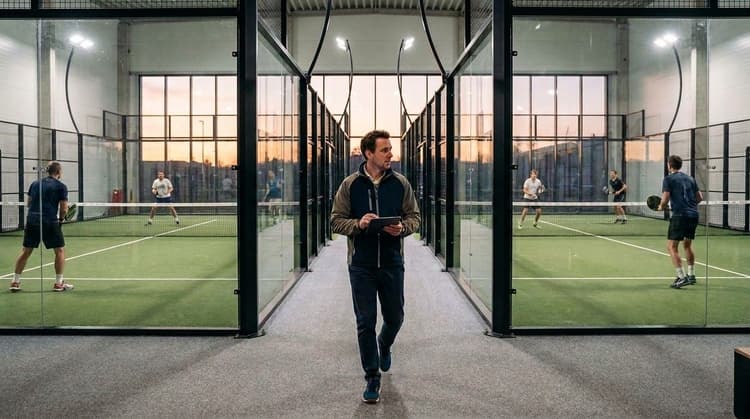
Padel usually needs enclosed courts with glass walls. That changes the economics. It also changes who builds the sport first: clubs, private operators, hotels, real estate groups, and facilities with room for a purpose-built setup.
Coaching depth matters too.
Pickleball has scaled fast because new players can start without much instruction. Padel asks for more court-specific coaching sooner. The walls, lobs, rebounds, and net positioning create a learning curve that casual players feel quickly.
The US also has a smaller padel coaching bench. Many experienced instructors still come from Spain and Latin America. Building domestic coaching depth takes time.
That is why the US numbers look lopsided. Pickleball solved access first. Padel is still building the court network and coaching base that turn interest into regular play.
Bounce’s Racket Social Club fits that middle ground: organized social play where someone can try a racket sport without needing to build a full playing group from scratch.
| Category | Pickleball | Padel |
| US players | 24.3 million in 2025 | More than 1 million in the latest SFIA reporting cycle |
| Global players | No single official active-player count | More than 35 million, per FIP |
| US play locations | 18,258 locations in USA Pickleball’s 2025 report | Smaller US footprint, with growth led by clubs and private operators |
| Global courts | No single central global court count | 77,300 courts, per FIP |
| US growth pattern | Mass participation first | Facility buildout first |
| Access model | Parks, gyms, clubs, converted courts | Enclosed courts and club-led expansion |
| Best current market | United States | Spain, Latin America, Europe, and new growth markets |
Which one is growing faster
Inside the US, pickleball is growing faster by participation.
Going from roughly 4.2 million US players in 2020 to 24.3 million in 2025 is a rare adoption curve for any recreational sport. SFIA’s 479% growth figure is the clearest proof point.
Globally, padel has the stronger official infrastructure story. FIP’s 2025 report counts 14,355 courts built in 2025 alone, bringing the world total to 77,300.
So the answer depends on the measurement.
If you care about US player participation, pickleball is ahead. If you care about official global court buildout, padel has the cleaner worldwide data.
There is one constraint worth naming: fast growth creates friction.
Carmel-by-the-Sea, California moved toward a public pickleball ban after years of noise complaints at its only public courts. The Carmel example shows what happens when demand outruns planning, acoustic work, and neighborhood tolerance.
Padel has its own version of that risk. Build too few courts and players cannot find games. Build too many in the wrong market and clubs carry empty inventory.
Sustainable growth comes down to matching court supply, coaching depth, local demand, and the business model behind the facility.
Which sport should you play
Play pickleball first if you want quick access, fast games, simple rules, and a lower barrier to entry.
Play padel first if you want longer rallies, more movement, wall play, and angles.
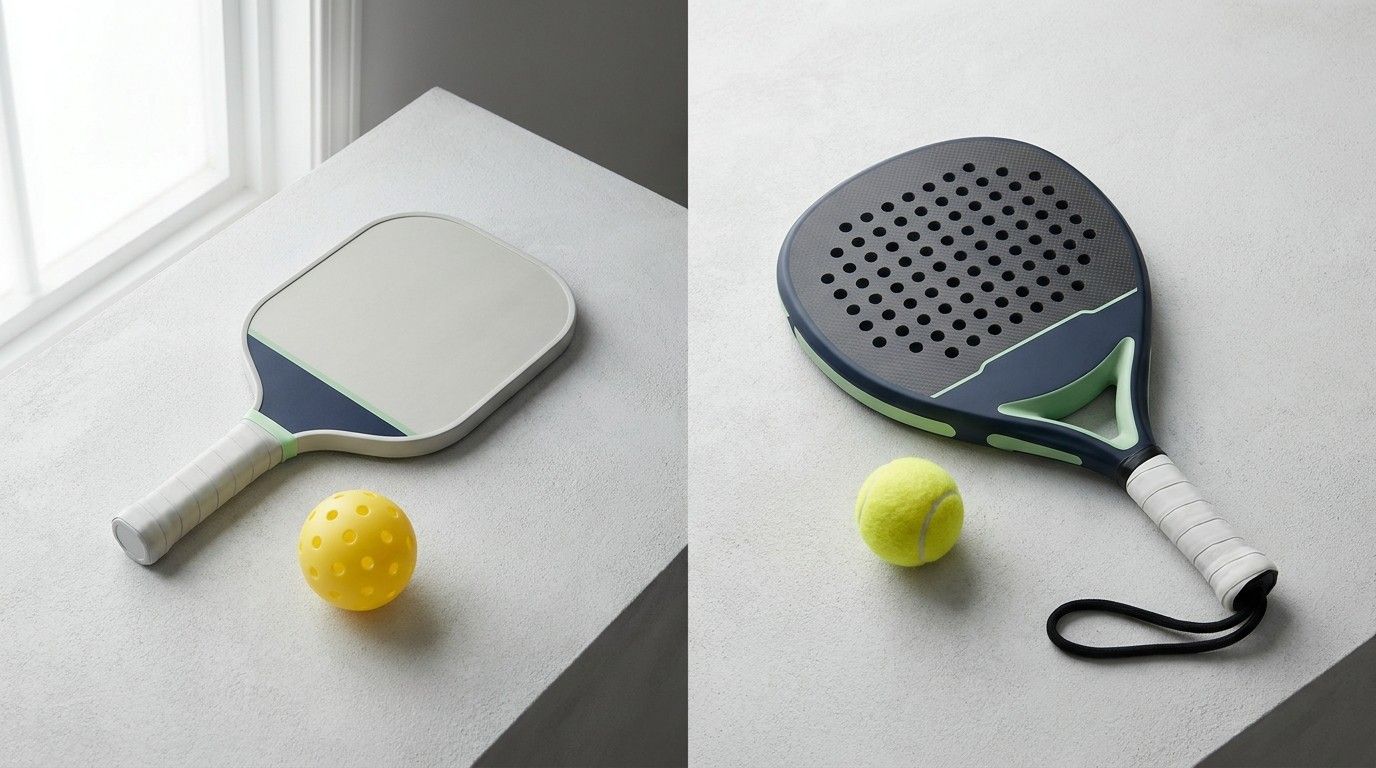
The better answer is to try both. They train different instincts. Pickleball sharpens touch, hands, shot selection, and decision speed. Padel makes you read space, rebounds, and court position.
You will know within 30 minutes which one pulls you back.
Conclusion
Pickleball is the bigger US sport in 2026. The gap is large enough that the domestic popularity question is settled for now.
Padel is the more established global racket sport by official international reporting. FIP’s player and court counts show a sport with real worldwide depth, even while the US market is still young.
The practical choice is simpler than the market debate. Play the sport you can access consistently, then add the other when the chance is there.
For players building their game through structured coaching and organized play, Bounce connects you with certified coaches and competitive formats in your city.
FAQs
Which is more popular, padel or pickleball?
Padel has the larger reported player base worldwide. The International Padel Federation counted more than 35 million active padel players in 2025, while SFIA counted 24.3 million pickleball players in the United States. The clearest answer is padel globally and pickleball in the U.S.
Which sport is growing faster, pickleball or padel?
Pickleball is growing faster inside the United States. Participation increased from 4.2 million players in 2020 to 24.3 million in 2025, while padel added 5 million players worldwide during 2025 and increased its court supply by 15.2%. A direct global comparison remains difficult because the governing organizations measure different markets.
Is pickleball declining in popularity?
Pickleball participation is still rising. SFIA named it the fastest-growing U.S. sport for a fifth consecutive year, and the number of core players who play at least eight times annually increased from 1.4 million in 2020 to 7.5 million in 2025.
Is padel growing or declining?
Padel is growing across every major region. FIP recorded more than 35 million active players and 77,300 courts in 2025, with the number of courts rising 15.2% in one year. That level of facility construction gives padel a durable base beyond its current media attention.
Why is pickleball more popular than padel in the U.S.?
Pickleball is easier to find in most U.S. cities. USA Pickleball’s 2025 report listed 18,258 playing locations and 82,613 courts nationwide, giving beginners a large network of public courts, clubs, open play sessions, and local leagues. Padel’s U.S. reach depends on the continued construction of dedicated courts.
In which country is padel most popular?
Spain is the clearest answer based on facilities and organized participation. FIP reported almost 4,500 Spanish clubs and 17,000 courts in 2024. The Spanish federation also passed 109,040 registered player licenses, while Argentina remains another historic center of the sport.