Pickleball still carries the old retirement-community label. Slow pace. Friendly games. Easy on the knees.
That picture is now too small. The current player base is younger, more mixed by age, and more spread out than the stereotype suggests.
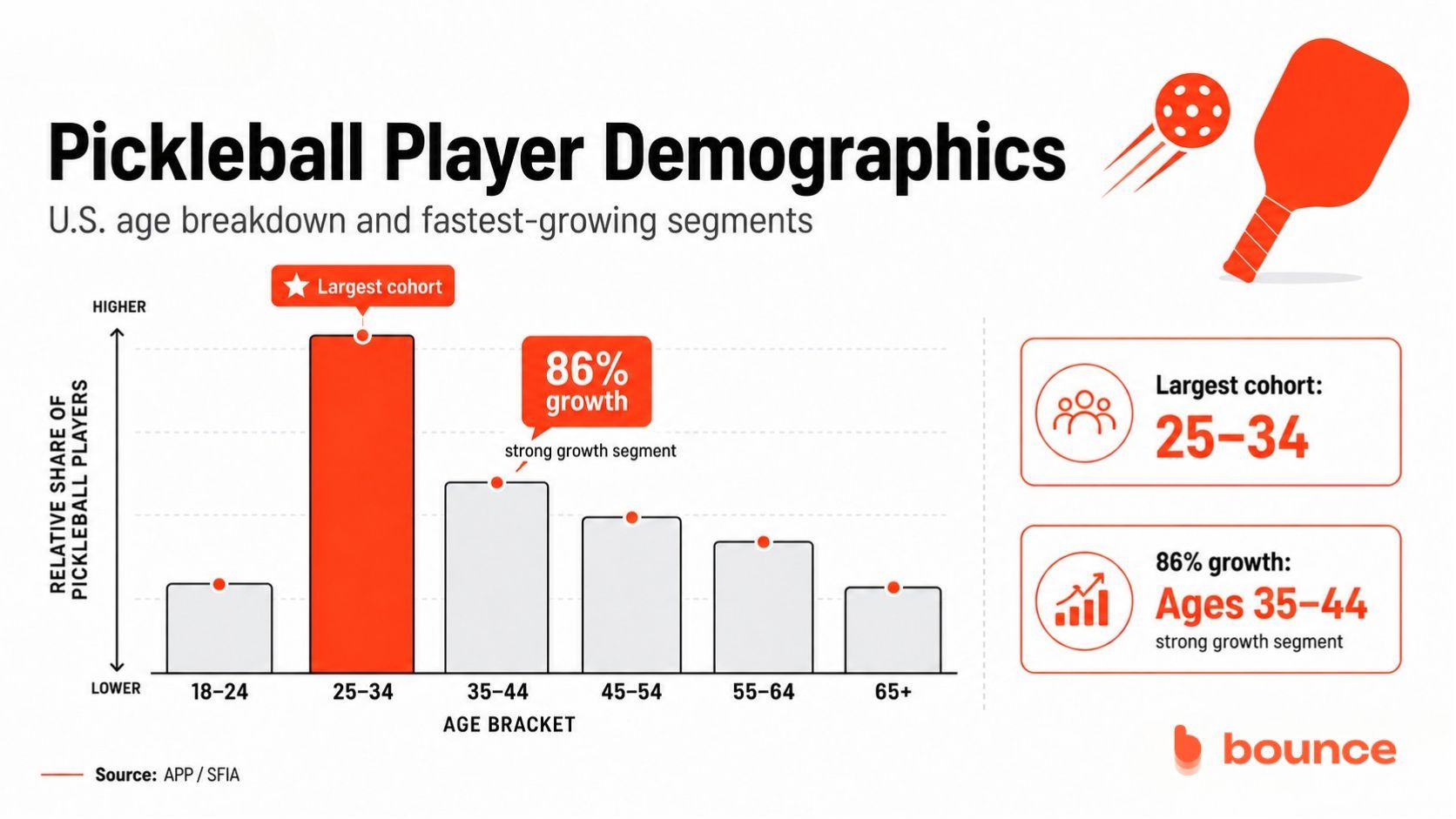
The cleanest read is this: 25 to 34 is the largest age group, Gen Z is showing up faster than expected, women make up a large share of casual players, and older adults are still one of the sport’s most reliable groups.
Quick Answer
Want the short version? Pickleball’s player base is much younger than its old reputation, but the older players never left.
The sport now pulls from younger adults, working-age players, women, retirees, college programs, and regional hot spots like the South Atlantic. That mix changes what happens on real courts: faster open-play rotations, more demand for structured leagues, more mixed-format programming, and more players looking for consistent games instead of one-off drop-ins.
The useful demographic story is simple: pickleball is no longer growing from one age group. It is growing because several groups are playing for different reasons and coming back often enough to keep courts full.
Pickleball demographics at a glance
| Data point | What the number says | Court-level meaning |
| Average avid player age | 34.8 years old | The sport is being driven by working-age adults, not only retirees. |
| Largest age cohort | 25 to 34 | Programming needs to fit younger adults with jobs, schedules, and social habits. |
| Avid player concentration | More than 70% are 18 to 44 | Open play and leagues are getting faster and more competitive. |
| Casual gender split | 57% male, 43% female | Mixed formats are a better fit than narrow gender-specific programming alone. |
| Top U.S. region | South Atlantic, 2.8 million players | Court demand is strongest in warm, suburban, and fast-growing markets. |
| Top motivation | Nearly 94% cite exercise | Players return when the game feels like a workout and a social routine. |
The average pickleball player is younger than the reputation
The Association of Pickleball Professionals reported that the average age of avid pickleball players dropped to 34.8 years old. That is a major reset for a sport still described as a retirement activity in casual conversation.
APP also reported that more than 70% of avid players are between 18 and 44. The 25 to 34 segment alone accounts for 40% of avid players, while 18 to 24 accounts for another 18%.
SFIA's 2024 State of Pickleball reporting points in the same direction: the 25 to 34 age group had the most participants, at 2.3 million, and the sport added more than 1 million children under 18 from 2022 to 2023.
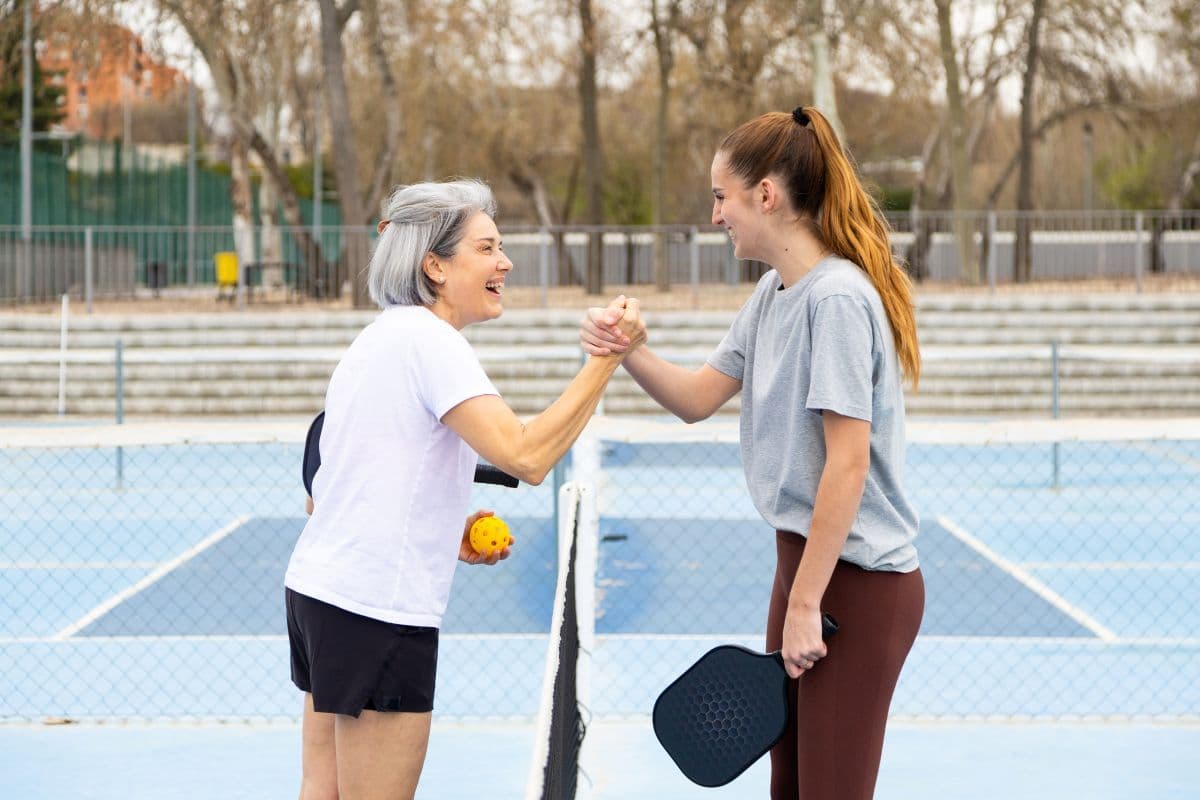
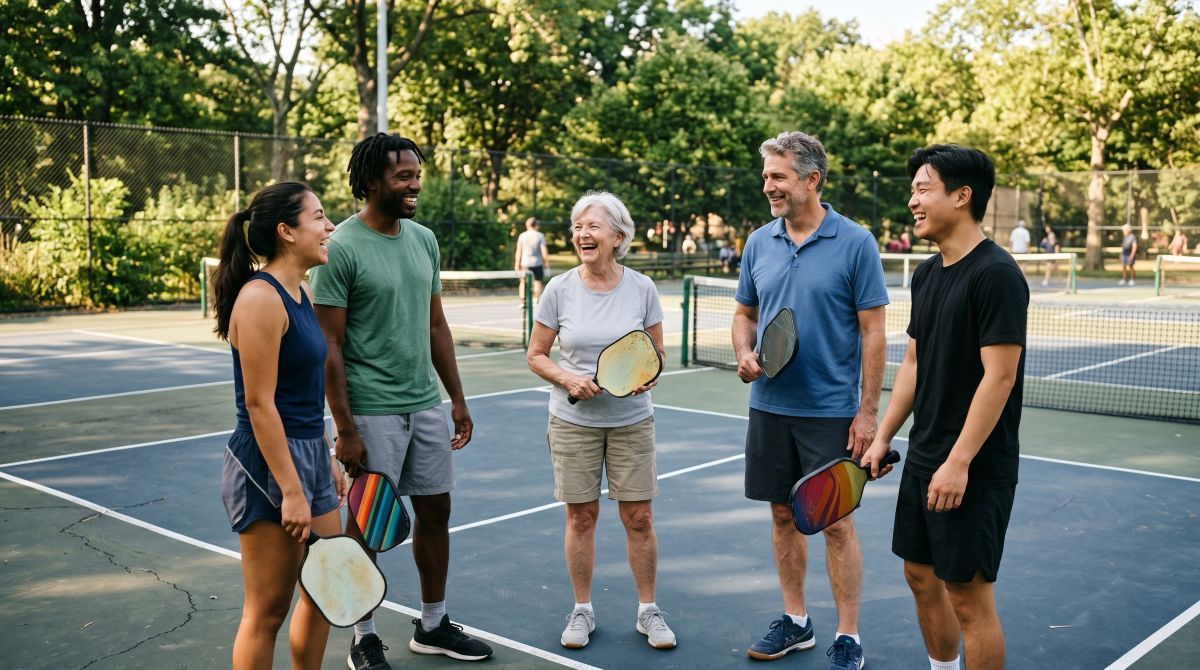
That changes the tone of local play. A beginner clinic can include college students, young parents, tennis converts, gym regulars, and older players who already understand the rhythm of the game.
For context on how pickleball has grown across every age group, the shift from a niche senior activity to a cross-generational sport happened faster than anyone in the industry predicted.
Gen Z is pushing the sport into a different social lane
The youngest adult group is now part of the main story. Some consumer polling in 2024 showed 18 to 24-year-olds leading recent pickleball play, and CivicScience has separately found strong recreational league interest among Gen Z adults. Treat that as a directional signal. The SFIA and APP participation datasets carry the harder demographic weight.
The direction still matters. Younger players find pickleball through friends, short videos, gyms, campuses, and social leagues. They can get a rally going quickly, which makes the first session less intimidating than tennis for many new players.
USA Pickleball's 2024 annual growth report adds the infrastructure piece. The organization awarded $45,350 in youth grants across 33 community programs, 4 collegiate initiatives, and 102 youth-focused projects.
For younger players trying to move from casual games into something with a schedule, Bounce fits the actual behavior behind the data: find a coach, join a league, or book organized play in the city where they already live.
Gender breakdown: who's on the court
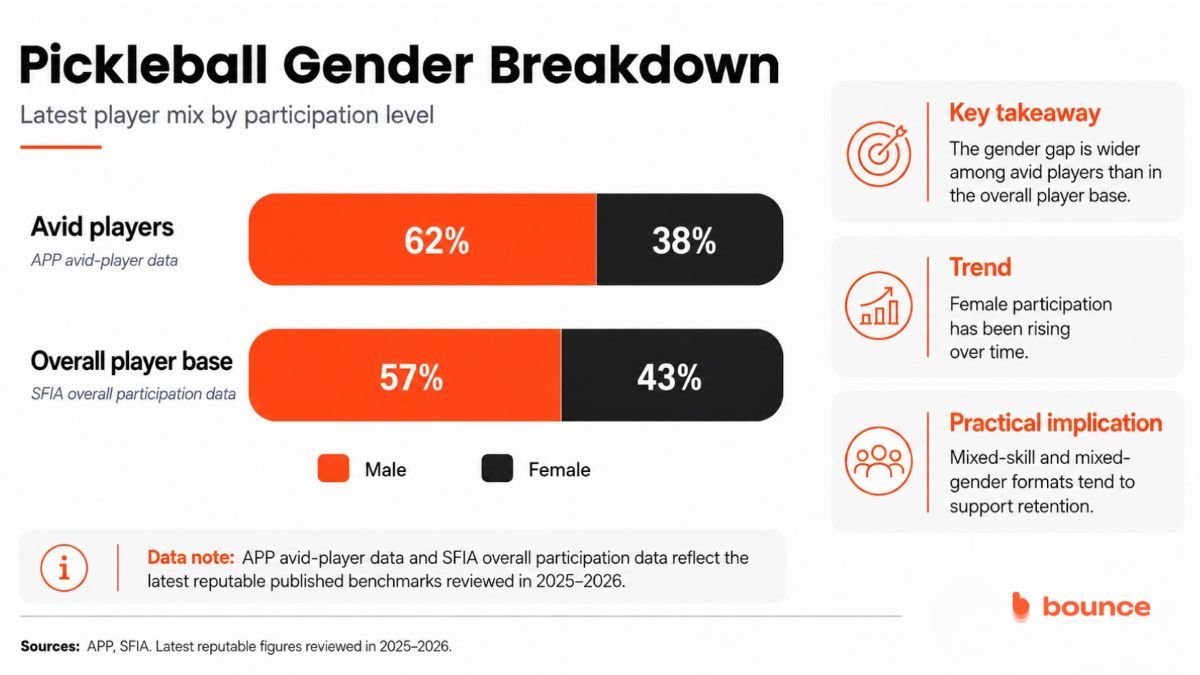
The broad player base is close enough to be balanced that leagues should plan for mixed play. SFIA's public pickleball participation page lists the overall split at 57% male and 43% female. APP's avid-player data is more male-heavy, at 62% male and 38% female.
That difference is useful. Casual participation and frequent participation can follow different patterns. If women are showing up strongly at the casual level, the question for clubs and organizers is how to turn first-time or occasional players into regulars.
The answer is usually format. Mixed-skill clinics, social round robins, women's beginner nights, and clear rotation systems lower the awkward entry cost. Players stay when the first few sessions feel organized and welcoming.
This is where the community layer matters. The guide to finding a pickleball community explains why recurring groups, skill levels, and local organizers often matter more than the court itself.
Where the players are: regional breakdown
The South Atlantic region leads U.S. participation with 2.8 million players, up 50% from 2022. That region includes Florida, Georgia, North Carolina, South Carolina, Virginia, Maryland, Delaware, and Washington, D.C.
The Pacific, East North Central, and Middle Atlantic regions follow. SFIA reported that every U.S. region grew in 2023, which matters because pickleball now reaches far beyond warm-weather retirement markets.
The constraint is court supply. Dedicated pickleball facilities grew 55% year over year in 2024, but SFIA's infrastructure reporting still estimated $855 million in court construction needed over the next 5 to 7 years.
That is where demographics become practical. When more young adults, families, older players, and competitive groups want the same evening court blocks, open play gets crowded fast. A booked clinic or league slot becomes more useful than a vague plan to show up and hope.
Why people play: the motivation data explains retention
Participation counts explain scale. Motivation data explains why people return.
Among avid players surveyed in SFIA's Pickleball Market Playbook, the top motivation was physical exercise, cited by nearly 94% of players. Fun and enjoyment came next, followed by competition and social interaction.
That combination is the sport's real retention engine. A player can get movement, a score, a partner rotation, and a social routine in one session. The learning curve is short enough for a first session to feel like real play.
The exercise angle also makes the demographics easier to understand. Younger adults can treat pickleball like a social workout. Older adults can use it as a repeatable movement. Competitive players can use it as skill work. Same court, different reason for showing up.
For a deeper look at the fitness side, the guide on whether pickleball is good exercise connects the movement demands to cardio, coordination, and long-term consistency.
For players who want those motivations built into the schedule, Bounce connects local players with certified coaches, clinics, and organized leagues that match how people actually use the sport: fitness, competition, and community in the same week.
The 65+ cohort is still here
The sport is getting younger, and the older player base stayed. That is what makes the demographic mix unusual.
Players 65 and older remain one of the sport's most important groups because they play often. The smaller court, doubles-heavy format, and kitchen rule allow older players to stay competitive through positioning, patience, and shot selection.
USA Pickleball's annual growth report gives a clean image of that range. At the 2025 USA Pickleball National Championships, competitors ranged from 11 years old to 87. That age spread is a real feature of the sport.
The rules help explain it. The non-volley zone slows down net dominance, the double-bounce rule gives both teams time to enter the rally, and doubles rewards placement as much as speed. The basic pickleball rules guide gives the clearest explanation of why the game stays accessible across age groups.
What the demographics mean for players, coaches, and clubs
The data points toward 3 practical takeaways.
- Beginner programming should assume a wider age range. A first-time group may include a 22-year-old and a 72-year-old in the same session.
- Leagues need clean skill sorting. Younger players may bring speed, but older players often bring repetition and court sense.
- Court access will keep shaping participation. In high-growth regions, reliable scheduling matters as much as the number of players.
This is why casual participation often turns into a search problem. People know they want to play. Finding the right level, the right time, and the right group is the harder step.
Conclusion
The pickleball demographics data tells a clear story. The player base is younger than its reputation, more balanced by gender than many assume, spread across every U.S. region, and driven mostly by exercise, competition, and social connection.
The cross-generational mix is the strength. The 25 to 34 group drives volume. Gen Z adds cultural momentum. The 65+ group adds frequency and continuity. Those groups now share the same courts.
For players who want to plug into that mix locally, Bounce helps you find certified coaches, structured leagues, and organized play formats in your city. Search your city, find the right level, and get on court with players who match how you want to play.
FAQ
What is the average age of a pickleball player?
The average age of an avid pickleball player is 34.8, according to APP research. That number is much younger than the old retirement-community stereotype and reflects the growth of adults ages 18 to 44.
What age group plays pickleball the most?
The 25 to 34 age group is the largest pickleball cohort in SFIA reporting, with 2.3 million players. APP data also shows that 25 to 34 accounts for 40% of avid players.
What percentage of pickleball players are women?
SFIA lists the broad pickleball player base at 57% male and 43% female. APP reports a wider gap among avid players, with 62% male and 38% female.
Is pickleball popular with Gen Z?
Yes. Gen Z is increasingly visible in pickleball, especially through social play, college programs, and recreational leagues. The strongest hard data still points to 25 to 34 as the largest age cohort, but younger adults are becoming a bigger part of the sport.
Which U.S. region has the most pickleball players?
The South Atlantic region leads with 2.8 million players as of SFIA reporting for 2023. That region includes Florida, Georgia, North Carolina, South Carolina, Virginia, Maryland, Delaware, and Washington, D.C.
Why do people play pickleball?
Exercise is the top motivation among avid players, with nearly 94% citing it in SFIA research. Fun, competition, and social interaction follow, which explains why organized formats and recurring groups retain players well.
How many people play pickleball in the U.S.?
SFIA reports that 24.3 million Americans played pickleball in 2025. That is up from about 4.2 million in 2020 and shows how quickly the sport moved into mainstream recreation.